
home/projects/schools/colombian-hebrew school
Colombian-Hebrew School / Aarón Cohen + Angélica Mejía + Camilo Sellamén + Camilo Fuentes + Joel Amón
Educational ArchitectureSchoolRenovation
- Architects
- Aarón Cohen + Angélica Mejía + Camilo Sellamén + Camilo Fuentes + Joel Amón
- Location
- Bogotá, Colombia
- Year
- 2024
- Photographs
- Alejandro Arango
- Type
- School · Renovation
- Category
- Schools
- Graphic image
- Sofía López
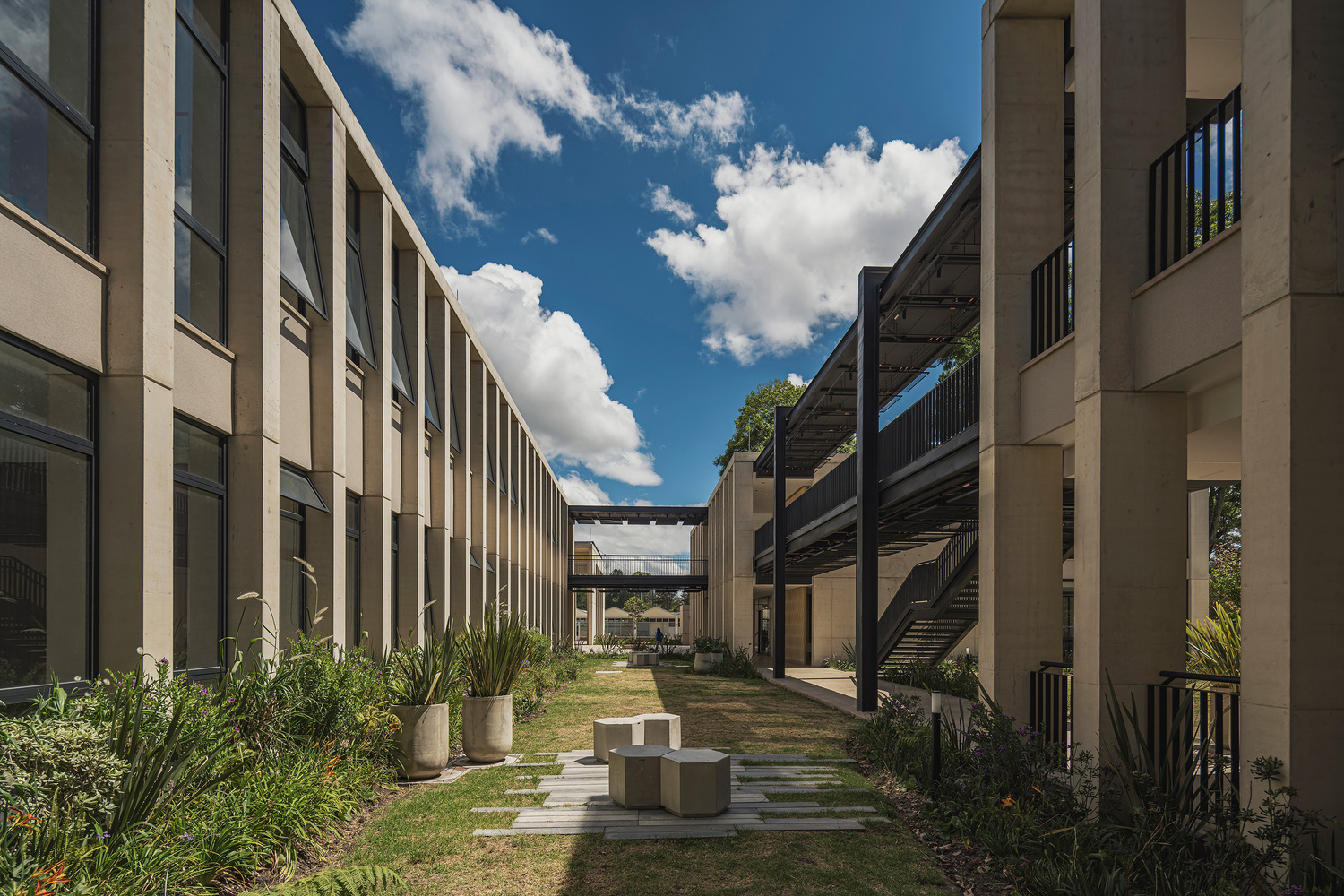
The renovation of Colegio Colombo Hebreo in Bogotá redefines the spatial and cultural fabric of one of Colombia’s most significant Jewish educational institutions. Designed by Aarón Cohen, Angélica Mejía, Camilo Sellamén, Camilo Fuentes, and Joel Amón, the 4,294-square-meter project introduces a unified master plan that consolidates academic, sports, and service areas around a central promenade. The intervention replaces decades of fragmented growth with a cohesive campus that balances functionality and symbolism. A restrained palette of concrete, steel, and glass shapes light-filled spaces that reflect values of perseverance, contemplation, and collective identity. Anchored by a ceremonial Atrium and central plaza, the school’s architecture expresses continuity between learning, culture, and community life, positioning the campus as both a contemporary educational environment and a reaffirmation of Jewish heritage in Bogotá.
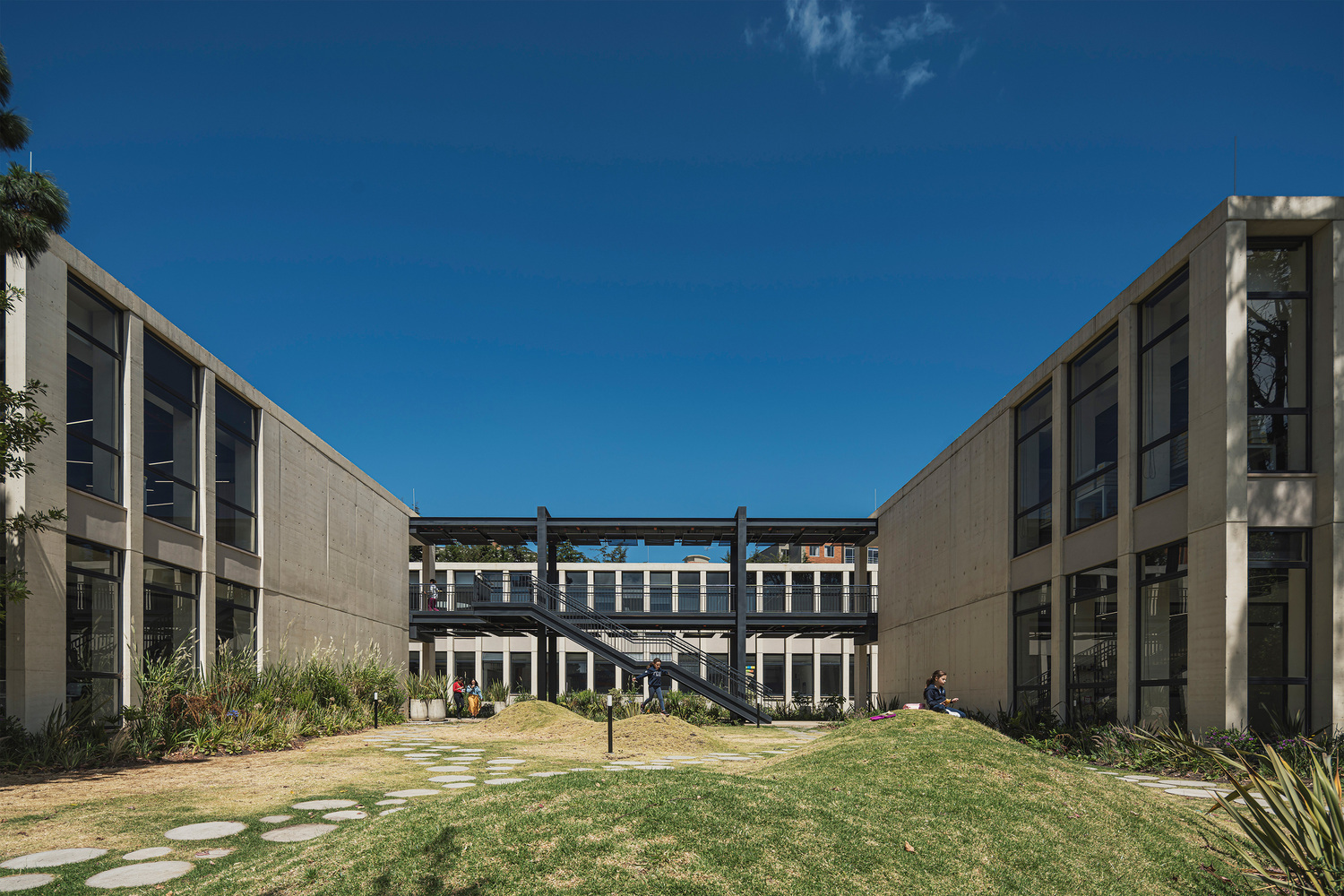
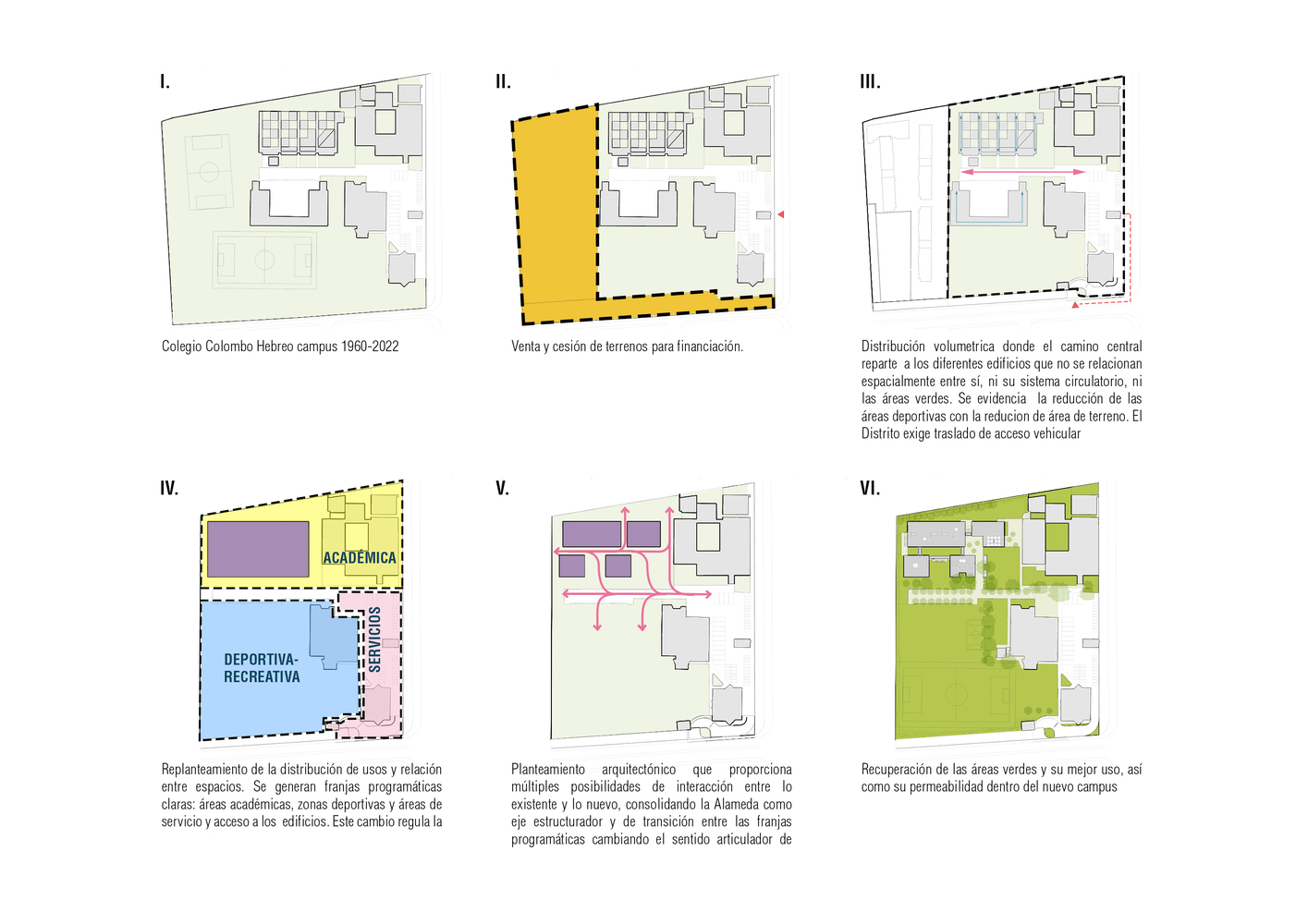
The renovation of Colegio Colombo Hebreo in Bogotá represents the most extensive architectural intervention undertaken by the city’s Jewish community in four decades. The project emerged as a historic opportunity to reimagine the campus following 70 years of incremental, organic growth that had occurred without a defined master plan. To fund the new development, approximately one-third of the original land was sold, prompting a complete reorganization of building placements.
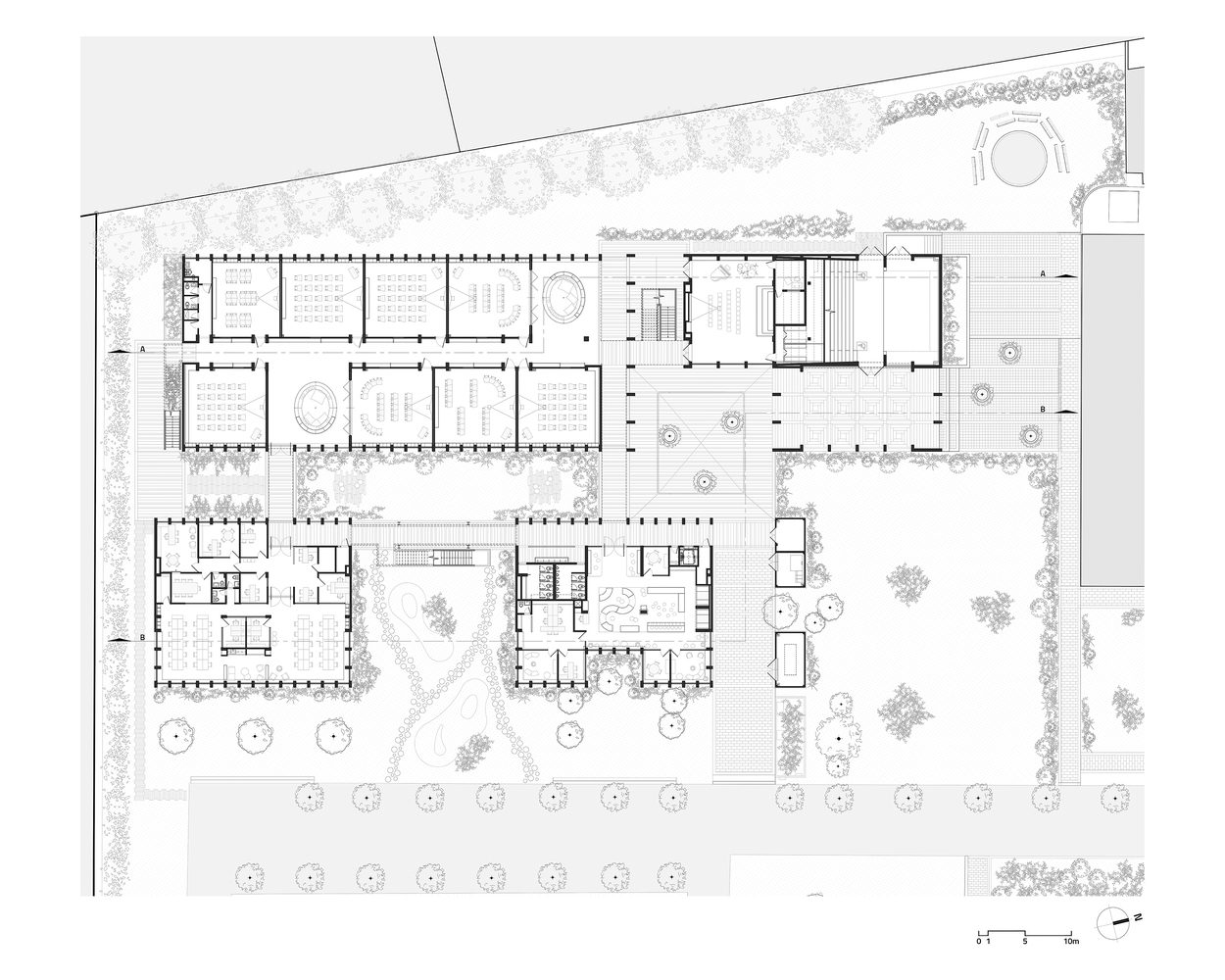
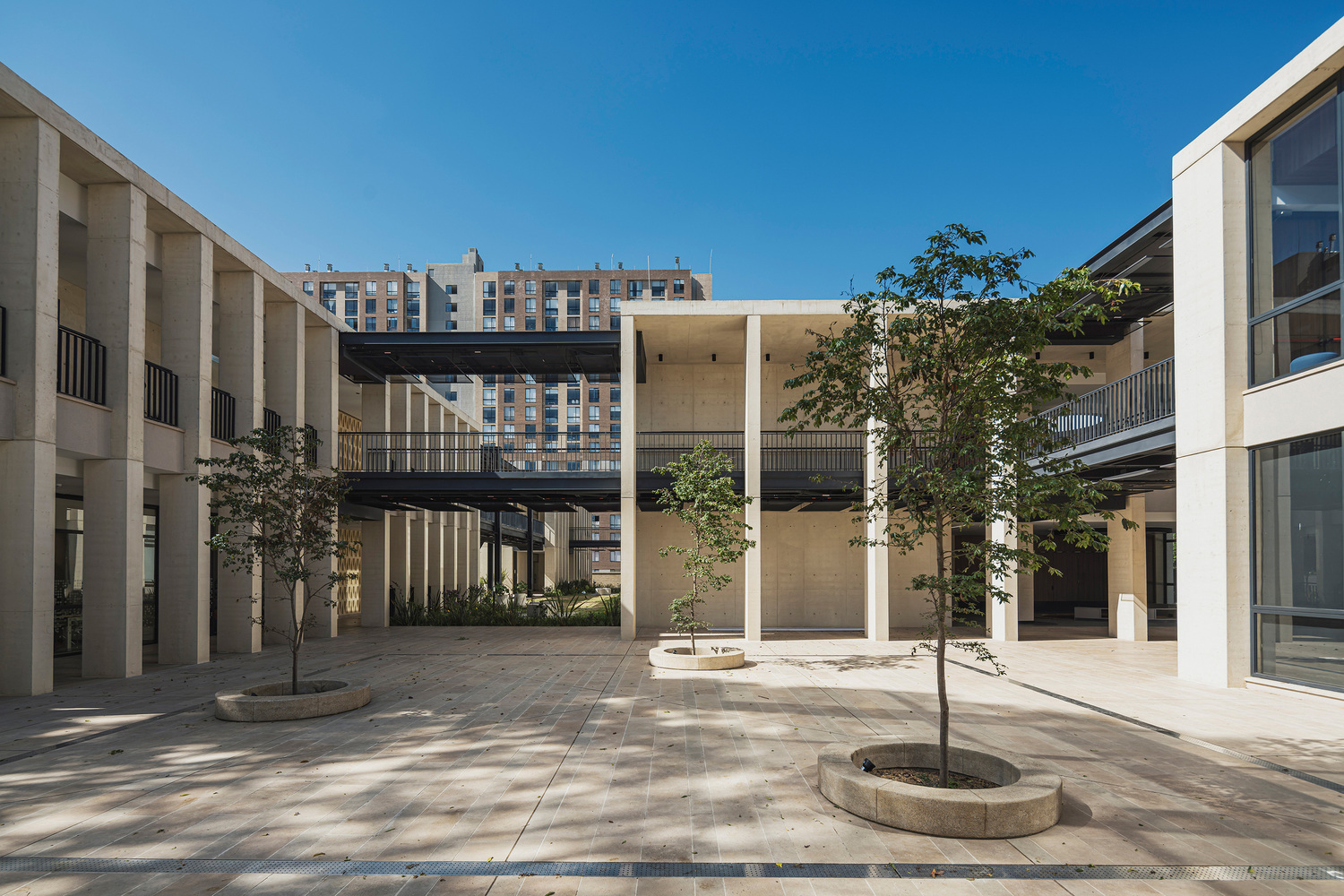
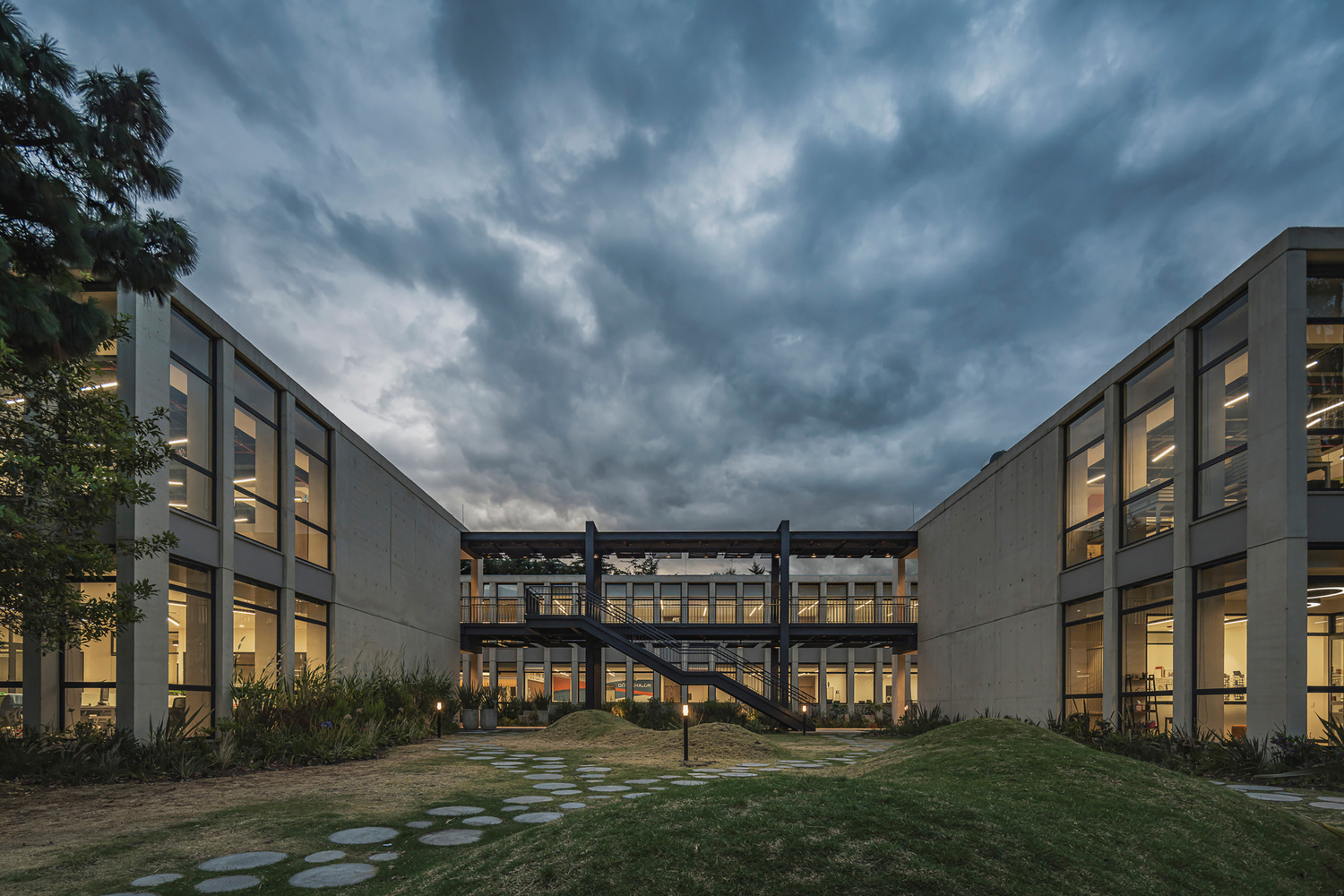
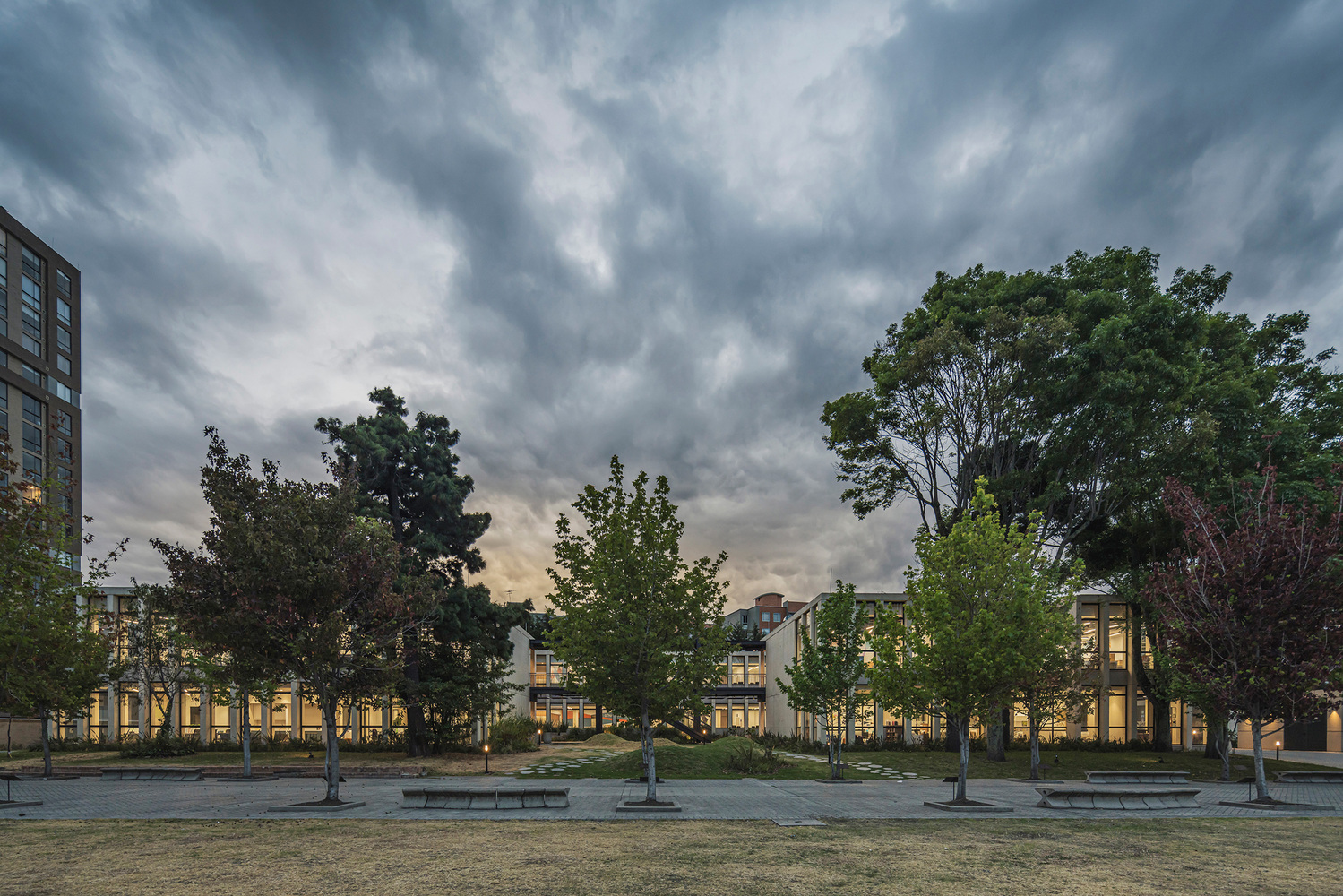
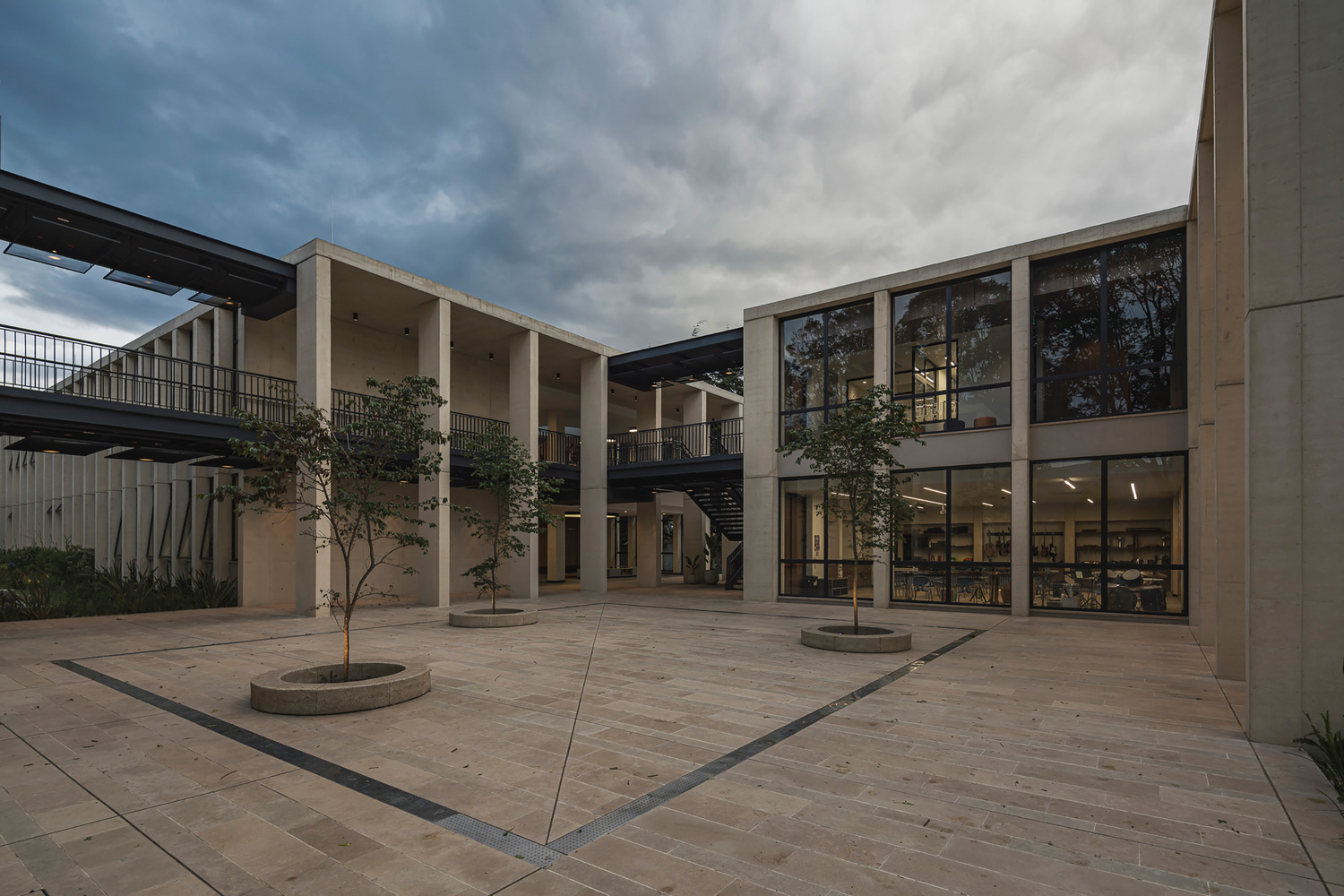
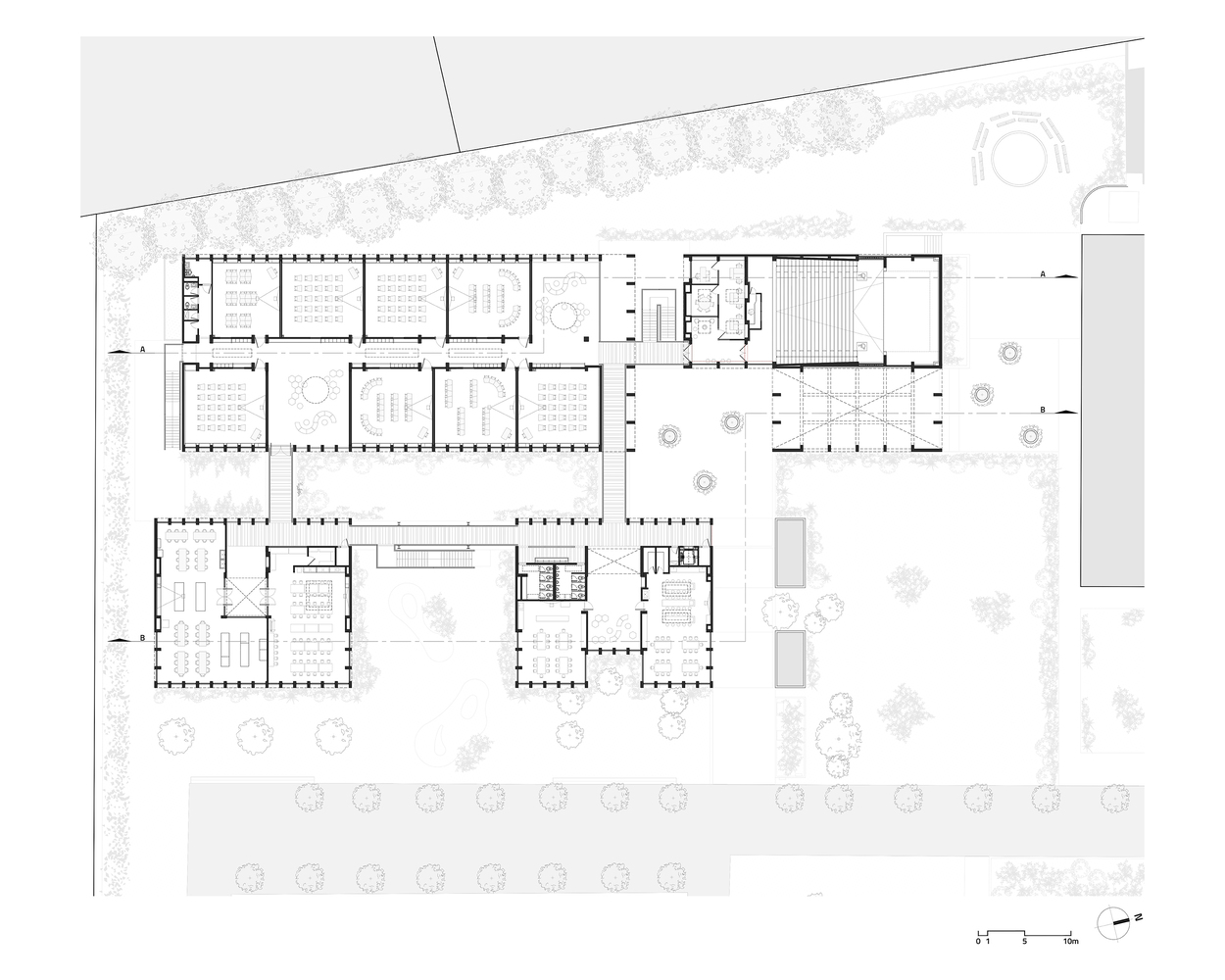
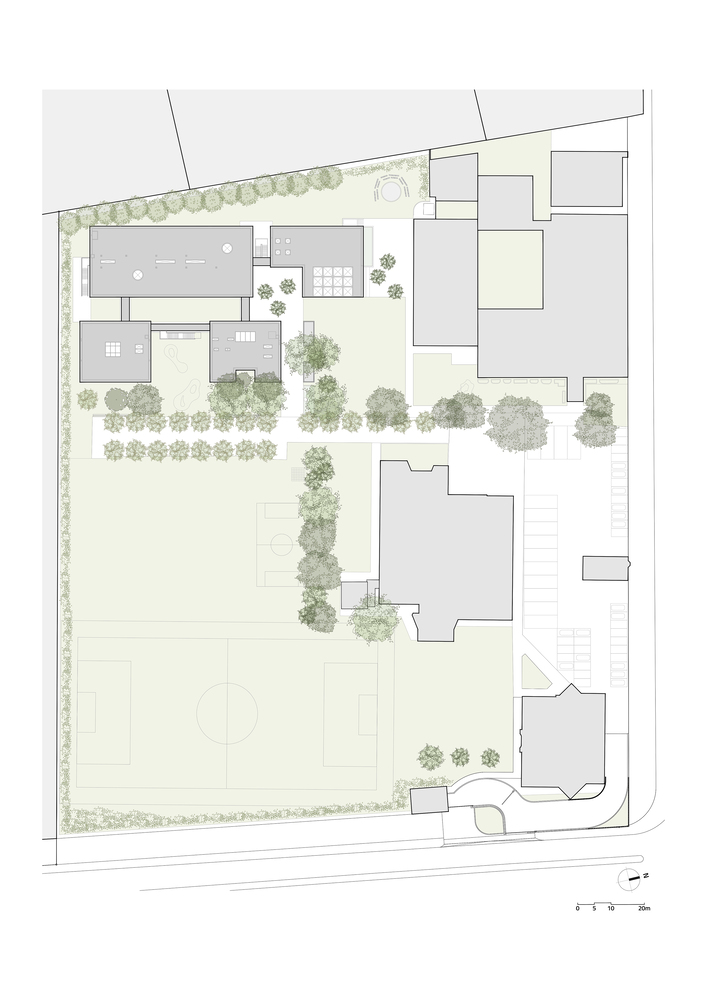
The previous layout, centered on a single pathway lined with scattered buildings, had created disjointed educational and social spaces. The new master plan restructures the site into three programmatic zones: academic, sports, and service areas. These zones now revolve around a central green corridor transformed into a grand promenade that unites the entire campus.
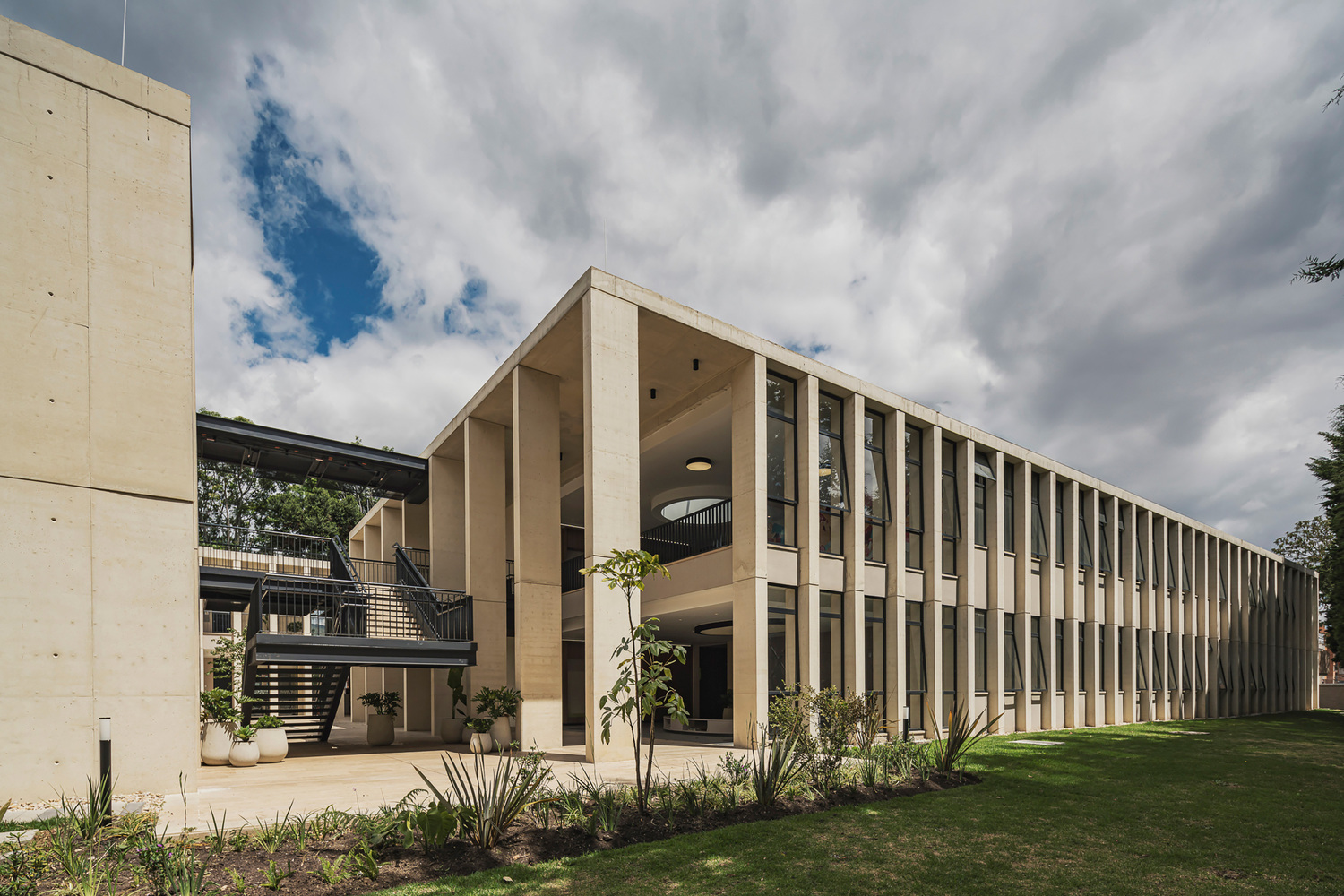
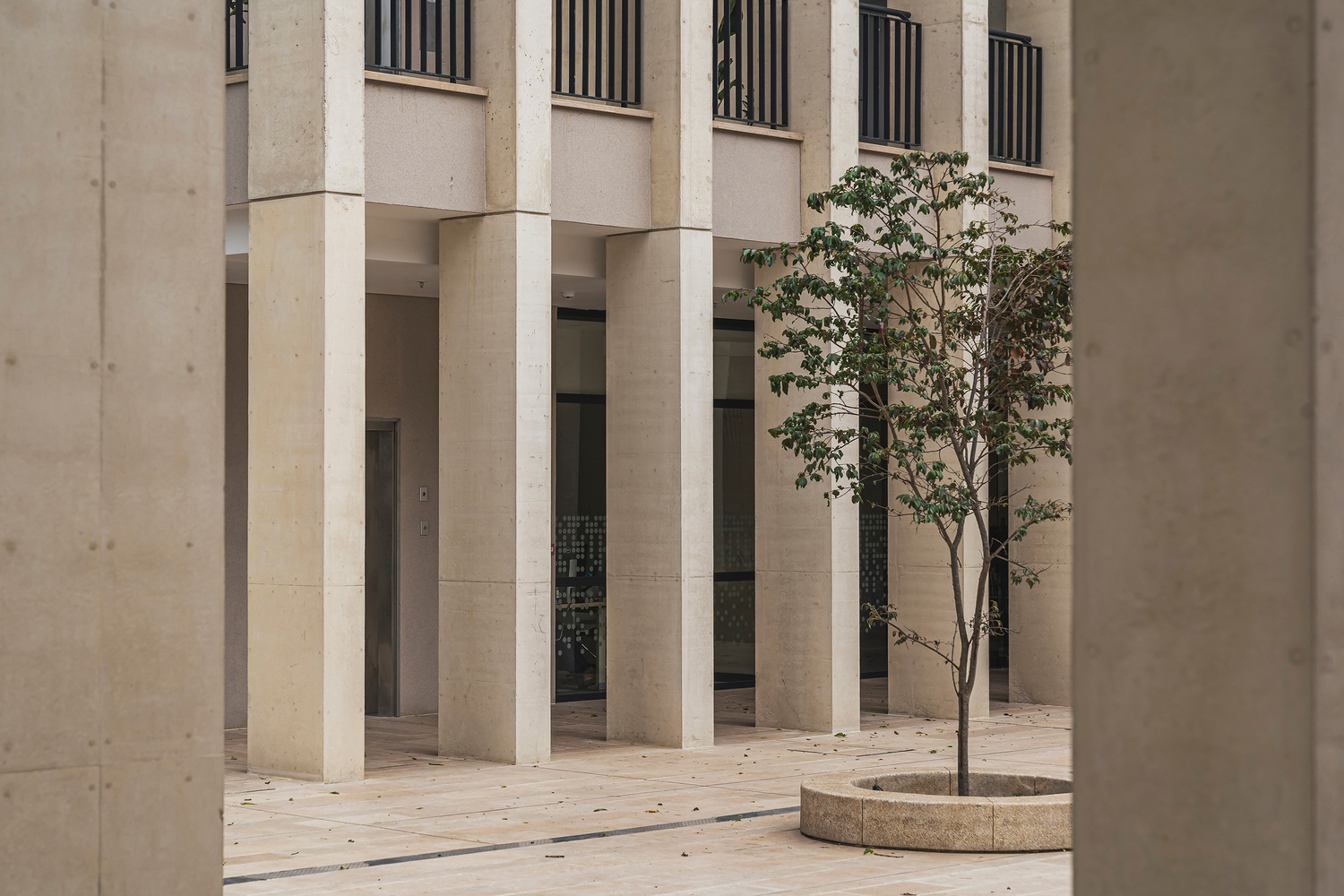
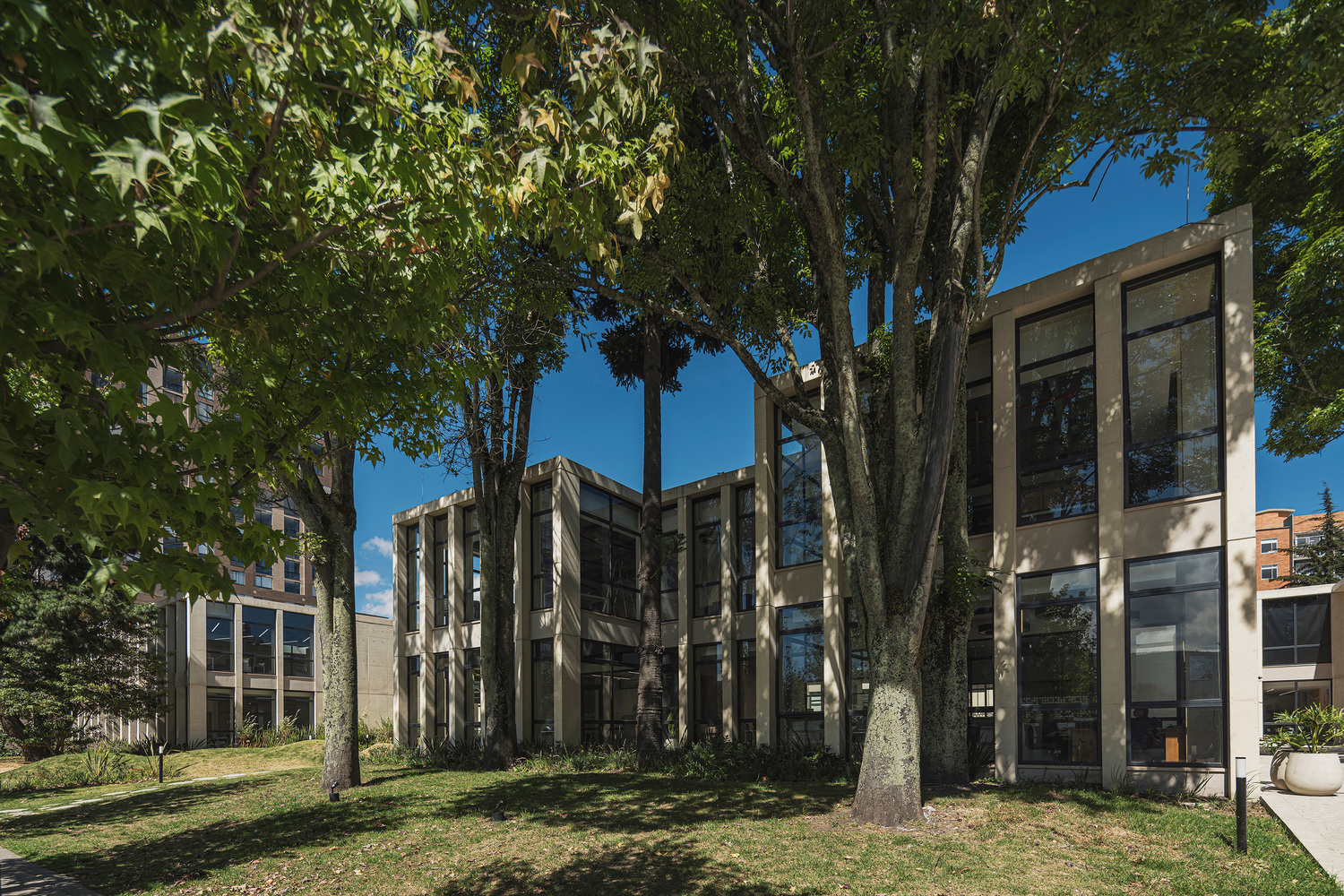
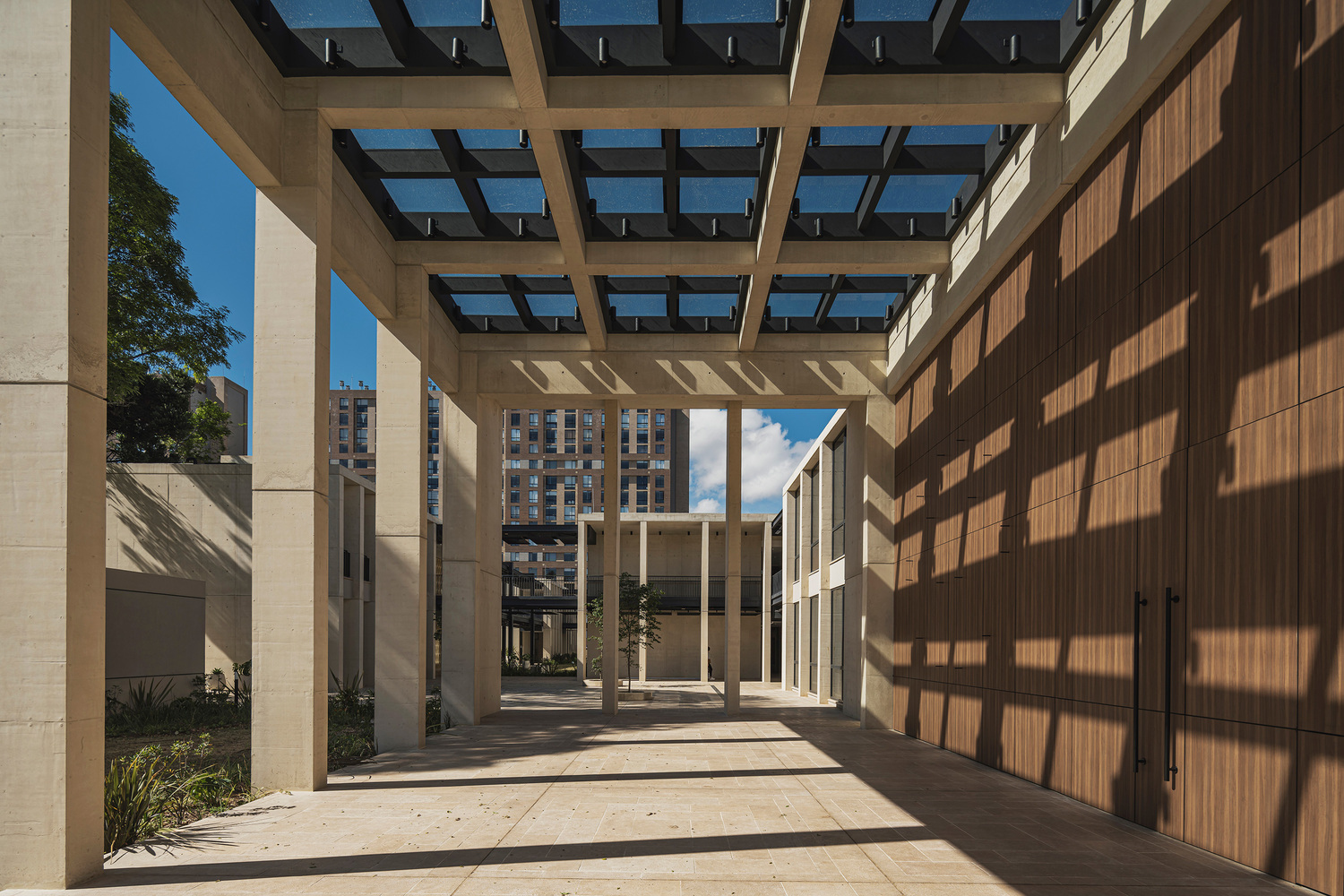
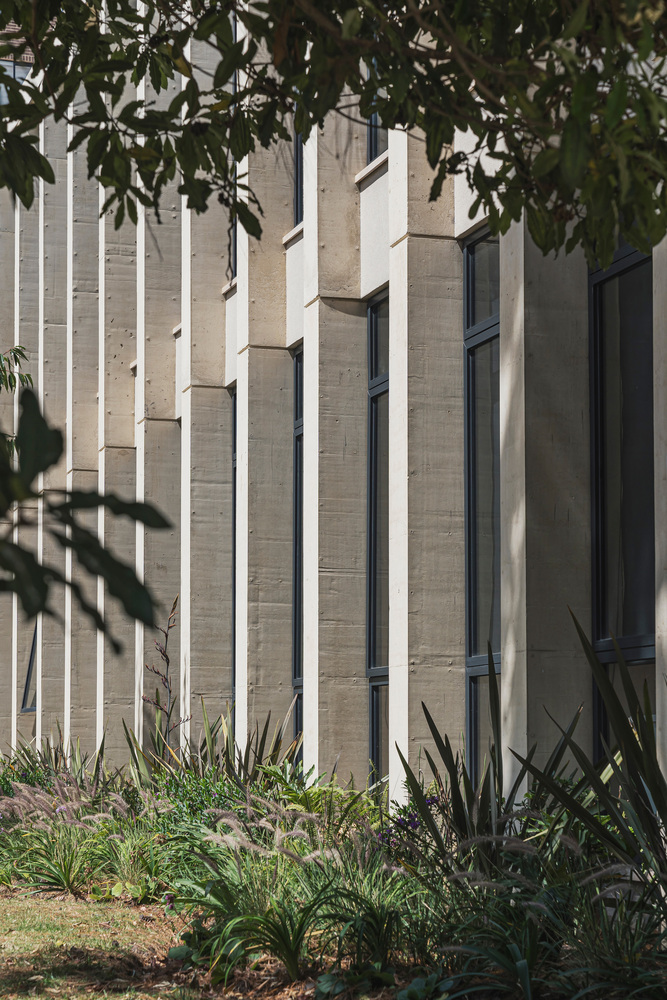
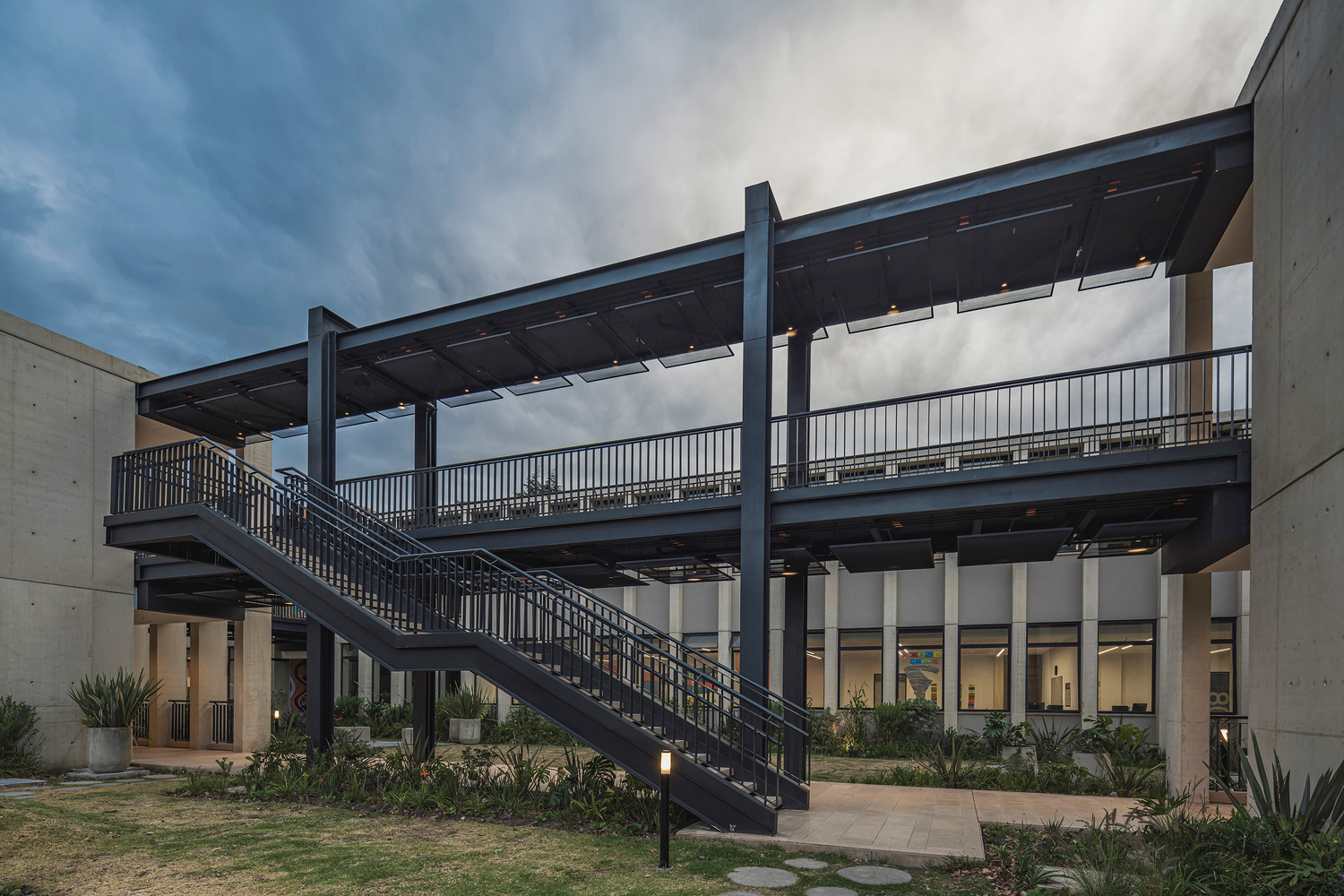
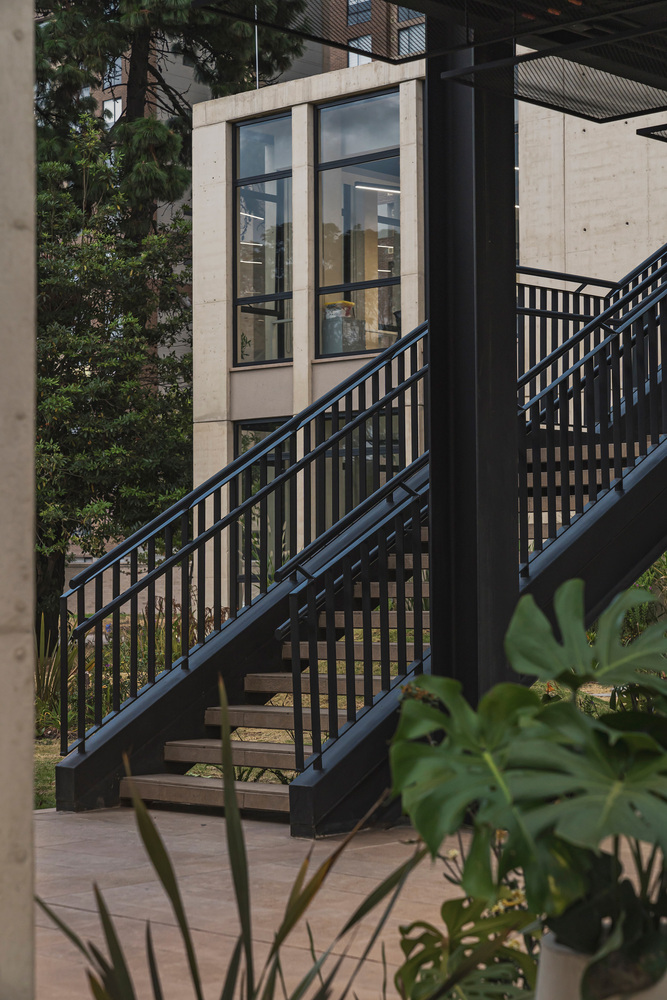
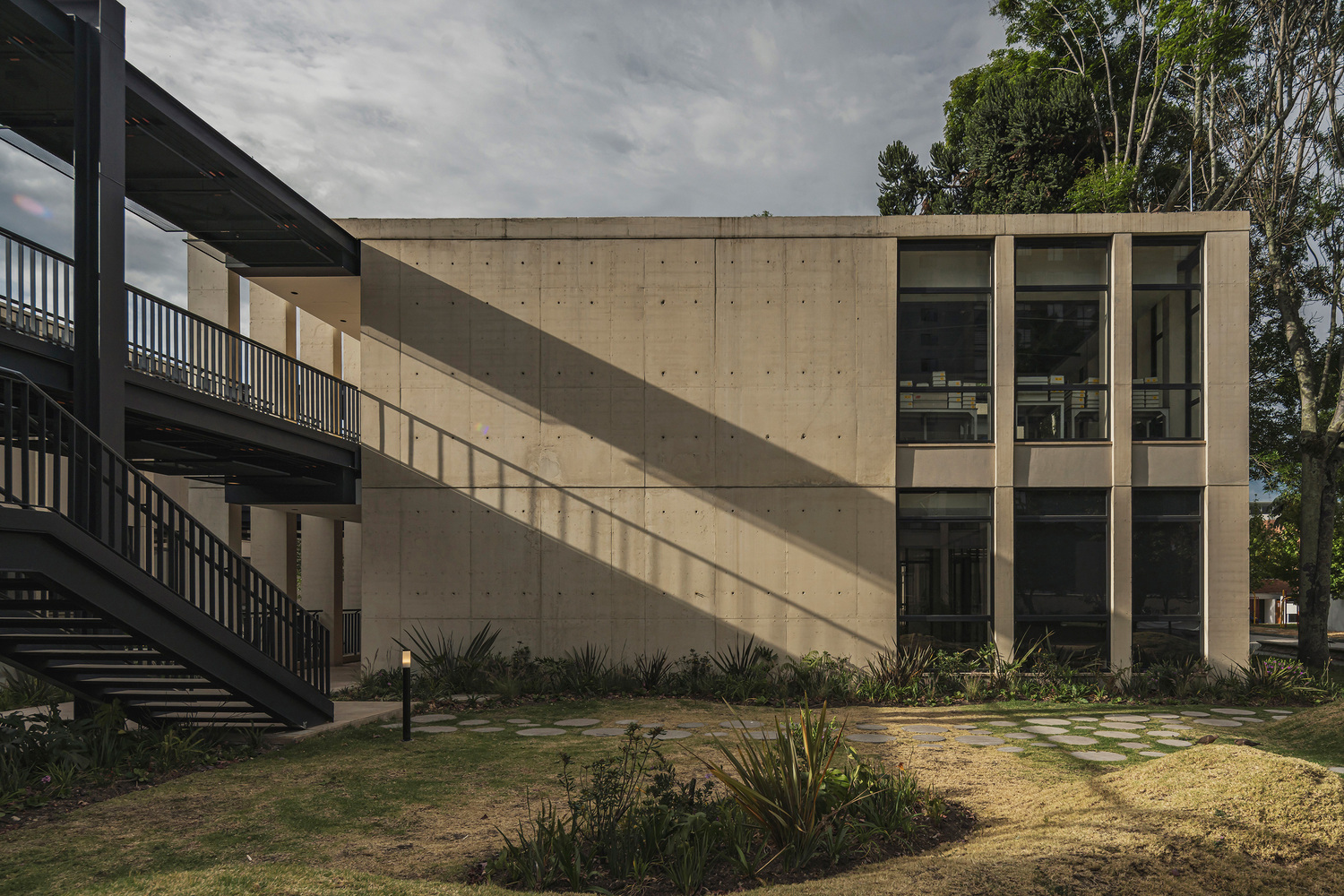
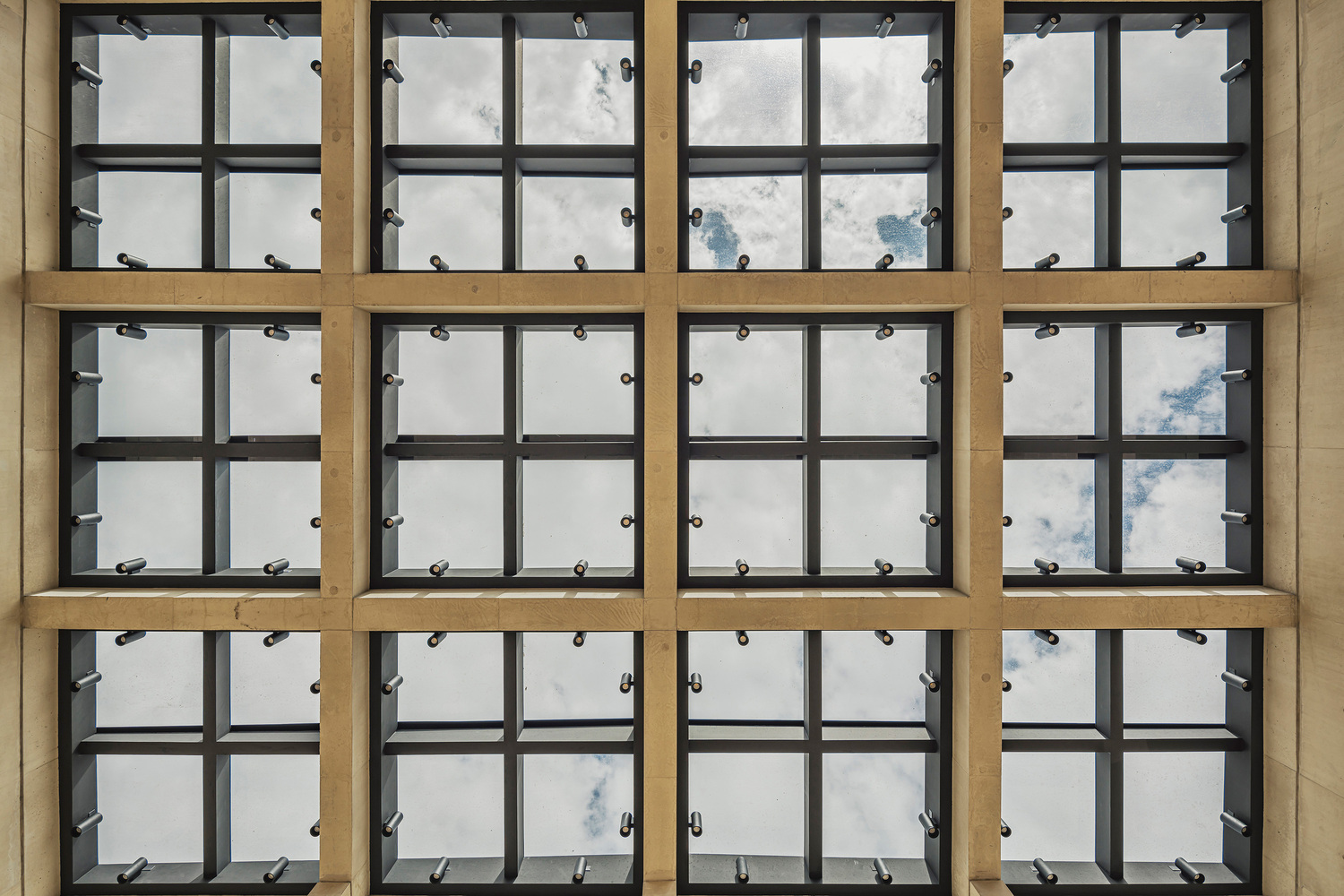
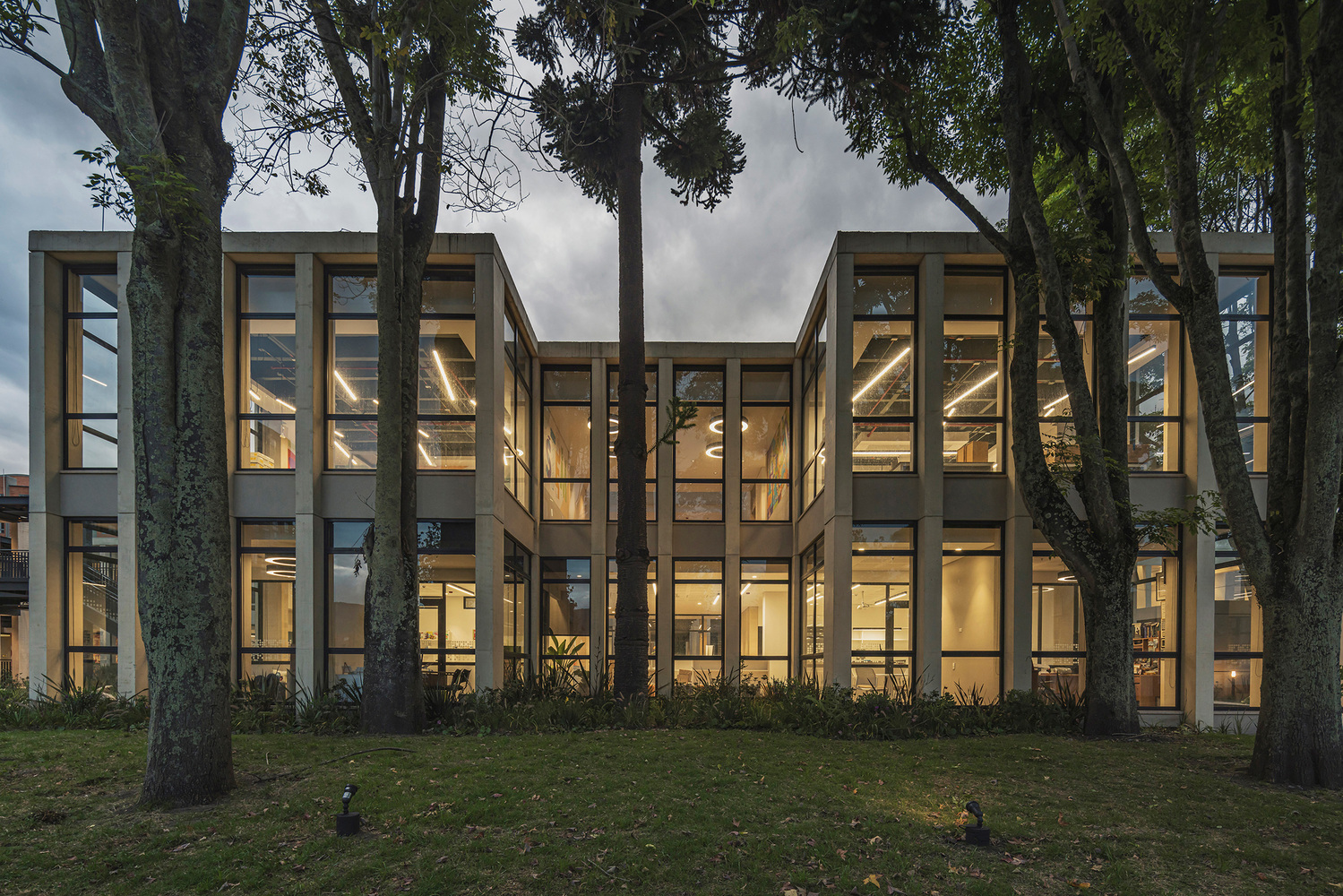
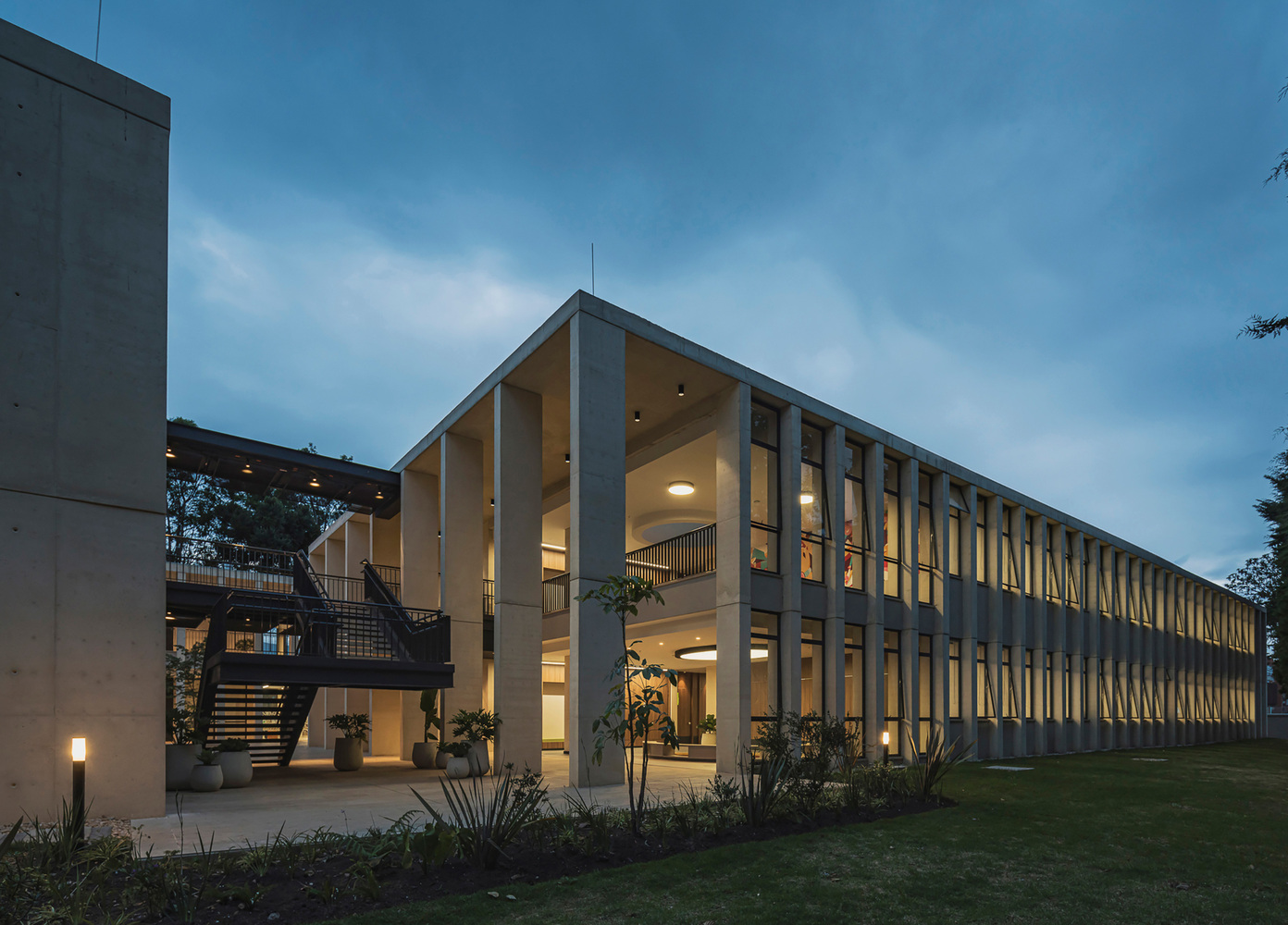
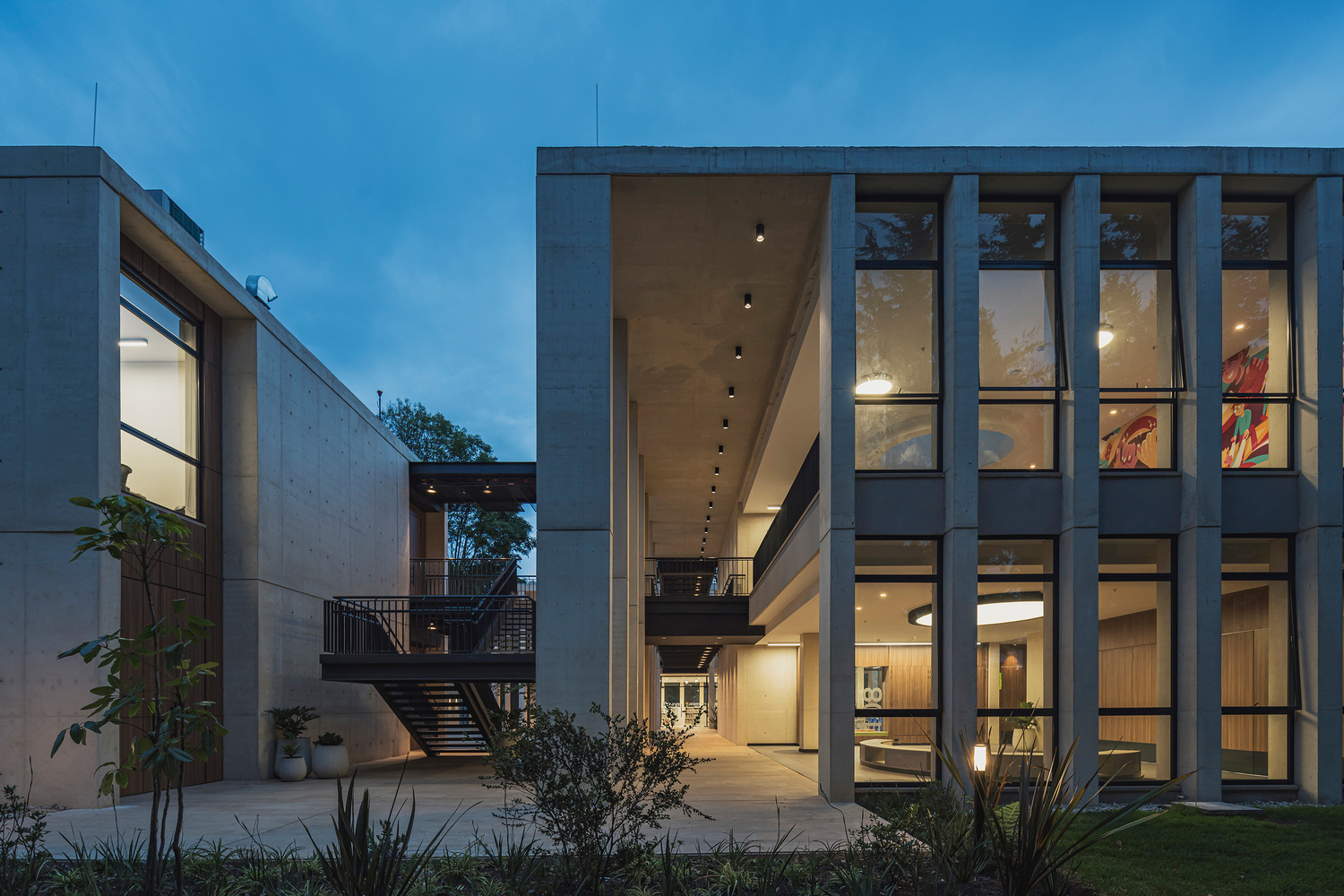
The architectural approach conveys essential Jewish values. The design draws on the idea of the Jewish people as the “People of the Book,” emphasizing sobriety, timelessness, and symbolic rhythm. A reduced palette of materials—concrete, steel, and glass—is carefully composed in relation to the surrounding landscape to support spaces for reflection and learning that extend beyond formal classrooms.
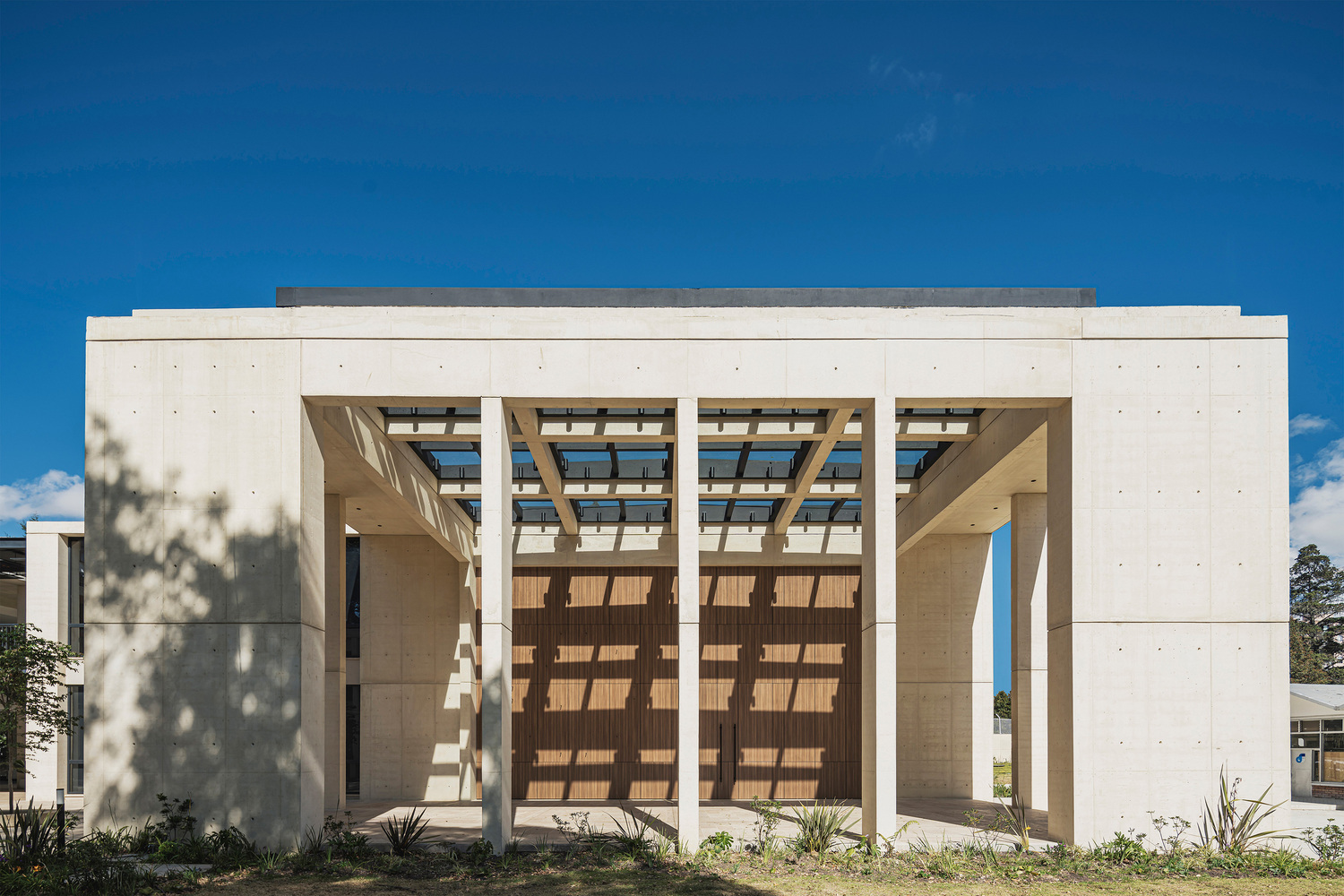
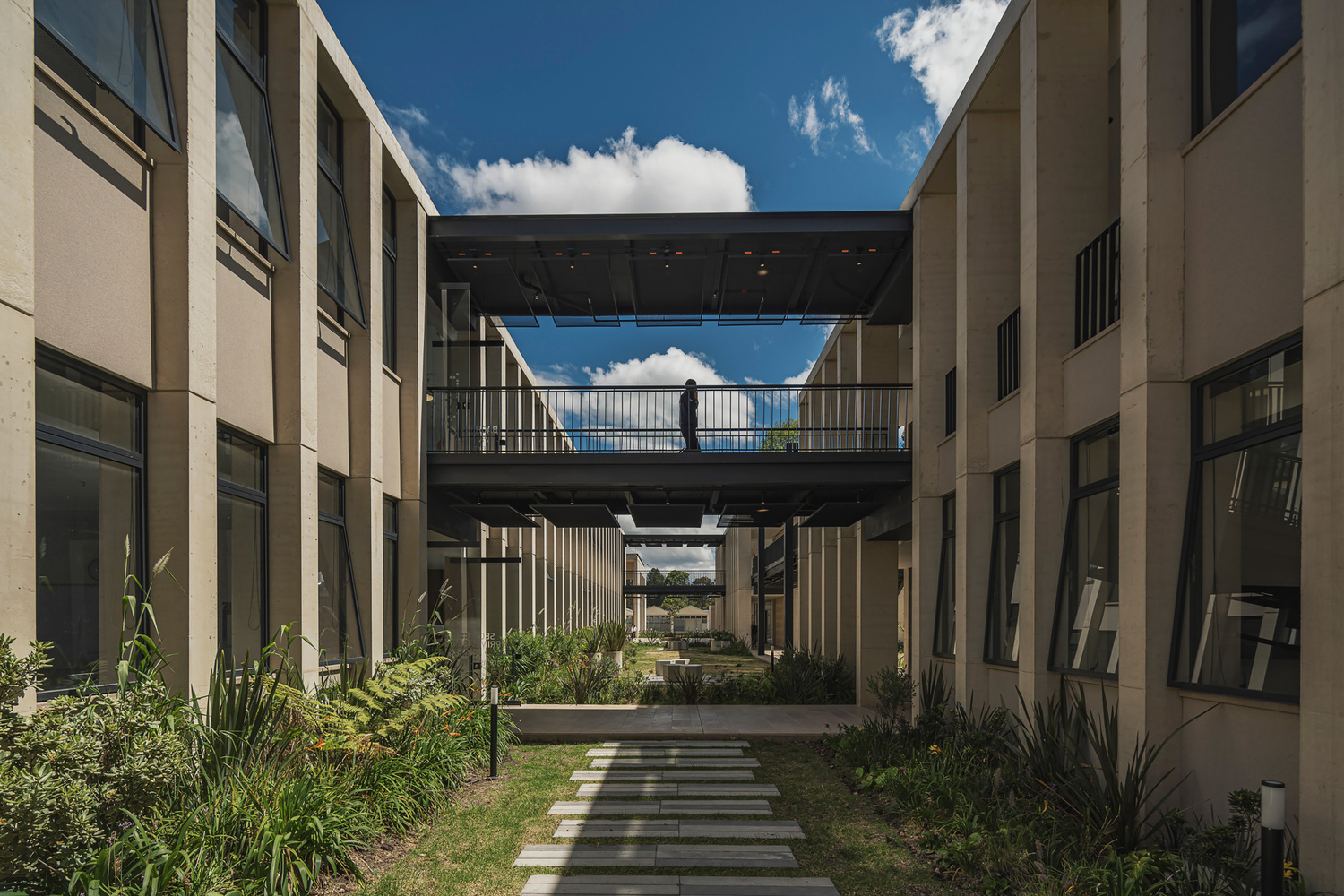
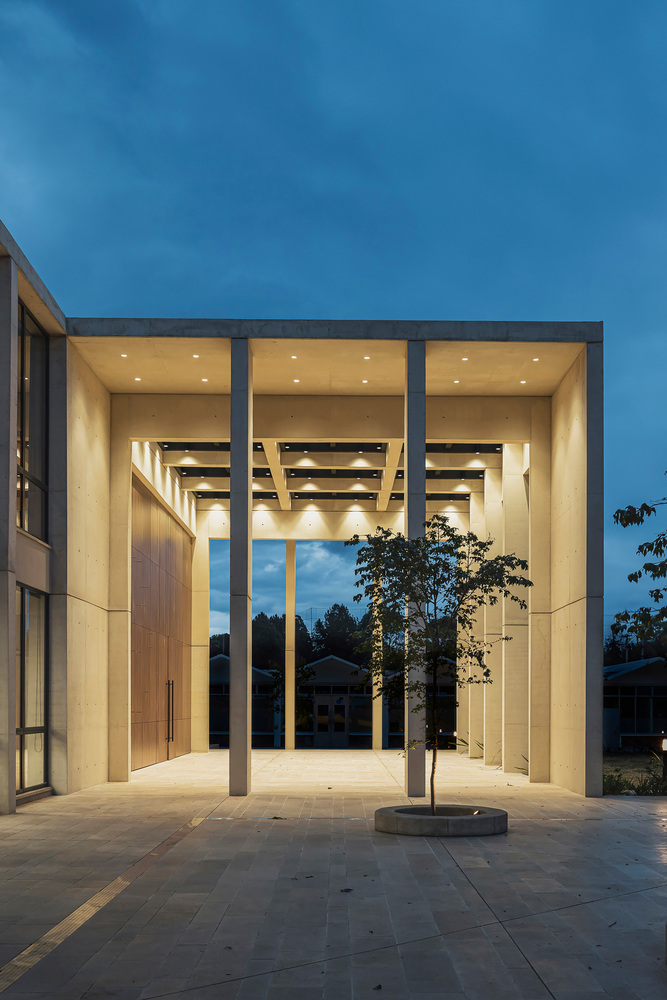
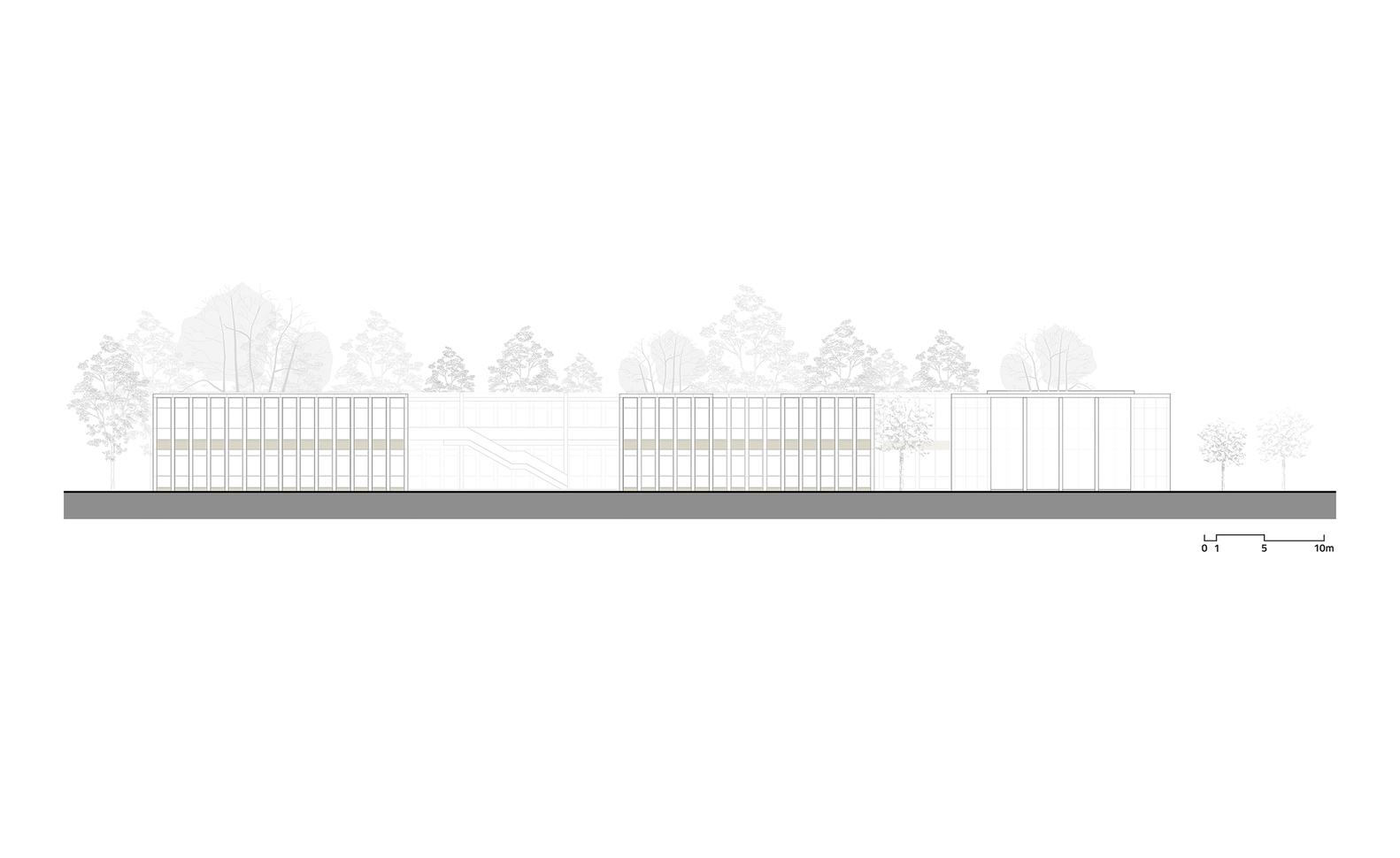
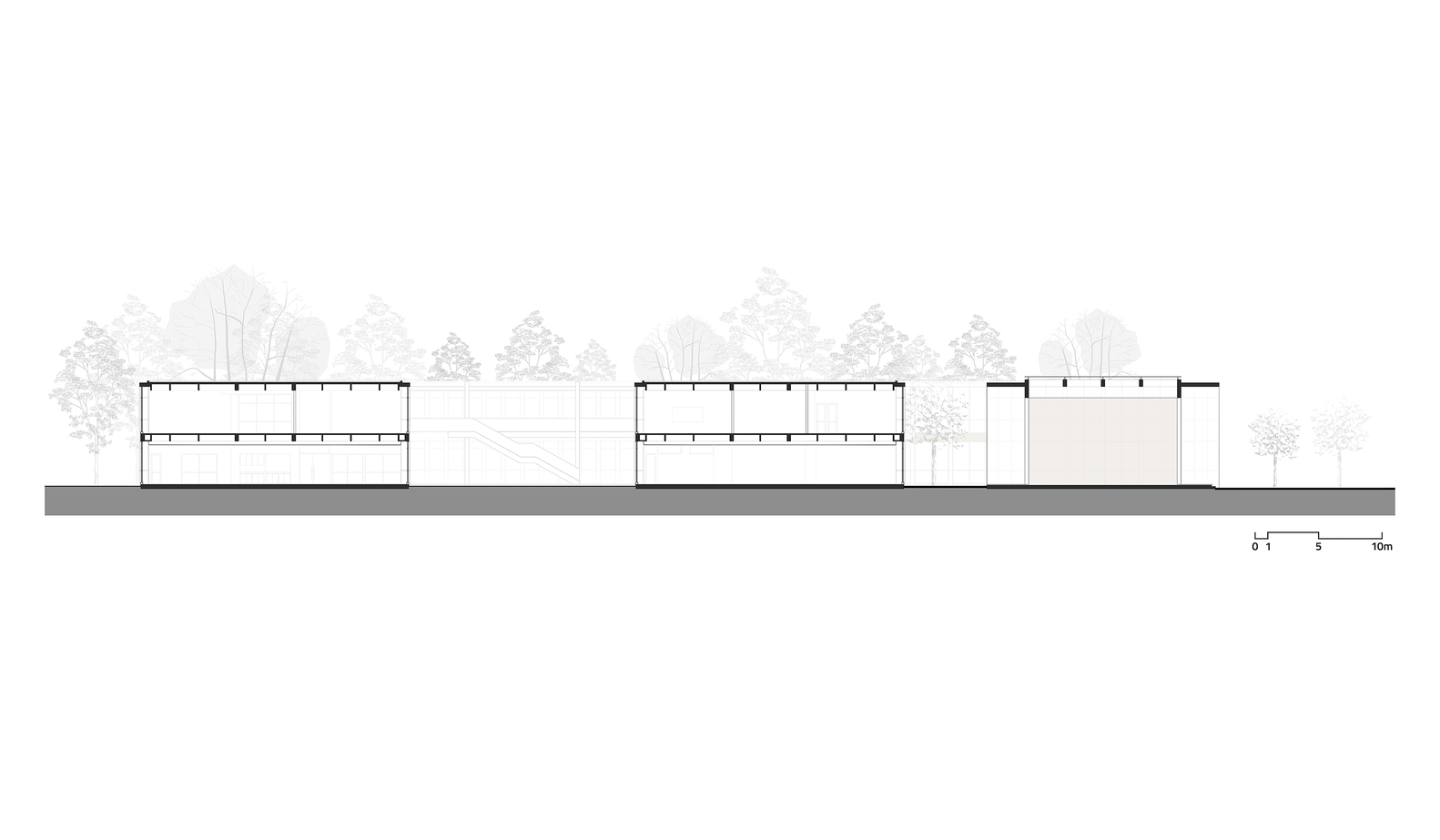
Four main buildings organize the program, each connected through light, open structures. These converge at a central plaza and the Atrium, conceived as the most symbolic space of the project. According to the architects, it is “a place where nothing and everything happens,” encouraging reflection and serving as a metaphoric passage between earthly life and intellectual growth. Its double height distinguishes it as a space of ceremony and reverence, underscoring the role of education in the community’s legacy.
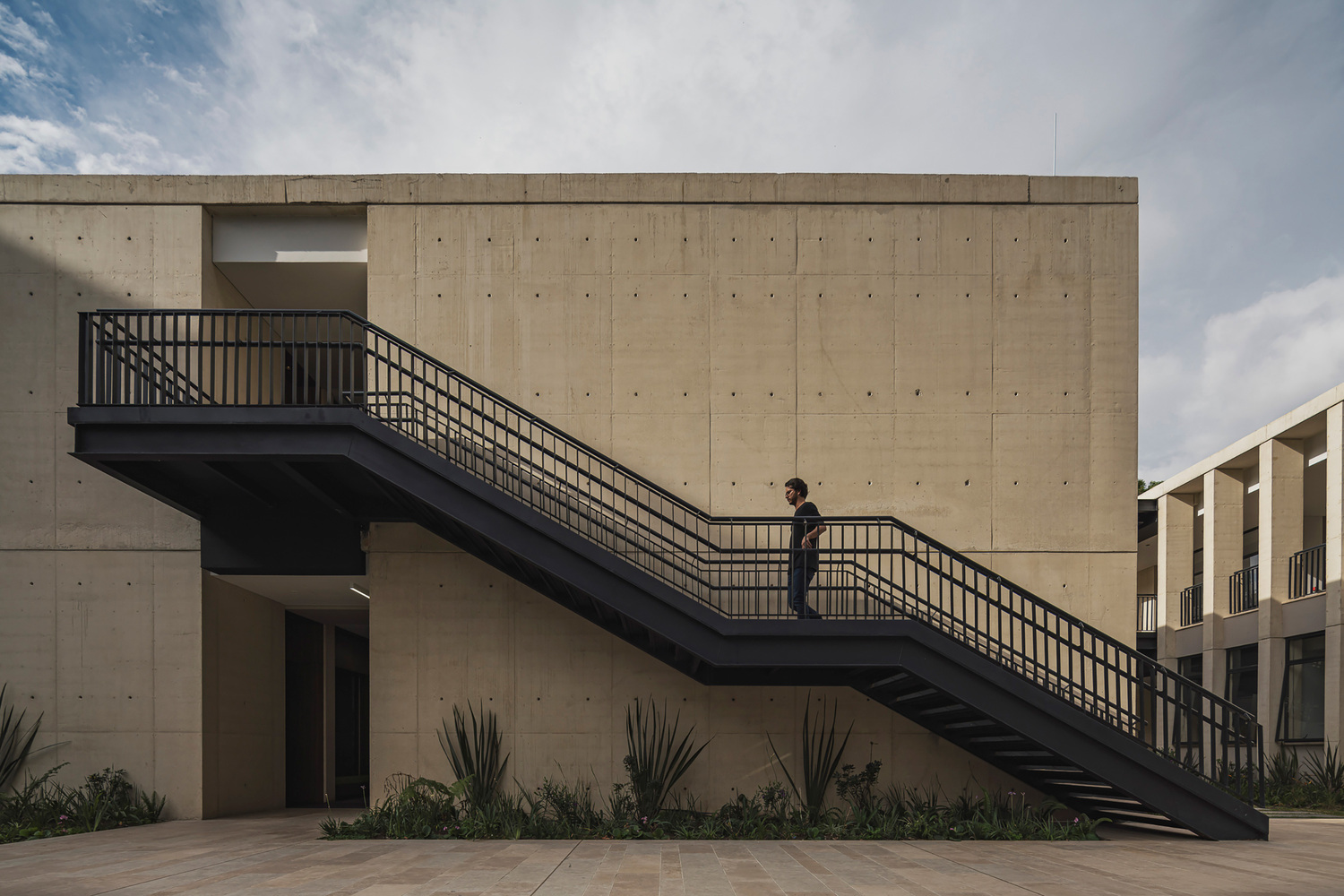
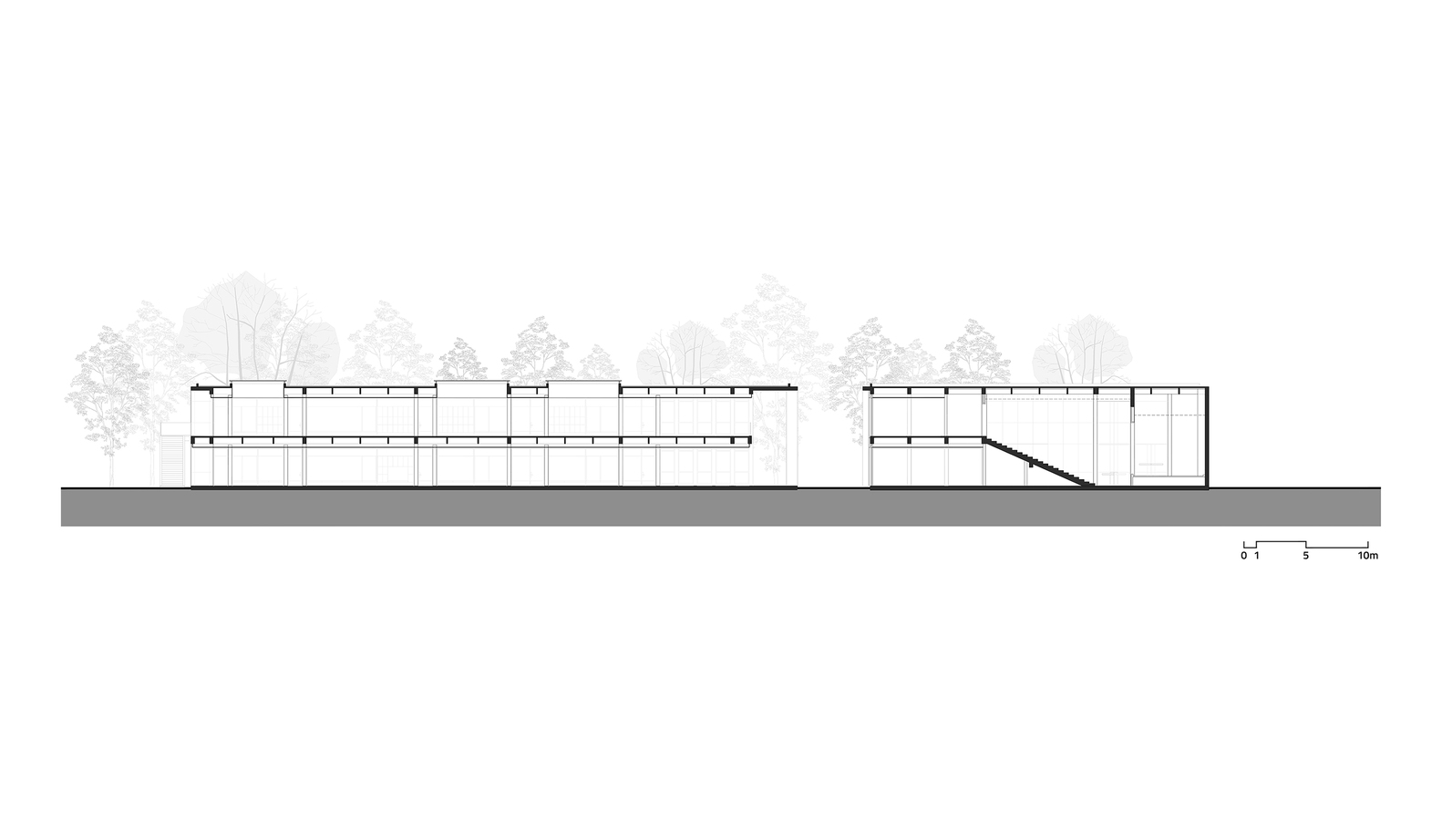
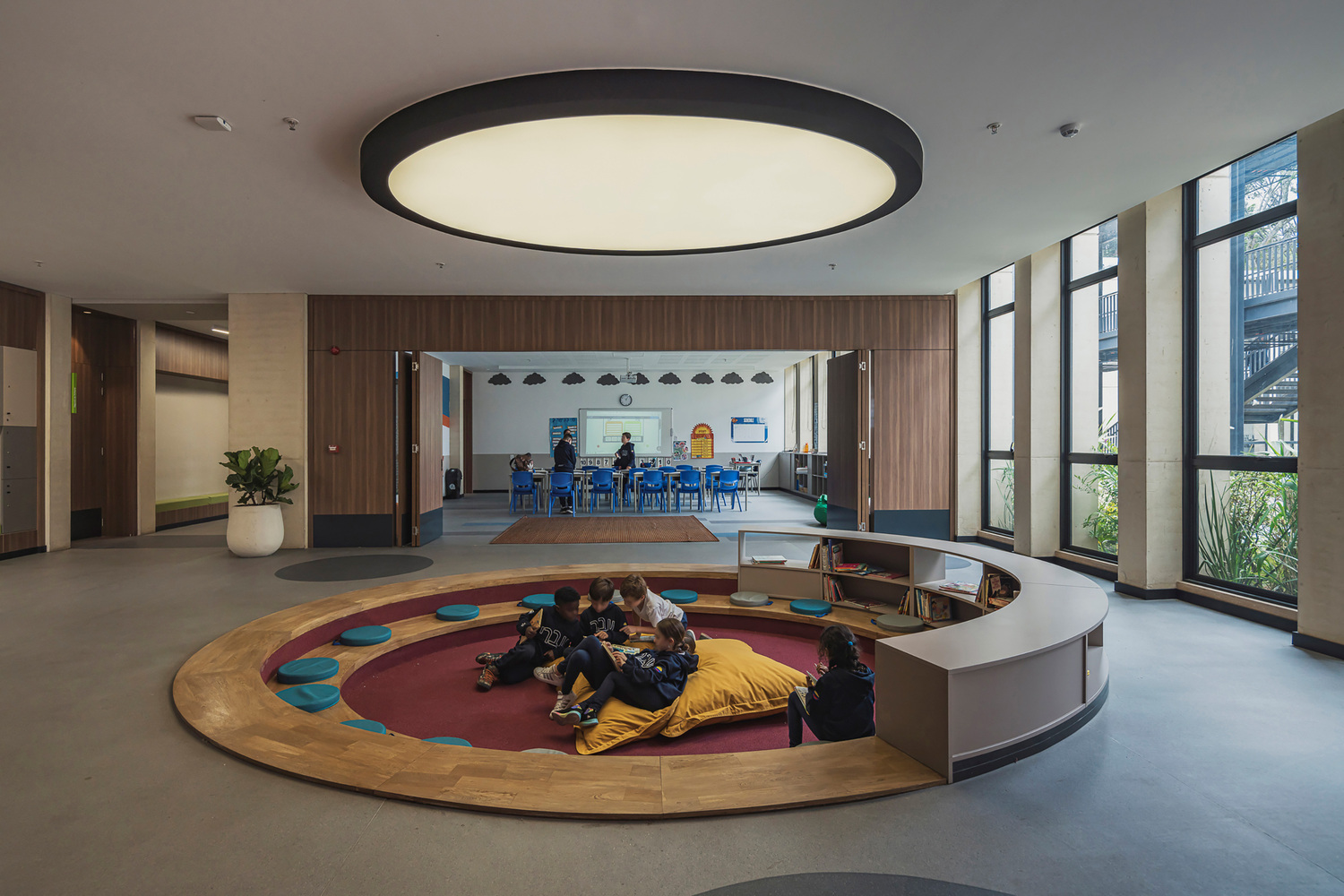
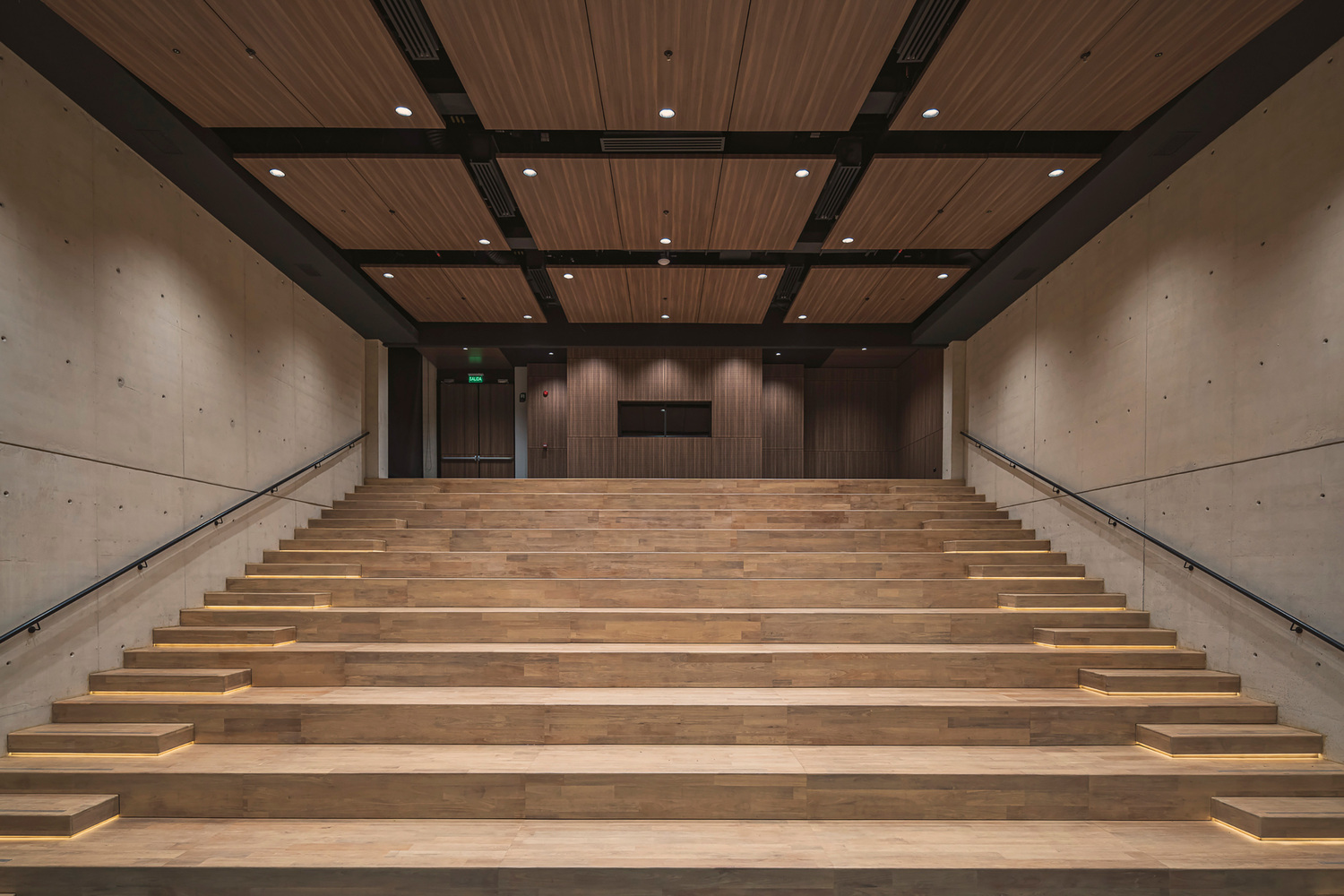
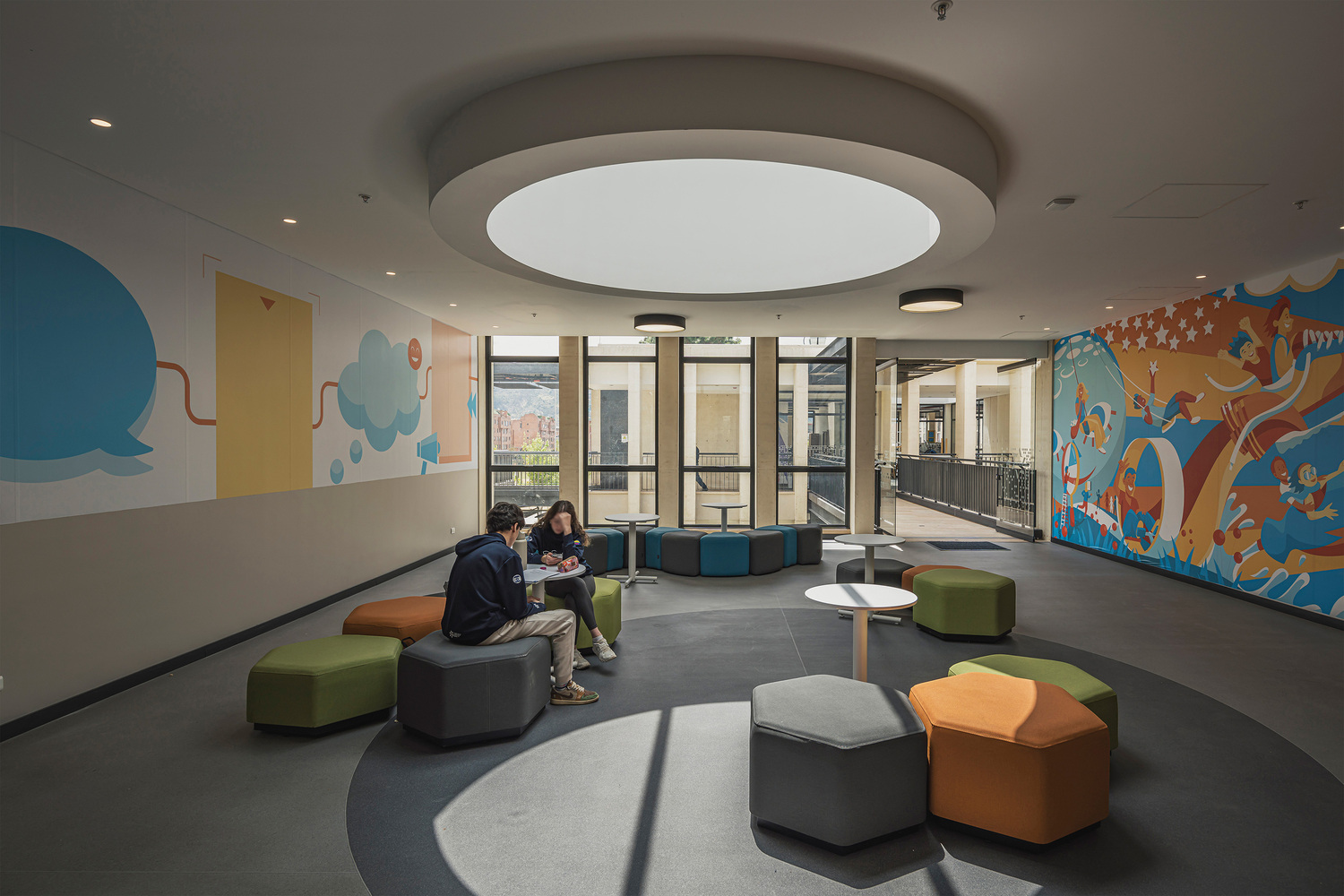
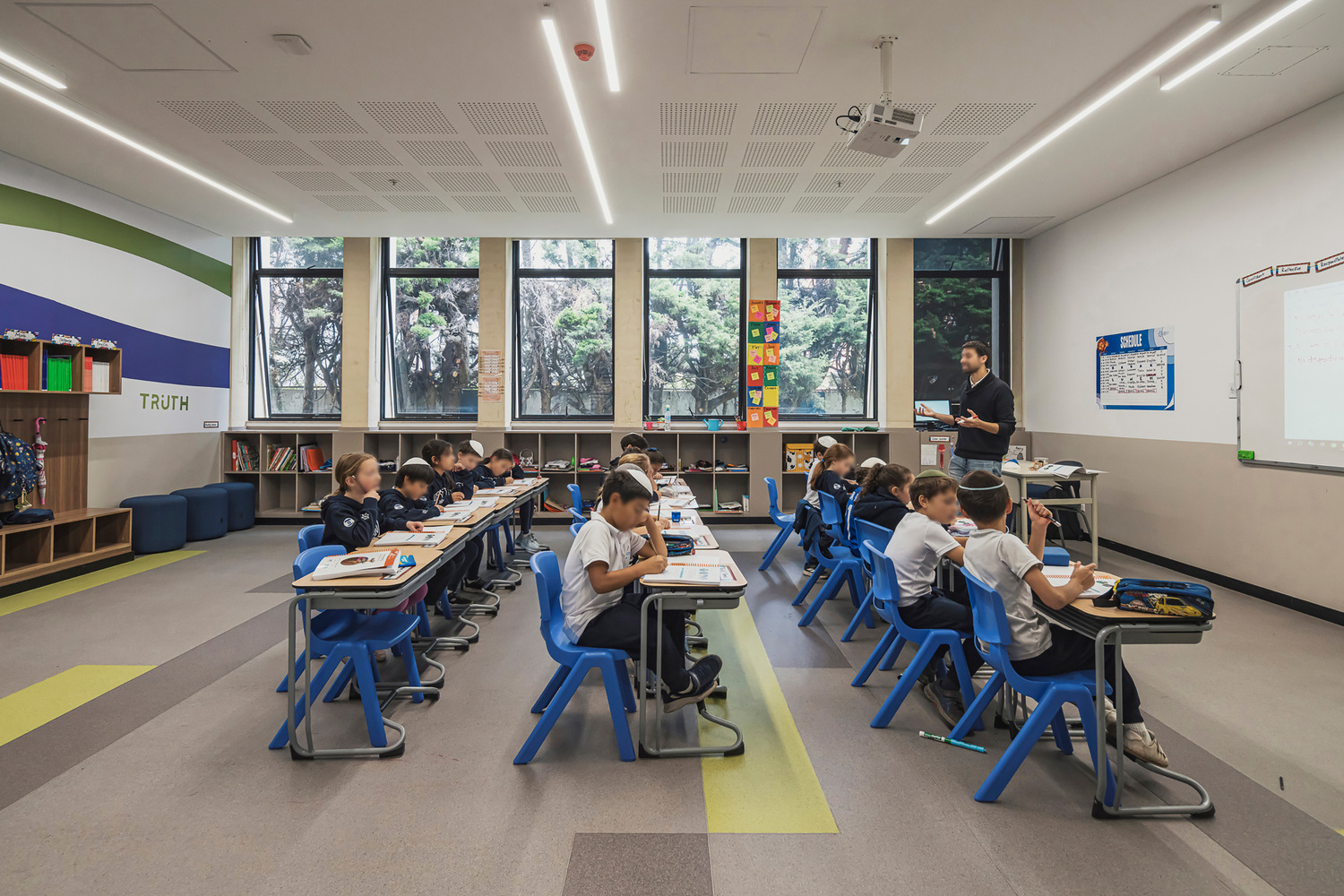
The interconnected buildings include classrooms, multipurpose spaces, administration areas, a library, science labs, art and music rooms, a makerspace for STEM, and an auditorium.
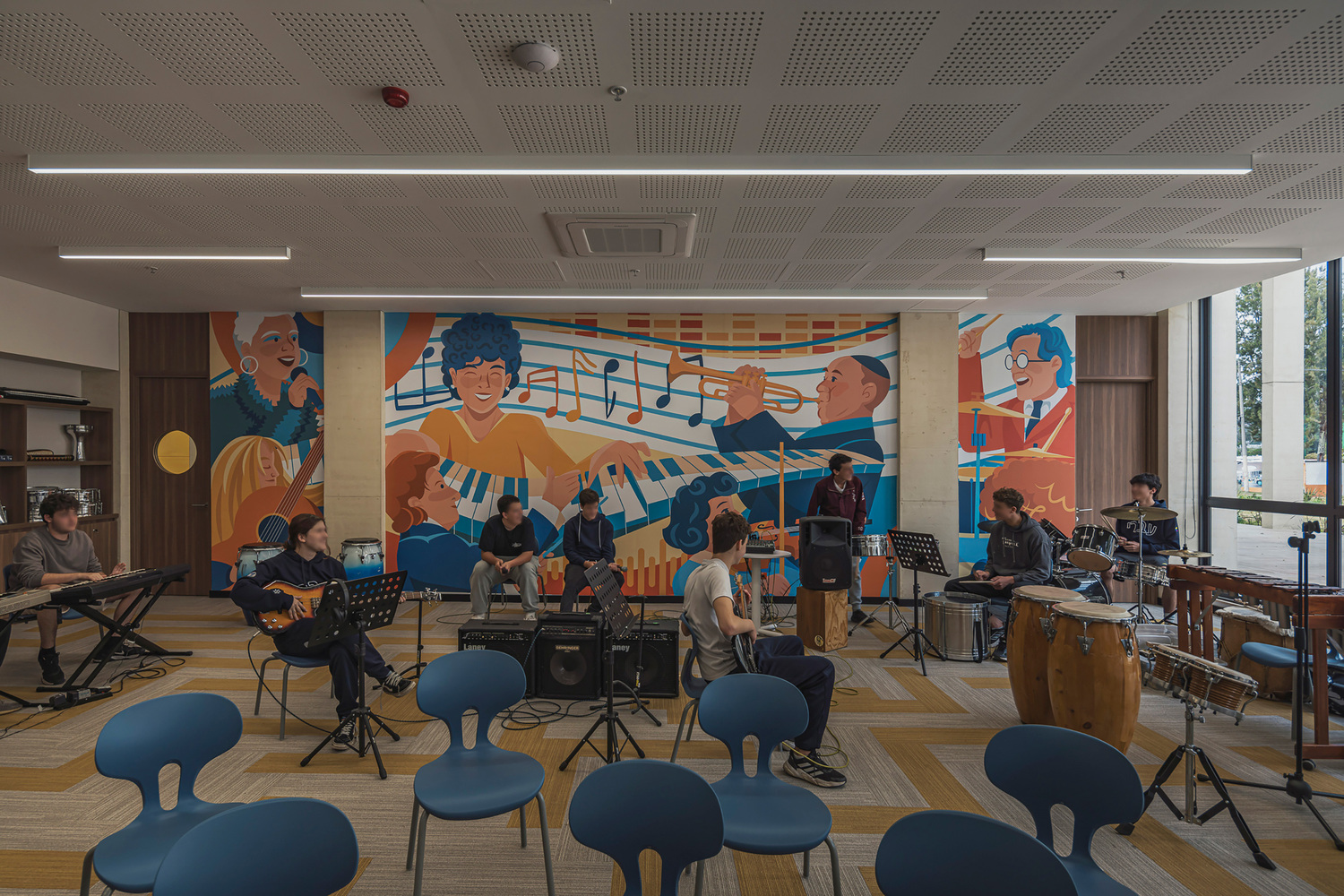
Through this physical transformation, the new campus fosters educational advancement, reinforces communal bonds, and projects the Jewish cultural identity into the future.

Project Gallery
36 photographs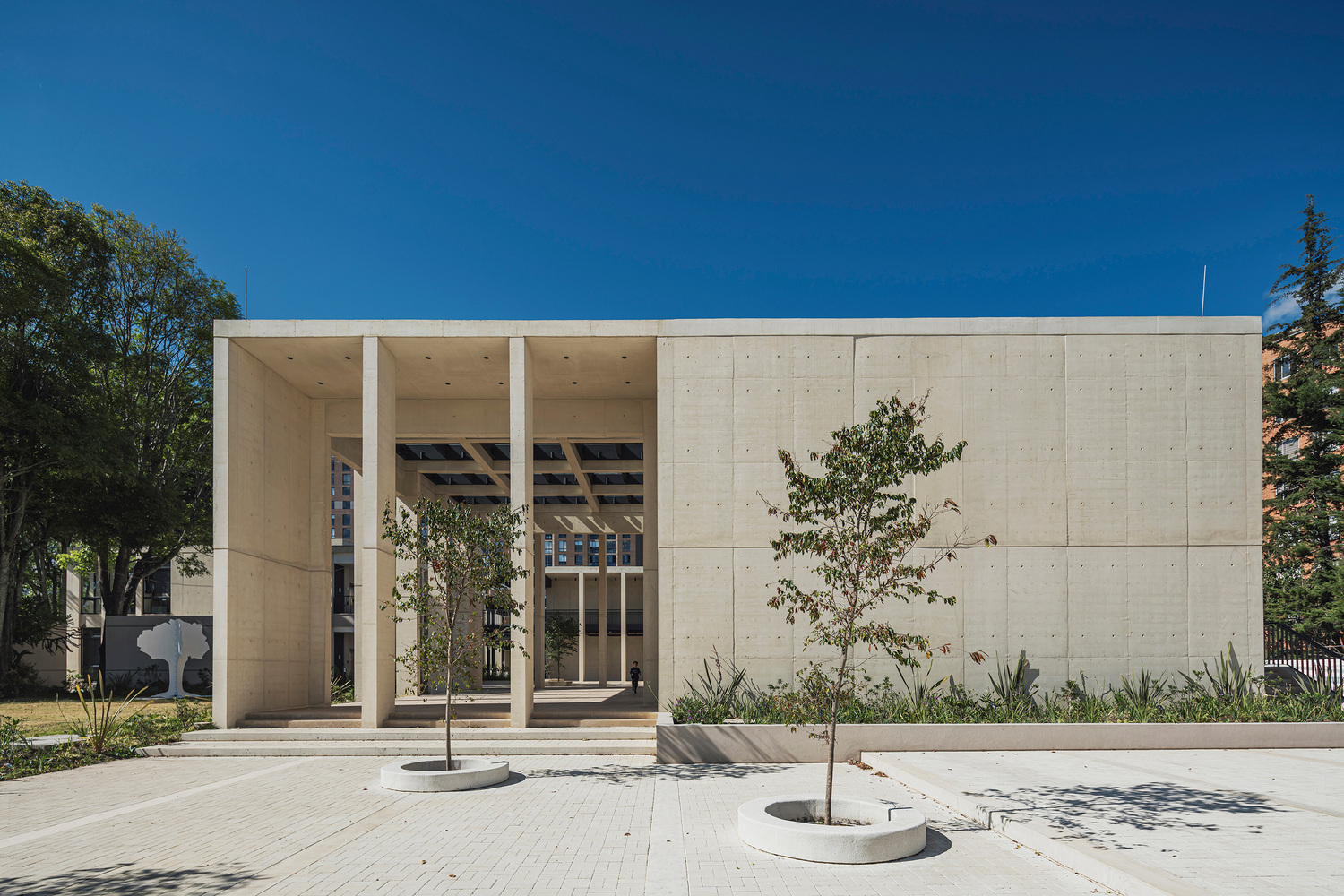
Project Location
AddressSuba Locality (Localidad de Suba), Bogotá D.C., Colombia
The location is intended for general reference and may denote a city or country; it does not identify a precise address.