
home/projects/office buildings/kalyon karapınar 1.350 mwp spp – central control building
Kalyon Karapınar 1.350 MWp SPP – Central Control Building / Bilgin Architects
Commercial & OfficesOffice building
- Architects
- Bilgin Architects
- Lead architects
- Caner Bilgin, Begüm Yılmaz Bilgin
- Year
- 2023
- Photographs
- Egemen Karakaya
- Manufacturers · 11
- Andreu World, Jansen, Kasso, Arper and 7 more, B&T Design, iGuzzini, Avcı Gemino, Flos, Mozaik Design, Tuna Ofis, Çuhadaroğlu Aluminium
- Type
- Office building
- Client
- Kalyon Energy
- Materials
- Stainless steel façade panels at four transparency levels
- Project coordinator
- Cem Katkat
- Infrastructure projects
- Diyap Project
- Digital art works
- Süleyman Yılmaz, Hakan Yılmaz, Ali Tan Uçer, Ecem Dilan Köse
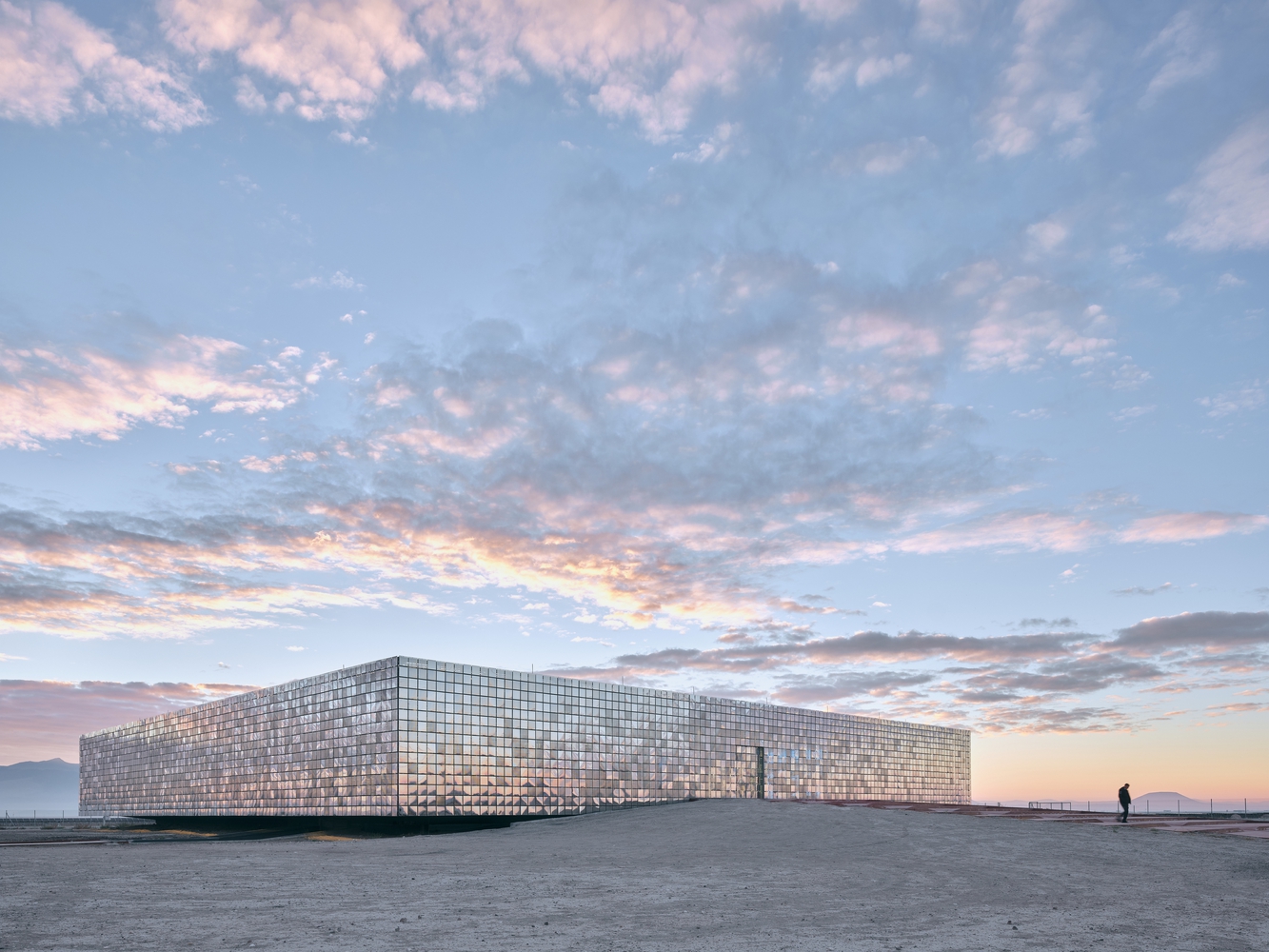
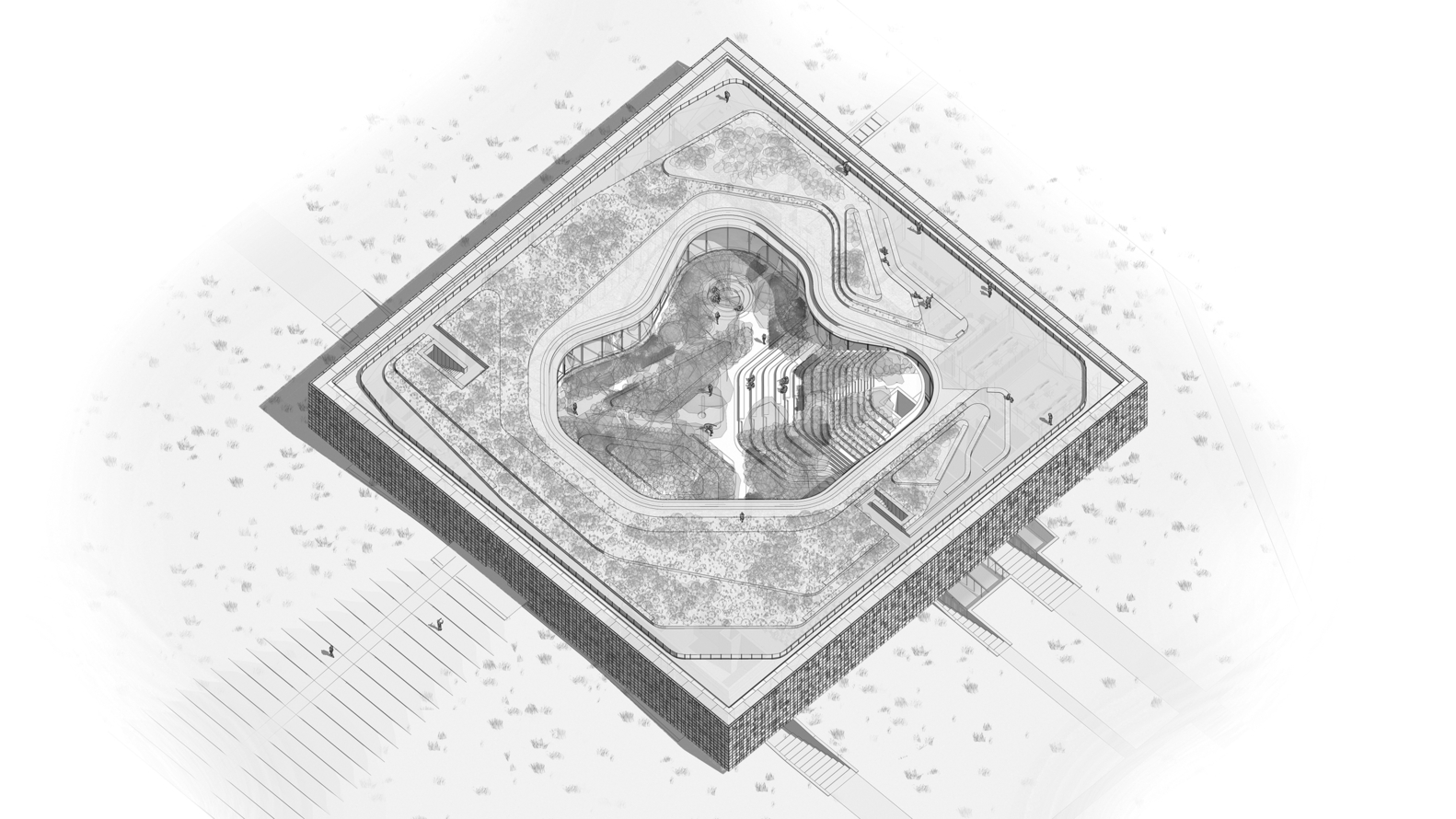
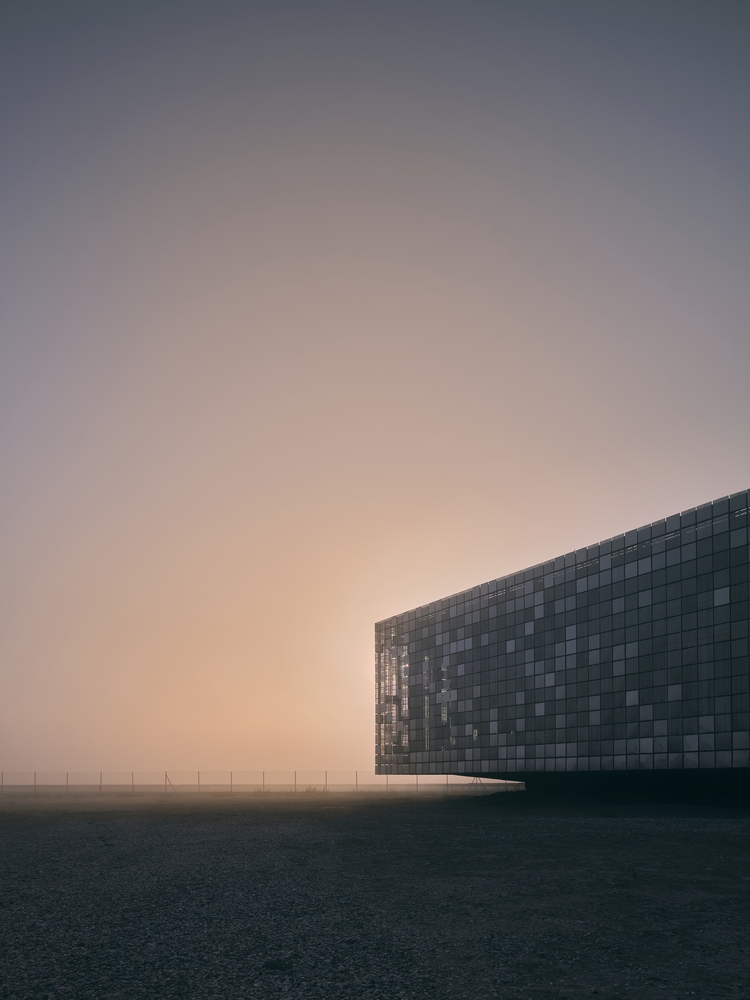
Kalyon Karapınar 1.350 MWp SPP – Central Control Building by Bilgin Architects is a 2,778 m² office building in Karapınar, Türkiye, completed in 2023. It is the control building of the 1,350 MWp solar power plant that its client, Kalyon Energy, has established in the only region of the country with a desert climate. Beyond the technological infrastructure that runs the plant, the architects conceived the building as an interface that represents sustainable energy technologies. The single-storey volume stands on flat land that extends to the horizon, beside the solar field and turned in the same direction. A second façade of stainless steel shields the glass behind it from the sun and reflects the ground and the sky. Offices, a foyer, a cafeteria and a multipurpose hall are ordered around a planted courtyard that contrasts with the arid land outside.
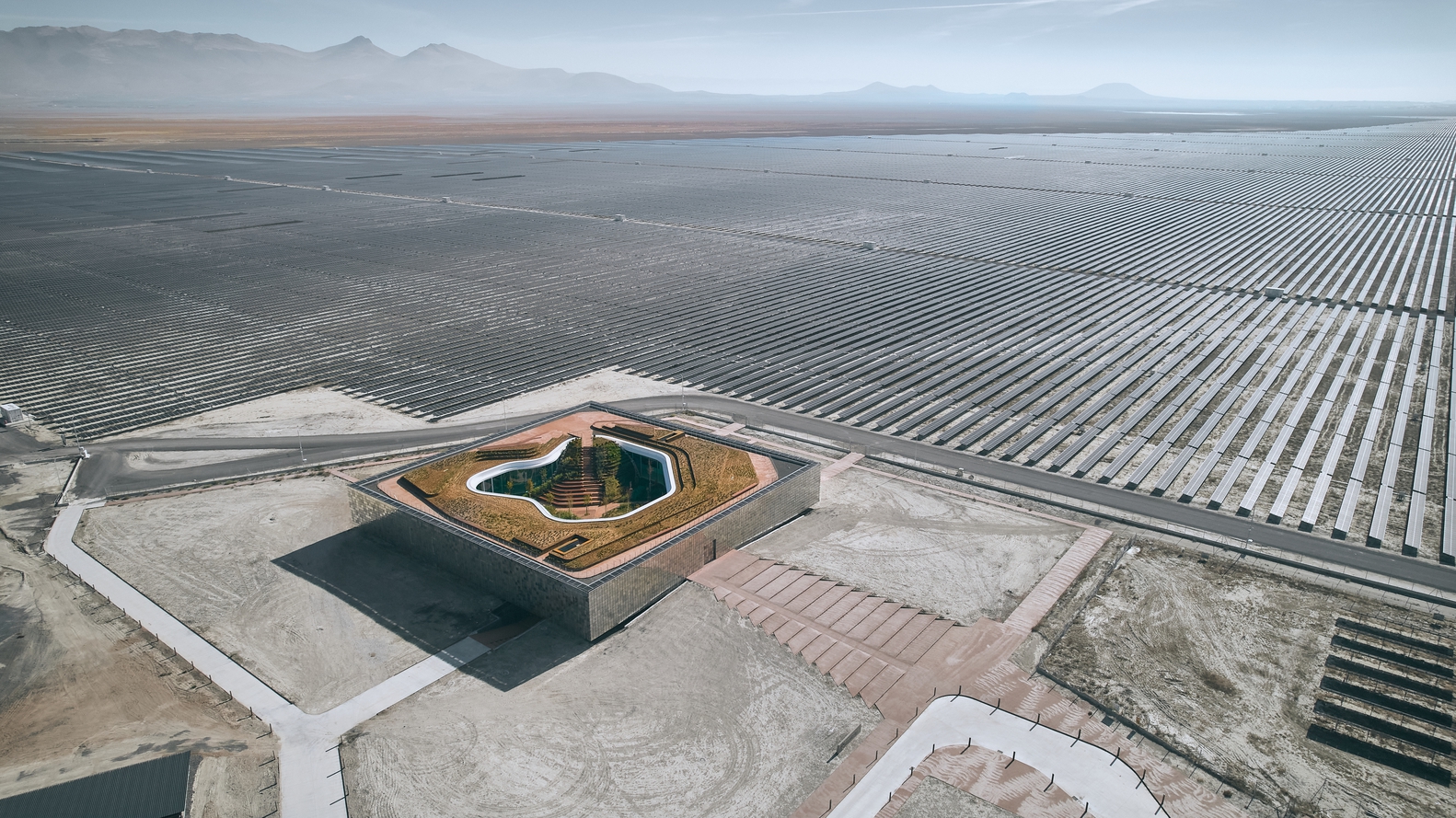
The commission for the control building came through a national architectural competition held by the client, in which this design won first prize. Kalyon Energy asked for more than a technical facility: a building that would represent the plant and its technologies. The architects answered with what they call “an interface representing new energy technologies in a flat topography extending to the horizon”. Caner Bilgin and Begüm Yılmaz Bilgin led the design, whose construction began in 2021 and was completed on 15 September 2023. Since then the building has worked both as the control centre of the plant and as its public face.
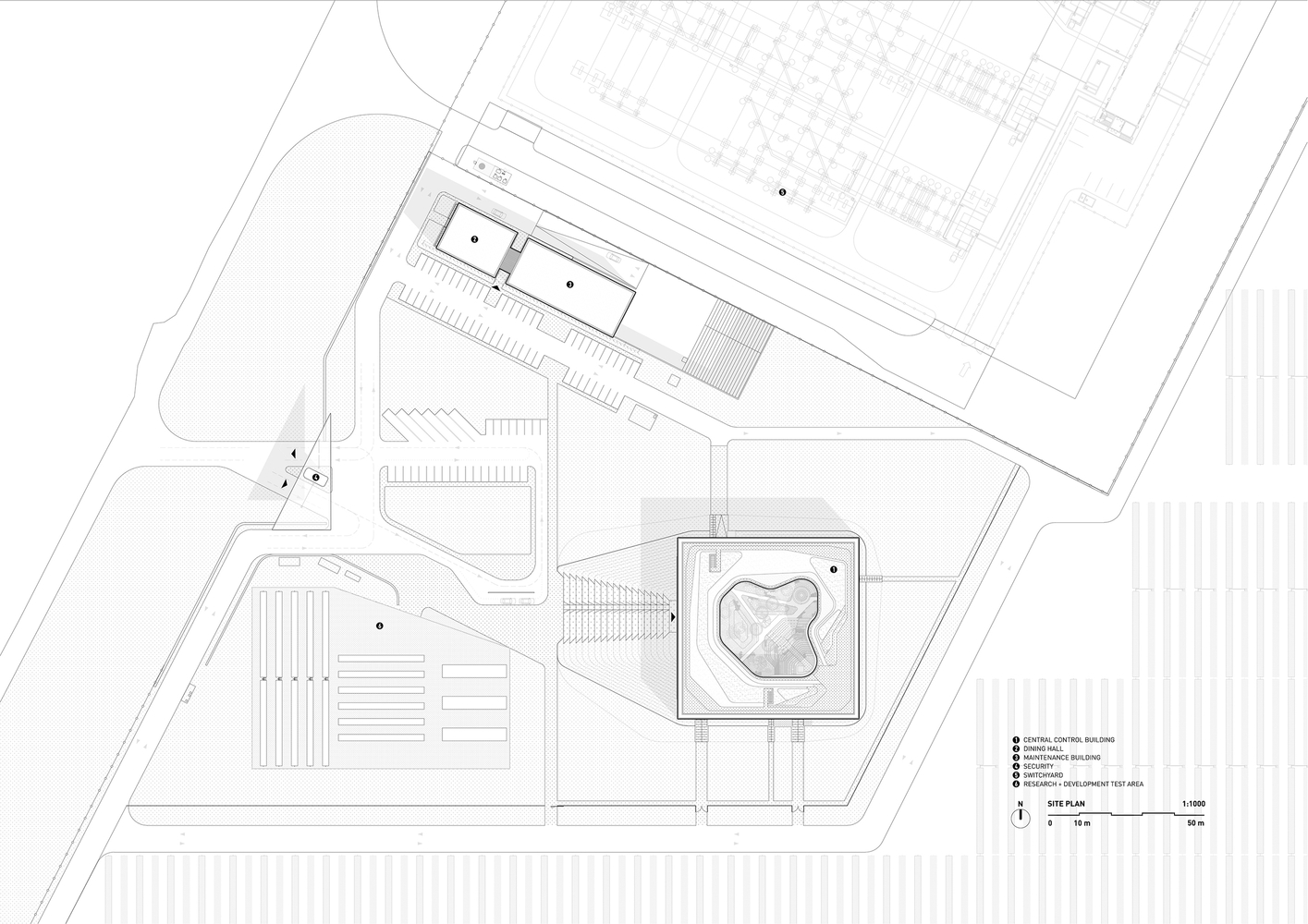
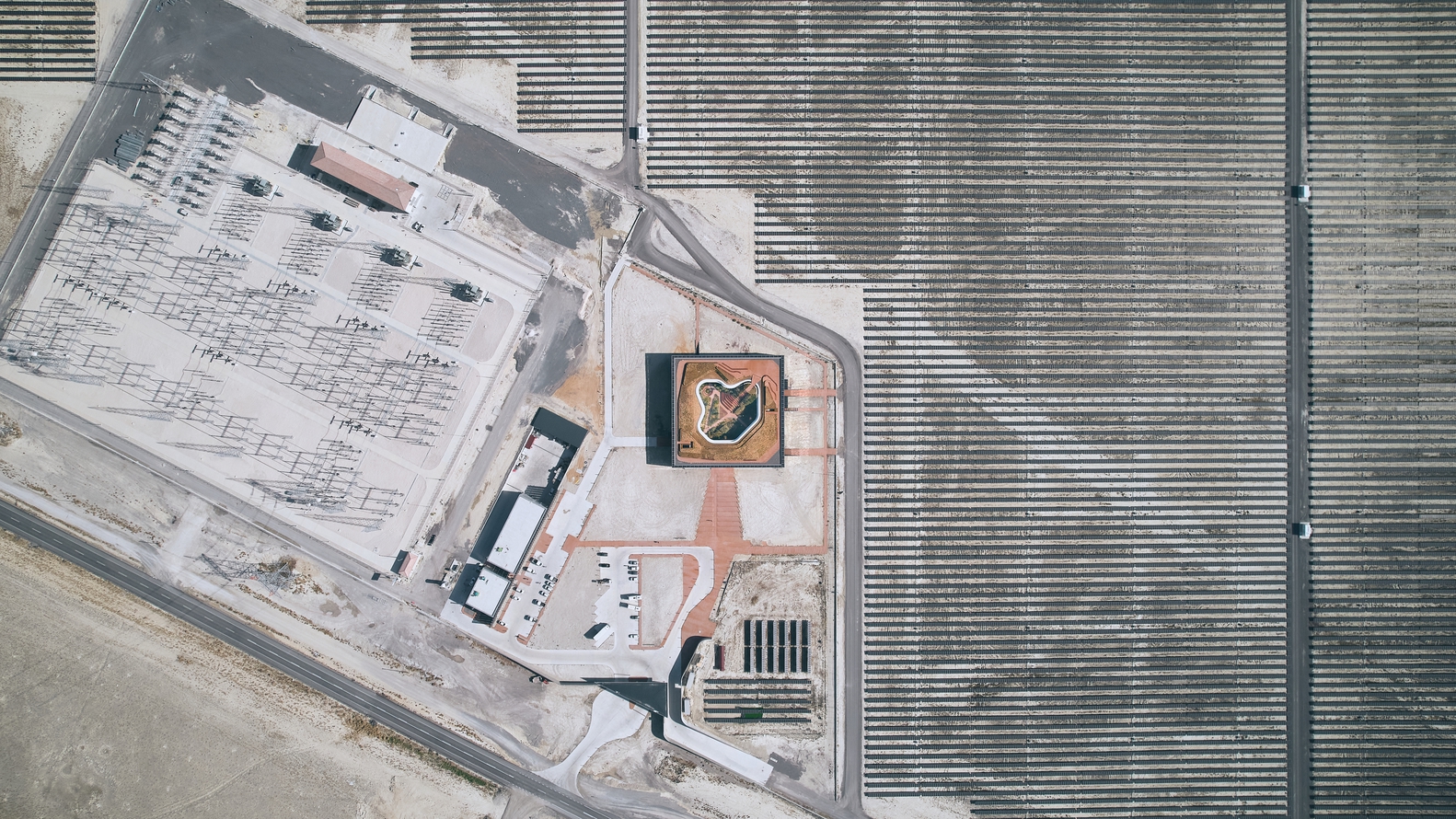
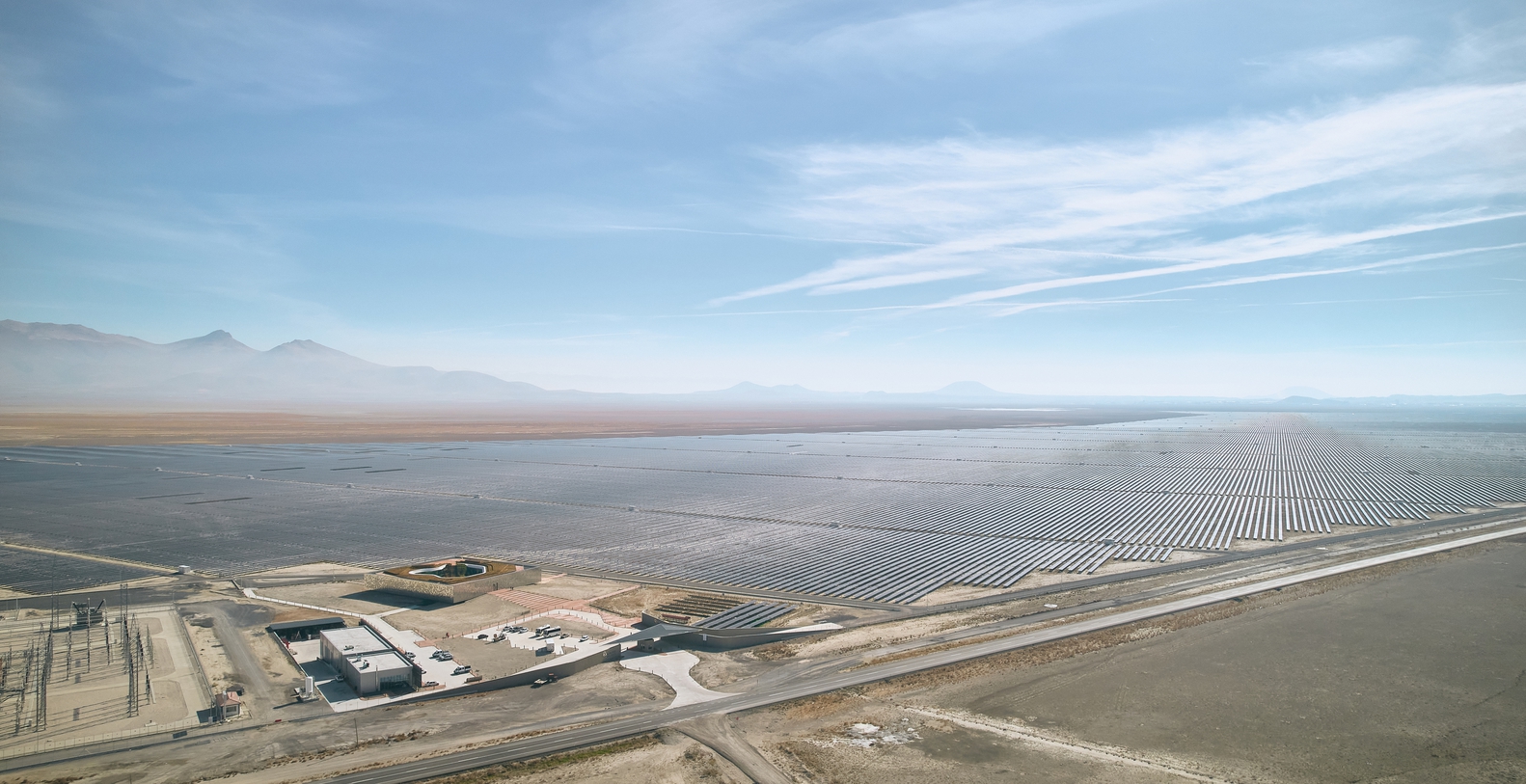
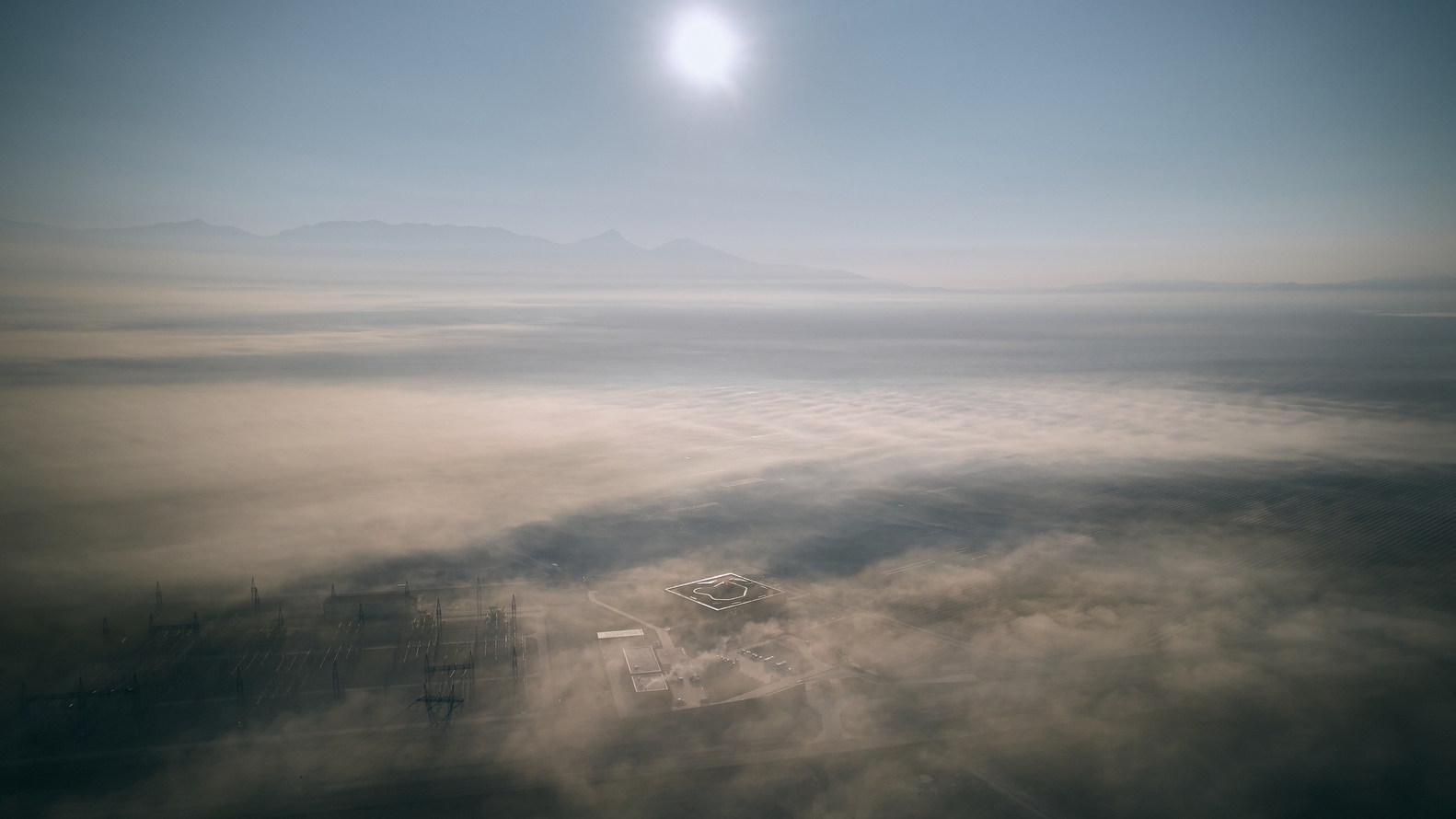
A 20-square-kilometre area of this desert region, no longer suitable for agriculture but with significant energy potential, has been designated an energy specialisation area, and the construction of the solar power plant followed in 2020. On this land Kalyon Energy has established a plant whose 3.2 million panels give it, in the architects’ words, “the capacity to be the largest solar energy power plant in Europe”. The control building manages the operation of the whole field from a site of 38,000 m², near the substation that connects the plant to the national grid.
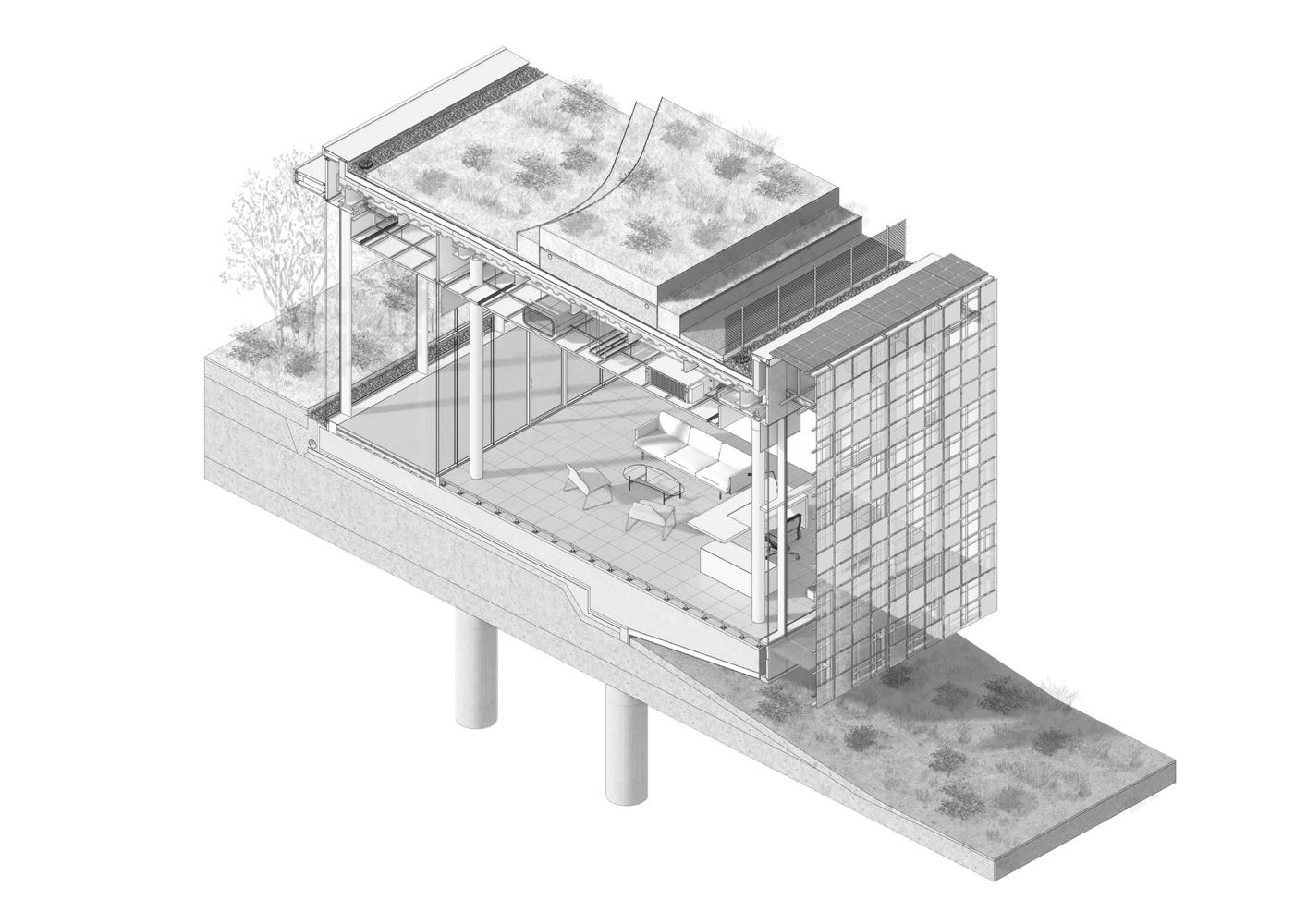
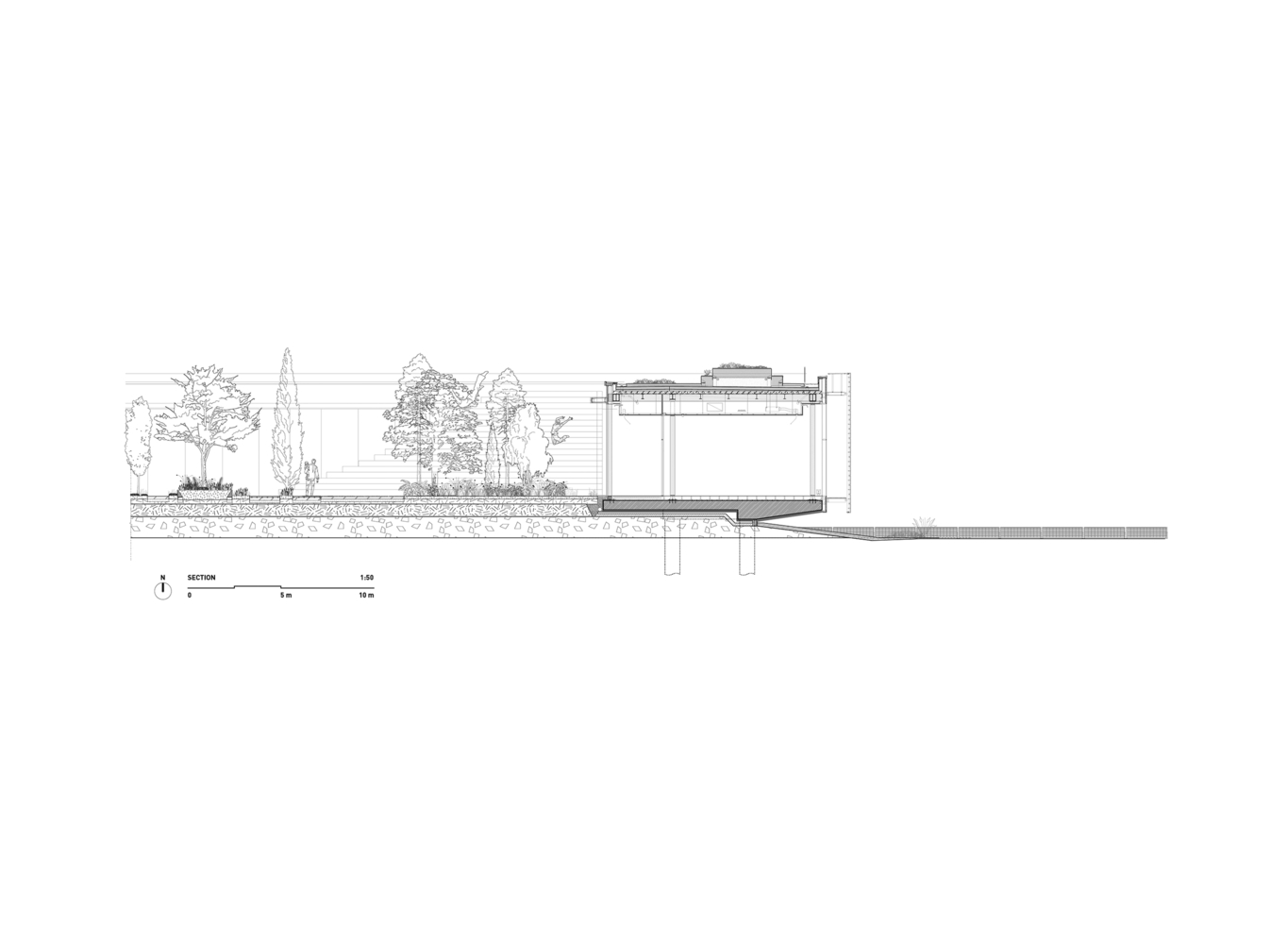
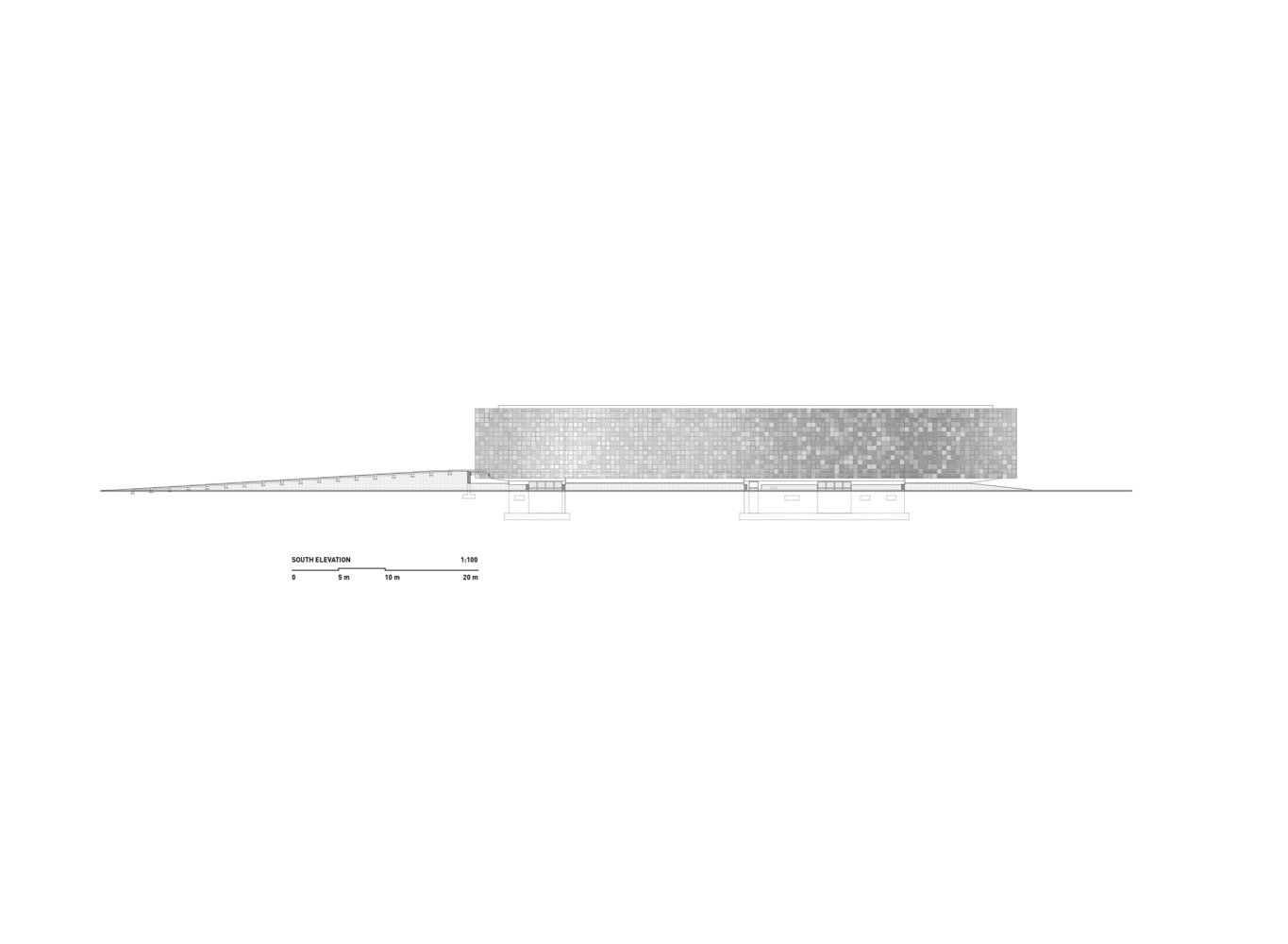
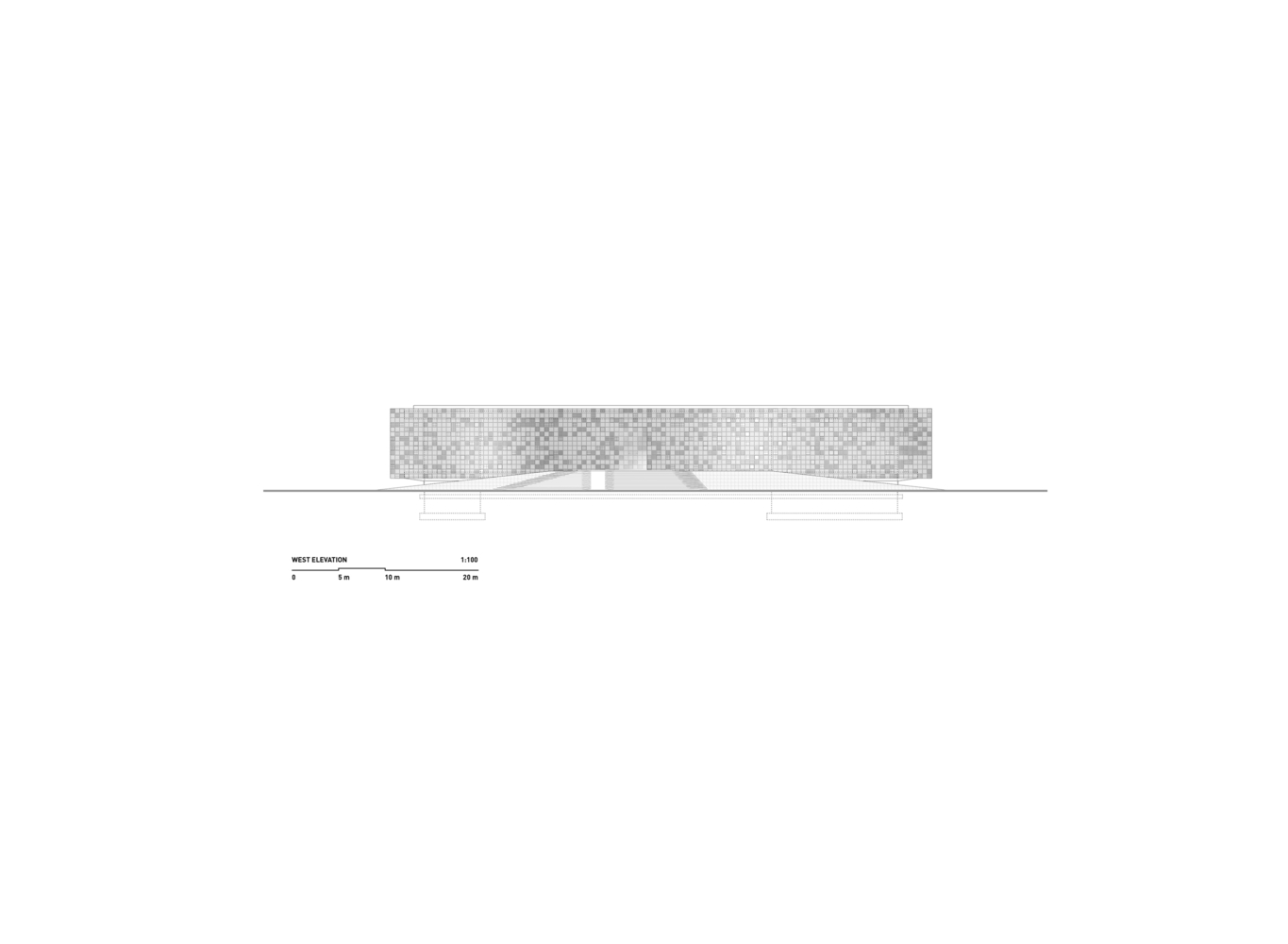
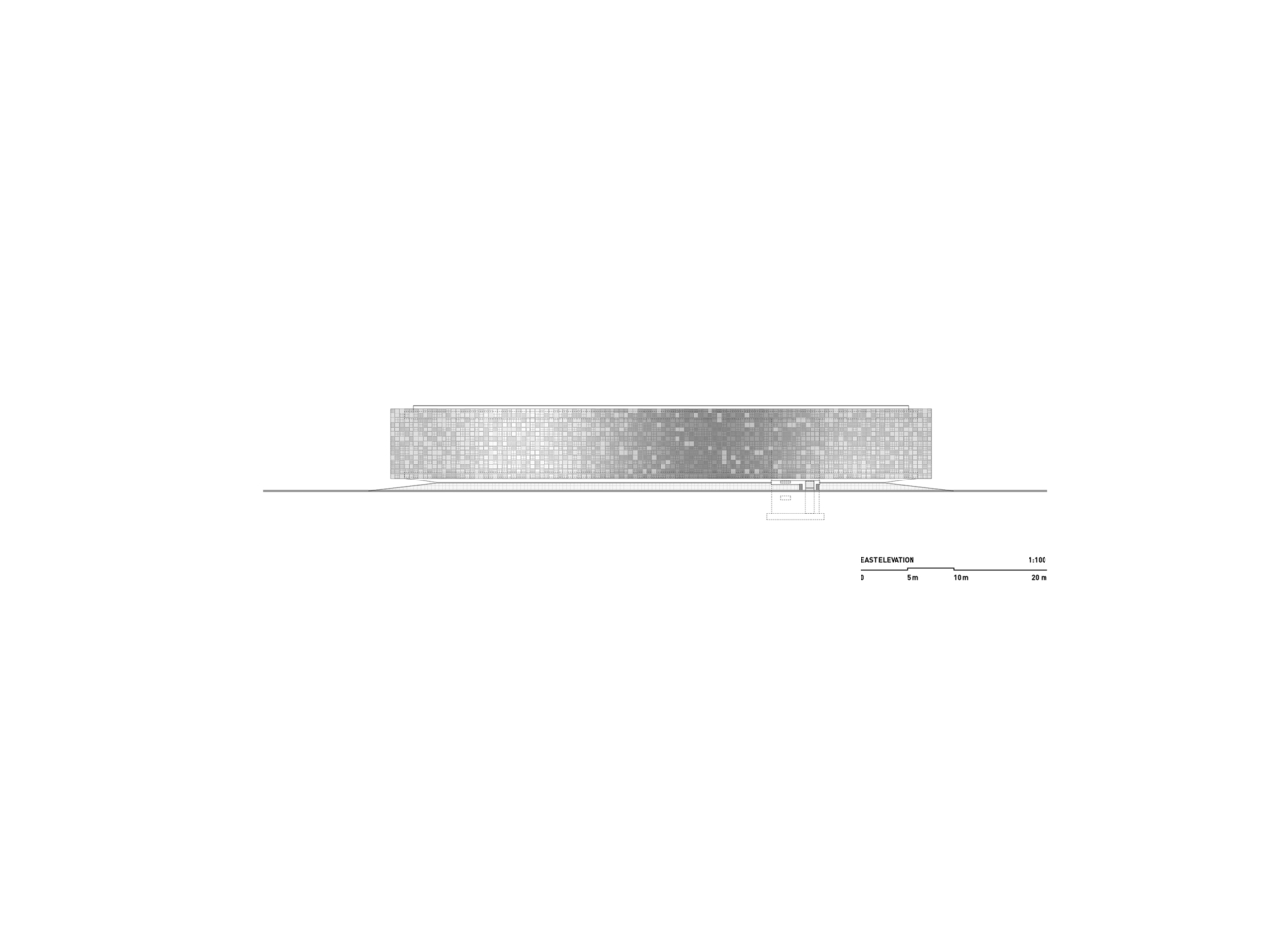
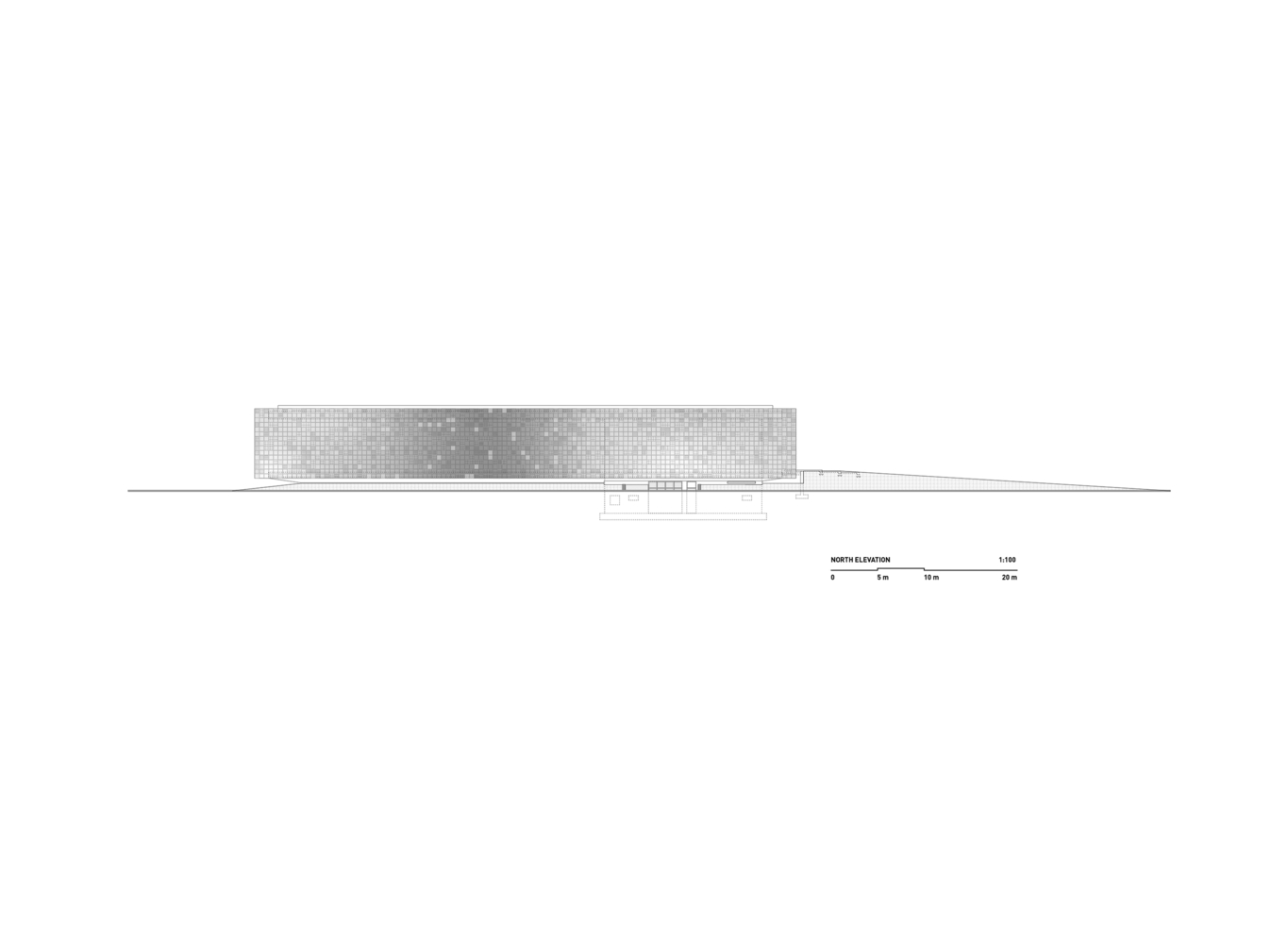
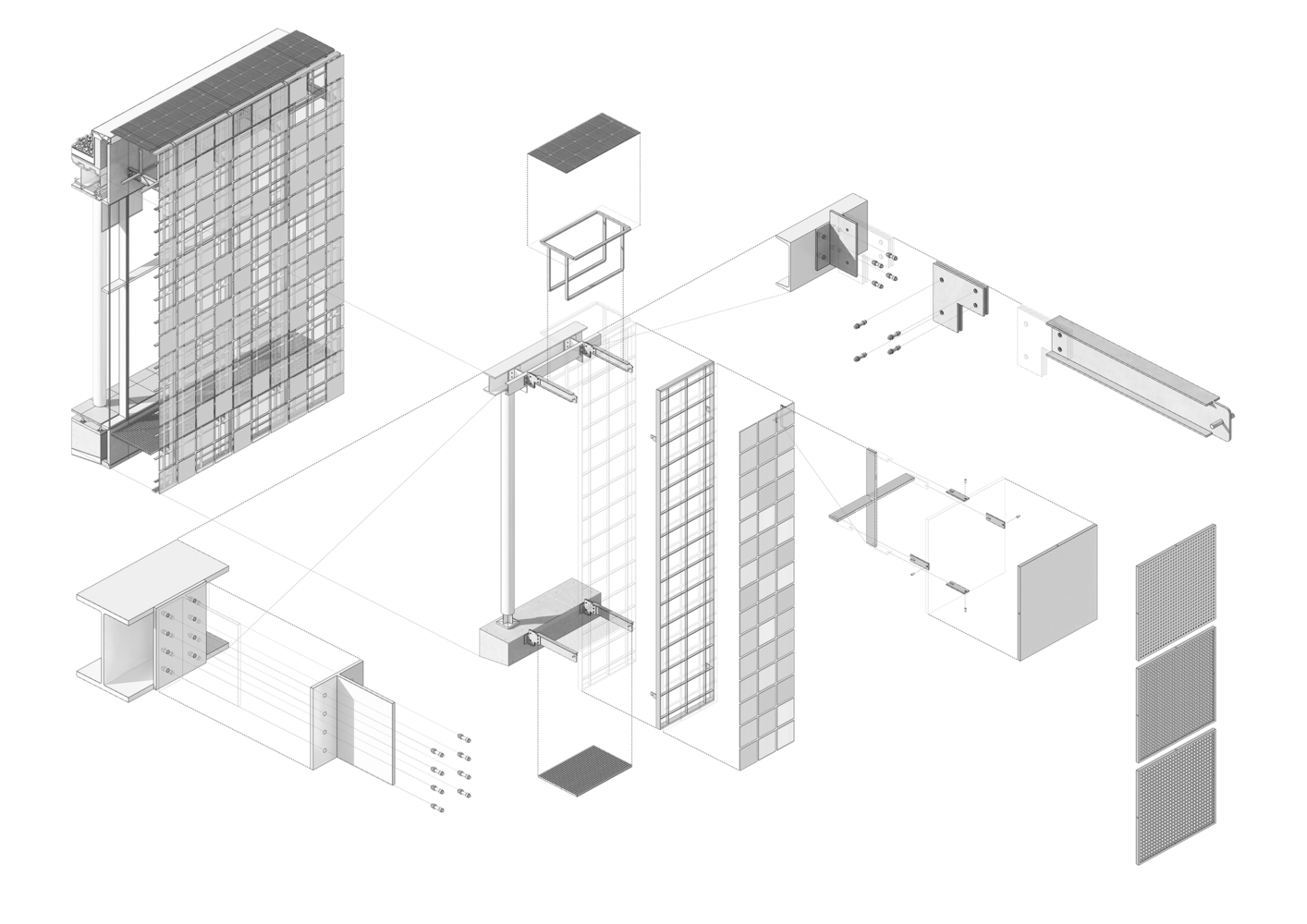
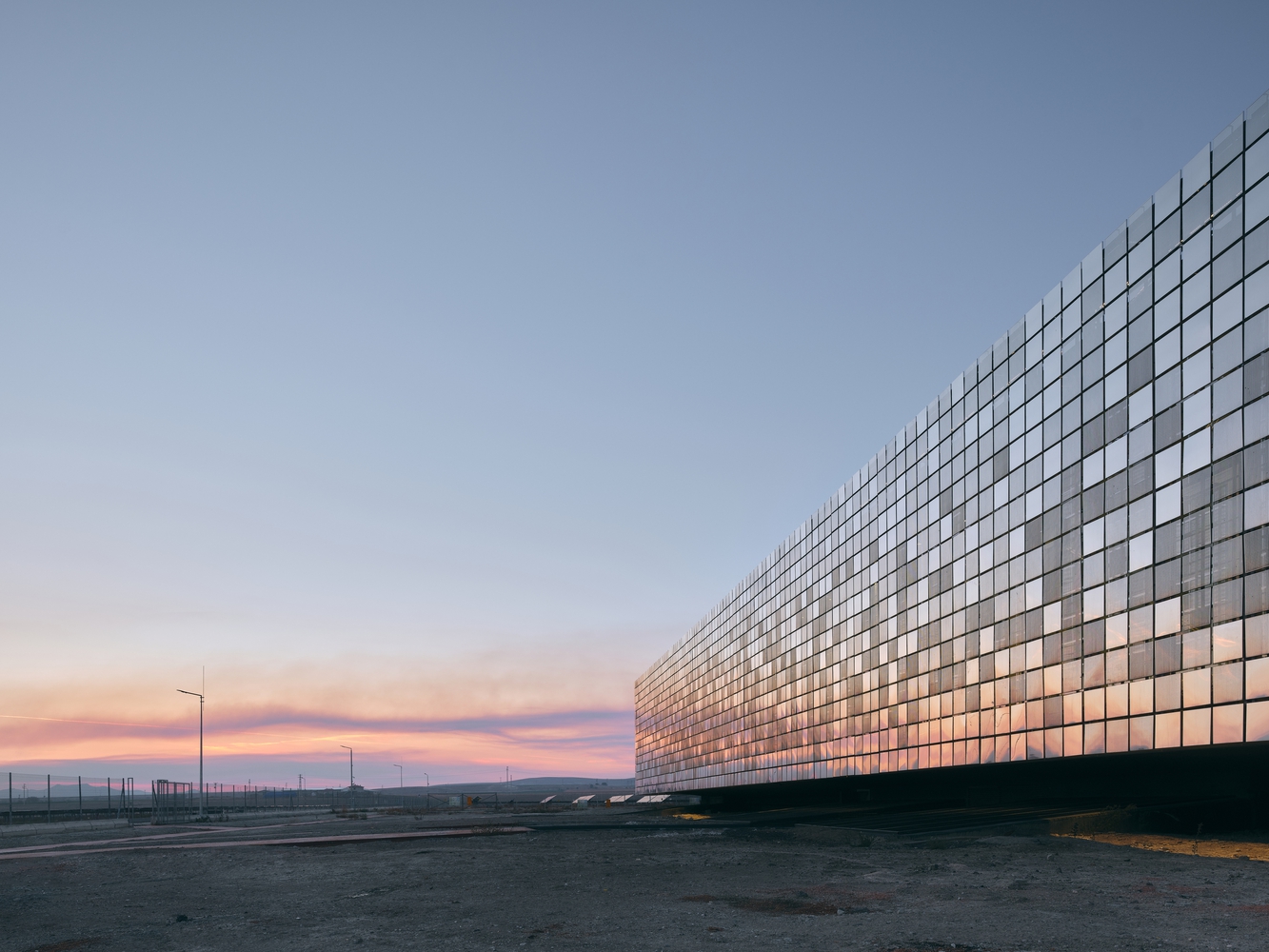
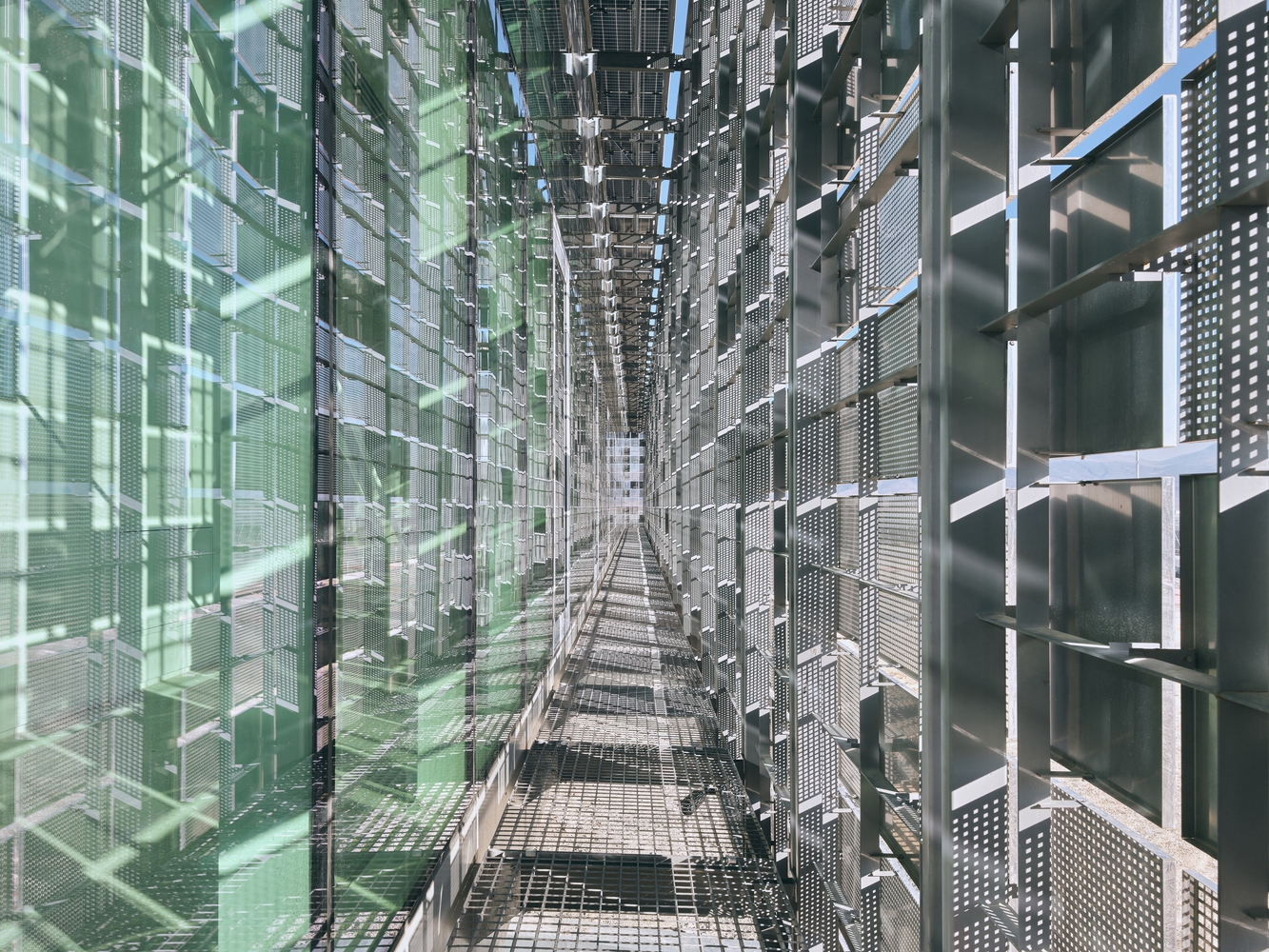
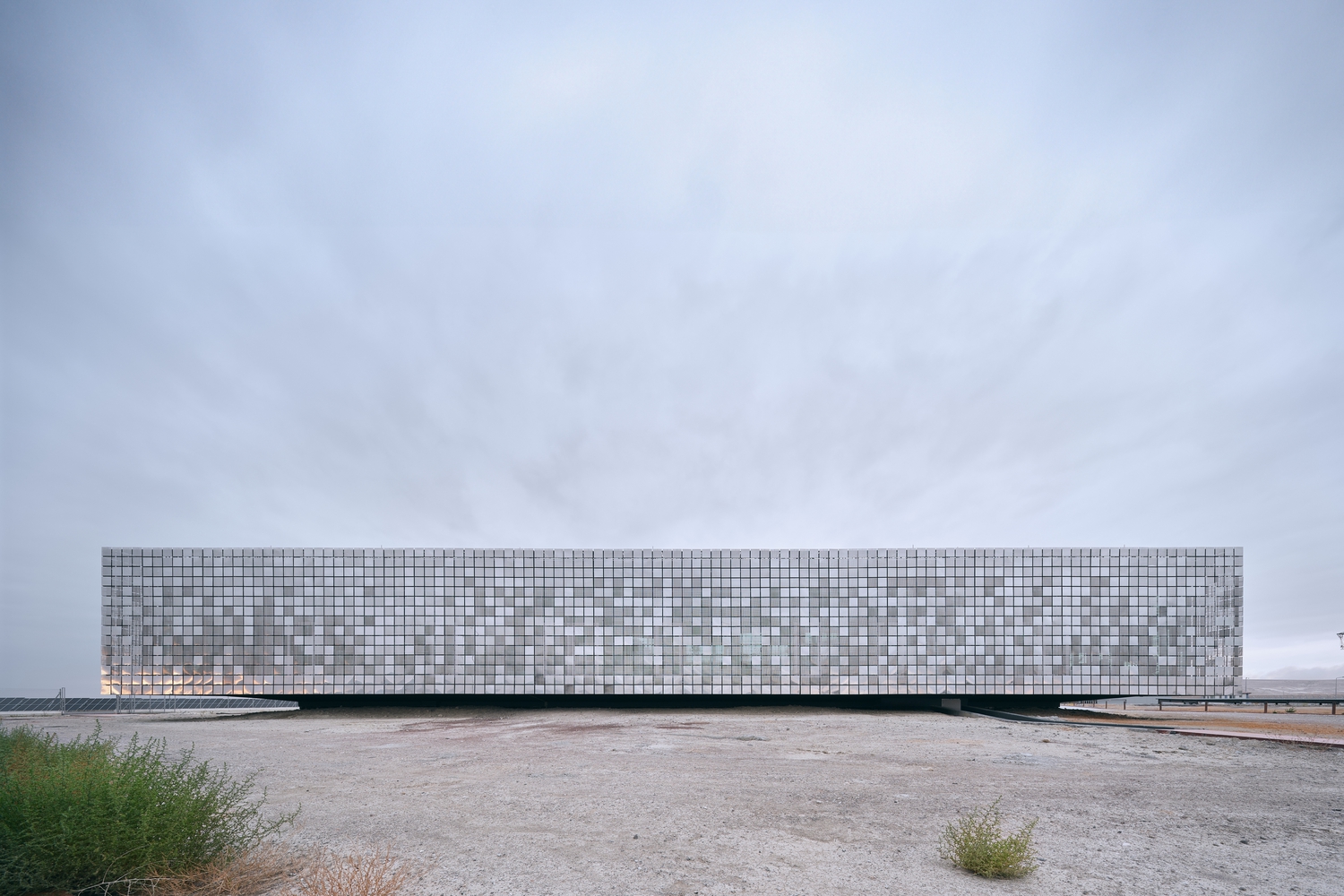
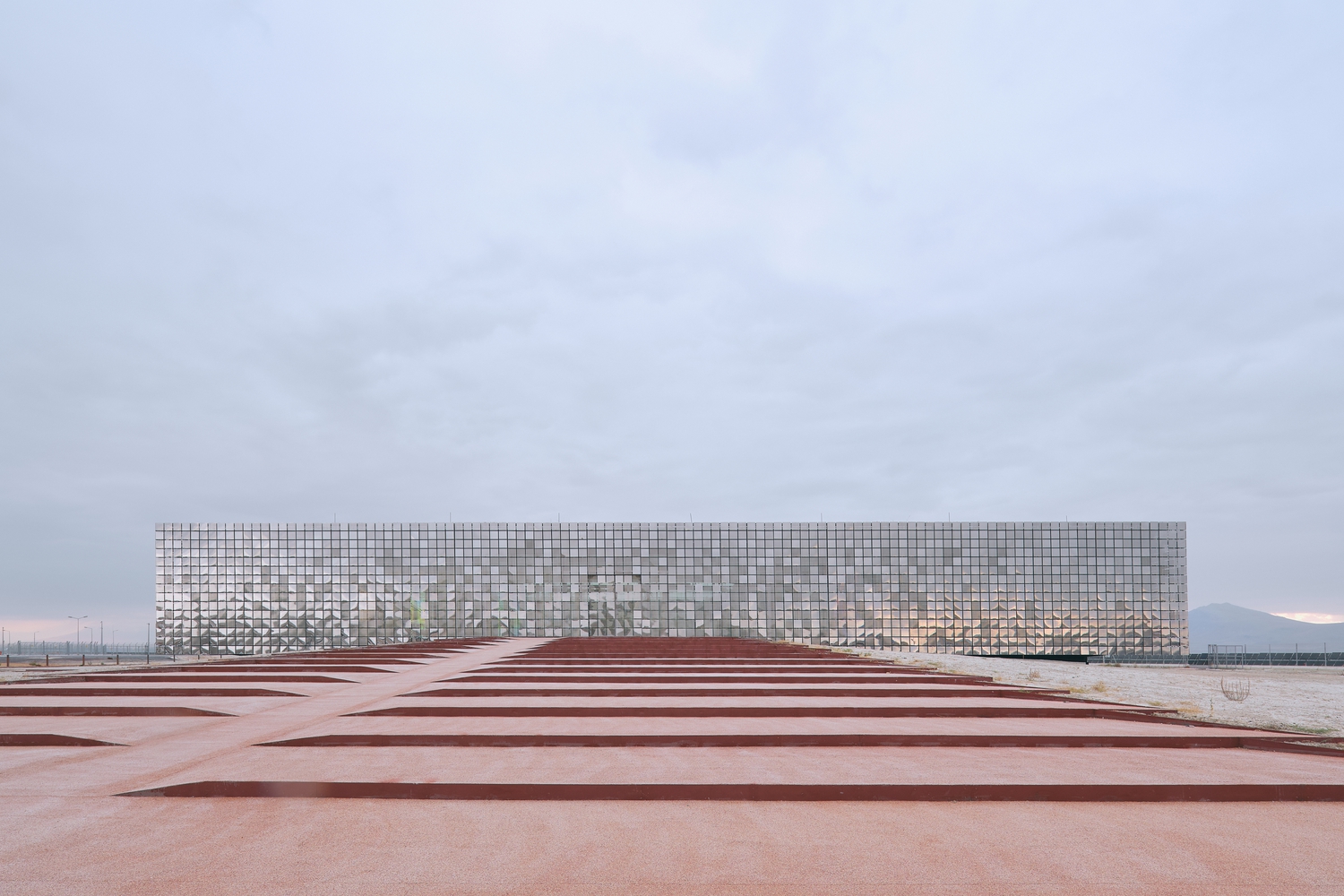
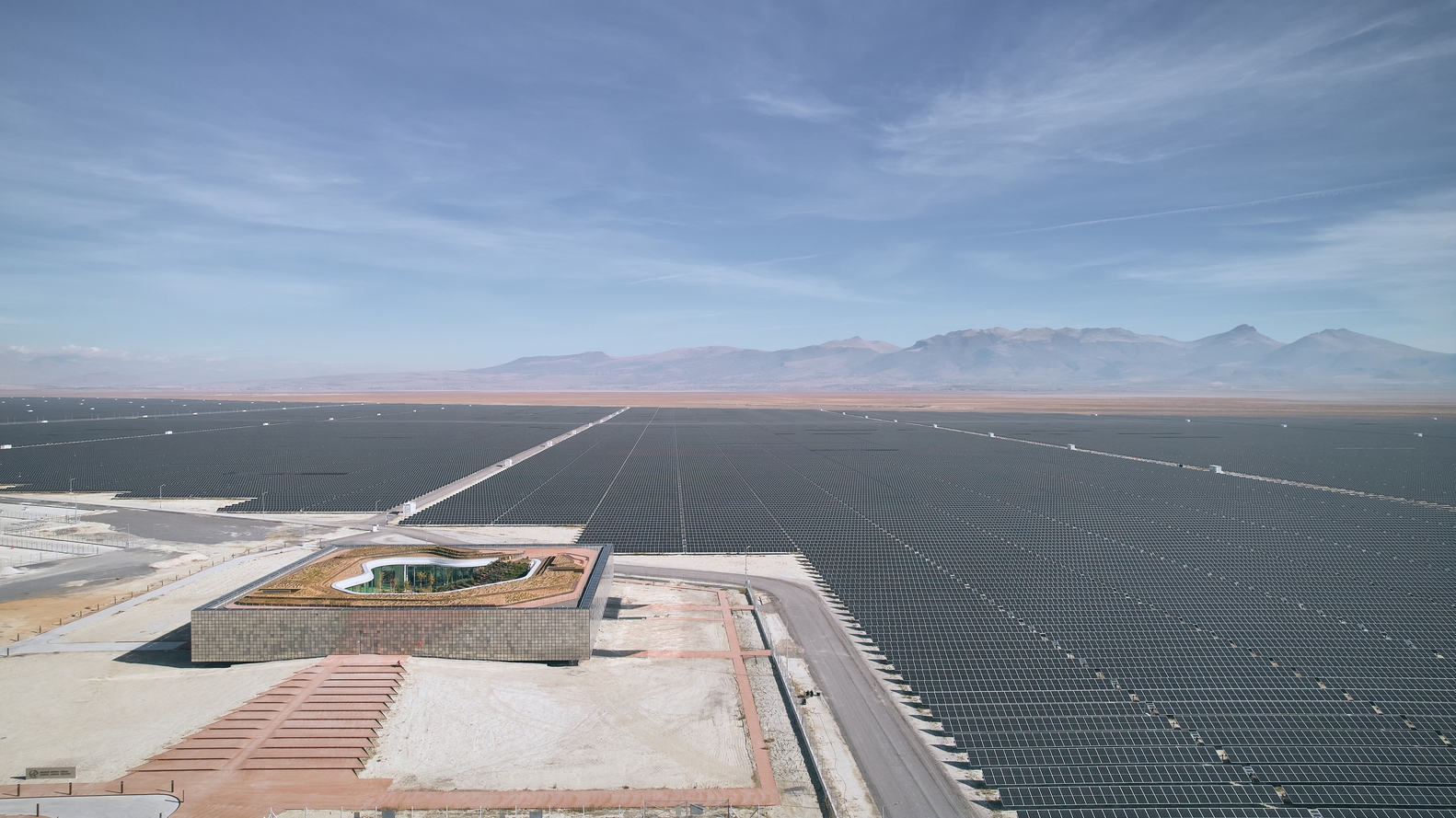
As an extension of the solar field, the building is positioned 40 metres from the panels and in the same direction, in an area where it casts no shadow on them. Its façades are designed, in the architects’ words, “not only as an architectural element but also as a part of the earth and even the sky”. Their high reflectance integrates the building with the geography it inhabits, while the silhouette on the horizon continues across them. The reflective façade gives the building its identity while it limits solar exposure. This façade consists of two layers, of which the outer one is designed to minimise the radiation falling on the main façade, preventing high heat exposure for most of the year. That outer layer “is formed by 7,200 stainless steel panels at four different transparency levels”.
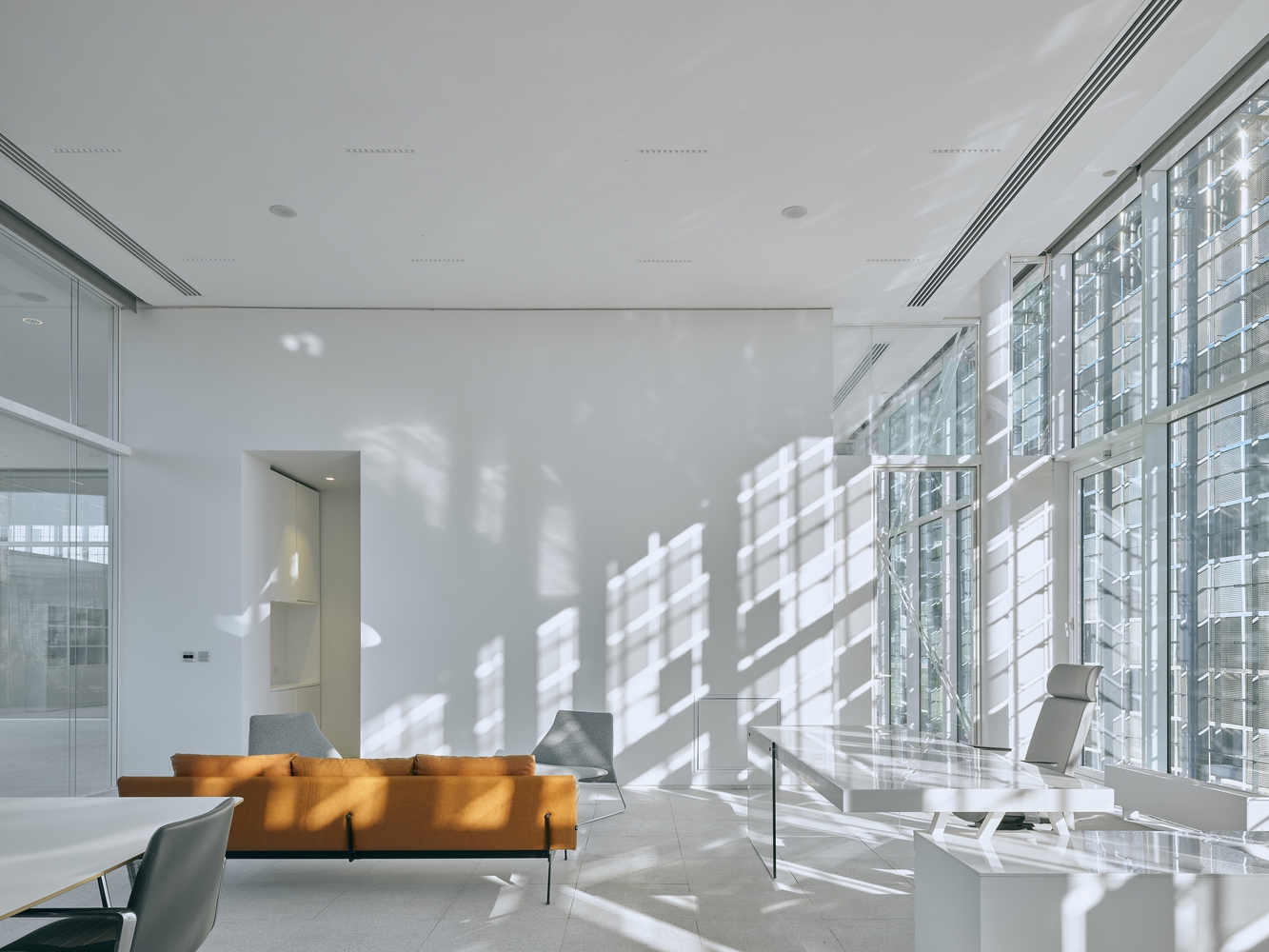
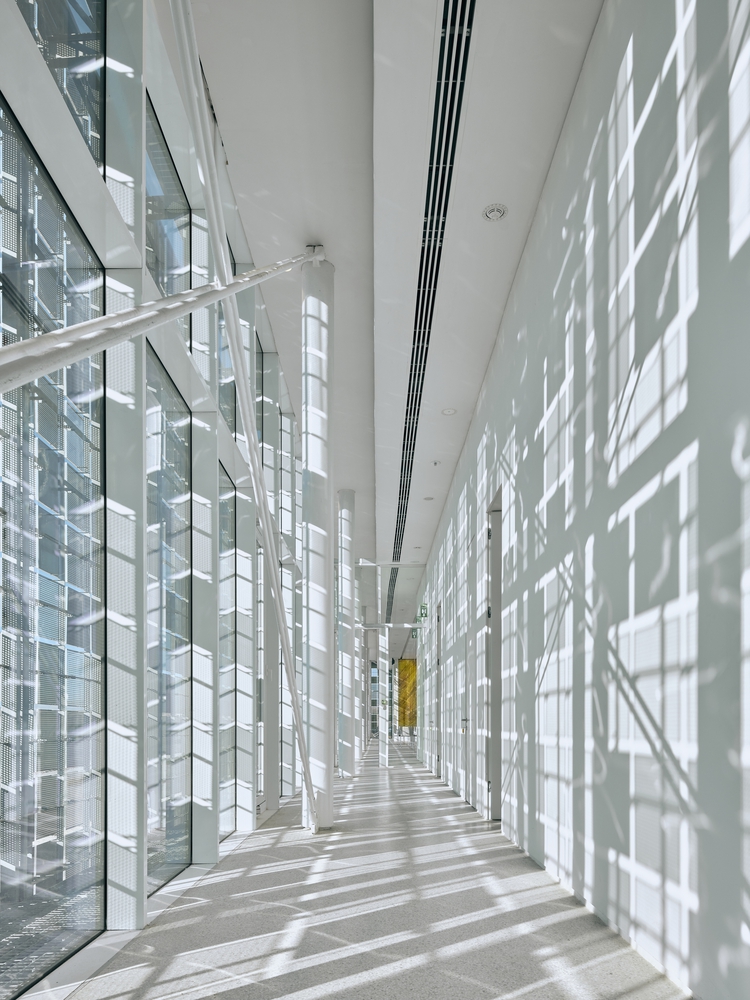
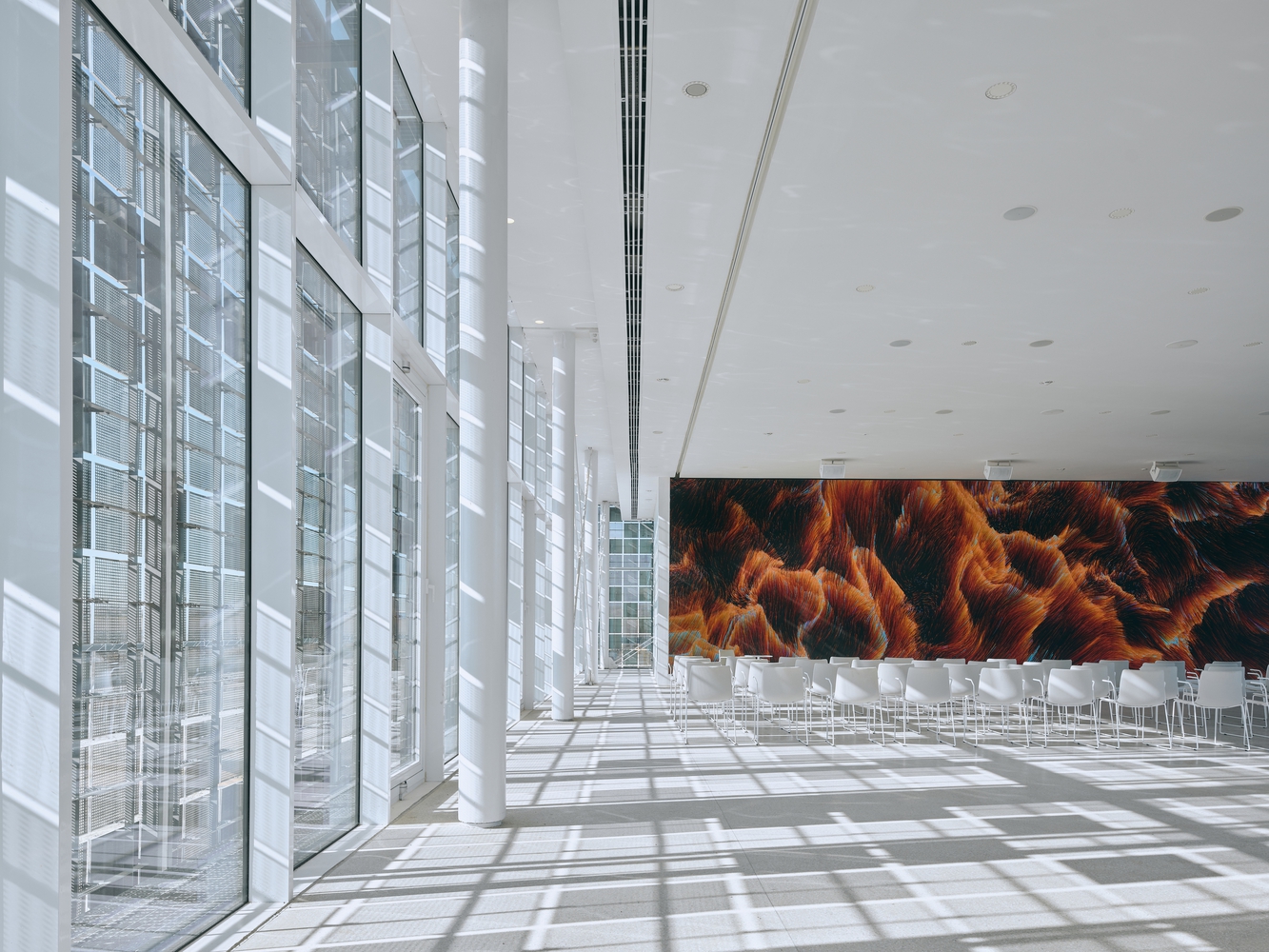
The outer stainless steel panels of the control building are about 50 centimetres square and shield an inner façade of glass, small enough to keep the façade articulated and to prevent the building from disappearing entirely. Their four types range from fully solid to 47 per cent solid, and a parametric code positioned each panel by the solar exposure projected for its place on the exterior. The resulting pattern is non-repetitive, based on parameters such as geographical direction, surrounding space and optimum light requirements. In total, solar radiation on the interior was reduced by 65 per cent. Because the surface is reflective, the material changes colour through the day, whereas on cloudy days the boundaries of the façade blur until it becomes a part of the sky. At night the façade “turns inside out”, as artificial light passes through the perforated panels to reveal the interiors and the courtyard.
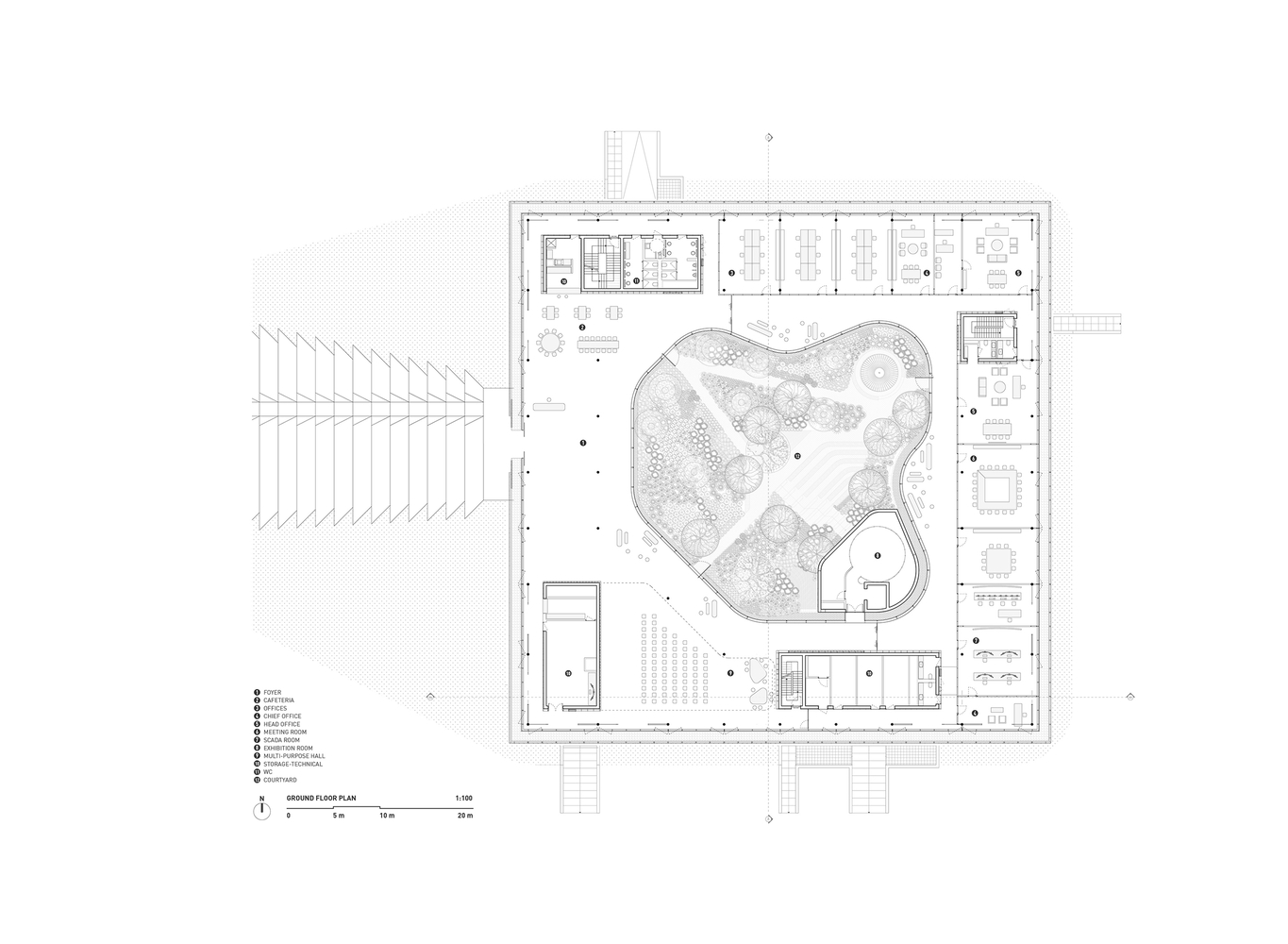
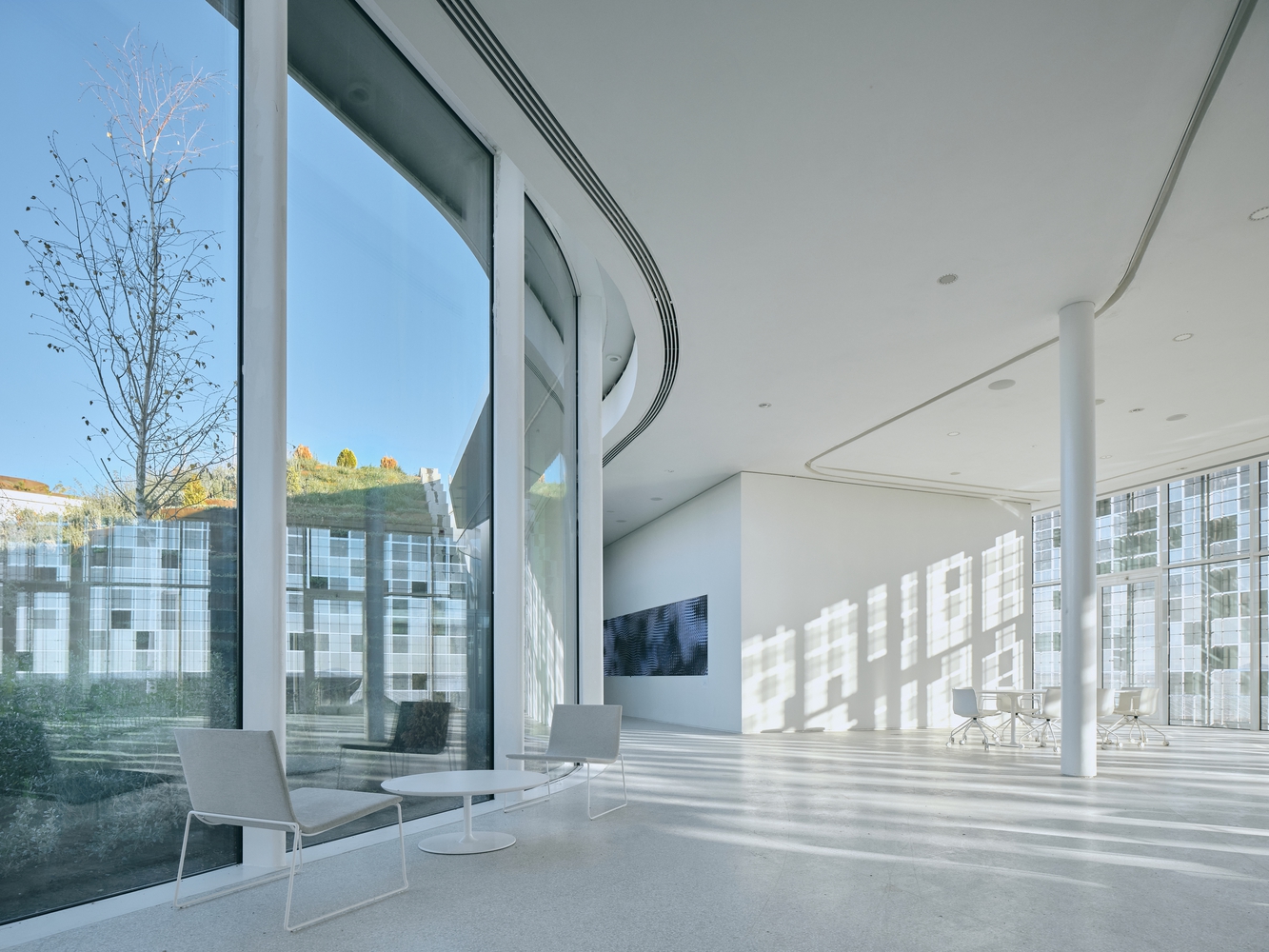
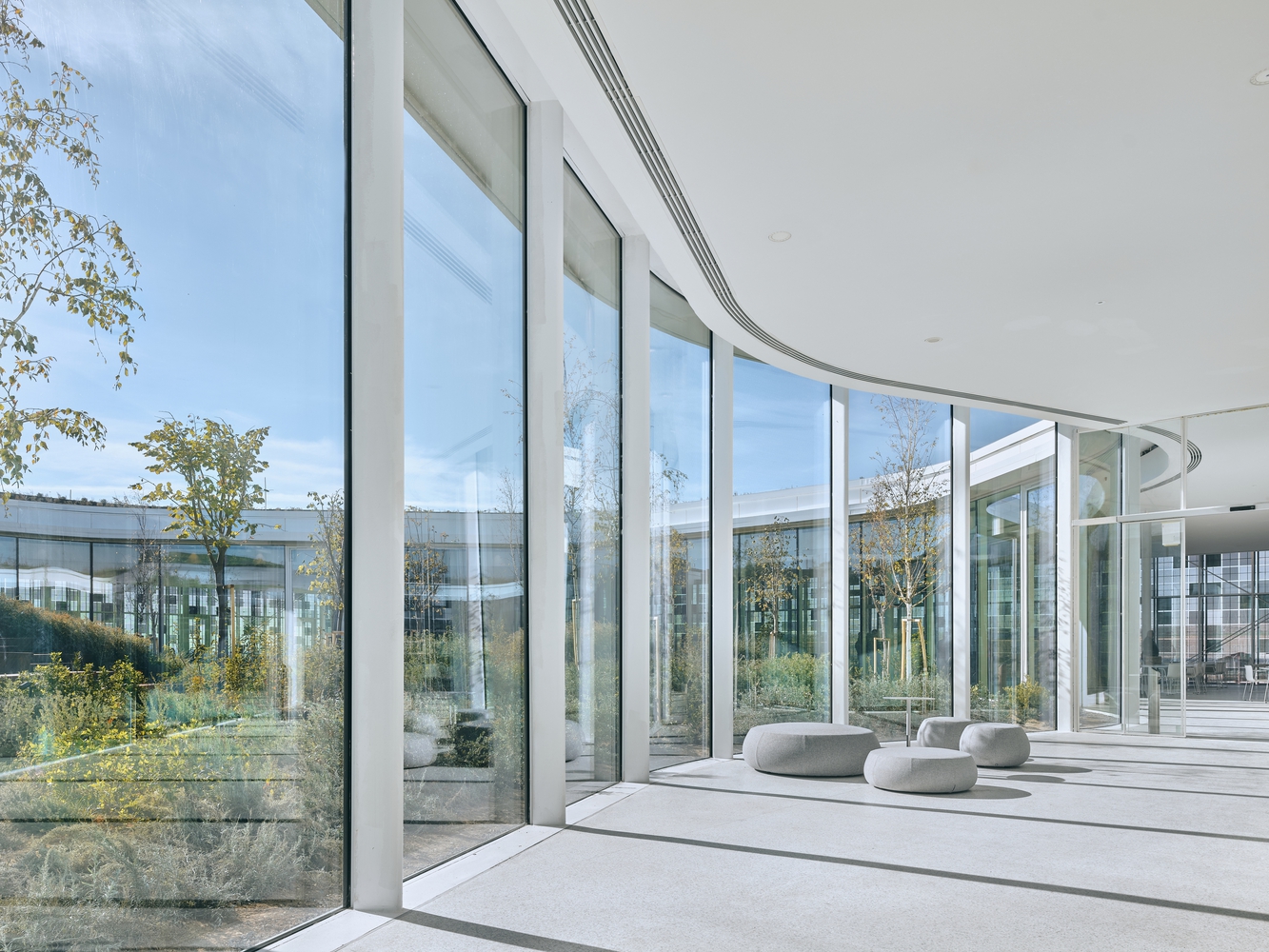
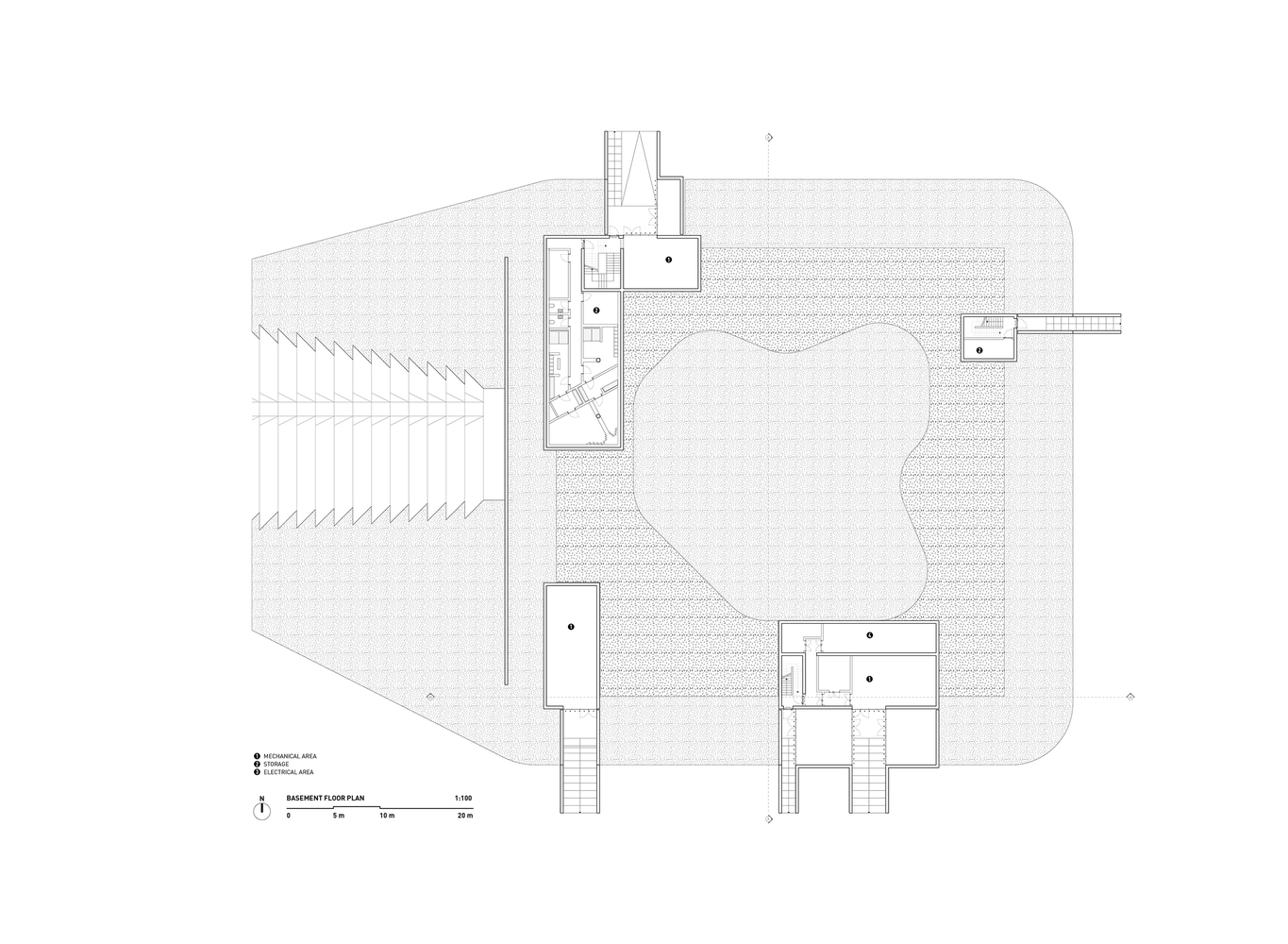
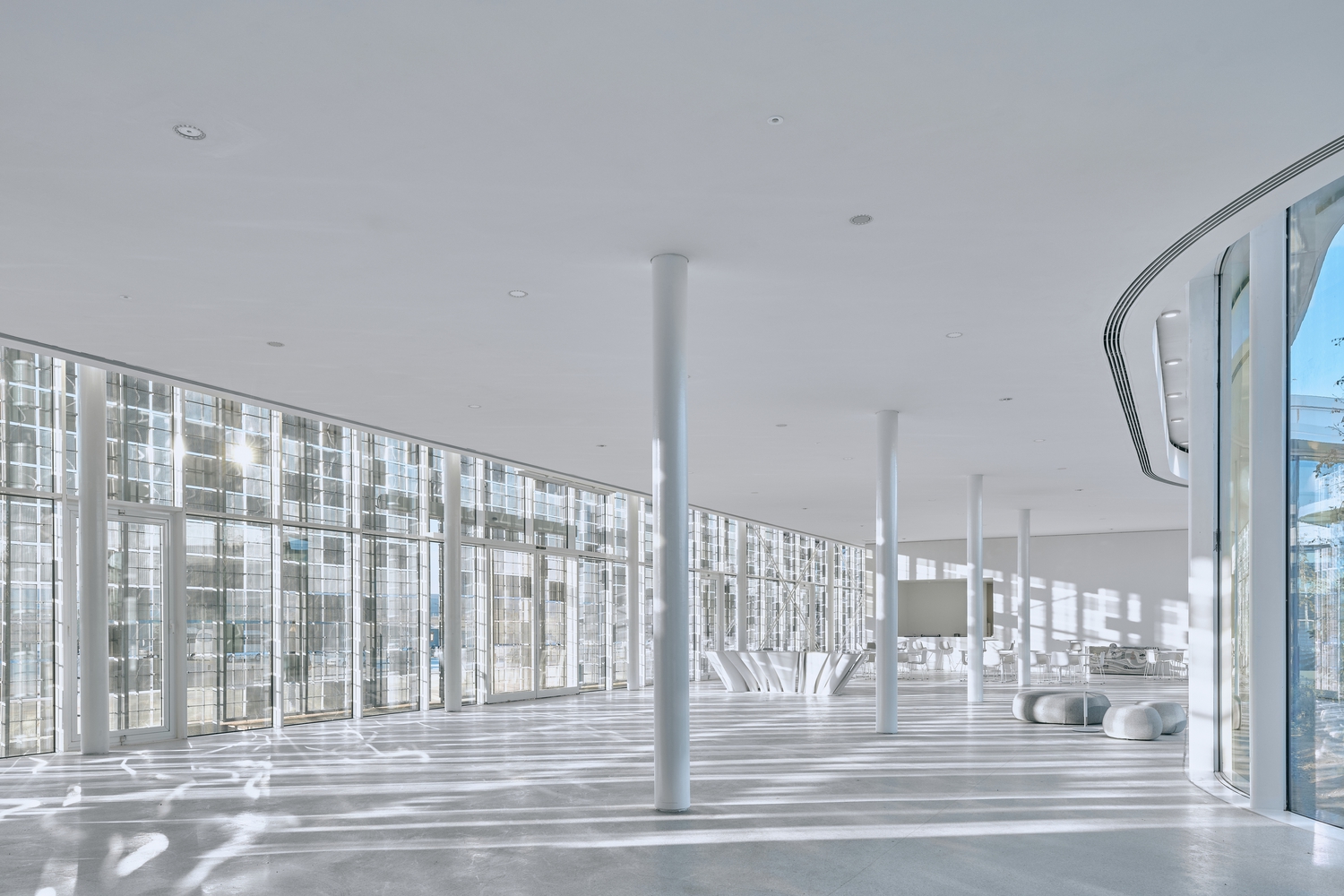
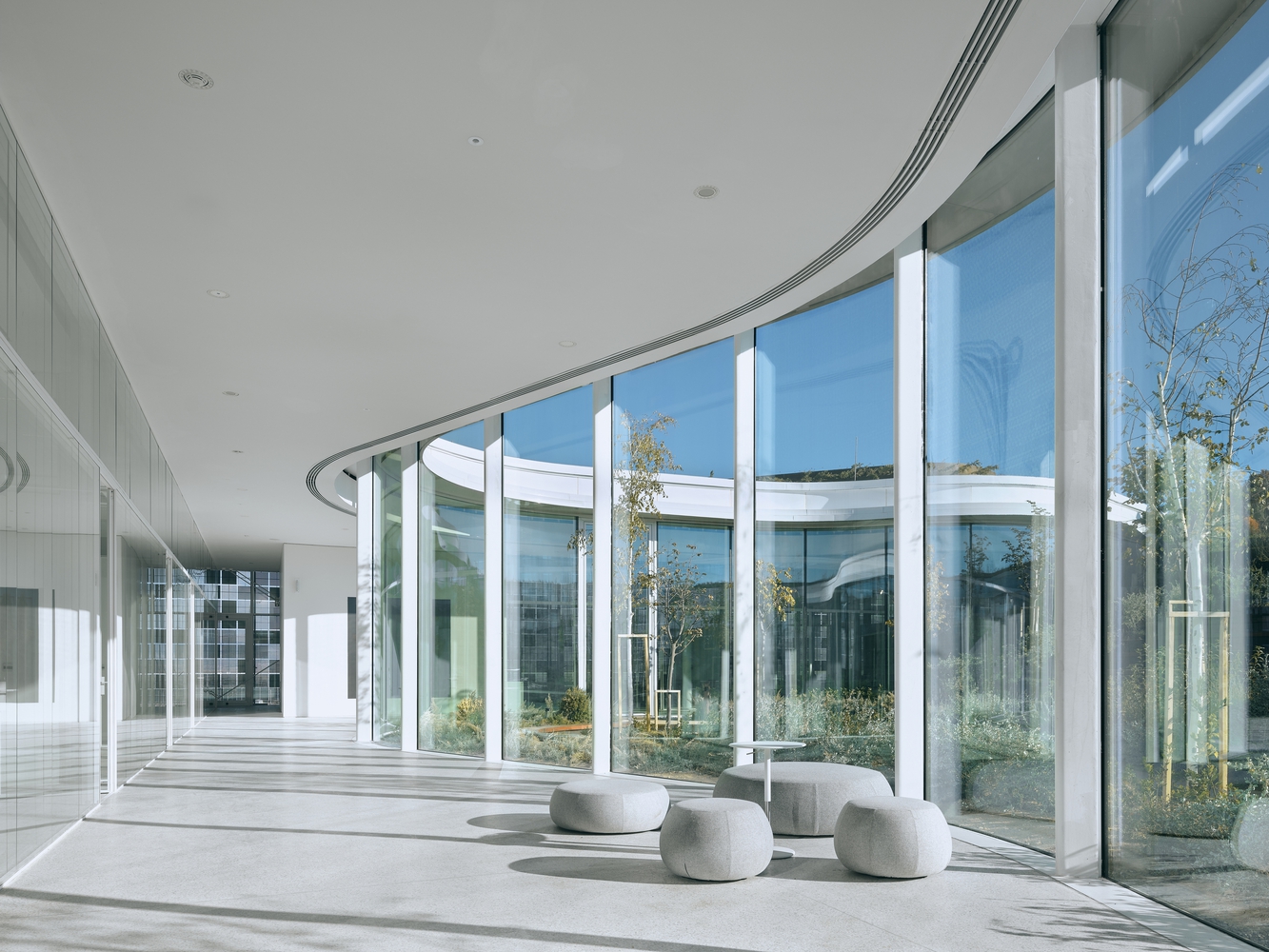
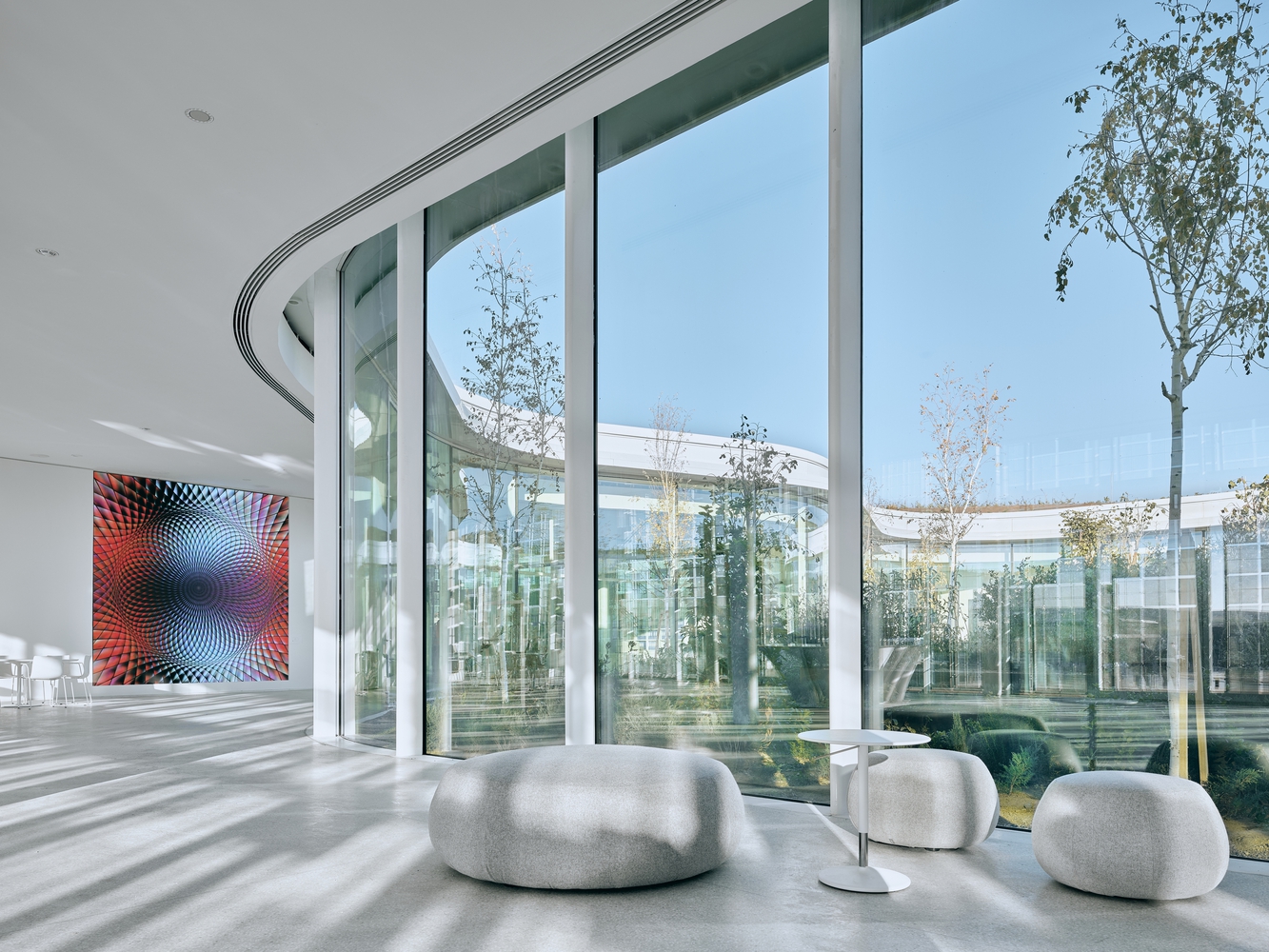
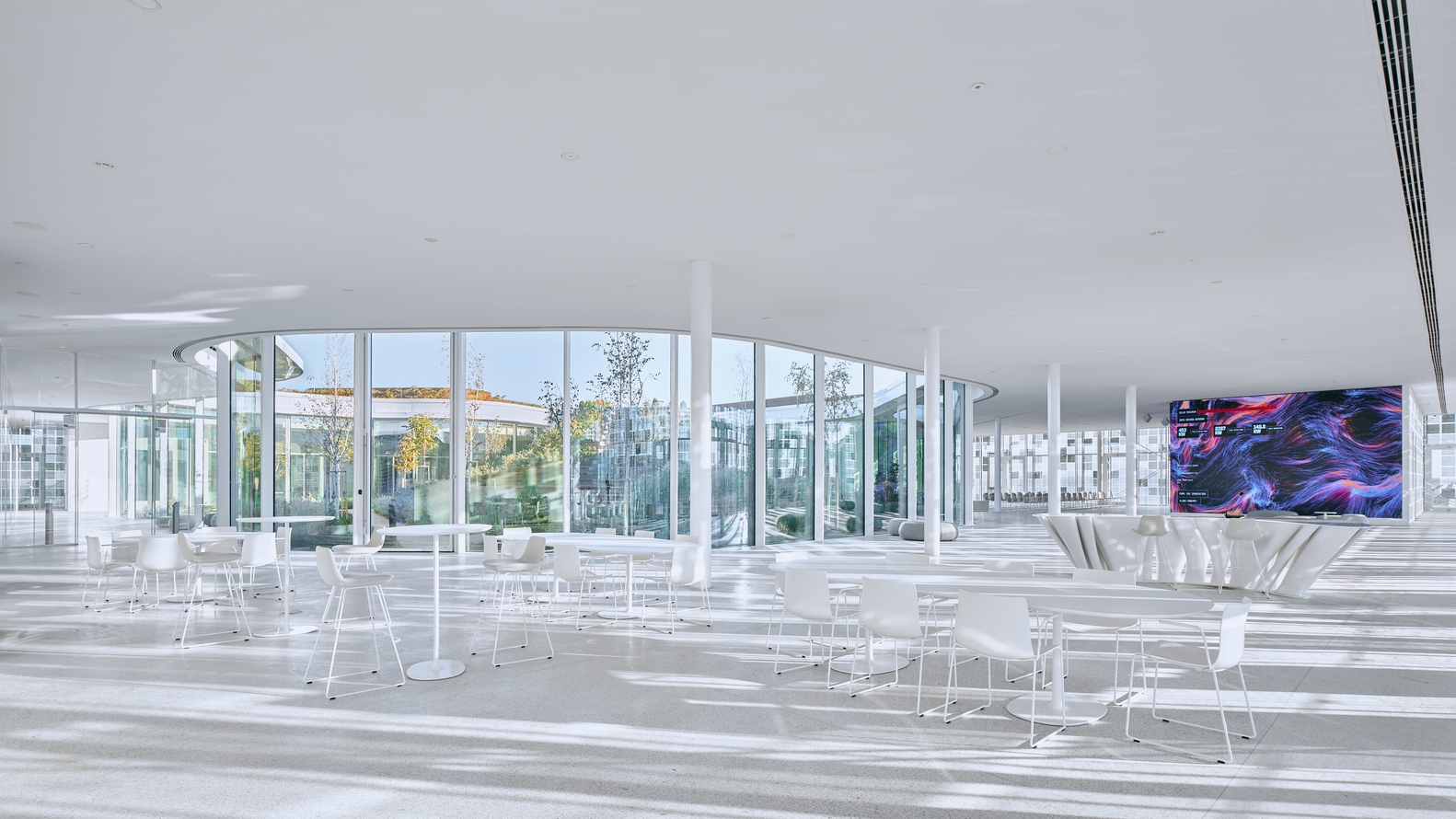
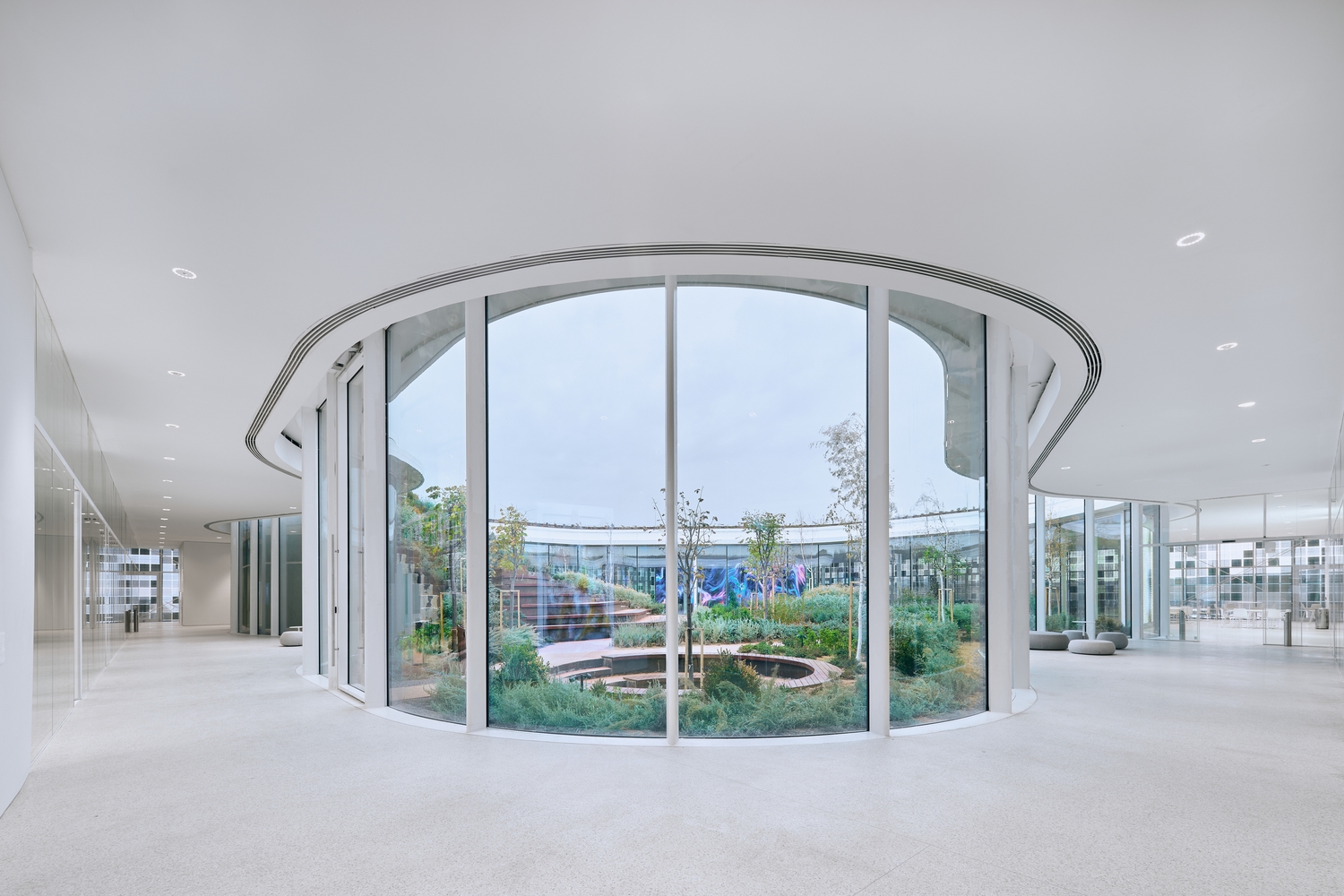
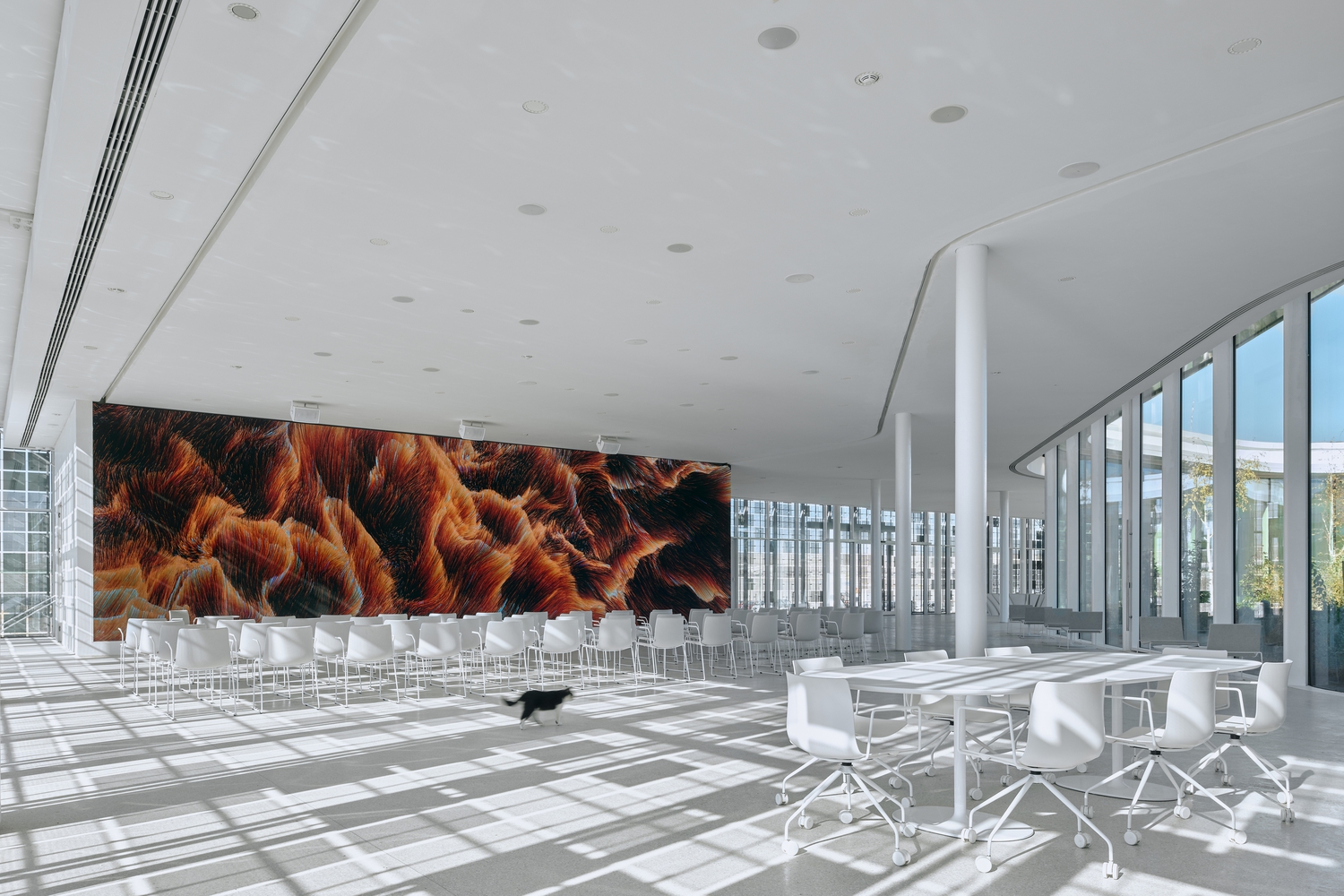
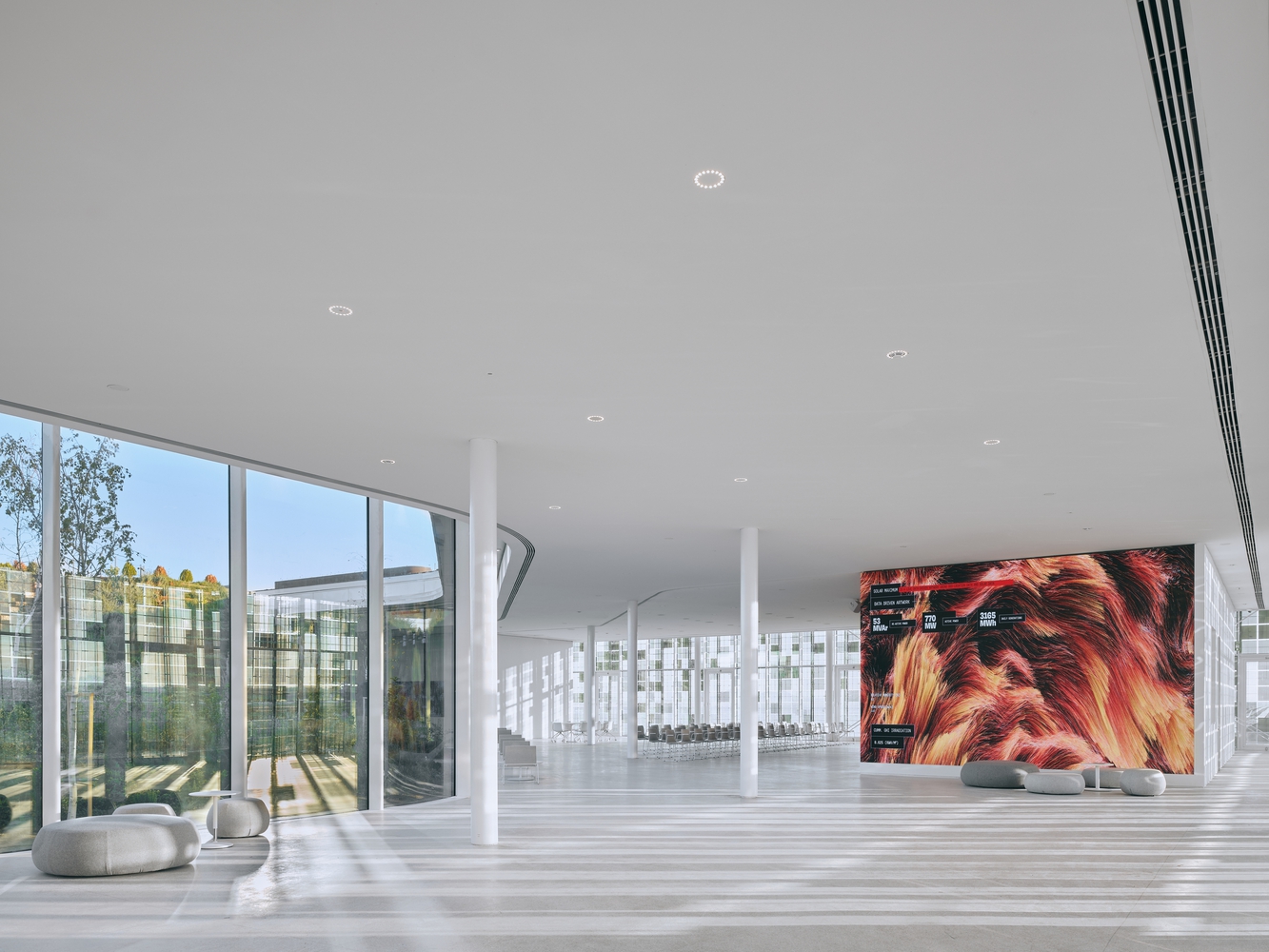
Detached from the ground, the single-storey building offers, in the architects’ description, “different experiential spaces at the intersection of humans, nature, and technology”. From within, the reflective façade forms a gentle barrier like a sheer curtain, and the foyer, where boundaries are blurred, welcomes visitors with the glazed façade of the courtyard. A series of spaces extends from there to the cafeteria and the multipurpose hall, with the infrastructure to host events, panels and workshops. Offices for the engineering and management teams, a meeting room and an exhibition room complete the programme. Technical rooms store the SCADA hardware that controls and monitors the solar field, and a large screen in the foyer, installed by Süleyman Yılmaz, displays the energy production of the plant.
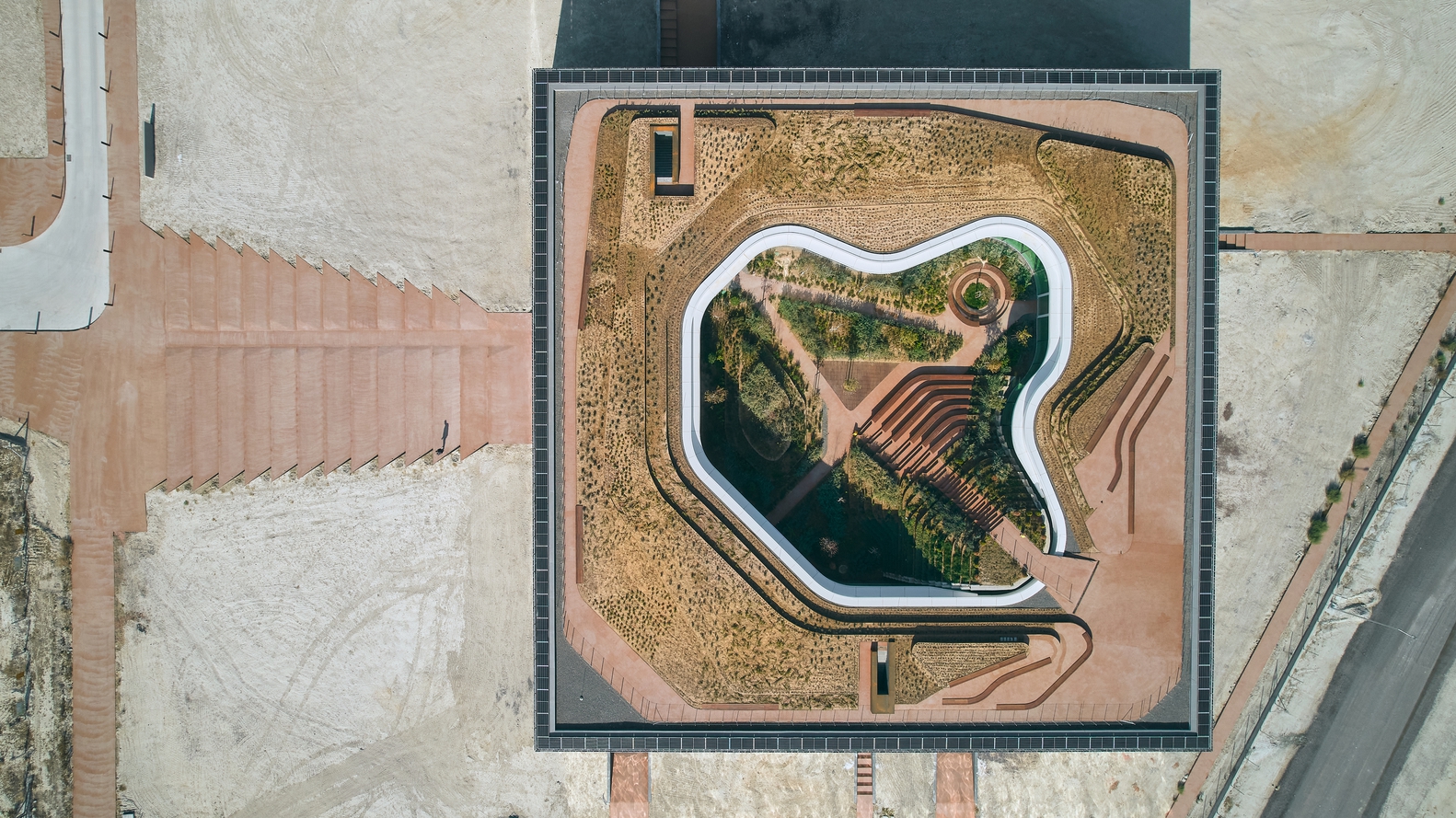
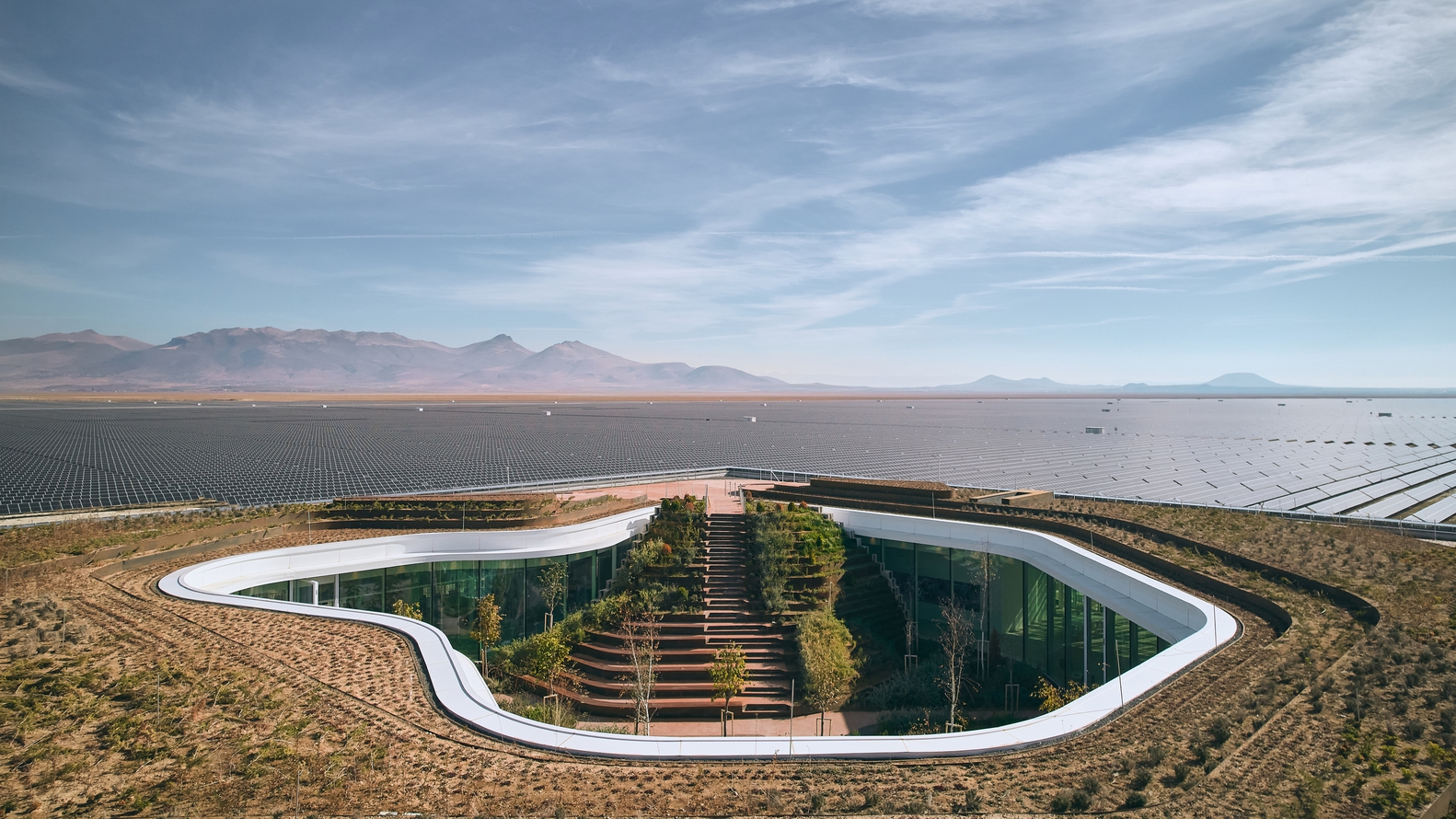
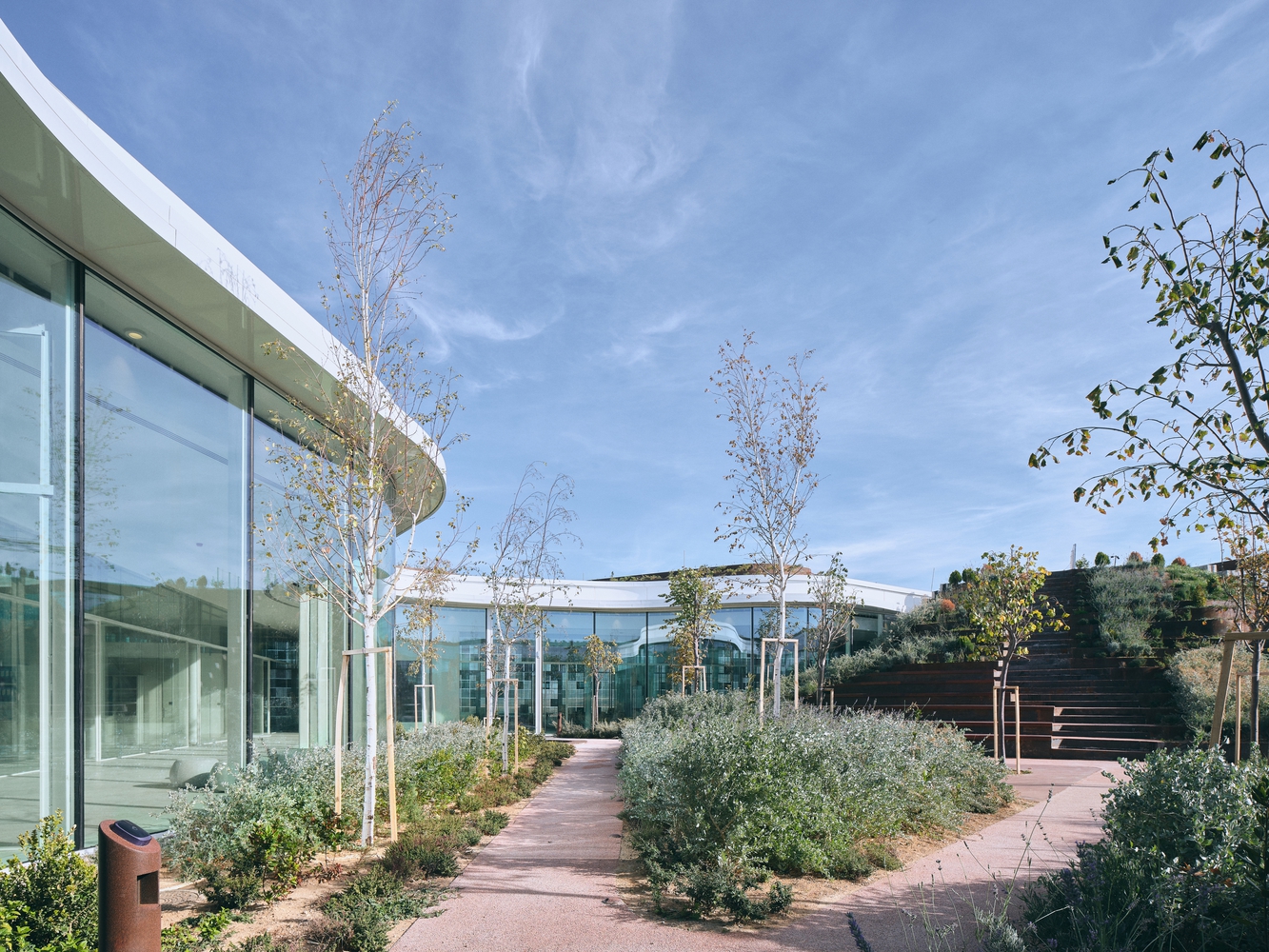
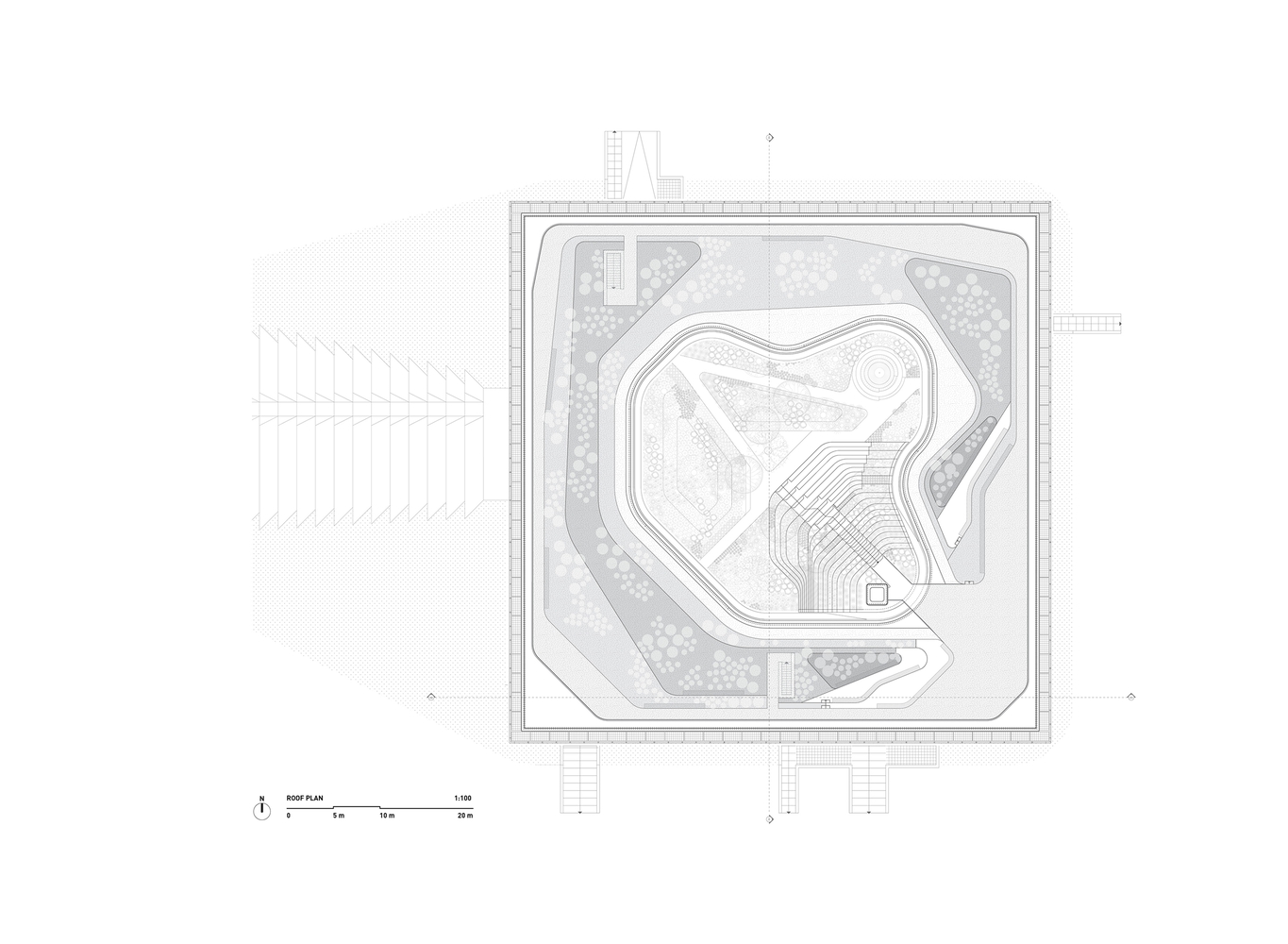
The courtyard at the centre of the control building determines all the circulation areas and the hierarchy of spaces, separating the private areas from the common ones, and it serves as a sheltered place for rest and activity against the harsh climate. Its irregular outline follows the rooms around it, since the cafeteria and the events hall extend further than the narrow offices. Employees and visitors can also reach the courtyard by a large staircase from the roof level.
The planted courtyard of the control building contrasts with the arid surroundings, as its reflective façade does. Planted with endemic species that need little irrigation and maintenance and that bloom at different times of the year, it establishes a sustainable microclimate, and its trees are expected to grow until they shade the glazing. A green roof above the offices captures rainwater, which is filtered and reused in the garden. Caner Bilgin, the founder of the office, says of the courtyard: “It receives wind without dust and provides a shaded area.” For him it is also “a machine that contributes to the energy efficiency of the building”.
The control building, in the words of Caner Bilgin, “also has a semi-public service aspect”. Since it opened, people of all ages and levels of expertise have used it for engineering workshops, panels and sessions that explain sustainable energy to students. Digital artworks by Hakan Yılmaz, Ecem Dilan Köse, Süleyman Yılmaz and Ali Tan Uçer, which were commissioned for the interior, take sustainability and technology as their themes.
The project won the Grand Prix of the BIG SEE Architecture Award 2025 among public and administration buildings. Before that, it was longlisted in the infrastructure and transport category of Dezeen Awards 2024. The awards site of Share Architects, in turn, lists it among its finalists of 2026.
Project Gallery
39 photographs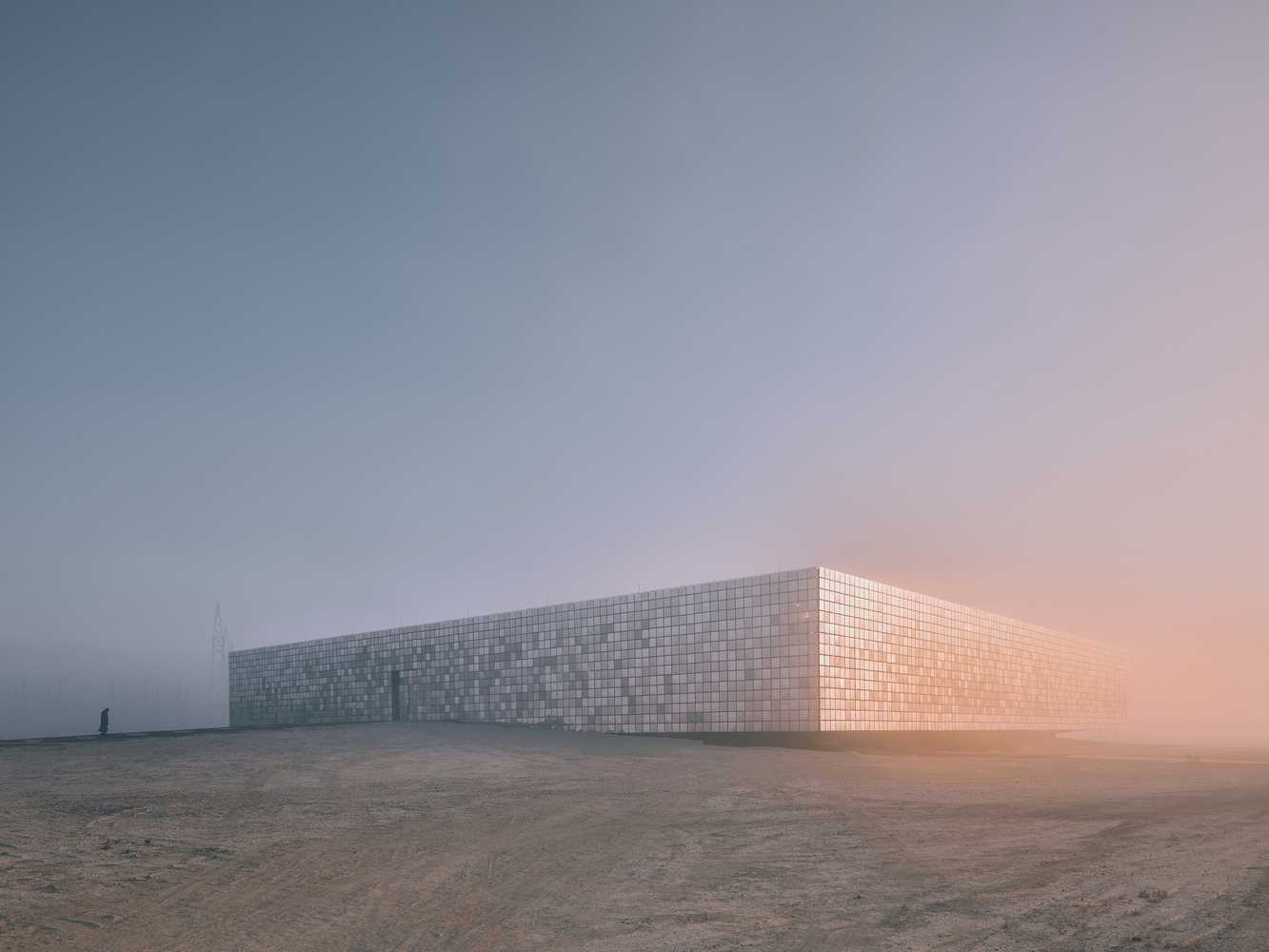
Project Location
AddressKarapınar, Konya, Türkiye, Turkey
The location is intended for general reference and may denote a city or country; it does not identify a precise address.