
home/projects/schools/rainbow international school
Rainbow International School / Spacefiction studio
Educational ArchitectureSchool
- Architects
- Spacefiction studio
- Lead architects
- Baba Sashank, Vindhya Guduru
- Location
- Nellore, India
- Year
- 2025
- Photographs
- Vivek Eadara
- Type
- School
- Category
- Schools
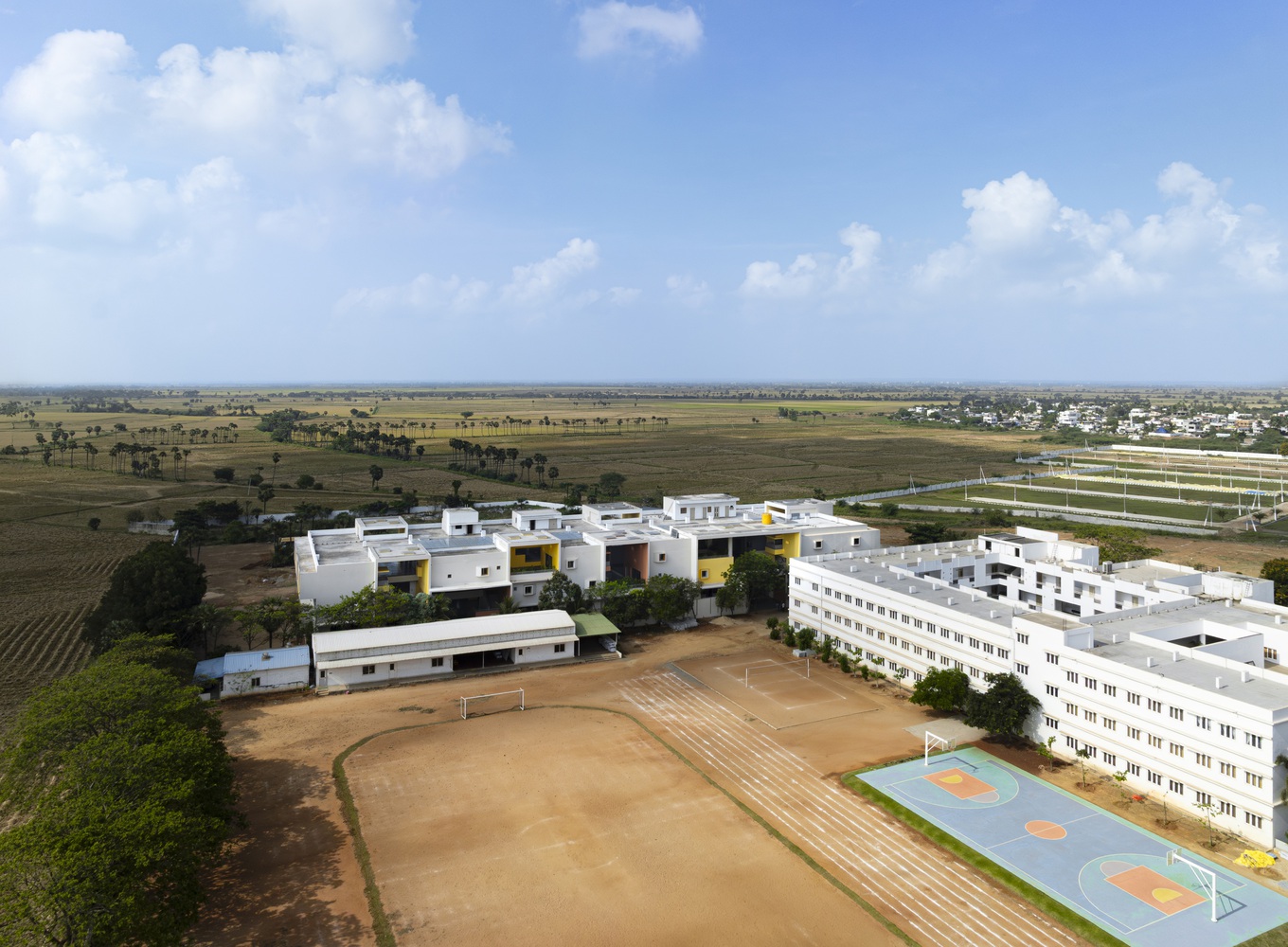
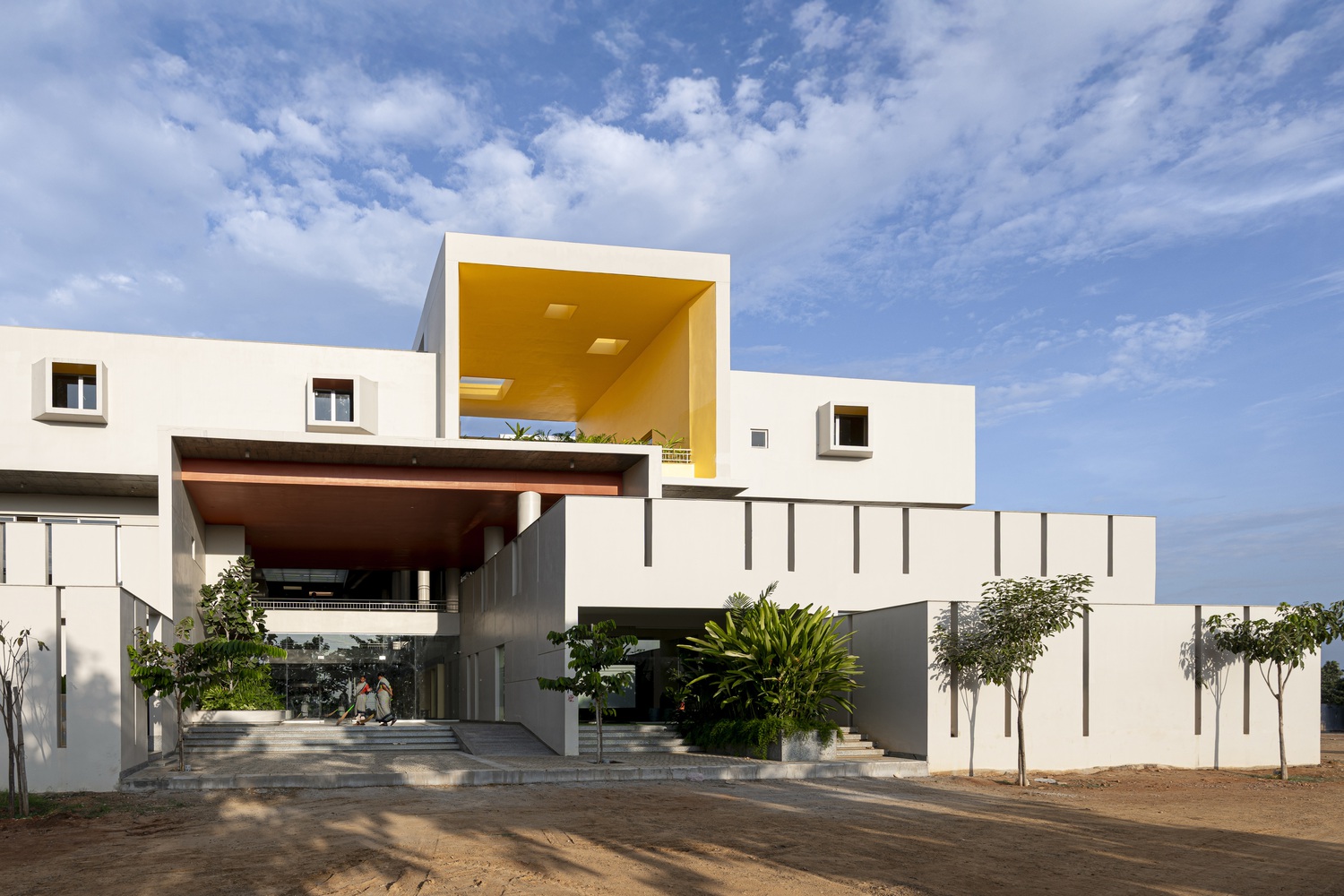
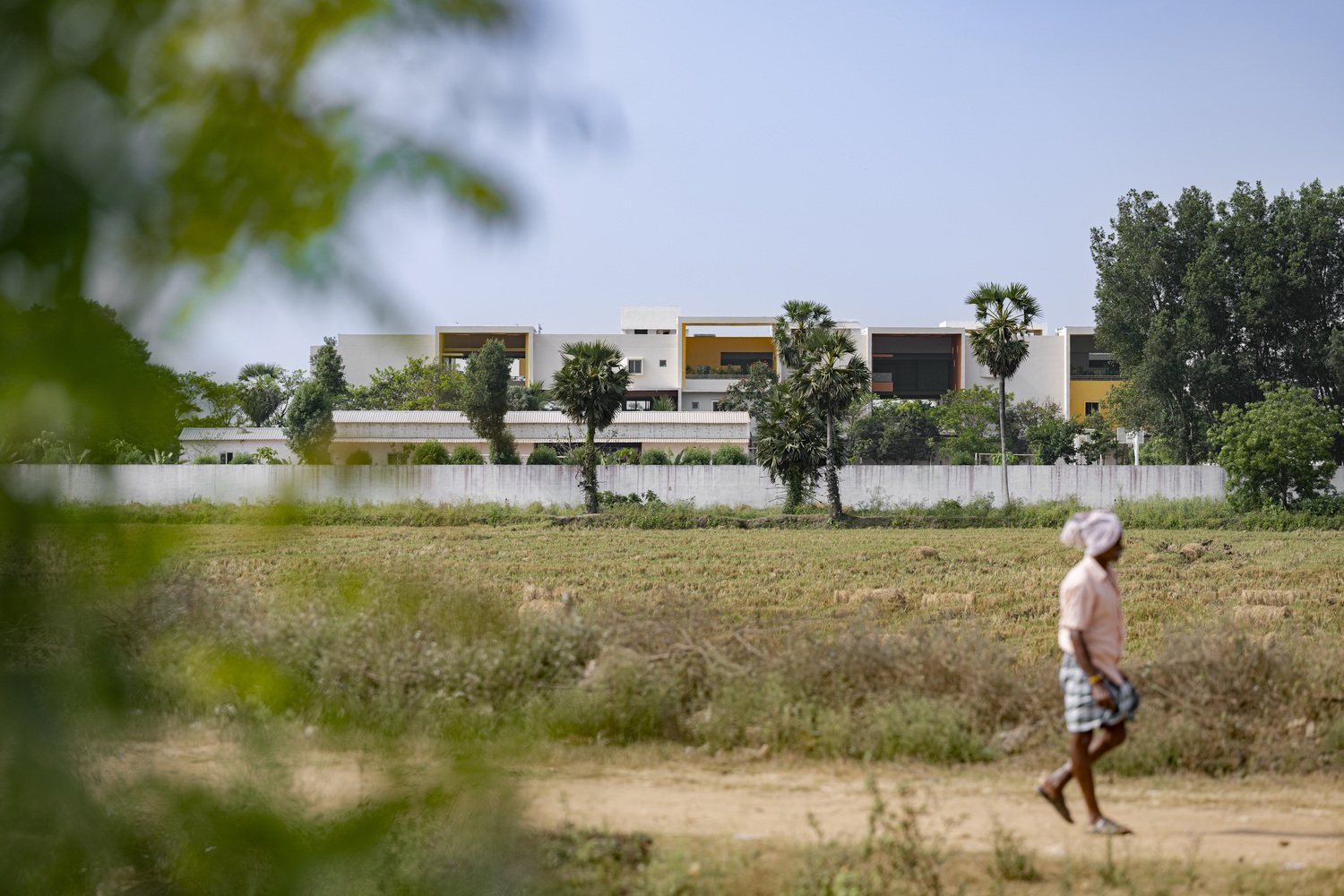
Rainbow International School education center designed by unidentified architects in Nellore, India has redefined spatial learning environments by prioritizing flexible pedagogy and integrating nature into academic architecture. Completed as an extension to an existing campus, the three-story structure aligns east-west to reduce heat gain while a central spine lit by skylights organizes circulation between two wings. The design replaces the conventional classroom model with open, double-height courtyards and shaded outdoor zones, fostering a more constructivist and fluid learning experience. Drawing inspiration from the historic gurukul model, the project aims to dissolve boundaries between instruction and exploration, blending indoor and outdoor education. Locally sourced Kota stone and tandoor stone, coupled with sliding aluminum doors, ground the materiality in regional climate and traditions. Through its circulation, spatial sequencing, and natural interventions, Rainbow International School encourages informal learning, dialogue, and community-driven knowledge transfer.
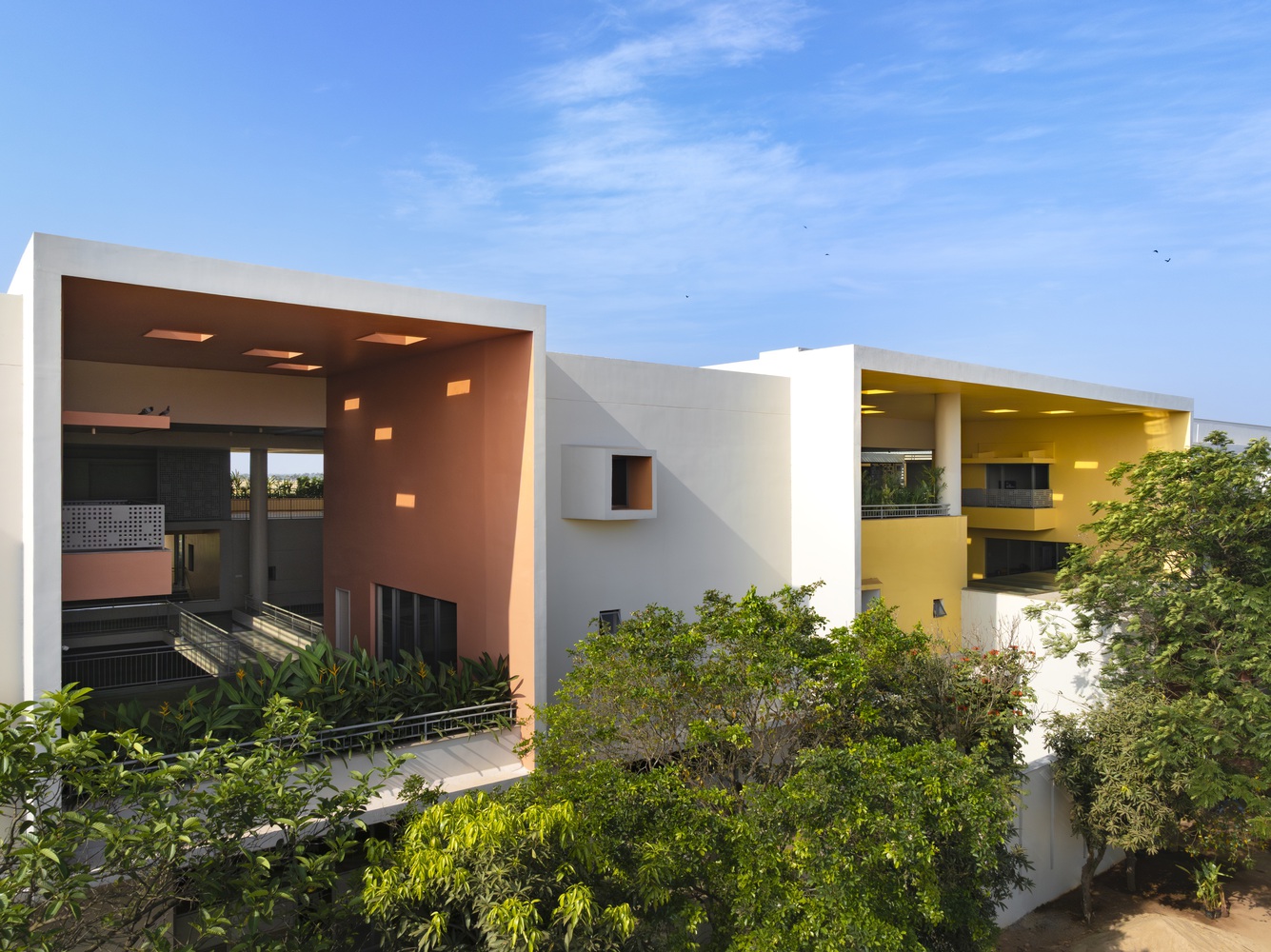
India’s educational history includes one of its oldest models, the gurukul (guru–teacher, kul–house), which evokes a strong image of a teacher imparting knowledge to students beneath a large tree. This minimal, open, and indirect method of instruction declined around the 19th century as formal institutions adopted the “cells and bells” model.
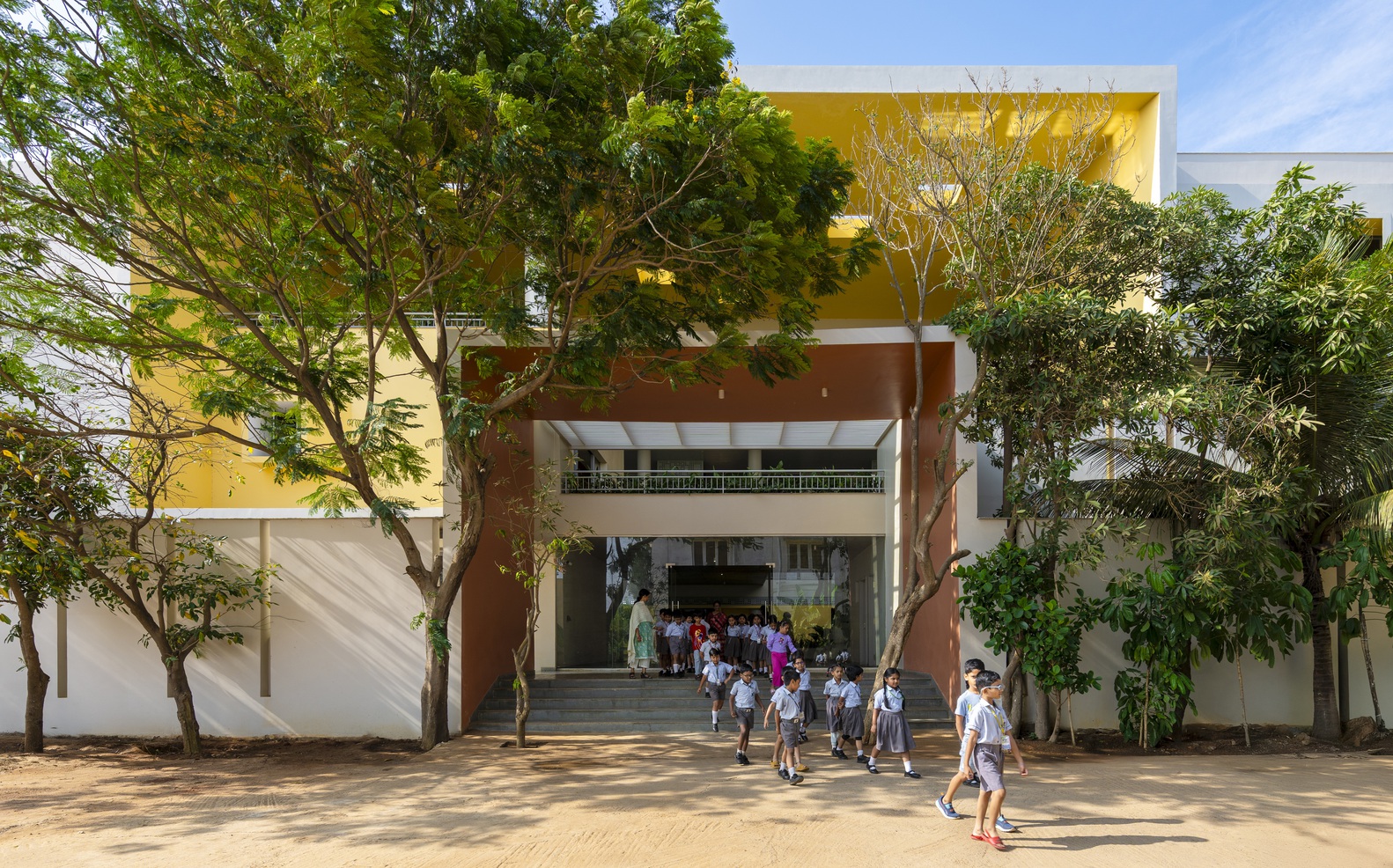
The term school originates from the Greek scholē, meaning “leisure.” Today, however, most learning environments in India lean toward pressure rather than ease. As educational models evolve, the hierarchical, industrial approach to teaching no longer aligns with the needs of contemporary learners. Emerging pedagogies call for spaces that support exploration and reciprocity between teachers and students.
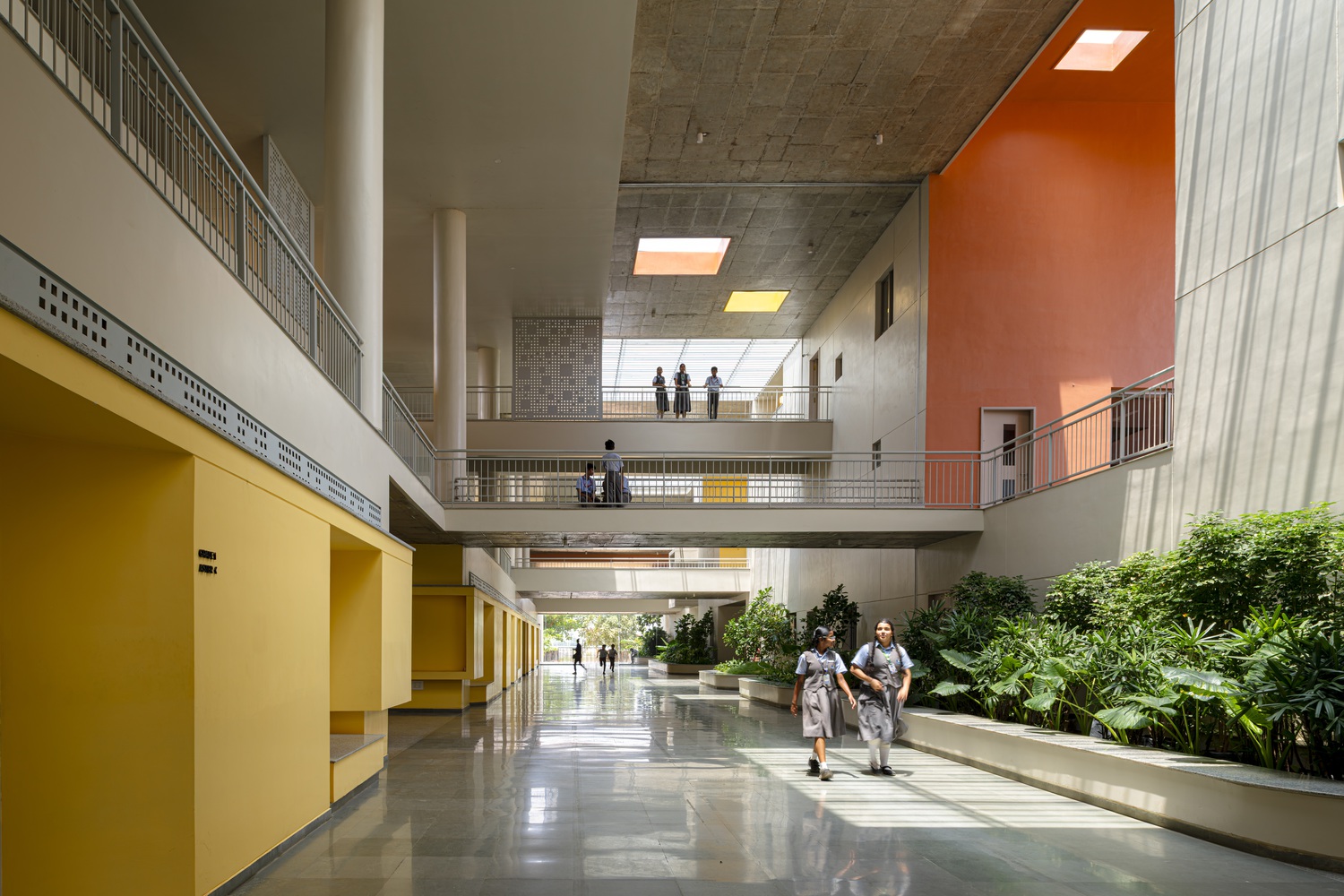
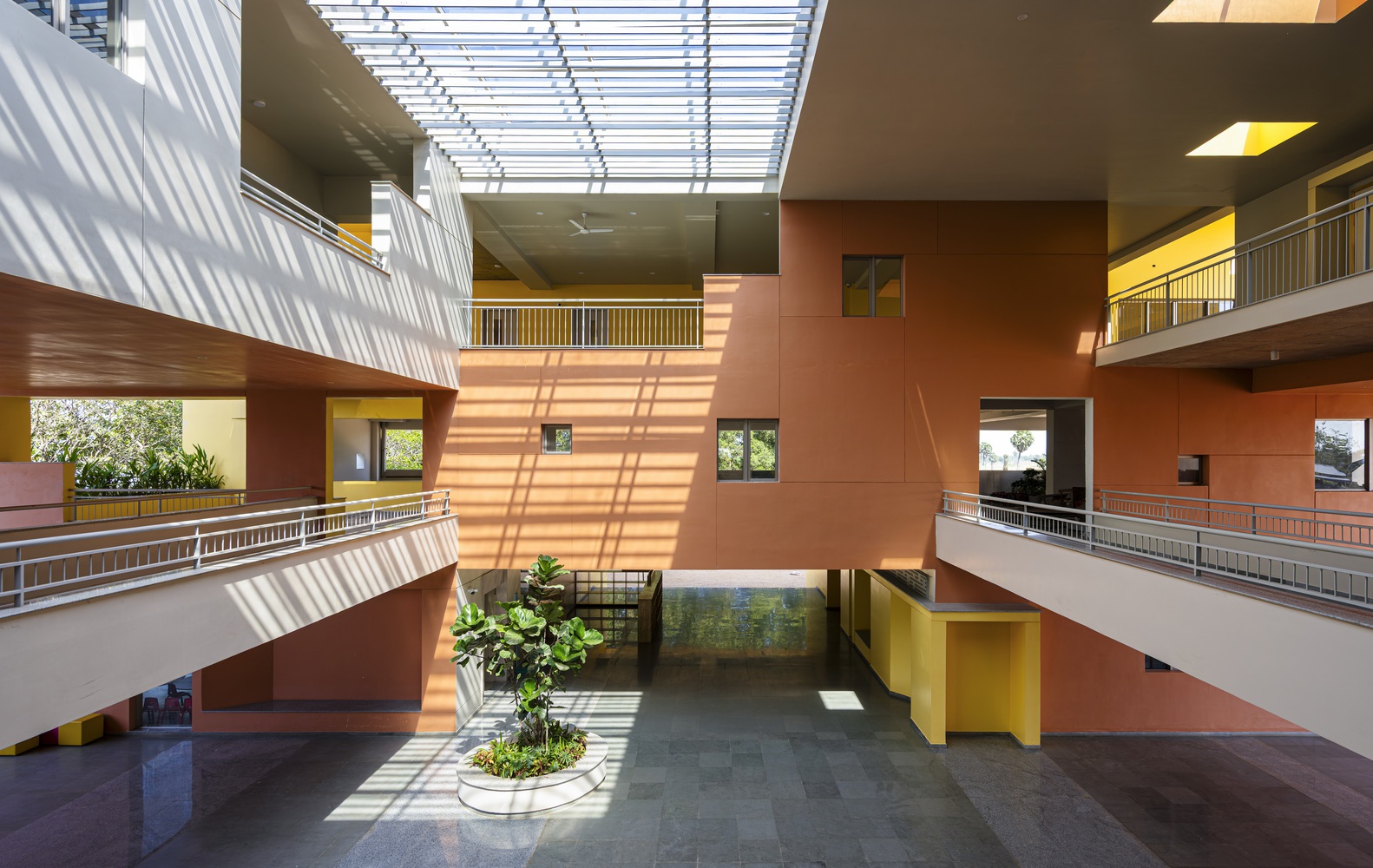
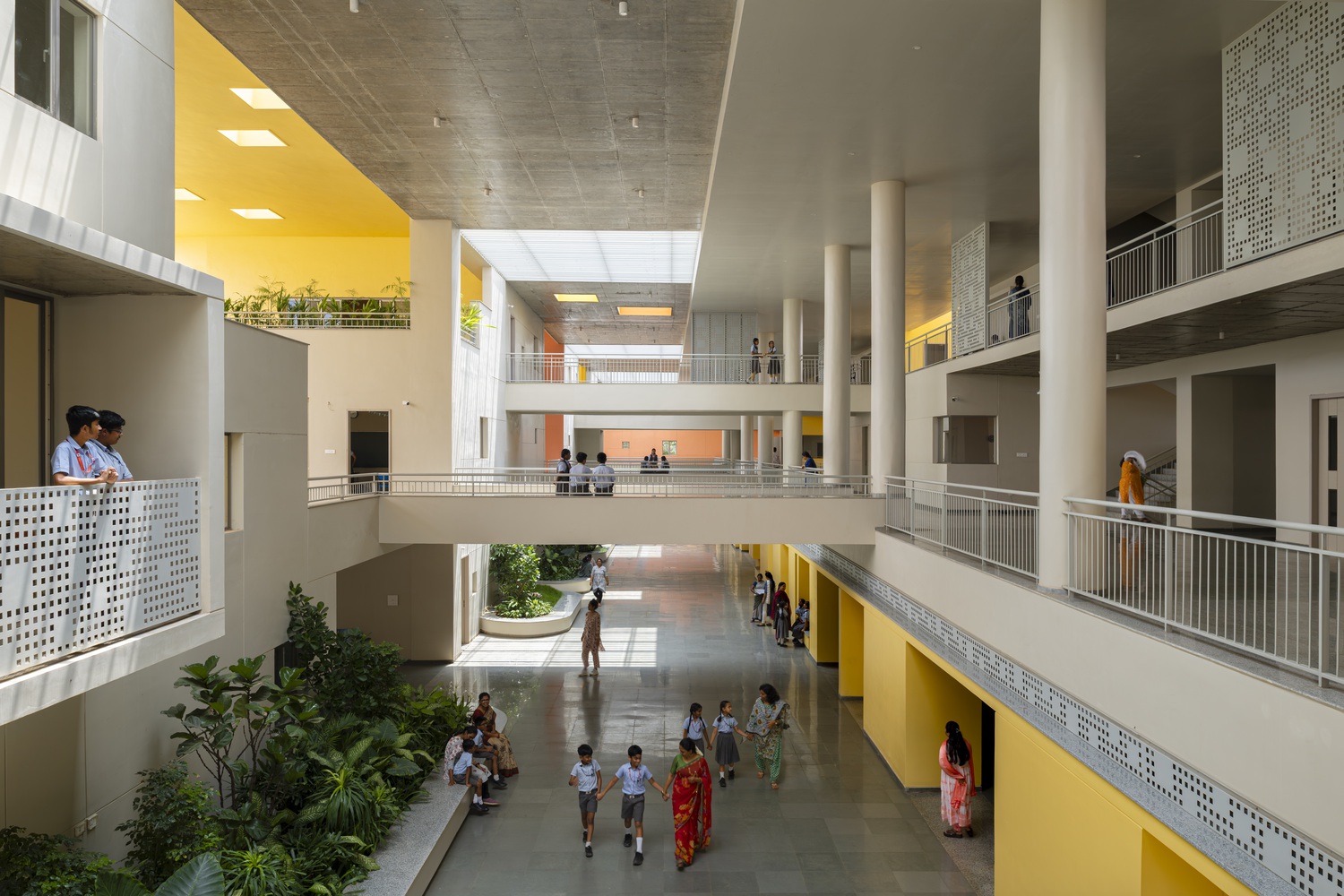
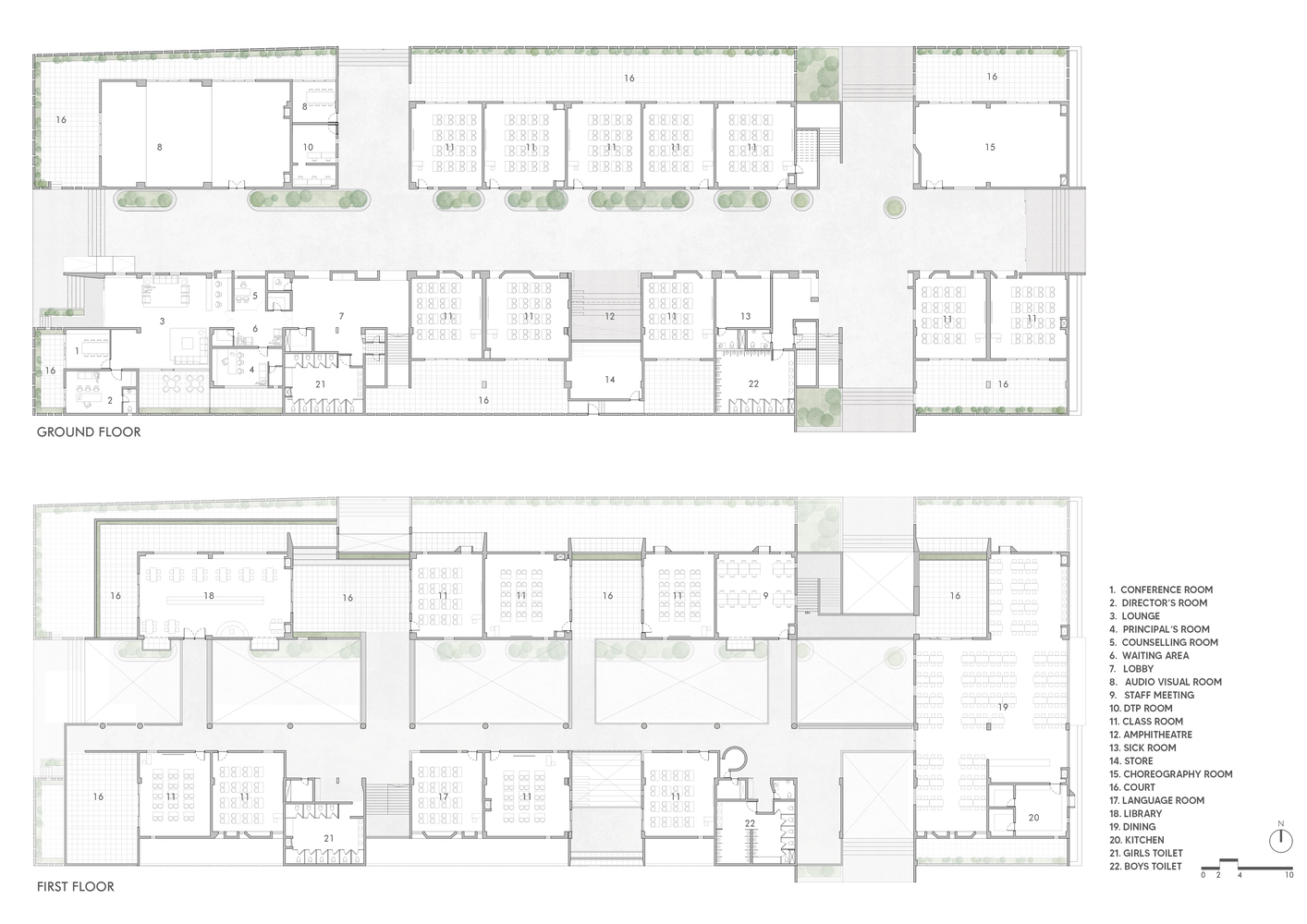
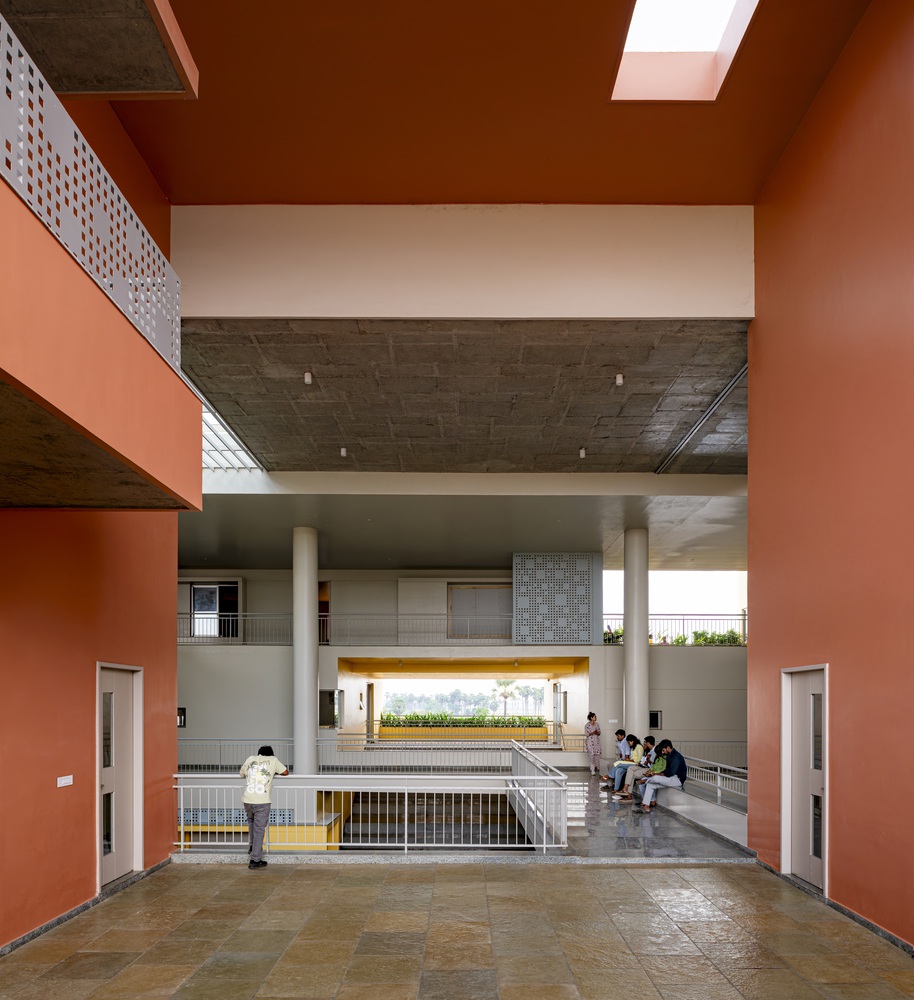
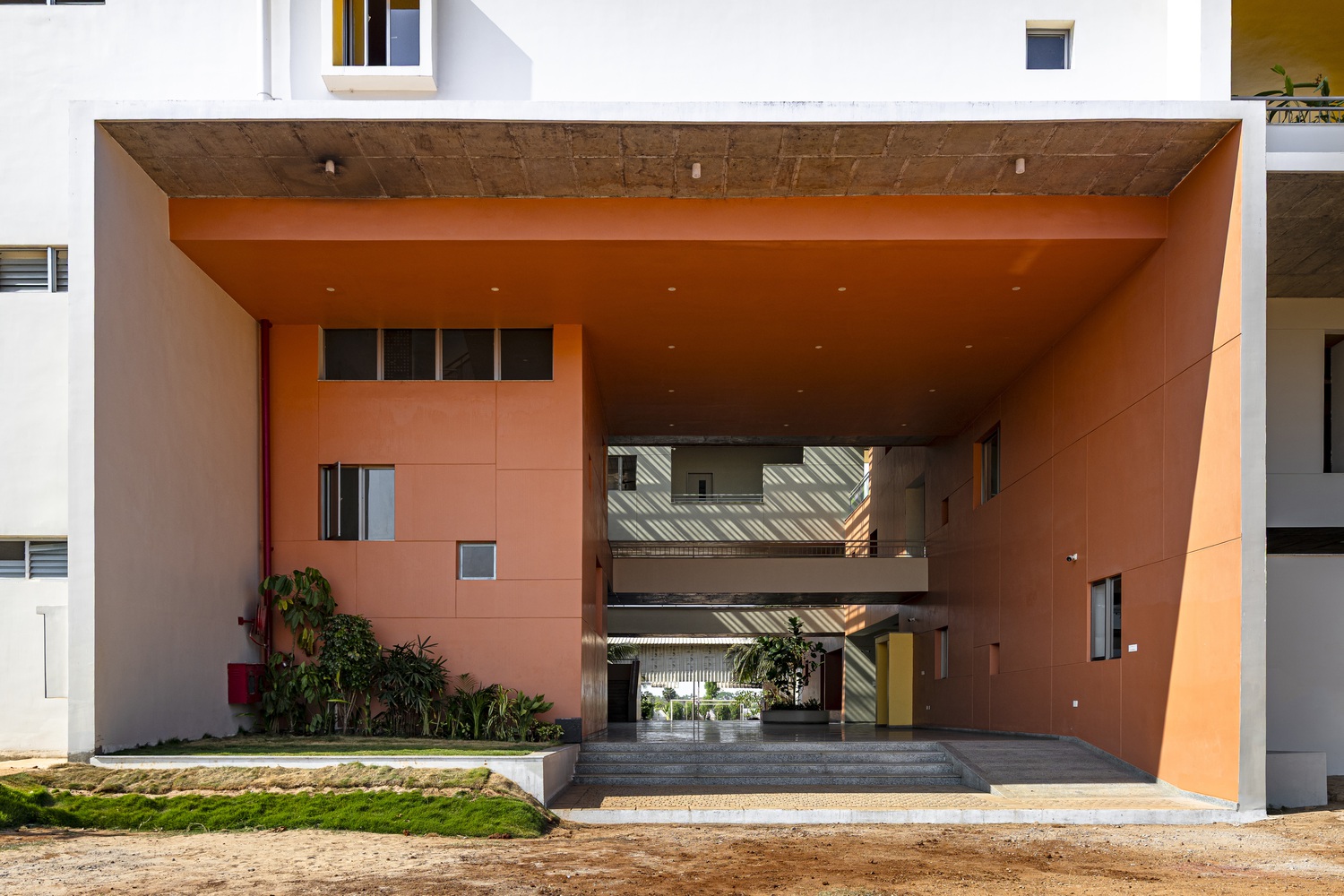
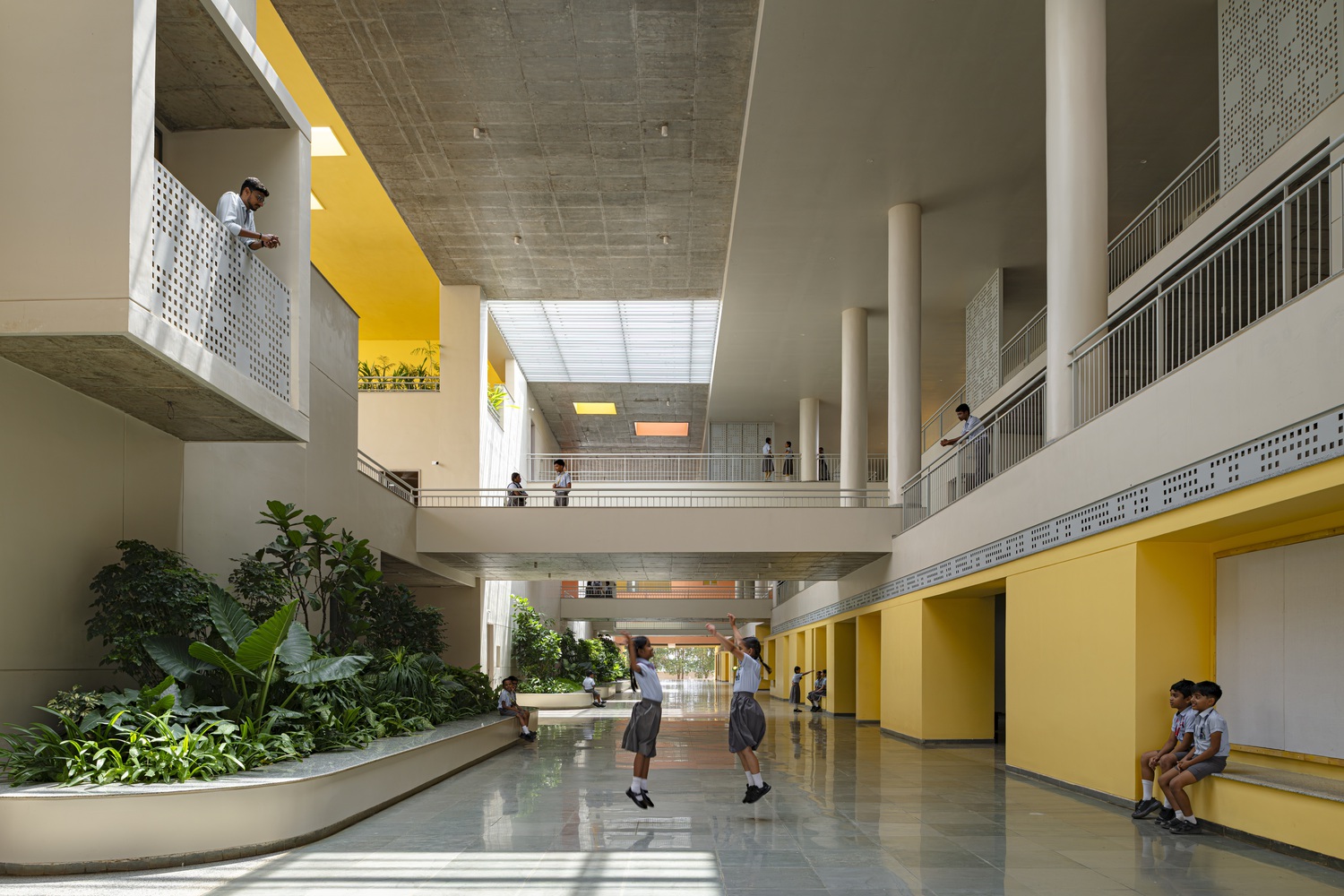
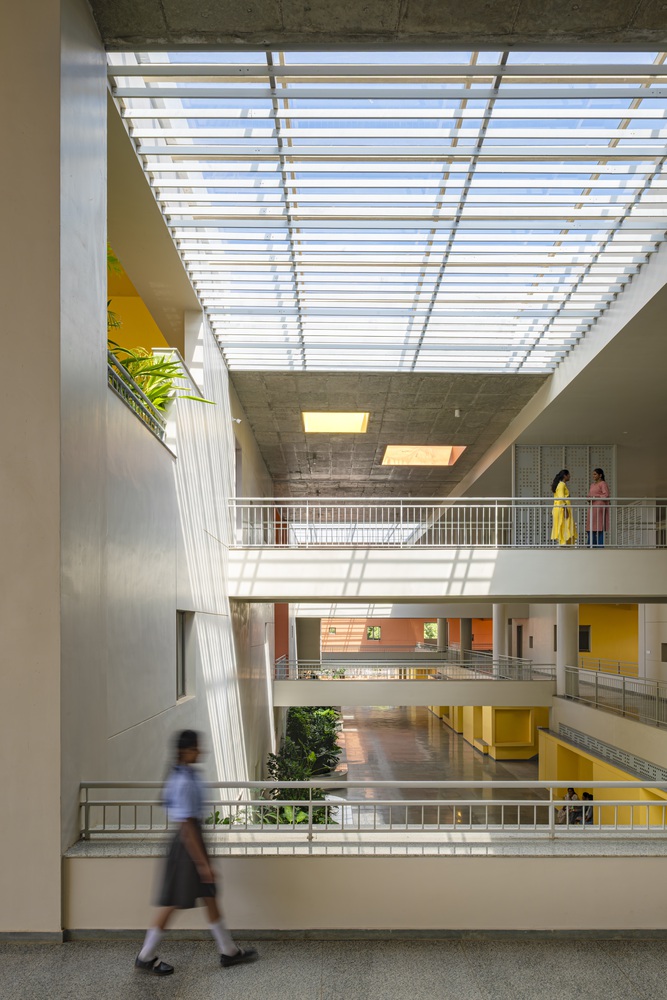
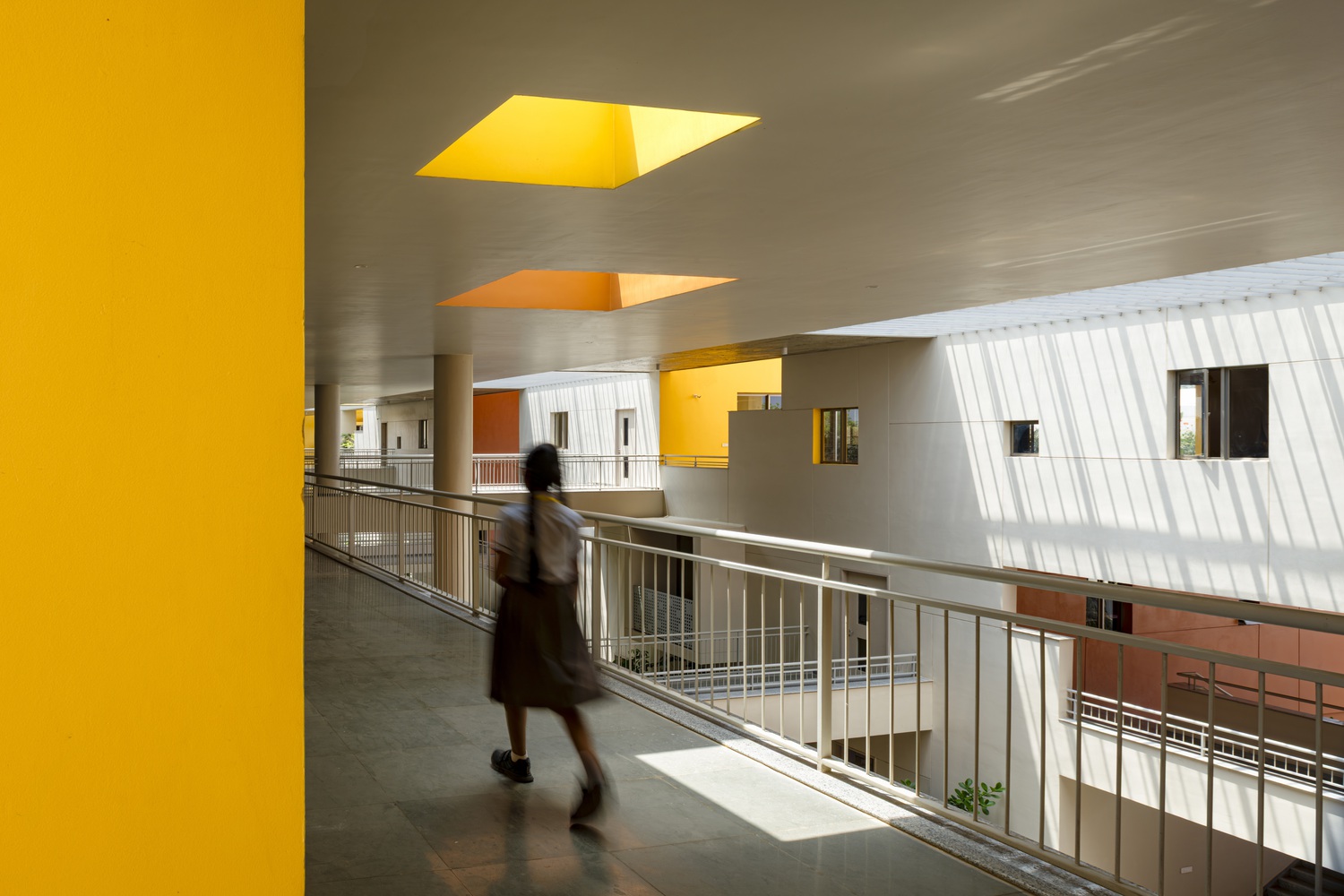
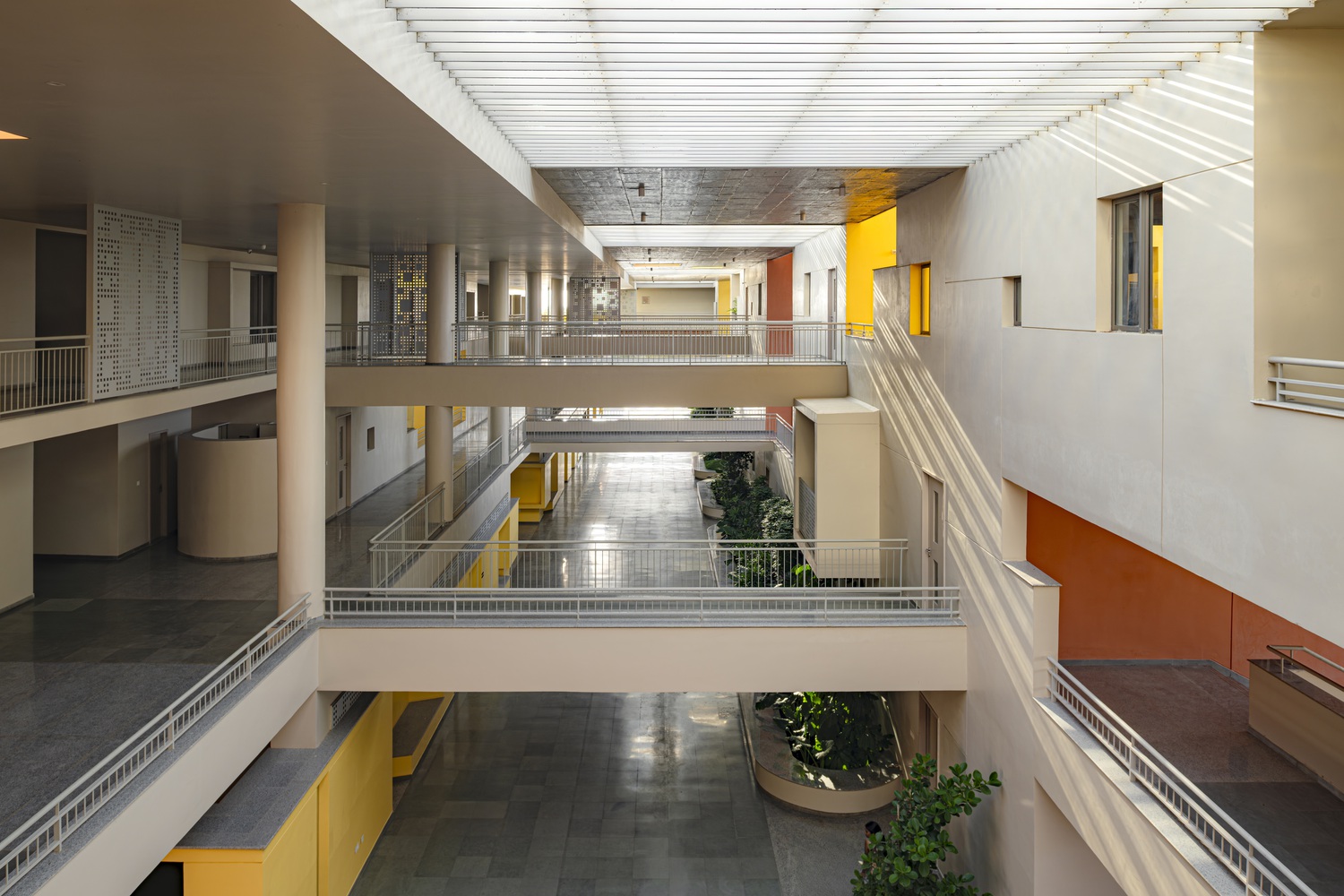
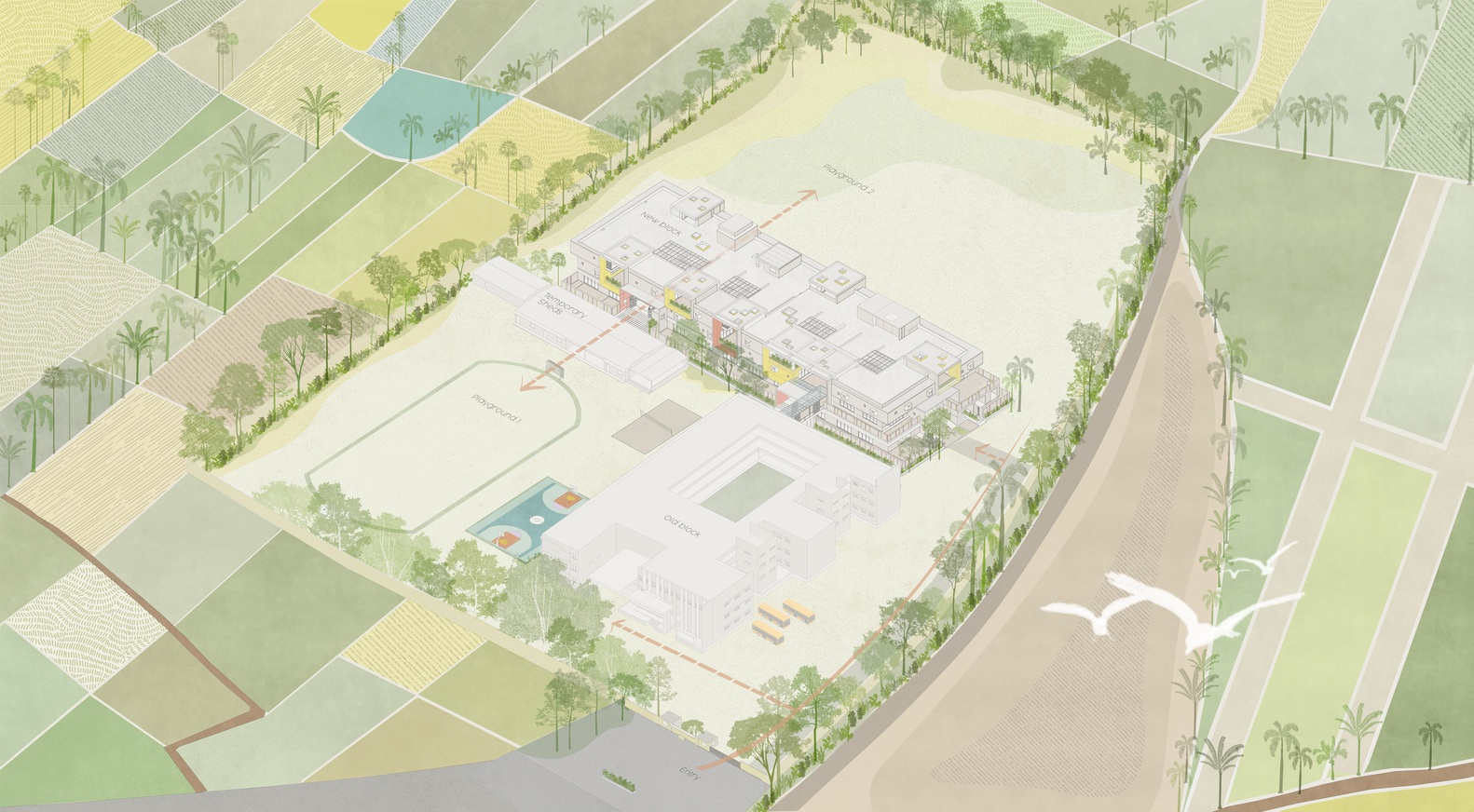
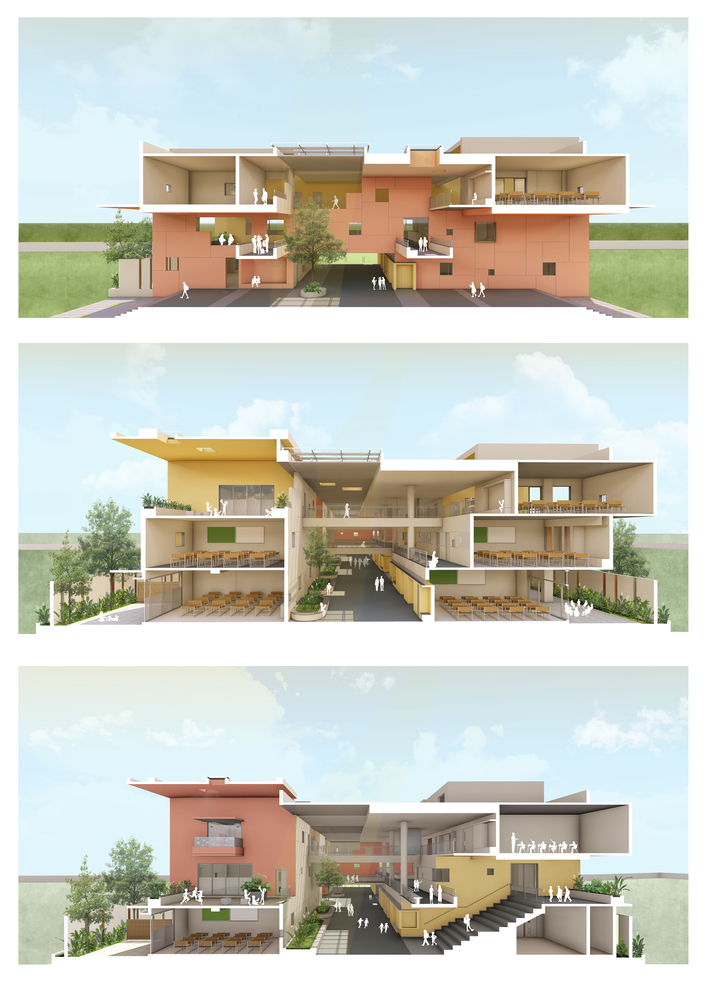
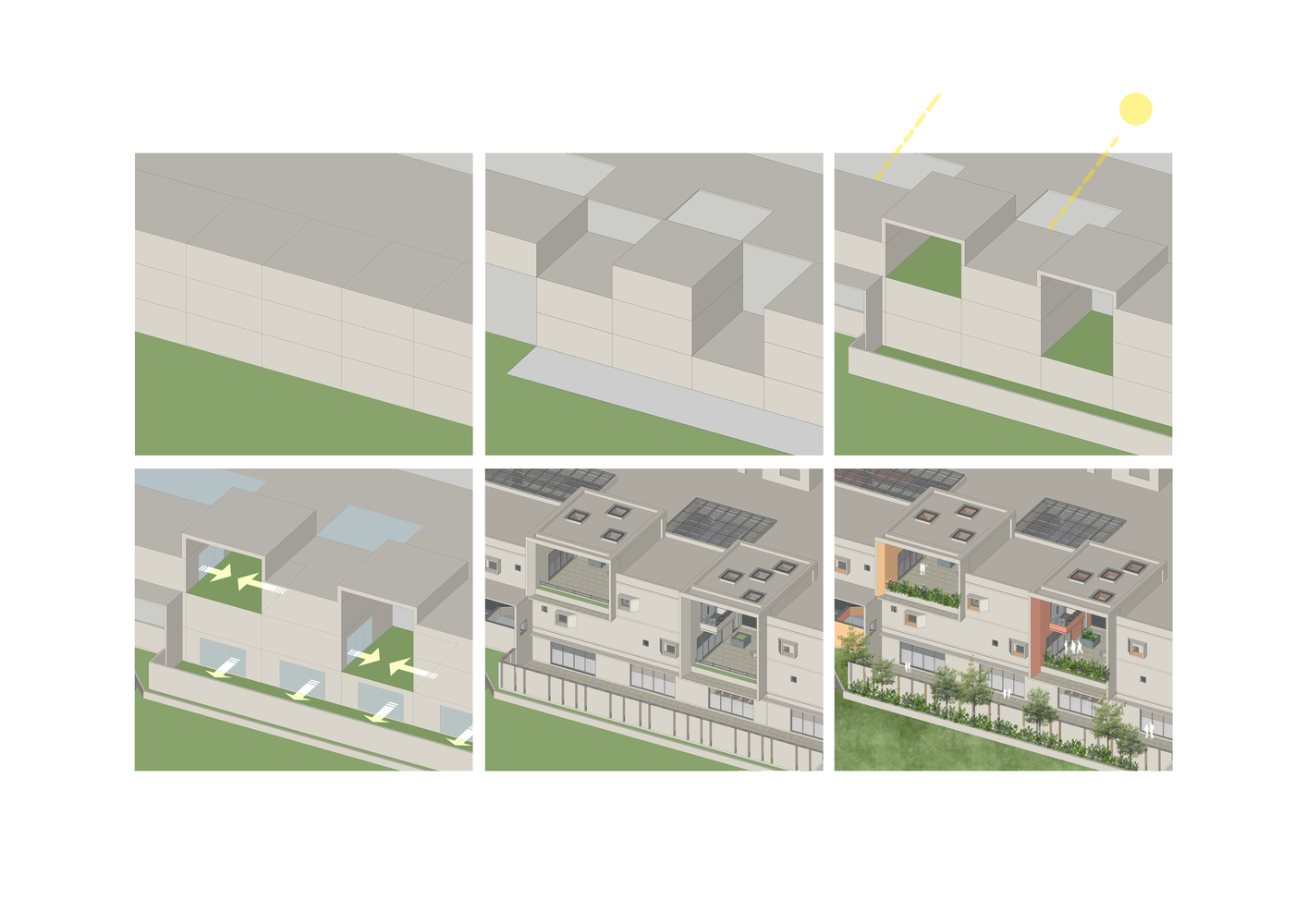
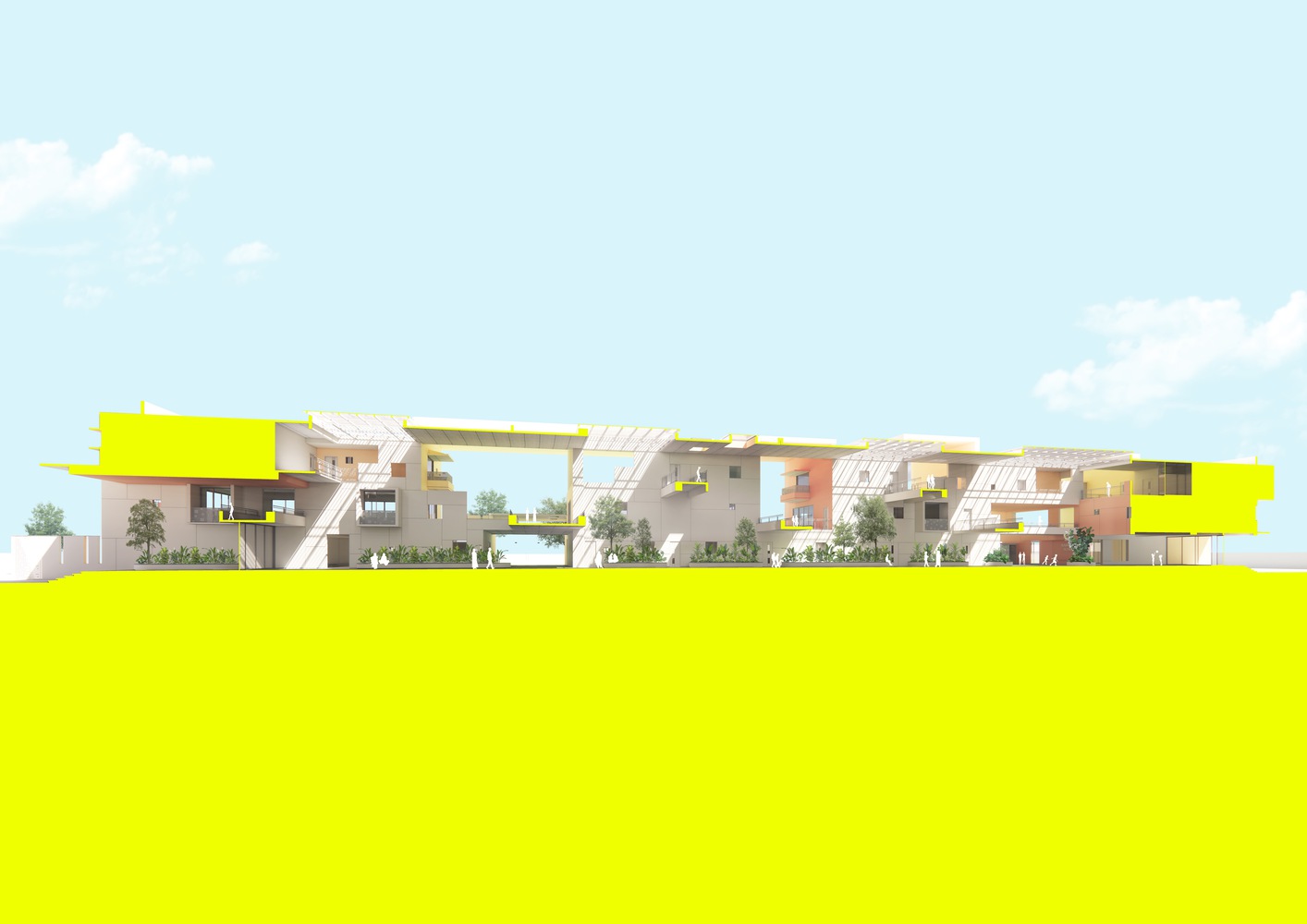
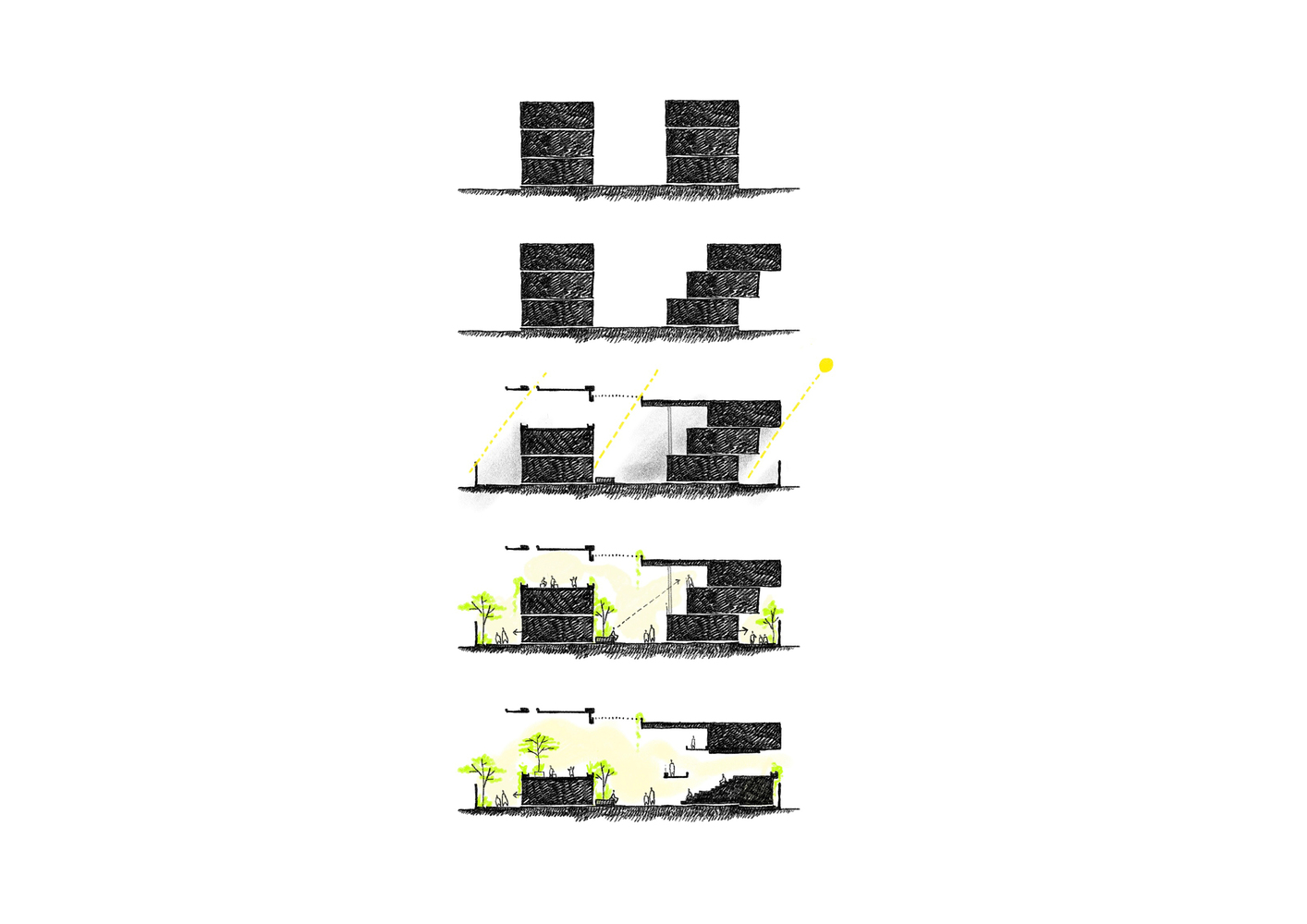
Rainbow International School, a three-story addition to an existing campus in Nellore, stretches along an east-west axis, placing its longer facades toward the north and south to reduce solar heat gain. A central vertical volume spans three floors, separating the north and south wings and serving as the main circulation spine. Bridges connect both wings across multiple levels. Natural light enters through skylights above and falls onto linear planters filled with tropical vegetation running the building’s length. The staggered layout of the south wing shades the lower levels from intense southern sunlight.
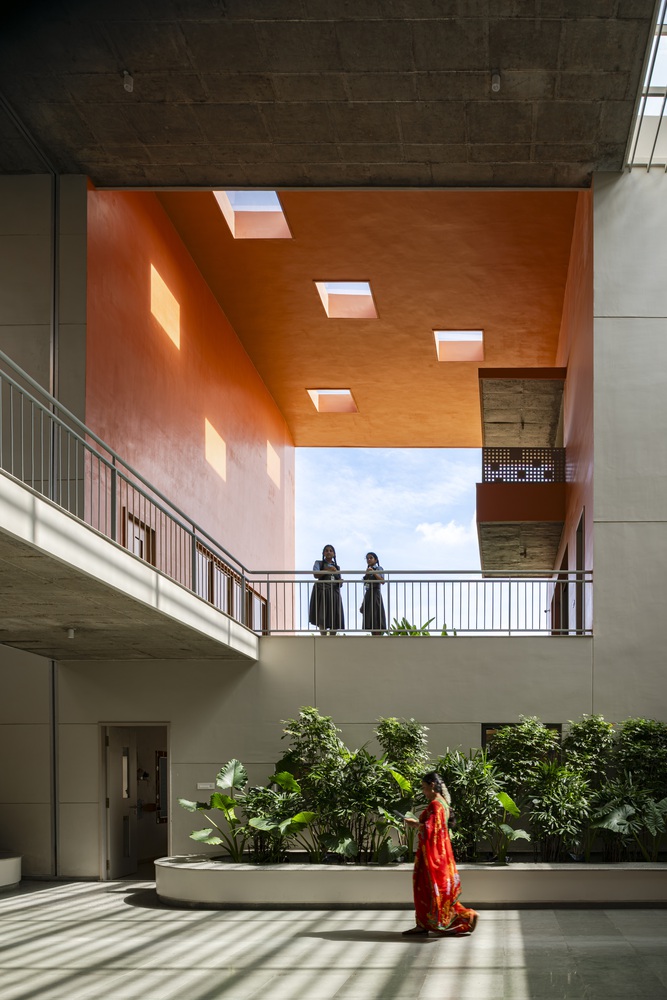
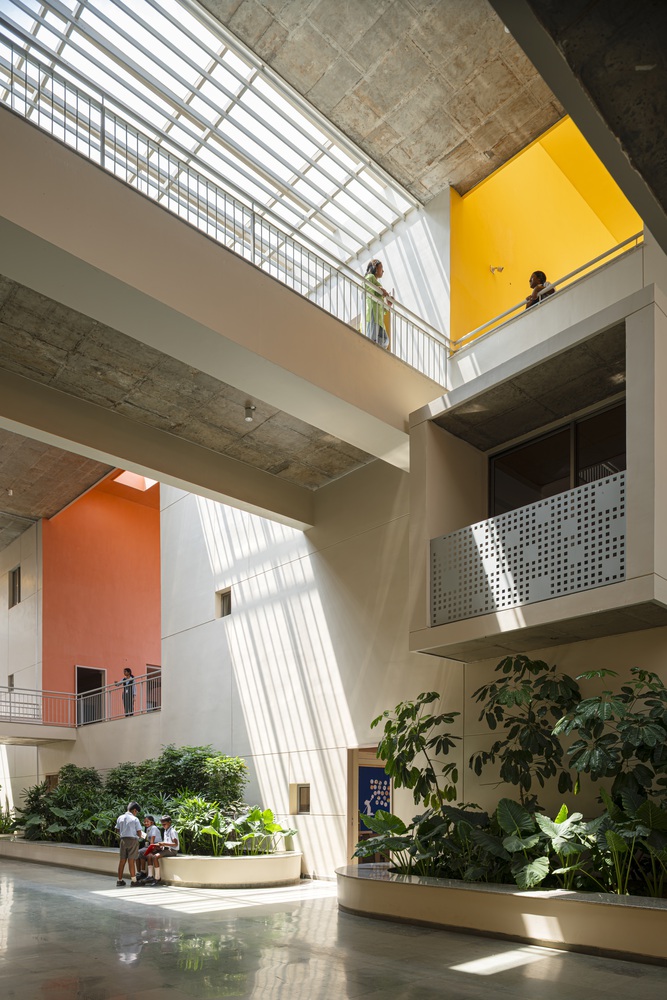
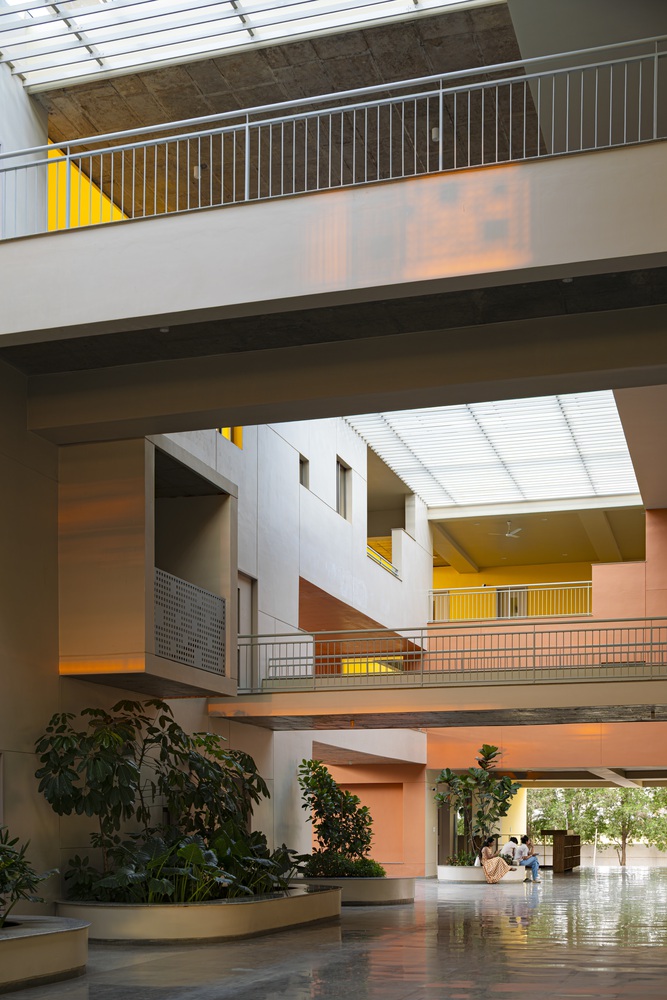
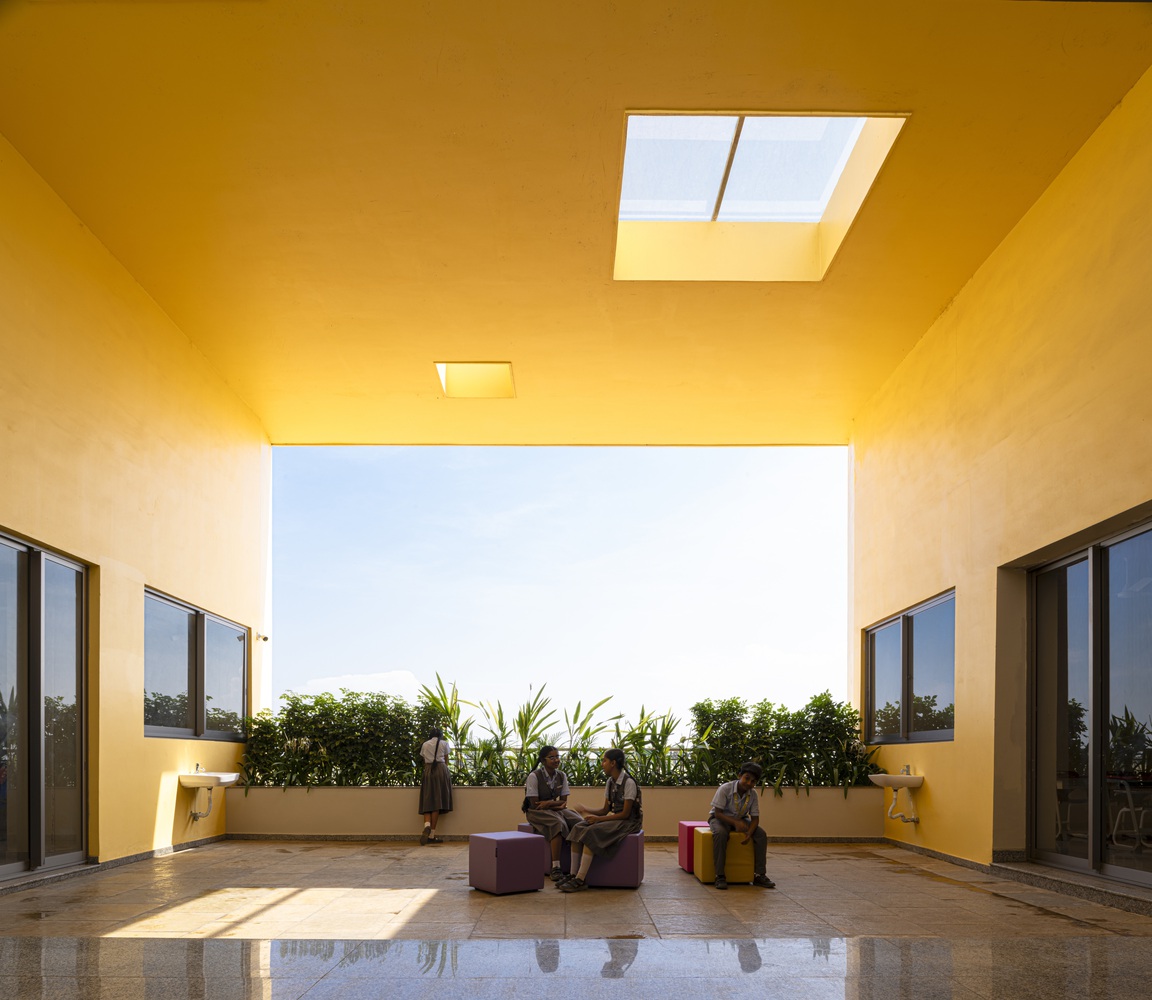
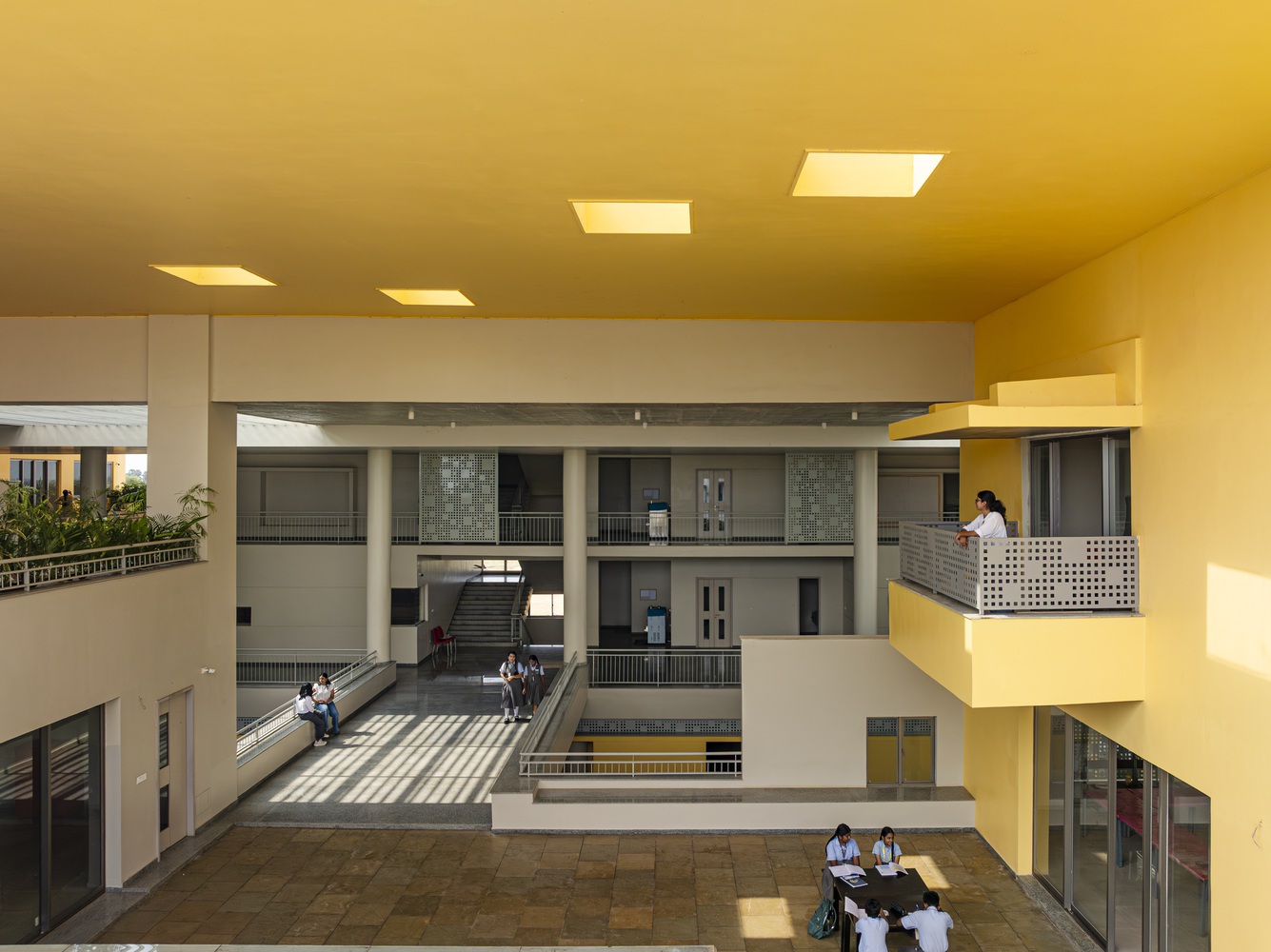
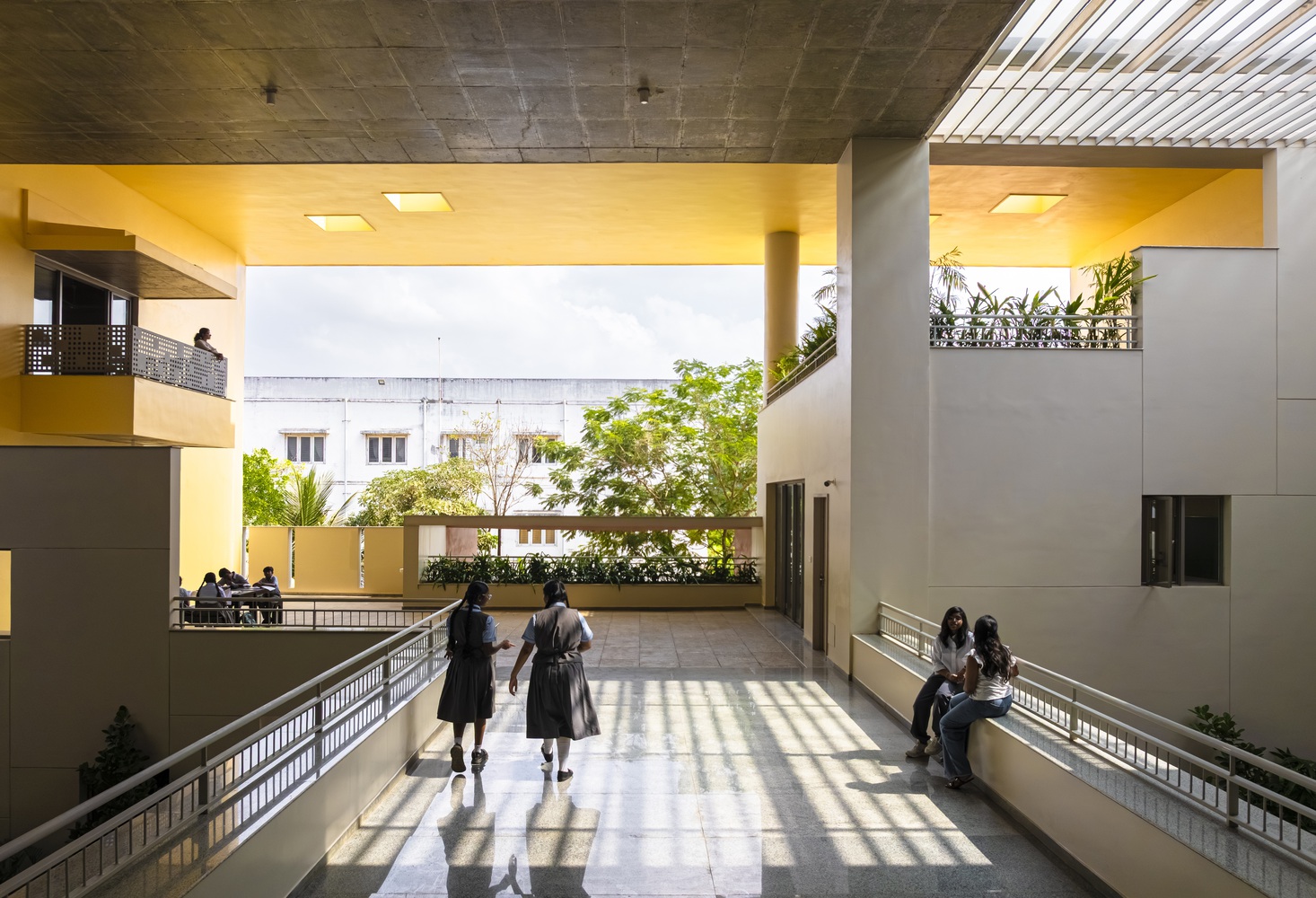
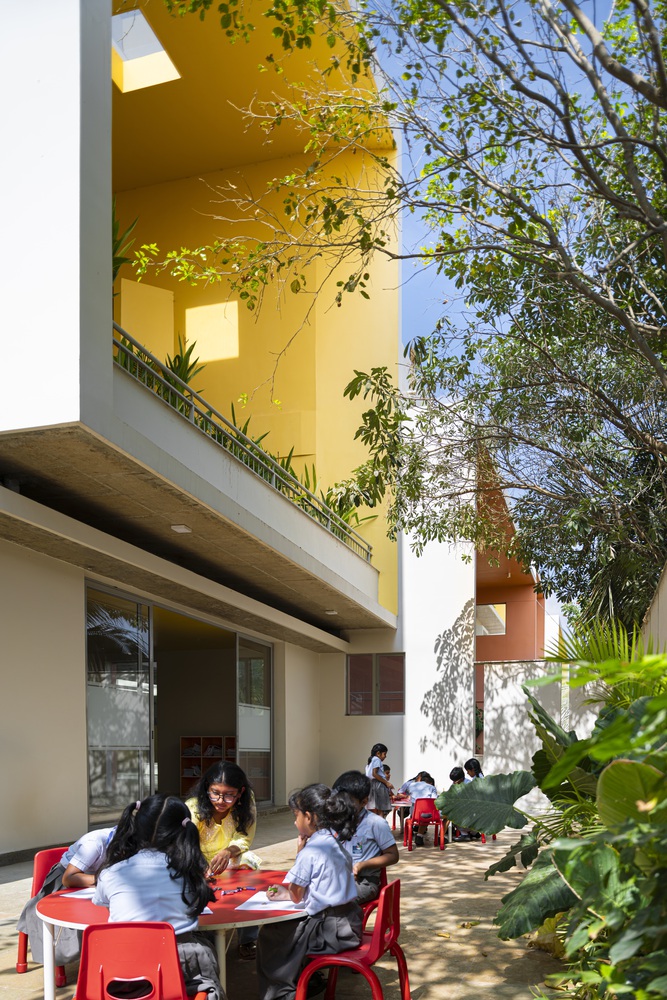
On the ground level, classrooms open directly into shaded courts on the north and south sides. Upper-floor classrooms open to the east or west and share expansive, double-height courtyards. These open-air spaces aim to reintroduce the atmosphere of the gurukul, reducing enclosure and expanding the possibilities for diverse learning formats—ranging from lectures to group work and independent study.
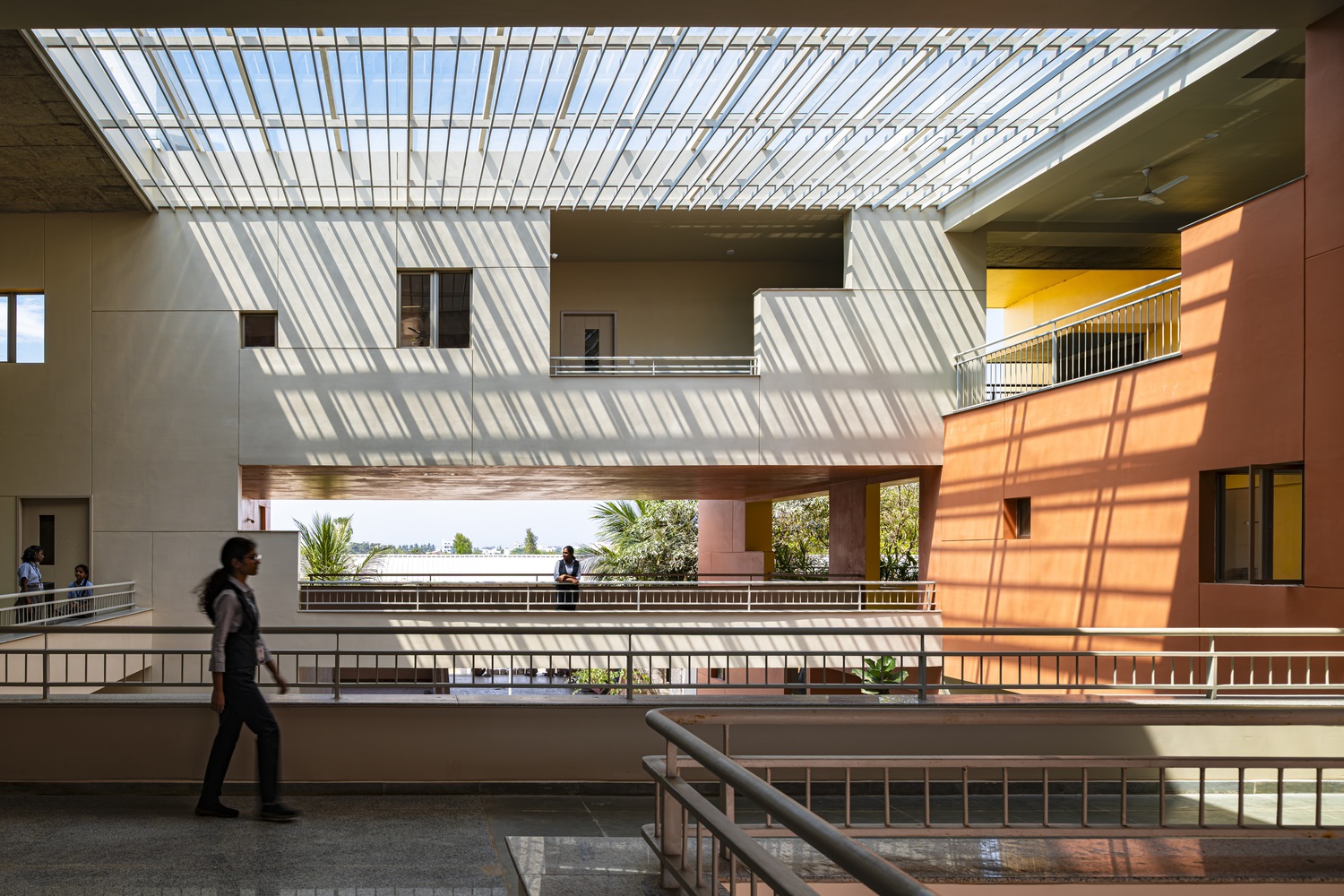
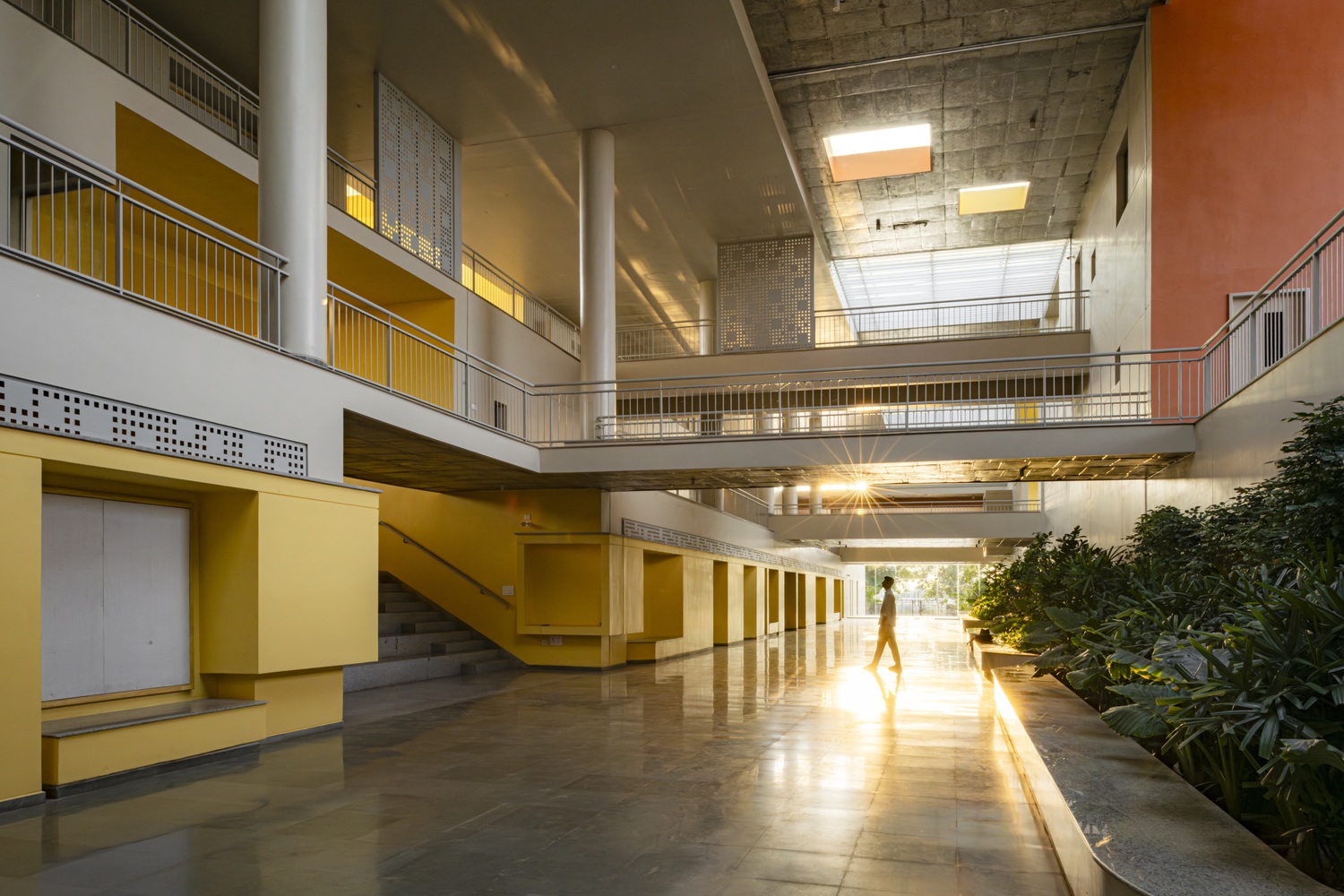
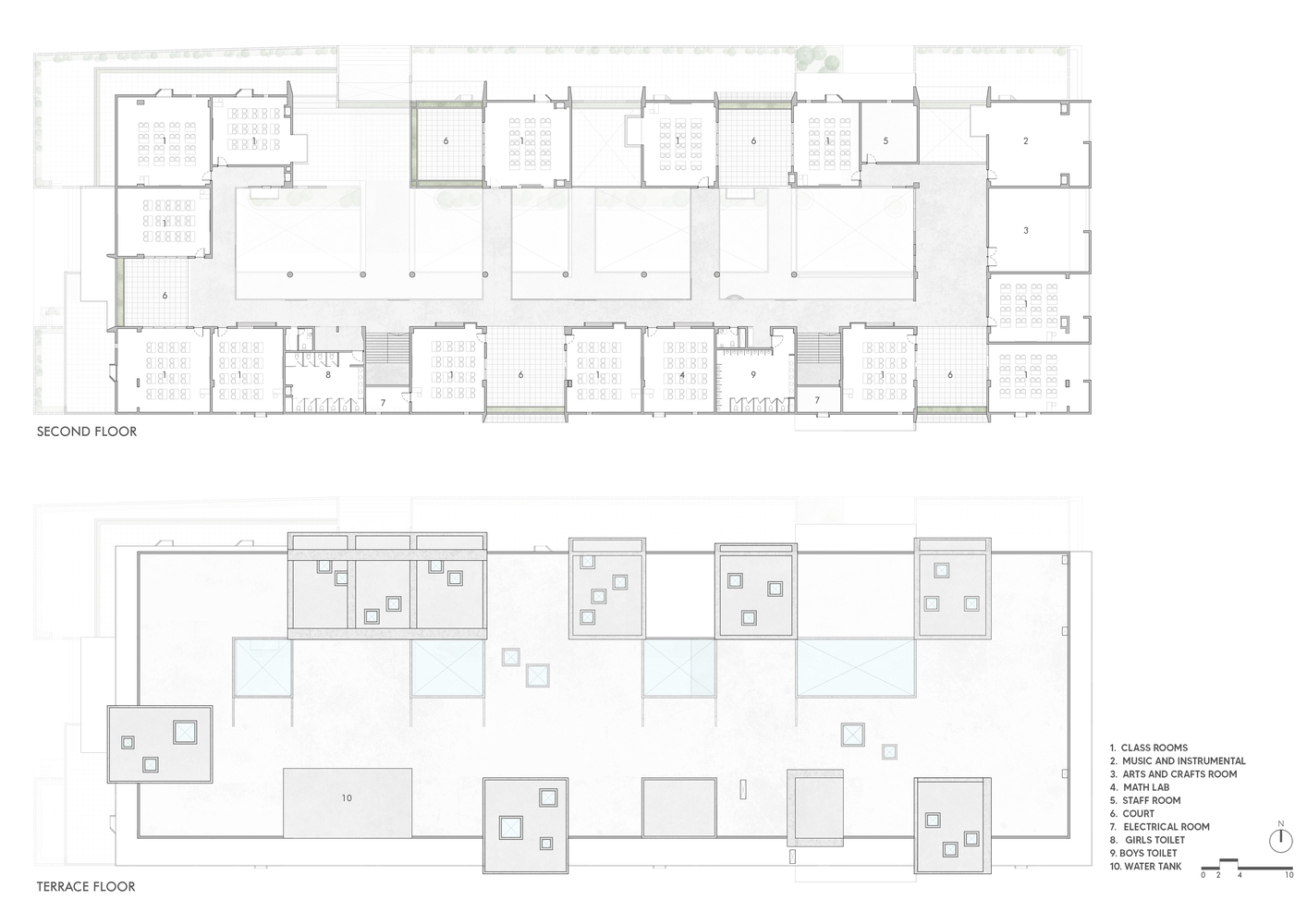
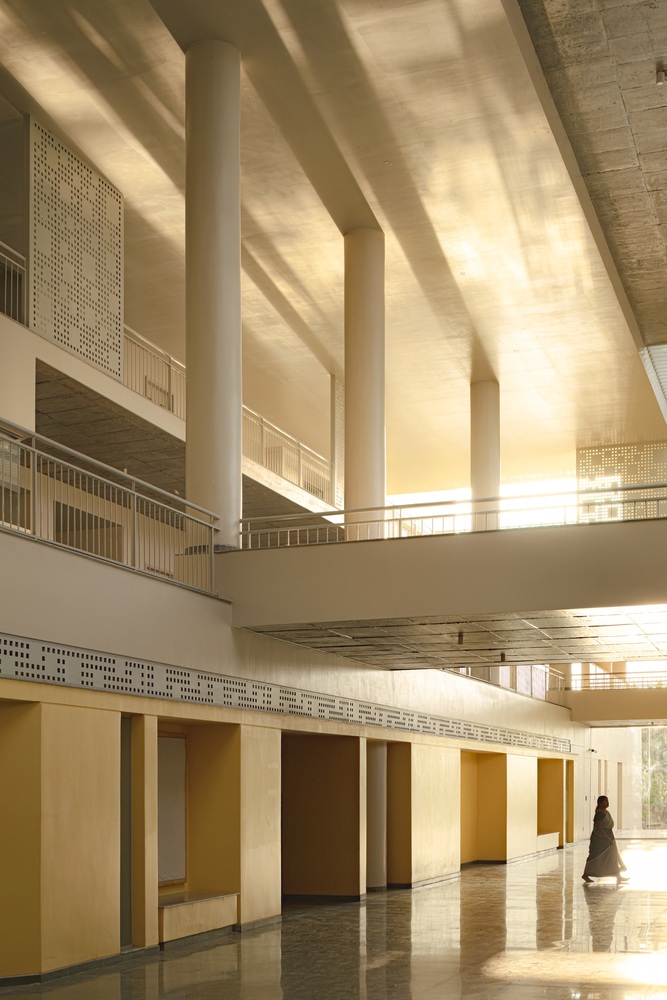
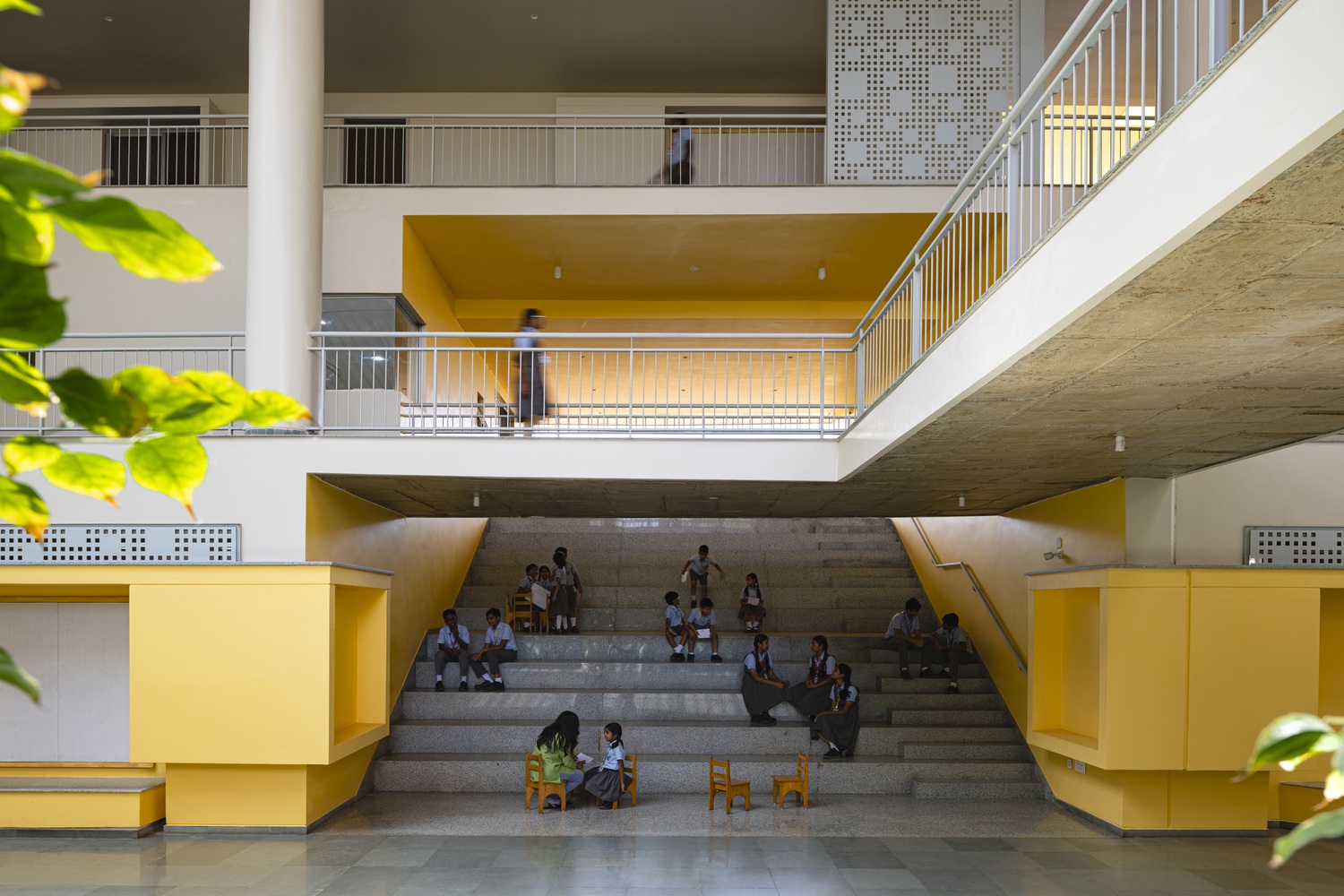
Learning extends into a network of interconnected spaces outside traditional classrooms, creating opportunities for informal interaction and a sense of community. These “left-over” spaces offer unexpected zones for reflection and collaboration, shifting norms of spatial utility and educational productivity.
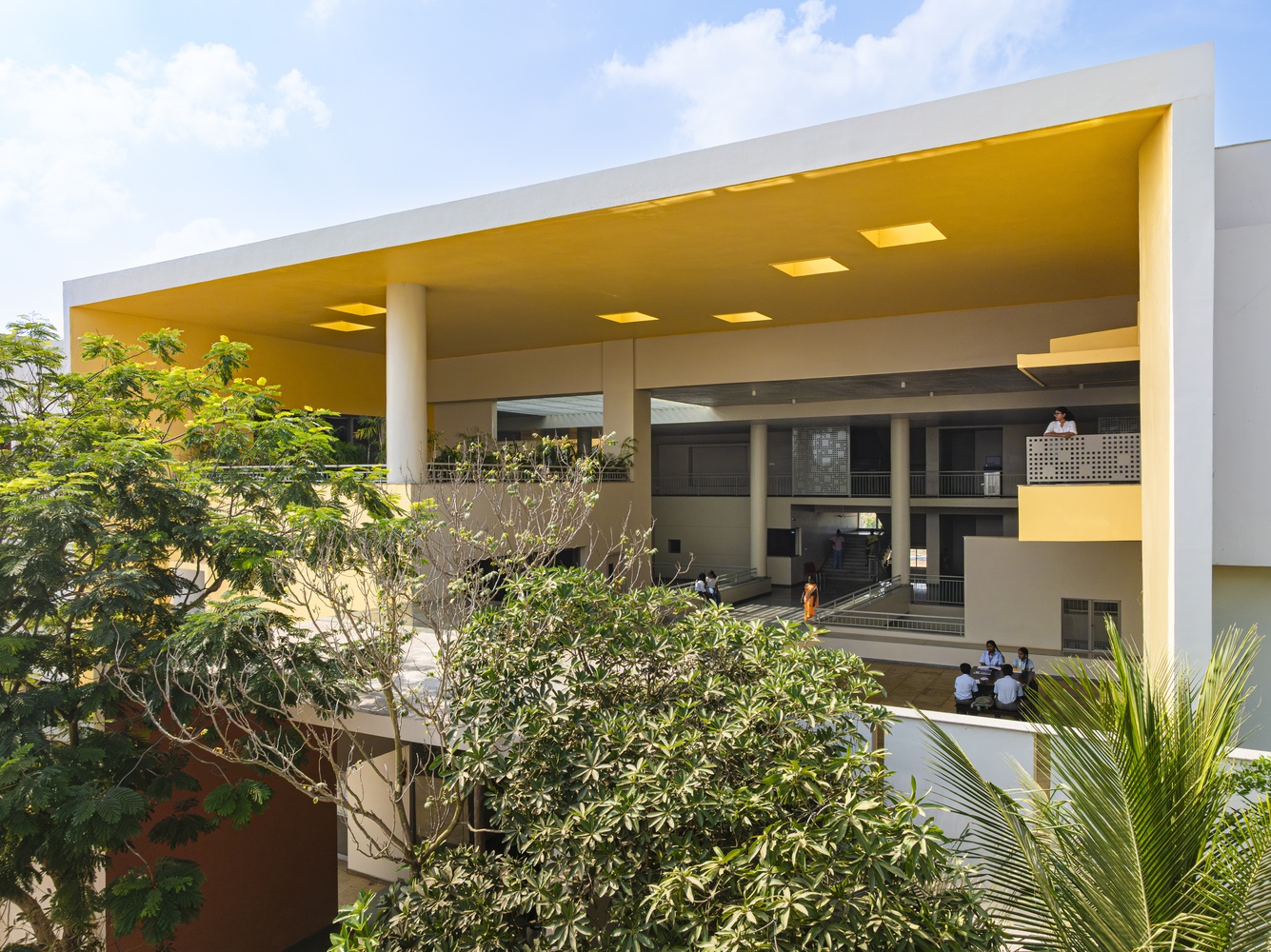
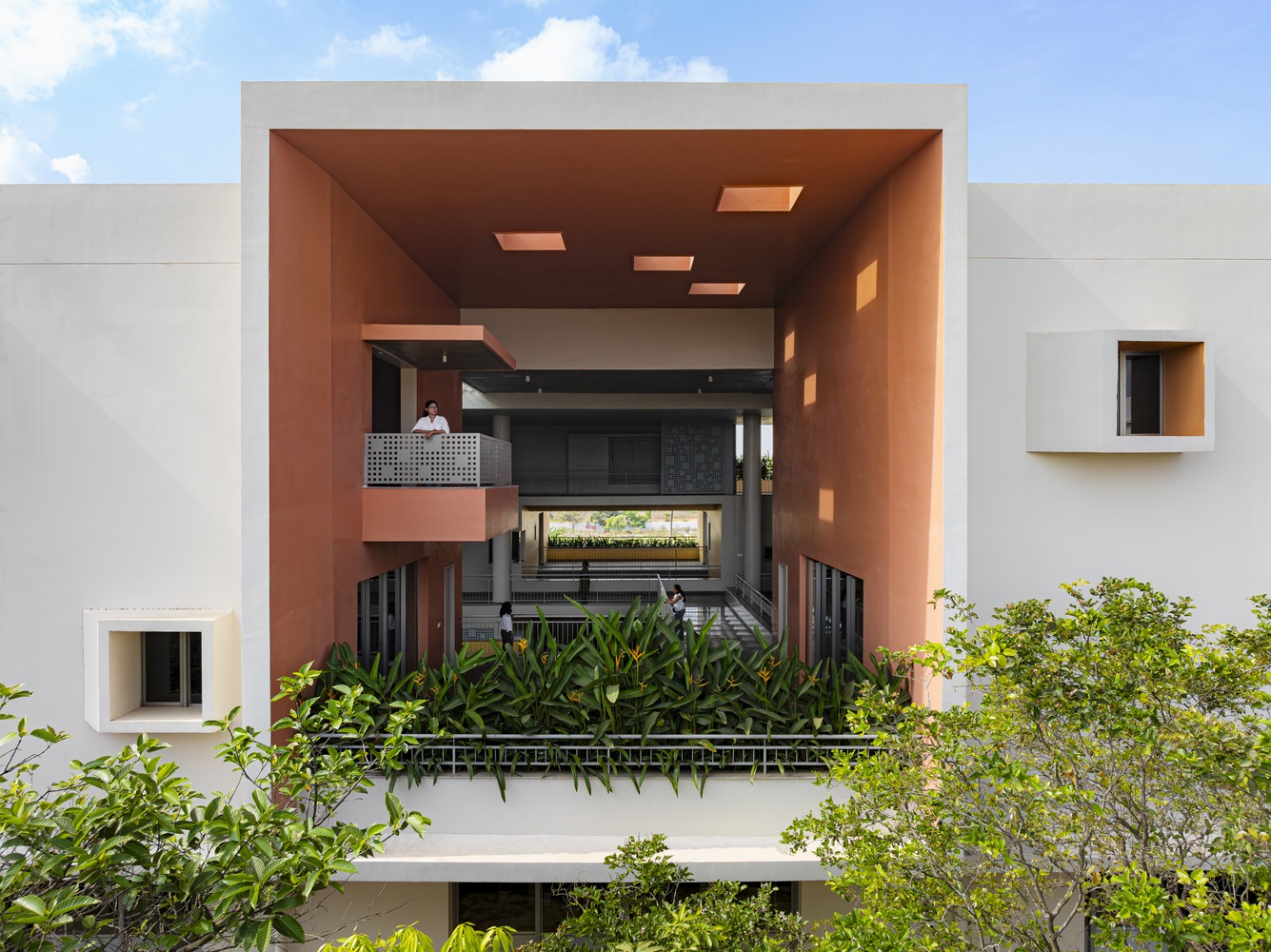
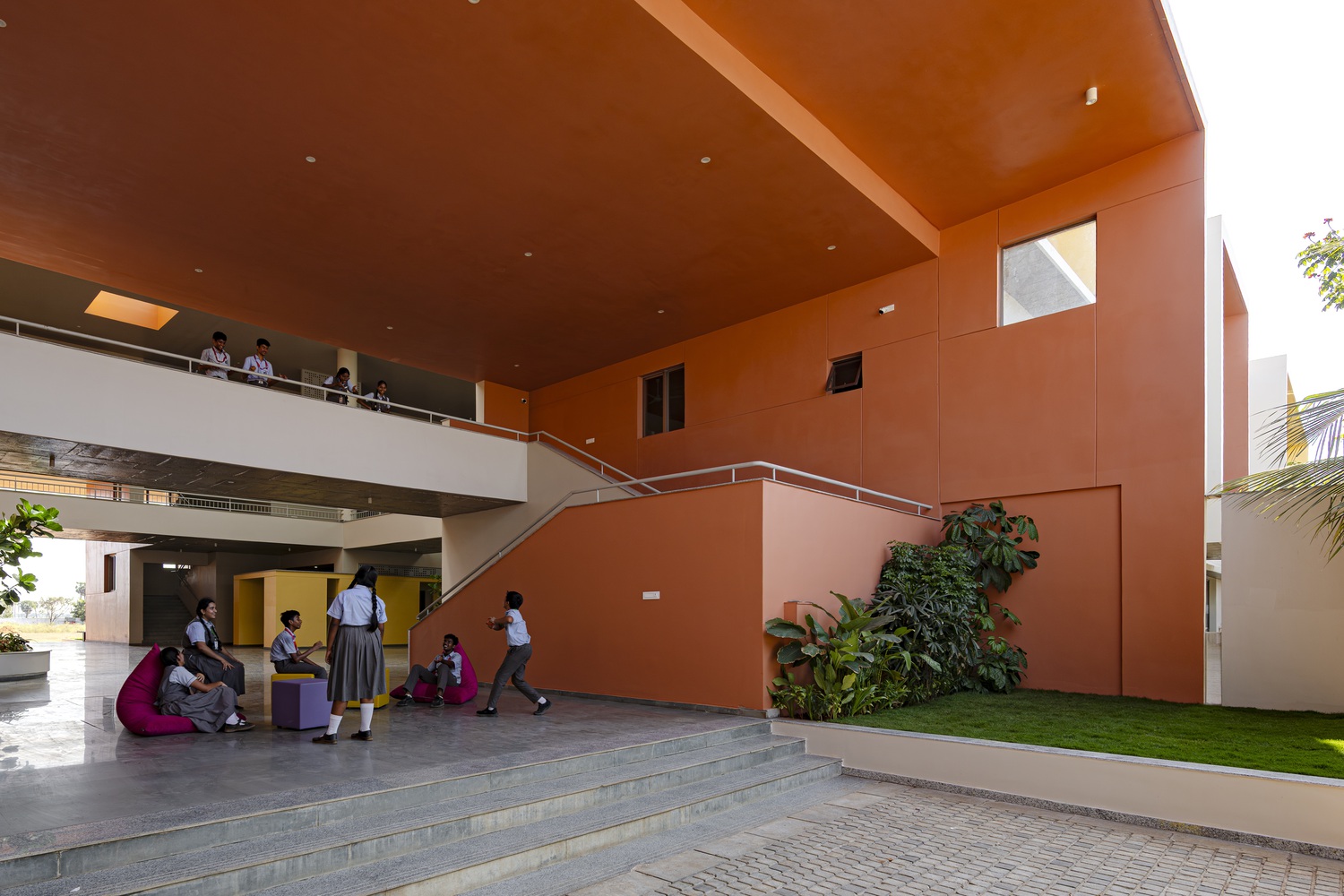
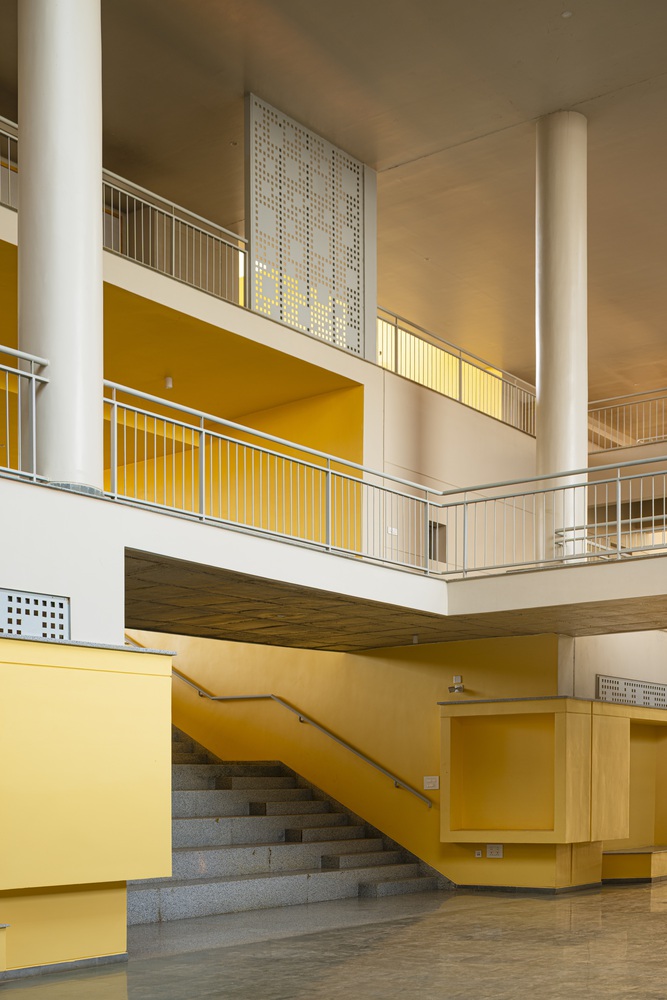
The school uses Kota stone flooring interspersed with granite, while local tandoor stone finishes the external courts. Aluminum sliding doors separate indoor classrooms from the courtyards. By integrating light, air, vegetation, and sectional openness, the architecture reconnects education with nature. Despite millennia of technological development distancing humans from natural rhythms, the school re-engages the learning process with environmental elements as fundamental spatial and experiential components.
Project Gallery
37 photographs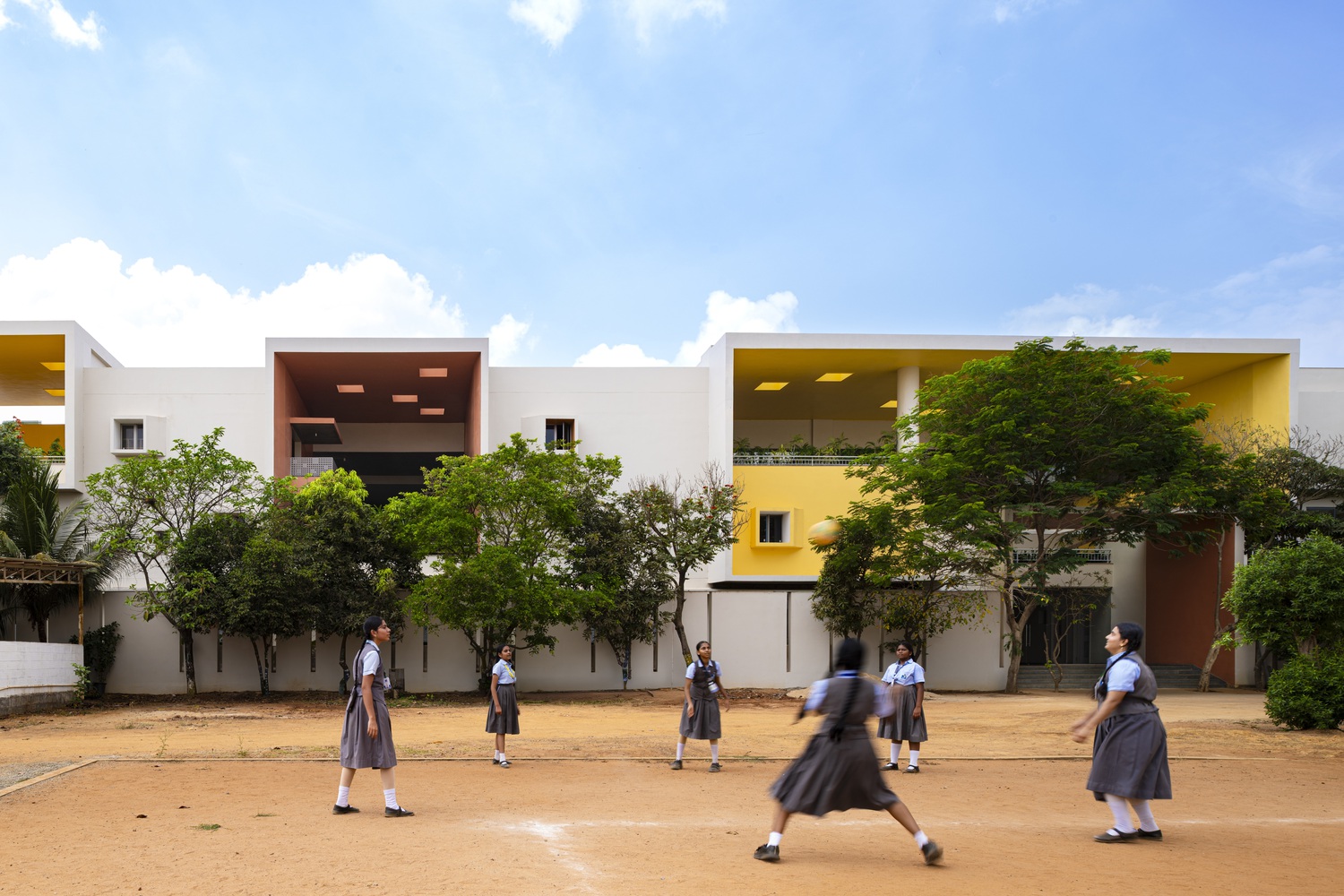
Project Location
AddressNellore, Andhra Pradesh, India
The location is intended for general reference and may denote a city or country; it does not identify a precise address.