
home/projects/elementary and middle schools/the bridge at waring school
The Bridge at Waring School / OPAL Architecture
Educational ArchitectureElementary & middle schoolHigh school
- Architects
- OPAL Architecture
- Location
- Beverly, Essex County, Massachusetts
- Year
- 2021
- Photographs
- Trent Bell Photography
- Client
- Waring School
- Passive house certifier
- Peel Passive
- Owner’s representative
- Craig Douglas, AIA
The Bridge at Waring School institutional building, designed by OPAL in Beverly, Massachusetts, enhances campus accessibility and environmental performance by replacing a flood-prone structure and connecting two campus levels across a 12-foot grade. Completed in 2021, the 12,370 square foot facility serves as a new main entry and provides classrooms, study areas, and a central space for the school’s daily All School Meeting. The project meets Passive House standards and integrates contextual materials to respond to the wooded landscape and existing campus architecture.
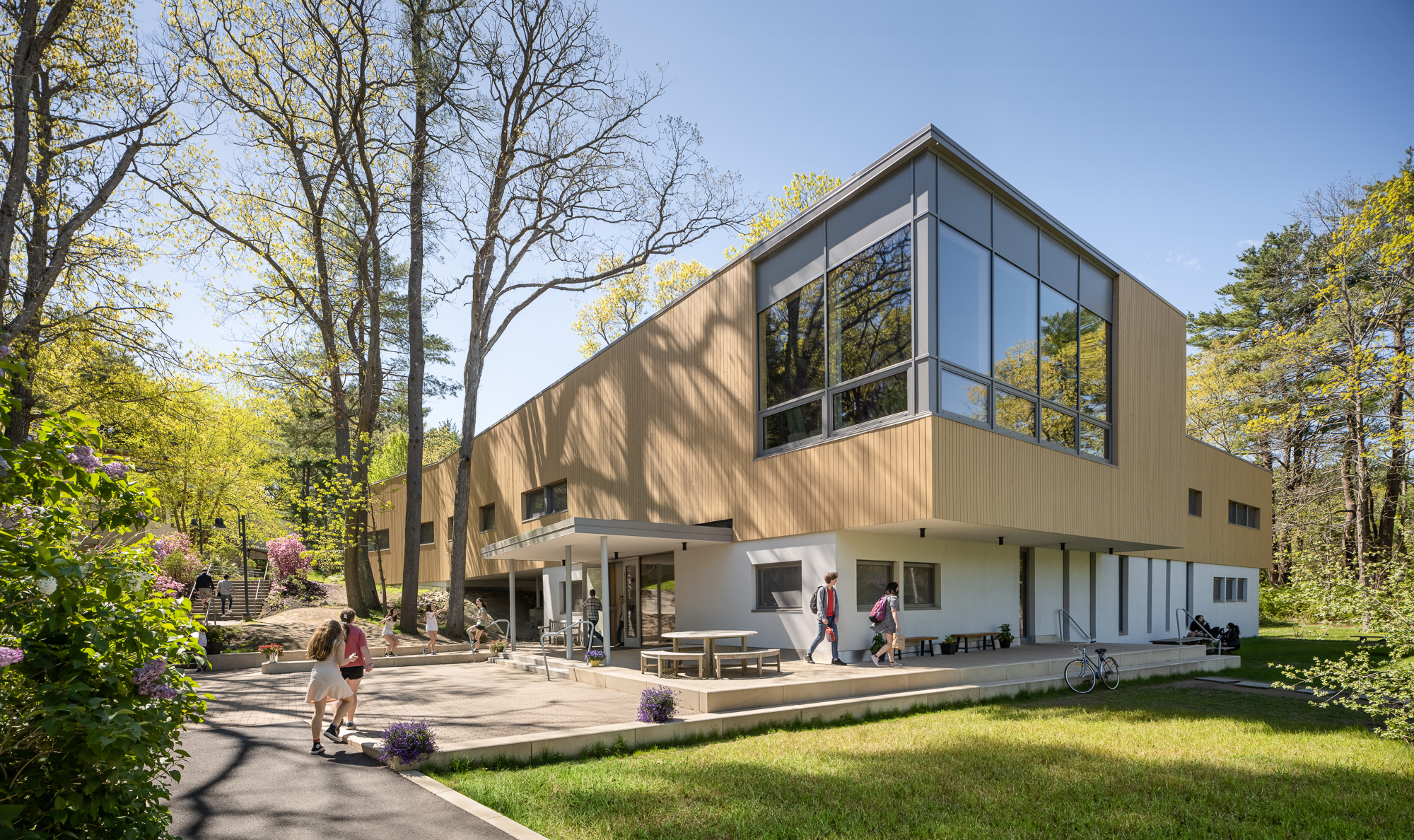
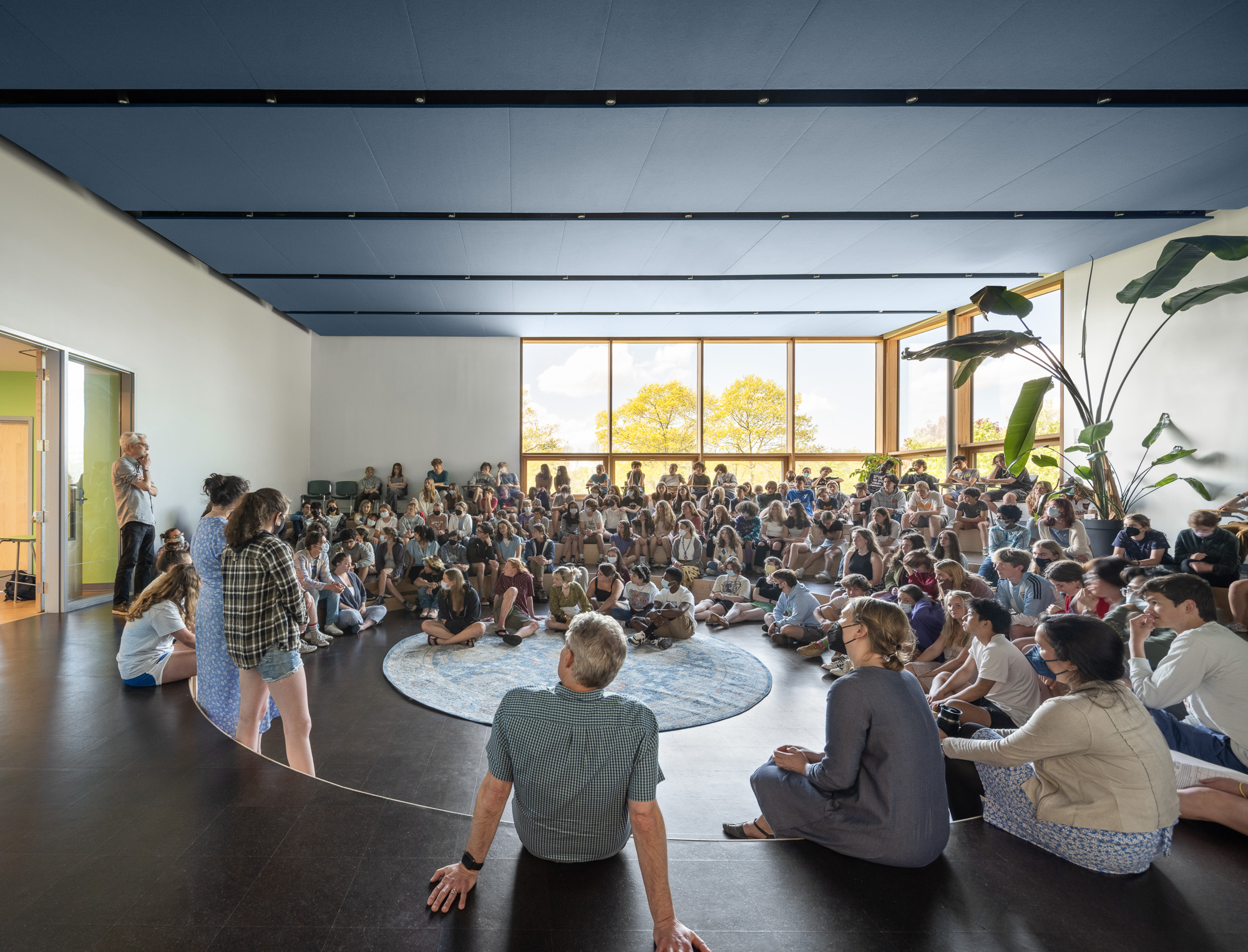
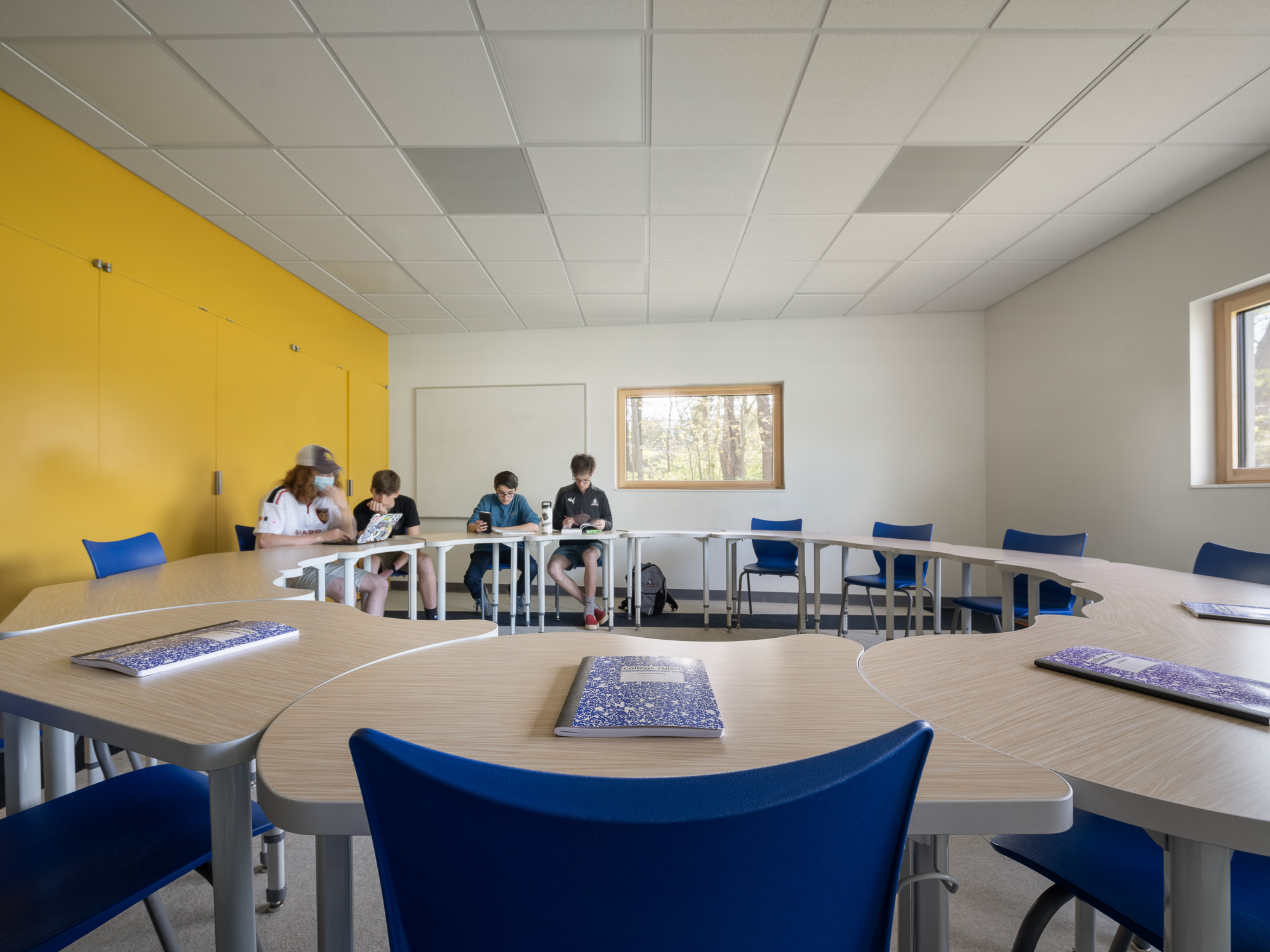
The Bridge at Waring School is a 12,370 square foot academic building completed in 2021 for Waring School, a private liberal arts middle and high school in Beverly, Massachusetts. Designed by OPAL, the project functions as a new campus gateway and central organizing element. It provides general classrooms, informal study spaces, and a forum classroom configured around the All School Meeting, a long-standing daily gathering that has defined the school’s culture since its establishment in 1972.
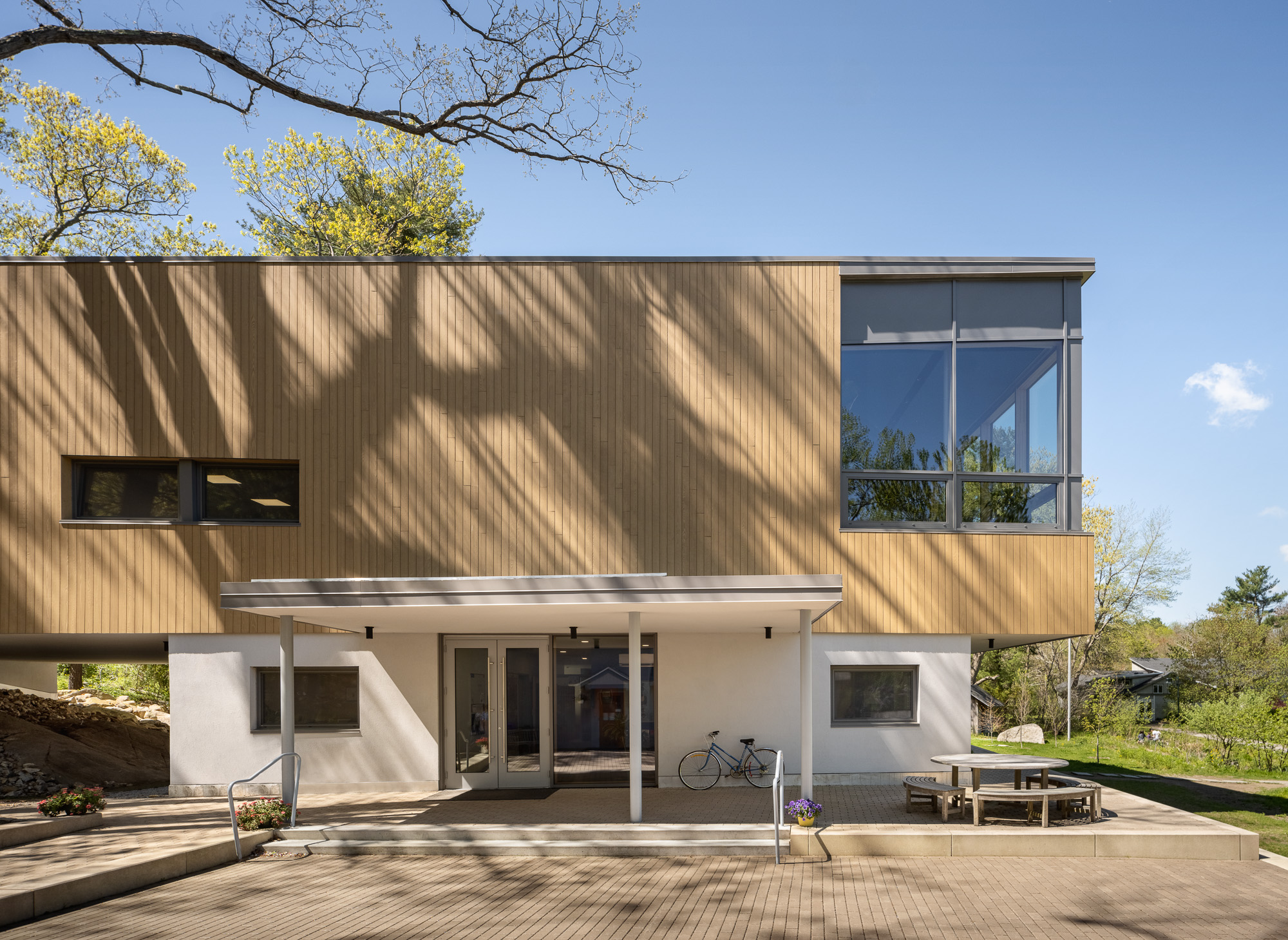
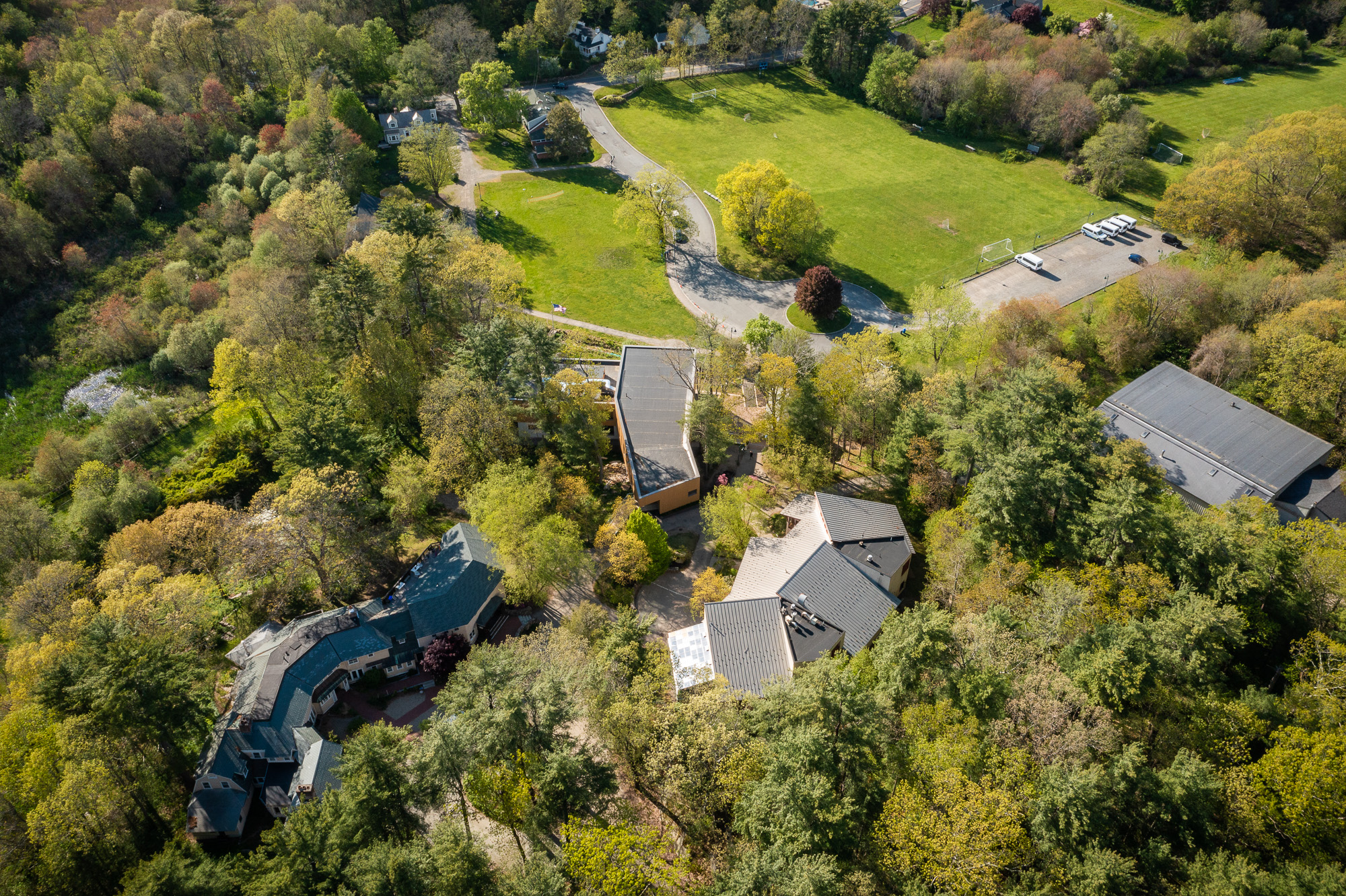
The project meets the Passive House standard for energy performance and indoor air quality, addressing both environmental sustainability and user well-being. It replaces a former residential structure that lacked accessibility and was frequently affected by flooding. Elevated above the floodplain and spanning a twelve-foot vertical grade, the new building establishes a fully accessible route between the upper and lower sections of campus. This connection addresses circulation issues while reinforcing inclusivity and equity within the school environment.
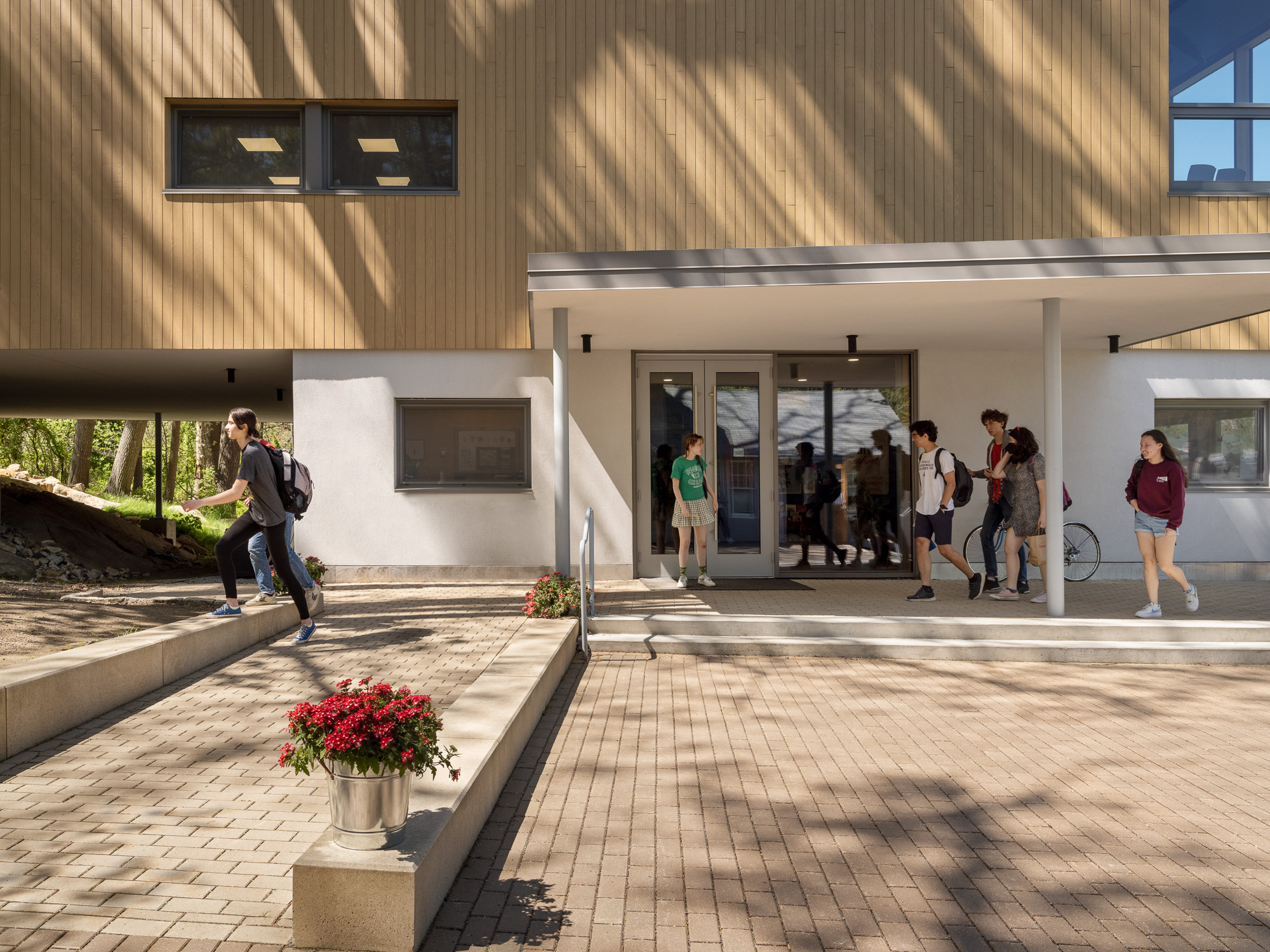
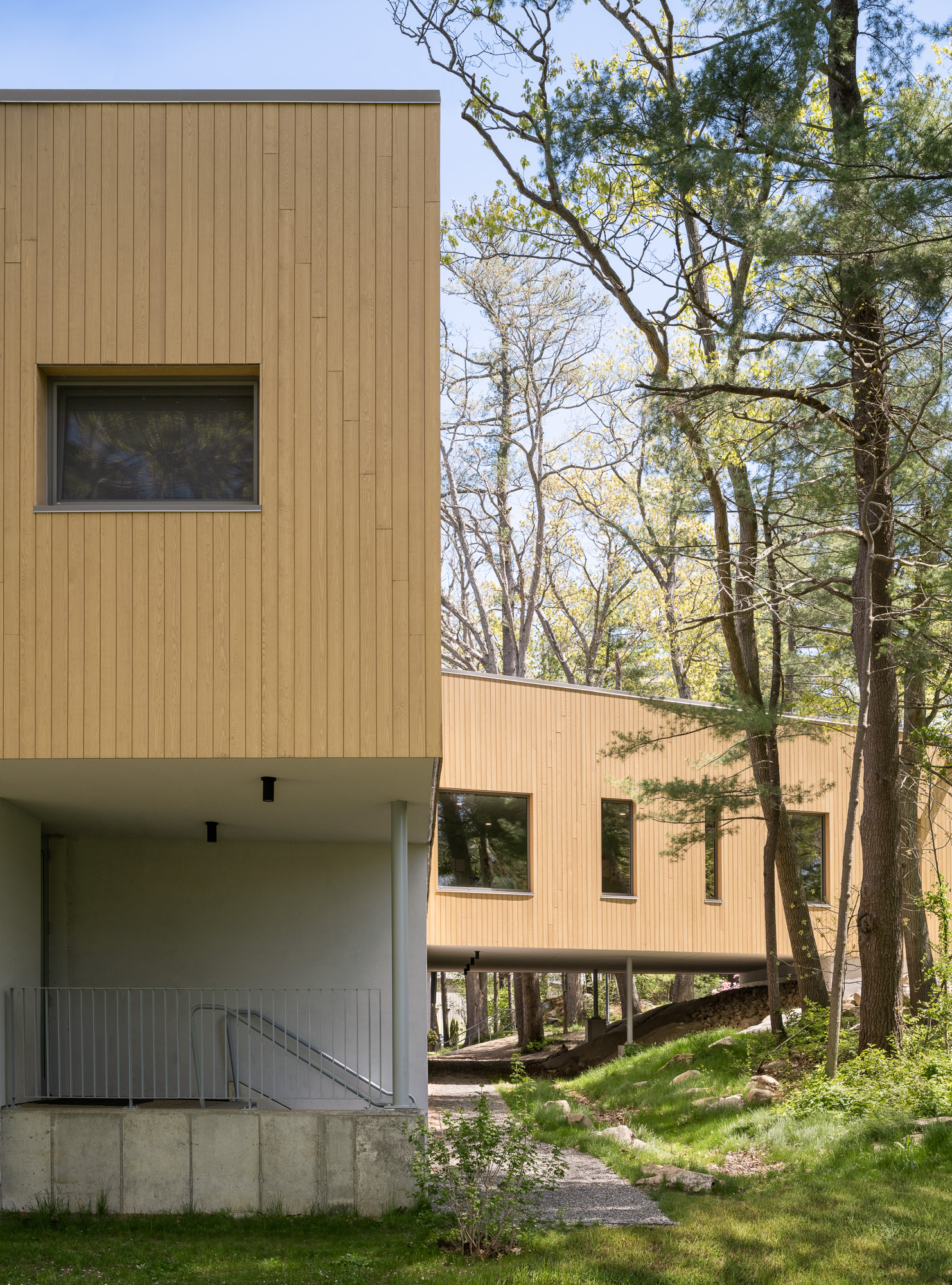
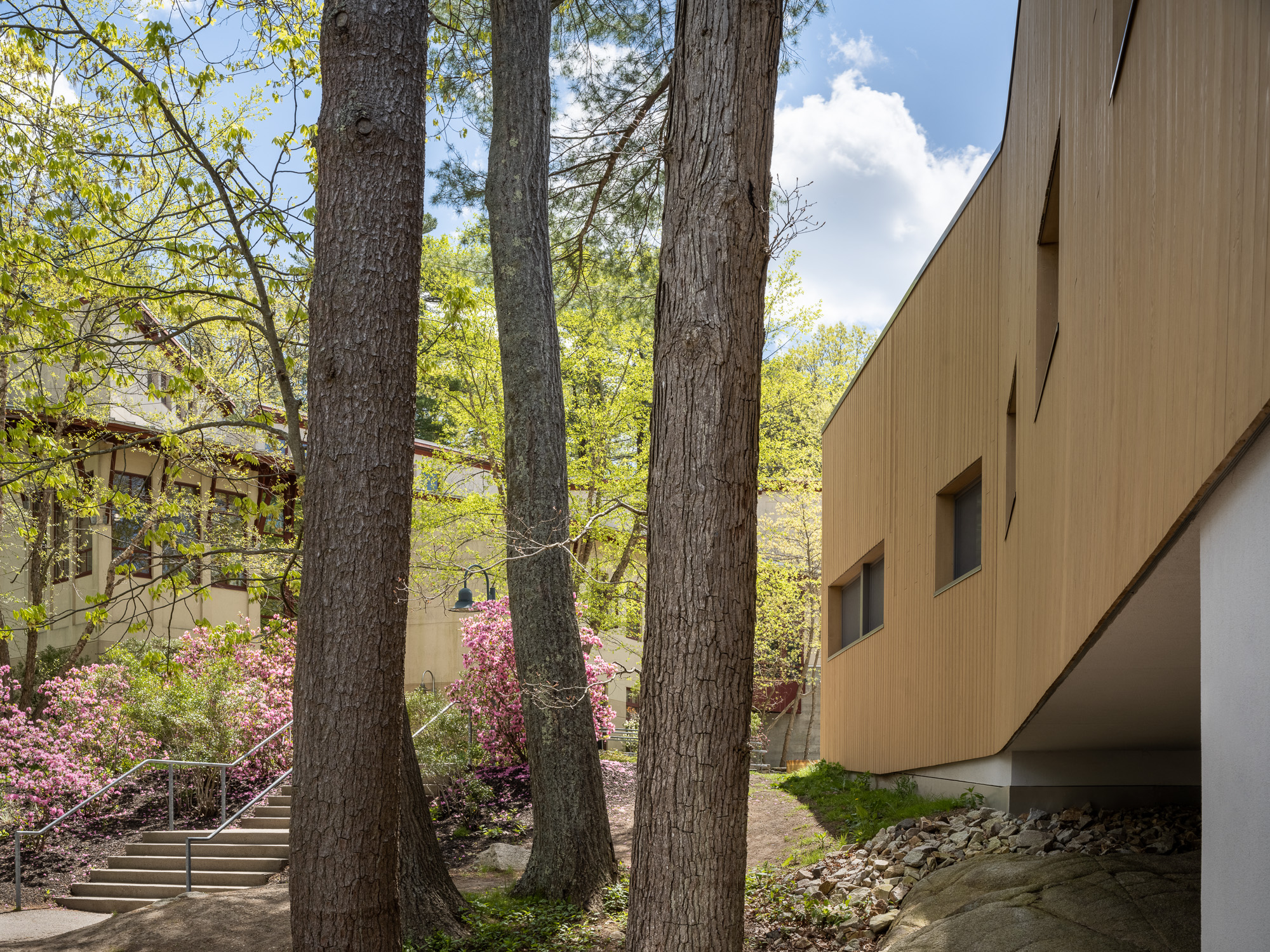
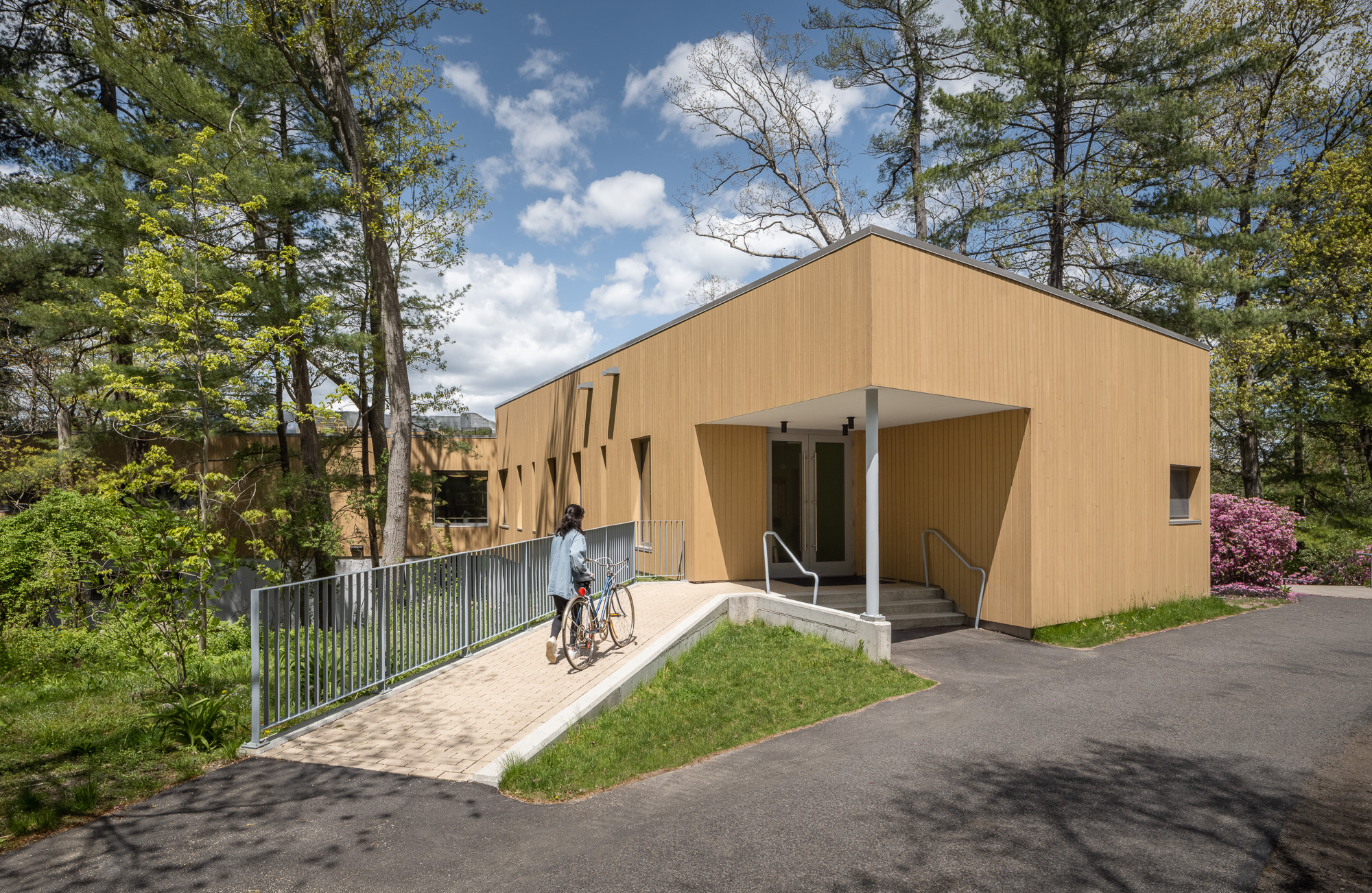
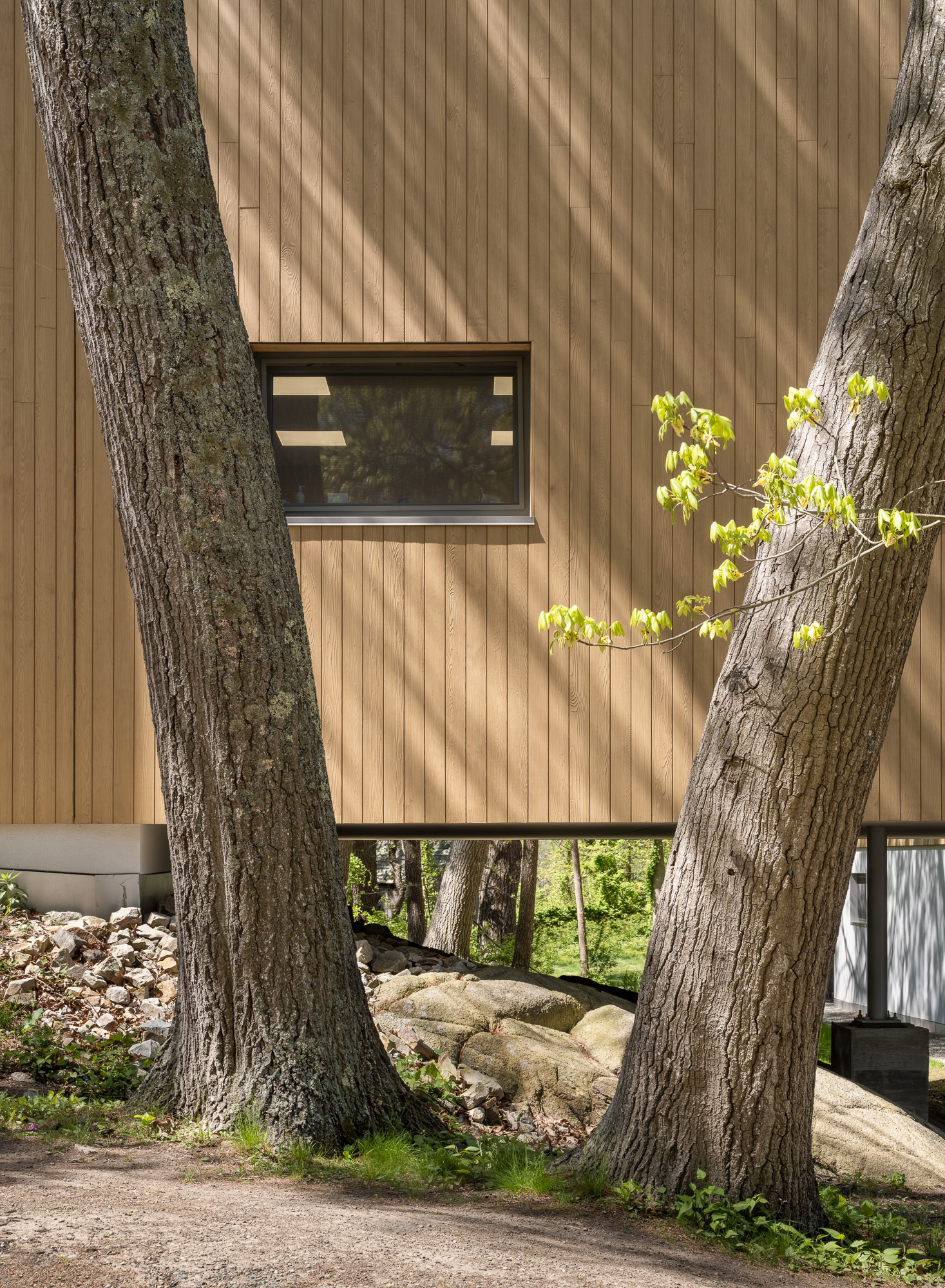
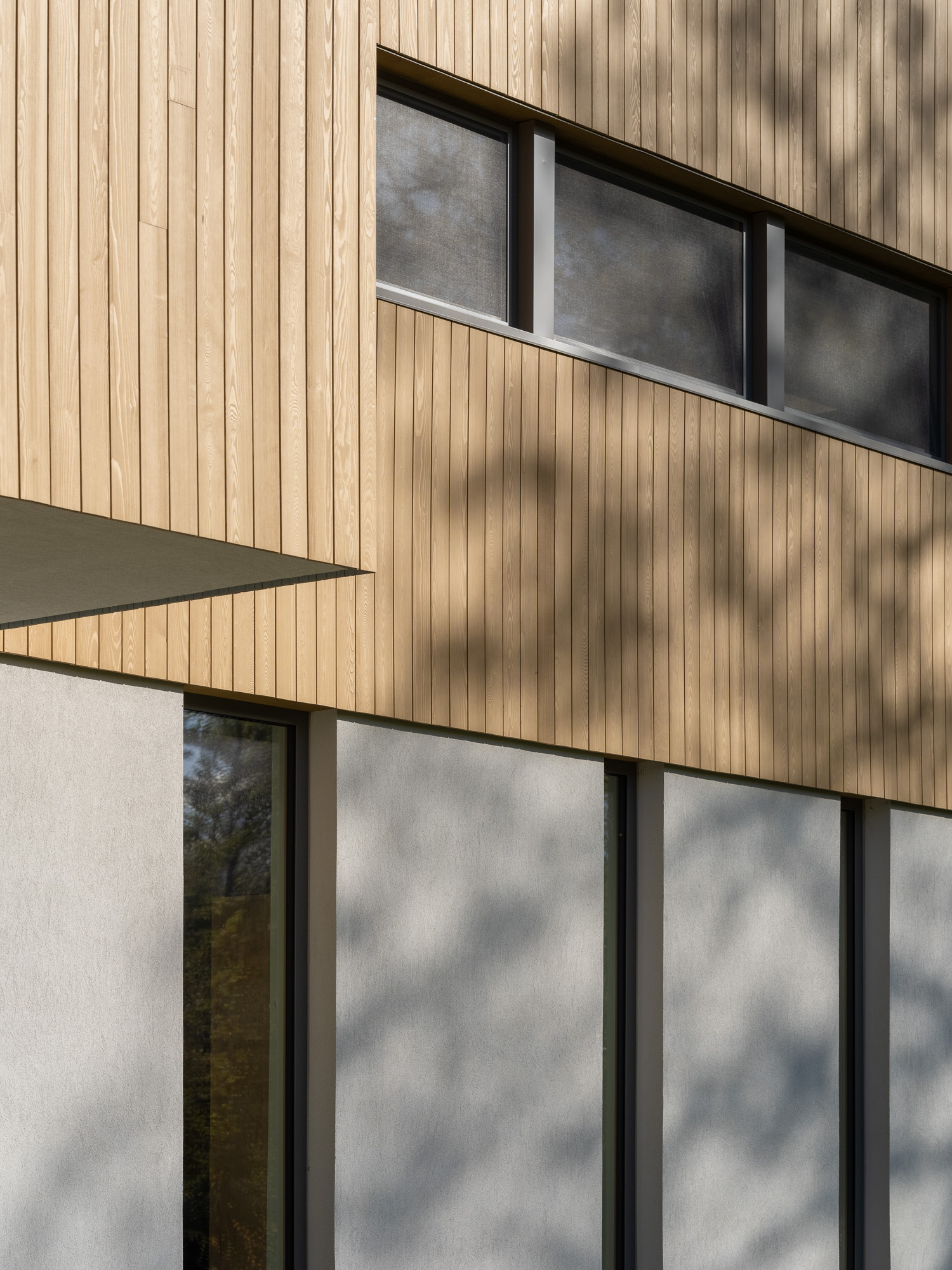
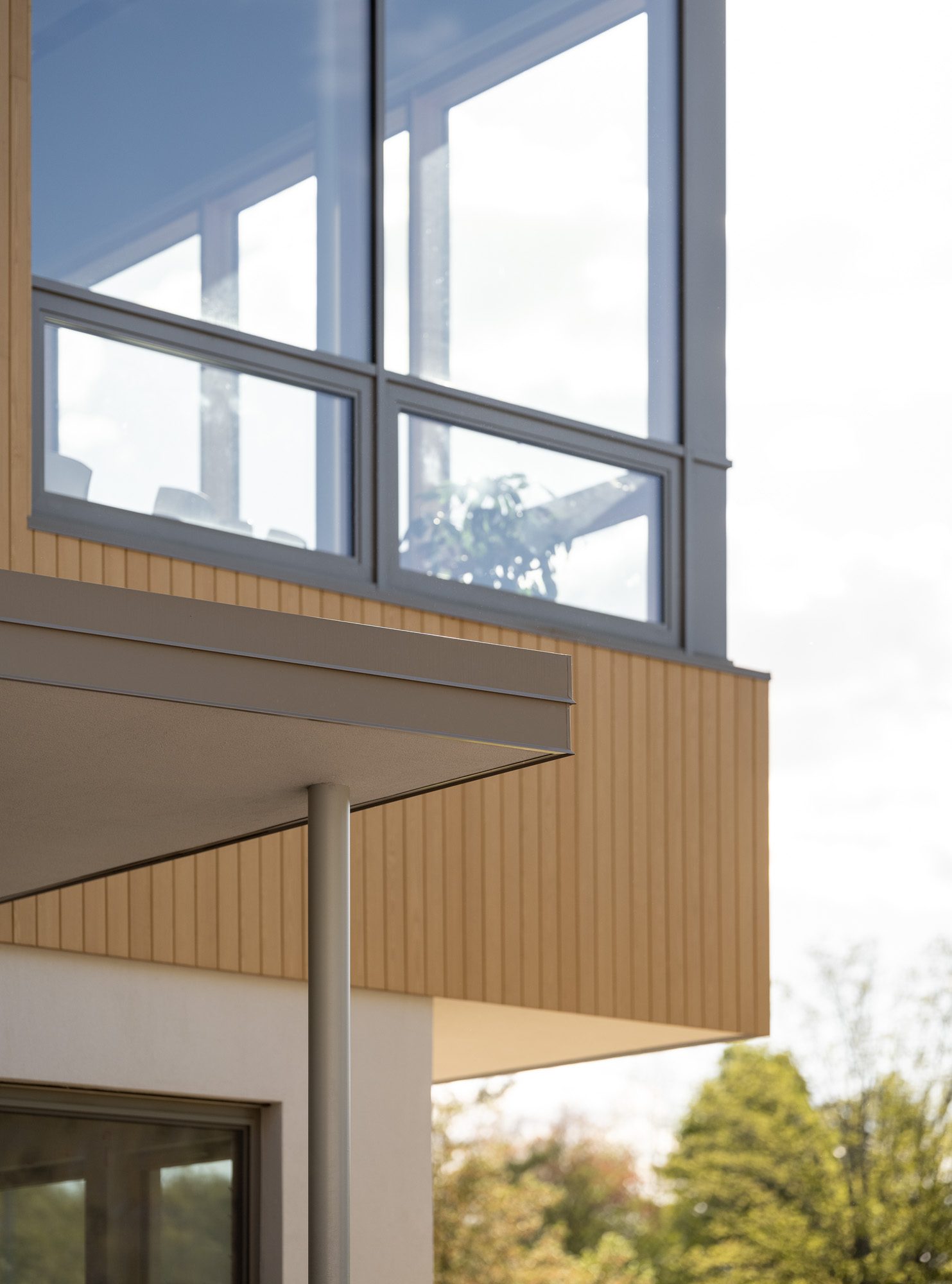
The building’s massing consists of two stacked single-story volumes. The upper volume is rotated perpendicular to the lower, forming an L-shaped footprint that responds to the site’s wooded slope. Exterior materials were selected for contextual continuity, including stucco to reflect adjacent campus buildings and vertical wood siding to align with the surrounding forest.
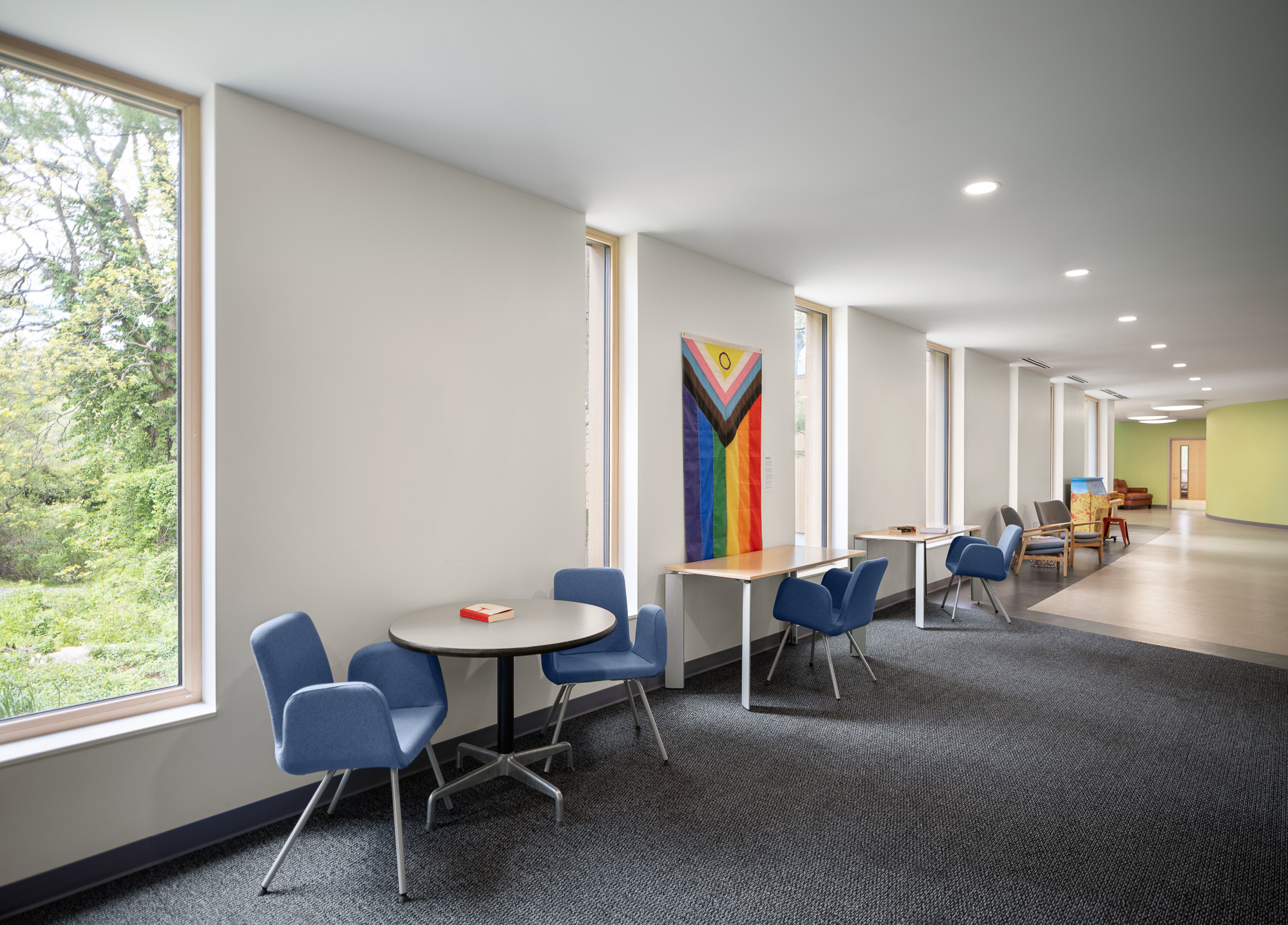
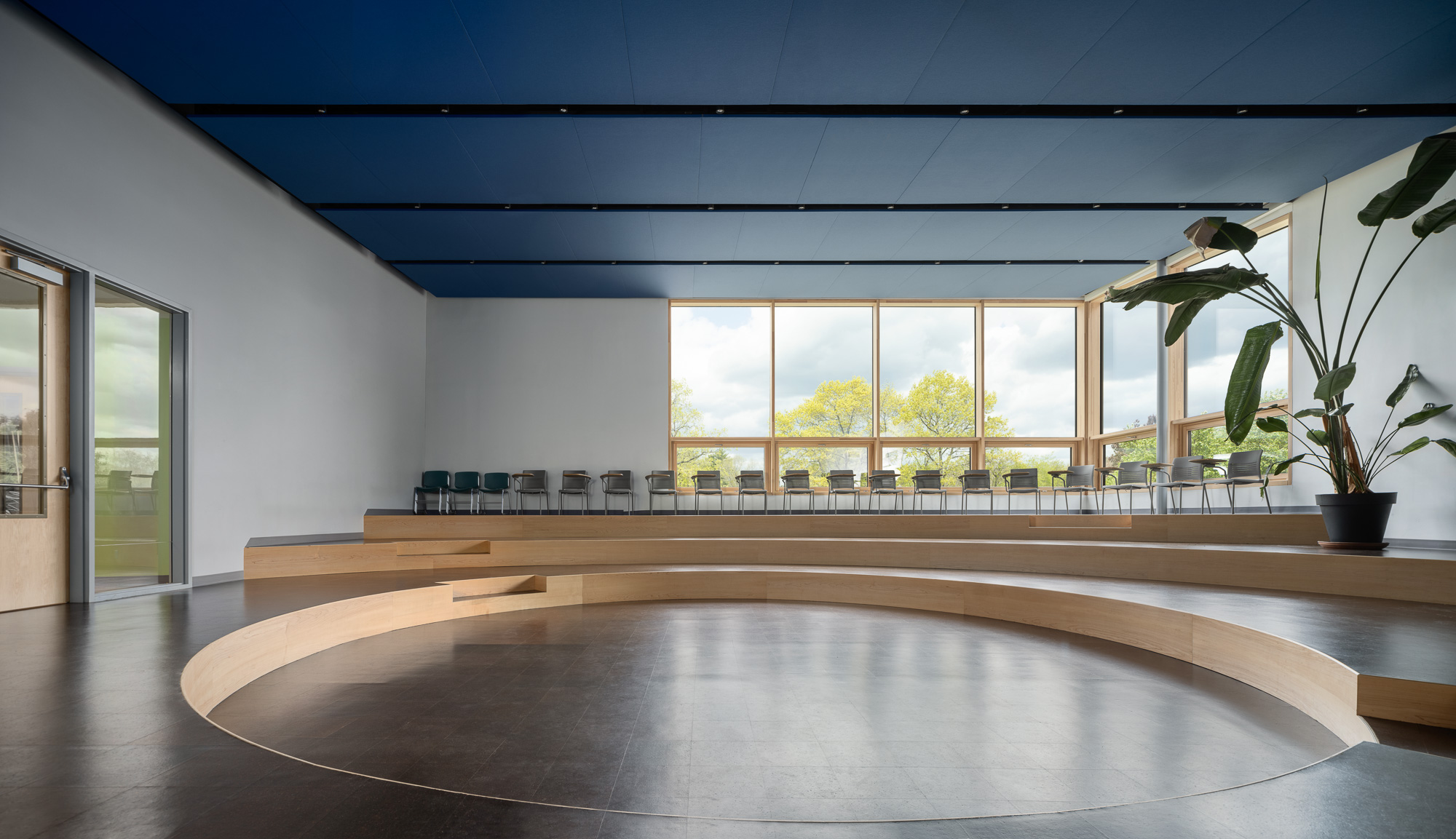
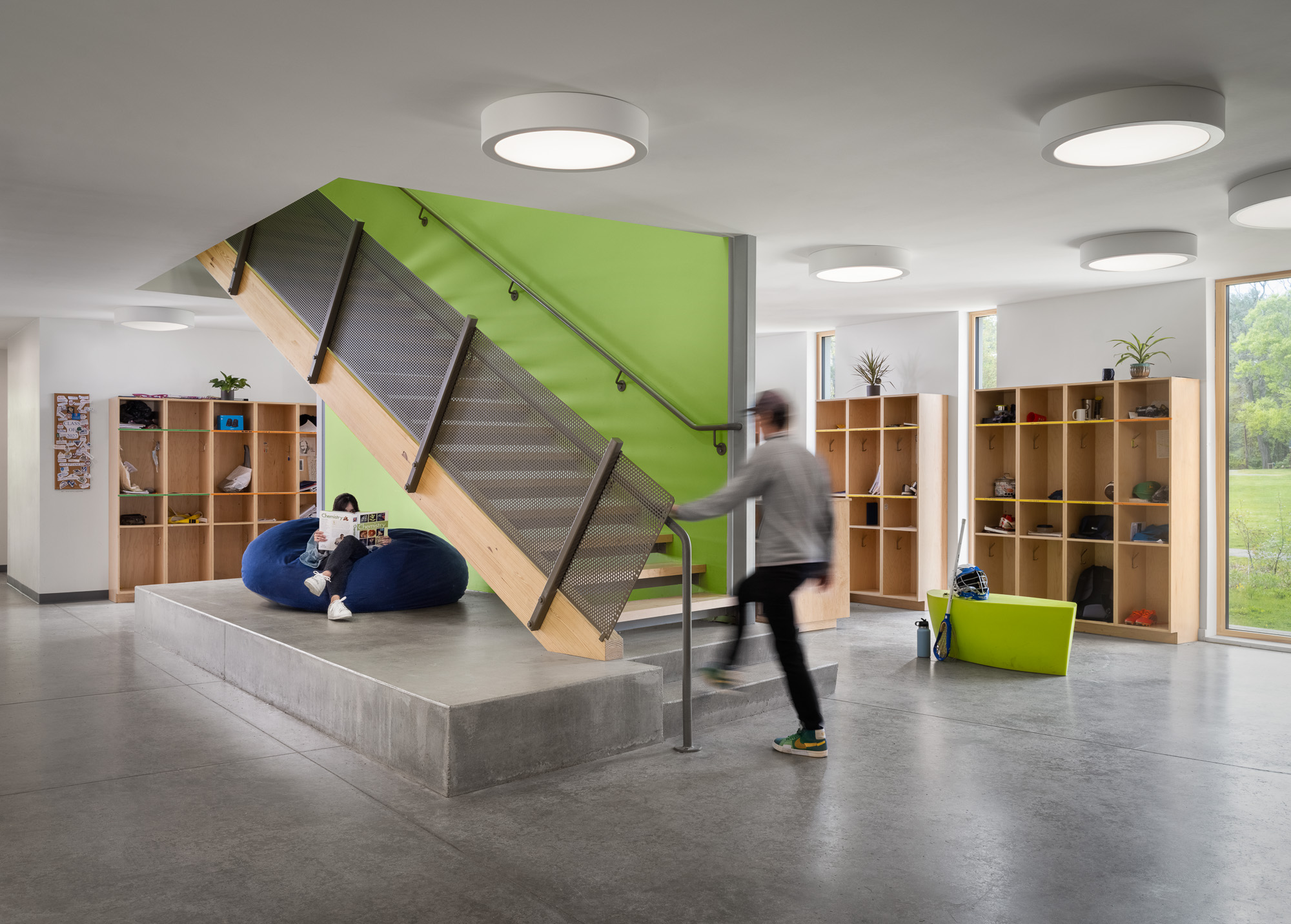
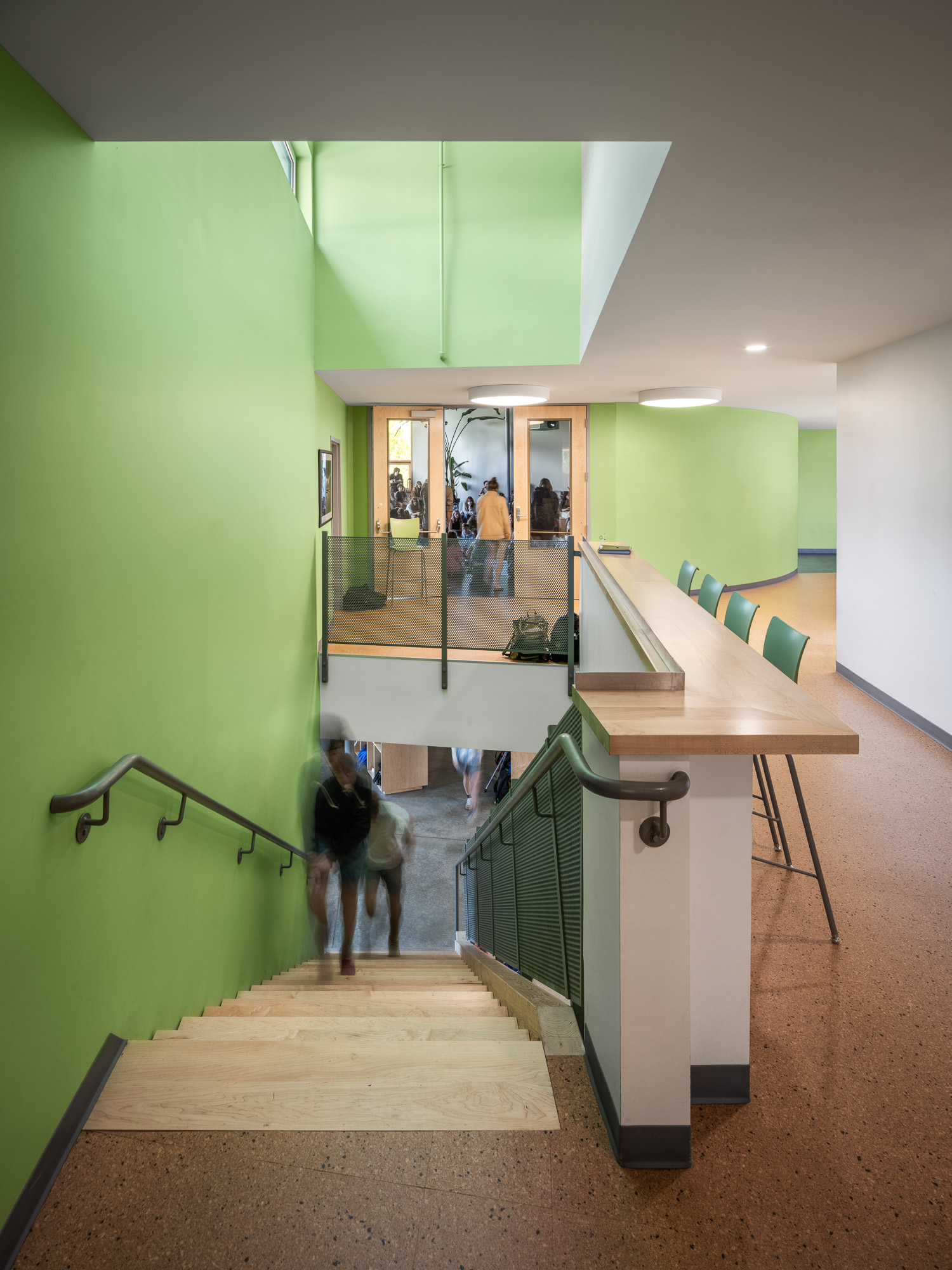
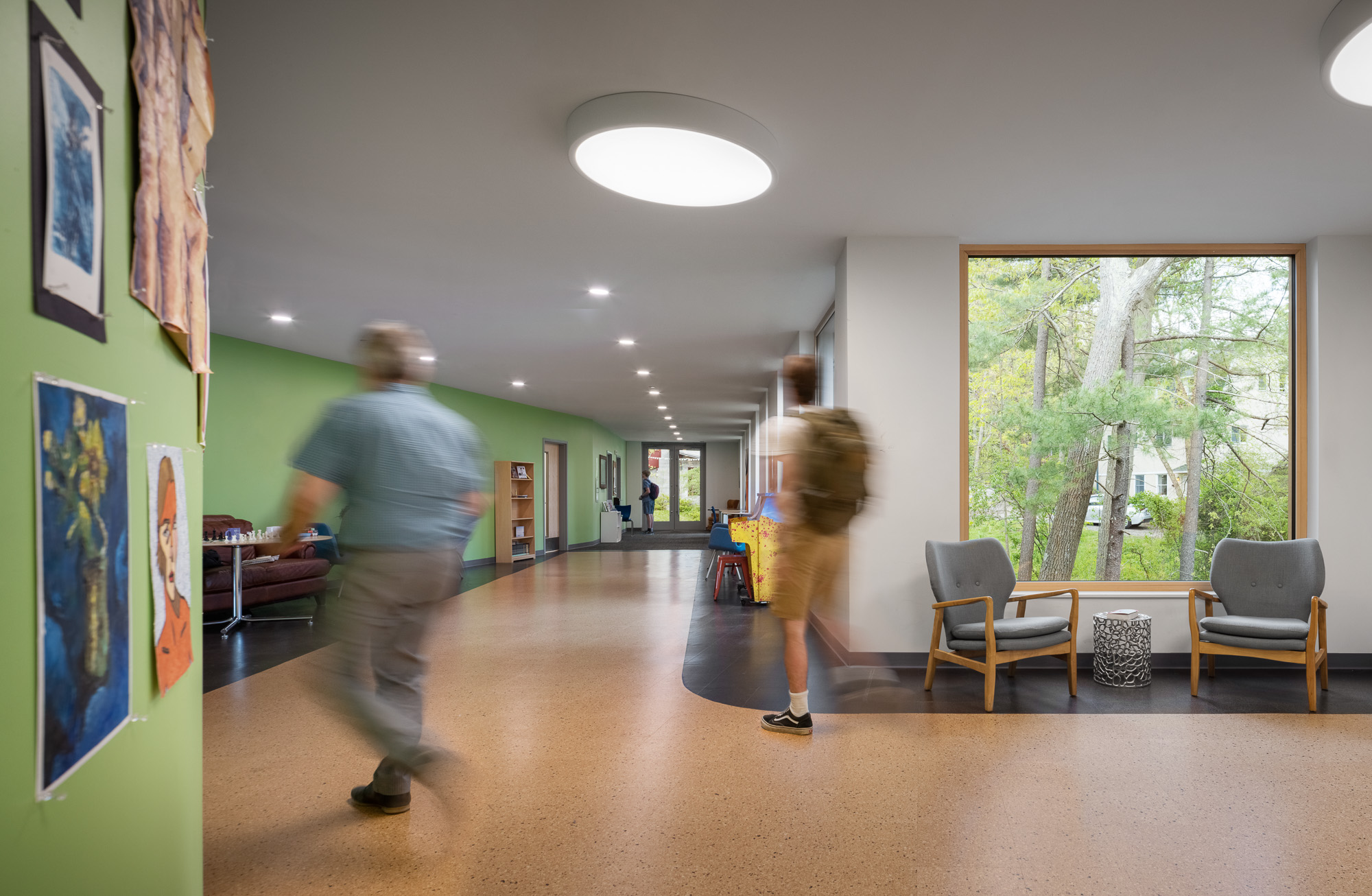
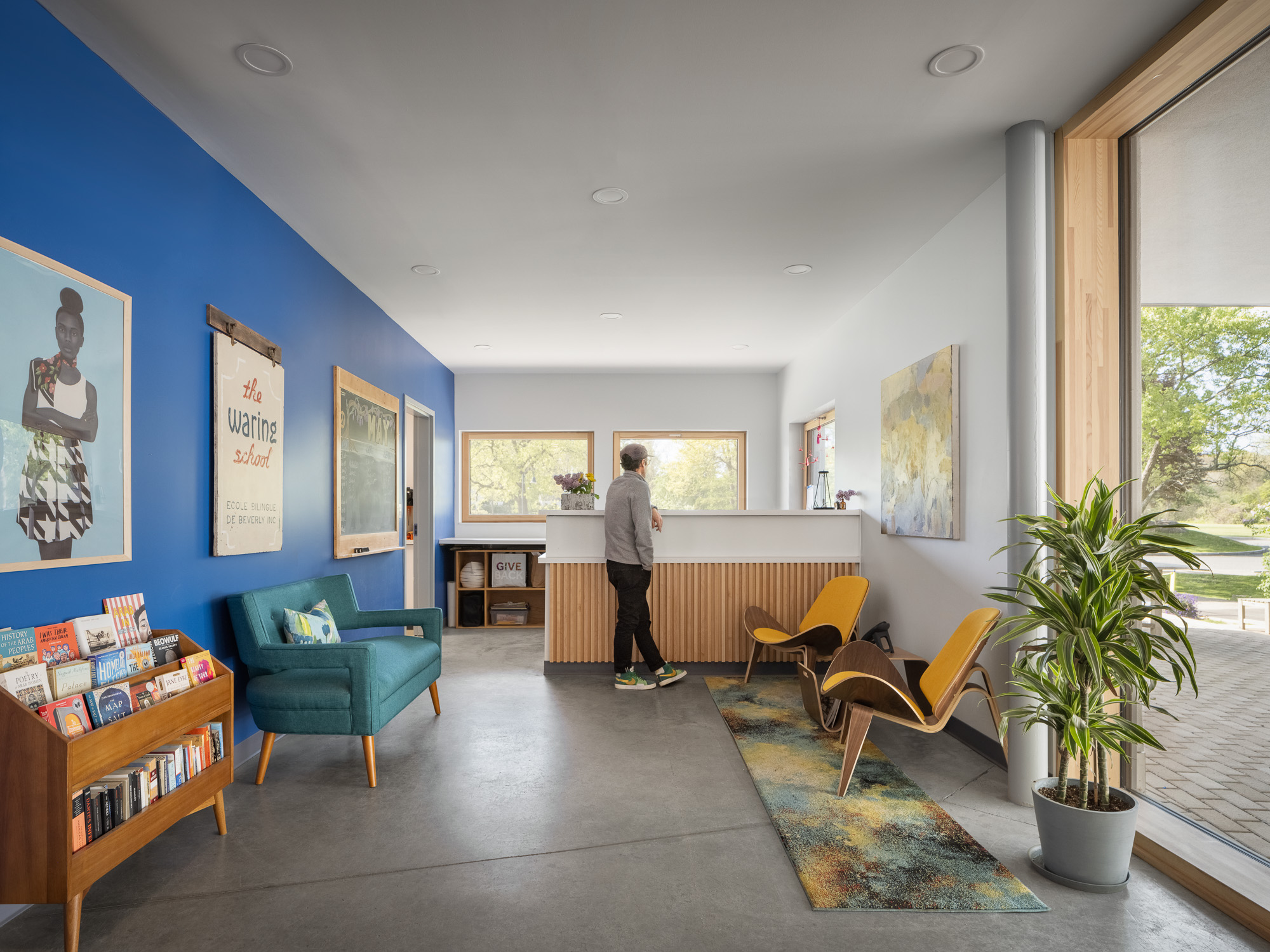
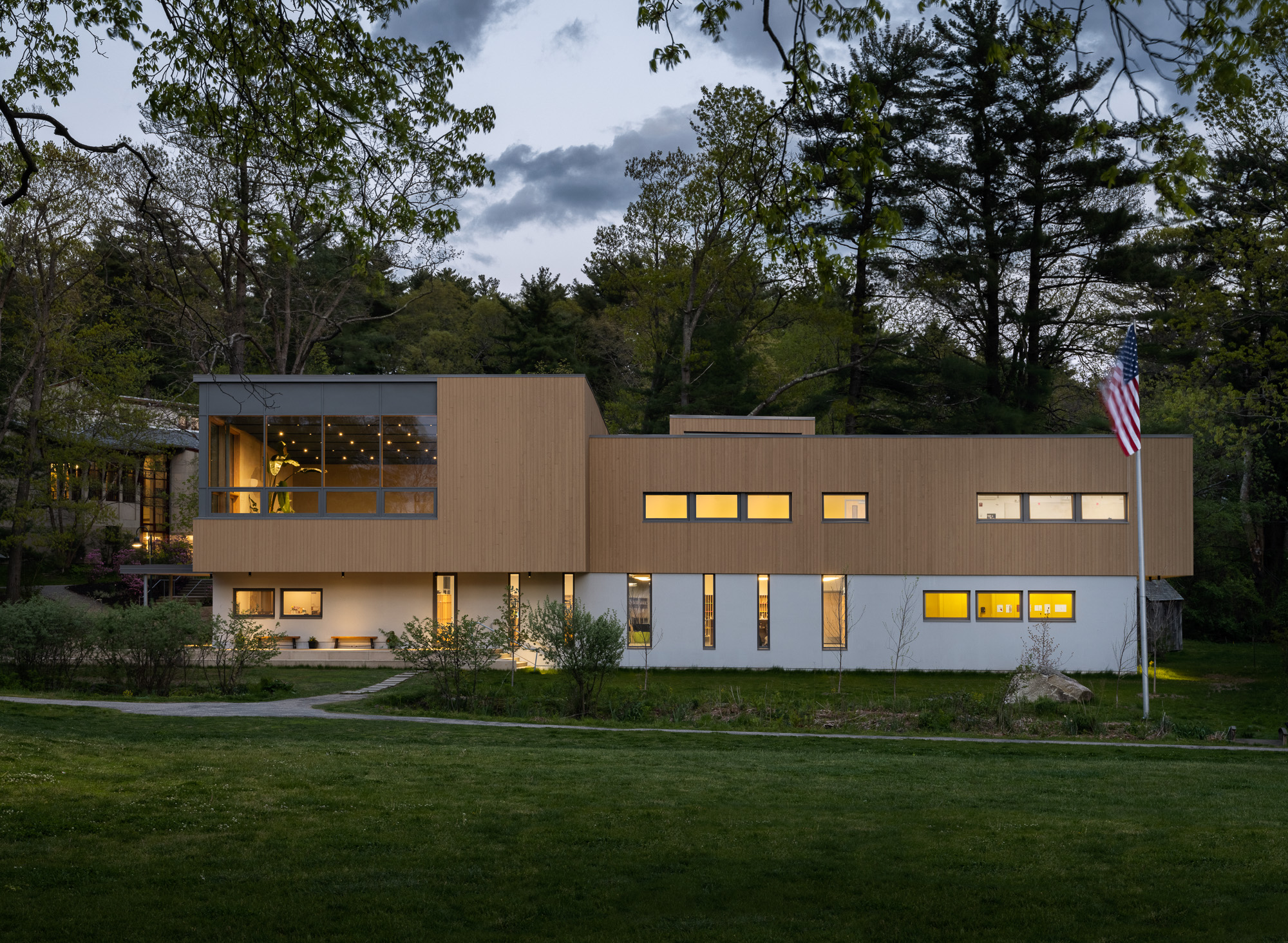
At the intersection of the two volumes, the All School Meeting space occupies a glazed corner that overlooks the lower campus. This space serves both as a visual anchor for the site and as a welcoming focal point for students, faculty, and visitors. The architects described it as a “welcoming beacon” that connects daily activity with the broader landscape of the school.
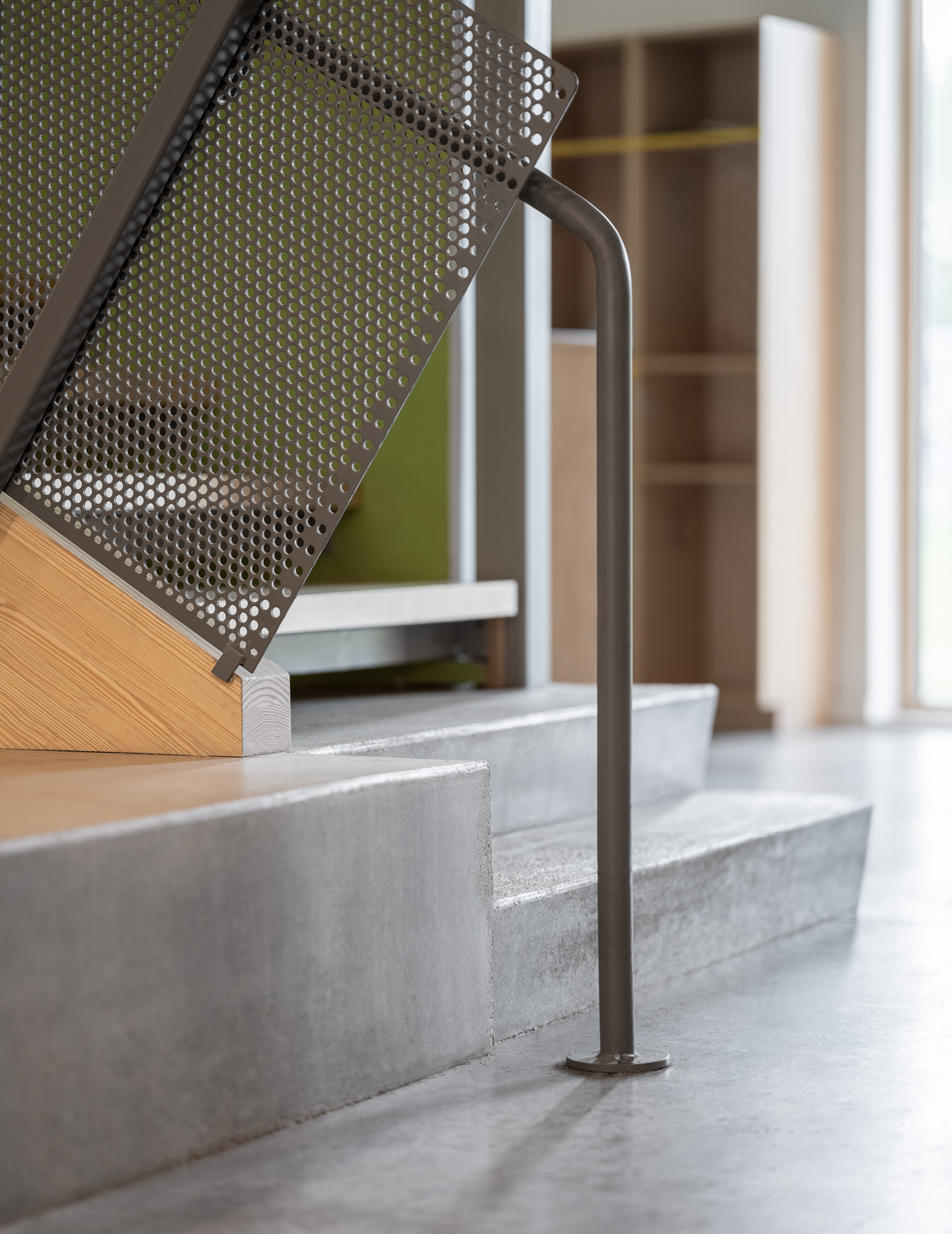
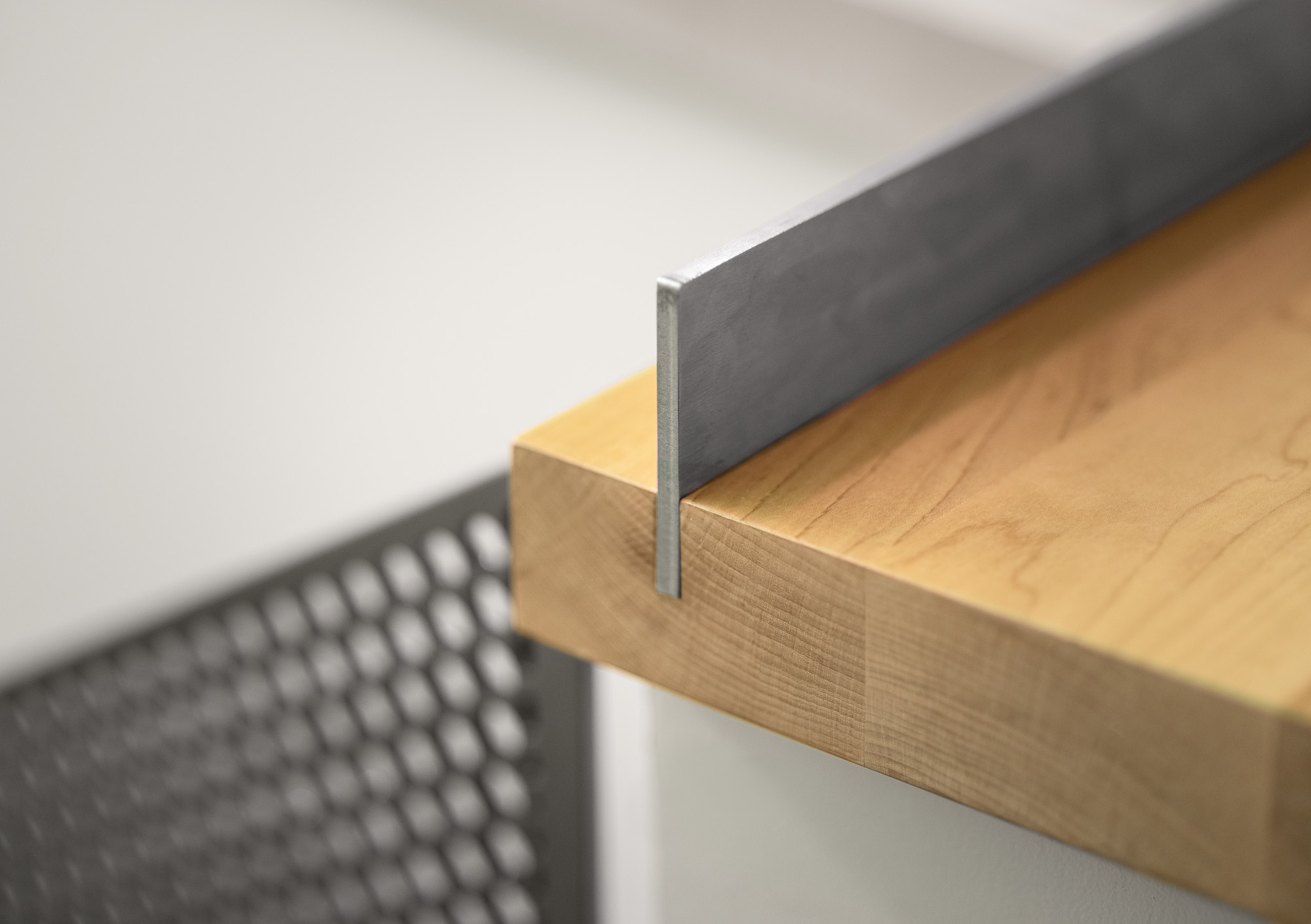
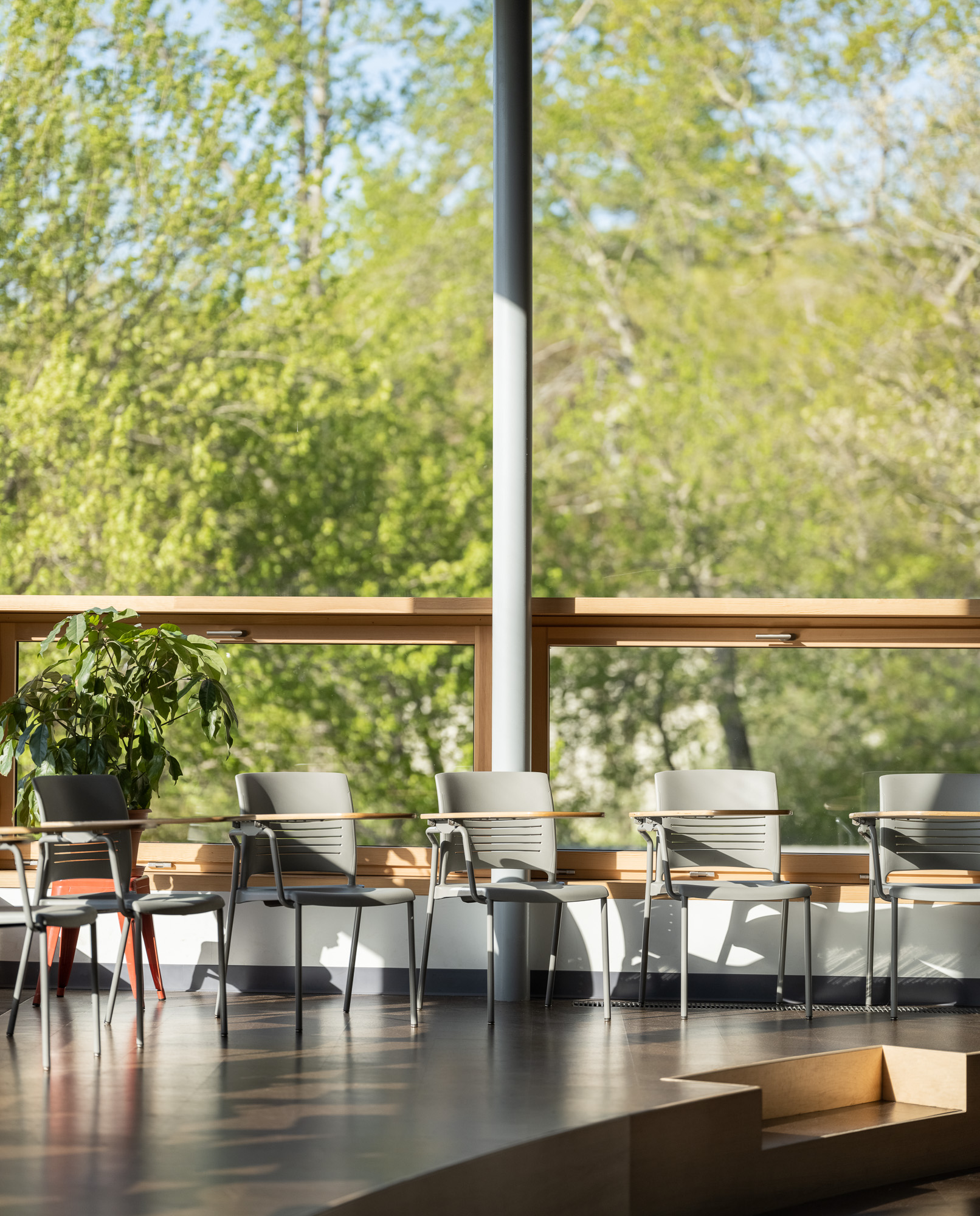
The project was led by OPAL’s design team, including Matthew O’Malia, Timothy Lock, Riley Pratt, and Alexandra Pagán. L.D. Russo served as the general contractor. Consultants included Hancock Associates for civil engineering, Thornton Tomasetti for structural design, VanZelm Associates for mechanical, electrical, plumbing, and fire protection, and Ground for landscape architecture. Passive House certification was provided by Peel Passive, and owner representation was managed by Craig Douglas, AIA.
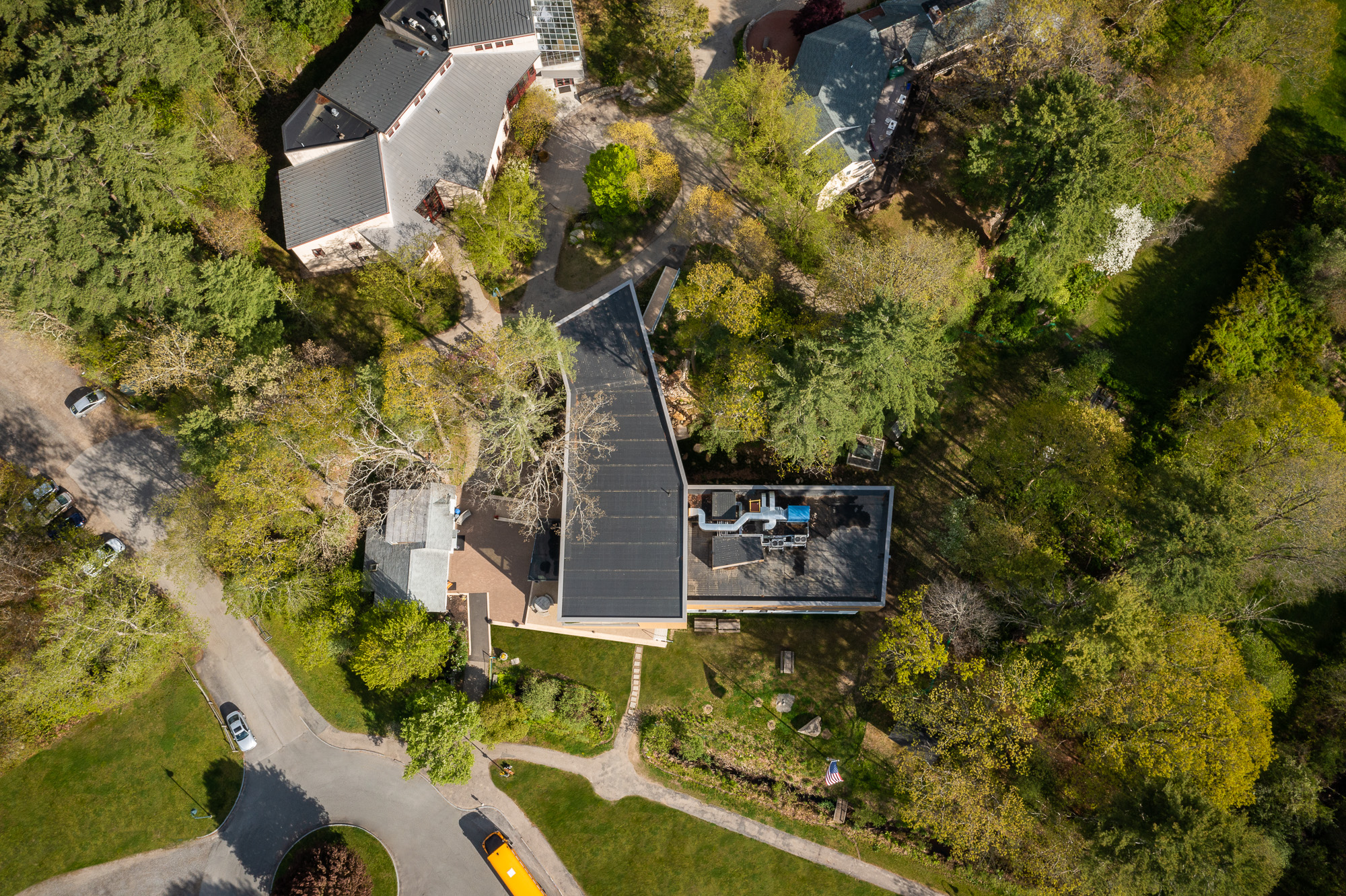
Project Gallery
24 photographs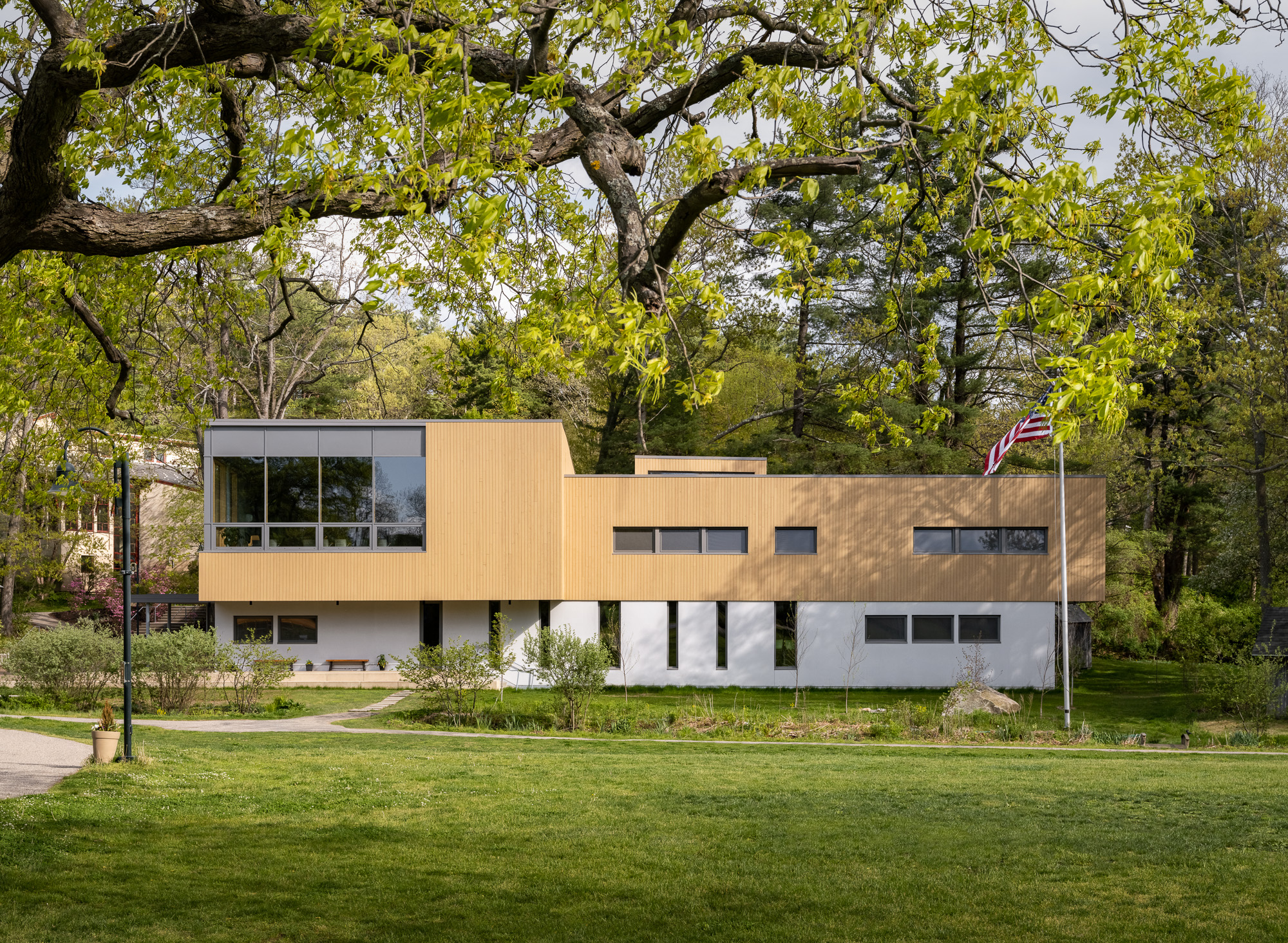
Project Location
Address35 Standley Street, Beverly, Massachusetts, 01915, United States
The location is intended for general reference and may denote a city or country; it does not identify a precise address.