home/projects/cultural centers/guangzhou opera house
Guangzhou Opera House / Zaha Hadid Architects
Cultural ArchitectureCultural centerOpera house
- Architects
- Zaha Hadid Architects
- Year
- 2010
- Photographs
- Iwan Baan, Virgile Simon Bertrand, Hufton+Crow
- Manufacturers · 5
- Kalzip, Reggiani, Kvadrat, HIMACS and 1 more, Kaolin Tiles
- Type
- Cultural center · Opera house
- Client
- Guangzhou Municipal Government
- Site area
- 42,393 m²
- Project management
- Guangzhou Municipal Construction Group Co. Ltd
- Project director
- Woody K.T. Yao, Patrik Schumacher
- Project leader
- Simon Yu
- Building services
- Guangzhou Pearl River Foreign Investment Architectural Designing Institute
Guangzhou Opera House, designed by Zaha Hadid Architects, is an opera house completed in 2010 in Guangzhou, China, on the Pearl River, for the Guangzhou Municipal Government. The 70,000 m² project combines a larger volume that holds the main auditorium with a smaller one, a multifunction hall for performance art, opera and concerts in the round. Its site lies at the heart of the cultural sites development of the city, at the foot of Zhujiang Boulevard, and river valleys, with the way erosion transforms them, shaped its two forms. A promenade cut into the landscape leads visitors from the city to the riverside, while fluid surfaces continue inside through foyers and auditorium. Since its opening the building has drawn further cultural institutions to its surroundings.

In 2002 the municipality of Guangzhou launched an invitation-only architectural competition for an opera house. That November it gave the commission to Zaha Hadid Architects, ahead of the other finalists, Rem Koolhaas and Coop Himmelb(l)au. Schematic design started in October 2004 and construction in January 2005. Although a fire broke out on the site in May 2009, the RMB 1.38 billion building was completed by May 2010, before its formal opening in February 2011.
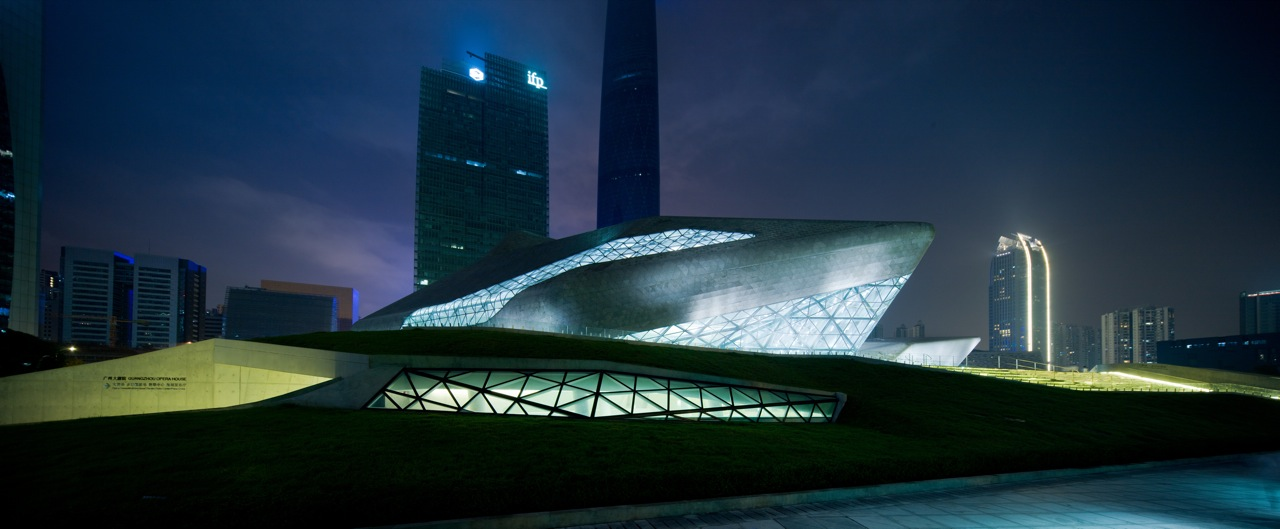
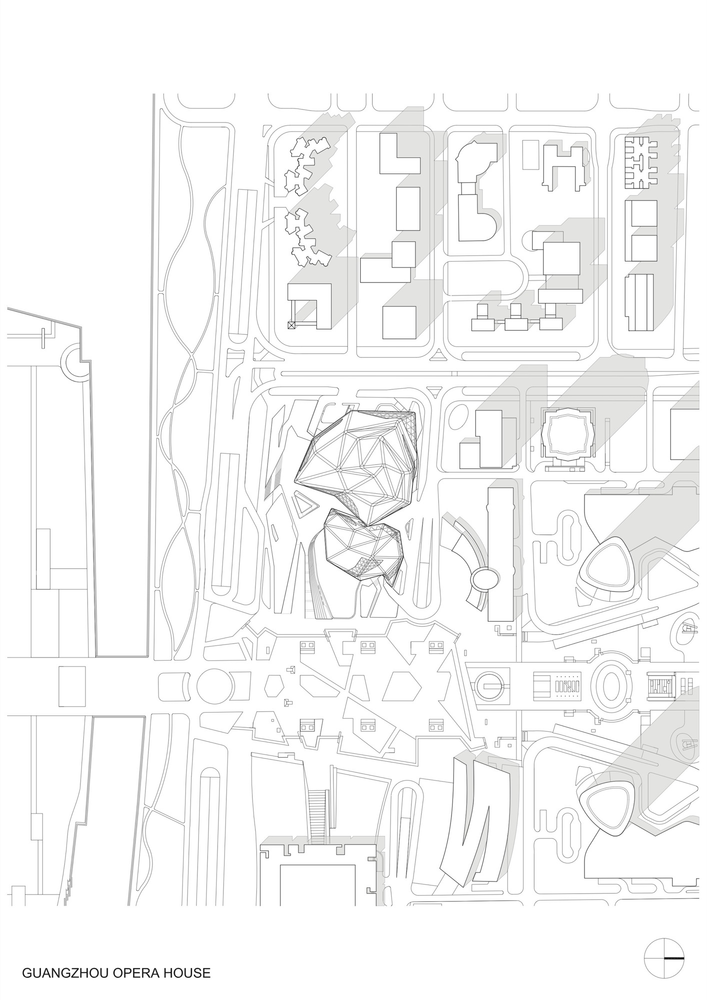
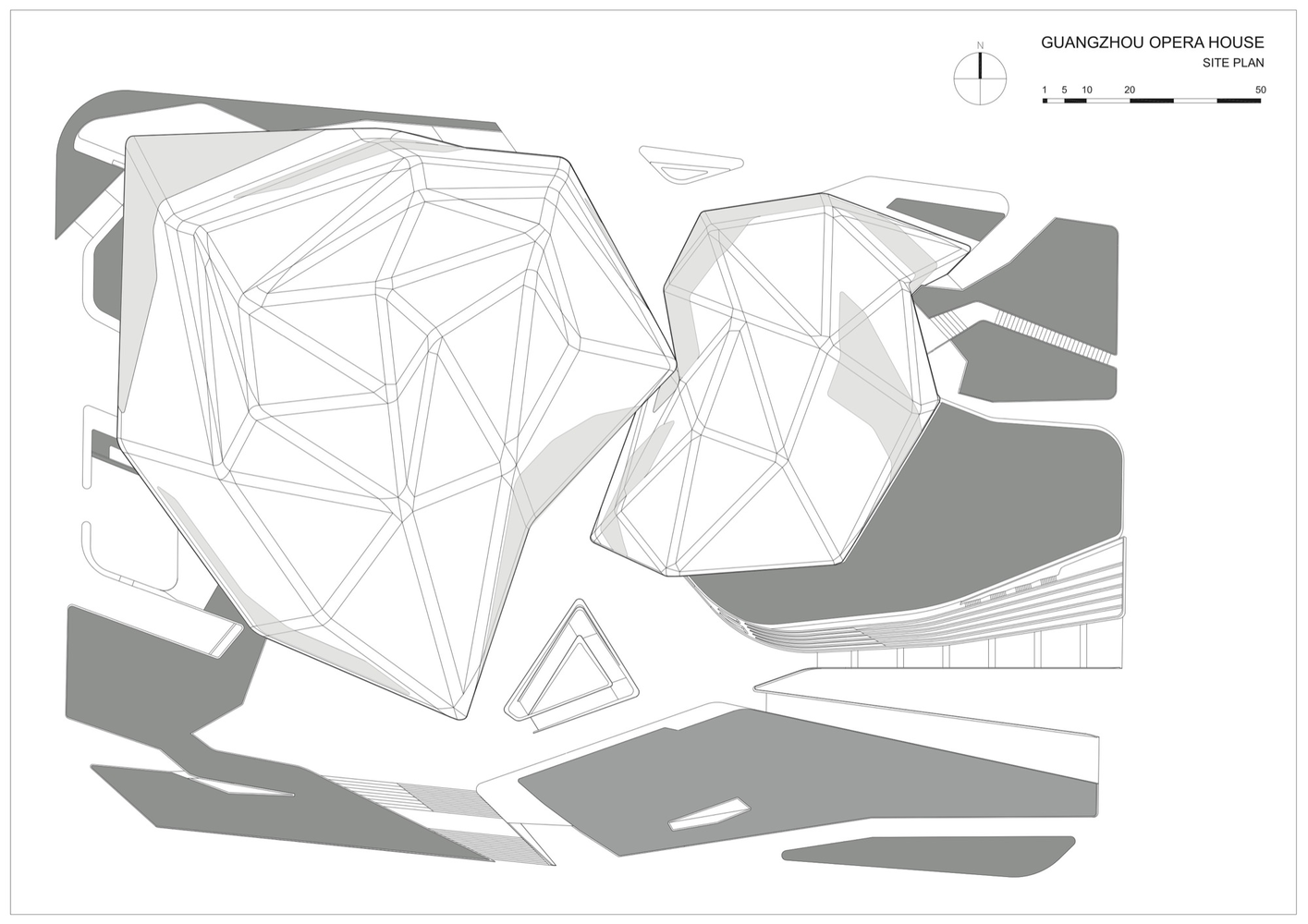
The office conceived the building, at the heart of the cultural sites development of the city, as a lasting monument to the new millennium that overlooks the Pearl River. It brings together two adjacent sites, those of the proposed museum and of the metropolitan activities, and it forms an adjunct to the Haixinsha Tourist Park Island and a dominant riverside focus for visitors. With its contoured profile, its twin-boulder design and its approach promenade, the building enhances urban function, opens access to the riverside and the dock areas, and creates a new dialogue with the emerging new town. From the park at the centre of Zhujiang Boulevard it reads as a visual prelude to the island beyond, whereas from the river the towers of Zhujiang New Town stand behind it as a backdrop to the civic and cultural buildings of the district.
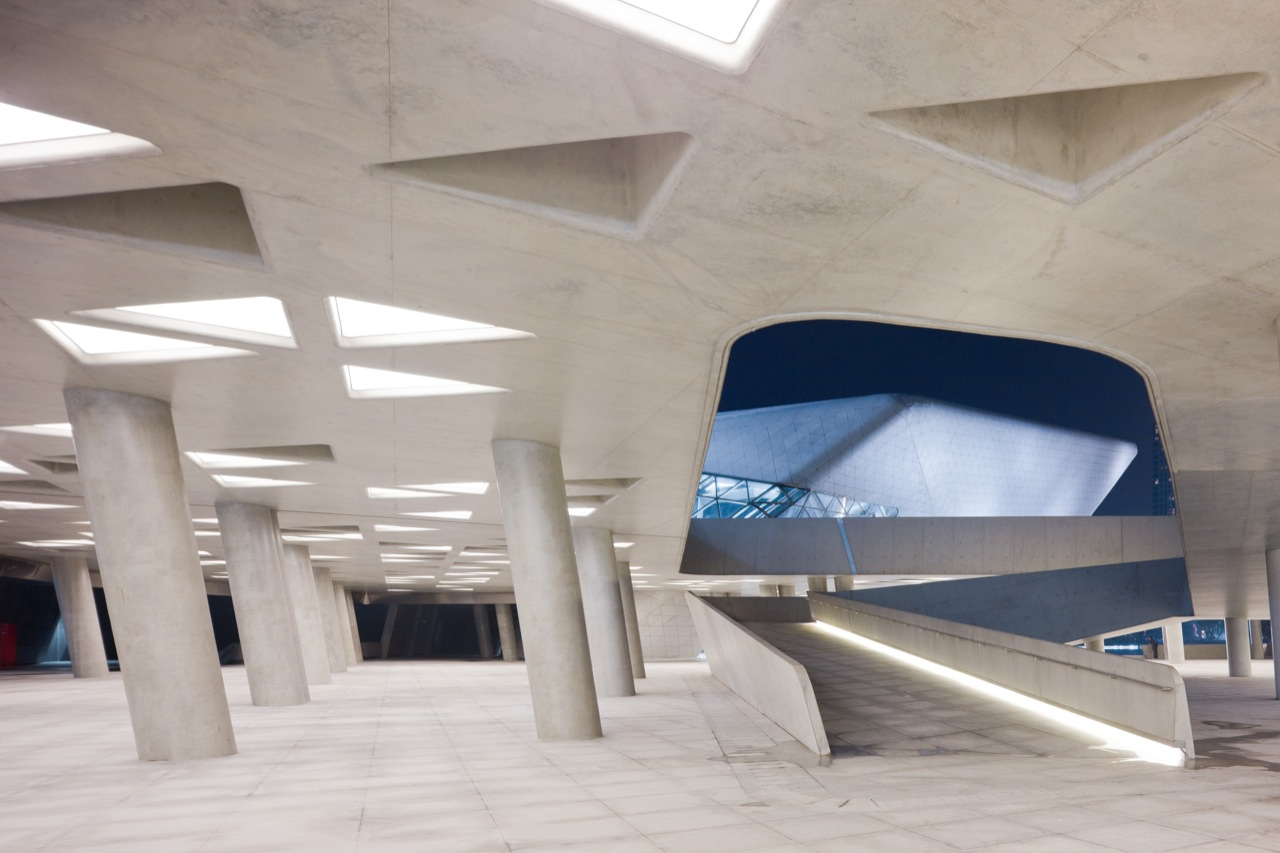
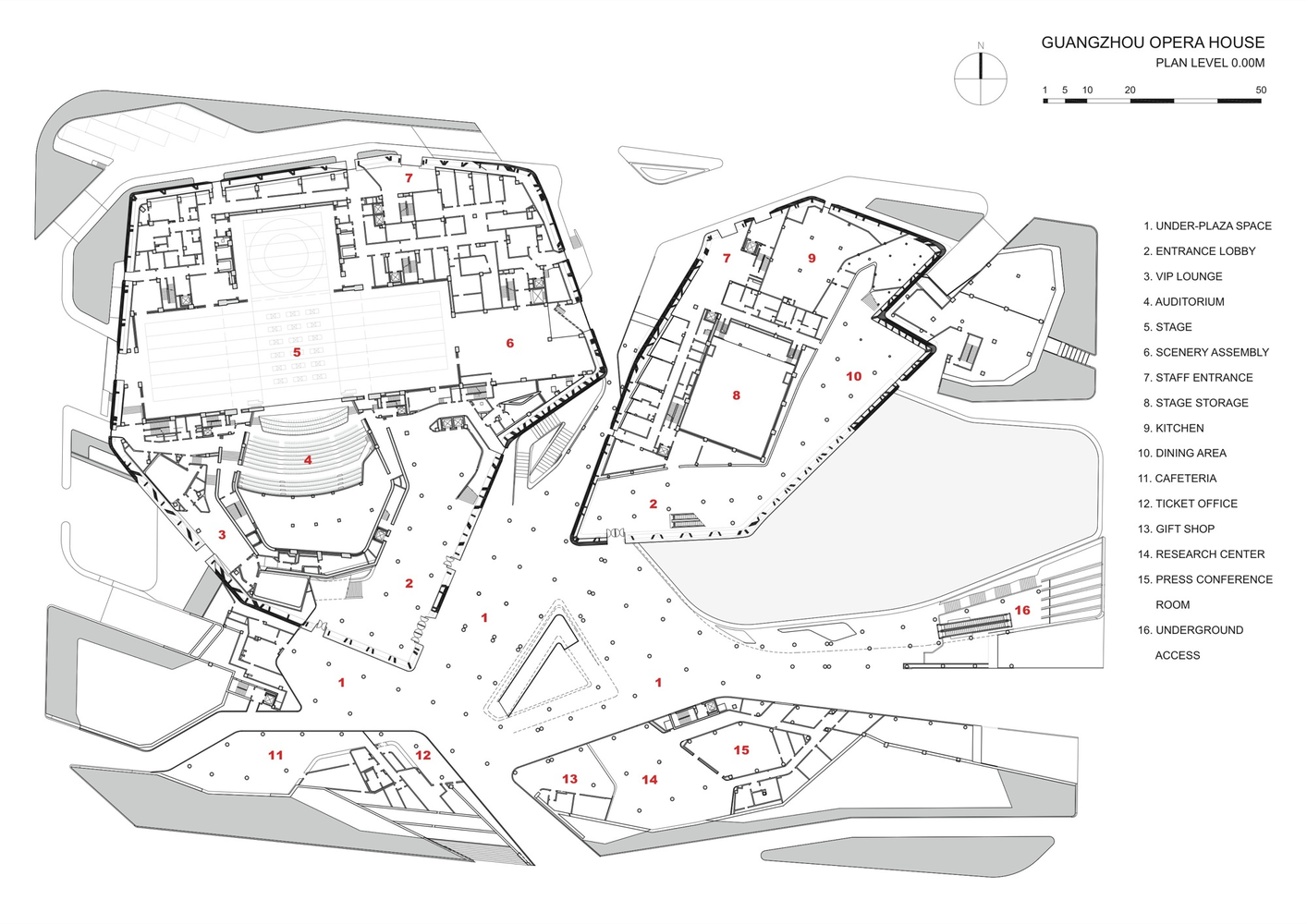
Its approach promenade begins at the site of the proposed museum, on the opposite side of the central boulevard, and runs as an internal street cut into the landscape. Along one side of it, a cafe, a bar, a restaurant and shops are embedded “shell-like” into the landforms. Visitors arriving by car or bus are set down on the north side of the site, on Huajiu Road, while service vehicles reach the buildings at either end of the same road and VIP access is from the western boundary, facing Huaxia Road. Cascading stairs and ramps lead to the main entrances and the outdoor areas. The paths continue through the site and between the two buildings, in a network of circulation dotted with pools and plazas.
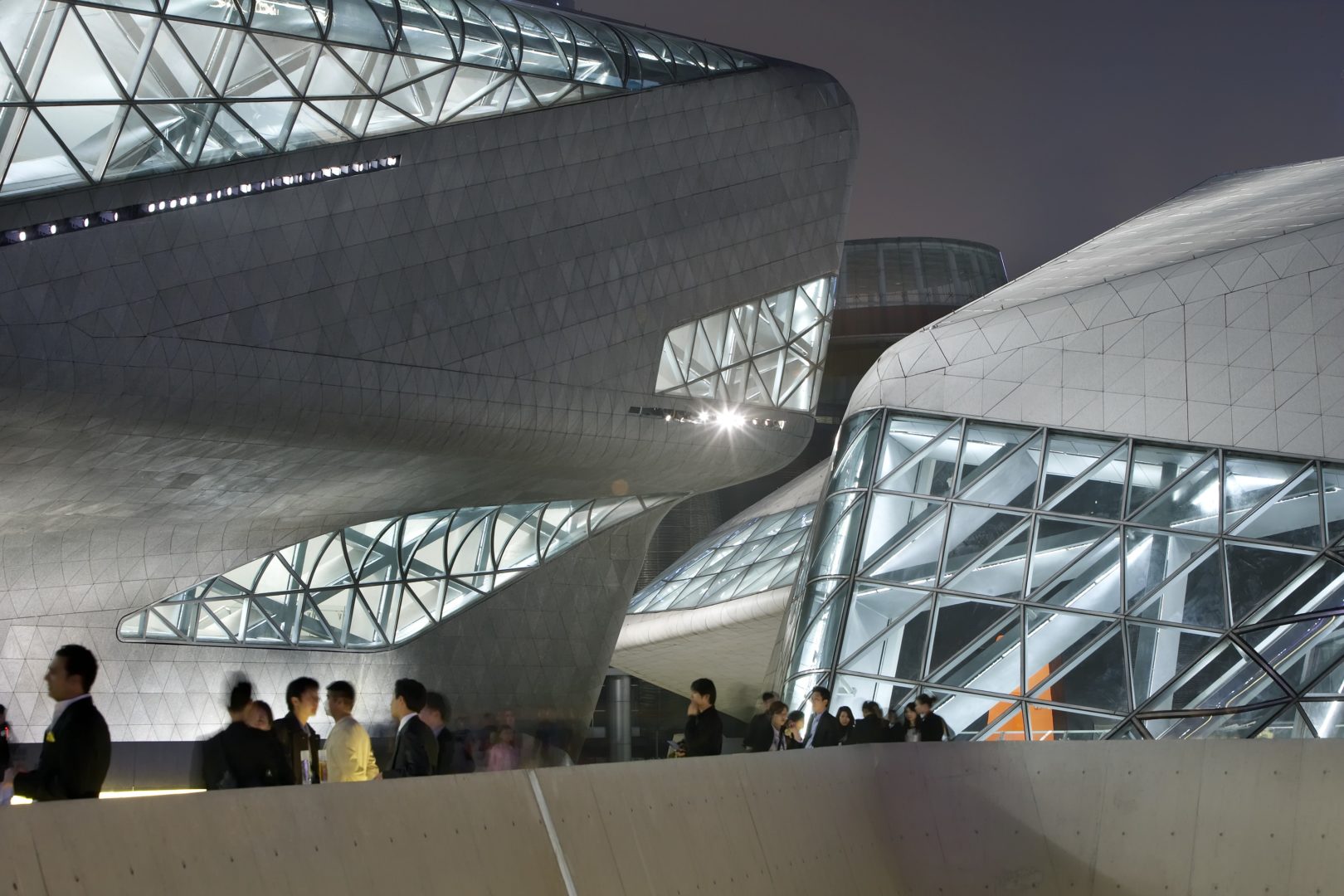
The design evolved from the concept of a natural landscape and from the interplay between architecture and nature, engaging with the principles of erosion, geology and topography. The particular influence came from river valleys and the way erosion transforms them, and the two volumes appear as twin boulders taken from a riverbed and smoothed by a stream. Fold lines in this landscape define territories and zones within the building, cutting interior and exterior canyons for circulation, lobbies and cafes and allowing natural light to penetrate deep inside. This analogy continues in the smooth transitions between disparate elements and between different levels. The buildings were not conceived in plan, with a front, a back and sides, but modelled dynamically in three dimensions, so that buildings and landscape are omnidirectional. The office presents the result as a combination of “the cultural traditions that have shaped Guangzhou’s history, with the ambition and optimism that will create its future”.
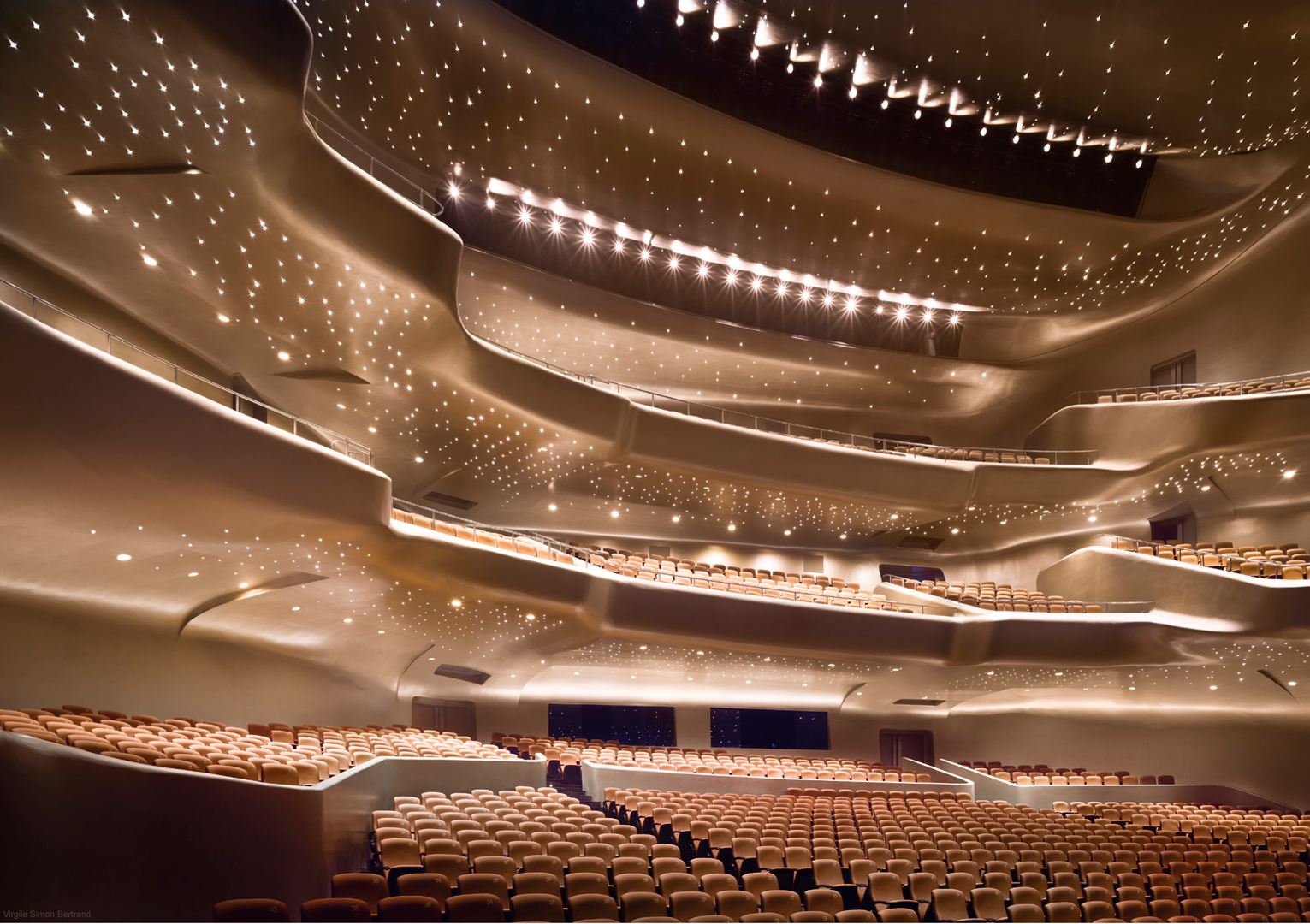
For Zaha Hadid, the opera house was one of the first projects that the office designed as a “total topography”, influenced by two of its earlier waterfront redevelopments, the Zollhof 3 Media Park in Düsseldorf and the Rheinauhafen Redevelopment in Cologne. The interior of the auditorium harks back to her unrealised Cardiff Bay Opera House of 1994 to 1996, particularly in its asymmetrical plan. From Cardiff, as Patrik Schumacher explains, the office also brought the use of higher and lower levels to create a multiple ground, and the projection of the sloped auditorium out into the lobby and further into the outer volume. In the hall itself, the seating refines the vineyard terracing that Hans Scharoun first used in the Berlin Philharmonie in 1963.
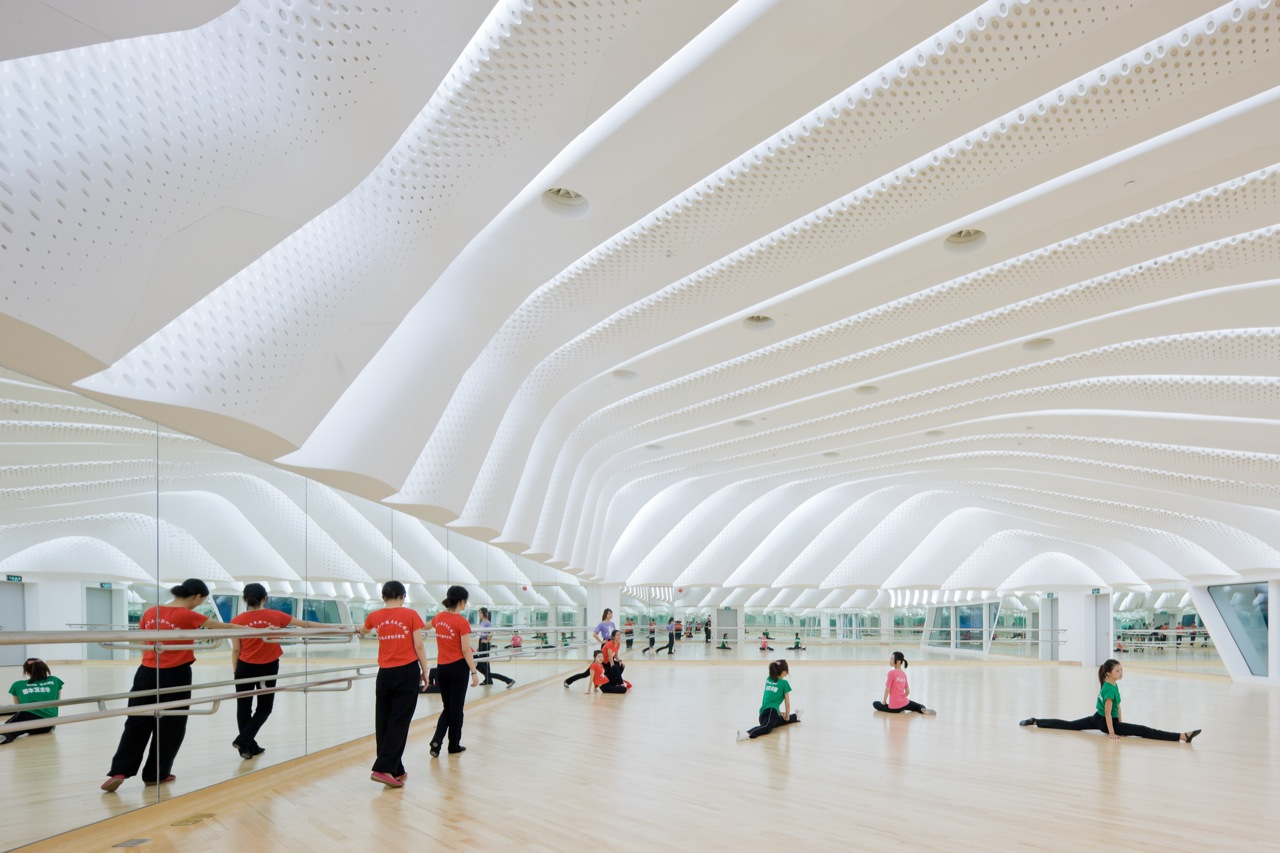
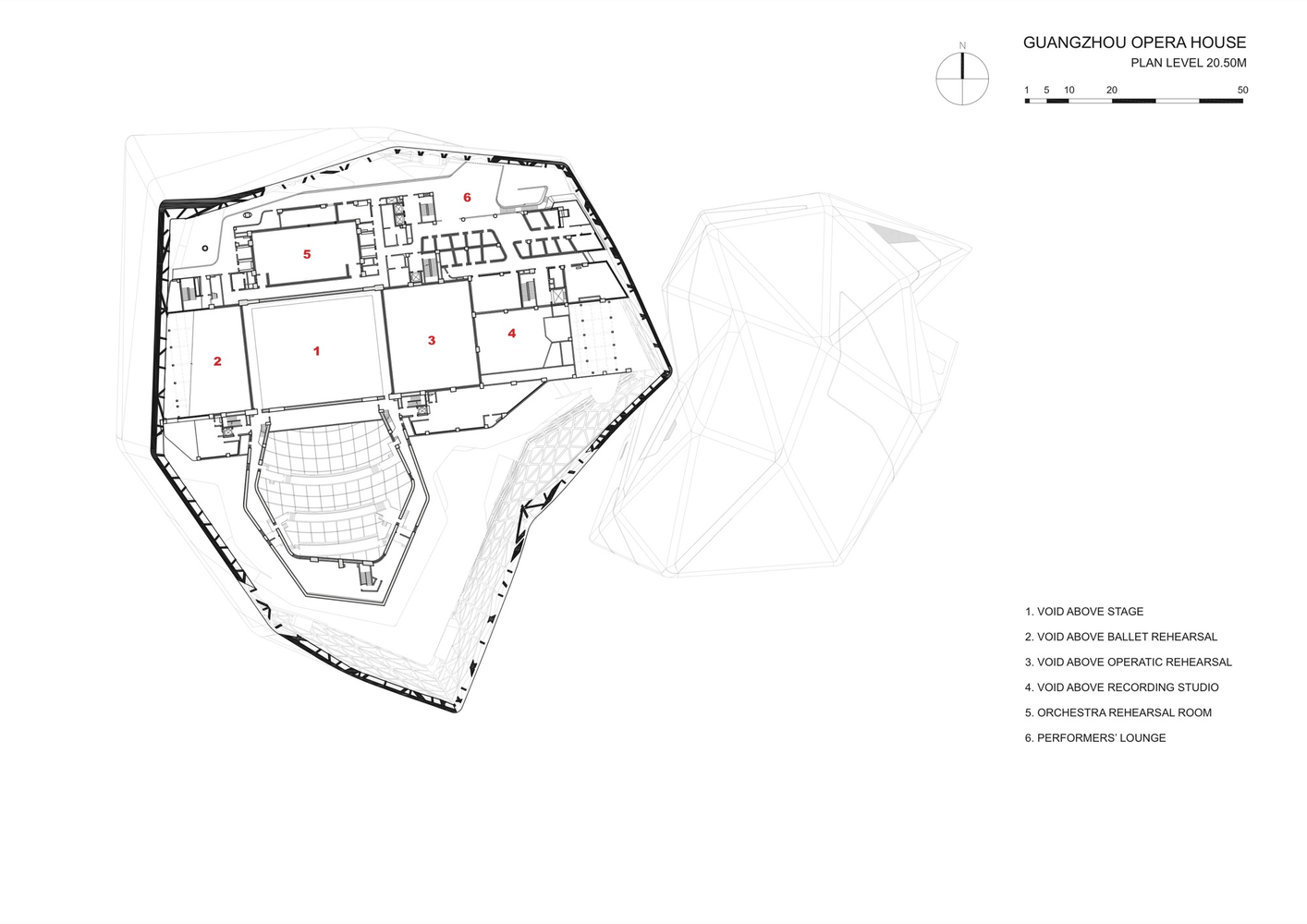
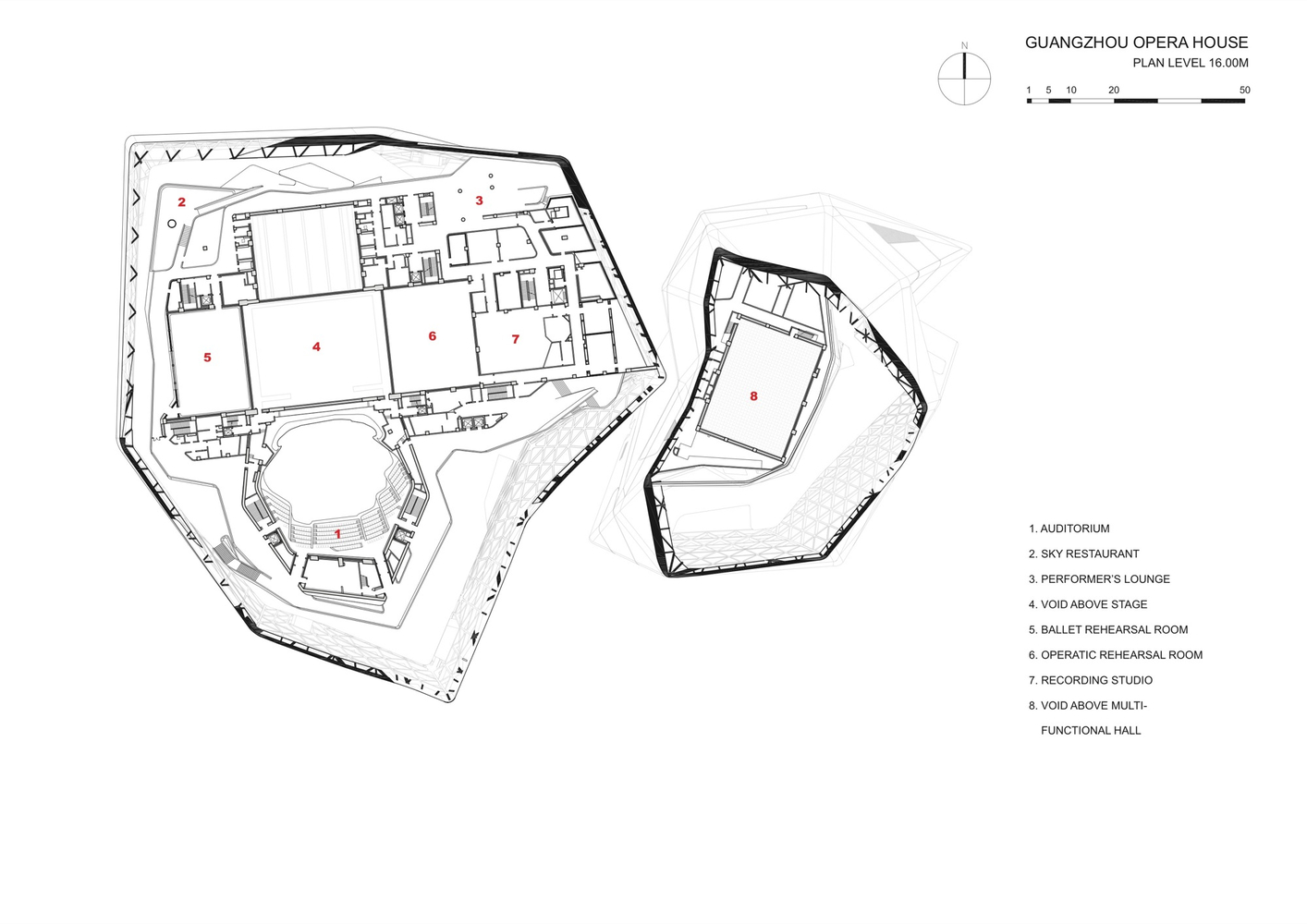
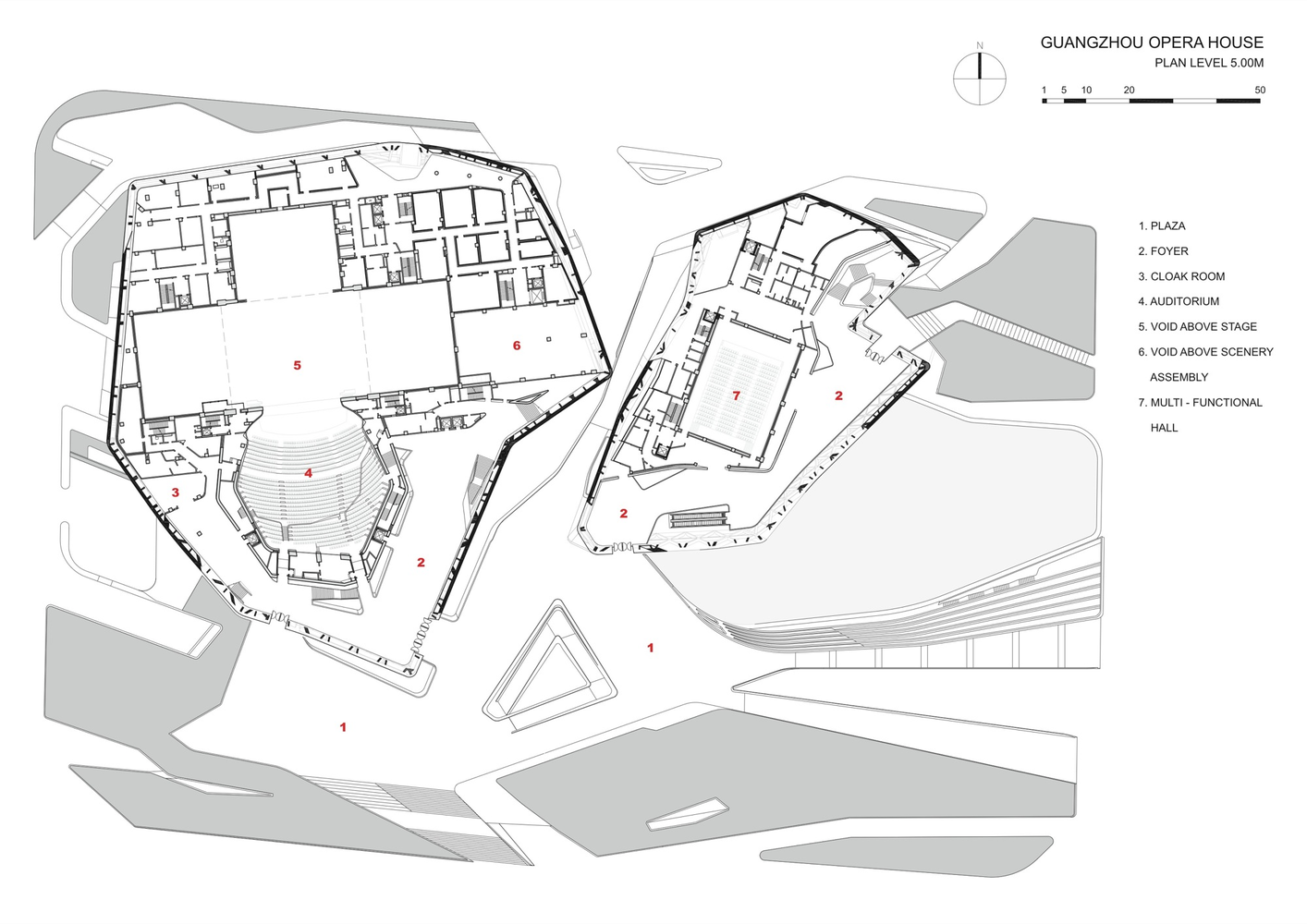
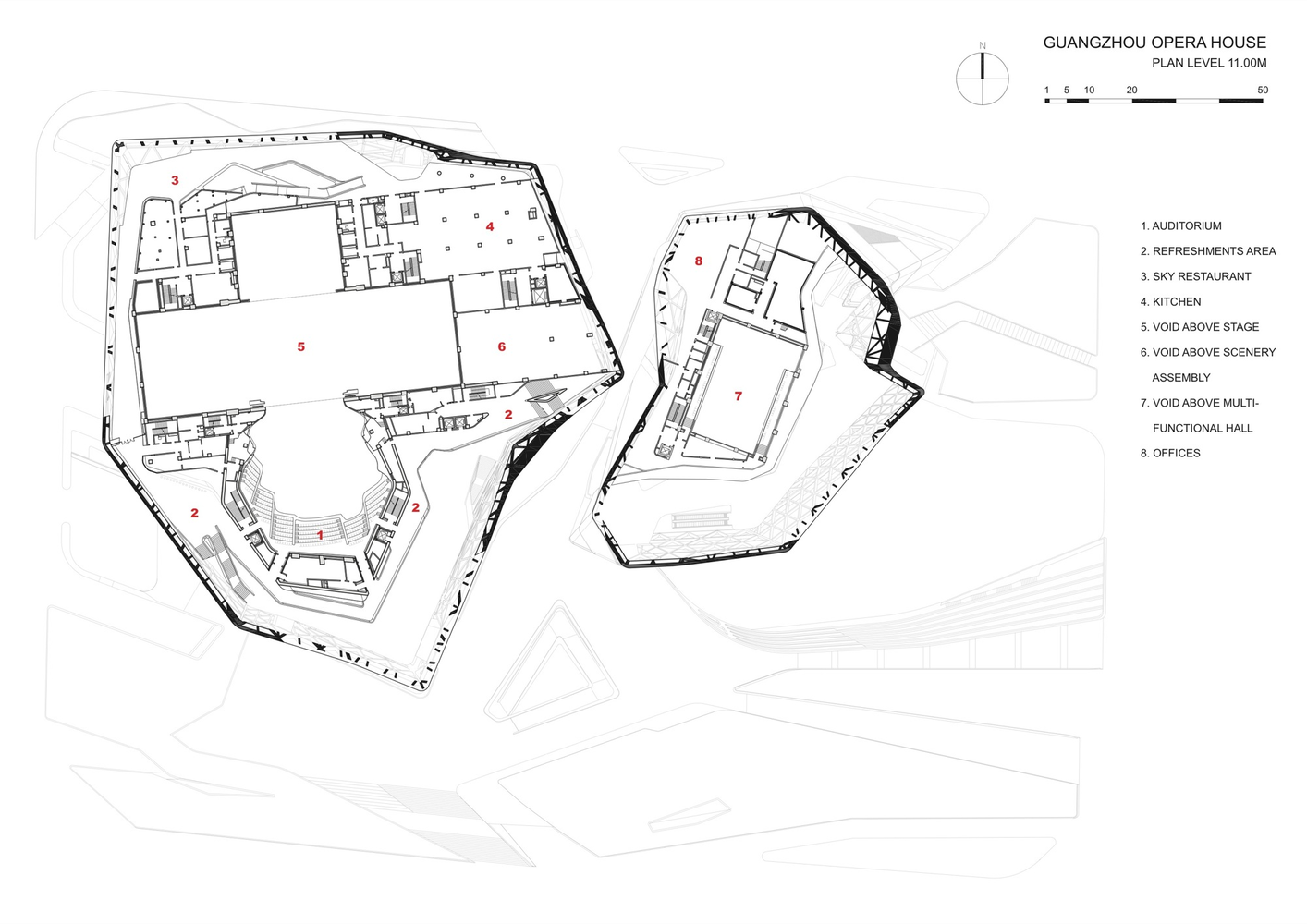
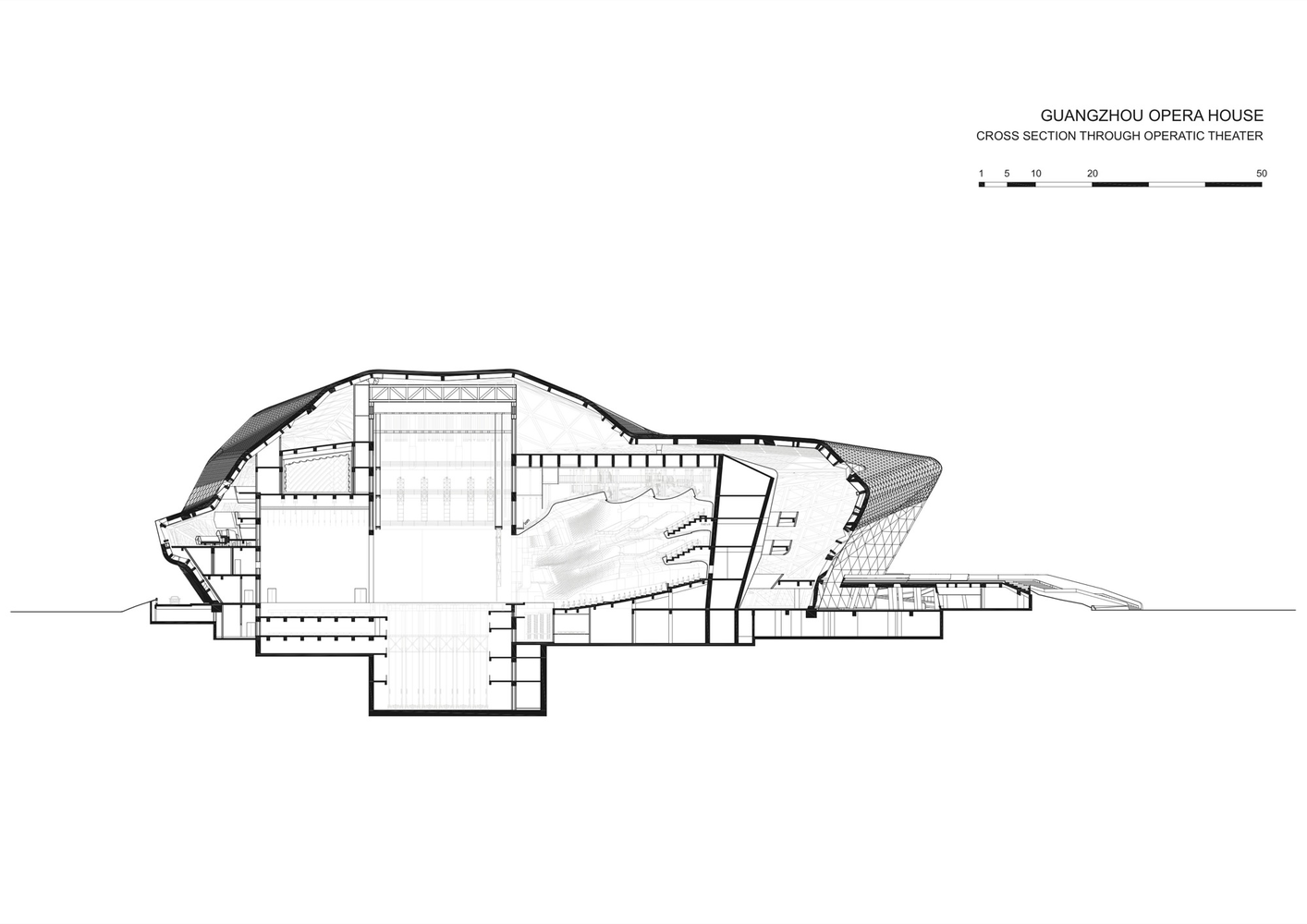
The opera house pairs an auditorium of 1,800 seats with a multifunction hall of 400 seats, together with rehearsal rooms and an entrance hall. The auditorium is equipped with the latest acoustic technology, while the smaller hall is designed for performance art, opera and concerts in the round. The whole stands on a site of 42,393 m², of which the two volumes and their facilities make up a floor area of 70,000 m².
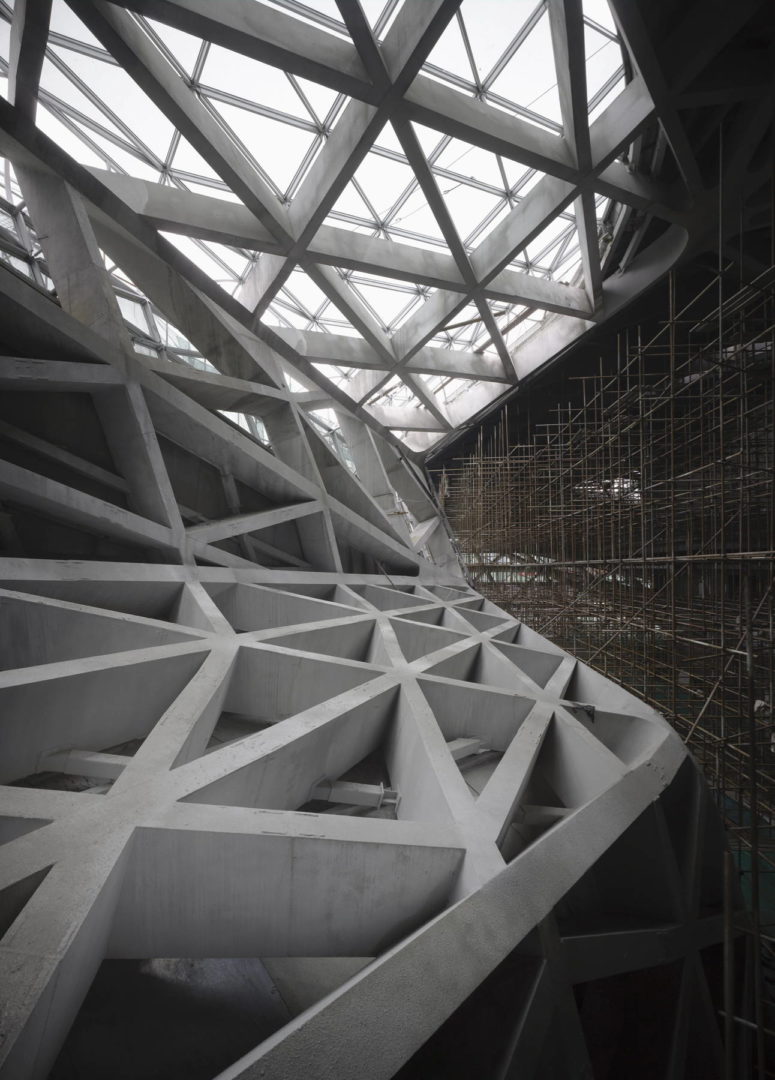
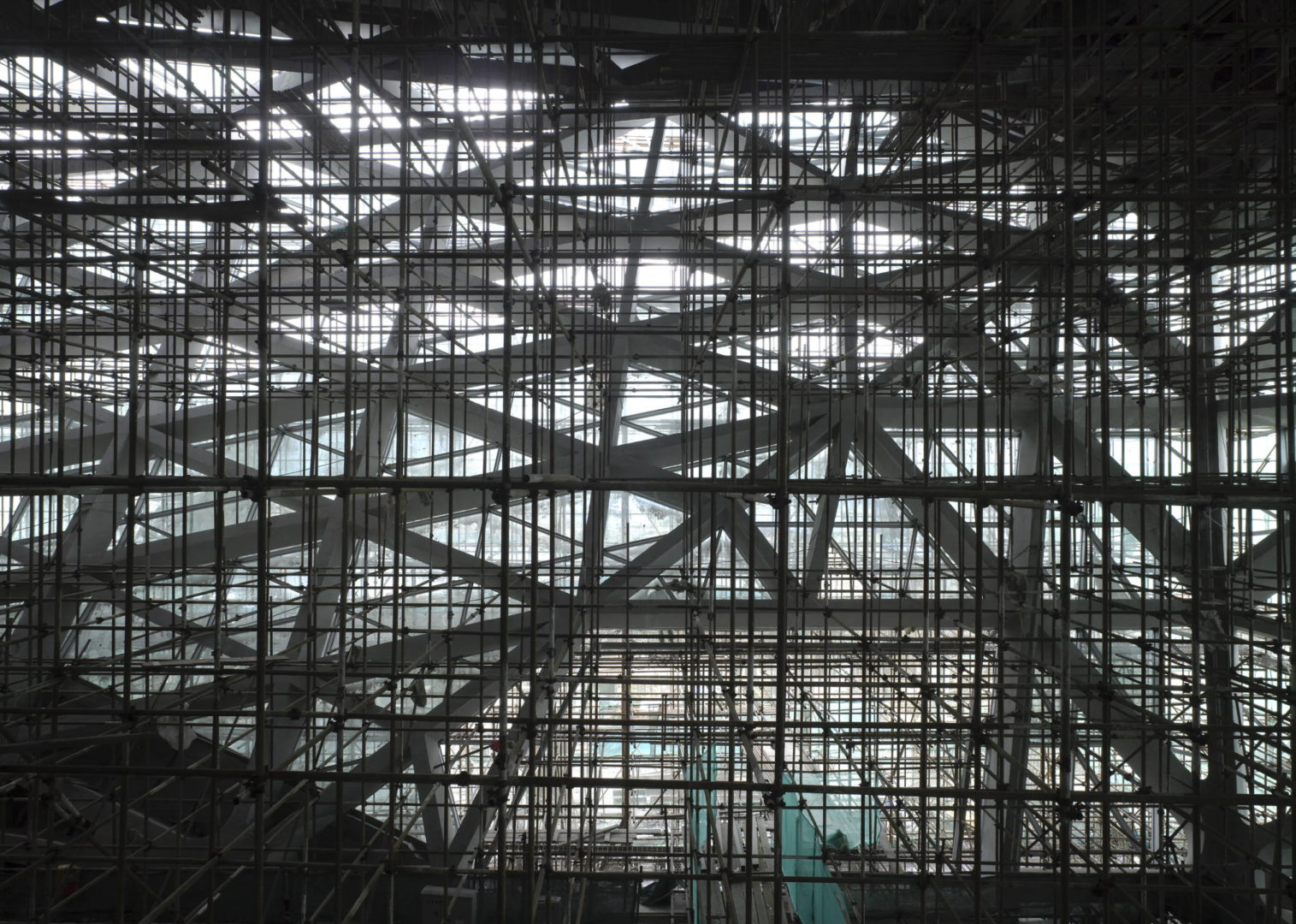
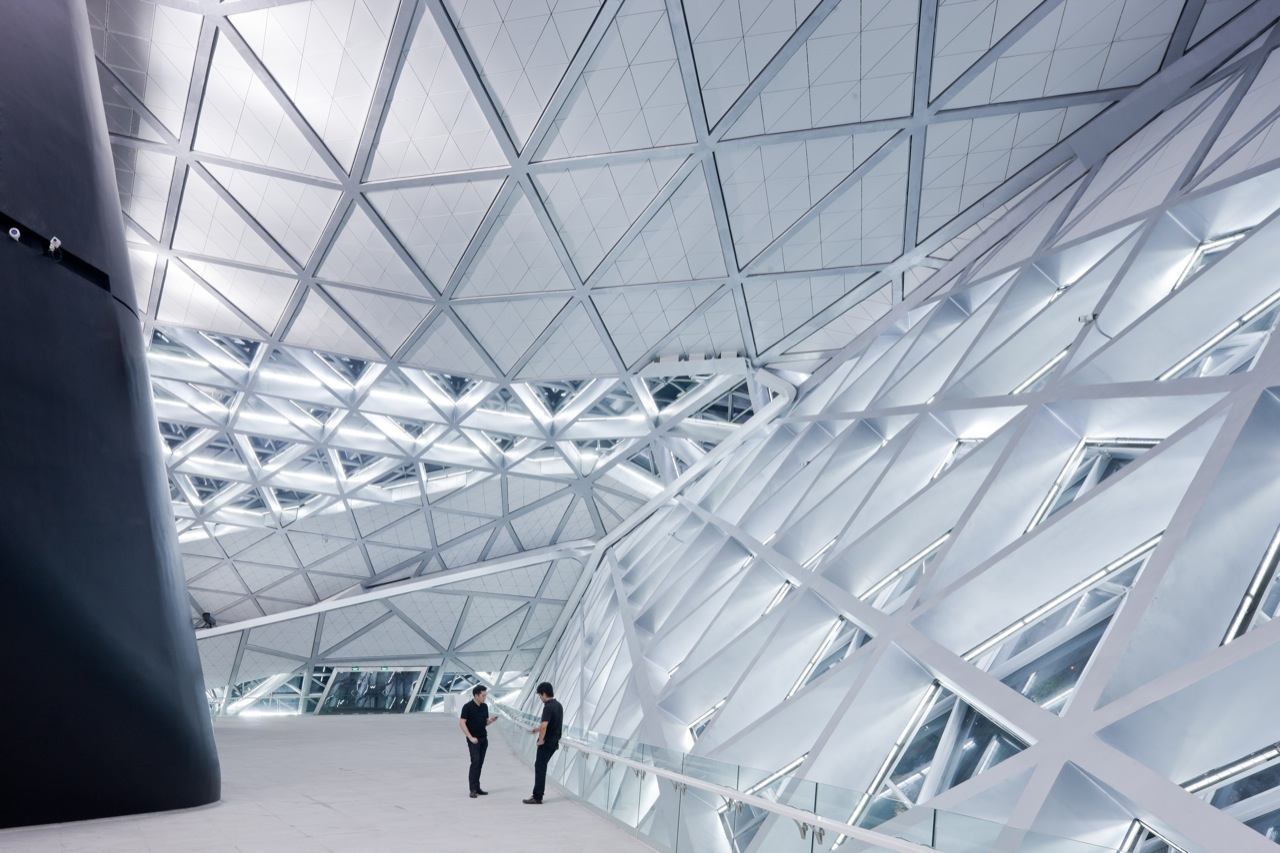
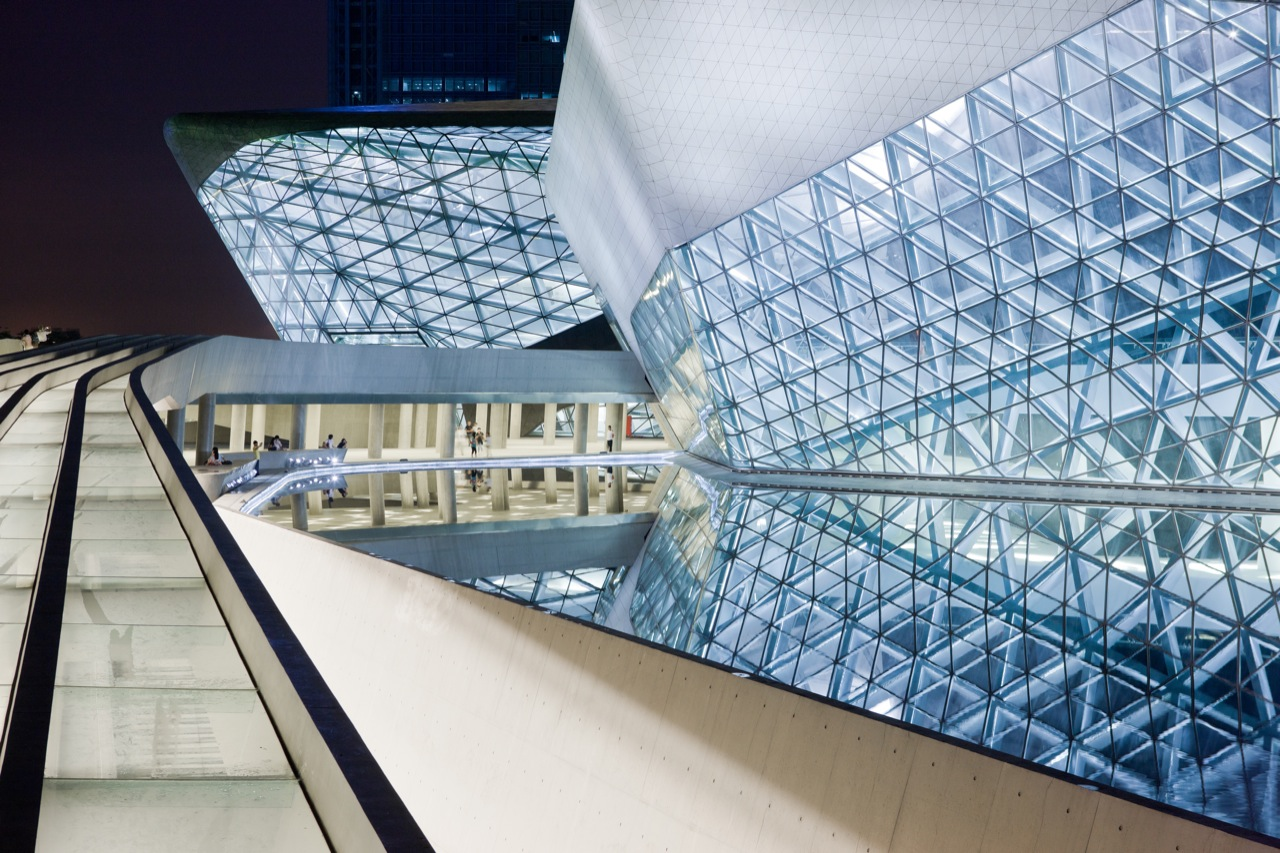
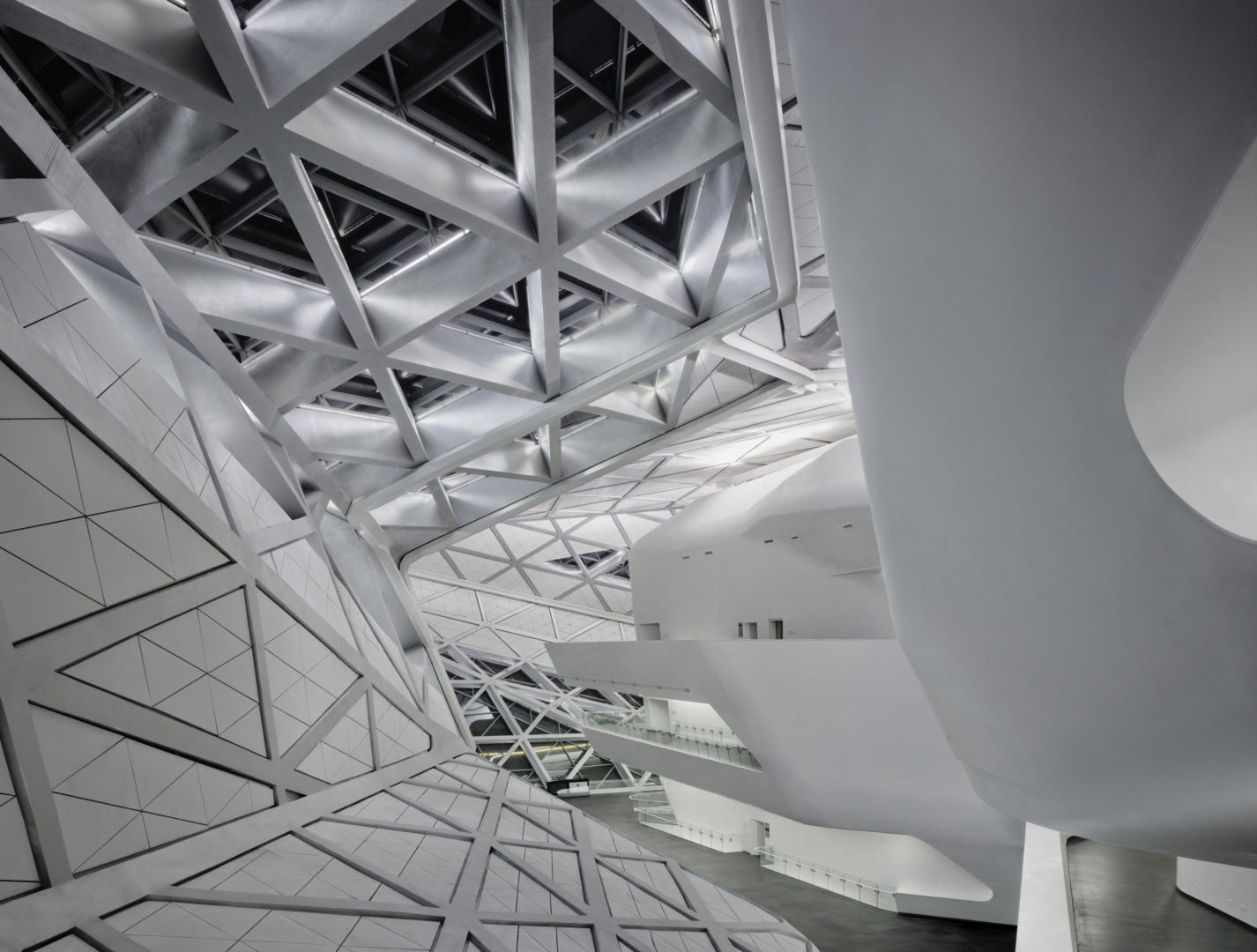
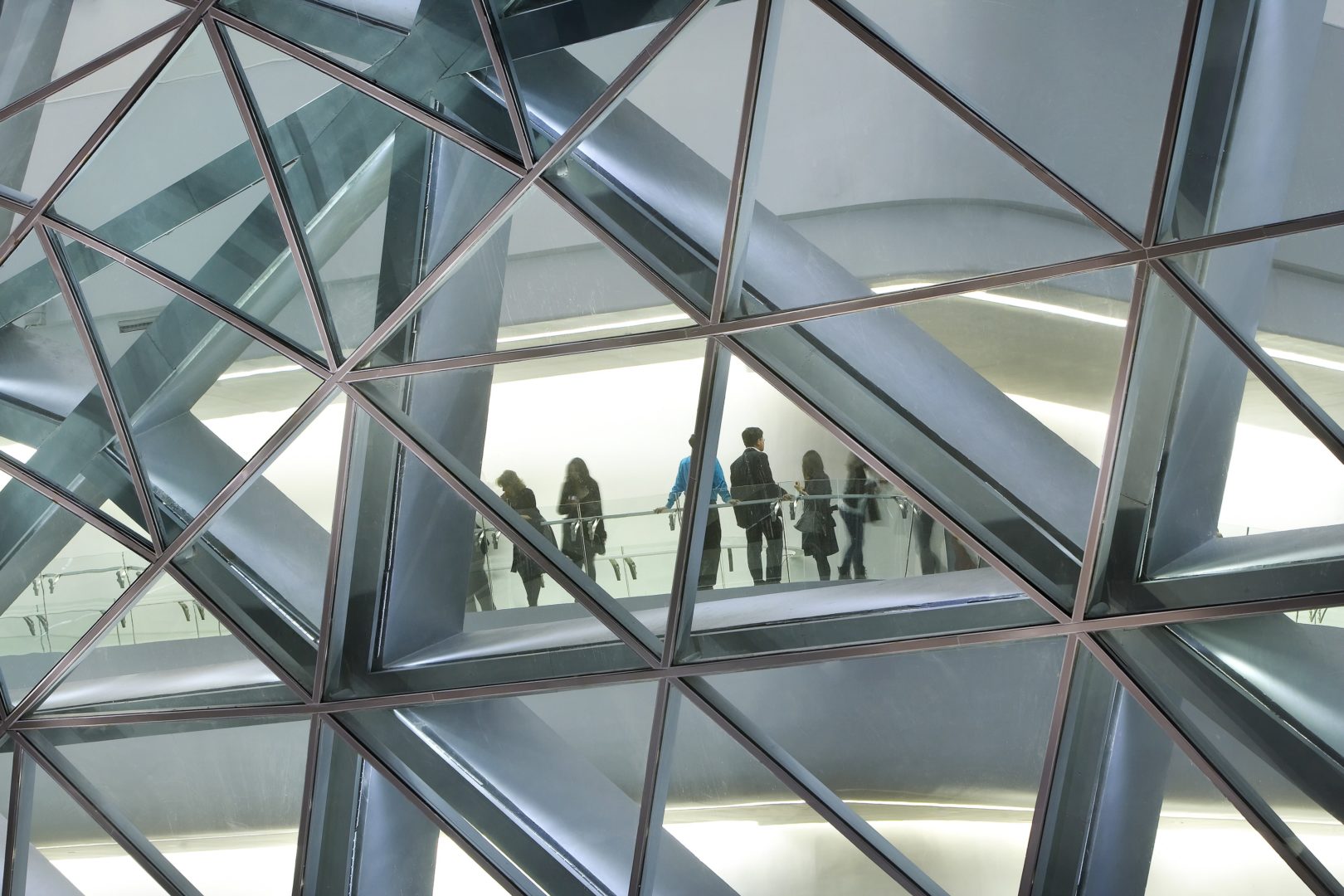
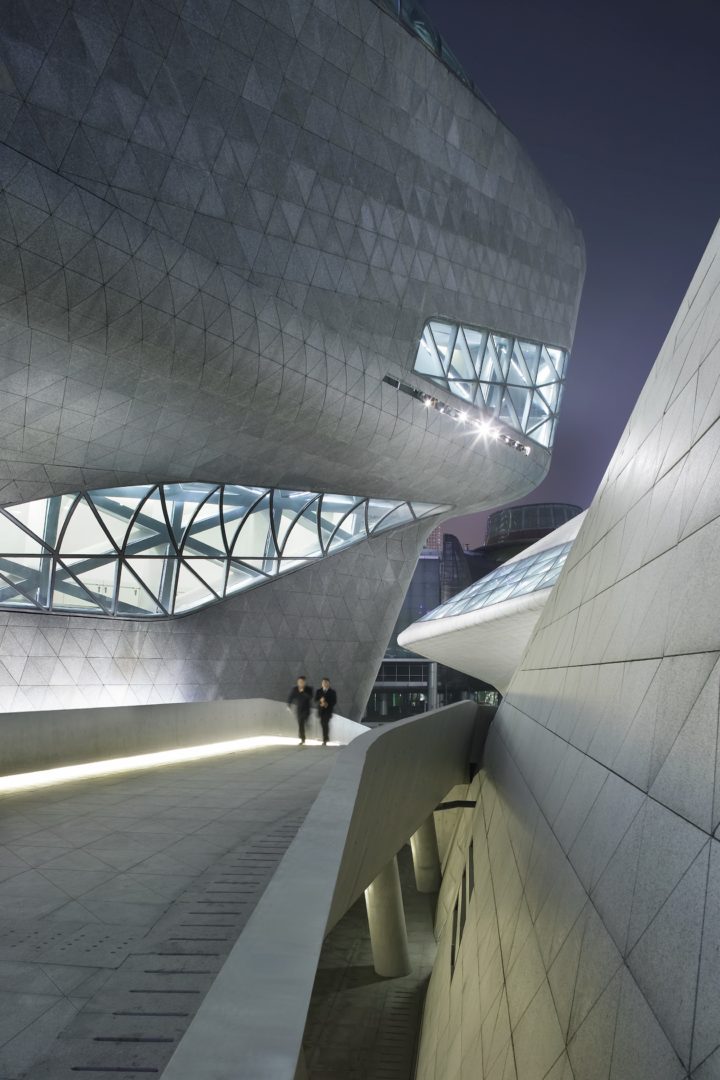
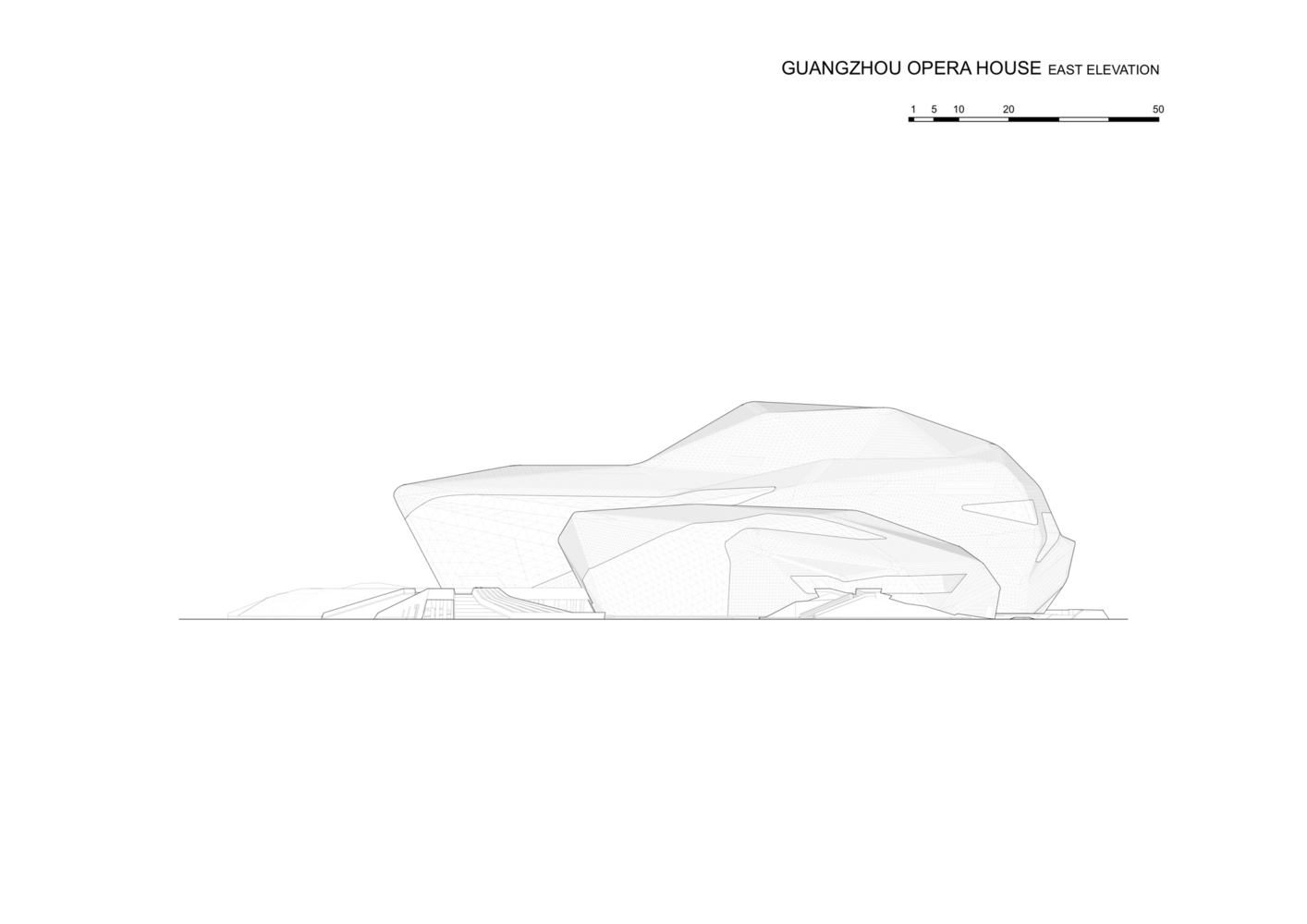
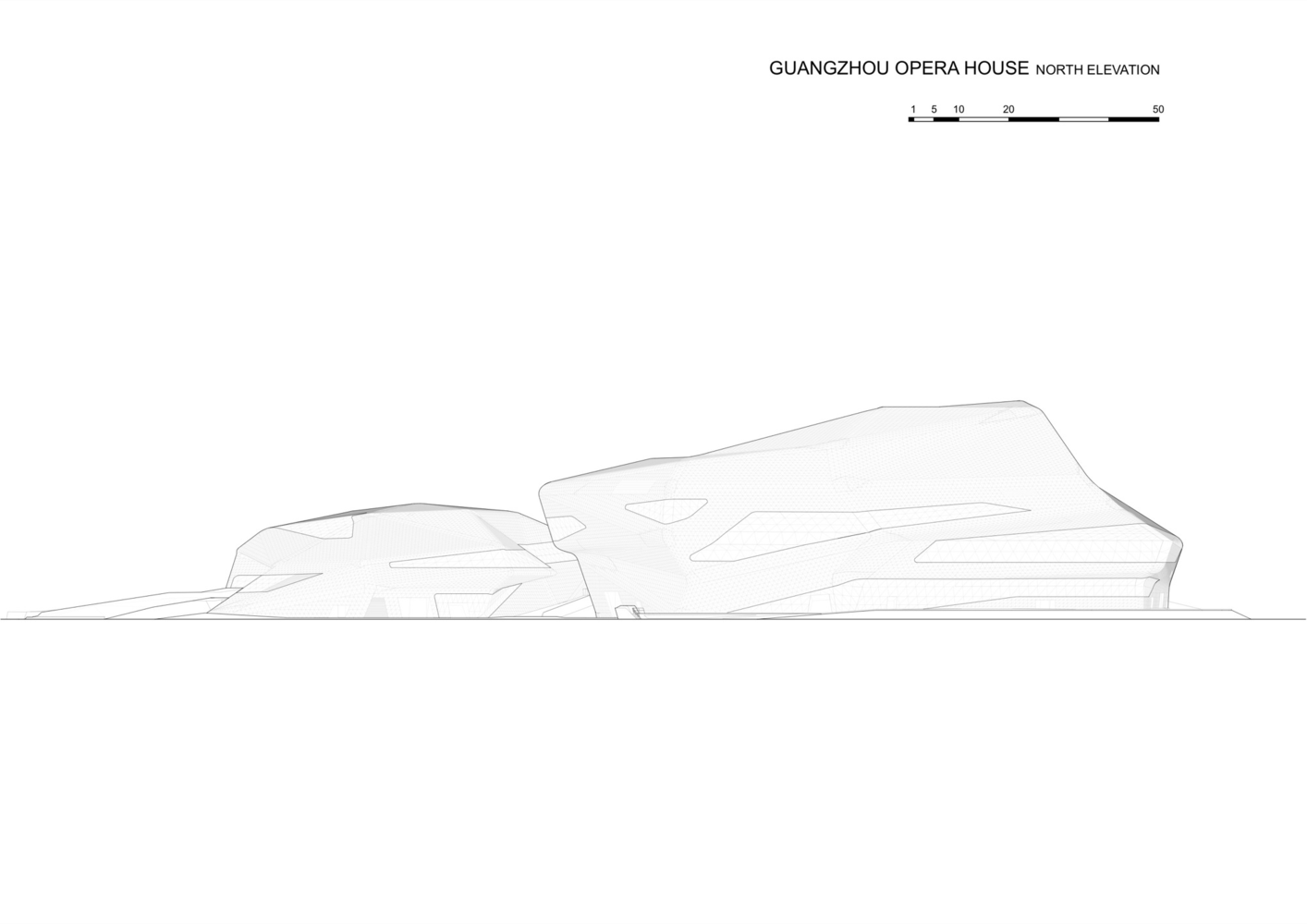
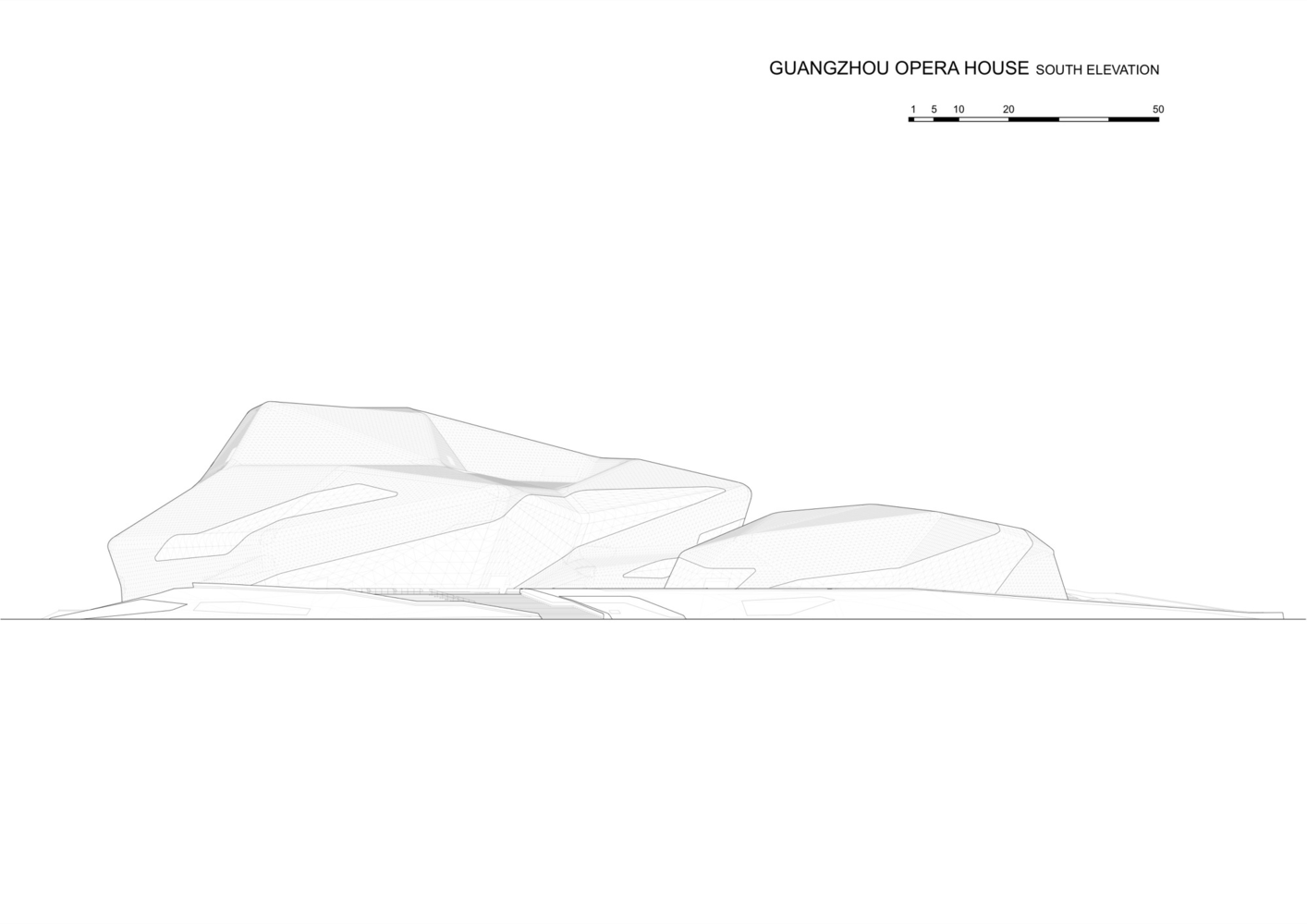
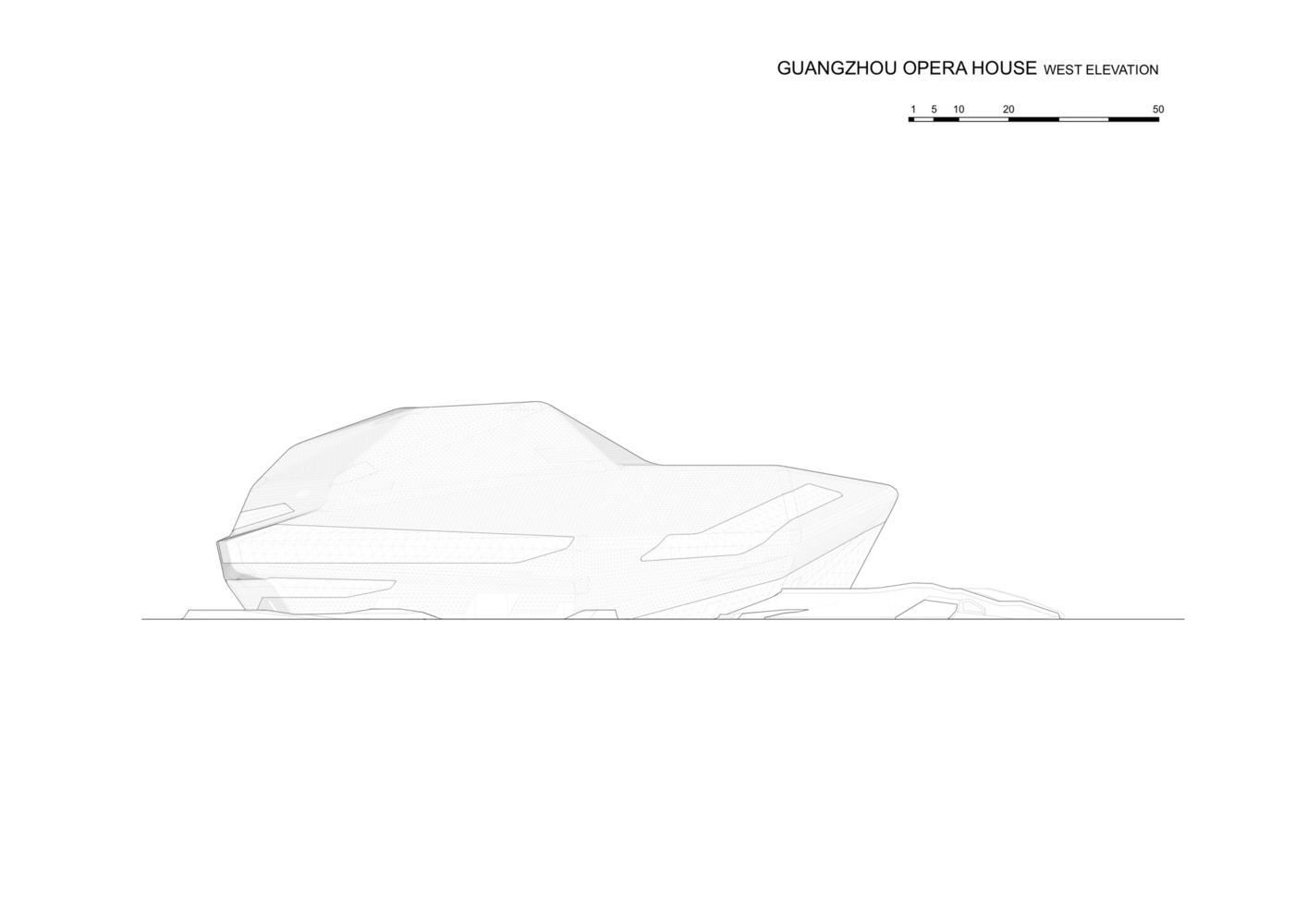
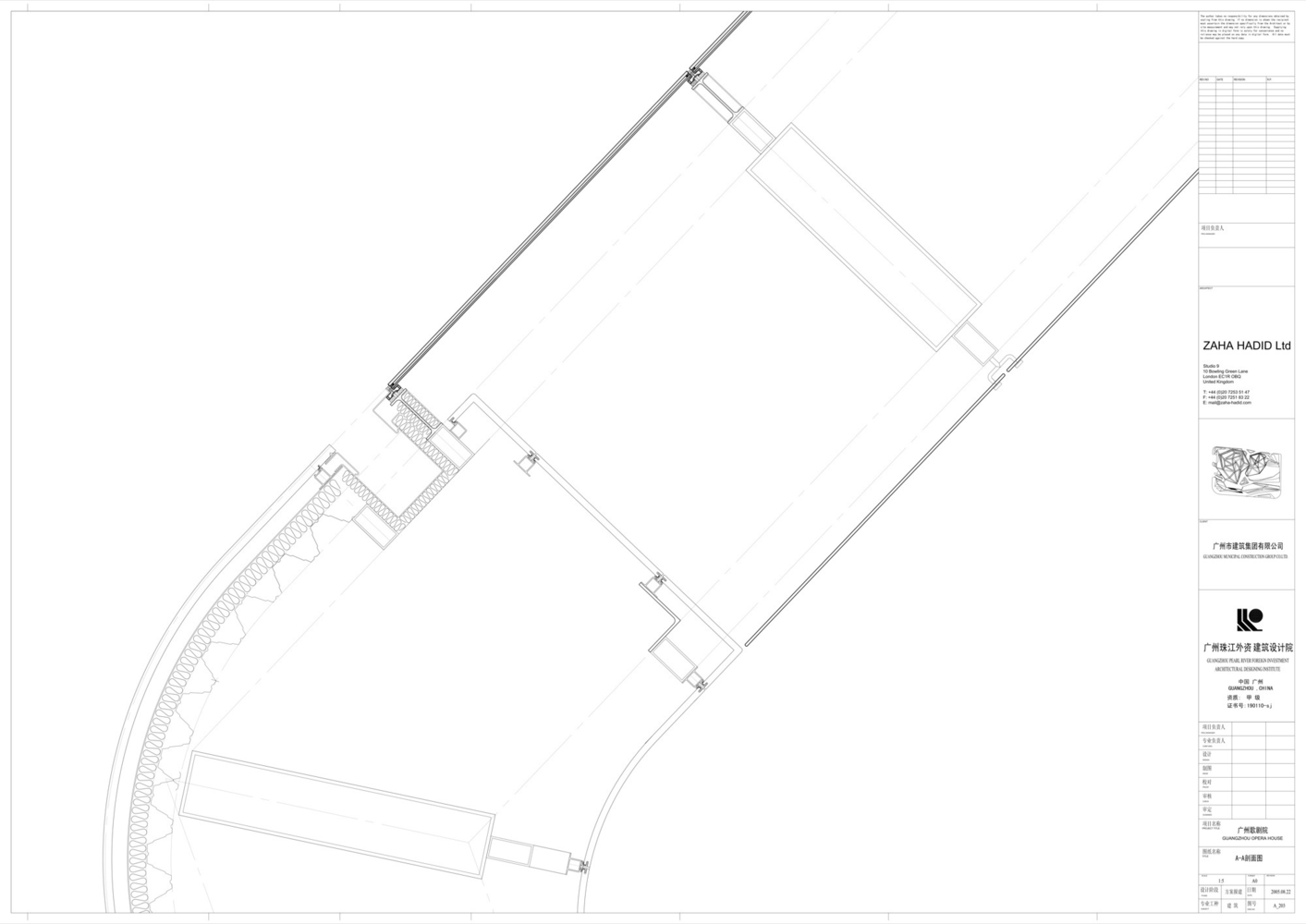
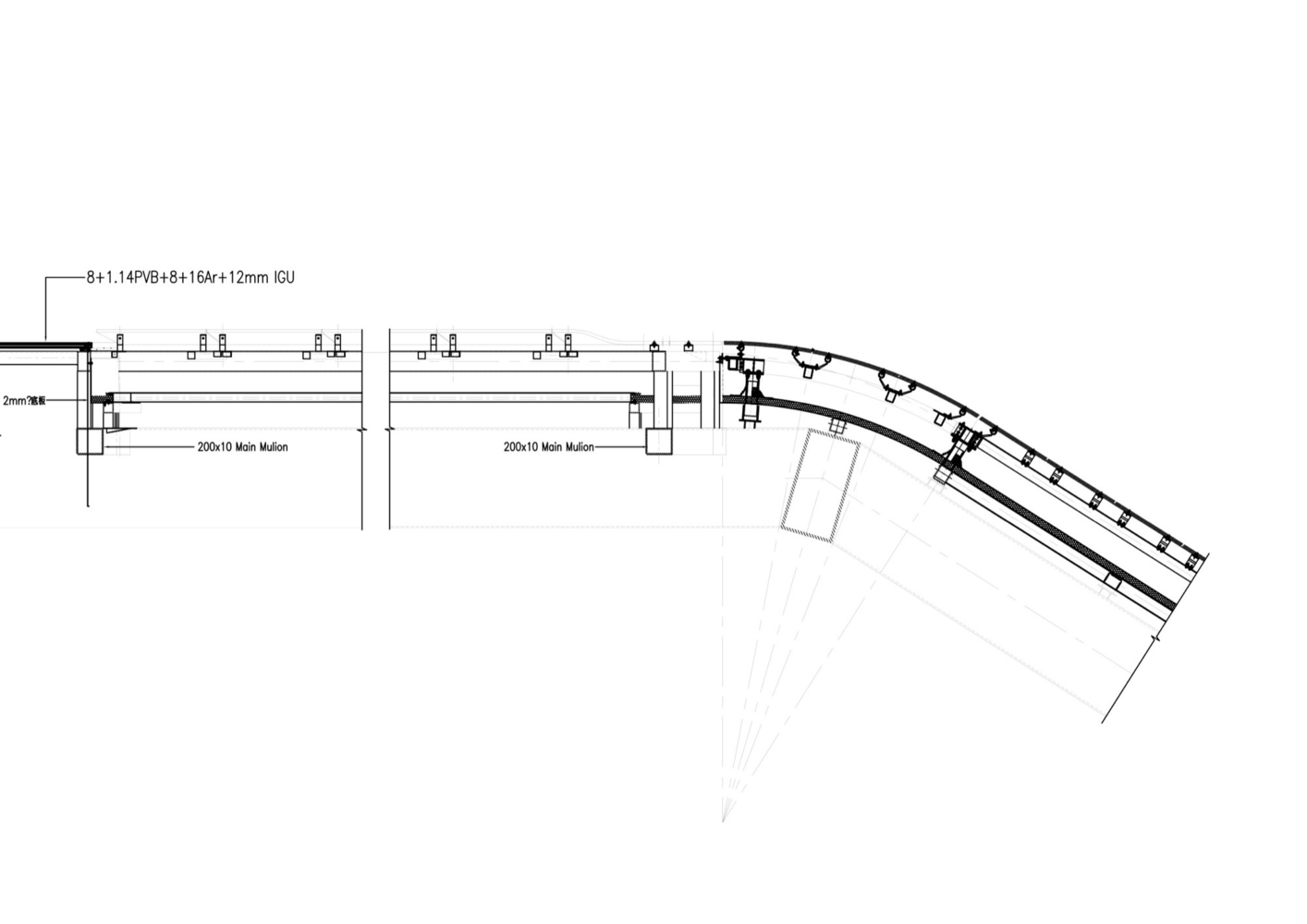
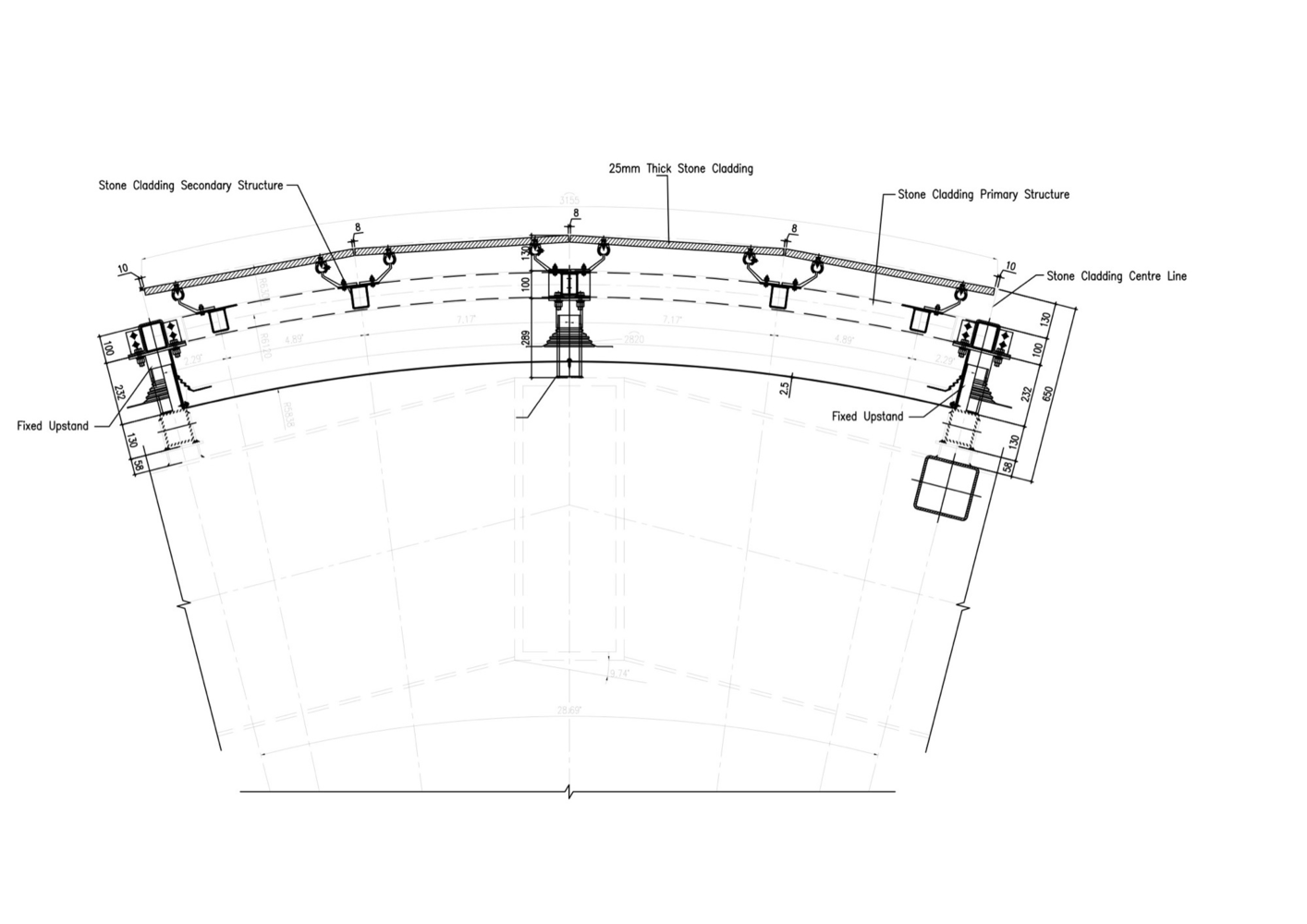
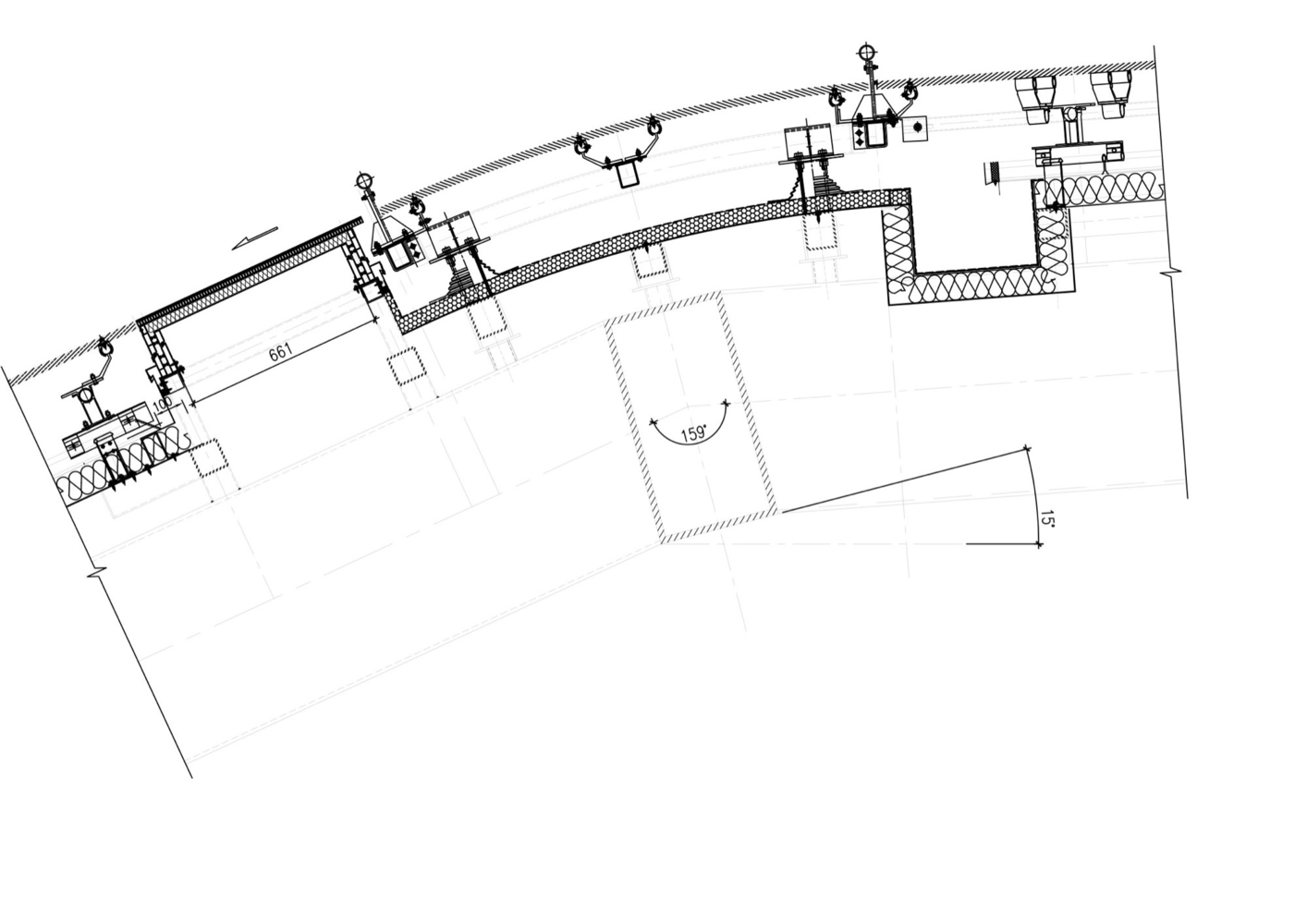
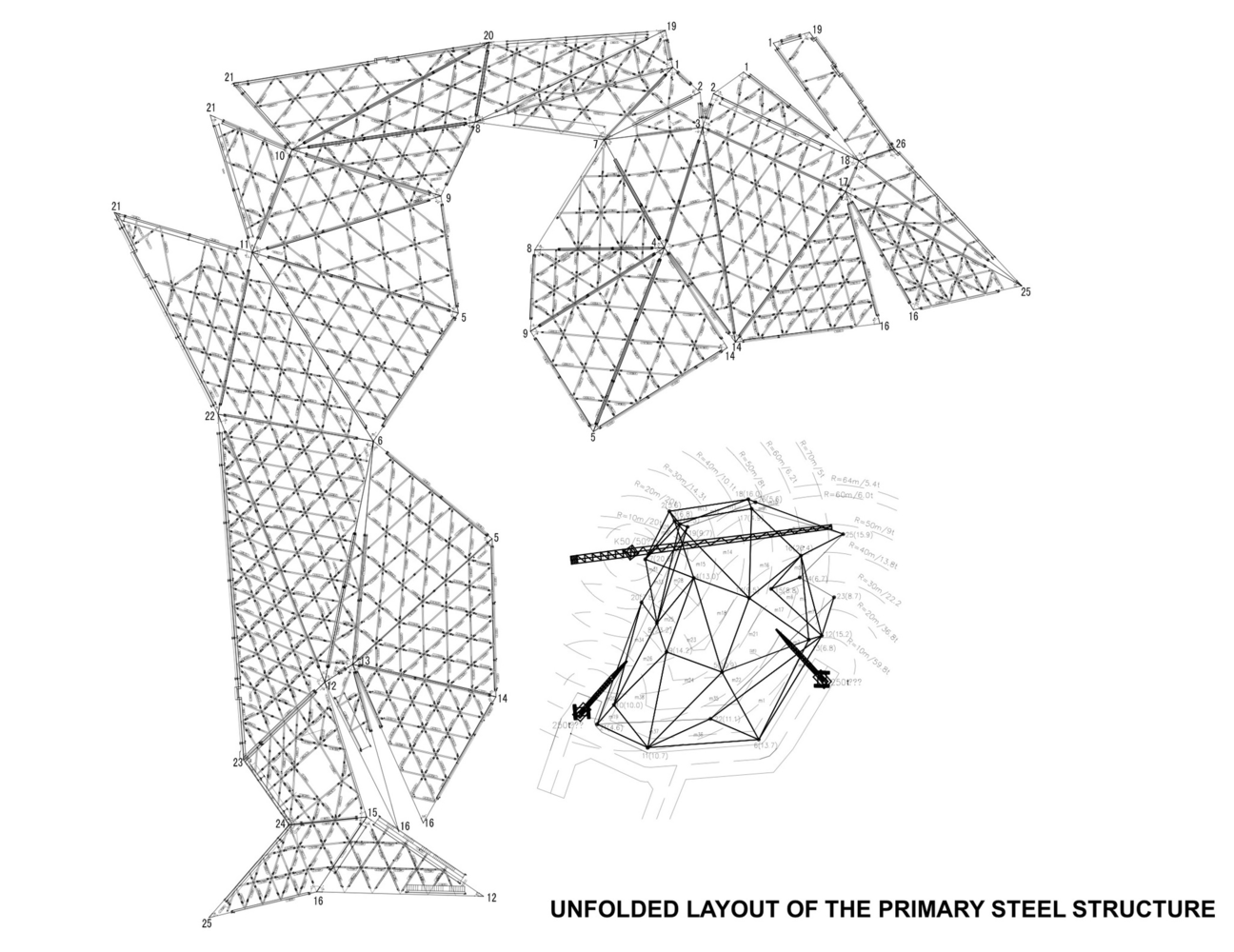
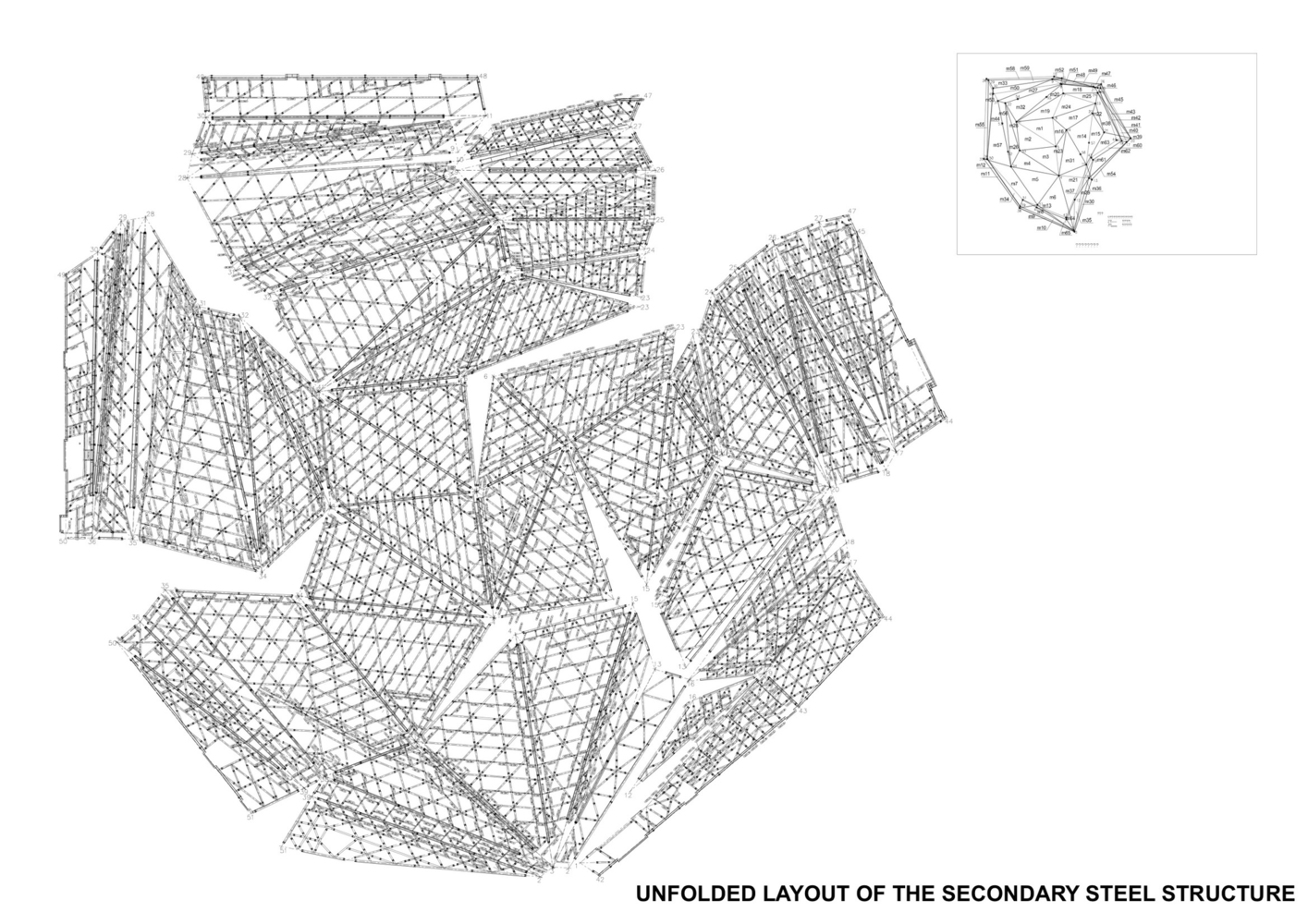
Each volume is an asymmetric structure in which dome and curtain wall are integrated, and the building stands about 43 m tall with an external shell up to 120 m long. Skew-folded steel plates form the structural façade, while the metal framework relies on 59 custom-cast steel joints, no two alike, assembled with GPS positioning and laser techniques. Charcoal-coloured granite with a rough texture clads the larger building, whereas the smaller one is lighter and white; together the two skins count 75,422 pieces of granite. Tessellated, triangular sections of glass provide internal lighting and open up to the public areas.
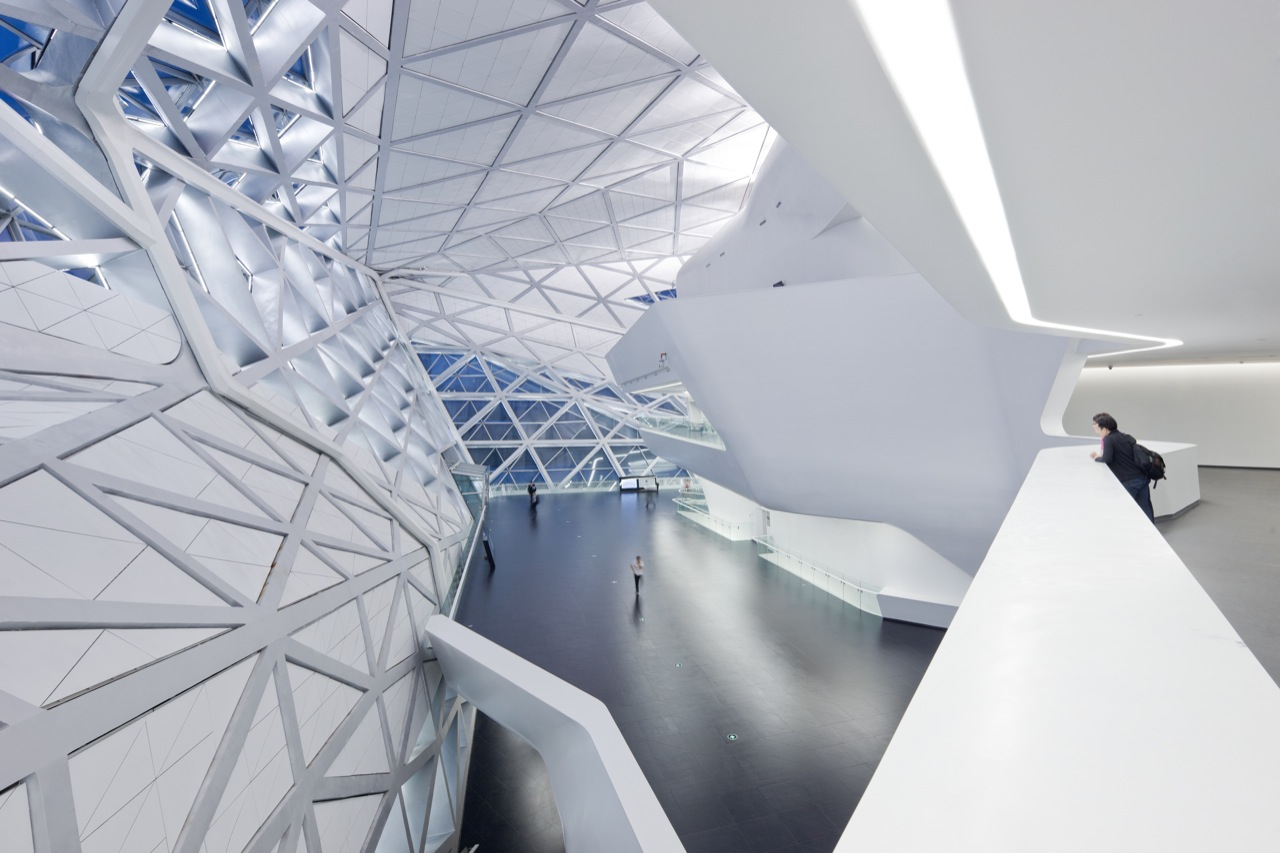
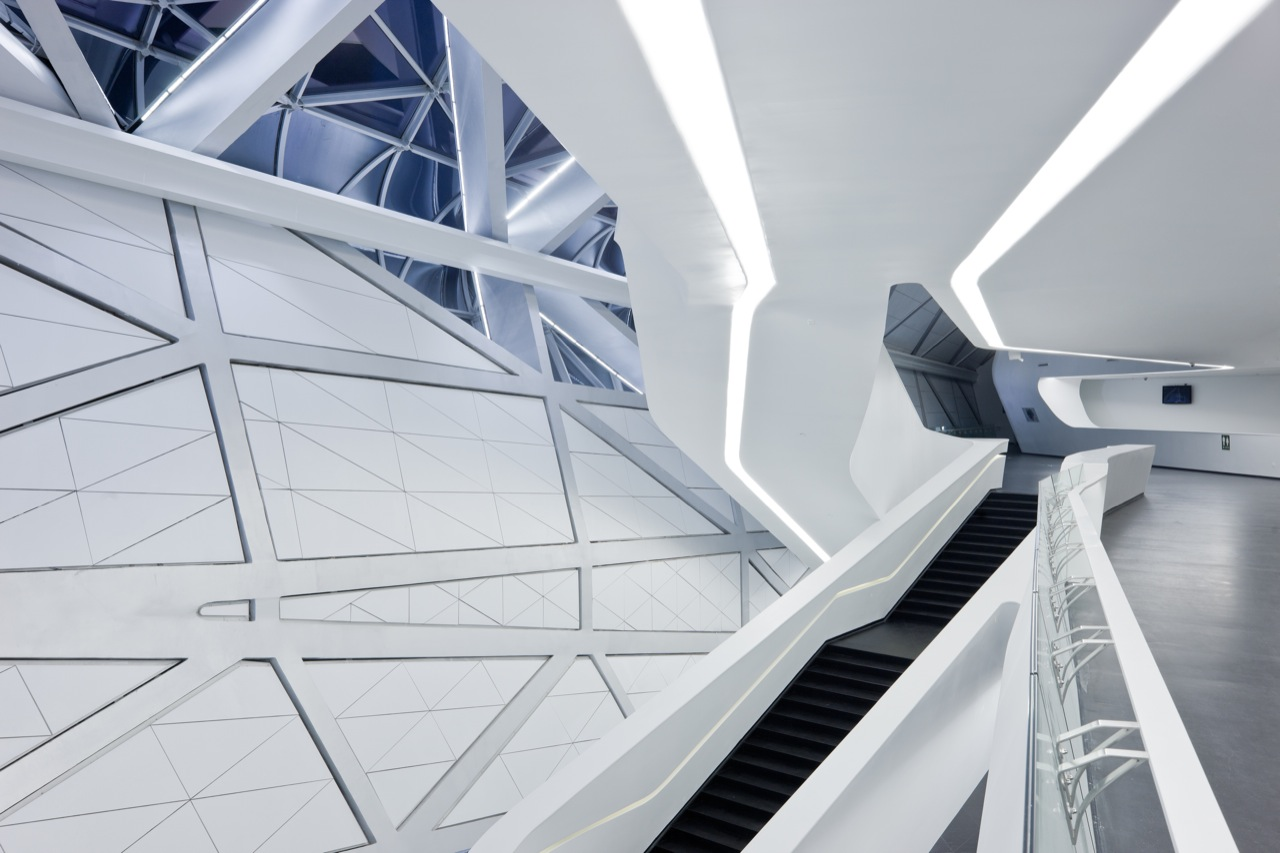
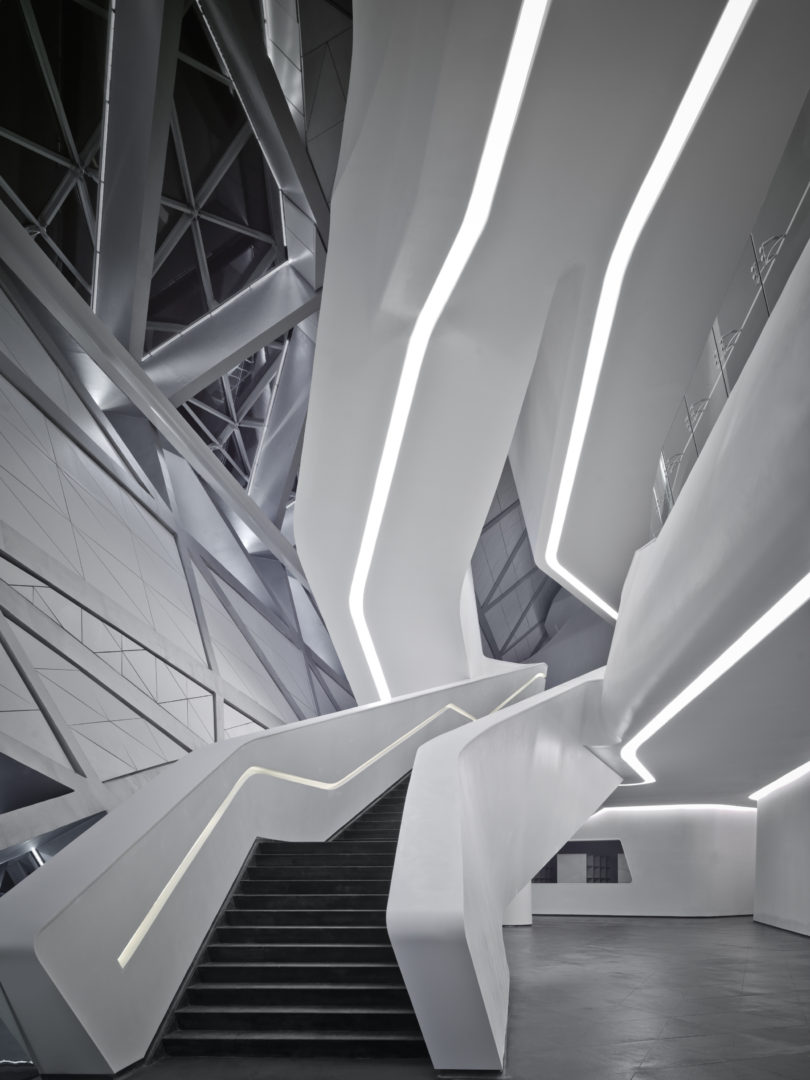
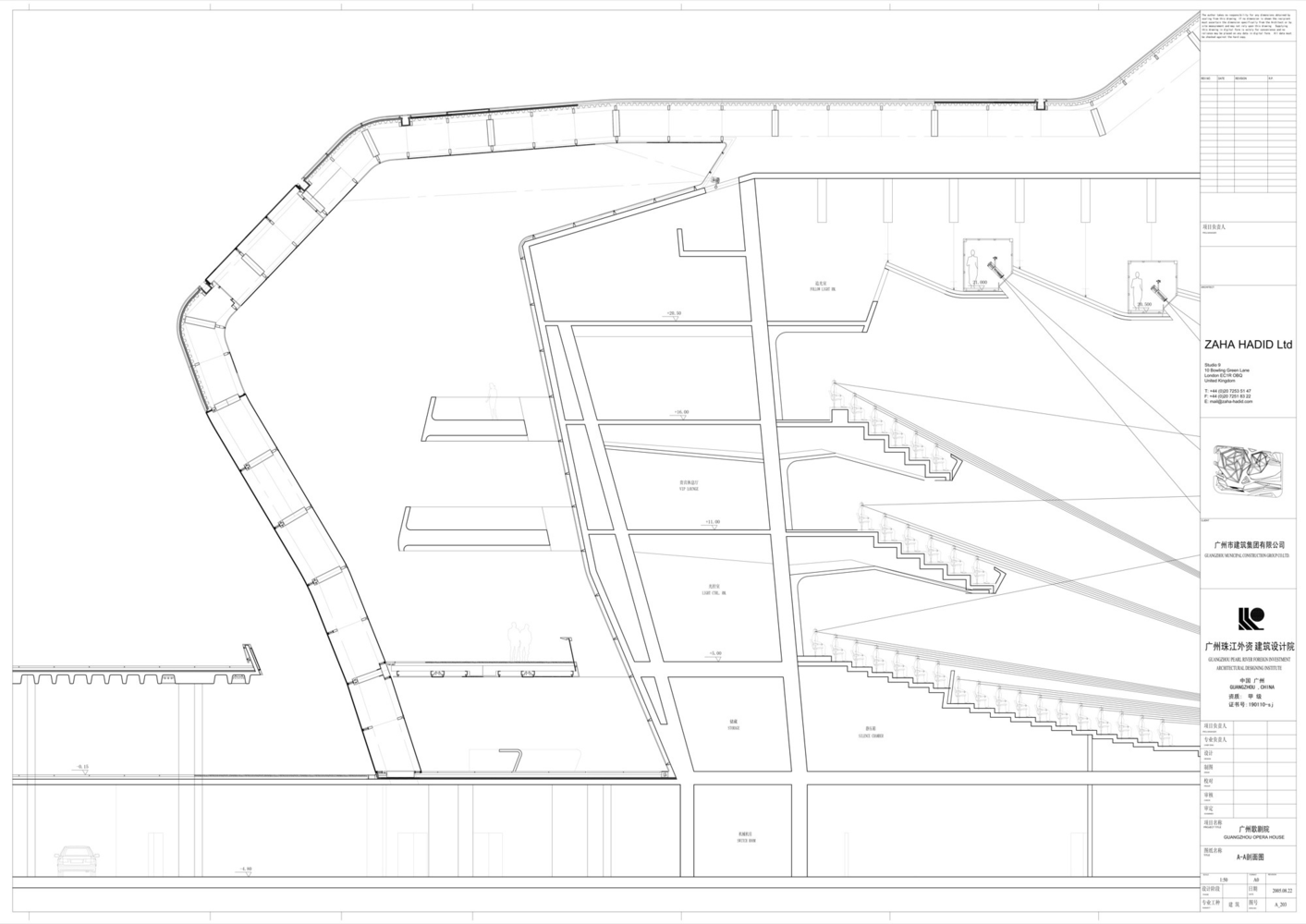
The public foyers lie between the auditorium and the exposed steel structure, where black granite floors lead visitors through slopes and twists to the auditorium balconies. Terraces and staircases cantilever from the theatre volume, forming an architectural promenade and a stage for the audience itself, and they hang, like the balconies, from the concrete structure of the auditorium. Views into the main atrium from various levels establish orientation and connectivity within the building.

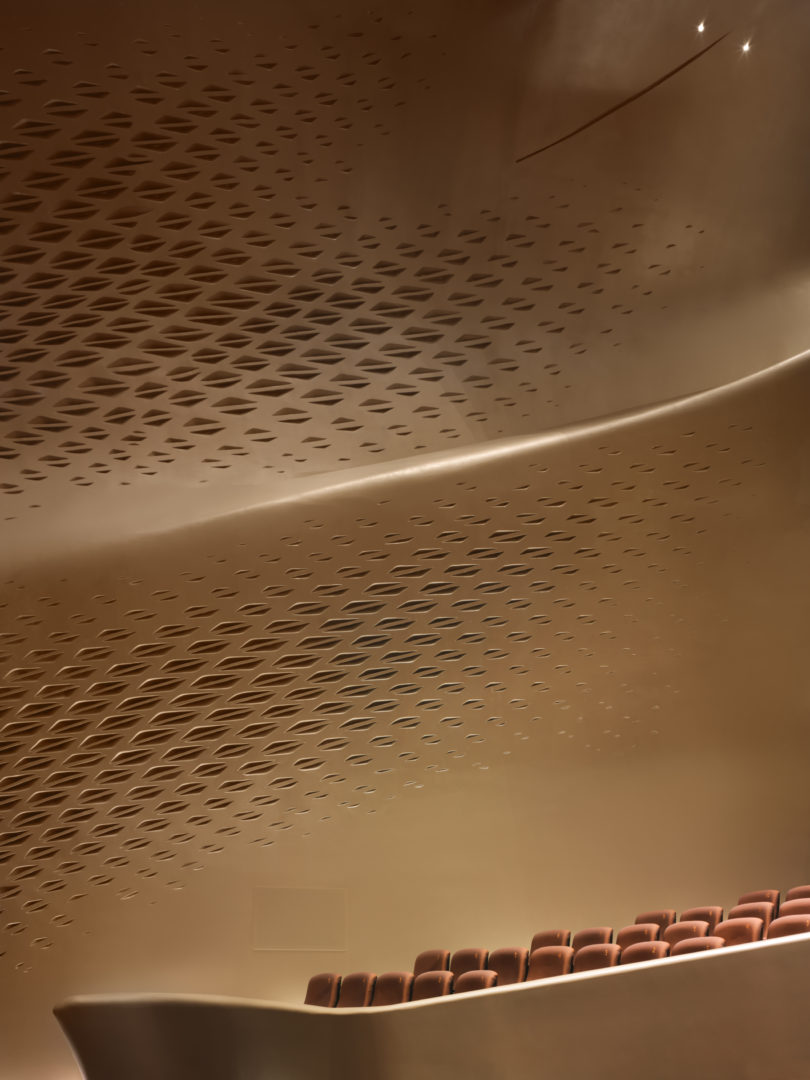
Inside the main auditorium, custom moulded units of glass-fibre reinforced gypsum, about 50 mm thick and fixed to a steel frame, continue the architectural language of fluidity across walls and ceiling. Their folded, flowing surface is finished to a golden gloss, the split-level terraced seating is copper-toned, and 4,000 white LEDs light the ceiling. Curving balconies, designed to fragment the sound and to assure sight lines, emerge smoothly from the walls within what Patrik Schumacher calls the “balanced asymmetry” of the hall, whose surfaces contain slits for concealed lighting and speakers. The acoustic design, a challenge in such a room, considered the differences between Chinese and Western opera, and the hall has a reverberation time of 1.4 to 1.6 seconds.
Marshall Day Acoustics worked closely with the architect on the room acoustics, with a computer model and a 1:20 scale model of the auditorium that was built and tested to verify its predictions. The seats of the main hall are covered in a custom red Cava textile by Kvadrat, while those of the multifunction hall use Gloss 2. As project leader, Simon Yu explains that the textile met the technical and acoustic demands of such a hall, while its “light, modern texture and copper-red colour” suited the atmosphere of the space.
Of the three fully staged operas given in its first two months, the first was Puccini’s Turandot. Since its opening, the opera house has been the catalyst for further cultural facilities in the city, including new museums, a library and an archive, and it accelerated the establishment of the Guangdong Provincial Museum, which stands opposite. In May 2011, the project won the International Award of the Royal Institute of British Architects for its design.

Project Gallery
38 photographs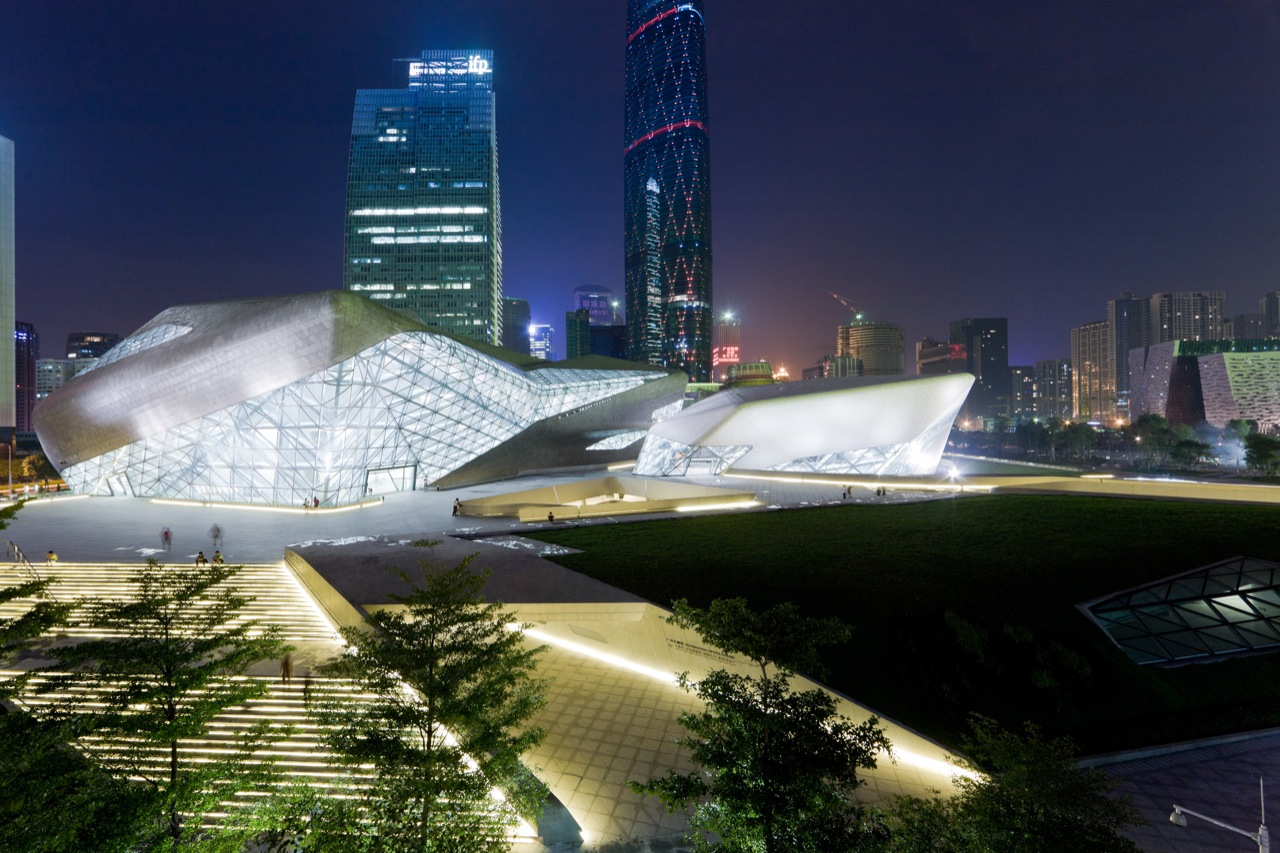
Project Location
Address1 Zhujiang West Road, Tianhe District, Guangzhou, Guangdong Province, 510623, China
The location is intended for general reference and may denote a city or country; it does not identify a precise address.