
home/projects/museums/h.c.andersen hus museum
H.C.Andersen Hus Museum / Kengo Kuma & Associates
- Architects
- Kengo Kuma & Associates
- Lead architects
- Yuki Ikeguchi
- Year
- 2022
- Photographs
- Rasmus Hjortshøj
- Type
- Museum
- Owner and user
- Odense Kommune / Odense Bys Museer
- Funding
- A.P. Møller Fonden, Augustinus Fonden / Knud Højgaards Fond, Nordea Fonden
H.C.Andersen Hus Museum, designed by Kengo Kuma & Associates, is a museum completed in 2022 in Odense, Denmark, in the heart of the city where Hans Christian Andersen was born. The 5,600 m² project combines a new building for the museum of the writer with a garden and a cultural centre for children. Its design takes its idea from Andersen’s stories, in which opposites such as the real and the imaginary live side by side. Most of the museum lies underground, beneath a garden of curving hedges, while pavilions of timber and glass rise above it. The garden stays open to the citizens, and the architects intended it to reconnect two parts of the city that a road had divided.
“At that time, it was just a dream, but recently I began to think it’s not a dream — it’s the reality of the future.”Interview with Kengo Kuma of Kengo Kuma and Associates
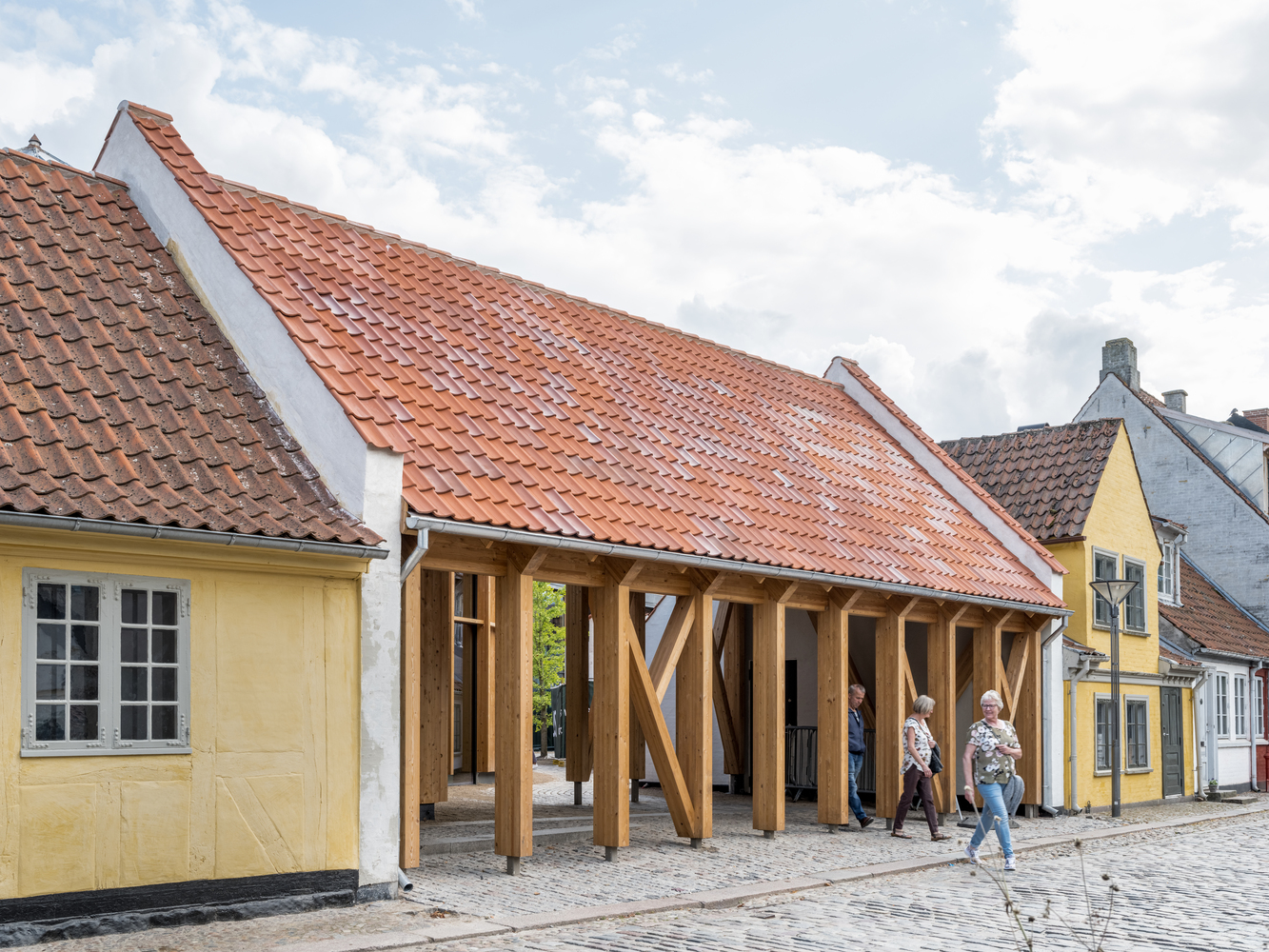
The project began with a competition in 2016, and its design dates from 2017. With Yuki Ikeguchi as the partner in charge of the design, the office worked with the executive architects of C&W and the landscape architects MASU Planning. The British firm Event Communications designed the exhibition in partnership with twelve artists from around the world. Several foundations supported the project, whose budget was DKK 390 million. The museum opened in part on 30 June 2021 at Hans Jensens Stræde 45, beside the house where the writer was born, and it was completed in 2022.
Andersen’s writing is the starting point of the design, and in it the architects find a duality of opposites: the real and the imaginary, nature and the man-made, human and animal, light and dark. These opposites coexist, in their words, and “they are not in black and white”, which the office set out to reflect in architectural and landscape form. In the eyes of the office, the profound messages of the fairytales reflect the author’s own life and its journey, and his stories still speak to readers today. The sequence of spaces in the museum turns that contrast into a physical journey, since its stories “are not only in written form but are to be experienced and sensed through physical spaces in the museum and in the garden”. The office compares its method with Andersen’s own, “where a small world suddenly expands to a bigger universe”.
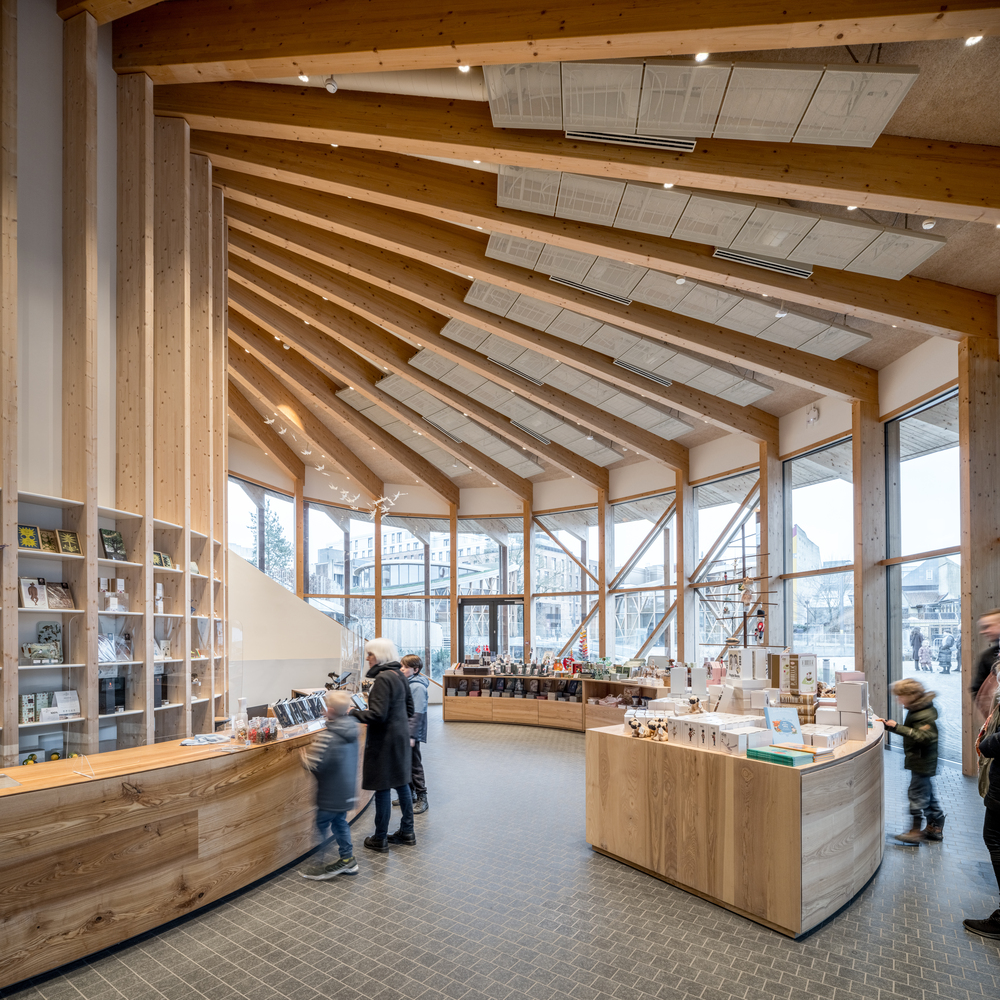
The site lies between two townscapes: on one side the medieval streets around the house where the writer was born, on the other the wide, straight lanes of modern development. One critical aim of the plan, as Ikeguchi explains, was to reconnect the old part of the city, with its small traditional wooden houses, to the rest, from which a large road had once separated it. By closing one of the arterial roads, the development plan aims to reconnect these two parts, with the museum in a core role in the new urban landscape. Their proposal was to extend the garden beyond the museum site and over the light rail, in order to give “a feeling of one continuous ground of HC Andersen world and green public open space”. Because most of the exhibition space is buried underground, the building also keeps its height as low as possible.
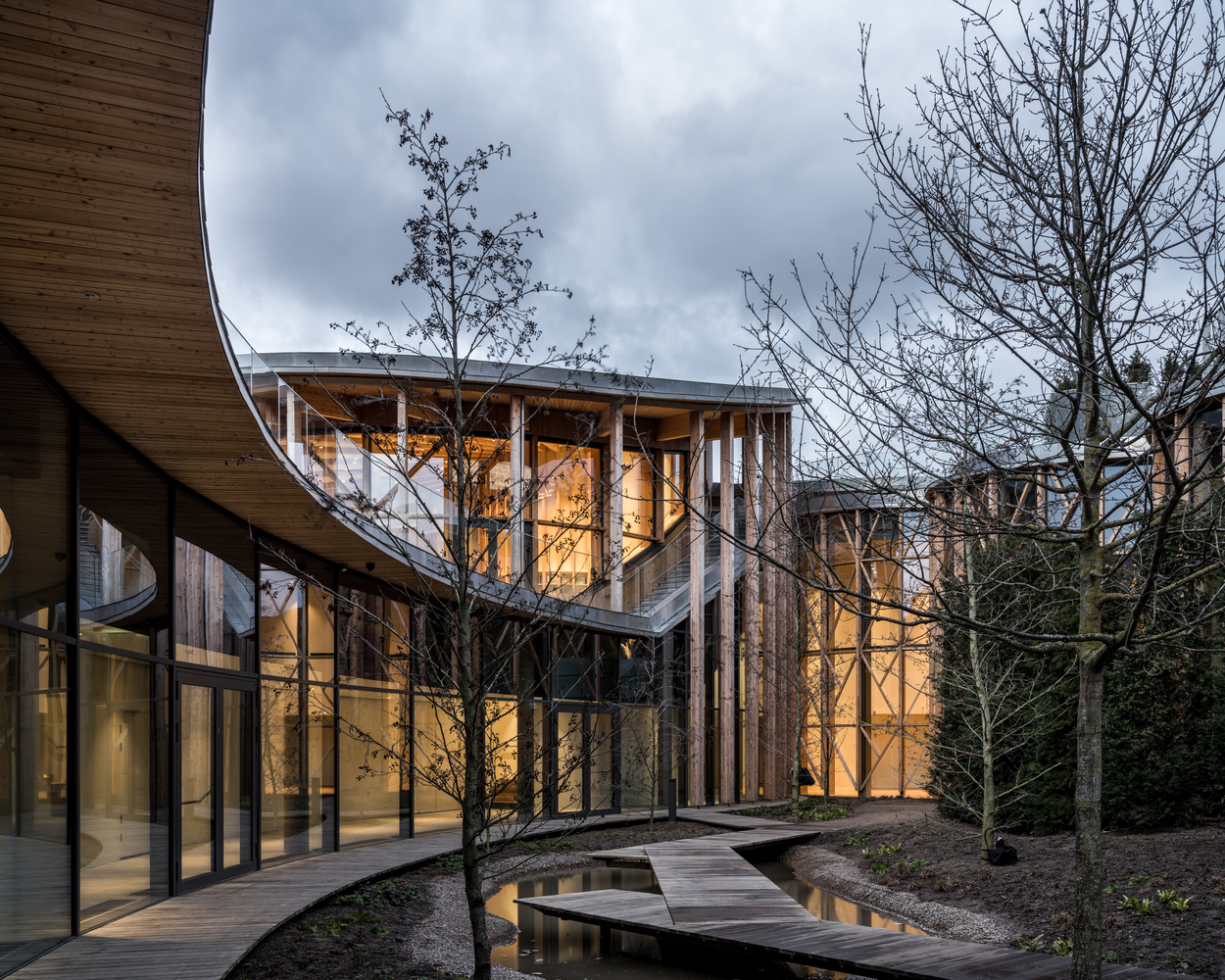
Two thirds of the museum lie underground, beneath a garden of 7,000 m². It is laid out on two storeys, the ground floor and a basement. From its circular rooms, tangent to one another like a chain and organised in a non-hierarchical, non-centric manner, a continuous, curving green wall expands, tracing the structure of the underground spaces and defining the garden above them. As this wall meanders and weaves in and out, above and under the ground, visitors find themselves between outside and inside, while the built form diminishes into a maze of hedges.


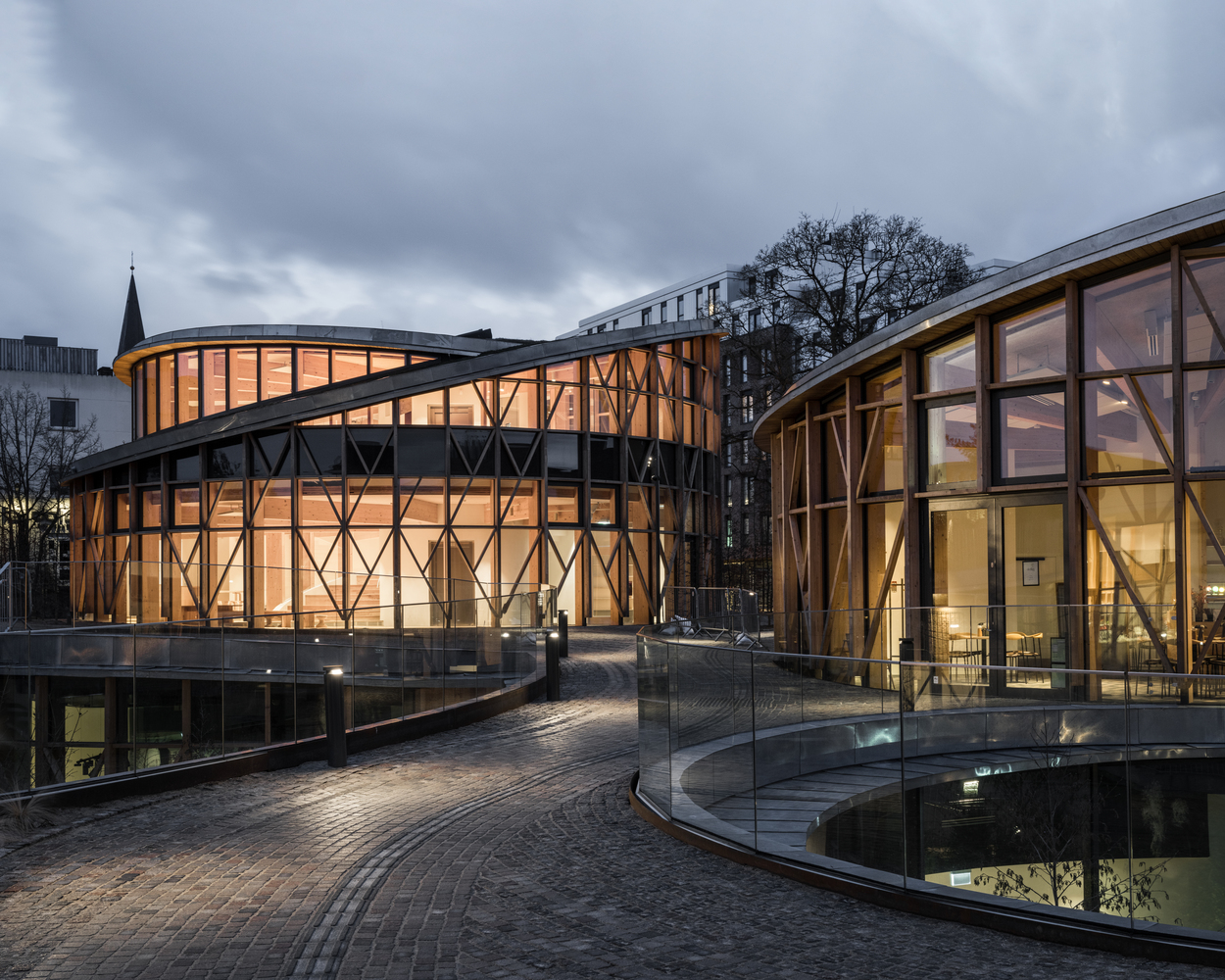
The architects conceive the gardens in four distinct ways, of which the first, the Urban Garden, is an active public area that people pass through daily. The Architectural Garden consists of the entrance, the café and the children’s cultural centre, which stand above ground as small pavilions. First known as the Tinderbox, that centre now carries the name Ville Vau. The Scenographic Garden is a series of intimate outdoor spaces, created by the hedge that traces the walls of the exhibition spaces underground. The Secret Garden, large and deep, is positioned so that it becomes a backdrop for all the programmes above ground and a route of circulation for visitors.
Below ground the structure is concrete, whereas above ground it combines concrete with timber. A faceted slab of exposed concrete defines both the topography of the landscape above and the ceiling of the fairytale world below, where a series of columns supports it and lets visitors wander as if in a forest. The triangular facets of this doubly curved deck follow the positions of the columns, which stand along the tangent circles of the plan. Raw walls of concrete cast in situ form curved stairwells and ramps, and many of the cast structures are left visible, with round forms and very few right angles. Ikeguchi credits the concrete specialists of NCC with resolving the complex geometry of the curved surfaces and of the long ramp.


The pavilions on the ground are timber structures with green roofs, whose radial beams, like the branches of trees, support curved slabs of cross-laminated timber and the façade. Both are meant to relate softly to the garden and to the traditional façades of the surrounding houses. The framing of the curved glass walls, in turn, echoes the half-timbered house next to them, in which the writer was born. The timber structure of the children’s pavilion is like a tree trunk that grows from the underground world of the fairytales to the world above, while its beams branch out radially to support the roof. Slow steps revolve around this tree and connect the two worlds, and the pavilion stands next to the symbolic light tree that already existed at the corner of the site, so that it is legible and easily accessible to the public. In materials, the office “intentionally limited the material and colour palette to the minimum and left the finish as untreated as possible”.
For the architects, the completion of the building is “the beginning of the life of the garden”, which is designed to grow over time and to set its roots. As it matures, it will give visitors and the community a sense of nature and of the seasons through its changes of colour, scent, density, transparency and scenery. The meandering paths through the garden are to be experienced as an extension of the museum, and with the hedges they restore a human scale to the zone between the two townscapes.


A series of sunken gardens, each one a hole in the ground and a portal from the world of the fairytales to the world outside, joins the exhibition to the garden. Along the winding ramp, the visitor follows the real life of the author, while a more or less transparent screen, a membrane made of PVDF, lets the world of the fairytales be sensed on its other side. The environment below ground also suited an exhibition design that works with projections and effects of light to create a fantastical world. At the Little Mermaid, a shallow pool over a glass skylight is installed “to create a sensation of being at the bottom of the ocean with a sense of longing”. Original objects, paper cuttings and drawings by the author are on show, while a café and a shop serve the visitors.
During the construction of the building, the pandemic brought unexpected challenges in sequencing, planning and sourcing. It disrupted the familiar working methods of the team through a cause that the office calls intangible and incomprehensible. Its statement recalls that it felt “as if we were experiencing Andersen’s world of fairytales” while the team learned to adapt and to cope with the unknown.


Project Gallery
22 photographs


Project Location
AddressHans Jensens Stræde 45, 5000 Odense, Denmark
The location is intended for general reference and may denote a city or country; it does not identify a precise address.


