

Washing with a portable bidet works wherever clean water is available, on camping and backpacking trips, in hotels and RVs, and the design, squeeze bottle or battery sprayer, decides how it fills, aims and cleans. To use one, fill it with water, open the nozzle and point it at the area to wash, then squeeze the bottle or switch on the battery model, and pour out the leftover water afterward. The sequence holds from Brondell’s GoSpa squeeze bottle and CuloClean’s nozzle cap for most plastic bottles to Panasonic’s DL-P300, which sprays from its own tank on two AAA batteries at a nozzle angle that cannot be changed. The models part ways on care, since the Brondell and TUSHY bottles go in the dishwasher and the HappyPo does not, and none clears carry-on screening full, because every one holds more than the 3.4 oz, 100 mL, TSA allows per liquid container.
What Is A Portable Bidet?
A bidet washes the bottom with water instead of paper, and the Primary Care Dermatology Society notes that a bidet or shower jet helps clear away particles of bowel motion trapped near the anus. The home version, a handheld sprayer such as Brondell’s covered in how to use a bidet, runs entirely on water from the cold water supply line behind the toilet.
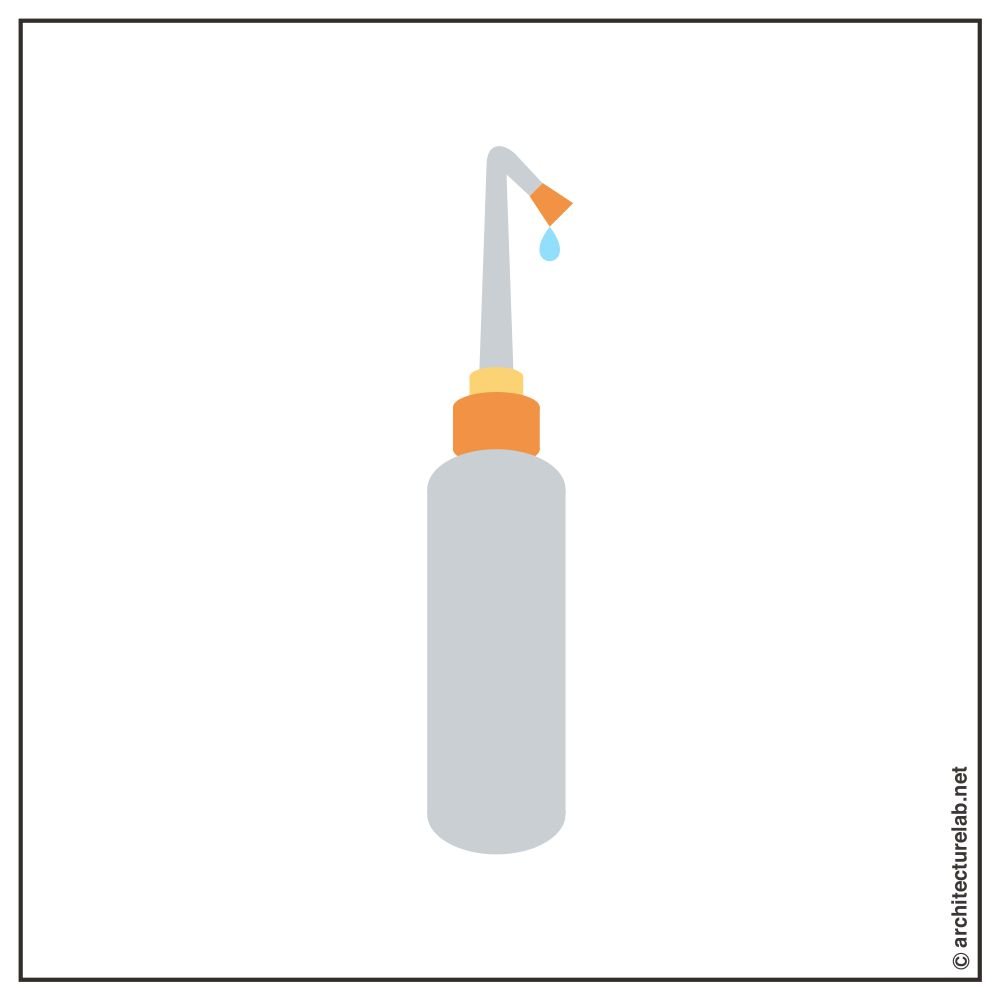
Unlike a full-sized bidet, which is a low, basinlike bathroom fixture, or a bidet attachment fitted to the toilet, a portable bidet carries its own water. Brondell’s GoSpa travel bidets hold 400 or 500 mL by model, about 13.5 or 16.9 fl oz, and are meant to come along on backpacking and camping trips, in RVs and hotels, to gyms and to work.
What separates the designs is how the water gets out. Brondell’s GoSpa Essential is a squeeze bottle with a metal airlock that lets air into the bottle for even pressure. Collapsible bottles, Brondell’s silicone travel bidet and the TUSHY Travel among them, have soft silicone bodies that are squeezed directly. CuloClean’s bottle-cap nozzle fits most plastic bottles, and Panasonic’s DL-P300 swaps the squeeze for two AAA batteries.
How To Use A Portable Bidet
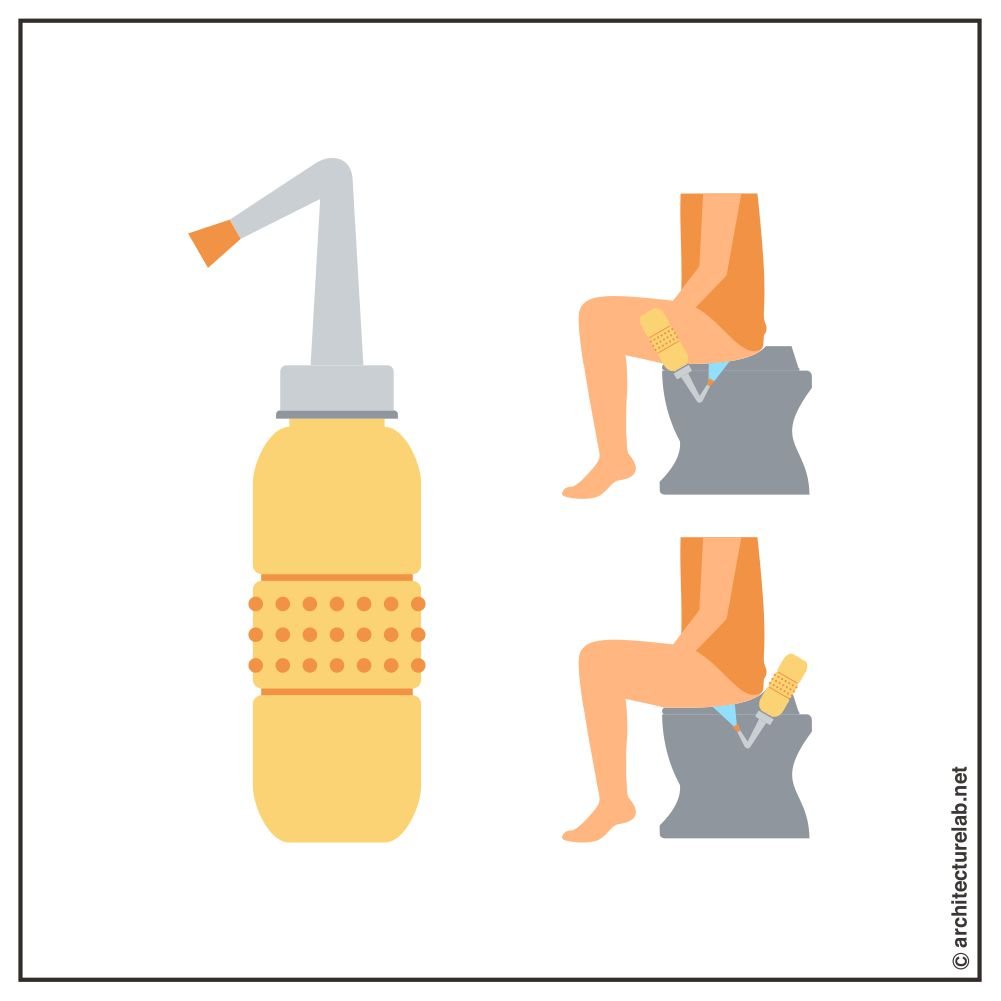
- Unscrew or fully extend the bottle and fill it with water, cool or warm for Brondell’s GoSpa and lukewarm for the HappyPo.
- Open the nozzle. Press down the pop-up nozzle on Brondell models that have one, flip up the hinged nozzle on the TUSHY Travel, or pull it out on the Panasonic DL-P300.
- On a Brondell GoSpa, cover the air lock on the bottom with a finger before turning the bottle upside down.
- Point the nozzle at the area to wash and squeeze, harder for a stronger stream and softer for a gentler one.
- Pour out any water left before the bidet goes back in its bag, and let it dry to avoid mold.
| Type | Example | Capacity | Fill with | Water pushed by | After use |
|---|---|---|---|---|---|
| Squeeze bottle with airlock | Brondell GoSpa | 400 or 500 mL, 13.5 fl oz for the 400 mL | Cool or warm tap water | Squeezing the inverted bottle | Empty after each use, wash with dish soap or in the dishwasher |
| Collapsible silicone bottle | TUSHY Travel | Up to 11 fl oz, about 325 mL | Water | Compressing the extended bottle | Empty and let dry, wash by hand or in the dishwasher |
| Two-part squeeze bottle | HappyPo | 300 or 480 mL, about 10.1 or 16.2 fl oz | Lukewarm water | Squeezing, no batteries | Water and soap, not dishwasher safe |
| Bottle-cap nozzle | CuloClean | The plastic bottle it is fitted to | Water in that bottle | Squeezing harder or softer | Pack used tissues out in the small waterproof bag |
| Battery unit | Panasonic DL-P300 | About 130 mL tank, about 4.4 fl oz, or a PET bottle | Tap or drinking water up to about 40 °C, 104 °F | Two AAA batteries | Empty the tank, rinse tank and nozzle with water |
Use and care by type, with one example model for each design, its capacity, the water it takes, what pushes the water out and what to do after use. A figure that follows a maker's own figure is a conversion, by the NIST factor of 29.5735 mL per US fluid ounce or the exact Fahrenheit relation.
Operating A Travel Bidet
Brondell’s squeeze bottle takes five steps. Unscrew the two halves, fill the bottle with cool or warm water and screw the top back on, pop up the nozzle if the model has one, cover the air lock with a finger while turning the bottle upside down, then point and squeeze. The metal airlock lets air into the bottle, which keeps the pressure smooth and even with only a gentle squeeze, so the finger comes off the air lock once the nozzle is aimed.
The TUSHY Travel works by compression and has to be filled before heading out. Extend the silicone bottle fully, fill it with water and close it, then flip up the little spout, point and squeeze. HappyPo’s two-part bottle needs only three steps, filling it with lukewarm water, positioning and squeezing it, then drying the bottom, and it holds 300 mL, about 10.1 fl oz, or 480 mL, about 16.2 fl oz, in the XL. On any manual bottle the pressure comes from the hand, so a gentle squeeze is enough on the Brondell, and squeezing a CuloClean harder or softer turns the stream up or down.
How Does a Battery Portable Bidet Work?
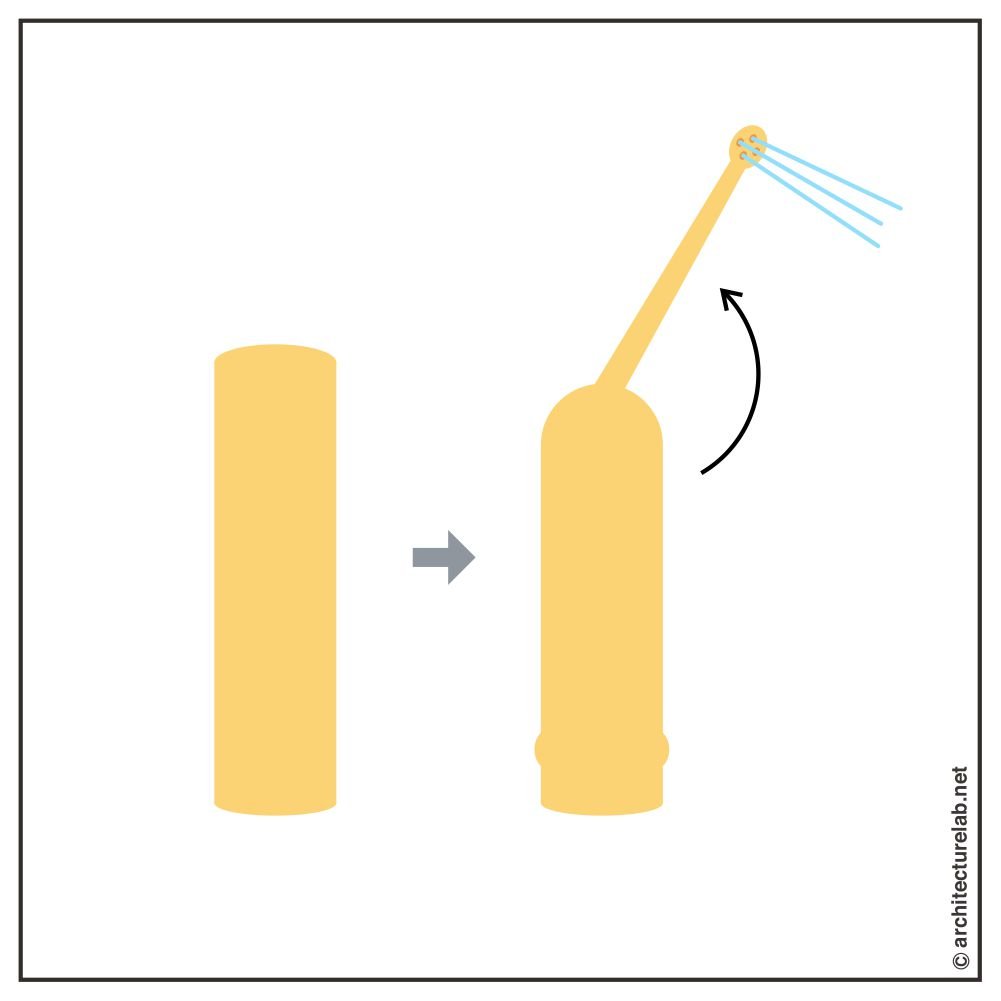
A battery portable bidet sprays on battery power, so there is nothing to squeeze. To use Panasonic’s DL-P300, twist the tank slightly and pull it off, fill it to the water line, insert the body and lock it, pull the nozzle out in the direction of the arrow, and wash from the front or diagonally from behind. Tap or drinking water works, plain or lukewarm up to about 40 °C, 104 °F.
On HI the DL-P300 pushes out about 350 mL a minute, about 11.8 fl oz, so a tank lasts about 20 seconds with fresh alkaline batteries, and LO slows the flow to about 230 mL, about 7.8 fl oz. A set of batteries is good for about 100 uses. A button on the body switches between strong and weak mid-wash, a second, 7-hole soft nozzle gives a gentler wash, and the unit runs at about 45 dB. For a longer wash the tank can stay empty, since two supplied adapters fit the DL-P300 straight onto most Japanese and overseas PET bottles, and Panasonic recommends a bottle whenever more water is wanted.
How Do You Use a Bottle-Cap Bidet on a Water Bottle?
A bottle-cap bidet turns an ordinary plastic bottle into its reservoir, and CuloClean’s nozzle is made for the two most common neck diameters, so it fits most plastic bottles on the market and sprays harder the harder the bottle is squeezed. The Ultralight model weighs 6 g, 0.21 oz, and CuloClean rates the Desert version at 30% less water.
How to Use a Portable Bidet as a Woman
For women, the NHS advice on wiping is the sensible guide to aiming. It gives wiping from front to back as one way to help prevent urinary tract infections, so the stream is best directed the same way, and after a bowel movement women need to take particular care not to wash bacteria forward. The DL-P300 is designed to wash from the front or diagonally from behind. Its nozzle angle is fixed, matched to Panasonic’s warm-water bidet seats, so aiming it means moving the whole body of the unit.
Drying After Using A Portable Bidet
Drying takes very little paper. Bio Bidet’s advice is to let the area drip-dry for a moment or two before patting it dry with a few squares, without wiping, to avoid irritation, and on the trail CuloClean has users carry tissues and pack them out once used in a small waterproof bag. The drying methods are compared in how to dry after using a bidet.
How Effective Are Portable Bidets?
Aim is the one skill to learn. A Brondell sprays wherever it is pointed and the DL-P300 wherever its body is held, so the first few uses go mostly into finding the angle. Even with the angle right, water alone may not finish the job, as a 2005 controlled comparison with 22 female nursing home residents aged 75 and older found for a fixed wash-and-dry toilet-bidet, which nursing staff said cleaned the residents but not completely.
Capacity is the other limit. Panasonic’s 130 mL tank, about 4.4 fl oz, lasts about 20 seconds on HI, against 400 or 500 mL in a Brondell and up to 11 fl oz, about 325 mL, in a TUSHY, and Panasonic’s own answer for a bigger wash is a PET bottle on its adapter. At home the limit disappears, because Brondell’s handheld sprayers connect to the cold water supply line behind the toilet.
Things To Keep In Mind When Using A Portable Bidet
The medical cautions concern overuse. A 2021 review in the Journal of the Anus, Rectum and Colon warns that excessive bidet use can cause anal pruritus and anal incontinence, and advises patients with anal pruritus to avoid excessive cleaning and those with incontinence to stop bidet use, while a 2022 systematic review found that habitual use may increase the odds of pruritus ani and has no effect on hemorrhoids.
A 2010 study of 268 Japanese women with increased vaginal discharge found normal Lactobacillus flora absent in 42.86% of habitual bidet-toilet users against 8.77% of non-users, and its authors concluded that habitual use aggravates vaginal microflora. The study measured habitual use of bidet toilets, not portable bottles.
Nozzle contamination is documented for shared electric seats. A 2017 study in the Journal of Hospital Infection found the warm-water nozzles of 254 of 292 electric bidet toilets at a Japanese university hospital, 86.9%, contaminated, and called them a potential vehicle for cross-infection in hospitals.
Portable Bidet Best Use Cases
Panasonic builds the DL-P300 for care with a portable commode, for diaper changes and the outdoors, and, because it runs on batteries, for disasters. Brondell aims its travel bidets at the other end of the range, backpacking and camping, RVs, hotels, gyms and work, anywhere clean water is available.
1. Certain Ailments
For perianal skin conditions, which dry toilet paper and wet wipes can aggravate, a 2023 editorial in the International Journal of Women’s Dermatology holds that bidets can be recommended as an alternative. For piles, the NHS advice is to keep the bottom clean and dry and to pat it dry rather than rub it. A bidet is a way to keep the area clean, and the 2022 systematic review concluded that the evidence does not identify bidets as a treatment for perianal disease.
2. Bedridden Patients
For someone who relies on a carer, the DL-P300 is designed to be used with a portable commode, and afterward its tank is emptied and the tank and nozzle rinsed with water, which keeps cleanup short at the bedside. In the 2005 nursing-home comparison, about half of residents and staff reported a positive effect on toileting.
3. People With Limited Motion Range
Limited grip need not rule out a squeeze bottle, since the TUSHY Travel’s soft silicone body squeezes without pain even in hands with severe arthritis, at least over a few days of use. For anyone who finds squeezing hard, an electronic model is the surer option, and the DL-P300 switches between strong and weak flow with a button on its body.
4. For Additional Cleanliness
Washing before or after sex is not among the uses Brondell or Panasonic give for their portable models, though the job is the same as any other external rinse and a portable bidet handles it wherever clean water is available. Keep it to the outside of the body, the use HappyPo marks its bottle for.
5. Cleaning Infants
For babies, Panasonic pitches the DL-P300 at diaper changes, cleaning the skin gently without rubbing. The 7-hole soft nozzle and the weak setting, switched with the button on the body, give the gentlest wash the unit offers, and the water in the tank should stay at tap or drinking-water quality and no warmer than about 40 °C, 104 °F.
Some Points To Note When Using A Travel Bidet
1. Testing The Bidet
A test squeeze over the sink before the first real use shows where the stream lands. The DL-P300’s nozzle angle cannot be changed, so on that unit the test is about how to hold the body, while on a squeeze bottle it also shows how hard to press, since the stream gets stronger the harder the bottle is squeezed.
2. Cleaning With Toilet Paper
Expect to use a little paper even with a bidet. Brondell advises patting dry with a few squares of toilet paper or a washcloth after the wash, and puts the saving in toilet paper at up to 75%. Going without paper entirely works for some, but planning on far less of it is the more dependable approach.
3. Using The Bidet As A Mini Shower
Plain water is all the wash needs, with tap water from the nearest faucet enough for Brondell’s bottle and tap or drinking water specified for Panasonic’s, while the HappyPo is marked for external use only. For an itchy bottom, adding soap works against the skin, which the Primary Care Dermatology Society warns is easily irritated by moist tissue wipes, soaps, perfumes and antiseptics.
4. Removing Pieces Of Clothing
Moving trousers and underwear well clear before the first squeeze keeps them dry, because the stream goes wherever the nozzle points, and on the DL-P300 it comes from the front or diagonally from behind. On a squeeze bottle the angle is set by the hand and on the DL-P300 by the whole body of the unit, so clothing needs to sit clear of both positions.
5. Drying Yourself Properly After Bidet Use
A towel used for drying after using a bidet should be clean and kept to one person, the standard health guidance sets for hand towels and for homes treating threadworms. The CDC recommends a clean towel for drying hands, changed when visibly dirty and before it develops mildew from staying damp, and the NHS tells households treating threadworms not to share towels or flannels.
6. Avoid Storing Water In Portable Bidets
Pack the bidet empty. Brondell’s travel bidet is not leakproof and its travel bag is not waterproof, so the bottle is emptied after each use and before it goes in the bag. TUSHY gives the same advice for a different reason, emptying the Travel and letting it dry after every use with no water left inside to avoid mold growth, and ships it with an airmesh case for faster drying. Leaks are not a given, though, since a full TUSHY Travel carried on daily walks, tossed and turned over, holds its water without spilling a drop.
Tip
Empty a portable bidet after every wash, before it goes back in its bag. Brondell’s travel bidet is meant to be emptied after each use, the TUSHY Travel is emptied and left to dry with no water inside to avoid mold, and the DL-P300’s tank and nozzle are rinsed with water once the tank is empty.
Are portable bidets sanitary?
The documented contamination problems belong to bidet toilets. A 2017 hospital study found contaminated warm-water nozzles on 86.9% of the electric bidet toilets it sampled, and the 2021 review warns that the nozzle surface and spray water of bidet toilets may carry fecal indicator bacteria. For a personal portable bidet, hygiene rests on three habits the makers spell out, emptying it after every use, letting it dry and washing it with dish soap and water or, for Brondell and TUSHY, in the dishwasher.
How to disinfect a portable bidet after use?
To disinfect a portable bidet after use, follow the maker’s washing steps, household dish soap and water for a Brondell, a hand wash or the dishwasher for the TUSHY Travel, an emptied tank with tank and nozzle rinsed in water for the Panasonic DL-P300, and regular washing with water and soap for the HappyPo.
Can you sterilize a portable bidet?
The care instructions for Brondell, TUSHY, Panasonic and HappyPo bidets include no sterilizing step, and the dishwasher is as far as any of them goes. The GoSpa travel bidet and the TUSHY Travel are dishwasher safe and the HappyPo bottle is not. For the DL-P300, Panasonic’s heat limit concerns the water put in the tank, at most 40 °C, 104 °F.
Should you use a portable bidet without toilet paper?
Not entirely, by the makers’ own advice. Brondell and CuloClean both pair the wash with a little paper for drying, a few squares patted dry after a Brondell and tissues carried along with a CuloClean. Brondell puts the saving in toilet paper at up to 75%, so paper use falls sharply without going away.
How long does a portable bidet last?
The durability figure on record for these makers is the DL-P300’s battery life, since their published specifications give no lifespan in years. It runs about 100 uses per set of alkaline AAA cells and also takes AAA rechargeables, while a manual bottle such as the HappyPo works without batteries and has none to wear out.
Can You Take a Portable Bidet on a Plane?
Yes, a portable bidet can fly, provided it goes through the checkpoint empty. At US airport checkpoints, TSA allows an empty water bottle in carry-on and checked bags, with the final decision resting with the TSA officer, and limits carry-on liquids to travel-sized containers of 3.4 ounces, 100 milliliters, or less per item, in one quart-sized bag.
Even the smallest of these bidets, Panasonic’s 130 mL tank, holds more than 100 mL, 3.4 fl oz, and TSA’s limit applies to the size of the container, so any water at all in the bottle puts it over. The way through is to carry the bidet through screening empty and fill it after the checkpoint, bearing in mind that the TSA officer has the final say.
Final Thoughts
Bidets are long established outside the US, with the handheld sprayer known as a shattaf across the Middle East and a bum gun across much of Asia, and electric bidet toilets widely used and integral to daily life in Japan. TOTO’s overseas WASHLET sales began in the United States in the late 1980s.
Pick by the trip and the hands that will use it. For the lightest pack the 6 g, 0.21 oz nozzle cap is hard to beat, for anyone who finds squeezing hard the battery unit makes more sense, and for the most water a PET bottle on Panasonic’s adapter goes furthest.
