
- Architects
- Peter Stutchbury Architecture
- Lead architects
- Peter Stutchbury
- Location
- Blackheath, Australia
- Year
- 2020
- Area
- 158 m²1,700 ft²
- Photographs
- Brett Boardman, Michael Nicholson
- Type
- House
- Client
- Basil Borun
- Materials
- Brick, concrete, wood, steel, glass
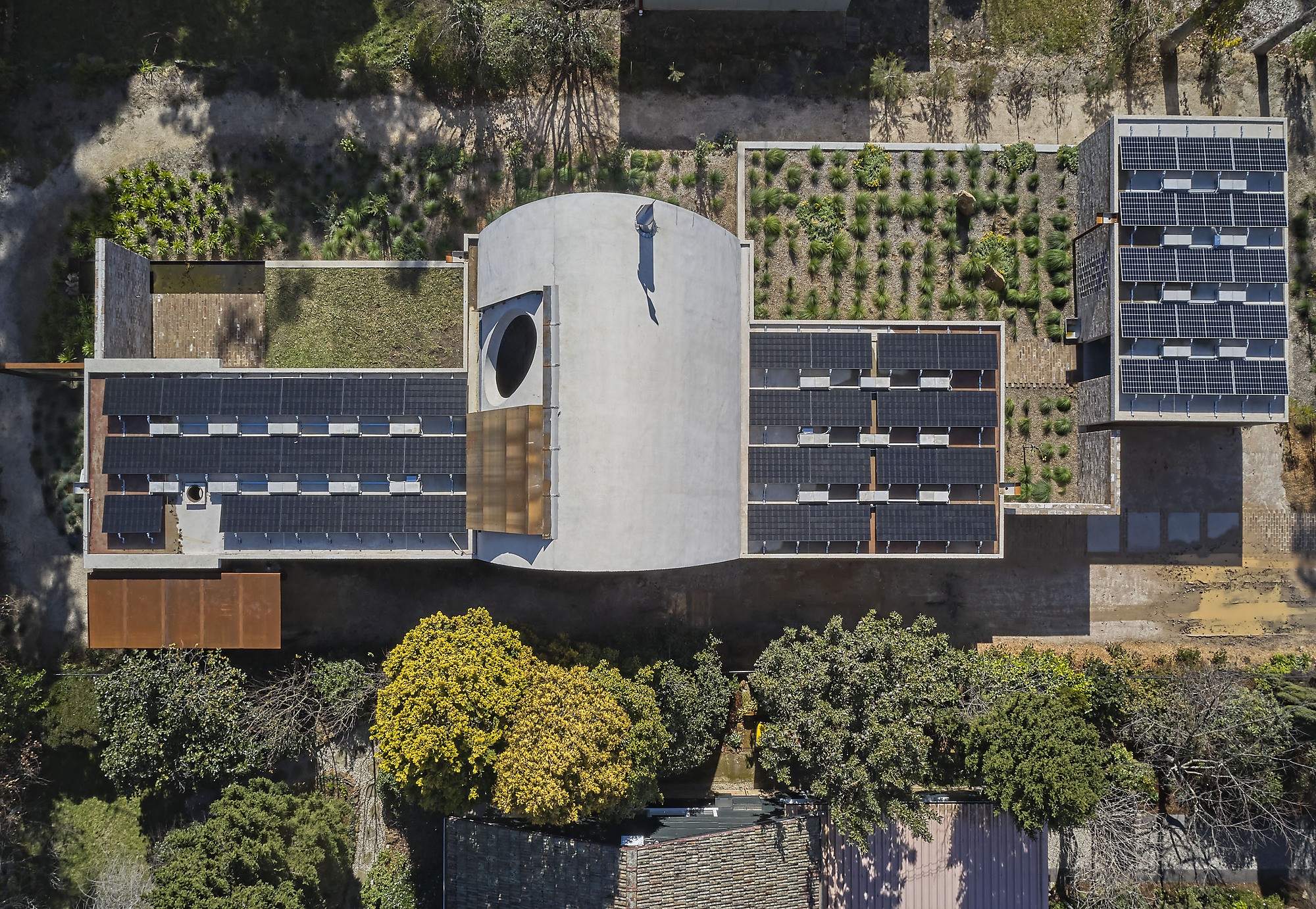
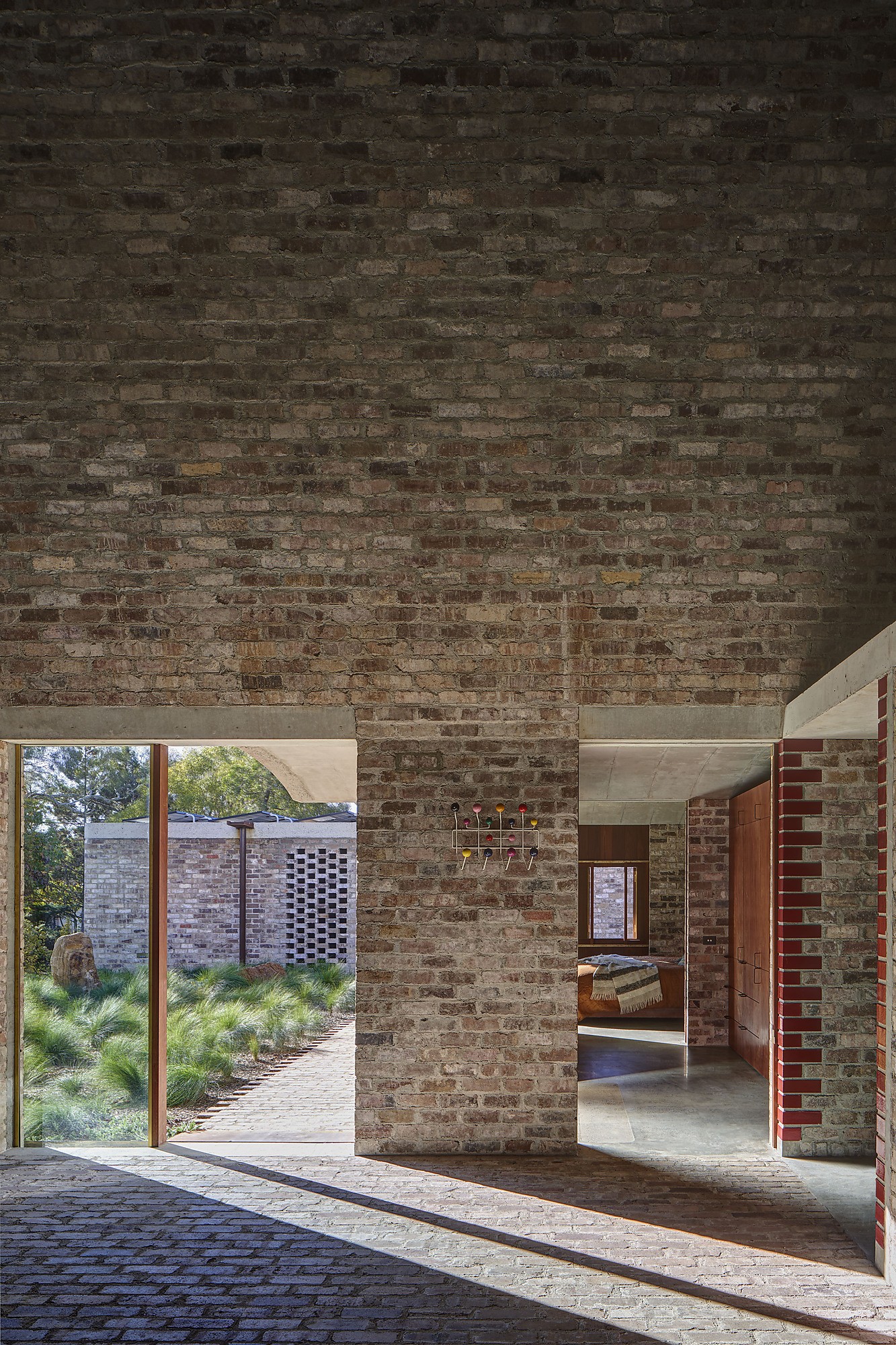
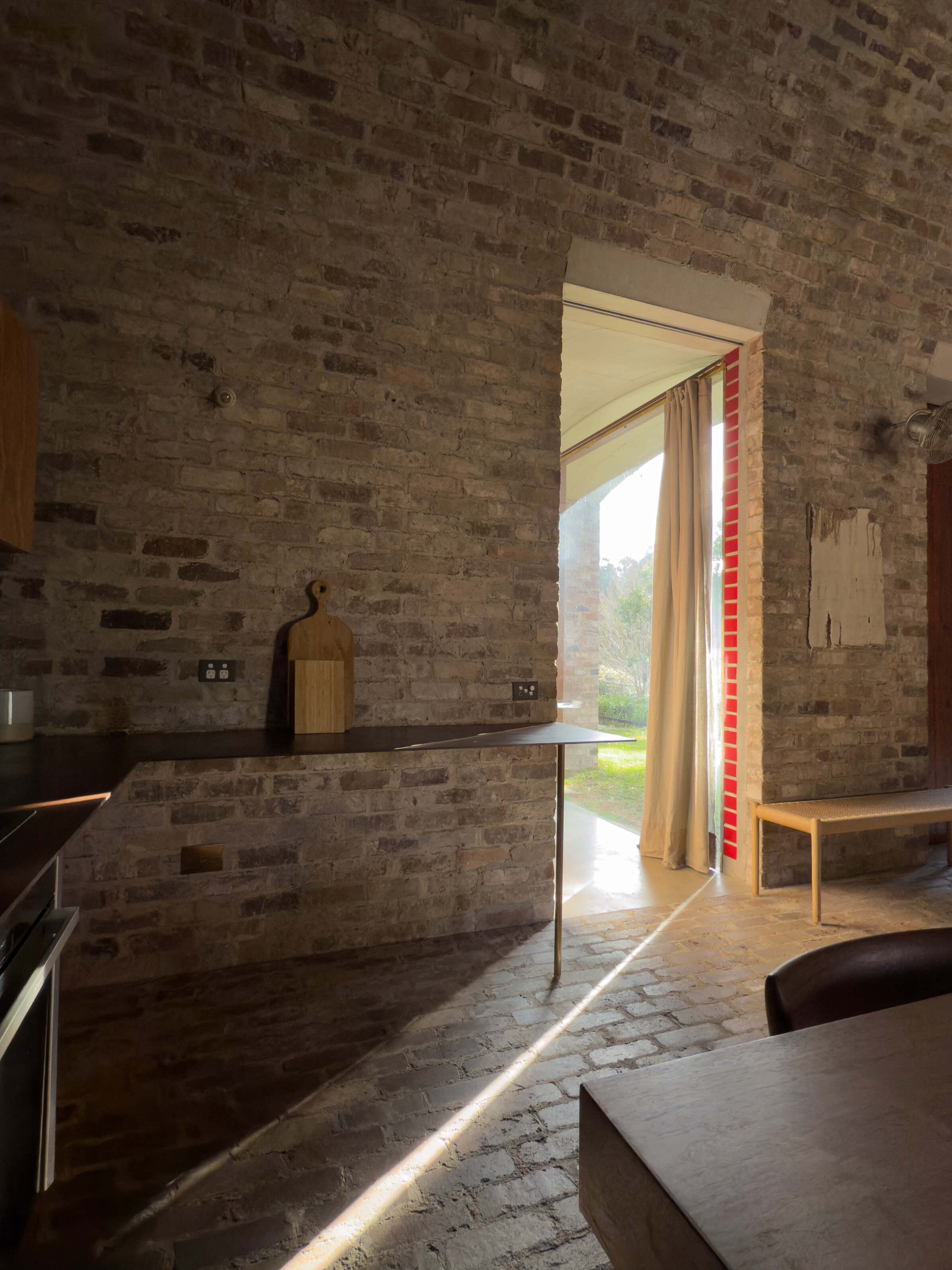
Night Sky House, designed by Peter Stutchbury Architecture, is a single-storey house completed in 2020 in Blackheath, Australia. The project combines 158 m² of living space for Basil Borun with an opening to the stars above the main room. A brick vault shelters the kitchen and the areas for eating and sitting between lower wings containing bedrooms and a study. The roof aperture opens directly to the air so the owner could view the southern sky from his wheelchair. Accessible routes extend through the house, and sliding doors let adjoining rooms open into a continuous passage. The main room opens onto a courtyard, and the bedrooms look through glass into native gardens. Built of recycled brick, the house produces its own energy and collects its own water.

Basil Borun commissioned Peter Stutchbury Architecture to make a home from which he could observe the stars without leaving his living room. An engineer and astronomer who used a wheelchair, he asked Peter Stutchbury for an accessible two-bedroom house. The house took almost three years to build and is designed to last beyond 120 years.
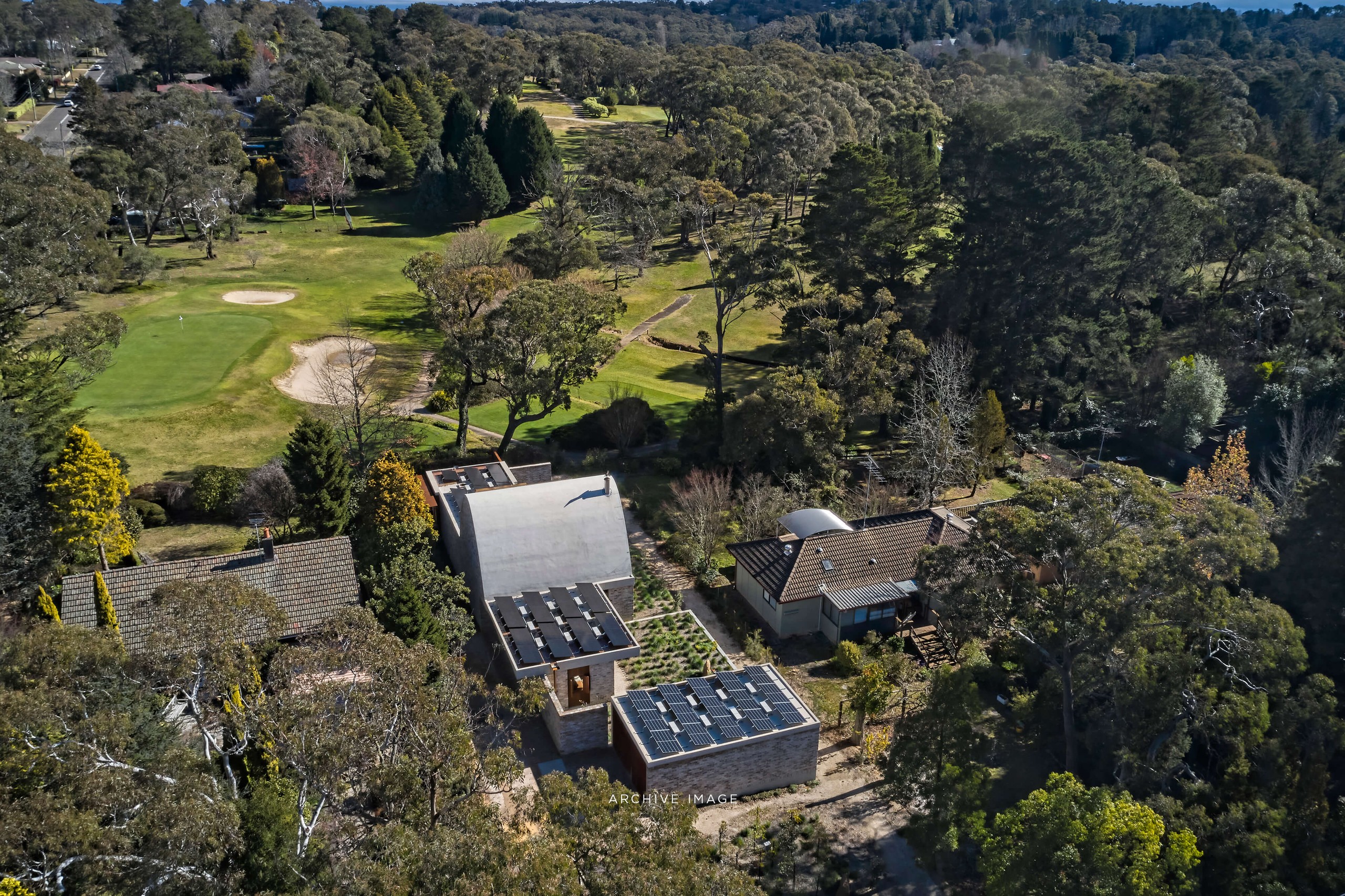
Night Sky House occupies a long, narrow block of almost 1,000 m² beside Blackheath Golf Course, on the land of the Dharug and Gundungurra peoples. Known also as Night Sky, the house stretches along an east–west axis and opens to the north. The house stands at 1,024 m (3,360 ft) in Blackheath, the highest town in the Blue Mountains of New South Wales, west of Sydney.
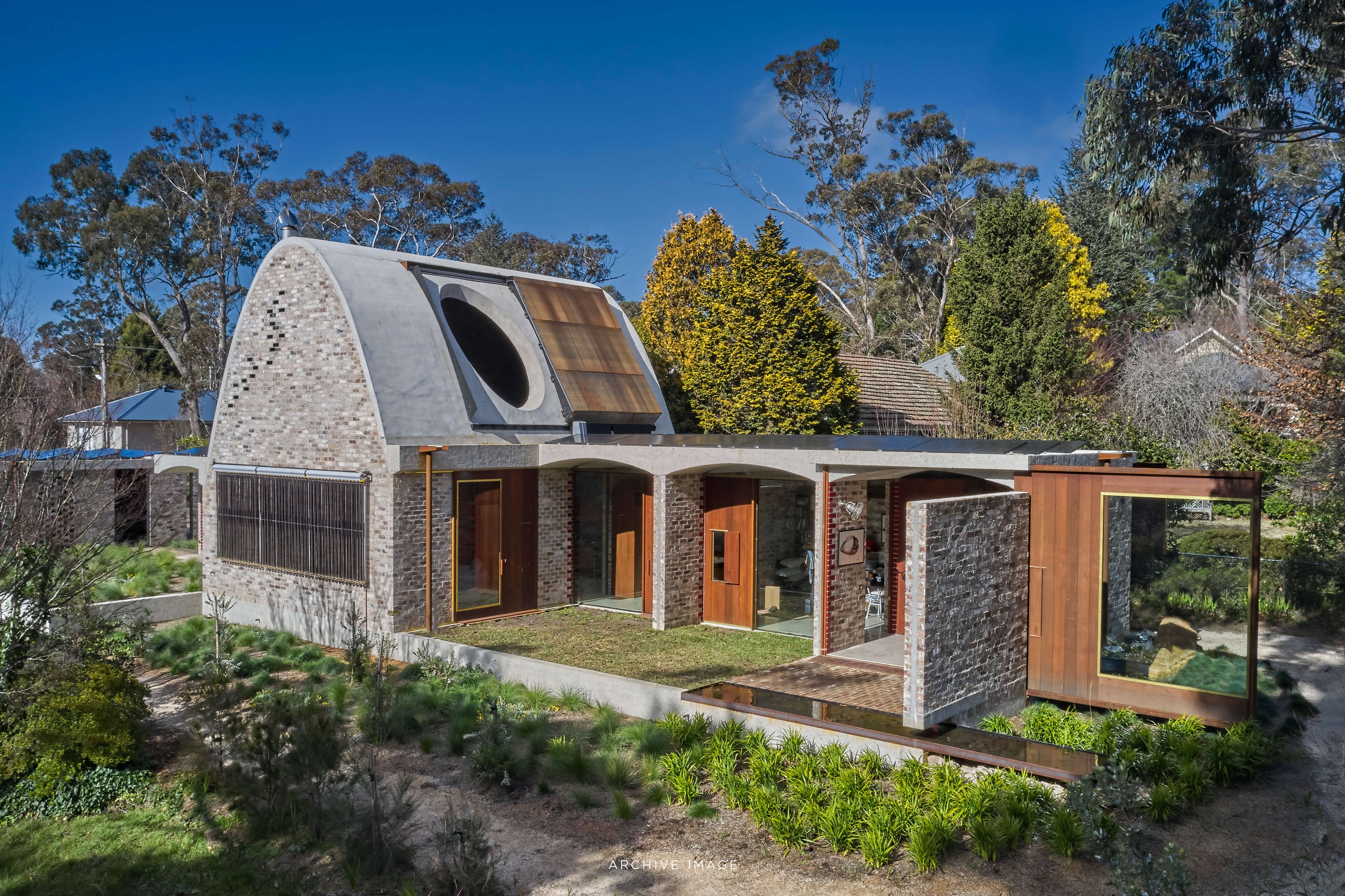
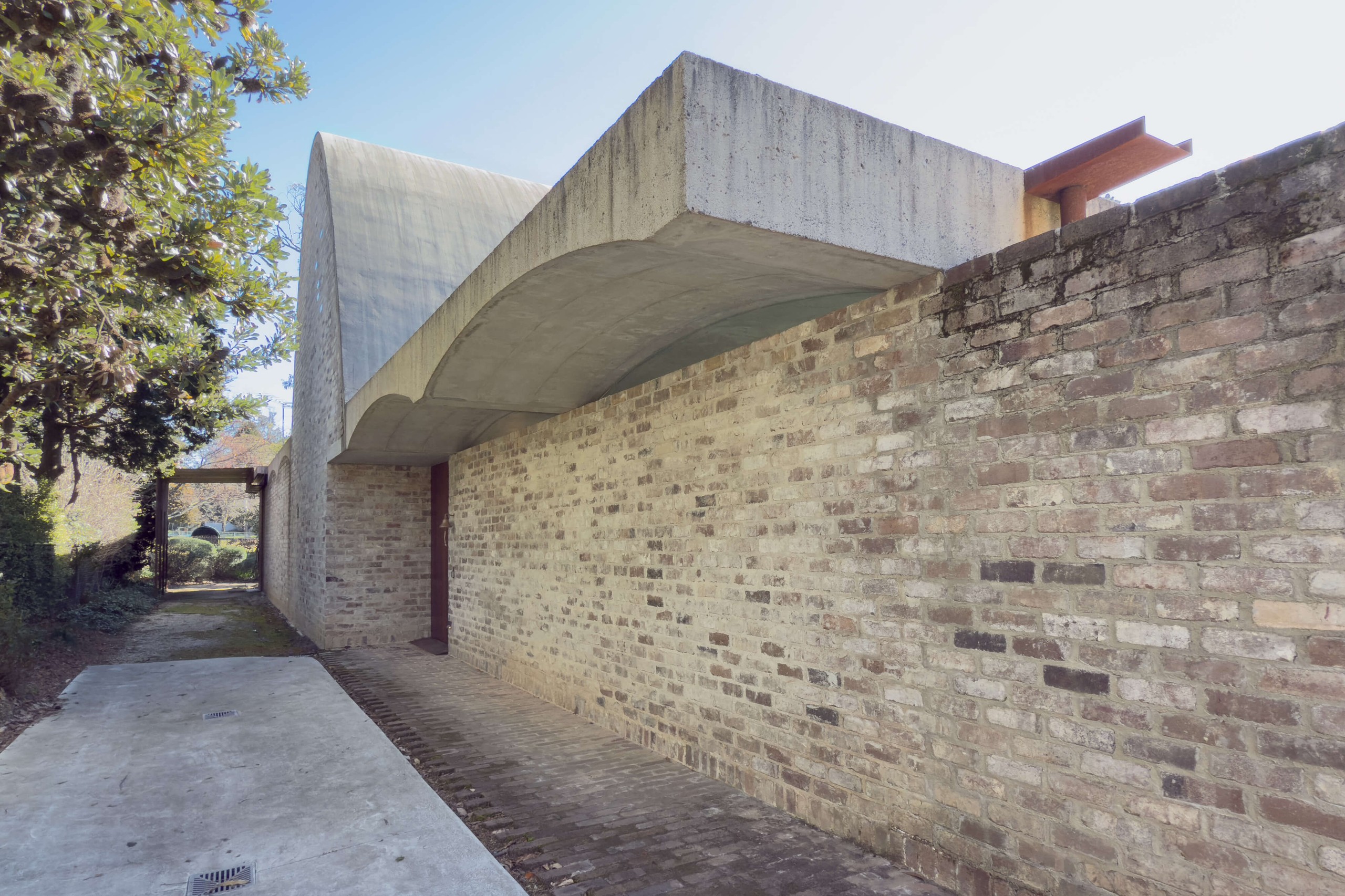
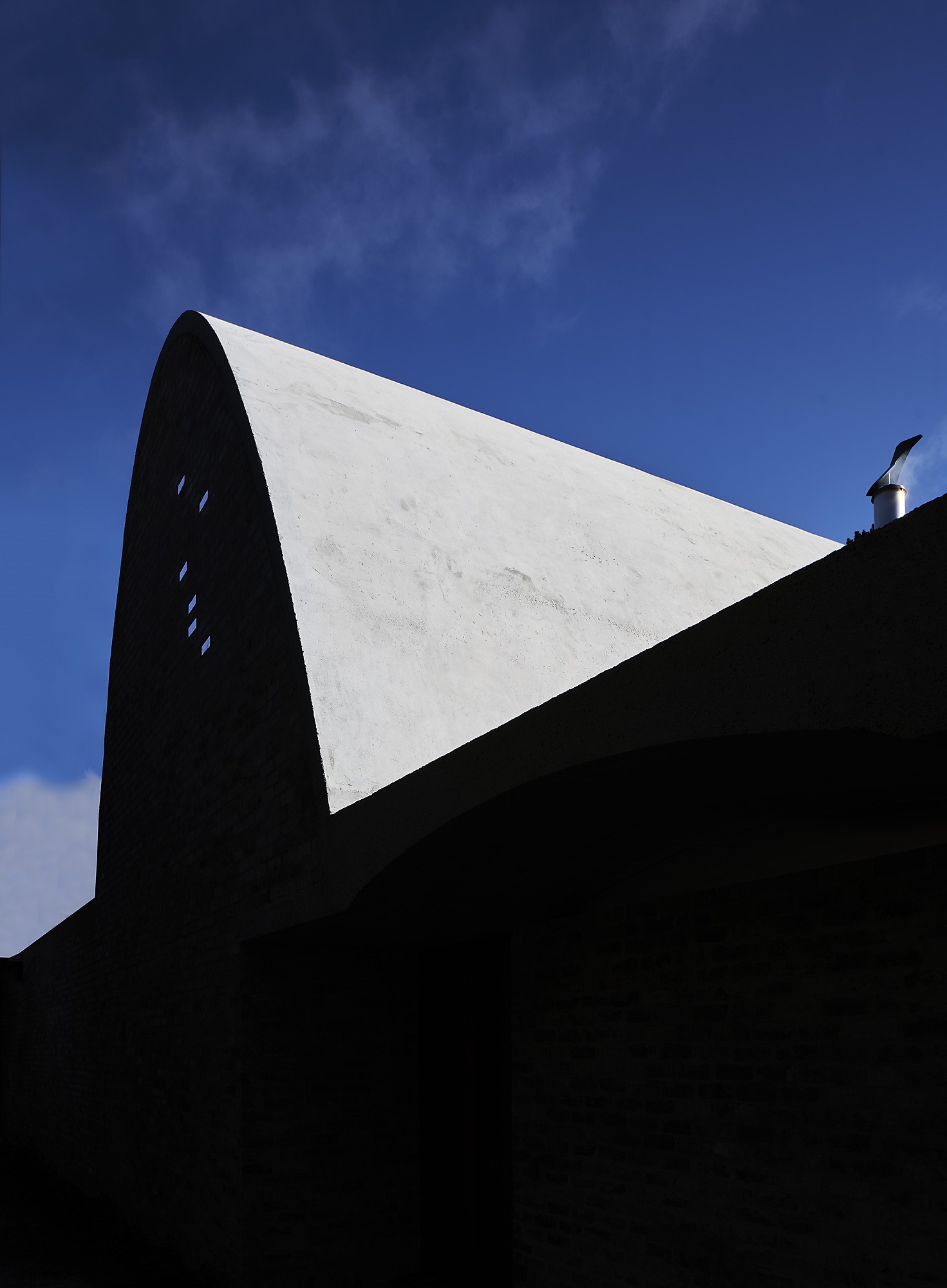
The brick arches began with Basil Borun’s recollection of a nineteenth-century ammunition bunker in Romania. For Peter Stutchbury, Le Corbusier‘s work in India supplied another reference. A tall parabolic roof covers the shared living room, then the ceilings drop to shallow curves over the adjoining rooms. The low curve of each smaller arch was partly inspired by the Blue Mountains landscape.
The living room receives the front entrance and accommodates a kitchen alongside places to eat and sit beneath the vault. To the east, the principal bedroom has a bathroom and dressing area, positioned for the morning sun. The western wing contains a guest bedroom, bathroom, laundry and study, with a separate entrance. The study can become a third bedroom, and the flexible plan allows for future live-in help.
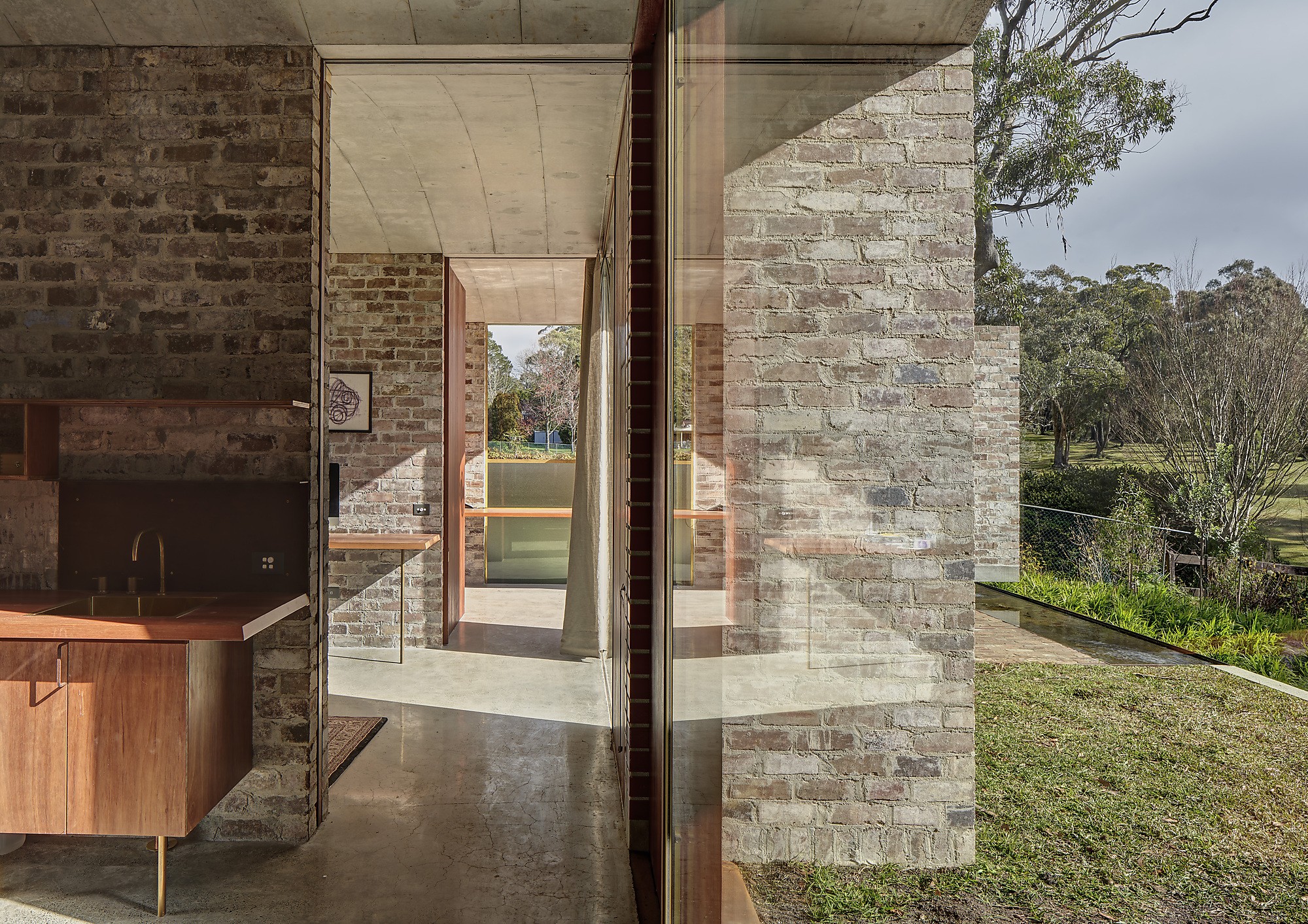
The house goes beyond the Australian Standard for access and mobility: Basil Borun could reach any room from his car with a single turn of his wheelchair. No step in the house is higher than 10 mm, the tolerance of his wheelchair. Sliding doors link the rooms along a wide circulation route. When open, they allow a view through the house and make part of each room a passage; when closed, they restore privacy. Australian blue gum doors serve the accessible openings, and the main entrance operates automatically.
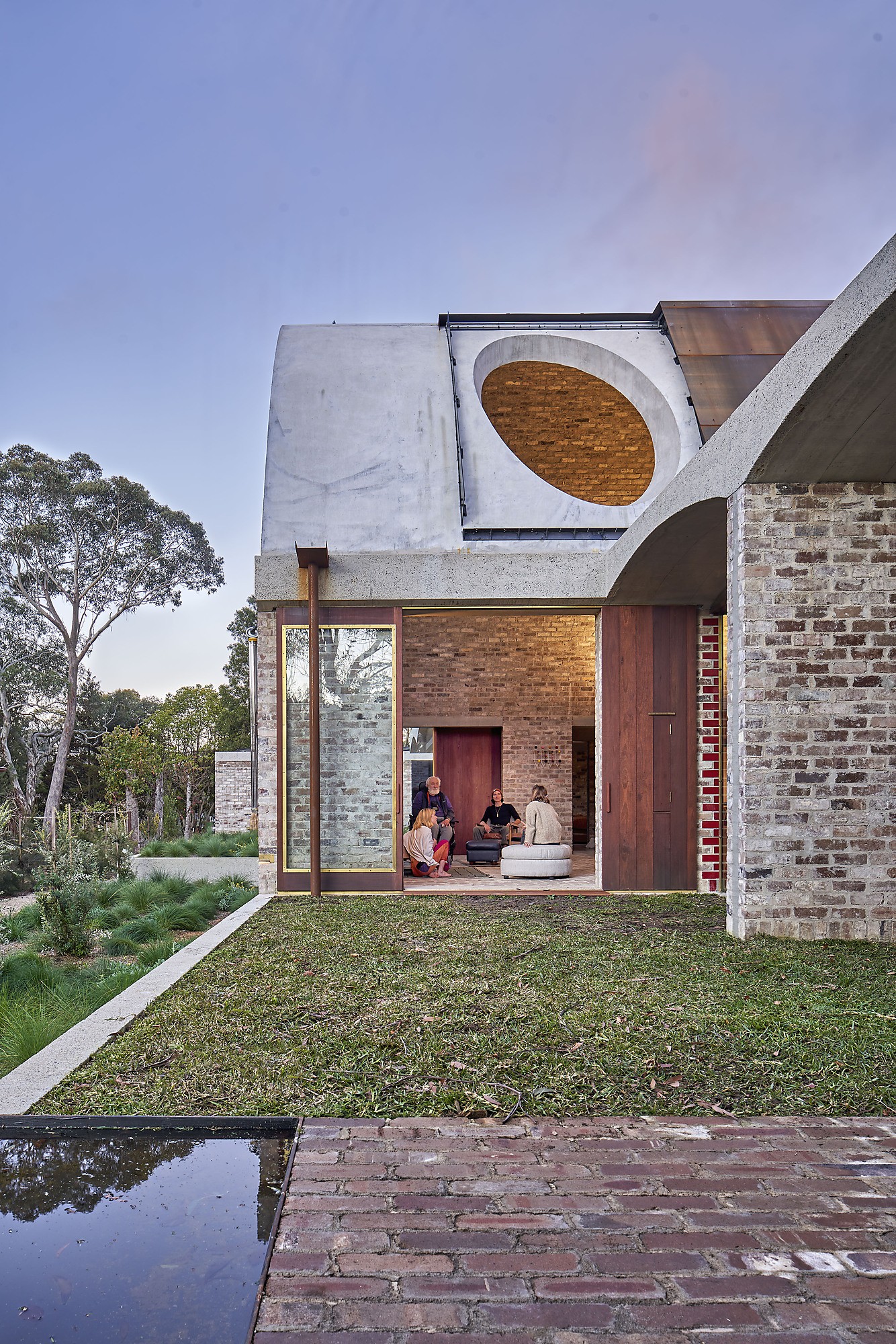
The vault of Night Sky House is self-supporting brickwork that reaches an apex of 7.5 m. Bricks salvaged from a demolished apartment building in western Sydney include many selected by Basil Borun. An elliptical opening, 3.5 m long and 2.5 m wide, tilts 20 degrees south through the roof. Project architect Fernanda Cabral of Peter Stutchbury Architecture and builder Mark Tan tested cut-outs against the sky until the aperture framed the constellations Basil Borun wanted to see, including Pavo. No glass separates the room from the sky: a steel panel retracts at the touch of a switch to uncover the opening.

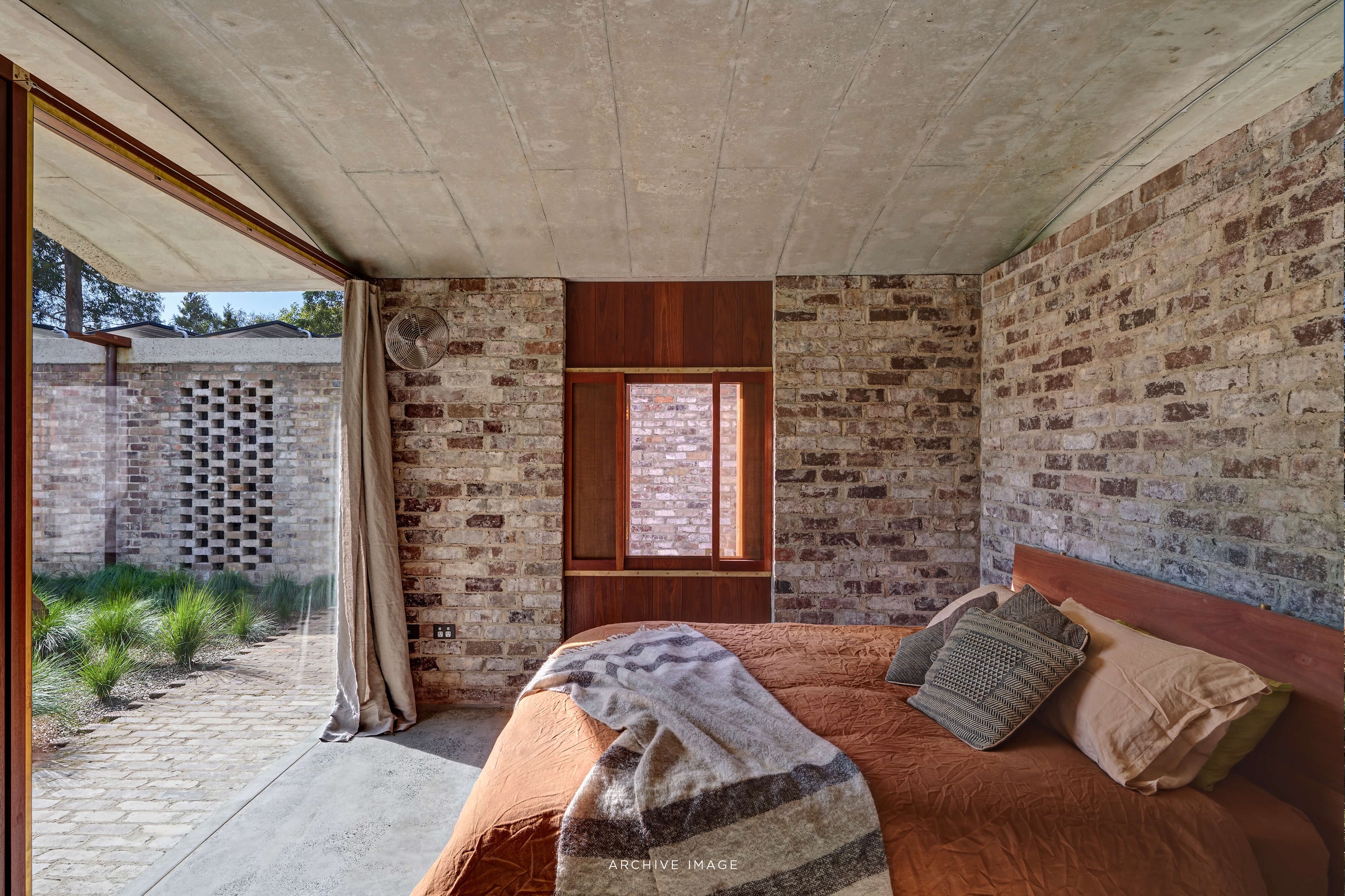
The open oculus admits sunlight that moves across the walls and floor during the day and releases rising hot air in summer. Recycled double-brick walls and insulation help the house absorb and release heat. Hydronic heating runs beneath the recycled brick floor of the main room. Polished concrete adds to the thermal mass of the brick, and the windows are double glazed. Crafted shutters, worked by hand with ropes, double as the window openings.
The courtyard extends the main room into a lawn, pond and barbecue area. External blade walls run along one wing to form a colonnade. Sophie Zaccone designed the garden around native species and grasses, with planting chosen for its low water needs. The bedrooms, ensuite and office overlook the planted spaces through broad areas of glass.
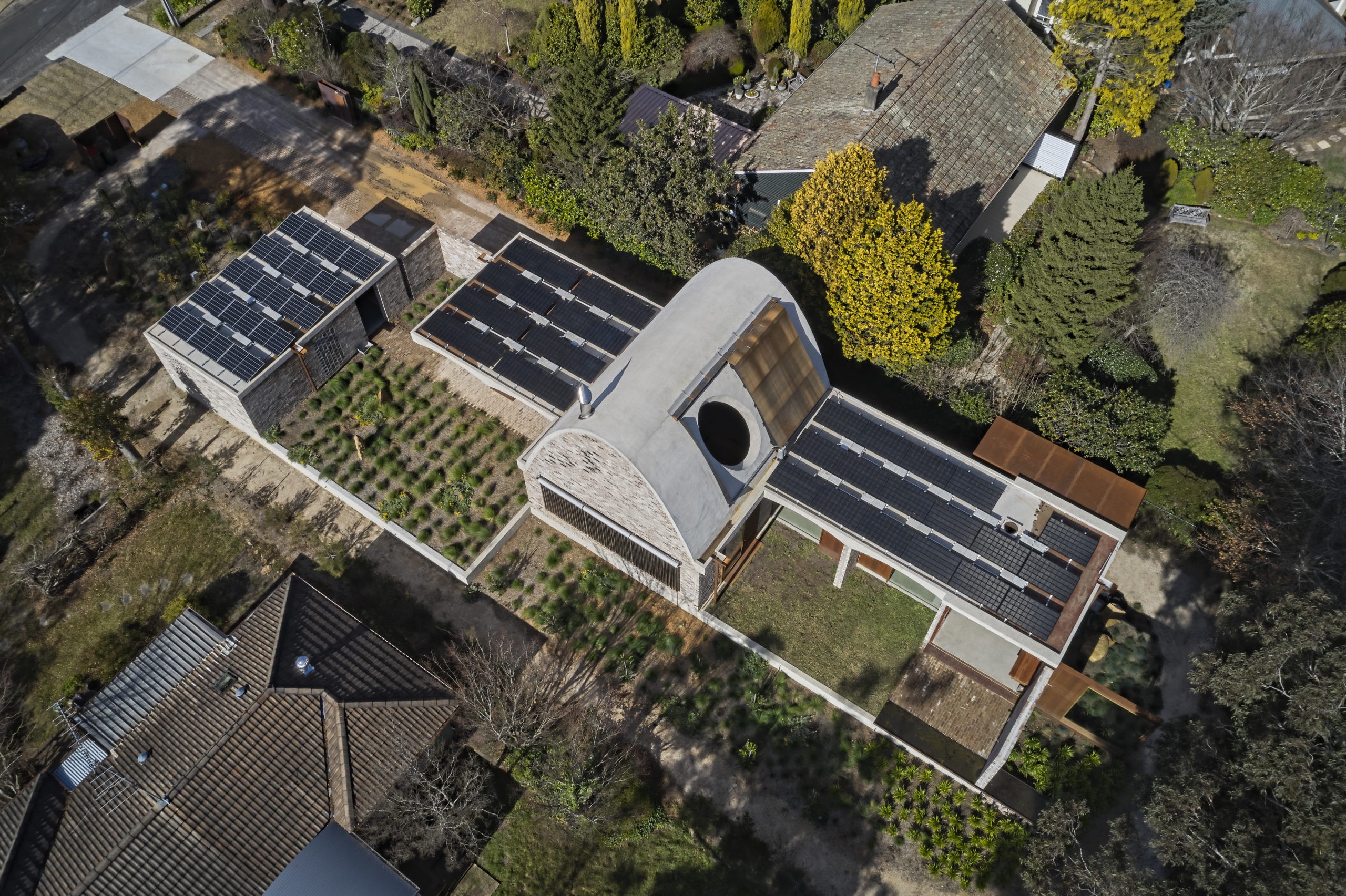
A bank of 48 photovoltaic panels gives Night Sky House its own electricity, and evacuated tubes heat its water. Rainwater passes into a filtered tank holding 60,000 litres, allowing the house to operate without mains water. Two charging points serve electric vehicles. The design reserves space for a residential windmill in the site’s south-west corner.
Night Sky House received the Australian Institute of Architects’ 2021 Robin Boyd Award for Residential Architecture – Houses (New), Australia’s highest residential architecture award. The Institute’s NSW awards of the same year added Residential Architecture – Houses (New) and Sustainable Architecture, and the 2021 Houses Awards gave the house the Sustainability prize and a commendation for New House under 200 square metres. The garden received an Award for Landscape Architecture at the 2022 NSW awards of the Australian Institute of Landscape Architects. The house was offered for sale in March 2023, after Basil Borun’s death at Easter 2022.
Project Gallery
42 photographs











Project Location
Address6 Jubilee Avenue, Blackheath, New South Wales, Australia
The location is intended for general reference and may denote a city or country; it does not identify a precise address.
Stunning , I want to live here . In this beautiful inspiring place of true spiritual comfort .
If only I were 40 years younger and didn’t have Parkinson’s .
What a cure it would be to look out of those windows at night when sleep doesn't come easy and the devil rests on your should turning your body and mind into a place of fire and discomfort .
Thank you at least for giving me the chance to know this place exists ,so I can but dream . My nights are long .