
home/architects/kengo kuma
Kengo Kuma
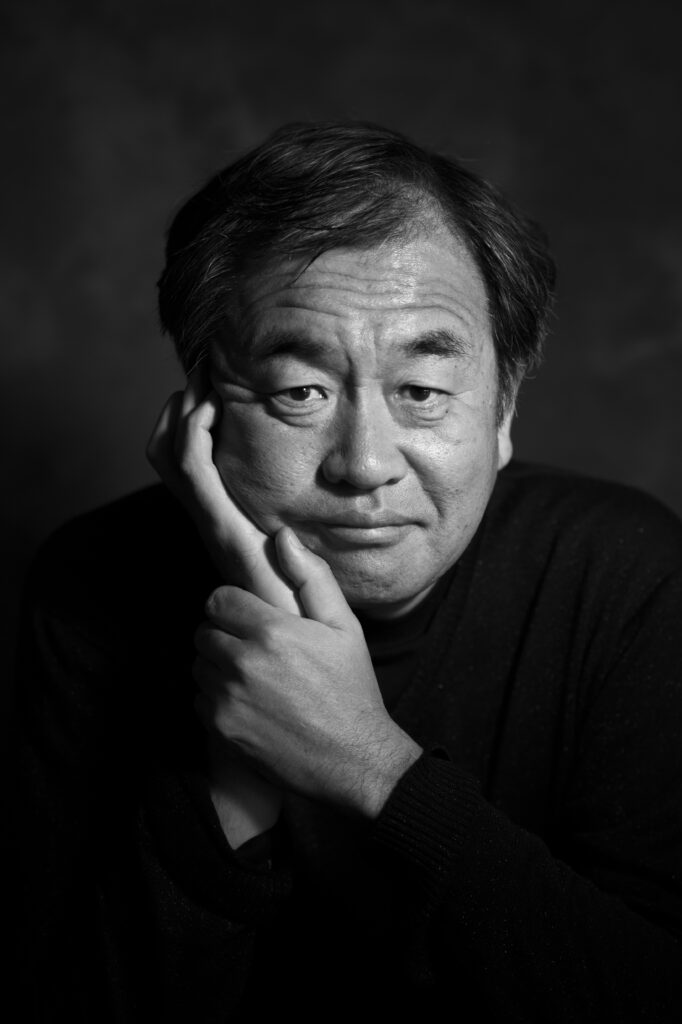
Kengo Kuma is a Japanese architect, born in 1954, who established Kengo Kuma & Associates in 1990. His buildings include the V&A Dundee in Scotland and the Japan National Stadium in Tokyo, and he is Professor Emeritus at the University of Tokyo.
“As a beginner in my career, I thought that concrete was too heavy and too hard, and I was looking for a softer material than concrete and wood seemed like the best solution.”
- Education
- University of TokyoArchitecture, 1979
- Columbia UniversityVisiting scholar, 1985–1986
- Practice
- Kengo Kuma & Associates
- Honours
- Louis I. Kahn Award2025
- Japan Art Academy Prize and Imperial Prize, for V&A Dundee2024
- TIME 100 Most Influential People2021
- Medal with Purple Ribbon2019
- John D. Rockefeller 3rd Award2019
- Global Award for Sustainable Architecture2016
- Honorary Fellowship, American Institute of Architects2011
- Officier de l'Ordre des Arts et des Lettres2010, France
- Mainichi Art Award, for Nezu Museum2010
- International Fellowship, Royal Institute of British Architects2009
- Spirit of Nature Wood Architecture Award2002, Finland
- International Stone Architecture Award, for Stone Museum2001, Italy
- Architectural Institute of Japan Award, for Noh Stage in the Forest1997
Biography
Kuma was born in Kanagawa and graduated in architecture from the University of Tokyo in 1979. He spent 1985 and 1986 at Columbia University in New York as a visiting scholar, with the Asian Cultural Council. The Spatial Design Studio, which he founded in 1987, preceded his own office by three years.
He lectured at Columbia's Graduate School of Architecture, Planning and Preservation in 1994, and was professor at Keio University, first at the Faculty of Environmental Information in 1998 and 1999, then at the Faculty of Science and Technology from 2001 to 2009. From 2009 to 2020 he was professor at the Graduate School of Architecture of the University of Tokyo; from 2020 the office's list of his posts names him Special/Honorary Professor there, as adviser to the Sekisui House – Kuma Lab, an international platform for architectural education. The same list makes him president of the Kochi Prefectural Forestry College from 2018 and records an honorary doctorate of the Politecnico di Milano in 2013; he is a member of the Japan Art Academy.
On the page of the Japan Design Committee, of which he is a member, he writes that passive design, defeated by its environment and the given conditions, stays fixed, and asks whether a design can respond to its environment in a flexible manner, like breathing. His books include Anti-Object (2000), Makeru Kenchiku (Architecture of Defeat, 2004), Shizen na Kenchiku (Natural Architecture, 2008), Chisana Kenchiku (Small Architecture, 2013), Ten Sen Men (Point Line Plane, 2020) and Nihon no Kenchiku (Architecture of Japan, 2023).
Small units recur in his buildings, an approach known as particlisation. In the John Hejduk Soundings Lecture he gave at the Harvard Graduate School of Design in April 2025, titled “Return to Nature”, he explained it with the seventh-century pagoda of Hōryū-ji in Nara, whose secret is “small, replaceable pieces”: a damaged piece can be replaced without destroying the whole. His examples there ran from the Hiroshige Museum of Art in Bato, built of cedar planks, artisan-made paper and quarry stones from the forest beside it, to the GC Prostho Museum Research Center, whose wooden members are 6 by 6 centimetres thick, and the Japan National Stadium, which employs wooden planks. Three themes ran through the lecture: the connection between forest and city, the use of the small particle, and the value of experimentation.
Sources — Kengo Kuma and Associates: Kengo Kuma · Kengo Kuma and Associates: Offices · Harvard Graduate School of Design: Kengo Kuma Urges a Return to Nature · Wikipedia: Kengo Kuma · World-Architects: Kengo Kuma and Associates · Kengo Kuma and Associates · Kengo Kuma and Associates: Selected projects · Stylepark: Kengo Kuma · Kengo Kuma and Associates: Links · Japan Design Committee: Kengo Kuma · Kengo Kuma and Associates: Timeline
Projects0
No projects yet.