

A linear foot is a measurement of length, 12 inches in a straight line, exactly 30.48 centimeters, whatever the width or thickness of the material being measured. It is the ordinary foot, also called a lineal foot or running foot, and lumber, trim, fences, decking, cabinet runs and freight-trailer space are measured by it. The working questions are its length in inches and meters, how to measure linear footage, how it differs from square feet and board feet, which things are sold by it and how movers use it.
What Is A Linear Foot?
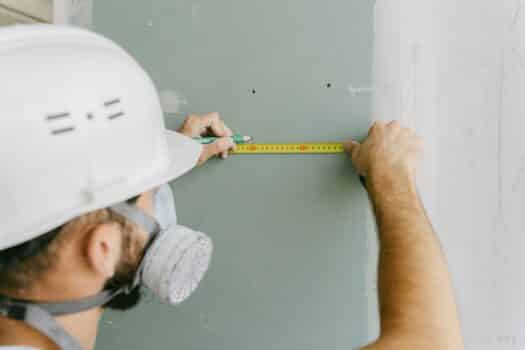
A linear foot is a measure of length in one dimension, 12 inches along a straight line, and linear in the name of a unit means a single dimension, as against square or cubic. Any straight run of 12 inches is considered one linear foot, so a linear foot of a board, a fence or a gutter is one foot of its run, with height, width and thickness left out of the count.
A tape measure gives the length of each wall, and a measuring wheel rolled around a room gives a total for long runs, the way one millwork shop estimates trim.
How Many Inches Is a Linear Foot?
A linear foot is 12 inches, 30.48 centimeters, as big as the foot in everyday use, so linear feet convert to inches by multiplying by 12 and inches convert to linear feet by dividing by 12.
| Linear feet | Inches | Centimeters | Meters |
|---|---|---|---|
| 0.5 | 6 | 15.24 | 0.1524 |
| 1 | 12 | 30.48 | 0.3048 |
| 2 | 24 | 60.96 | 0.6096 |
| 3 | 36 | 91.44 | 0.9144 |
| 4 | 48 | 121.92 | 1.2192 |
| 5 | 60 | 152.4 | 1.524 |
| 6 | 72 | 182.88 | 1.8288 |
| 8 | 96 | 243.84 | 2.4384 |
| 10 | 120 | 304.8 | 3.048 |
| 12 | 144 | 365.76 | 3.6576 |
| 16 | 192 | 487.68 | 4.8768 |
| 20 | 240 | 609.6 | 6.096 |
| 36 | 432 | 1097.28 | 10.9728 |
Exact conversions. One meter is about 3.28 linear feet.
Is a Linear Foot the Same as a Foot?
Yes, a linear foot is the same as a foot, the international foot of exactly 0.3048 meter fixed in 1959, and the word linear only says the foot is measured as length. The 2020 Federal Register notice that retired the US survey foot says the international foot is typically referred to as simply the foot.
The US survey foot, 1200/3937 meter, was deprecated on December 31, 2022 and has been obsolete since January 1, 2023. It differed from the international foot by 2 parts per million, about 0.01 foot per mile, and definitions based on it are to be avoided except for historic and legacy applications.
Lineal Feet vs Linear Feet: Is There a Difference?
Lineal feet and linear feet are the same unit, with no difference in length, and Merriam-Webster gives linear as the first meaning of lineal. Québec’s terminology office lists linear foot, lineal foot, running foot and foot run as English names of one unit, one hardwood lumber seller prices decking and siding by the lineal foot, and the softwood lumber standard spells it linear foot.
What Does LF Mean in Construction?
LF means linear feet in one cabinet shop’s construction pricing, which counts a 10-foot run of upper and lower cabinets as 20 LF. The American Softwood Lumber Standard writes LFT or Lin Ft for linear foot or feet, and Québec’s terminology office gives lin. ft. as the English abbreviation.
How To Calculate Linear Feet?
To calculate, find or determine linear feet, measure the length in inches and divide by 12, or measure each run in feet and add the runs, so an object 36 inches long is 3 linear feet. The conversion also runs the other way, and a fence maker’s picket calculator multiplies 120 lineal feet by 12 to get 1440 inches before dividing by the picket width plus any spacing. A length measured in centimeters converts at 30.48 centimeters to the linear foot.
How to Measure Linear Footage
To measure linear footage, measure each straight run in feet along the line the material will follow, one wall or one side at a time, and add the runs.
- Measure one wall at a time with the tape tight into the corner and straight on the wall, as a molding maker instructs.
- Take openings out where the material stops, so a fence total leaves out gate footage before it is divided by the panel width, 6 or 8 feet in one maker’s preassembled panels.
- Count outside miter corners where crown molding runs around pillars and arches, as the same molding maker advises.
- Turn the total into whole stock lengths for each run, the way one trim carpenter counts 16-foot pieces of base or crown per run.
- For gutters, measure the roofline and divide by the section length, 10 feet in one maker’s vinyl system, to count sections.
- Add waste, about 10 percent for trim and for pickets in makers’ guidance.
What Is The Difference Between Linear Feet And Square Feet?
The difference between linear feet and square feet is dimension, because linear feet measure length along one line and square feet measure area, length multiplied by width. A square foot is exactly 0.09290304 square meter, and 9 square feet make a square yard. A room 12 feet by 12 feet is 48 linear feet around its walls and 144 square feet of floor, the first figure buying baseboard and the second buying flooring, which hardwood makers sell by the square foot in cartons.
How To Convert Square Feet To Linear Feet For Floorboards?
To convert square feet to linear feet for floorboards, multiply the square feet by 12 and divide by the board’s face width in inches. The 144 square feet of a 12 by 12 foot room laid in boards with a 2 1/2 inch face comes to 144 times 12, or 1,728, divided by 2.5, which is 691.2 linear feet of board before waste. The face width is the exposed width, because the tongue of tongue-and-groove flooring adds to its overall width.
A National Wood Flooring Association manager’s 2011 answer in a trade magazine gives the commonly accepted waste allowance as at least 5 percent of the measured square footage, 7 to 10 percent for lower grades, shorts or plank, and no less than 10 percent on a diagonal or in an irregular room.
| Face width, in | Face width, mm | Linear feet per 100 sq ft | Linear meters per 10 m² |
|---|---|---|---|
| 2 1/4 | 57.2 | 533.3 | 175.0 |
| 2 1/2 | 63.5 | 480.0 | 157.5 |
| 3 1/4 | 82.6 | 369.2 | 121.1 |
| 5 | 127.0 | 240.0 | 78.7 |
| 5 1/2 | 139.7 | 218.2 | 71.6 |
| 7 1/4 | 184.2 | 165.5 | 54.3 |
Arithmetic before waste. The face widths are examples.
Linear Feet vs Board Feet
Linear feet measure a board’s length, and board feet measure its nominal volume, 144 cubic inches each, a board 12 inches wide, 12 long and 1 thick. Board feet equal nominal thickness times nominal width in inches times length in feet, divided by 12, so a 10-foot 2×6 is 10 board feet, and the American Softwood Lumber Standard tallies lumber by this board measure or by cubic measure.
A board 1 inch thick and 12 inches wide costs the same per board foot as per lineal foot, a 6-inch board half as much per lineal foot and a 3-inch board a quarter. One hardwood lumber seller prices cabinet-grade lumber by the board foot and decking and siding by the lineal foot. Dressed lumber is smaller than its name, a dry 2 by 4 being surfaced to 1 1/2 by 3 1/2 inches.
| Nominal size | Dressed dry size, in | Dressed dry size, mm | Board feet per linear foot |
|---|---|---|---|
| 1×4 | 3/4 x 3 1/2 | 19.1 x 88.9 | 0.33 |
| 1×6 | 3/4 x 5 1/2 | 19.1 x 139.7 | 0.5 |
| 1×8 | 3/4 x 7 1/4 | 19.1 x 184.2 | 0.67 |
| 1×12 | 3/4 x 11 1/4 | 19.1 x 285.8 | 1 |
| 2×4 | 1 1/2 x 3 1/2 | 38.1 x 88.9 | 0.67 |
| 2×6 | 1 1/2 x 5 1/2 | 38.1 x 139.7 | 1 |
| 2×8 | 1 1/2 x 7 1/4 | 38.1 x 184.2 | 1.33 |
| 2×10 | 1 1/2 x 9 1/4 | 38.1 x 235.0 | 1.67 |
| 2×12 | 1 1/2 x 11 1/4 | 38.1 x 285.8 | 2 |
Board feet use the nominal size. Dressed sizes are minimums for dry lumber.
Which Things Are Sold By Linear Feet?
Things sold by linear feet are long products of a fixed profile, measured along the run and bought by the foot or in stock lengths, panels and sections, such as trim, molding and baseboard, fencing, gutters, and decking and siding boards, and cabinet runs are quoted by the linear foot under conventions that vary. Stone and quartz countertops, plank flooring and carpet are priced by area even where a run is measured first.
| Product | Sold or quoted by | What to measure |
|---|---|---|
| Trim, including baseboard and crown | Length, bought in stock pieces | Each wall, outside miters where crown runs around pillars or arches, plus about 10 percent |
| Fencing | Lineal feet, 6 or 8 ft panels from one maker | The fence line less gates |
| Picket fencing | Lineal feet, converted to pickets | Length in inches over picket width plus spacing, plus 10 percent |
| Gutters | Length, 10 ft sections in one vinyl system | The roofline |
| Decking and siding boards | Lineal foot at one lumber seller | Area times 12 over board width in inches |
| Cabinet-grade hardwood | Board foot at one lumber seller | Thickness, width and length |
| Cabinets | Linear feet, conventions vary | Front edge or wall length, uppers and lowers together or apart |
| Stone and quartz countertops | Square feet | Total square inches divided by 144 |
| Plank flooring | Square feet, in cartons | Floor area plus waste |
| Broadloom carpet | Area, cut mostly from 12 ft rolls | Room size and seams |
| Wallpaper | Rolls | Length and width of each wall |
| Freight-trailer household moves | Linear feet of trailer floor | Trailer length used |
| Full-service interstate moves | Weight, or a binding estimate | Estimated then actual weight, or the quantities a binding estimate lists |
1. Cabinets
Cabinets are measured in linear feet because base and wall cabinets run along a wall, but the linear foot of a cabinet has no single convention. A cabinetry estimating text measures lineal feet at the cabinetry’s front edge, while one cabinet shop prices LF off the wall, counts a 10-foot run of uppers and lowers as 20 LF and prices a 36-inch corner cabinet as 4 LF by taking both sides.
The National Kitchen & Bath Association measures kitchen countertop needs as frontage, a length, and recommends 158 inches of countertop frontage 24 inches deep, while stone countertops are quoted in square feet. A closet installer asked on a contractors’ forum whether pay per linear foot meant the wall the closet occupies or each shelf, which is the question to settle before two quotes are compared, with the wall measured by tape or laser measuring tool.
2. Trim
Trim is the molding of a room, baseboard, crown, chair rail and window and door casing, and it is measured in linear feet around the perimeter it frames, one wall at a time, with outside corners counted where crown runs around pillars or arches. It is then bought in whole stock lengths, 16-foot pieces of base or crown in one trim carpenter’s count, with about 10 percent extra for underestimates, damage and bad cuts.
3. Boards
Boards are sold by the lineal foot at one hardwood lumber seller for decking and siding and by the board foot for its cabinet-grade hardwood, while the softwood lumber standard tallies lumber by board measure or cubic measure. Floorboards are bought by area, so their linear feet are worked out from the face width.
How Much Is a Linear Foot?
How much a linear foot costs depends on what is priced per foot and on what the seller counts as a foot, so a per-foot price compares only with a price measured the same way. Cabinet quotes follow the shop’s convention for uppers, lowers and corners, freight-trailer movers quote a per-foot rate for trailer space used, with a 5-linear-foot minimum at one service, and full-service interstate movers base a non-binding estimate on weight or give a binding estimate that fixes the charge.
Advantages Of Linear Foot In Moving
The advantage of the linear foot in moving is that a freight-trailer service can charge for the length of trailer floor a household uses instead of its weight. U-Pack’s trailers are 28 by 8 by 9 feet, with 28 linear feet for belongings, most trailers marked in 2-foot increments, and a bulkhead set after loading fixes the feet used, down to a minimum of 5 linear feet. The same company’s guides give a studio both as the 5-foot minimum and as 6 linear feet. Those guides estimate the linear feet a move needs by home size, and the price follows the per-foot rate on the reservation for the feet actually used, which the bulkhead placement shows.
Full-service interstate household-goods movers base a non-binding estimate on the estimated weight of the shipment and its final charges on actual weight, and a binding estimate guarantees the total cost for the quantities and services it lists. Freight carriers use linear feet in their tariffs too, and one LTL carrier rates a shipment that takes up at least a set length of trailer on the greater of its actual weight or a calculated weight per linear foot.
What Is The Cubic Capacity Rule In Freight?
The cubic capacity rule in freight is the minimum charge LTL carriers apply to light, bulky shipments that take up a lot of trailer space for little weight, and many carriers set their own thresholds. One LTL carrier rates low-density shipments that fill a large volume of trailer on a calculated weight per cubic foot in place of actual weight. It finds a shipment’s cubic capacity by totaling the cubic feet of all its articles, pieces and packaged units, and a cubic foot is a 12-inch cube of 1,728 cubic inches, so each piece’s height counts along with its length and width. An interstate household-goods mover that estimates by volume must explain in writing the formula it uses to convert that volume to weight.
Linear Foot FAQ
How many linear feet are in a yard?
There are 3 linear feet in a yard, which is exactly 0.9144 meter in both NIST Handbook 44 and the UK Weights and Measures Act 1985.
How long is a linear foot in meters?
A linear foot is 0.3048 meter long, 30.48 centimeters, and a linear meter is about 3.28 linear feet.
¿Cuánto es un pie lineal y cómo se mide?
Un pie lineal es igual a 30.48 centímetros, 0.3048 metros, el mismo pie de 12 pulgadas que se mide en línea recta a lo largo de la pieza, sea cual sea su ancho o su grosor. Para pasar de pies cuadrados a pies lineales en un piso de tablas, se multiplica el área en pies cuadrados por 12 y se divide entre el ancho visible de la tabla en pulgadas. Un metro lineal equivale a unos 3.28 pies lineales.
Is linear footing the same as linear footage?
No, linear footing is not the same as linear footage, because linear footage is a length and a footing is part of a building’s foundation. The 2024 International Residential Code, where a jurisdiction has adopted that edition, requires all exterior walls to be supported on continuous masonry or concrete footings, crushed stone footings, wood foundations or other approved structural systems.
What is a linear square foot?
A linear square foot is a mix of two units, the linear foot of length and the square foot of area, which is 144 square inches, so a quote has to say which of the two it means.
Final Words
A linear foot is 12 inches of length along a run, and in a quote the figure that matters is how the seller counts the run, along the wall or the front edge for cabinets, by panel for fences and by trailer floor or by weight for a move.
Related Articles
- 10 Best Laser Measuring Tools
- 9 Best Laser Level For Hanging Pictures
- 25 Best Gifts for Construction Workers This Year
- 19 Best Torpedo Levels
- 13 Best Laser Receivers
- 13 Best Rotary Laser Levels
- 19 Best Green Laser Level
- What Is A Veranda | All You Need To Know
- What Is A Pony Wall? | Things To Know
- What Is Rain Glass? | Thing You Should Know
- What Is Pewter? | All You Need To Know
