home/products/7 best lightweight hard hats – weight, type & class
7 Best Lightweight Hard Hats – Weight, Type & Class
Lightweight hard hats on construction sites, in hot trades and near electrical conductors face different hazards, so shell weight, the ANSI Z89.1 electrical class and venting decide which one fits. LIFT Safety's HDF-15NG DAX, at an average 415 grams without its suspension, is the only full brim here pairing a maker weight with ANSI Z89.1-2014 Class G and EN 397. For hot work, MSA's Skullgard 475405 cap is tested against radiant heat producing up to 350°F and carries the lowest maker figure, 0.88 LBS or about 399 g. A crew moving between general and electrical work gets Class E, G and C on one non-vented Pyramex Ridgeline, while venting drops PIP's Evolution Deluxe 6161 from Class E to Class C, with no electrical protection. OSHA names Z89.1's 2009, 2003 and 1997 editions, so a hat labeled to ISEA's newer Z89.1-2026 meets the rule only where the employer shows it is at least as effective; heavier hats sit with the best hard hats.
Review
Lightweight hard hats on construction sites, in hot trades and near electrical conductors face different hazards, so shell weight, the ANSI Z89.1 electrical class and venting decide which one fits. LIFT Safety's HDF-15NG DAX, at an average 415 grams without its suspension, is the only full brim here pairing a maker weight with ANSI Z89.1-2014 Class G and EN 397. For hot work, MSA's Skullgard 475405 cap is tested against radiant heat producing up to 350°F and carries the lowest maker figure, 0.88 LBS or about 399 g. A crew moving between general and electrical work gets Class E, G and C on one non-vented Pyramex Ridgeline, while venting drops PIP's Evolution Deluxe 6161 from Class E to Class C, with no electrical protection. OSHA names Z89.1's 2009, 2003 and 1997 editions, so a hat labeled to ISEA's newer Z89.1-2026 meets the rule only where the employer shows it is at least as effective; heavier hats sit with the best hard hats.
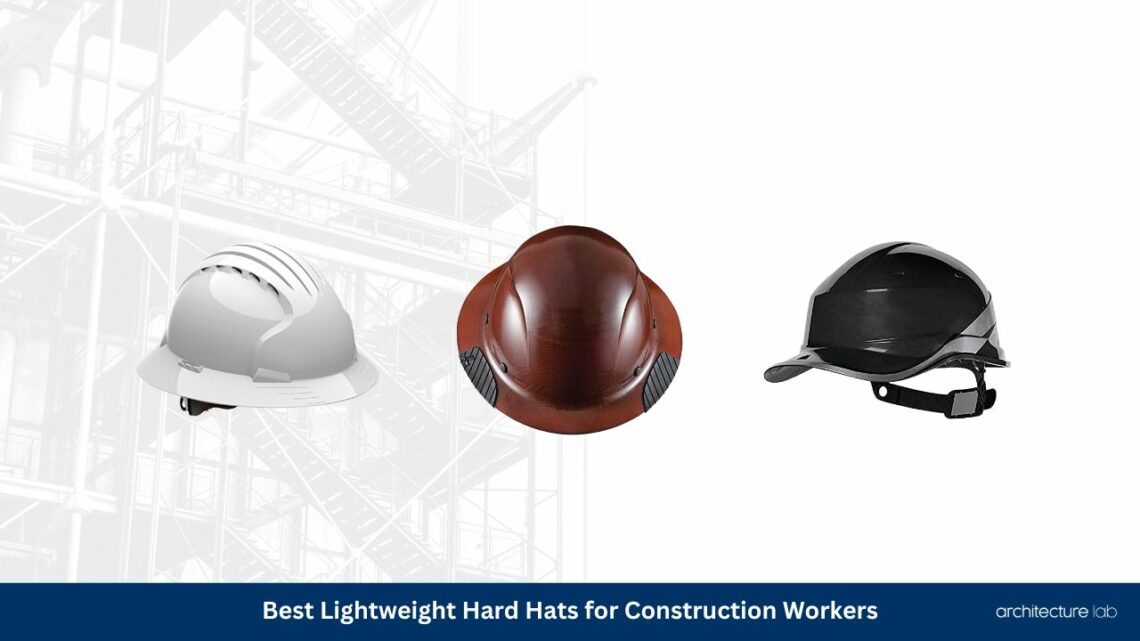
The seven hats come from LIFT Safety, MSA, PIP, Delta Plus, Pyramex and Fibre-Metal, five full brims and two caps in shells from fiber-reinforced resin and carbon fiber to phenolic composite, ABS and HDPE, each with its shell and the figure behind its pick on the line beside its name:
- LIFT Safety HDF-15NG DAX Hard Hat: a full brim with a fiber-reinforced resin shell, a six-point suspension and LIFT's average 415 grams without the suspension
- MSA Skullgard Fas-Trac III Cap 475405: a phenolic cap in hat sizes 7 to 8 1/2, tested to radiant heat up to 350°F, at 0.88 LBS by MSA's figure
- PIP Evolution Deluxe 6161 Hard Hat: a full brim HDPE hat rated Class C as PIP's vented version and Class E as the standard 6161, with a six-point suspension and a weight of 15.2 oz each
- LIFT Safety DAX Carbon Fiber Hard Hat: a full brim of carbon fiber reinforced resin, rated Type I Class C to ANSI/ISEA Z89.1-2014 and EN397
- Delta Plus Venitex Diamond V Cap Style Hard Hat: a 404 g baseball cap style helmet, non vented, certified to EN397:2012 and EN 50365 Class 0
- Pyramex Ridgeline Full Brim Hard Hat: an ABS full brim rated Type I, Class E, G and C non-vented, with a 4-point ratchet fitting sizes 6.5 to 8
- Fibre-Metal E1RW11A000 SuperEight Full Brim Hard Hat: a full brim smooth dome of thermoplastic HDPE on the 8-point SuperEight suspension, Type I Class E
Compare the Best Lightweight Hard Hats
| Hard Hat | Best For | Weight | Shell | Brim | Type and Class | Standard |
|---|---|---|---|---|---|---|
| LIFT Safety HDF-15NG DAX Hard Hat | Lightweight full brim | 415 g without suspension, 475-566 g with | Fiber-reinforced resin | Full | Type 1, Class G | ANSI Z89.1-2014, EN 397 |
| MSA Skullgard Fas-Trac III Cap 475405 | Large sizes and heat | 0.88 LBS item weight | Phenolic composite | Cap | Type I, Class G | ANSI/ISEA Z89.1-2014 |
| PIP Evolution Deluxe 6161 Hard Hat | Ventilation | 15.2 oz each | HDPE | Full | Type I, Class C vented, Class E non-vented | ANSI Z89.1-2009 |
| LIFT Safety DAX Carbon Fiber Hard Hat | Carbon fiber shell | Not published by the maker | Carbon fiber reinforced resin | Full | Type I, Class C | ANSI/ISEA Z89.1-2014, EN397 |
| Delta Plus Venitex Diamond V Cap Style Hard Hat | EN 397 cap style | 404 g | ABS | Cap | No ANSI Type or Class | EN397:2012, EN 50365 Class 0 |
| Pyramex Ridgeline Full Brim Hard Hat | Three classes in one shell | Not published by the maker | ABS | Full | Type I, Class E, G and C | ANSI/ISEA Z89.1-2014 (R2019) |
| Fibre-Metal E1RW11A000 SuperEight Full Brim Hard Hat | Eight-point suspension | Not published per hat | Thermoplastic HDPE | Full | Type I, Class E | ANSI/ISEA Z89.1, no year |
01. LIFT Safety HDF-15NG DAX Hard Hat - Best Lightweight Full Brim

Of the five full brims here, only LIFT's HDF-15NG DAX pairs a published maker weight with both an ANSI Z89.1-2014 rating and EN 397, so a crew that wants low weight and a double certification on one shell has one hat to buy. LIFT Safety builds it with a fiber-reinforced resin polymer shell over a six-point suspension, rated Type 1, Class G. LIFT gives 415 grams as an average without the suspension system and 475 to 566 grams with it, so the hat as worn sits in the higher range.
The fit is built for a full shift in gloves: a perforated Clarino synthetic leather comfort dome with a molded EVA foam insert for additional shock absorbing protection to the top of the head, a synthetic leather brow pad, a brim grip and a ratcheting fitment dial that is easy to grip and manipulate with gloves on. Class G, proof tested at 2,200 volts, keeps it to general work, and LIFT's weight is the average for its fiber-reinforced hardhat in general rather than a figure for this model. Where a job calls for Class E, the Pyramex Ridgeline carries E, G and C on one non-vented shell. The HDF-15NG comes in Natural, direct from LIFT and on Amazon.
For rotational protection, LIFT also sells the same DAX Full Brim Hard Hat with Mips, SKU HDF-24MNG in Natural, whose low-friction layer allows the head to move 10 to 15 mm relative to the helmet, so a buyer who wants that layer keeps the DAX shell and its full brim.
What We Like
- Full brim, fiber-reinforced resin shell
- Maker weight, 415 g average without suspension
- Six-point suspension, Clarino comfort dome
- ANSI Z89.1-2014 Type 1 Class G and EN 397
- Mips version sold as HDF-24MNG
What We Don't Like
- Weight is LIFT's average for its fiber-reinforced hardhat
- Class G rating only
02. MSA Skullgard Fas-Trac III Cap 475405 - Best for Large Sizes and High-Temperature Work

MSA lists steel mills, welding, construction, open-pit mining, oil, gas and petrochemical refineries, rubber manufacturing and steam tunnels among the Skullgard's markets, most of them hot trades where the line's heat rating earns its place. The phenolic composite shell is tested to radiant heat loads producing temperatures up to, but not exceeding, 350°F, 177°C, and the 475405 is MSA's Large, for hat sizes 7 to 8 1/2, so it takes the big heads the Standard cap leaves out.
The caps are Type I, Top Impact, to ANSI/ISEA Z89.1-2014 Class G, third-party certified by SEI, and the Large comes in Natural Tan on the Fas-Trac III ratchet suspension. Two weights are in circulation, an item weight of 0.88 LBS, about 399 g, from MSA and 1.01 LBS, about 458 g, from a distributor, and MSA's own figure is the lowest of the four maker weights. The cap is not vented and not slotted, so a buyer who plans to clip on accessories is better off with the Evolution Deluxe 6161 and its universal accessory slots. Amazon sells it as the MSA Skullgard Cap Style Safety Hard Hat with Suspension, a non-slotted cap made of phenolic resin, in several sizes, so the Large has to be selected when ordering.
What We Like
- Large cap for hat sizes 7 to 8 1/2
- Phenolic composite shell
- Tested to radiant heat up to 350°F
- Fas-Trac III ratchet suspension
- Type I, Class G, certified by SEI
What We Don't Like
- Published weights differ, 0.88 or 1.01 LBS
- Size must be selected when ordering
03. PIP Evolution Deluxe 6161 Hard Hat - Best for Ventilation

For heat and humidity PIP builds the Evolution Deluxe 6161 in vented versions whose vents increase air circulation, venting being meant for warmer climates where electrical protection is not a requirement. Vented, the hat drops to Class C, while the standard 6161 meets ANSI Z89.1-2009 Type I Class E, and since a Class C shell provides no electrical insulation, work near electrical conductors calls for the non-vented hat.
Both versions share a high-density polyethylene shell, a six-point suspension with polyester textile straps and the Revolution wheel ratchet, and PIP's 3D Adjustment sets a precise fit through harness depth settings. It weighs 15.2 oz each, about 431 g, and its universal accessory slots take the clip-on accessories the slotless Skullgard cannot. Amazon sells the vented hat as 280-EV6161-10V, a full brim with an HDPE shell, a 6-point polyester suspension and a wheel ratchet, a part number PIP itself writes as 280-EV6161V-10. On a site whose specification calls for the 2014 edition the 6161 falls short, since PIP rates it to Z89.1-2009, an edition OSHA's rules still name, where LIFT and MSA stamp Z89.1-2014.
What We Like
- Vented versions to increase air circulation
- Maker each weight, 15.2 oz
- Six-point polyester suspension
- 3D Adjustment by harness depth
- Revolution wheel ratchet
What We Don't Like
- Vented version rated Class C only
- Rated to the 2009 edition
04. LIFT Safety DAX Carbon Fiber Hard Hat - Best Carbon Fiber Hard Hat

The LIFT Safety DAX Carbon Fiber Full Brim sets itself apart from the fiber-reinforced HDF-15NG with carbon fiber reinforced resin, and its Class C rating keeps it to work with no electrical exposure. LIFT Safety certifies the Gloss, part HDC-15KG, to ANSI/ISEA Z89.1-2014, Type I, Class C, OSHA 1926.100 and EN397, so the shell provides no electrical insulation. The DAX shell has been tested to radiant heat loads producing temperatures up to, but not exceeding, 350°F, 177°C, so the carbon hat also serves hot work that carries no electrical risk.
It shares the DAX fit, a perforated Clarino synthetic leather comfort dome with a molded EVA foam insert, a synthetic leather brow pad, a brim grip and an oversized ratcheting fitment dial that adjusts with or without gloves. LIFT publishes no weight specific to the carbon hat and gives it the same note as the DAX, a fiber reinforced hardhat averaging 415 grams without the suspension, so a buyer choosing carbon to save weight has no figure that shows it does. The Gloss is available direct from LIFT while the Matte, HDFM-17KG, is not, and Amazon sells it as the DAX Carbon Fiber Full Brim in Black. A buyer who needs an electrical class in the same family has the fiber-reinforced HDF-15NG, rated Class G.
What We Like
- Carbon fiber reinforced resin shell
- Full brim
- Six-point suspension
- ANSI/ISEA Z89.1-2014 and EN397
- Sizes 6.5 to 8 in, 52 to 64 cm
- Tested to 350°F radiant heat
What We Don't Like
- No carbon-specific weight from LIFT
- Class C, no electrical rating
- Matte version not available
05. Delta Plus Venitex Diamond V Cap Style Hard Hat - Best Cap Style for EN 397 Sites

Sites that work to EN397 are where the Diamond V belongs: Delta Plus certifies it to EN397:2012, EN 50365 Class 0 and NBR 8221, with no ANSI/ISEA Z89.1 rating among them, so a US employer has to weigh it against the OSHA rule, which names Z89.1 editions or head protection the employer demonstrates is at least as effective. At 404 g it has the second-lowest of the four maker weights, behind only the Skullgard, and Amazon carries it as the Venitex Delta Plus Diamond V in Black.
The 8-point textile harness and an EVA foam comfort headband sit under a non-vented ABS shell in a baseball cap shape, and a mounting notch takes earmuffs, with lens and shield also listed as compatible, so hearing and eye protection mount on the same cap. Delta Plus gives it a lifespan of 84 months from manufacturing and 48 months from first use, which means a cap from old stock reaches its limit before the first-use clock runs out. As a cap it gives up the full brim's added protection from dropped objects and sunburns, so outdoor work in strong sun points to a full brim such as the HDF-15NG.
What We Like
- Maker weight, 404 g
- Baseball cap style
- 8-point textile harness
- EN397:2012 and EN 50365 Class 0
- 84-month lifespan from manufacturing
What We Don't Like
- No ANSI/ISEA Z89.1 rating
- Non vented
- Cap style, no full brim
06. Pyramex Ridgeline Full Brim Hard Hat - Best for Class E, G and C in One Shell

The Ridgeline Full Brim carries all three electrical classes on one non-vented shell, which suits a crew that moves between general trades and electrical work. Pyramex rates the non-vented hat ANSI/ISEA Z89.1-2014 (R2019) Type I, Class E, G and C, the vented version Class C only, and the shell to CSA Z94.1-2015 (R2024) Type I for Canadian sites.
The black SKU HP54111 has an ABS shell built for impact resistance and lightweight comfort, though Pyramex publishes no weight for it, and its 4-point ratchet suspension has the fewest points among the picks, against six on the LIFT DAX and the Evolution Deluxe 6161 and eight on the Diamond V and the Fibre-Metal E1.
Amazon sells it as the HP541 with ANSI Z89.1-2009 Type I, Classes C, G and E, an older edition than the Z89.1-2014 (R2019) Pyramex itself gives. For Type II protection in the same shape, Pyramex sells the Ridgeline T2 Full Brim, SKU HPT256110, rated ANSI/ISEA Z89.1-2014 (R2019) Type II, Class E, G and C non-vented, with a lightweight ABS shell and EPS halo-style foam, with and without Mips.
What We Like
- Class E, G and C on one non-vented shell
- ABS full brim shell
- 4-point ratchet, sizes 6.5 to 8
- CSA Z94.1-2015 (R2024) Type I
- Type II version sold as the Ridgeline T2
What We Don't Like
- No weight published by Pyramex
- Older 2009 edition cited at retail
07. Fibre-Metal E1RW11A000 SuperEight Full Brim Hard Hat - Best Eight-Point Suspension

The Fibre-Metal E1RW11A000 hangs eight points of suspension, the SuperEight with wheel ratchet adjustment, under a non-vented thermoplastic HDPE shell, a Type I full brim smooth dome. PIP's current specification certifies it Class E to ANSI/ISEA Z89.1, with no edition year given, and TAA compliant, and Class E, proof tested at 20,000 volts, is the class intended to reduce the danger of exposure to high voltage electrical conductors. The E1RW11A000 is the black version of style E1RW in size Medium.
PIP ships it 16 to a case at 17.79 lbs and gives no weight per hat and no Z89.1 edition year, so a buyer comparing weights or checking a site's edition requirement has nothing on the label to go on. Published ratings also differ, Honeywell's E-1 Full Brim description giving a Superlectric Thermoplastic shell with an 8-point suspension rated ANSI-Z89.1 Type 1, Class E, G, or C, and PIP's current specification Class E, and Honeywell's US address for the E-1 now redirects to PIP. A buyer who needs a weight figure and a dated edition on the label gets both from the LIFT HDF-15NG.
What We Like
- 8-point SuperEight suspension
- Wheel ratchet adjustment
- Full brim smooth dome
- Class E, non-vented shell
- TAA compliant
What We Don't Like
- No per-hat weight from PIP
- No Z89.1 edition year given
What Is the Lightest Hard Hat?
The lightest hard hat among the picks depends on which figure is read, because the makers weigh on different bases, an item weight from MSA, a plain weight from Delta Plus, an each weight from PIP and an average with and without the suspension from LIFT. Converted at the exact ounce and pound, MSA's 0.88 LBS for the Skullgard 475405 is about 399 g, Delta Plus's Diamond V is 404 g, LIFT's fiber-reinforced DAX averages 415 grams without its suspension and PIP's 15.2 oz for the Evolution Deluxe 6161 is about 431 g. A distributor gives the 475405 as 1.01 LBS, about 458 g, so MSA's own figure is the lower of two published weights. Outside the picks, Petzl's STRATO from its tactical range weighs 435 g, inside the same band.
| Hard hat | Published weight | Basis | In grams |
|---|---|---|---|
| MSA Skullgard cap 475405 | 0.88 LBS | Item weight, MSA, suspension not specified | About 399 g |
| MSA Skullgard cap 475405 | 1.01 LBS | Distributor figure | About 458 g |
| Delta Plus Diamond V | 404 g | Weight | 404 g |
| LIFT Safety HDF-15NG DAX | 415 g | Average without suspension | 415 g |
| LIFT Safety HDF-15NG DAX | 475-566 g | Average with suspension | 475-566 g |
| PIP Evolution Deluxe 6161 | 15.2 oz | Each weight | About 431 g |
| LIFT DAX Carbon Fiber HDC-15KG | Not published by the maker | None | None |
| Pyramex Ridgeline HP54111 | Not published by the maker | None | None |
| Fibre-Metal E1RW11A000 | Not published per hat | Case weight only | None |
Gram figures for ounce and pound weights are conversions rounded to the gram. The bases differ, so the order is not a measured ranking.
Buying Guide for the Best Construction Hard Hat
Type I vs Type II Hard Hats
Type I hard hats protect against impact and penetration at the top of the head, and Type II hats add front, rear and side impact protection and side penetration protection, as ISEA defines them. Every pick is Type I or carries only EN 397, and Pyramex's Ridgeline T2 is a Type II full brim. The older ANSI Z89.1-1986 used the same words for shape, Type 1 for a full brim and Type 2 for a hat with no encircling brim, so a Type II full brim reads as a contradiction only under that 1986 edition.
Brim shape is not the Type, since ANSI/ISEA Z89.1 is performance based and does not describe the style or design of the helmet. Traditional Type I hard hats are full brim or cap style, the full brim providing added protection from dropped objects and sunburns, while climbing-style helmets take the lower profile, brimless for a wider field of vision when looking up and lower in profile for mobility and a reduced snag hazard, though most climbing helmets do not meet Type II requirements. Of the seven picks, the MSA Skullgard and the Diamond V are caps and the other five are full brims.
ANSI/ISEA Z89.1-2026 adds two optional designations, Type I+ with a mandatory chin strap, enhanced retention and expanded front, rear and side impact protection, and Type II+ with a mandatory chin strap and enhanced retention added to Type II. The 2026 revision does not replace existing requirements or make current compliant head protection obsolete. ISEA's types are Type I, Type II, Type I+ and Type II+, the protection a hazard analysis chooses between, and under Z89.1-2014 the classes are E and G for non-vented hats and C for vented ones, so neither list includes a Type 3 or a Class 3 hard hat.
Z89.1 Editions and OSHA
OSHA's 29 CFR 1910.135 requires a protective helmet where falling objects can injure the head, and 1926.100 where there is a possible danger of head injury from impact, from falling or flying objects, or from electrical shock and burns. Both name ANSI Z89.1-2009, Z89.1-2003 and Z89.1-1997, and deem compliant any device the employer demonstrates is at least as effective. Under 1926.100(b)(2), construction workers exposed to high-voltage shock and burns need head protection that also meets Section 9.7, Electrical Insulation, of those standards. The makers stamp different editions, PIP 2009 for the Evolution, LIFT and MSA 2014, Pyramex 2014 (R2019), and Ergodyne already cites Z89.1-2026 for its Skullerz 8967. The employer and the local rules a site works under decide which edition and class a job requires.
The rule follows the hazard and names no job title: 29 CFR 1926.100(a), in its current text, requires that employees working where there is a possible danger of head injury be protected by protective helmets, and OSHA does not require a specific head protection style.
In practice, an architect on a site visit faces the same hazard test as the crew, with the duty to provide protection resting on the architect's own employer, and a lightweight hard hat rated for the site's hazards meets that test.
Class E, G and C Electrical Ratings
Class G hard hats are proof tested at 2,200 volts and Class E at 20,000 volts, and Class C provides no electrical insulation, under Z89.1-1997 and Z89.1-2014 alike. Those are test levels, and the class voltages are not an indication of the voltage at which the headgear protects the wearer. All Class E hats also meet Class G, and Canada's CSA Z94.1-15 (R2024) uses the same three letters with 20 000 V and 2200 V ratings. For electricians and other electrical work, Class E is intended to reduce the danger of exposure to high voltage electrical conductors, and Class C hats are not recommended for electrical work.
| Class | Proof test | Intended for | Picks rated in the class |
|---|---|---|---|
| Class G | 2,200 volts | Low voltage conductors, general trades | LIFT HDF-15NG DAX, MSA Skullgard, Pyramex Ridgeline |
| Class E | 20,000 volts | High voltage conductors | PIP Evolution 6161 non-vented, Pyramex Ridgeline, Fibre-Metal E1RW |
| Class C | No electrical rating | No electrical protection | Vented Evolution 6161, LIFT DAX Carbon Fiber, vented Ridgeline |
Proof test voltages under ANSI/ISEA Z89.1-2014. A test voltage is not a protection limit. Class E hats also meet Class G.
EN 397 and EN 12492 Helmets
EN 397 covers industrial safety helmets against falling objects, with a 49J impact to the crown only and no mandatory chin strap, while EN 12492 mountaineering helmets are struck on the crown and on the front, rear and side and must carry a chin strap that does not break or stretch at 500N. Both LIFT DAX hats and the Diamond V carry EN 397, and Petzl's STRATO in its tactical range carries EN 397 and EN 12492 and conforms to ANSI Z89.1 Type I Class E.
Material of the hat
The shells are fiber-reinforced resin polymer on the LIFT DAX, carbon fiber reinforced resin on the DAX Carbon Fiber, phenolic composite on the MSA Skullgard, high-density polyethylene on the Evolution Deluxe 6161 and the Fibre-Metal E1, and ABS on the Pyramex Ridgeline and the Diamond V. The DAX's fiber resin polymer is a composite of a polymer matrix reinforced with fiberglass, so the HDF-15NG's shell is fiberglass reinforced. On Ergodyne's own comparison for its Skullerz 8967, an HDPE shell is 15% lighter weight than PC-ABS hard hats. For welding, LIFT names welding operations first among the DAX hats' markets and MSA names welding among the Skullgard's, and both the DAX shell and Skullgard helmets have been tested to radiant heat loads producing temperatures up to, but not exceeding, 350°F, 177°C.
Presence of a chin guard
A chin strap is optional under EN 397, where any strap must release under a force of 150 to 250N, and mandatory under EN 12492 and on the Z89.1-2026 Type I+ and Type II+ designations. Of the picks, the Diamond V comes with a 4-point chin strap.
Inner suspension
The suspensions among the picks run from Pyramex's 4-point ratchet through six-point suspensions on the LIFT DAX hats and the Evolution Deluxe 6161, whose 3D Adjustment sets the harness depth, to the 8-point textile harness on the Diamond V and the 8-point SuperEight on the Fibre-Metal E1. MSA fits its Skullgard caps with the Fas-Trac III ratchet, and LIFT offers a DAX with Mips, a low-friction layer allowing the head to move 10 to 15 mm. Accessories follow the shell: the Evolution Deluxe 6161 has universal accessory slots, the Diamond V a mounting notch for earmuffs with a compatible lens, shield and earmuffs, and MSA's Skullgard caps are non-slotted.
For a big or a small head, the size ranges are 52 to 64 cm or 6.5 to 8 in on both LIFT DAX hats, 53 to 63 cm on the Diamond V, hat sizes 6 5/8 to 8 on the Evolution Deluxe 6161 and 6.5 to 8 on the Ridgeline, and 6 1/2 to 8 for MSA's Standard Skullgard cap and 7 to 8 1/2 for its Large, the size of the 475405. The Fibre-Metal E1 is sized OS, with no range given.
For the most comfortable hard hat over a long shift, ISEA advises trying several head protection options to find one that fits comfortably and can be worn correctly throughout the workday, since many products use adjustable suspension systems, ventilation, padding and retention systems to provide a secure and comfortable fit for extended wear. On the HDF-15NG DAX, the ratcheting system lies on the occipital lobe, providing stability and comfort.
Replacement follows each maker's own basis. LIFT recommends replacing its DAX hats every five years as a general guideline, counted from when the hat was placed into service instead of the manufacture date, and calls daily inspections the best way to decide when to replace the shell, the suspension or the entire unit. MSA advises replacing the Skullgard's suspension every 12 months and the entire helmet assembly immediately after an impact, and the Diamond V's lifespan is 84 months from manufacturing and 48 months from first use.
Color of Safety Hats
As picked, LIFT's HDF-15NG DAX comes in Natural and MSA's Skullgard 475405 in Natural Tan, the Diamond V, the Ridgeline HP54111 and the Fibre-Metal E1RW11A000 in black, and the DAX Carbon Fiber in Gloss, with the Matte not available. The wider ranges add white, green, blue and red shells for LIFT's fiber resin DAX Full Brim, the Evolution Deluxe 6161, the Fibre-Metal E1 and the Diamond V, a Grey on the LIFT DAX, a Gray on both PIP hats and a Grey-Yellow on the Diamond V, and an orange or high-visibility version from each, but none of those four ranges includes a brown. The Skullgard Cap, rated to ANSI/ISEA Z89.1-2014, meets the voluntary hi-visibility requirements of ANSI/ISEA Z89.1, and the HV marking on the helmet label confirms it. What each color signals on a job site is the subject of the guide to hard hat color codes.
Sweatbands
The Evolution Deluxe 6161 has a sweatband with an Egyptian cotton core and a porous PU coating for sweat absorption, and both DAX hats carry a synthetic leather brow pad that LIFT rates as better at sweat absorption than standard brow pads. A sweatband sits outside the Type and Class ratings, which makes it a matter of fit and feel, and whether the pad can be replaced is worth checking with the maker before buying.
Vents and holes
Venting changes the electrical class, Type I hard hats being Class E and G when non-vented and Class C when vented, with venting meant for warmer climates where electrical protection is not a requirement. The vented Ridgeline and the vented Evolution 6161 are both rated Class C, and Class C hats are not recommended for electrical work.
Related Articles
15 Best Gifts For Civil Engineers Everywhere
15 of the Best Hard Hats Right Now
13 Best Safety Glasses, Reviews & Guide
10 Best Home Office Desks Right Now
25 Best Gifts for Construction Workers This Year
7 Best Home Fire Escape Ladders
11 Best Work Lights For Any Construction Job
Does OSHA approve hard hats?
OSHA's rules do not list approved hard hats, and 29 CFR 1910.135 and 1926.100 instead require head protection built to ANSI Z89.1-2009, Z89.1-2003 or Z89.1-1997, or a device the employer demonstrates is at least as effective. A hat sold as OSHA approved is making a compliance claim, and the Z89.1 edition it is rated to is the part to check.
Are vented hard hats Class C?
Yes. Vented hard hats from these makers are Class C, Radians classing vented Type I hats as Class C and Pyramex and PIP rating their vented Ridgeline and Evolution Deluxe 6161 Class C, so they carry no electrical rating. Venting is meant for warmer climates where electrical protection is not a requirement, and a Class C hat provides no electrical insulation, so electrical work calls for a non-vented Class E or G shell.
How much does a carbon fiber hard hat weigh?
LIFT Safety publishes no weight specific to its DAX Carbon Fiber Full Brim HDC-15KG and gives it the same figure as the DAX, a fiber reinforced hardhat averaging 415 grams without the suspension and 475 to 566 grams with it. The carbon fiber reinforced resin shell sits on a six-point suspension, rated ANSI/ISEA Z89.1-2014 Type I Class C and EN397 and tested to radiant heat up to 350°F, so its case rests on the shell and the heat rating more than on a published weight saving.
Do I need a hard hat rated to Z89.1-2026?
OSHA's rules do not ask for a hard hat rated to Z89.1-2026, since they still name the 2009, 2003 and 1997 editions or head protection the employer demonstrates is at least as effective, and Z89.1-2026, released on September 11, 2026, does not replace existing requirements or make current compliant head protection obsolete. The employer and local requirements decide whether a site asks for the new Type I+ or Type II+.
Article by Anton Giuroiu for Architecture Lab · Published 26 October 2021 · Updated 14 October 2026
More Product Reviews
Topdon TC002C Review for Building Diagnostics: Specs, Field Tests, Alternatives
HIKMICRO B10S Review for Building Diagnostics: Specs, Field Tests, Alternatives
5 Best Fiber Laser Engravers and Cutters for Precision Work