home/interviews/ruo wang and haiyin tang
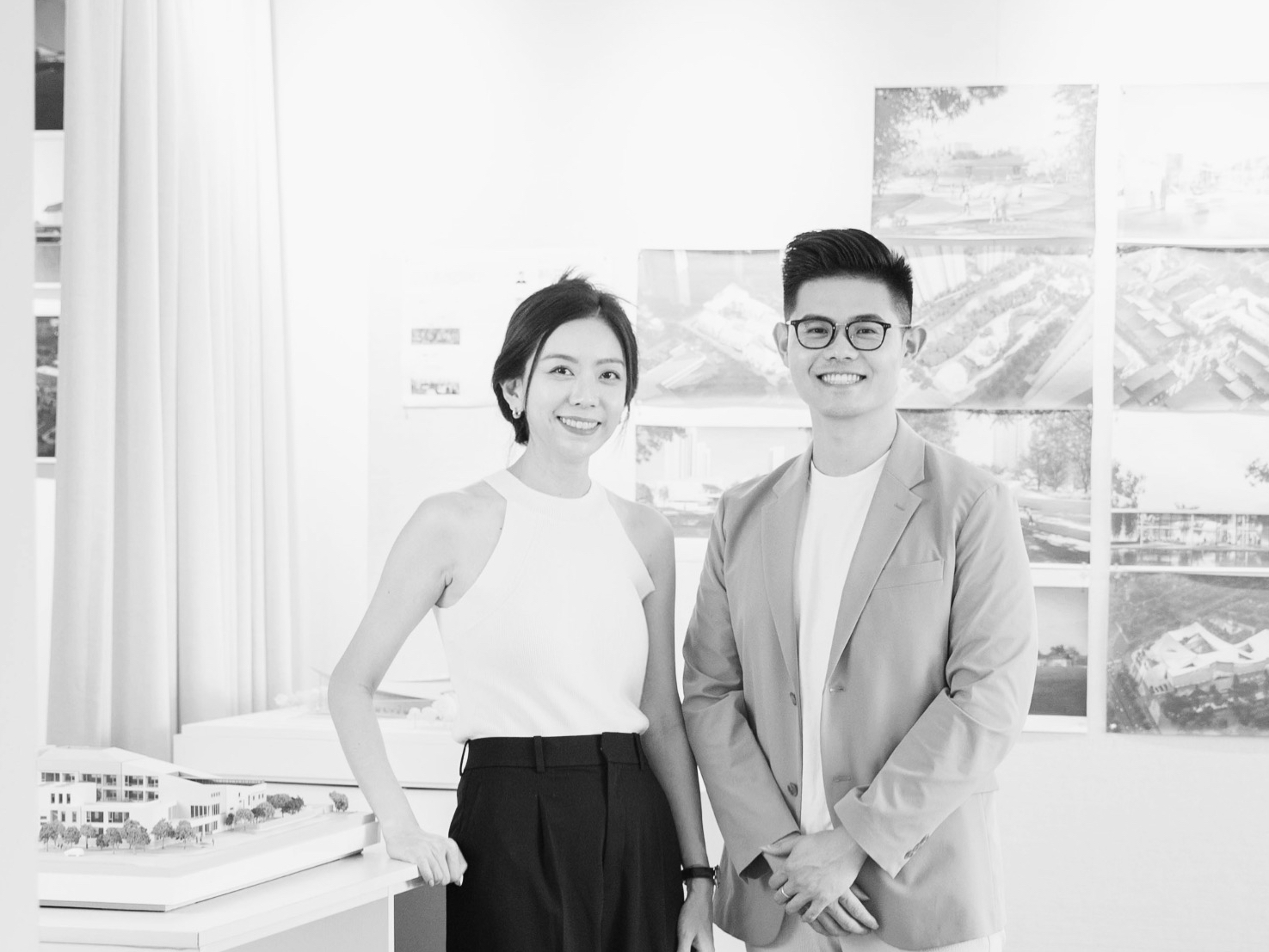
Interview with Ruo Wang and Haiyin Tang of SoBA
in conversation
Ruo Wang and Haiyin Tang are Chinese architects and founders of SoBA, or Soft Build Architects, a Suzhou-based architecture and design practice established in 2021. Working across architecture, landscape architecture, interior design, and urbanism, the studio develops what it describes as a “soft” approach to building, emphasizing adaptability, sensitivity, and attention to people and place. Its work includes The Orchestra Park in Suzhou, completed in 2023, Huachiao Vibrant Sports Park in Kunshan, completed in 2024, and The Bloom Box, completed in 2025, projects that explore the relationship between public space, everyday use, cultural references, and contemporary material strategies. Across different scales, SoBA examines how architecture and landscape can accommodate changing patterns of occupation while establishing connections between local identity and contemporary life. The studio’s work has been featured by Architecture Lab, ArchDaily, METALOCUS, Archello, Designboom, and other international architecture and design publications.

What inspires you?
We are inspired by ordinary places and the way people use them.
A small corner of a city, a lakeside platform, or the space between buildings can become meaningful when people begin to gather, play, or simply stay there. We also draw inspiration from traditional spatial experiences, art, and nature. They remind us that good spaces don't always need to be dramatic—they just need to feel natural and welcoming.
What inspired you to become a designer?
We were drawn to architecture because it combines creativity with real life.
An idea on paper can eventually become a place that people use every day. That process—from concept to construction, and finally seeing people enjoy the space—is what continues to motivate us. Starting our own practice gave us the opportunity to stay involved throughout that entire journey.
How would you describe your design philosophy?
We believe architecture should respond to place, respect cultural memory, and support contemporary life. Rather than pursuing a signature style, we look for simple and thoughtful solutions that feel natural to the site. We hope our work creates spaces that remain meaningful over time, not just visually, but through the way they continue to be used.


What is your favorite project?
One project that is especially meaningful to us is the Bloom Box Café.
It is the smallest project we have, but it represents an idea we care deeply about: how a small intervention can transform the relationship between people and a place.
The project started from an overlooked lakeside platform, and through a lightweight structure and a flexible approach, it created a new social space for the community.
What we love most is that the project is not only a café. When it closes, the space continues to function as part of the public landscape. It becomes less about a building and more about creating a place where different activities can happen naturally.


What is your favorite detail?
Our favorite detail is probably the edge condition in The Orchestra Park.
We are interested in how a boundary can do more than simply separate spaces. In the park, the edges of the skate elements, platforms, and landscape areas are designed to become places where different activities can happen. They can be used by skateboarders, but they can also become seats, gathering points, or places for people to watch and interact.
For us, this small spatial detail represents a larger idea that architecture should not define every action, but create opportunities for different experiences to happen.


Do you have a favorite material?
We don't necessarily have one favorite material, but we are drawn to materials that are versatile, durable, and quietly expressive. Concrete is one example. We appreciate its honesty and ability to create long-lasting public spaces, especially when combined with softer materials such as wood. What interests us most is not the material itself, but the possibilities it creates. A good material should support different experiences, age naturally, and allow people to feel connected to the space.
What is your process for starting a new project?
We always begin by listening—to the site, the client, and the people who will eventually use the space. We study the physical context as well as the cultural and everyday conditions that shape it. These observations become the foundation of the design, helping us create spaces that respond to their environment.
How do you fuel your creativity?
We believe imagination is one of the most important abilities a person can have. It allows us to question the present and imagine possibilities beyond what already exists.
To stay creative, we try not to limit ourselves to architecture. We look at art, nature, technology, history, and everyday experiences. Different fields often provide unexpected perspectives and help us see problems in new ways.
Curiosity is what keeps creativity alive. When we remain curious about the world, we continue to discover new possibilities and find opportunities to create meaningful change.


What inspired your work?
Our work is inspired by the connections between different disciplines and ideas. We believe creativity often comes from looking beyond architecture—from art, culture, technology, nature, and the way society continues to evolve.
Each project gives us an opportunity to explore a different question, whether it is how traditional cultural elements can be reinterpreted, how new materials can create possibilities, or how spaces can adapt to changing needs.
What keeps inspiring us is the continuous process of learning, questioning, and discovering new relationships between different fields.
How did materiality shape your work?
Materiality plays an important role in shaping the character and experience of our projects. We are interested in materials not only for their appearance, but for the possibilities they create.
In Vibrant Sports Park, UHPC allowed us to create a continuous landscape that combines movement, seating, and play. In Bloom Box Café, lightweight materials helped the structure remain flexible and connected to its lakeside setting. In our educational projects, material choices are used to create spaces that feel approachable, safe, and engaging for children.
For us, materials are a bridge between ideas and reality. They help transform concepts into spaces that people can experience, interact with, and make their own over time.


What advice would you give to young architects?
Find what genuinely excites you, and hold onto it. Architecture is a long journey, and it's easy to get caught up in deadlines, technical drawings, and daily tasks. Those things are important, but they shouldn't replace the curiosity that brought you into the profession in the first place. Stay open to inspiration beyond architecture—art, music, literature, nature, travel, or simply observing everyday life. Everything you experience becomes part of your design vocabulary.
Interview by Anton Giuroiu for Architecture Lab · Published