

Zaha Hadid Architects, an architectural practice led by Patrik Schumacher in London, has affirmed its commitment to advancing Zaha Hadid’s legacy and preserving its leadership in cultural and computational design innovation following the founder’s passing. Schumacher, a proponent of parametricism, emphasized that the firm remains a strong address for culturally significant work while maintaining its experimental design ethos. ZHA CEO Mouzhan Majidi echoed the firm’s collective strength, emphasizing the team-based approach Hadid established. As of her death, 36 projects across 21 countries remained in progress, underlining the firm’s international activity. On April 26, ZHA won a competition for the Sberbank Technopark in Moscow, reinforcing its continued relevance. The studio issued a statement reaffirming its intent to move forward with curiosity, integrity, and determination, stating that “Zaha is in the DNA” of the practice and continues to guide its future trajectory.
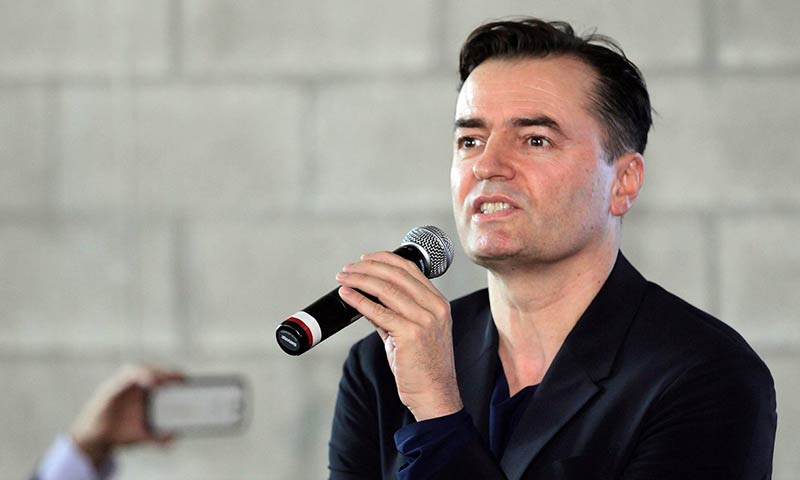
Zaha Hadid Architects (ZHA) has entered a phase of strategic consolidation in response to the absence of its founder, reinforcing its operational model and public leadership. While the studio’s design output remains uninterrupted, the transition marks a shift in visibility, as internal figures move to articulate their roles within a globally recognized architectural brand. The emphasis from within has not been on reinvention but on asserting authorship through the very design logic and institutional culture that Hadid herself developed.
“We want to tell the world that we’re still a viable, vibrant address for major work of cultural importance,” said Patrik Schumacher, senior partner at the firm and long-standing collaborator of Zaha Hadid.
In his interview with The New York Times, Schumacher confirmed that the studio remains committed to both design quality and theoretical research. As a proponent of parametricism, a methodology centered on algorithmic processes and digital material experimentation, he described the office’s intent to continue refining its research programs. He added that one of his goals is “to become more visible as a leader of the field to clients.”
“It’s tough,” he said. “But any star in architecture has been born in the discipline itself, and emerges through schools, competitions, and colleagues.” – Schumacher
Schumacher acknowledged the symbolic complexity of succeeding a figure so closely associated with the firm’s identity. His remarks reflect a generative model of authorship shaped by the professional culture of architecture rather than the inheritance of style.
“We feel very confident that we will carry on and go forward with her vision and her legacy and the experimental research she established in the office,” said ZHA chief executive Mouzhan Majidi. He emphasized that the future of the firm lies in the strength of its team. “It’s not the master architect who dictates and says, ‘Go and deliver it.’ It’s a collective, it’s a team.” That emphasis reinforces ZHA’s long-standing culture of interdisciplinary collaboration and internal design discourse.
“Zaha is in the DNA of Zaha Hadid Architects. She continues to drive and inspire us every day, and we work on as Zaha taught us,” the studio wrote in a formal statement. The office described its working ethos as one rooted in “curiosity, integrity, passion, and determination,” reinforcing the sense that continuity is embedded in the practice’s institutional model.
At the time of Hadid’s passing, the firm was managing 36 active projects across 21 countries, each in varying stages of construction or design development. On April 26, the studio was announced as the winner of the international design competition for the Sberbank Technopark at the Skolkovo Innovation Centre in Moscow. The commission serves as a significant indication of the firm’s ongoing relevance in designing advanced technological and cultural infrastructure.
The leadership now frames ZHA’s future as a continuation of its methodological agenda, rooted in experimental design and global engagement. The office functions not as a preservation of legacy, but as an evolving platform for architectural production, extending the trajectory authored by Hadid through a collective structure led by Schumacher and Majidi.

