

Rolled roofing offers budget-friendly, DIY-ready alternatives to traditional shingle or metal roofs, especially for flat and low-slope roofing systems. Available in materials like EPDM rubber, TPO thermoplastic, rubber, and bitumen, and finishes such as smooth, mineral-grit, or saturated felt, each option delivers different benefits in UV resistance, durability, and weather protection. This guide outlines the major types of rolled roofing based on both material and finish—helping homeowners, contractors, and architects select the most efficient, cost-effective flat-roof solution tailored to their structural and climatic needs.
Basics of Rolled Roofing
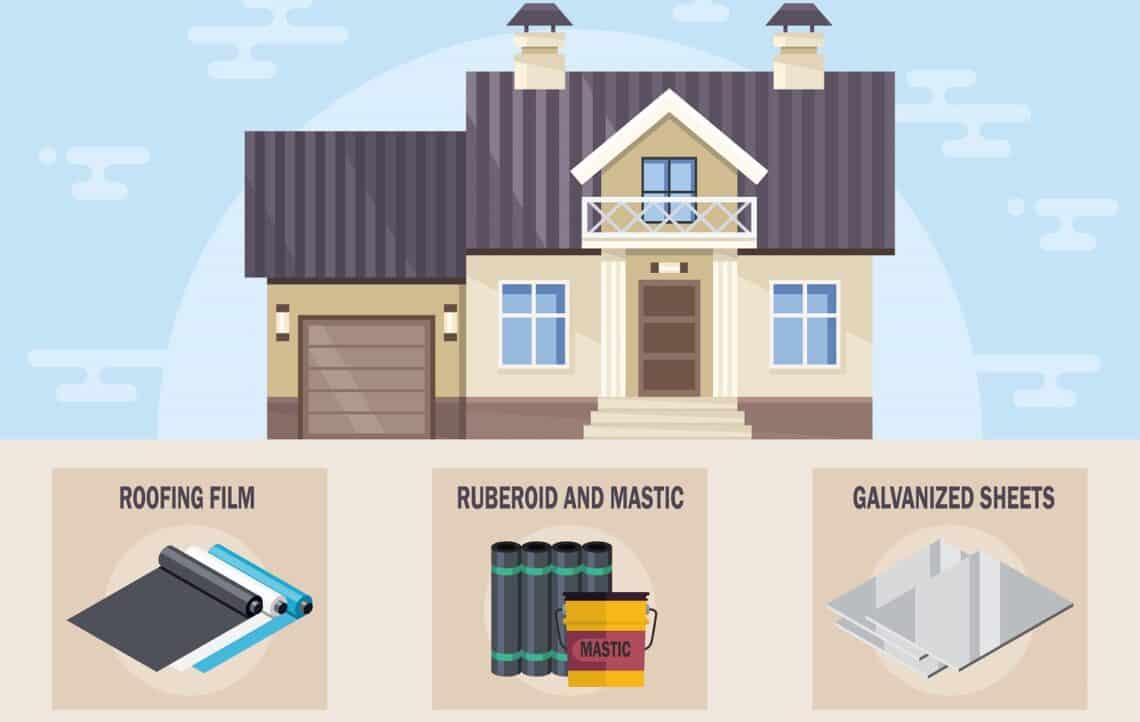
Before diving straight into its types, let’s spend a few minutes knowing a little more about rolled roofing and how it differs from conventional roofing.
Most of you must know that conventional roof tiles are not only costly, but they also require professional help to install. On the other hand, rolled roofing is the perfect budget-friendly alternative to traditional roofing.
This is because it is comparatively cheaper, and most manufacturers use the same material as asphalt shingles to make rolled roof tiles. To be more precise, these include felt, asphalt, and tar. Other notable materials like rubber, TPO, EPDM, Bitumen, and roofing paper are also used in the manufacturing process.
That being said, it is not just the materials of roofing tiles that classify them into different types. As a matter of fact, various styles and finishes are also available. So, when we talk about the types of rolled roofing, it is a diverse and broad concept, which needs a detailed categorization.
On that note, we bring you the different types of rolled roofing based on materials and design. So, let’s take a look, shall we?
Types of Rolled Roofing Based on Materials
As mentioned earlier, there are various types of rolled roofing available in the market today, ranging from 6 to 20 feet wide and a length of up to 100 feet. On that note, let’s take a run-through of the different types of materials used for making rolled roofing tiles.
-
Rubber Rolled Roofing
Being the most common and widely used rolled roofing material, this is undoubtedly the most affordable option on our list. Having said that along with rubber, sawdust, slate dust, and recycled tires are also essential materials required for making these roofing tiles.
You can easily install rubber roofing on flat or low-sloped roofs as overlapping sheets without the help of a professional. Being extremely durable and water-resistant, it is the best option to protect your roof from water damage.
Not just that, but it also benefits those with shingled roofs as it is capable of deflecting and insulating heat, making your home cooler than ever. Furthermore, it serves as the perfect replacement option for rusted and damaged metal roofs. This, in turn, lowers energy costs and improves curb appeal.
In fact, believe it or not, rubber roofs have a lifespan of 20 to 25 years. And with proper maintenance, these may even last for up to 50 years. Impressive, right? That being said, you won’t have to spend too much of your time and effort for this, since it is comparatively easy to clean and maintain.
-
TPO Rolled Roofing
Made using a combination of polypropylene and ethylene-propylene, TPO is one of the most popular types of rolled roofing out there. Although the techniques involved in the manufacturing process may differ, resulting in varying quality, these factors do not compromise its durability.
Now, for those who don’t know, TPO is relatively new in the roofing industry. And it is designed, keeping energy efficiency and cost-effectiveness in mind. Hence, despite not being time-tested as the other types on the list, it stands out to be one of the strongest, most flexible, and water-resistant roofing options out there.
Available mostly in white and grey colors, TPO roofing also ensures heat resistance, preventing the possibility of heat buildup, especially during summer. Not only that, but it is also UV resistant and 100% recyclable, containing no harmful chemicals, making it an environmentally friendly option.
-
EPDM Rolled Roofing
EPDM is basically another kind of rubber rolled roofing, which is also known as a rubber membrane roofing. Made using recyclable rubber-like ethylene propylene diene terpolymer, it is extremely lightweight compared to ordinary rubber roofing. But that does not compromise on durability. It is known to have the longest lifespan compared to all the other roofing types.
Furthermore, unlike TPO, EPDM has been in the roofing industry for quite some time. And therefore, it stands the test of time, lasting for up to 20 years or even more. Apart from longevity, EPDM ensures cost-effectiveness as well, so it is on the lower end of the budget.
Not just that, but being easy to install and lightweight, you can set up EPDM flooring without additional reinforcement. And that’s not all. Thanks to adhesive seams, one need not worry about leaks.
That being said, the only issue with EPDM roofing is its color. Being naturally black, it offers comparatively lower heat resistance than other lighter color rubber roofs. However, to solve this problem, you can order lighter color options at additional costs.
-
Bitumen Rolled Roofing
Coming to the last type of rolled roofing based on materials, Bitumen is a modified form of asphalt roof systems. Designed and sold as rolls, it is a popular choice for low-sloped and flat roofs because of its easy installation.
Apart from this, it can be either self-adhesive or cold-pressed based on the manufacturing process and required application. With the seams of Bitumen roofing sealed together, you don’t have to worry about longevity, provided it is well-maintained. But that being said, it offers a lower lifespan compared to the previous types of roofing systems.
Types of Rolled Roofing Based on Design
We have already gone through the types of rolled roofing based on the materials used for their manufacturing process. So, now it’s time to classify the rolled roofing systems based on design and finishes, be it smooth or mineral.
-
Smooth Finish Rolled Roofing
Like the name suggests, this roofing system features a smooth finish, thanks to its mica or talc coating. Made using saturated organic felt, it offers temporary protection to a building from moisture infiltration. Why? Well, this is because it is not as durable as the other rolled roofings on the list.
That being said, it also finds its use in remodeling or repair work, making it a valuable and essential requirement in construction sites.
-
Saturated Felt Rolled Roofing
The primary material used for making this rolled roofing is roof felt, which is then saturated using asphalt. And having said that, it is mostly used as an underlying product rather than a finishing material. In other words, it supports other products and can be used as a base layer for other types of roofing.
And not just that, but it also acts as a layer of protection between roofing shingles and roof decks. This is because it is highly water-resistant and ensures water drainage in case of extreme weather conditions. Hence, it saves your home from extensive water damage by preventing leakages.
-
Mineral Finish Rolled Roofing
Compared to smooth rolled roofing, mineral finish roofing is more durable. It is made using fiberglass, and then saturated with hot asphalt and coated with mineral granules to ensure the perfect finish.
Being highly versatile and easy to handle, mineral finish roofing is used for both residential and commercial applications. It utilizes cold-press adhesives, mechanical fasteners, or hot-mopped asphalt to serve as a perfect option for new roofing as well as re-roofing. That being said, it finds its use frequently in low-slope applications like porches or carports.
-
Eaves Flashing Rolled Roofing
Last but not least, eaves flashing rolled roofing is primarily made using self-adhesive materials, including artificial polymers and additives with asphalt. And this is why it serves as a better choice for moisture-protective flooring.
Apart from this, eaves flashing restricts water penetration through the roof, especially during the monsoons. In fact, it is also an ideal option to use around eaves or areas subjected to pooling or ice dams.
Conclusion
Rolled roofing, when properly maintained, can last up to 20 years, which is why it is trusted by many homeowners on a tight budget. Apart from affordability, the point that makes it stand out among all roofing systems is its easy installation, regardless of the type of roof it is installed on.
Simply follow the required procedure and apply the rolled roofing to your roof deck, using a particular kind of adhesive. You can also secure it with nails to make it more durable.
With this, we now come to the end of our informative guide to the different types of rolled roofing. And we are sure that this guide covers all there is to know about the topic.
However, feel free to reach out to us if you have any queries, as we are always here to help! On that note, we wish to take your leave. Till next time!
Related Articles
What is a Mansard Roof and What Advantages/ Disadvantages
Is a Roof Made Out of Glass Viable?
What is Modified Bitumen Roof + Pros & Cons
15 Metal Roof Pros and Cons to Consider Today
