

Thermal imaging is the technology that makes temperature visible: a thermal camera reads the infrared radiation every object emits, converts the intensity pattern into a color-mapped image, and turns invisible heat into a picture a person can interpret. Nothing needs to glow, and nothing needs light — a wall, a fuse, a roof, and a human body all radiate infrared continuously as a function of their surface temperature, and the camera photographs that radiation the way an ordinary camera photographs reflected light. The technology now runs building inspection, electrical diagnostics, firefighting, medicine, and wildlife observation from the same physical principle, and this guide covers that principle, the history behind it, the specifications that describe every thermal camera, and the limits — including the famous thing thermal imaging cannot do.
The Physics: Everything Warm Broadcasts
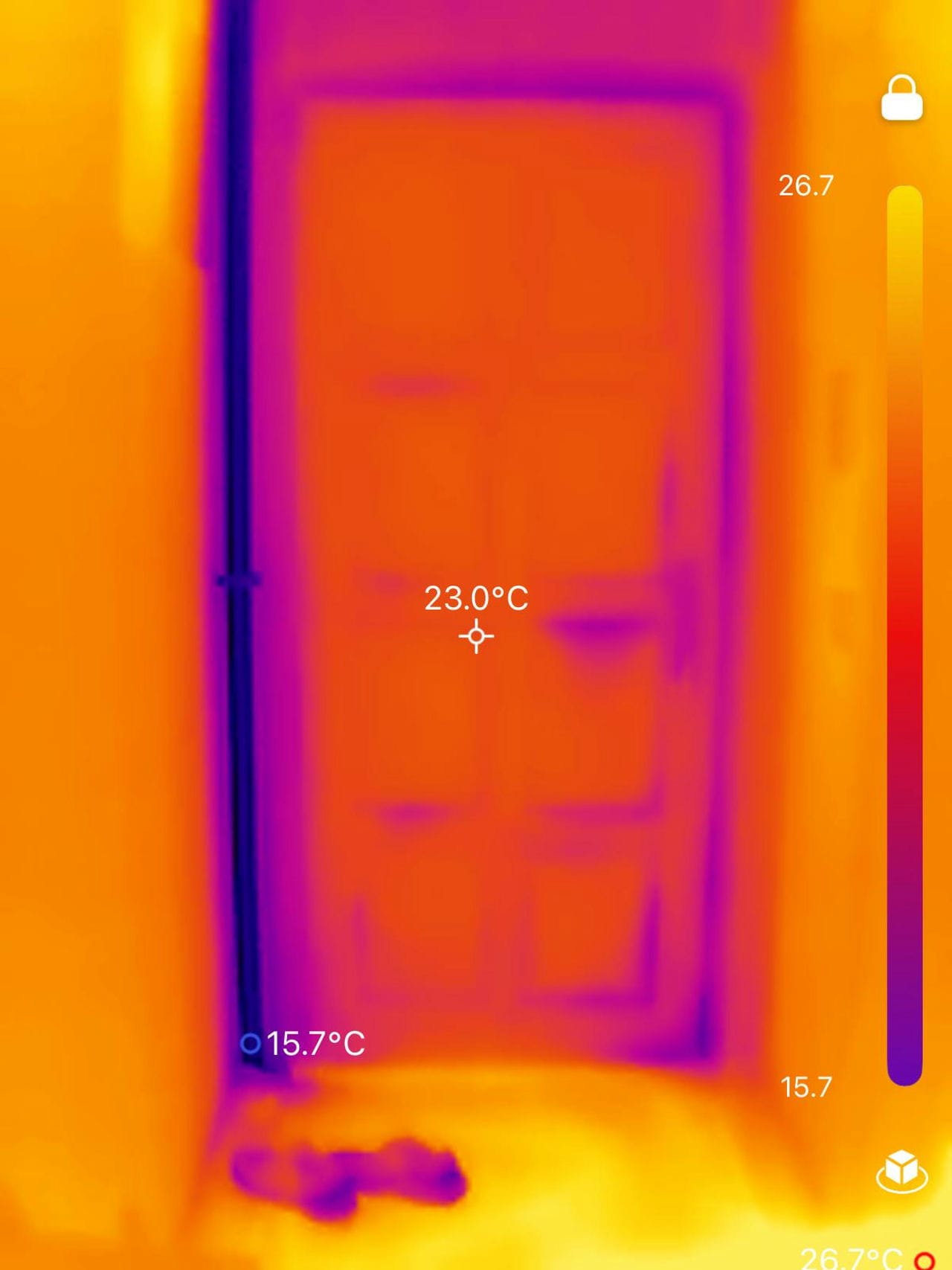
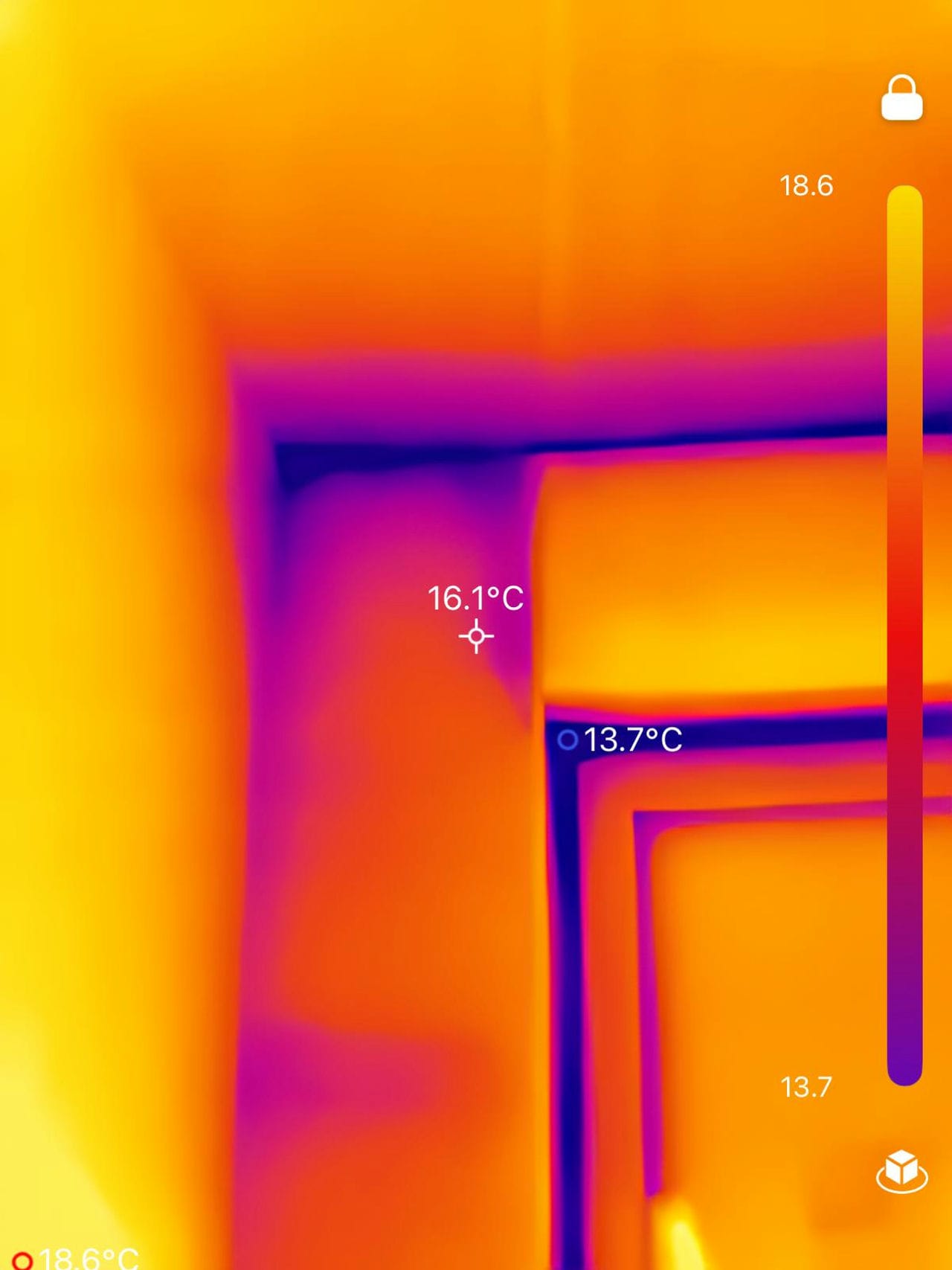
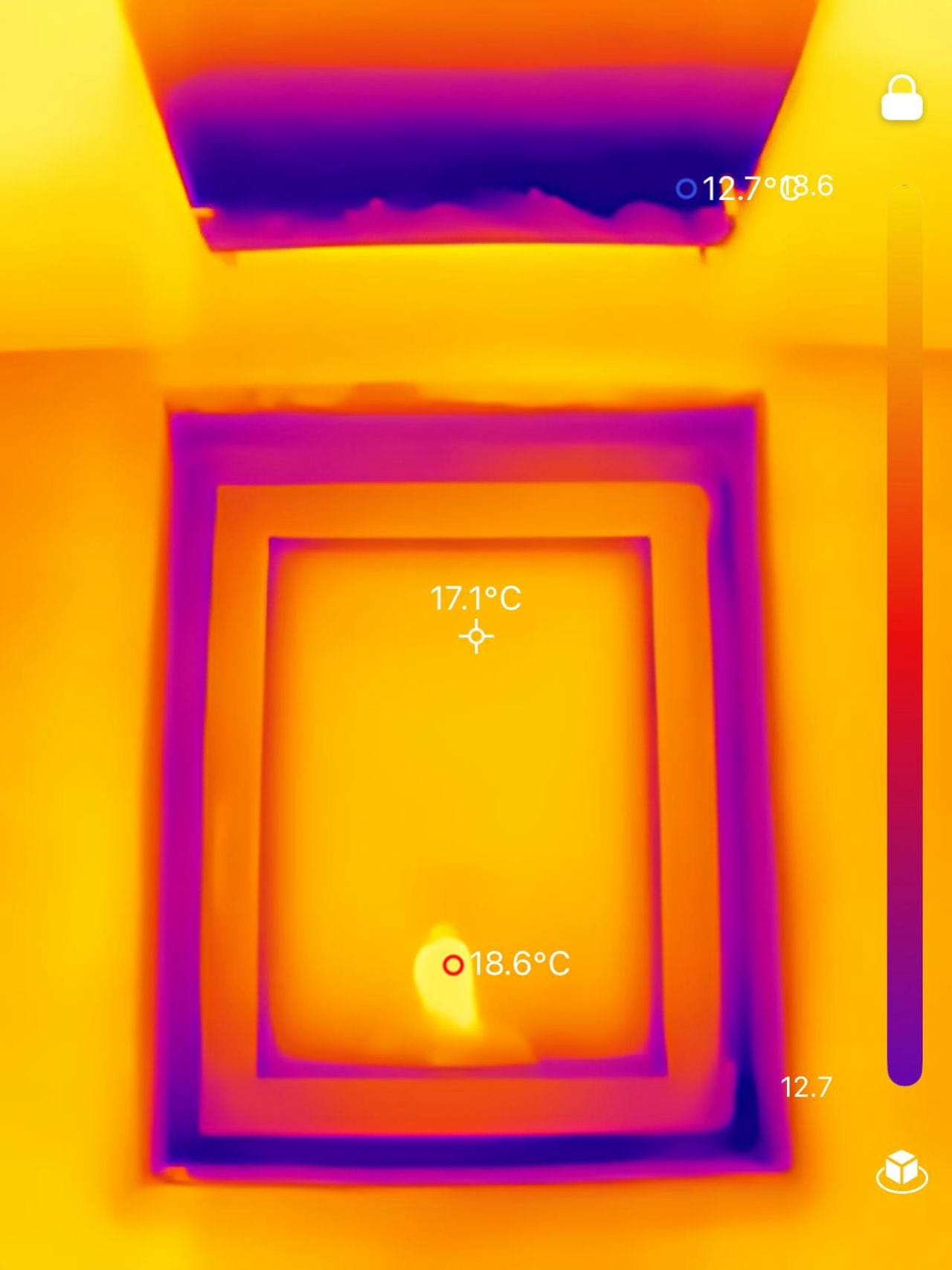
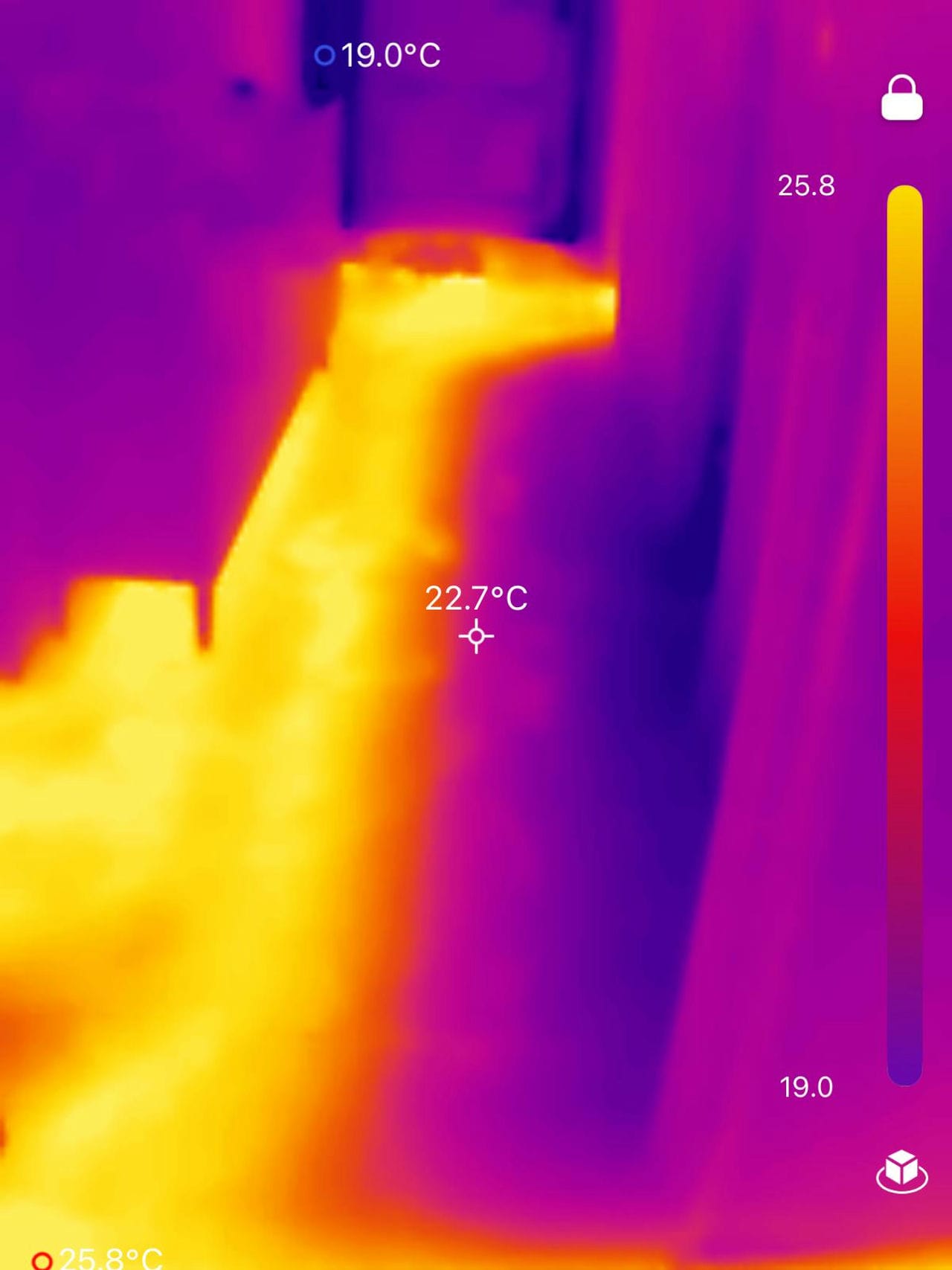
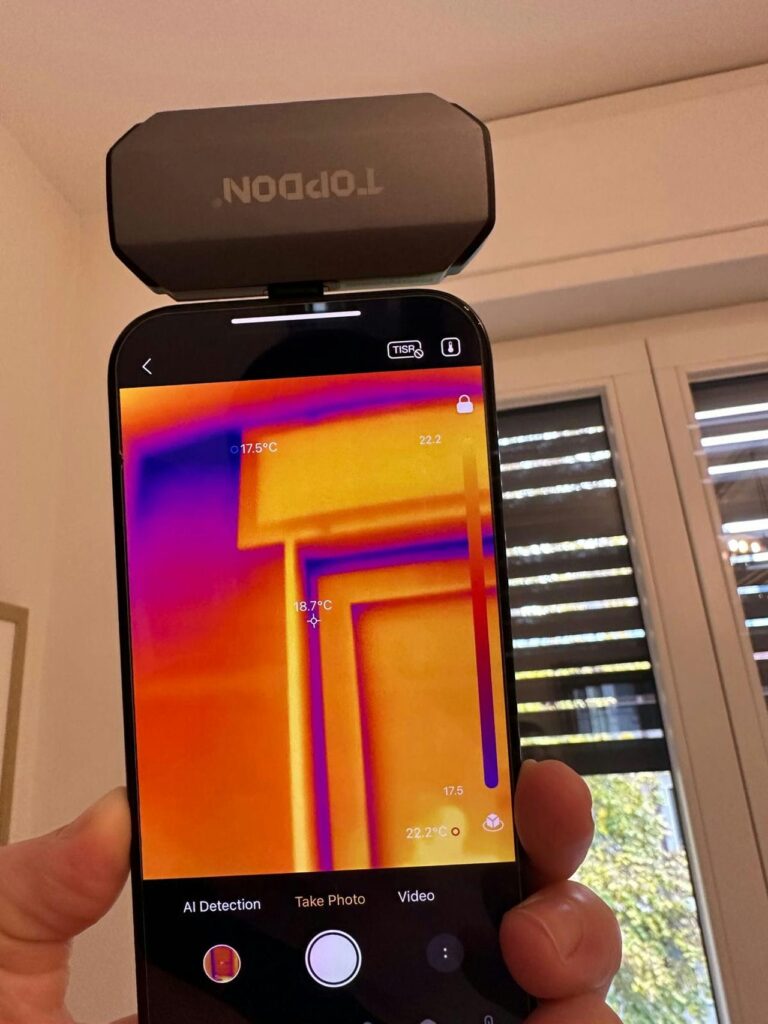
Every object above absolute zero emits electromagnetic radiation, and at everyday temperatures that emission concentrates in the long-wave infrared band — roughly 8 to 14 micrometers in wavelength, far beyond what the eye detects. Warmer surfaces emit more intensely than cooler ones, which means the infrared coming off a scene carries a temperature map of it. A thermal camera collects that radiation through a lens transparent to infrared (ordinary glass is not, which is why thermal optics use materials like germanium), focuses it onto a detector, and assigns colors or gray values to the intensities.
The detector in nearly every commercial thermal camera is an uncooled microbolometer: a grid of microscopic elements, each of which warms slightly as infrared lands on it and changes its electrical resistance in proportion. The camera reads those resistance changes across the whole grid many times per second and renders them as the thermal image. Each element is one pixel — a fact that makes detector resolution the specification everything else depends on.
One property of surfaces complicates the clean physics, and it is the single most important concept in practical thermography: emissivity. Surfaces differ in how efficiently they emit infrared, on a scale from 0 to 1. Most building materials are efficient emitters — red brick around 0.93, concrete 0.92 to 0.95, wood about 0.94, painted surfaces near 0.95, which is why Fluke’s guidance summarizes that most organic, painted, or oxidized surfaces sit close to 0.95. Bare shiny metals are the exception: polished aluminum runs near 0.05 and chrome near 0.10, meaning they emit almost nothing and instead mirror the infrared around them. A thermal camera pointed at a shiny duct reads mostly reflections, and this is why serious cameras carry adjustable emissivity settings — and why interpreting the image is a skill, covered in full in our guide to how to read a thermal imaging camera.
A Short History: From a Prism to a Pocket
The discovery is one of science’s elegant accidents: in 1800, the astronomer William Herschel split sunlight with a prism and measured the temperature of each color with thermometers — and found the highest reading beyond the red end, where no visible light fell. He had discovered infrared radiation by noticing heat where there was nothing to see, which remains a fair one-sentence description of thermal imaging itself.
Turning the discovery into pictures took a century and a half and, as with much sensing technology, military demand: thermal imaging systems matured through mid-twentieth-century defense research, where seeing warm targets through darkness and smoke justified the enormous early costs. The civilian turn came with the uncooled microbolometer, developed from defense research programs and commercialized in the 1990s — a detector needing no cryogenic cooling, which collapsed the cost, size, and complexity of thermal cameras and carried them from military platforms into inspectors’ toolbags, firefighting helmets, and eventually smartphone attachments. The technology’s price history explains its application history: each cost collapse opened a new profession.
Thermal Camera Specifications, Explained
Five specifications describe every thermal camera, and understanding them once serves every purchase and every reading.
Detector resolution is the pixel count of the infrared sensor itself — typical tiers run from entry-level around 80×60 through 160×120, mid-range at 320×240, and professional at 640×480 and above — and it is distinct from the display screen’s resolution, which merely shows the detector’s output. Thermal sensitivity (NETD), stated in millikelvin, is the smallest temperature difference the detector separates from its own noise: around 100 mK at entry level, 50 mK in the mid-range, 30 mK and below in professional units, with subtle work like moisture tracing generally wanting better than 60 mK. Lower is better. Accuracy is a different property from sensitivity — the industry convention is ±2 °C or ±2% of the reading, whichever is greater, which is precise enough for finding problems and too coarse for laboratory measurement; what degrades it in practice is the subject of our guide to how accurate thermal imaging cameras are. Field of view sets how much scene fits the frame at a distance, wide lenses suiting interiors and narrow ones suiting distant targets. Refresh rate clusters at 9 Hz across the market for a regulatory reason — export rules cap faster uncooled imagers — with 25 to 60 Hz units panning more smoothly for video work.
Two more terms matter at the professional tier: radiometric cameras store per-pixel temperature data in the image file, so measurements can be re-analyzed after the survey, while non-radiometric ones save only the picture; and spot ratio governs how far away a camera can accurately measure a target of a given size. The purchase-side application of all of this — which tiers fit which work, at what price — is the job of our roundup of the best thermal imaging cameras.
Thermal Imaging vs. Night Vision
The two technologies get conflated because both defeat darkness, and they share little else. Night vision amplifies light: it gathers the faint visible and near-infrared illumination present in a scene — starlight, or the beam of an infrared illuminator — and intensifies it into a viewable image. It shows what things look like, needs at least some light or an active illuminator, and measures nothing. Thermal imaging detects emitted heat: it needs no light of any kind, works in absolute darkness, through smoke and light fog, and reports temperatures — but it shows heat patterns, not appearances, so it cannot read a license plate or recognize a face the way an intensified image can. The practical division: night vision identifies, thermal imaging detects and measures. Devices sold as “infrared cameras” belong to one family or the other by this test — if it reports a temperature, it is thermal.
What Thermal Imaging Cannot Do
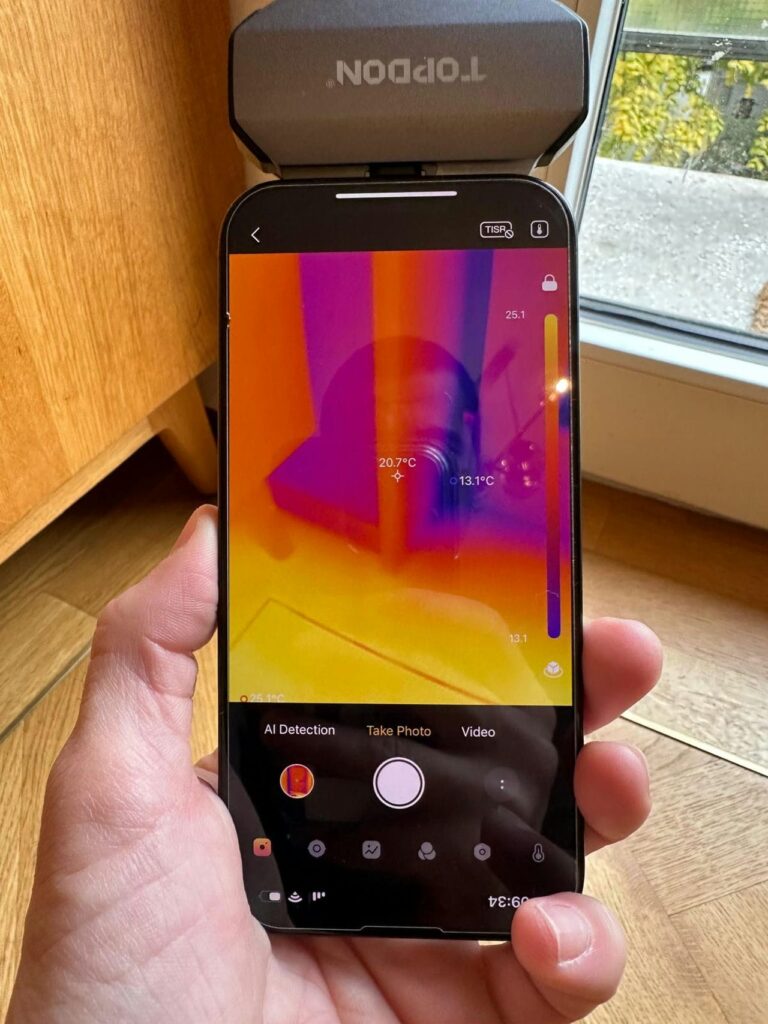
The myths deserve plain answers, because the marketing rarely provides them. Thermal cameras cannot see through walls — or concrete, wood, or clothing in any meaningful sense. A camera reads the surface temperature of the first opaque thing in front of it; a warm pipe inside a wall becomes visible only because it warms the wall’s surface into a telltale pattern. The inference is powerful and it is the entire basis of building diagnostics, but it is surface reading, never penetration. Thermal cameras also cannot see through glass — ordinary glass is opaque to long-wave infrared and behaves as a partial mirror, which is why a thermal image of a window shows a ghostly reflection of the operator rather than the room beyond. And thermal imaging is entirely passive: the camera emits nothing and irradiates nothing, making it as safe to use, and to be seen by, as any photograph.
The operational side of the technology — survey conditions, camera workflow, and getting readings worth trusting — continues in our guide to how to use a thermal imaging camera.
Frequently Asked Questions
What is thermal tomography?
An extension of thermal imaging into depth — where a thermal camera reads surface temperature, thermal tomography techniques actively pulse heat into a material and analyze the time-resolved surface response to infer structure beneath it, layer by layer. It belongs to research and industrial nondestructive testing rather than everyday inspection, and the handheld cameras this guide covers do not perform it; they read surfaces, which building diagnostics turns into inference the way our reading guide describes.
When was thermal imaging invented?
Infrared radiation was discovered in 1800, when William Herschel measured heat beyond the red end of sunlight split through a prism. Imaging that radiation matured through mid-twentieth-century military research, and the modern era began with the uncooled microbolometer detector, commercialized in the 1990s, which made thermal cameras affordable outside defense budgets.
Can thermal cameras see through walls?
No. A thermal camera reads the surface temperature of the first opaque object in view; anything behind a wall registers only if it changes the wall’s surface temperature into a visible pattern. That inference finds pipes, studs, insulation gaps, and moisture — but it is surface reading, not X-ray vision.
Is thermal imaging safe?
Completely — thermal cameras are passive instruments that emit no radiation of any kind. They receive the infrared that objects and people already give off continuously, the same way a camera receives light or an ear receives sound.
What wavelengths does thermal imaging use?
Commercial thermal cameras operate in the long-wave infrared band, roughly 8 to 14 micrometers — the range where objects at everyday temperatures emit most strongly. Visible light, for comparison, spans about 0.4 to 0.7 micrometers.
What is the difference between thermal imaging and night vision?
Night vision amplifies existing light into a visible picture and identifies what things look like; thermal imaging detects emitted heat, needs no light at all, and measures temperatures. If a device reports a temperature reading, it is a thermal camera.
Resources
- Fluke Process Instruments — Emissivity Fundamentals and Material Guidance
- Teledyne FLIR — Thermal Imaging Technology Documentation
- ThermoWorks — Emissivity Reference Tables
- Manufacturer specification sheets (NETD, accuracy, and spectral-range conventions across current handheld thermal cameras)
- Architecture Lab — How to Read a Thermal Imaging Camera
- Architecture Lab — How to Use a Thermal Imaging Camera
- Architecture Lab — How Accurate Are Thermal Imaging Cameras
- Architecture Lab — Best Thermal Imaging Cameras

