

In residential architecture, cellars, basements, and crawl spaces are the three primary below-grade structures that define how a home connects to the ground.
Each type serves distinct purposes in storage, structural support, insulation, and accessibility.
Understanding these differences helps architects, builders, and homeowners make informed choices about durability, energy efficiency, and long-term maintenance.
Quick Comparison
| Feature | Cellar | Basement | Crawl Space |
|---|---|---|---|
| Depth | Fully underground | Partially or fully underground | 1 – 3 ft below floor |
| Main Use | Full stair/walk-in | Living space + utilities | Food/wine storage |
| Conditioning | Naturally cool | Conditioned or semi-conditioned | Unconditioned unless encapsulated |
| Accessibility | Ladder or narrow stair | High without a vapor barrier | Limited crawl access |
| Moisture Risk | High if unsealed | Moderate (requires drainage) | High without vapor barrier |
| Cost | Low–Medium | Highest | Lowest |
| Best Suited For | Food preservation | Added living or mechanical space | Housing, plumbing, ducts, wiring |

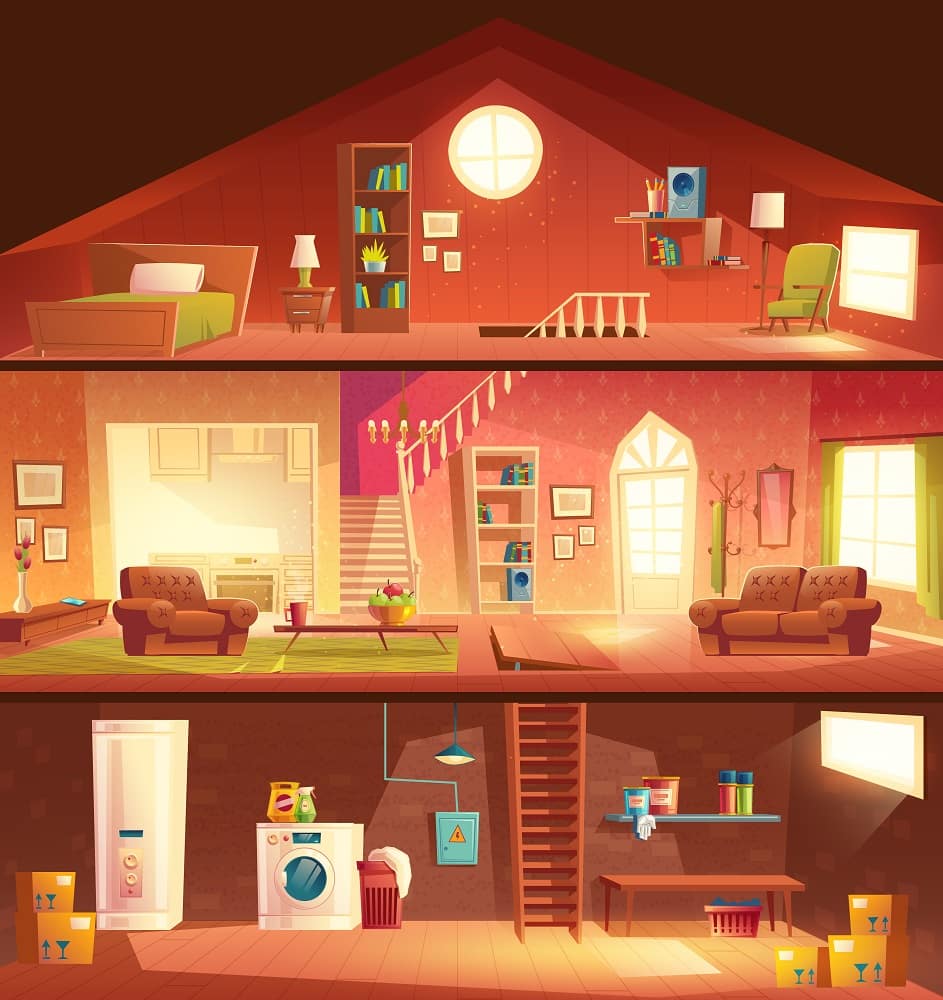

1 · Cellars
A cellar is a small underground chamber used primarily for storage and temperature stability.
Historically, civilizations used them for wine and food preservation long before modern refrigeration.
Their constant, cool environment slows spoilage and protects perishables.
Construction
- Located below grade, often under porches or basements.
- Should face north, away from sunlight.
- Minimum of 60 cm (2 ft) of soil overhead for insulation.
- Constructed with masonry or concrete to resist moisture, gravel floors improve humidity control.
Advantages
- Naturally cool and stable climate for food and wine.
- No mechanical energy required for cooling.
- It can be built beneath existing structures or in yards.
Disadvantages
- Prone to dampness, mold, and vermin without ventilation.
- Unsuitable for habitable use.
- Storage gases from certain produce can spoil other items.
2 · Basements
A basement is a full or partial underground floor forming part of the main structure.
It can serve as a utility space, an additional living area, or both.
Modern basements may be finished, insulated, and connected to home HVAC systems.
Construction & Uses
Typically built from poured concrete or block walls, basements anchor the structure above.
They often house water heaters, HVAC units, and laundry facilities, and can be adapted into guest rooms, home gyms, or studios.
Advantages
- Expands living or recreational space without extending the building footprint.
- Acts as a storm shelter in severe weather.
- Adds usable square footage, increasing property value.
Disadvantages
- Requires effective waterproofing and sump drainage.
- Vulnerable to flooding in high-water-table regions.
- Not suitable in areas with unstable soils or seismic risk.
3 · Crawl Spaces
A crawl space is a shallow, unconditioned gap (about 30–90 cm / 1–3 ft high) between the ground and the first floor.
It replaces full basements when soils are poor or excavation budgets are limited.
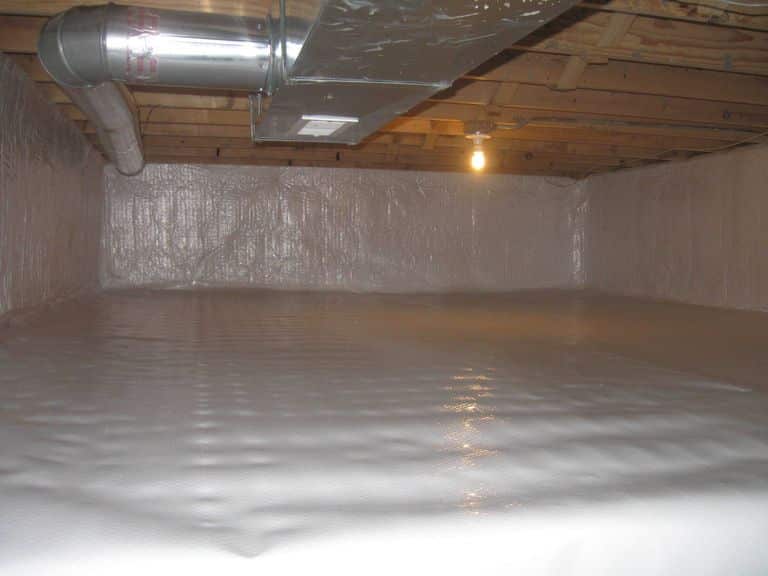
Construction & Features
- Perimeter walls of concrete block support the house above.
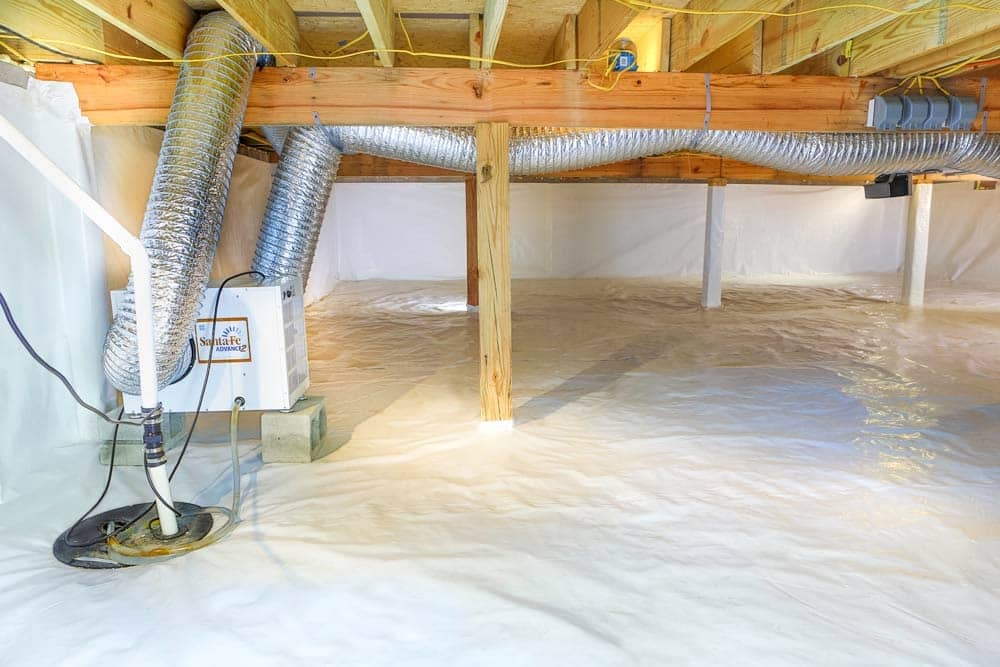
- Houses plumbing, wiring, and ductwork for easy maintenance.
- May use a dirt floor or a thin concrete slab.
Advantages
- Low construction cost and minimal excavation.
- Simplifies access for repairs and retrofits.
- Performs better than basements in flood-prone zones.
Disadvantages
- High moisture and pest risk without encapsulation (sealed vapor barrier + dehumidifier).
- Limited or no storage capacity.
- Poor insulation unless properly sealed.
Regional Suitability
| Climate / Region | Best Option | Rationale |
|---|---|---|
| Cold / Dry | Basement | Adds conditioned space and retains heat efficiently. |
| Hot / Dry | Crawl Space or Slab | Reduces heat gain, easy to ventilate. |
| Humid / Wet | Encapsulated Crawl Space | Prevents flooding and moisture intrusion. |
| Temperate / Mild | Basement or Cellar | Flexible for storage and living. |
| High Water Table / Coastal | Crawl Space | Avoids hydrostatic pressure and drainage issues. |
Regional conditions—particularly frost depth, groundwater level, and soil stability—determine which substructure performs best.
Environmental Considerations
Below-grade structures help regulate interior temperatures naturally, reducing heating and cooling loads.
Proper insulation, vapor barriers, and drainage not only prevent mold and structural damage but also improve indoor air quality.
Among all options, basements provide the greatest potential for energy-efficient retrofits, while crawl spaces minimize excavation and material impact.
Maintenance & Moisture Control
| Structure | Key Issue | Recommended Action |
|---|---|---|
| Cellar | Moisture and vermin | Add ventilation, mesh vents, and sealed containers |
| Basement | Water intrusion | Full encapsulation with a plastic barrier and dehumidifier |
| Crawl Space | Moisture and gas seepage | Full encapsulation with a plastic barrier and a dehumidifier |
Regular inspection and moisture management extend the structural lifespan of both subgrade and superstructure elements.
Choosing the Right Option
| Situation | Recommended Substructure | Reason |
|---|---|---|
| Food or wine storage | Cellar | Naturally cool, energy-efficient preservation |
| Expanded living or recreation area | Basement | Habitable space with mechanical systems |
| Flood-prone or unstable soil | Crawl Space | Elevated foundation minimizes risk |
| Energy-efficient retrofit | Basement | High insulation potential |
| Budget-conscious build | Crawl Space | Lowest excavation and material costs |
Cellars, Basements, and Crawl Spaces FAQs
Are cellars and basements the same thing?
No. A cellar is an unconditioned underground storage room; a basement is deeper and often finished for living or utilities.
Can a crawl space be turned into a basement?
Yes, but only through full excavation and new foundation walls—an expensive, structural-level renovation.
Which option adds the most resale value?
A finished basement expands usable square footage and provides flexible living or rental potential.
Which foundation type needs the least maintenance?
An encapsulated crawl space seals control moisture and pests while protecting utility systems.
Which option is most energy-efficient?
A sealed, insulated basement typically performs best; unconditioned cellars or open crawl spaces lose more heat.
What climates are best for each?
Basements suit colder regions; crawl spaces work in humid or flood-prone zones; cellars perform well in stable, temperate soils.
Conclusion
Cellars, basements, and crawl spaces each meet specific design and environmental needs.
Cellars preserve food naturally; basements expand livable area; crawl spaces provide practical, low-cost foundations in wet or unstable soils.
Choosing the right type depends on climate, soil, budget, and function—but proper insulation and moisture control are critical for all.
With informed design and regular upkeep, any of these substructures can improve a home’s longevity, comfort, and efficiency.
Related Articles
14 Best Basement Flooring Options Right Now
50 Basement Bar Ideas To Rock Right Now


Very informative, thank you