home/interviews/an schoenmaekers
Interview with An Schoenmaekers of SBE
in conversation
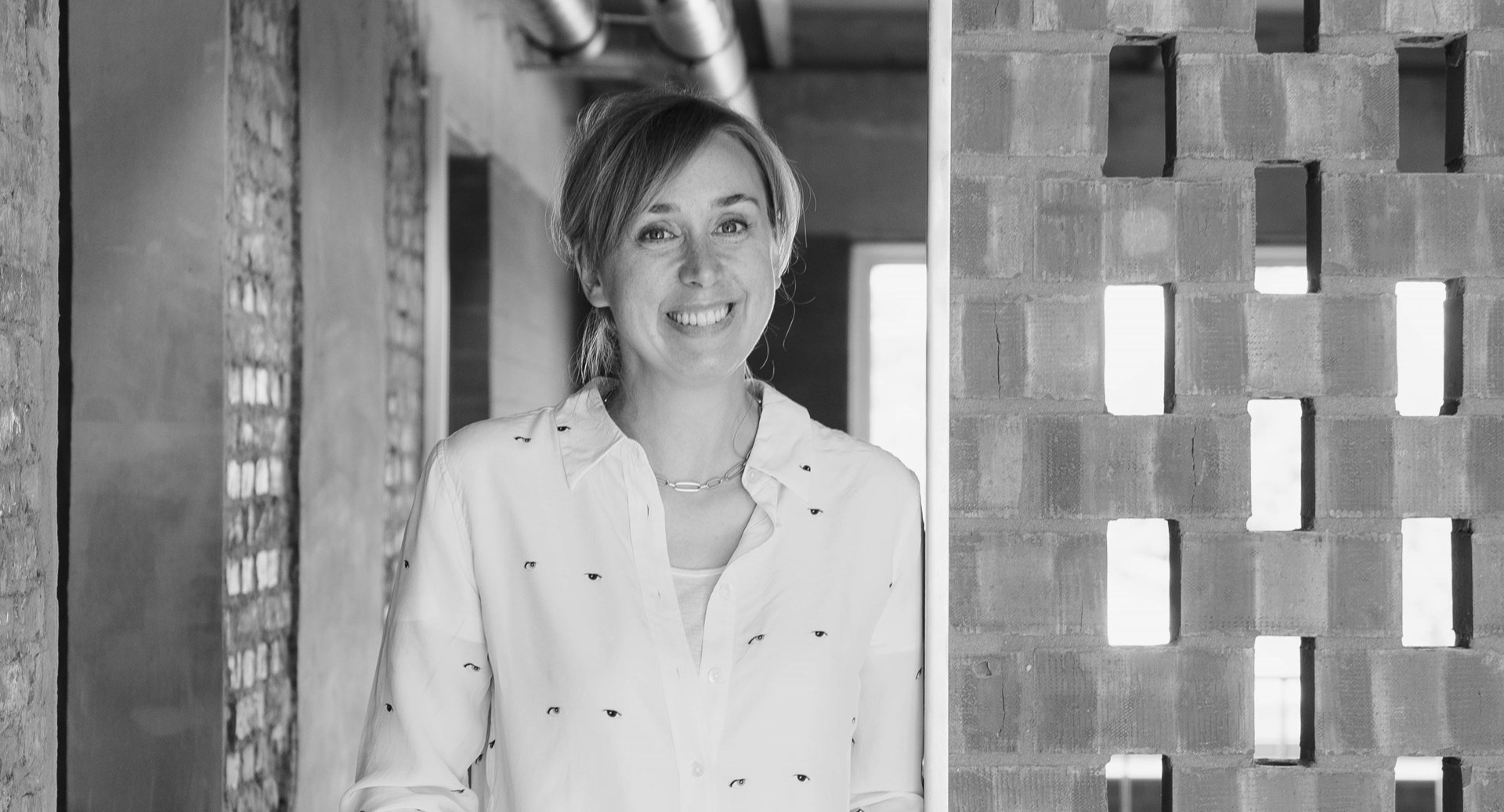
An Schoenmaekers is a Belgian architect specialising in bridge and infrastructure design, with a particular interest in how these structures shape landscapes and public space. At SBE, an interdisciplinary design and engineering practice based in Belgium, she founded and leads the Urbanism & Design department. Her work brings architecture and engineering together in projects that respond closely to their surroundings. Rather than treating infrastructure as a purely technical necessity, Schoenmaekers sees it as an opportunity to connect places, people, and disciplines. Through restrained and context-driven design, she seeks to strengthen the relationship between infrastructure, landscape, and public life, working closely with engineers, clients, public authorities, and local communities throughout the process. Her projects include the Vlasbrug bridge in Wielsbeke, the Lysbrug bridge in Ingelmunster, the Gerardabrug bridge in Sint-Niklaas, and the Look Out Point in Vresse-sur-Semois. Her work has been featured by Architecture Lab, ArchDaily, Archello, Divisare, and other international architecture and design publications.

What inspires you?
I design bridges. I design bridges physically. I design them within the design team. And the third is perhaps the most important. I design them together with society, because there is nothing so much more beautiful than that. The moment you deliver that bridge, that society claims it and also says “this is my bridge”.
What inspired you to become an architect?
The reason why I think this is the best job in the world, being a bridge designer: On the one hand, it is wonderful to create something tangible, from nothing but a shared idea, and then, after so many years, to see it become reality and improve people’s lives. It is a very beautiful moment when something is realized, delivered, and then to see a community truly embrace it and make it their own. At that point, it feels like your bridge, but it also belongs to so many people. And that is a wonderful privilege of being an architect. And you get to experience that feeling again and again.
How would you describe your design philosophy?
I would describe my style as no nonsense, something that can still be appreciated after fifty years. And more importantly, a style that ensures that what is already there, is enhanced and given extra meaning, rather than adding a sculptural object that everything else then has to revolve around. I find it more meaningful to add to an existing context in a way that elevates the whole, rather than focusing on the sculptural object itself.
What does your design process look like?
The challenges we face as architects today require a holistic approach. We are expected to reconcile so many different demands within such a limited space. There are so many stakeholders involved, with so many different perspectives, that you realise siloed thinking is no longer enough. Rather than starting with your own expertise, putting forward your ideas and wanting them to be developed, you begin to think the other way around. How can I meet your needs without compromising who I am? That requires a way of thinking in which you constantly question your own assumptions. That requires a solid level of expertise. What is merely ballast? And what is truly essential?
How would you define your role as an architect?
My guiding principle throughout the design process as an architect is often: less is more.
In an ideal scenario, the same applies to every discipline. Just focus on what really matters. Strip away everything unnecessary and focus on what truly matters. Then bring those essential pieces together. The result is a simple, clear, and coherent story. And there is great beauty in that simplicity.
What makes architecture beautiful to you?
My view of beauty has very little to do with aesthetics. I believe that when something works and feels completely natural, it becomes beautiful almost automatically. Then beauty is no longer a matter of personal taste. When something feels natural and deeply rooted in its surroundings as though it had always been there, that is when it becomes truly beautiful.
What role should the client play in the architectural process?
The dialogue with your client is, in many ways, no different from collaborating with any other discipline within the project team. It is an extra ally within the design process.
What is your favourite project?
For me, the Vlasbrug bridge is one of the most important projects so far. Because that bridge reflects what I stand for: I truly distilled the design down to its essence. What is the minimum intervention to give that environment renewed value, while still creating striking architecture.
What inspired the Look Out Point?
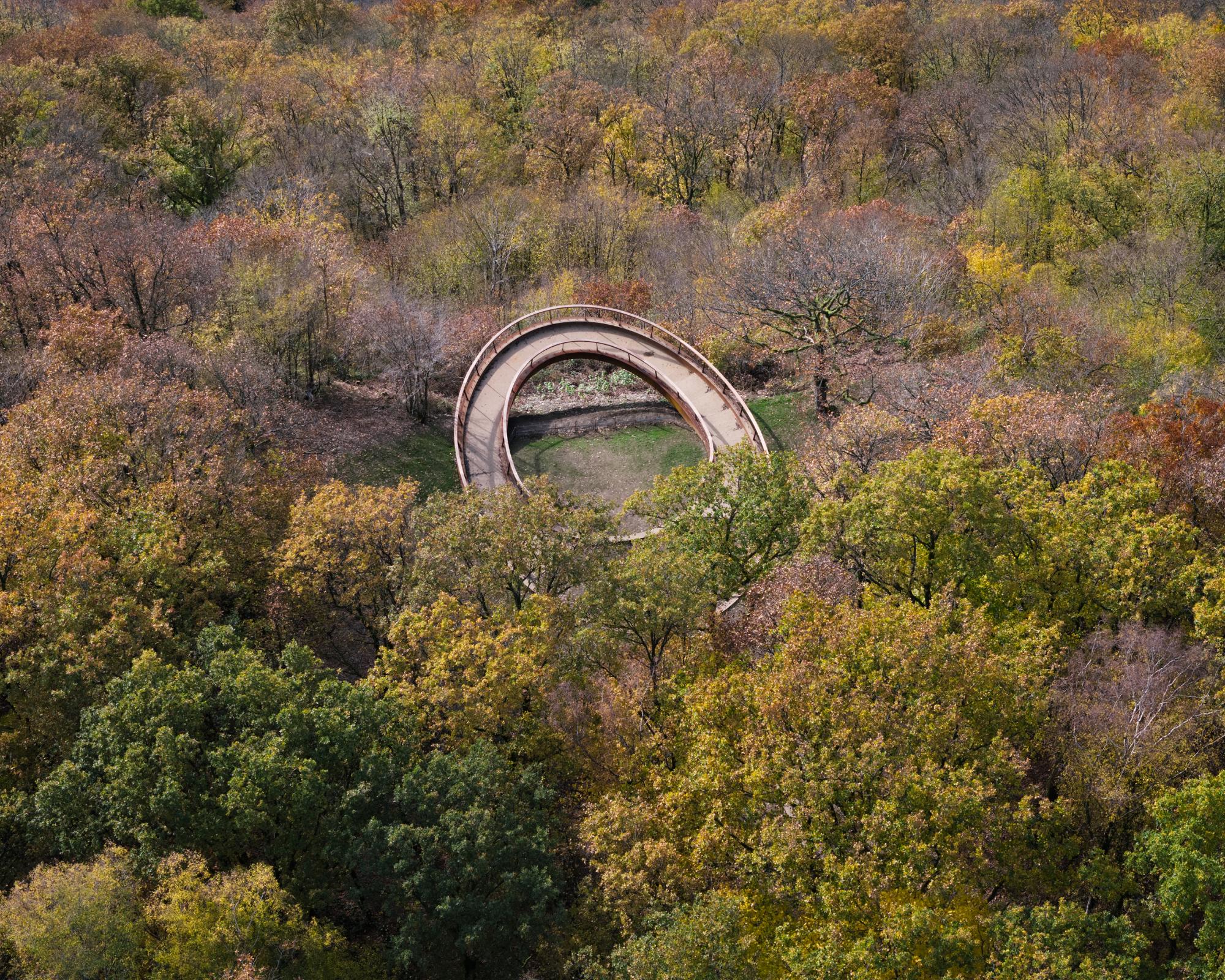
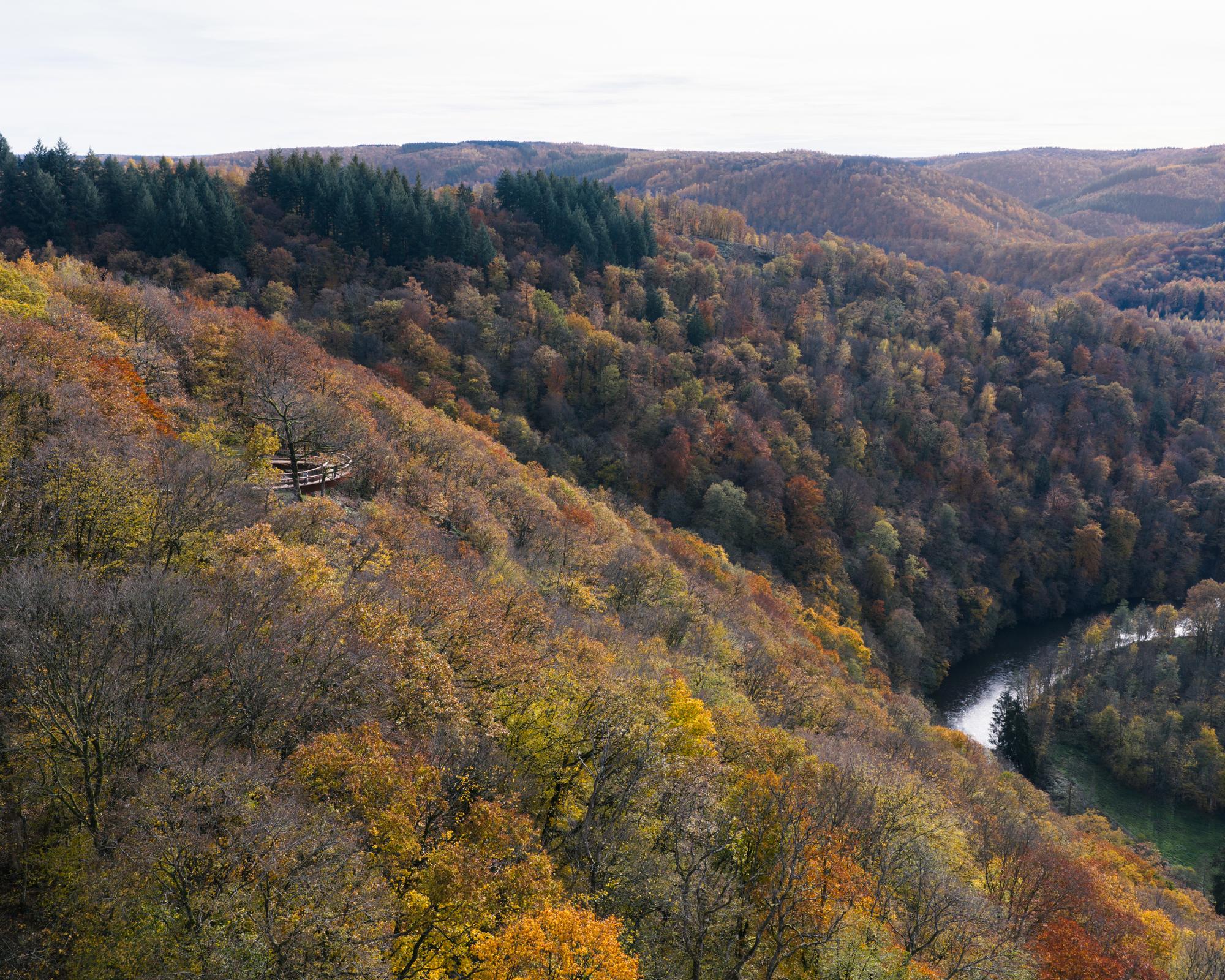
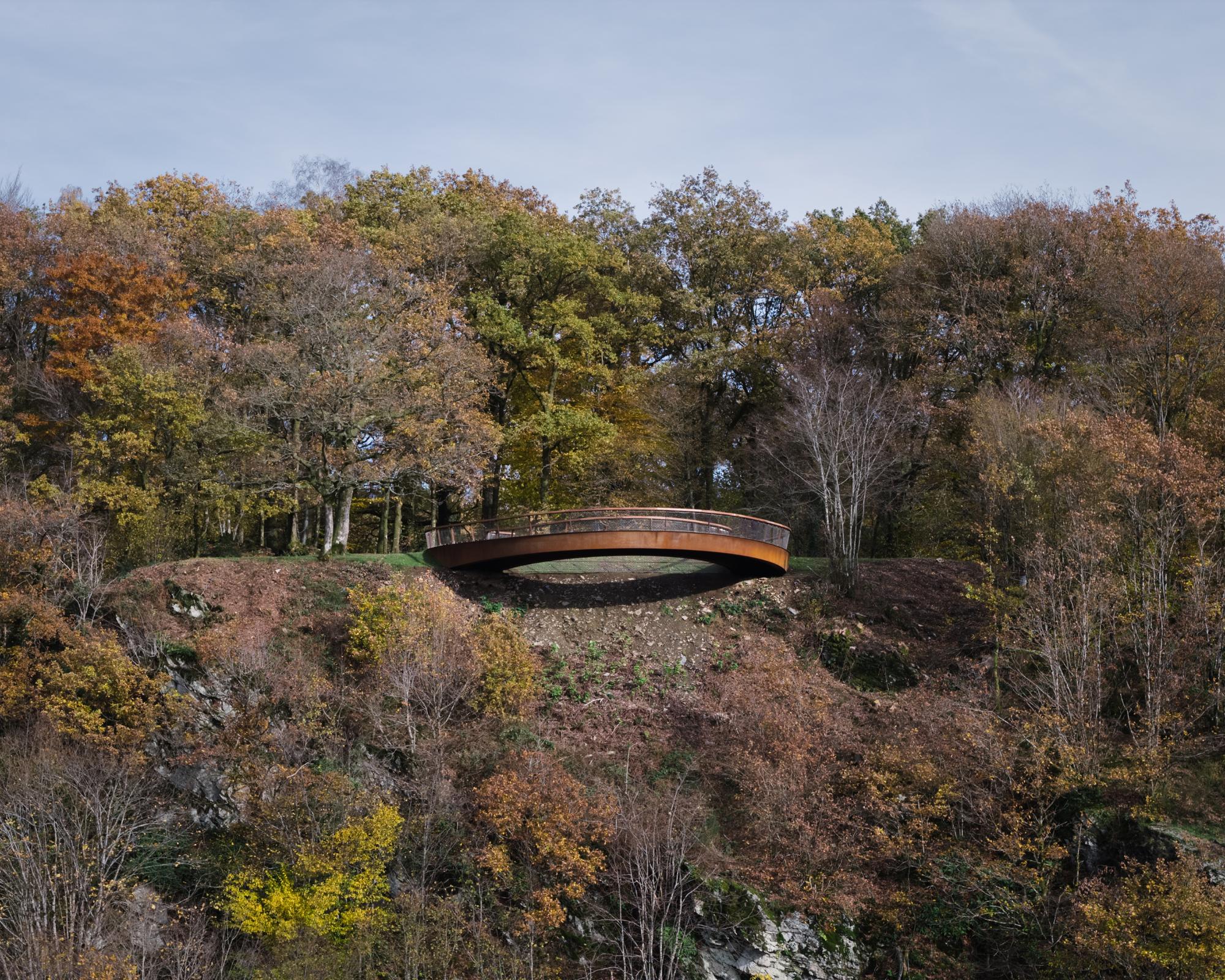
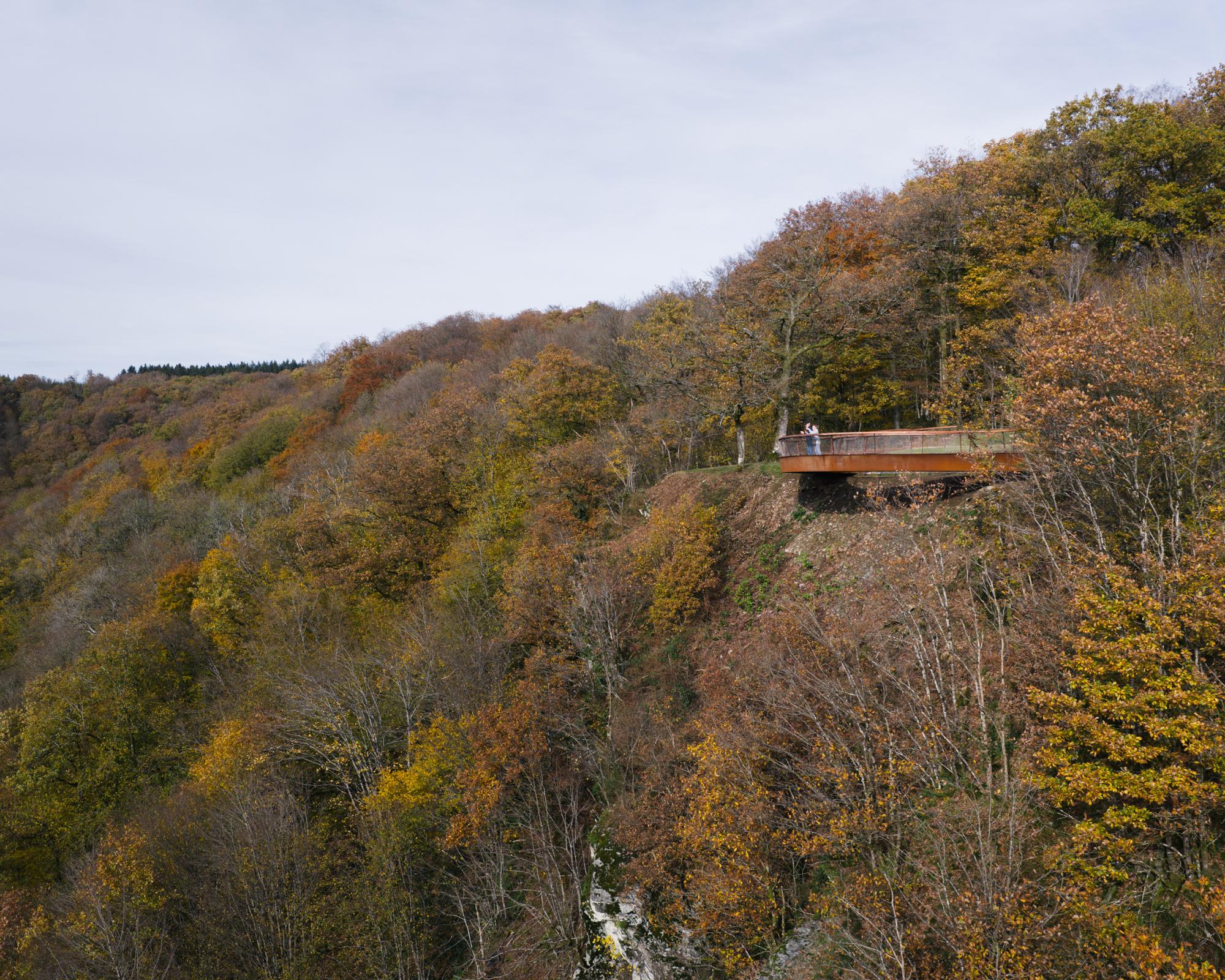
One of the projects we recently completed is the Look Out Point Vresse-Sur-Semois. It lies on the border between Belgium and France. Initially, there was a request to design a tower rising upwards. We did the opposite and created a viewpoint that descends into the landscape. That place is magnificent. I believe there is one important rule every architect should respect: Nature is the greatest architect in the world. As human beings, we shouldn’t try to surpass it. What we can do is use a limited number of interventions to enhance certain places, or to create a platform that allows more people to experience their beauty. That’s exactly what we did in Vresse-Sur-Semois. By introducing nothing more than a continuous staircase overlooking the valley, we invite people to experience the grandeur of nature even more intensely.

How do you fuel your creativity?
My family is what fuels my creativity. A stable environment is very important to me because I believe creativity can only truly flourish when you feel at peace.
What advice would you give to the young architects?
My advice to students and fellow architects would be: look beyond your own fence and engage with people who think differently. It takes energy and commitment, and it will not always be easy. But what you’ll learn from that difficult first conversation can lead to a far more interesting design than simply surrounding yourself with like-minded people. Otherwise, you are only working from a single perspective. Just imagine what might emerge if you brought three completely different perspectives together.
Interview by Anton Giuroiu for Architecture Lab · Published