home/interviews/maja uzarowicz
Interview with Maja Uzarowicz of Studio Uzarowicz
in conversation
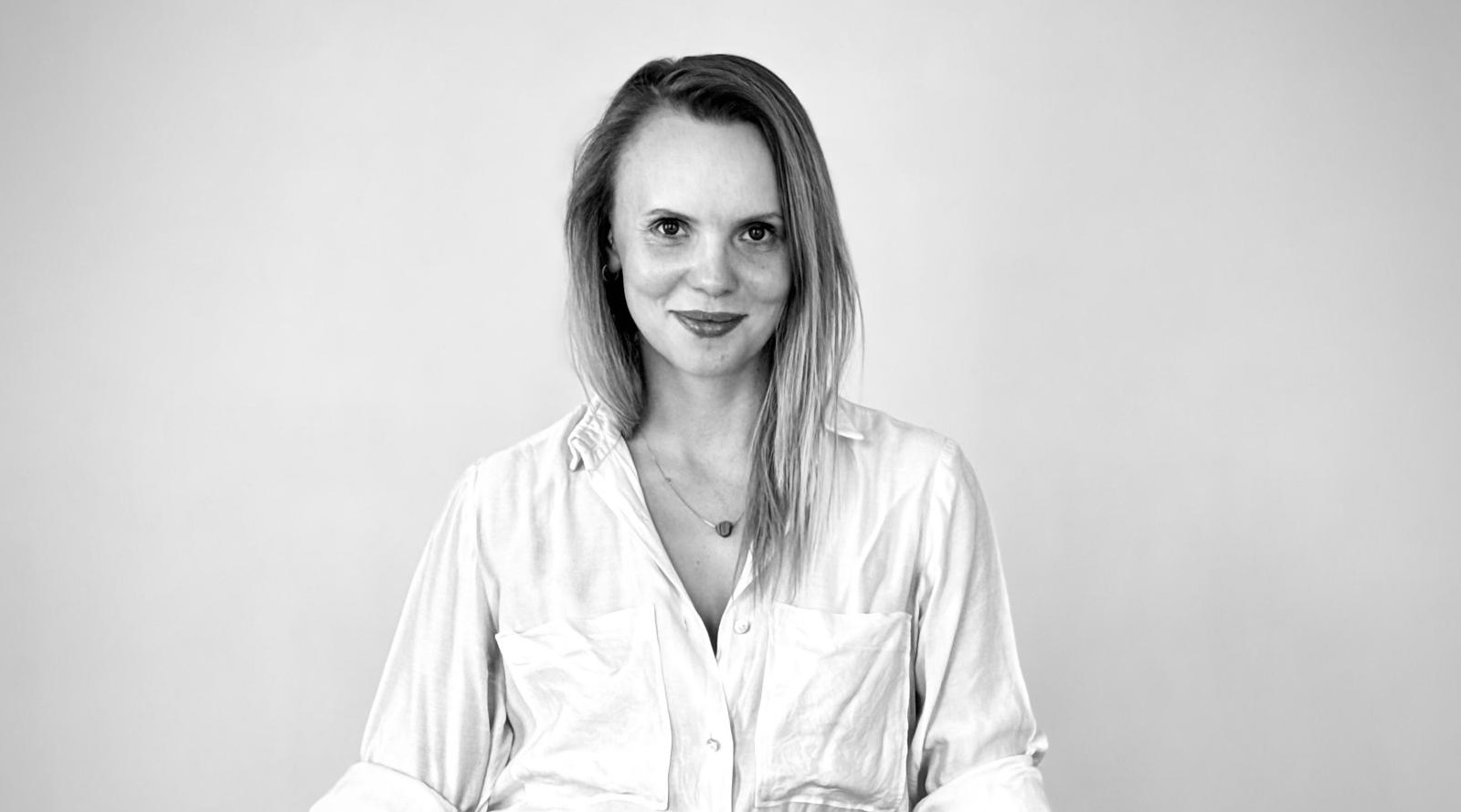
Maja Uzarowicz is a Polish interior and product designer and founder of Studio Uzarowicz, a Poznań-based practice working across residential and hospitality interiors. She studied at the Academy of Fine Arts in Poznań and develops spaces through close attention to her clients’ habits and daily rituals. Her projects include REY House, a family home at the edge of a forest near Poznań, and Tonari, a Japanese bistro informed by the atmosphere of domestic interiors from the Shōwa period. Uzarowicz also makes functional, hand-painted porcelain through Porcelana U. In this interview, Uzarowicz discusses cinema as a design reference, the demanding construction of REY House’s floating handrail, and how conversations with clients shape her work.

What inspires you?
Almost anything can be a source of inspiration for me. It can be a person, a place, a beautiful piece of typography , an unexpected combination of colours - inspiration can come from anywhere.
But if I had to name one thing that comes back most often in my work, it would be cinema. I’m inspired not only by film sets and interiors, but also by costumes, music, cinematography, individual frames and the overall atmosphere of a film.
Sometimes, when I’m designing an interior, I have a particular film, animation or even just a single scene in mind. It can become the starting point for a design idea - not necessarily something I want to recreate literally, but rather a mood, colour combination, composition or feeling that I want to translate into the space.
I think this is what I find most interesting about inspiration: it doesn’t have to be a direct reference. Sometimes it’s just a feeling that stays with you and eventually finds its way into a project.
What inspired you to become a designer?
I always knew that creativity would be part of my professional life. What drew me to design was that it is a very precise form of creativity - structured, purposeful and concrete. I like the fact that a design idea has to eventually become something real and functional.
I also remember a very simple thought that struck me when I was a teenager: everything has to be designed - even a door handle, a glass or a light bulb. It sounds obvious, but for some reason it stayed with me.
I think that idea eventually led me towards industrial design, which I went on to study. I was fascinated by the fact that design is present in almost everything around us, often in objects we hardly ever stop to think about.
How would you describe your design philosophy?
That’s not an easy question for me, because my design philosophy is constantly evolving. With every client, every new project and every experience, I refine it a little further. It’s a living process - and perhaps that is, in itself, part of my philosophy.
The tools of design can make the process look quite linear: you start at one point, move to the next, and eventually arrive at the final result. But what happens in my head, and in the exchange between me and my clients, is much more complex. It branches out in different directions, creating a very individual map of experiences, ideas and possibilities — and of what we ultimately want to see at the end of the project.
I think you could describe it as a form of slow design, almost a kind of craftsmanship. I carefully fine-tune different elements until they come together naturally. And for me, it’s not only about being satisfied with the final result, but also about making the process itself feel thoughtful, meaningful and enjoyable.
What is your favorite project?
Usually, it’s the one I’m currently working on. I tend to become very immersed in each project, so it’s difficult to choose just one.
But if I had to name a project that I think about with particular warmth, it would be REY House. It was a fantastic collaboration with the clients. There was a great deal of trust on both sides, and we kept motivating each other to push the project further and make it something truly special. For me, that kind of creative relationship is one of the most rewarding parts of being a designer.
Another one - Tonari, a small Japanese bistro in Poznań, is also very close to my heart, but for a different reason. It gave me an opportunity to explore one of my long-standing interests - Japanese culture and bring it into a design project in a very personal way.
The idea was to create a place inspired by ordinary Japanese homes of the Showa period, rather than by the more familiar contemporary aesthetics associated with Japan. I deliberately wanted to stay away from the polished, minimal aesthetic of Japandi and from decorative interpretations of Japan. I was much more interested in the everyday, imperfect and nostalgic side of Japanese interiors. I wanted it to feel authentic, slightly nostalgic and lived-in: dark wood, tatami, characteristic wallpapers, vintage objects and soft, dim lighting.
I loved the idea that the interior could transport you somewhere else - not only geographically, but also in time. It became almost like creating a small cinematic world, where the details, colours, objects and atmosphere all tell the same story.
So perhaps I don’t really have one favourite project. Some stay with me because of the collaboration, while others because they gave me the freedom to explore something I’m genuinely fascinated by.
What is your favorite detail?
In REY House, one of my favourite details is the staircase and, in particular, the handrail, which almost appears to float alongside it.
Technically, it was quite a challenging element to execute. We wanted to create a very light, almost weightless effect, while still making sure the staircase and the handrail were completely stable and comfortable to use.
I was very lucky to work with skilled craftsmen who understood the idea and managed to translate that visual effect into something that is not only beautiful, but also structurally sound. I love details like this - when something looks effortless, even though there is a lot of thought and technical precision behind it.


Do you have a favorite material?
Yes! And I think the answer might be a little unexpected, because my favourite material isn’t actually an interior finishing material. It’s porcelain - my love and passion.
Over the past year, I’ve been developing a new brand, Porcelana U, a small porcelain studio creating functional pieces with a collectible character, all handmade and hand-painted.
What I love most about porcelain are its contradictions. It looks incredibly delicate and fragile, but that is deceptive. It is fired at a very high temperature, which transforms it into an exceptionally durable material.
I’m also fascinated by the way porcelain objects can appear so simple and effortless, almost as if they came into being without much effort. In reality, achieving that kind of simplicity requires a great deal of patience, precision and a lot of experience.
Working with porcelain has taught me a lot about process. It is a constant cycle of learning, discovering and experimenting - but also of accepting that the material has its own character and that I can’t control everything. There is a certain humility in that.
And perhaps that is what I love most about it: the combination of precision and unpredictability, delicacy and strength, control and surrender. It can be frustrating at times, but when everything finally comes together, the satisfaction is enormous.
What is your process for starting a new project?
I always need a starting point - something that gives the story of a project a direction and allows it to unfold and grow. That’s why the first and most important step is always a conversation with the client.
Of course, I want to understand their needs, expectations and lifestyle - those are the basics. But I also pay a lot of attention to what is being said between the lines. I look for small, seemingly insignificant details. Is someone adventurous? Perhaps a bit of a loner? Maybe they recently saw an exhibition that stayed with them, or were unexpectedly drawn to a particular colour in a restaurant.
These little things can tell me much more than a simple list of functional requirements. When something catches my attention, I start building a story around it. I follow the associations it creates and explore them through different sources of inspiration - films, existing interiors, colour combinations, fashion, furniture, art, objects, materials… anything that naturally extends that particular thread.
Then I observe the client’s reactions. What makes them curious? What surprises them? What do they respond to emotionally? Those reactions become part of the process too.
This is usually where the project really begins - with a small idea, a feeling or an association that gradually grows into a much bigger story.
How do you fuel your creativity?
Life fuels my creativity. People, conversations, places, travelling, new experiences - I think you need to keep exposing yourself to different things and sensations.
But I also need time to simply sit with what I’ve experienced. To let the images, thoughts and impressions stay in my head for a while, without immediately trying to turn them into an idea. I often write things down, make notes, collect images or simply let different associations connect in my mind.
I think creativity needs both: experiencing the world and then giving yourself enough space to process it. Sometimes an idea appears much later, when I’m no longer consciously looking for it.


What inspired the REY House?
The REY House was inspired by both its surroundings and the people who were going to live there. Located on the edge of a forest near Poznań, the house naturally called for a strong connection with the landscape.
At the same time, I wanted it to feel like a comfortable nest for a large family - warm, welcoming and generous enough for everyone to have their own space, while still encouraging people to spend time together.
I was particularly drawn to the colours and atmosphere of the Polish autumn - warm, muted, earthy tones, changing light and the richness of natural textures. Rather than bringing nature inside literally, I wanted to translate that feeling into the interior through colour, materials, light and texture.
The result was meant to be a home that feels grounded and connected to its surroundings, but above all, a place that feels good to live in - a home with its own character, designed around the everyday life of the family.
How did materiality shape REY House?
Materiality was very important in shaping the atmosphere of REY House. I wanted the interiors to feel warm, tactile and grounded, so I worked with a combination of natural and textured materials rather than relying on decoration.
The clients were also very open and brave when it came to using expressive fabrics and strong patterns. They were willing to embrace materials with a very distinct character, which gave me the freedom to create more unexpected combinations.
Although many of the fabrics and patterns are quite bold individually, they work together as a harmonious whole. The common earthy colour palette, natural materials and carefully balanced textures create a sense of cohesion rather than visual overload.
Dark wood and expressive stone give the interiors depth and solidity, while soft textiles, upholstery and ceramics bring warmth and intimacy. For me, materiality is ultimately about how a space feels, not just how it looks.


What advice would you give to young architects?
I would encourage young architects not to close themselves off within the world of architecture. Explore other creative fields - music, painting, photography, fashion, cinema, crafts. I believe that developing your creativity across seemingly unrelated disciplines can enormously enrich the way you approach a project.
Sometimes the most interesting ideas come from connections between things that don’t appear to have much in common at first. The more different experiences and references you have, the richer your own creative language becomes.
I would also encourage young designers to find a mentor, especially at the beginning of their career. Someone who can help illuminate the path, challenge your ideas and be demanding when necessary. A good mentor doesn’t simply tell you what to do - they make you think harder and help you discover your own way of working.
And perhaps most importantly, stay curious. Keep looking, learning and allowing yourself to be inspired by things outside your own discipline.

Interview by Anton Giuroiu for Architecture Lab · Published · Updated