home/interviews/mareike lamm, sibylle bornefeld & vera hartmann
Interview with Mareike Lamm, Sibylle Bornefeld & Vera Hartmann of sauerbruch hutton
in conversation
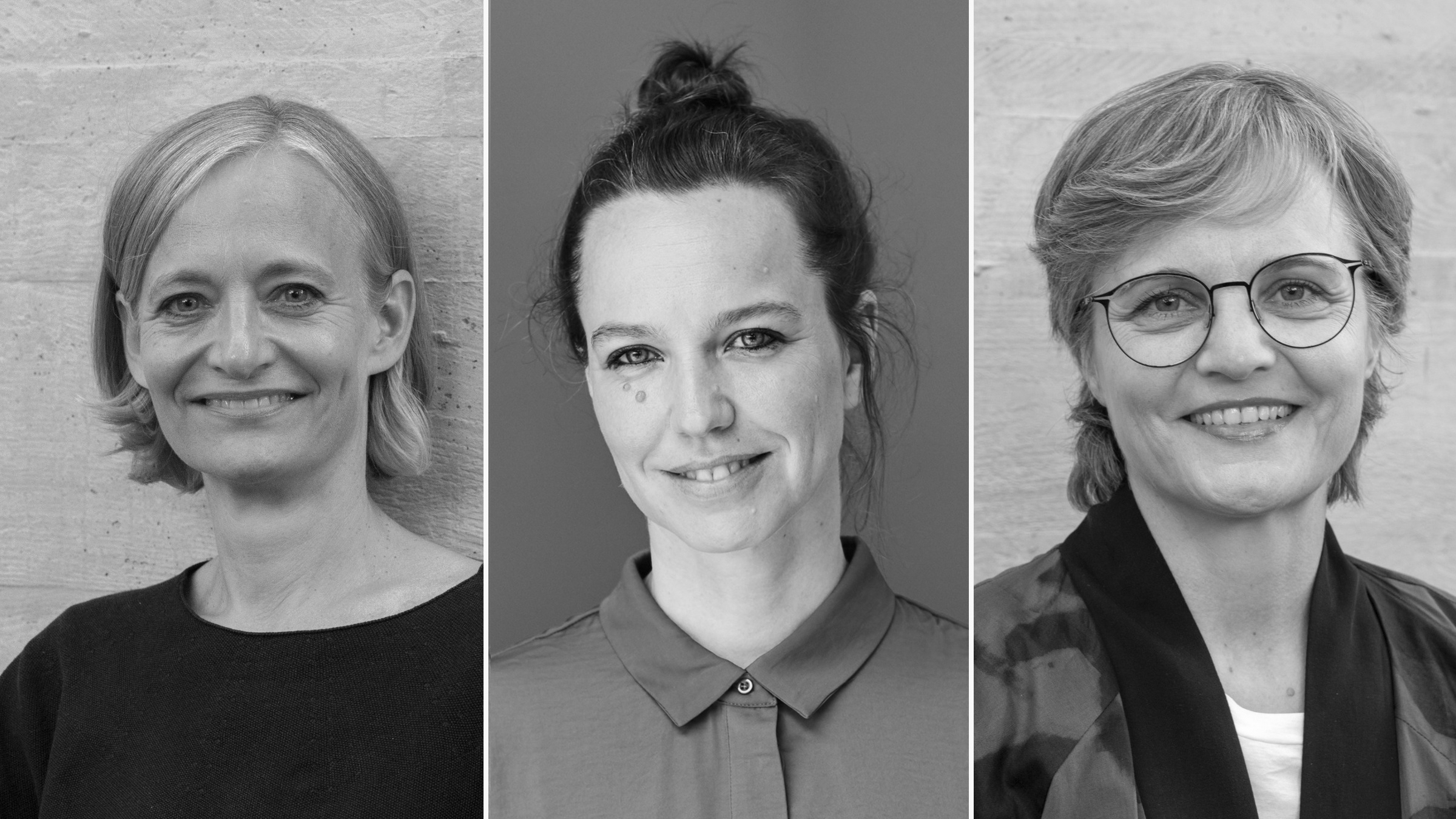
Mareike Lamm, Sibylle Bornefeld, and Vera Hartmann are architects and partners at sauerbruch hutton, a Berlin-based architecture practice founded by Matthias Sauerbruch and Louisa Hutton in London in 1989. Bornefeld joined in 2007 and works primarily across residential and office buildings as well as research and educational facilities, with particular expertise in timber construction. Lamm joined in 1999 and works across residential architecture, laboratory, production and research buildings, urban design, educational buildings, and industrial architecture. Hartmann joined in 2000 and is a partner and member of the Management Team, focusing on residential and educational buildings, refurbishment, timber construction, and bio-based materials. Between them, their work spans architecture, urban design, adaptive reuse, and material research, with projects including the Luisenblock for the German Bundestag, the Federal Environment Agency in Dessau, Franklin Village, the Berlin Metropolitan School, the Timber Earth Campus, and the transformation of the Telekom Tower in Konstanz.

What inspires you?
Sibylle Bornefeld
I don't think inspiration comes first. Curiosity comes first. The more I learn about a place, a client, a material or a construction method, the more ideas begin to emerge. Inspiration isn't a sudden flash of genius – it's something that grows out of paying close attention.
Mareike Lamm
My inspiration comes with and from the people I work with. For me, designing as part of a team brings unexpected dimensions, opens my mind and, in the end, leads to better results.
Vera Hartmann
My inspiration comes from what is heterogeneous, from ordinary everyday life, and from art and culture. Often, though, it is simply other people who inspire me and from whom I learn.
What inspired you to become an architect?
Sibylle Bornefeld
I wanted to become a musician before I became an architect. What drew me to music was its immediacy: you play a note and it changes the atmosphere in an instant. Architecture works the same way, only on a longer timeline. It may take years to realise a building, but the moment someone steps inside, the experience is immediate. Architecture is physical. It surrounds us, influences us, and demands a response. Being able to shape that experience is what gives the profession its meaning for me.
Mareike Lamm
I took a book called ‘An A to Z of Degree Courses’ with me to London, where I spent a few months after school, and didn’t get very far with it. That fun fact aside, my initial interest was mostly in the people I would be designing for.
Vera Hartmann
Quite prosaically: when I was fourteen, my parents built a house. I was allowed to help design my own bedroom, and I found it wonderful to see my ideas later translated into space. That was precisely the feeling I wanted to turn into a career.


How would you describe your design philosophy?
Vera Hartmann
The heterogeneity I have just mentioned, together with an iterative approach, shapes the way I think and develop projects. I greatly enjoy the back and forth with others, which often leads to solutions one would probably never have arrived at alone.
Mareike Lamm
I listen and observe what I find. I enjoy bringing different aspects and wishes together, which in the end will hopefully result in more joy in our built environment.
Sibylle Bornefeld
Designing, to me, is much more like solving a Sudoku than waiting for inspiration. You gather one parameter after another – context, programme, climate, structure, material, budget – and keep rearranging the pieces. It's a constant process of moving forwards and backwards, testing, questioning, and refining. I don't believe in a single right answer, but I do believe in coherence. My ambition is not a signature style, but a design in which every decision belongs and reinforces the whole.
What is your favorite project?
Sibylle Bornefeld
My answer changes with every project I work on. Architecture has a way of directing your attention, so my "favourite" is always evolving. At the moment, I'm constantly returning to Bruno Taut. What fascinates me is not the colour itself, but the care with which he elevates the ordinary. A two-coloured window or door may seem like a small gesture, yet it changes the scale of a building and gives people something to relate to. Those details are never mere decoration – they make architecture feel generous, approachable and profoundly human.


Vera Hartmann
If I am to name a project from our own world, then the Berlin Philharmonie. It is a spatially incredibly complex building, a child of its time, built with simple means and a clear structure. For me it is a "Gebäudetyp E" par excellence – [a reference to the German "Building Type E" approach, where the "E" stands for einfach (simple) or experimentell (experimental): the idea of building more simply and economically by dispensing with standards that are not strictly necessary]


Mareike Lamm
I know the others have picked buildings from elsewhere, but I'm going to be a little partisan and choose one of our own. Of all the projects I have worked on at sauerbruch hutton over the last 27 years, my favourite is still the Federal Environment Agency in Dessau. On the one hand, it was my first large project – in a way, the building that made me an architect in every respect; on the other, it is a building full of new ideas, experiments and innovation. One of the nicest comments we received came from an employee who, after a year and a half in the new building, said that he had got to know more people in that time than in ten years working in the former 1930s building in Berlin.

Federal Environment Agency, Dessau / sauerbruch hutton © Jan Bitter
What is your favorite detail?
Sibylle Bornefeld
My favourite details are rarely the most complicated ones. They're the ones that embrace imperfection. They accept tolerances, solve practical problems, and still feel effortless. One of my favourites is from an early sauerbruch hutton office building in Sheffield. Exposed service pipes pass through drywall partitions – a junction that usually ends up looking awkward. Instead of hiding it, we placed a simple milled timber collar around every penetration. It turned a technical necessity into something calm and carefully considered. I love details like that: they transform a constraint into a quality. They are intelligent rather than complicated, and generous without asking to be noticed.
Mareike Lamm
I like the surprise. When you look at the façade of the Museum Brandhorst in Munich, it is based on a functional aspect (it is meant to absorb noise) and a polychromatic design idea. Both shape the façade and create a complex visual experience.

Vera Hartmann
A specific answer would limit me far too much – I don’t really have a “favourite detail”. With professional experience, though, comes a longing for what can actually be built.
Do you have a favorite material?
Mareike Lamm
I see material as the starting point. It is what you do with it, how you apply it, that makes the difference.
Vera Hartmann
At the moment I am a little in love with Brandenburg pine, Berlin clay from construction-site excavation, and materials from paludiculture.
Sibylle Bornefeld
I don't have a favourite material. I have a favourite moment: the point where one material meets another. That's where architecture becomes tangible. Joints, transitions and connections reveal how a building is made – and whether it has been made with care. That's also why I'm sceptical of composite materials. They often erase both identity and reversibility. I prefer materials that can age, be separated, repaired and reused.

What is your process for starting a new project?
Mareike Lamm
Like every architect, I try to understand where we are building, who we are building for, and what we want to give both the user and the built environment. To develop a shared understanding within the team, we often begin by building a physical model, as a hands-on way of getting to grips with the task.
Sibylle Bornefeld
Every project starts with people. Architecture is only ever as good as the team that creates it. One of the most rewarding parts of a new project is watching a group of individuals become a team. Everyone brings different strengths, questions and perspectives, and over time they begin to challenge and inspire one another. That shared curiosity creates the conditions for great architecture. Before drawings, models or details, my first priority is to build an environment in which good ideas can emerge together.
Vera Hartmann
Get everyone on board, define together the goals we want the project to achieve, then start thinking, hold workshops, and then move into the back and forth with the client and the specialist planners. The best ideas rarely come about alone.


How do you fuel your creativity?
Sibylle Bornefeld
I fuel my creativity by stepping away from architecture. Sometimes the best way to solve a problem is to stop looking at it. Like in music. You can practise a piece endlessly, but it often improves most after you've left it alone for a while. The same is true for design. Distance brings clarity. Unfortunately, architecture doesn't always allow for that luxury – but it's still the process I trust most.
Mareike Lamm
By looking at other disciplines, I would say, and also by listening to younger generations – to the future we are building for.
Vera Hartmann
Walks in the woods in Brandenburg, Pilates, good food and exchanging ideas with other people.
What inspired the Telekom Tower?
Vera Hartmann
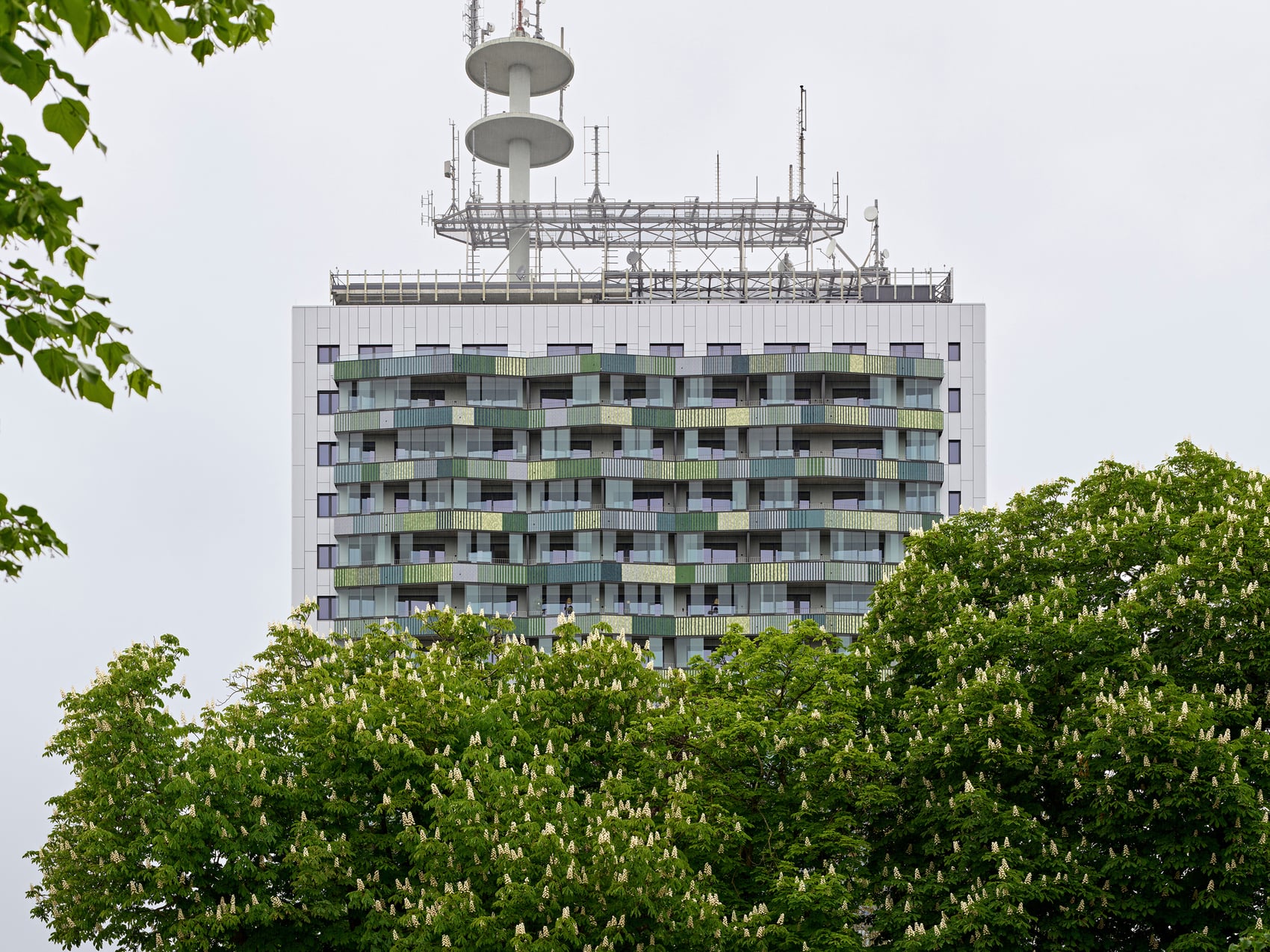
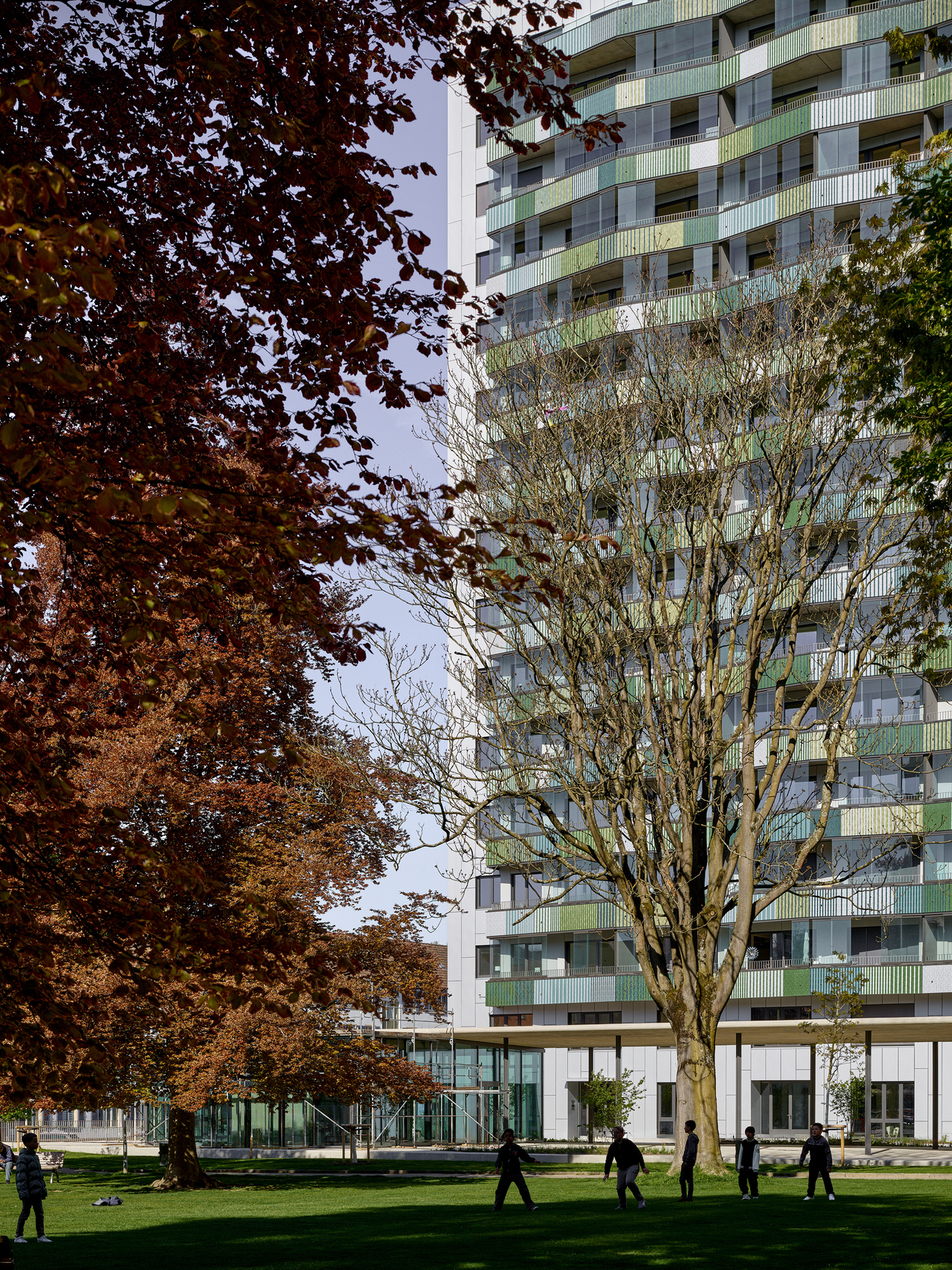
The existing building itself – its structure, its position within the city and the wider urban context. At the same time, the question of how we want to live today: with more softness, generosity and quality of life.
How did materiality shape the Telekom Tower?
Vera Hartmann
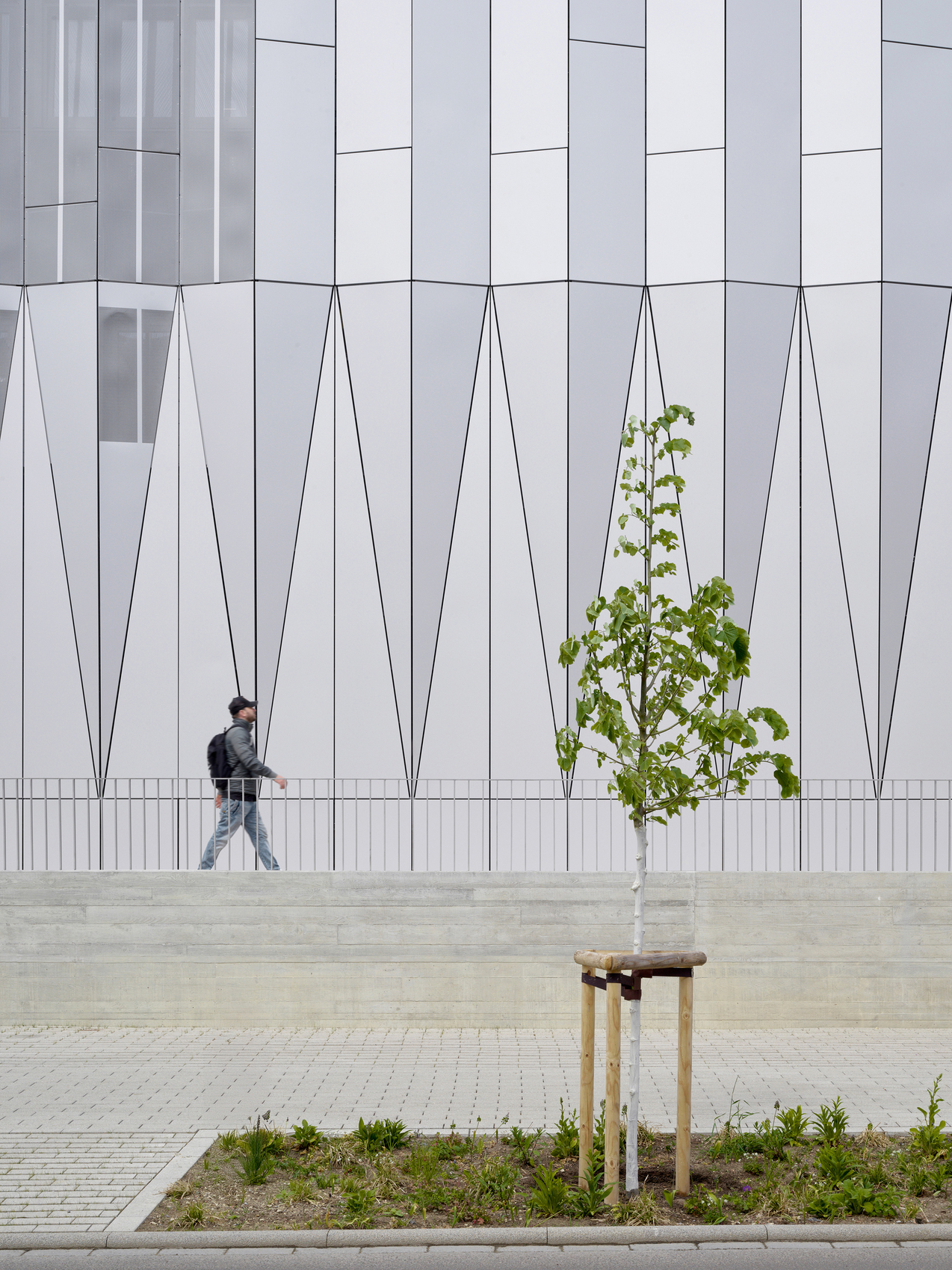
For us, building within the existing fabric means working with what is already there, rather than forcing the building into a new form. From this attitude, the concept develops almost by itself. The tower consists of a reinforced-concrete frame of columns and ribbed slabs, which remains visible throughout and shapes the character of the building. The new structure is added to the existing fabric and is clearly legible as an independent addition. The flowing balconies and the deliberately retained parts of the interior make the interplay of old and new directly tangible in every flat. In this way, the principle of kintsugi continues beyond the entrance lobby and accompanies the entire building, right down to each individual flat.
What advice would you give to young architects?
Mareike Lamm
AI might be able to produce images, and perhaps even plans, but it cannot build up trust with the people you are planning for, and it has neither the power of persuasion nor belief in an idea.
Vera Hartmann
Believe in yourself, have courage and confidence, and take pleasure in thinking for yourself. Look at as much architecture as you possibly can, from every century. You don’t have to follow every trend. Find your own way.
Sibylle Bornefeld
Resilience. Learn to listen carefully, and don't become too attached to your own ideas. Design doesn't get weaker when you allow other people to influence it – it usually gets better. And don't be afraid of failure. Every competition you lose, every idea you discard, every difficult conversation moves you forward. In architecture, progress rarely happens in a straight line.
Featured Image Credits © Erik-Jan Ouwerkerk & Urban Zintel
Interview by Anton Giuroiu for Architecture Lab · Published · Updated