

The mid-century modern office chair is a real canon, not a furniture-store aesthetic: ten documented designs below, each with its designer, dates, and the story that earned its place. The distinction matters more in this category than anywhere else in the style, because the search results for it are dominated by velvet-and-gold task chairs that borrow the era’s name without any of its engineering; none of them appears on this list. The full seating canon lives in our guide to the 23 most loved mid-century modern chairs; this page is its working wing — the chairs the era designed for desks, lobbies, and the long day sitting down.
1. Eames Aluminum Group – Herman Miller, 1958
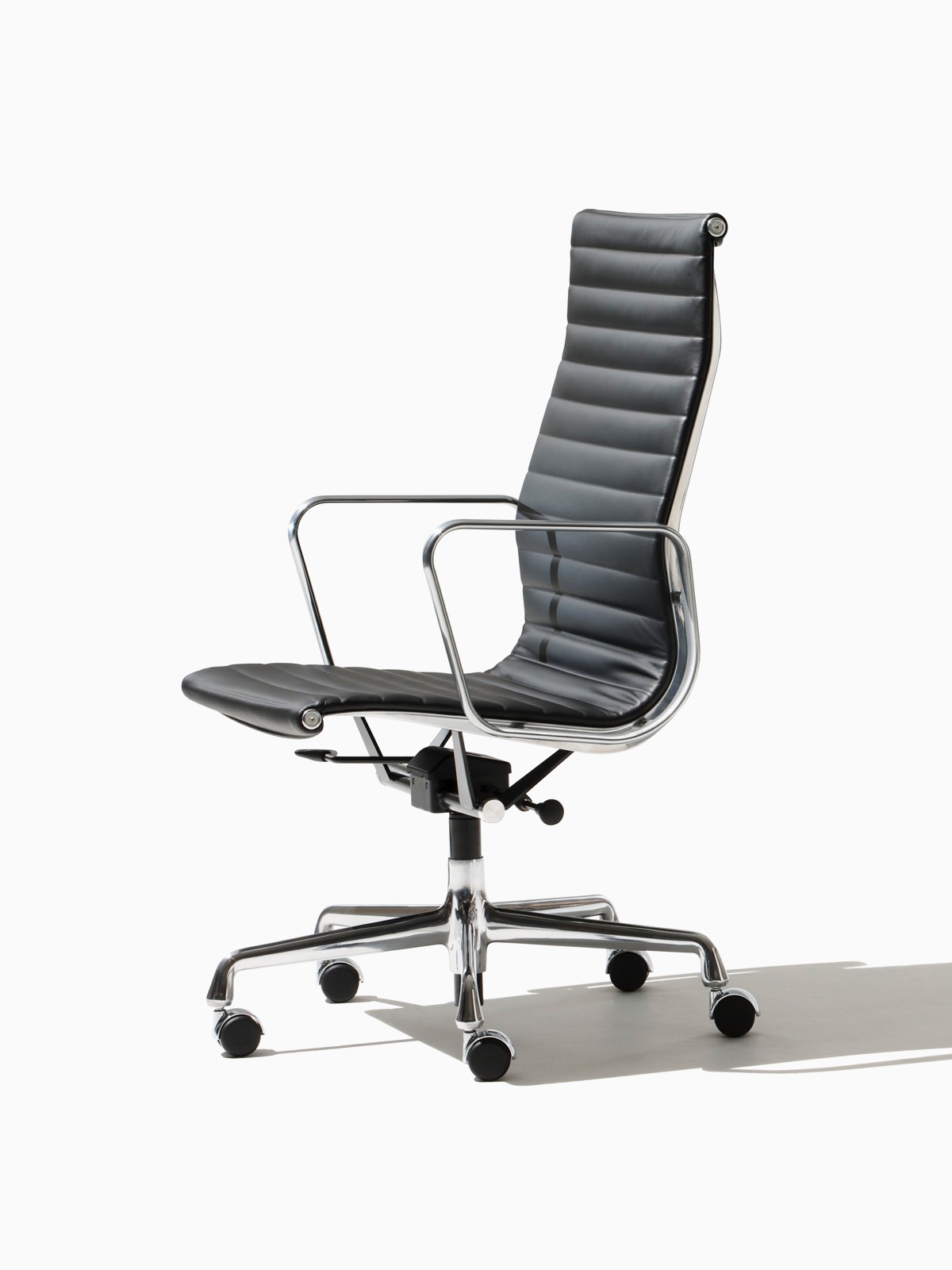
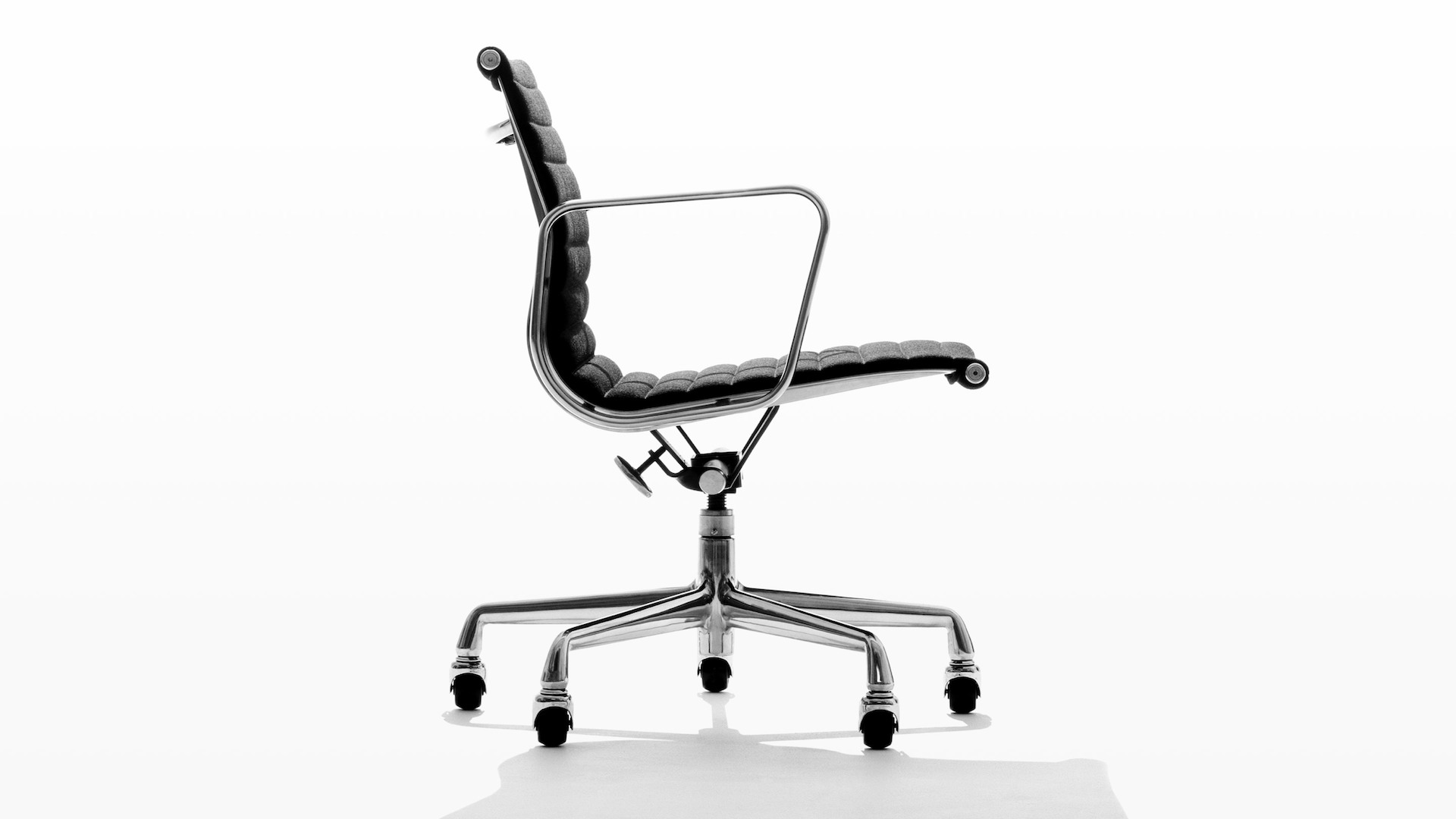
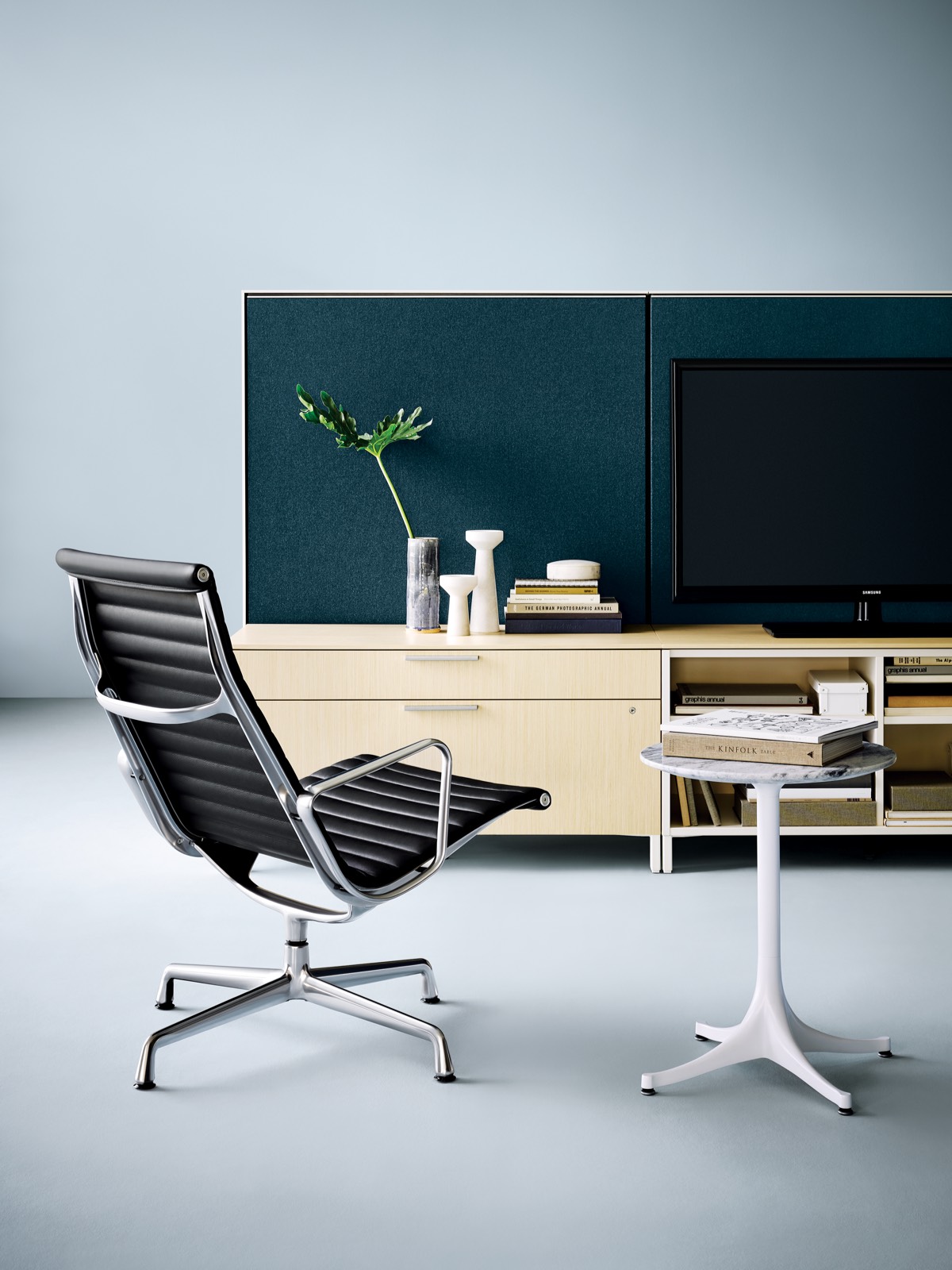
The Aluminum Group is the founding document of the modern office chair, and it began outdoors: Eero Saarinen commissioned Charles and Ray Eames to design high-quality seating for the Irwin Miller House he was building with Alexander Girard in Columbus, Indiana, and the Eameses answered in 1958 with ribbed aluminum side frames holding a continuous seat-and-back membrane in tension — a sitting pocket rather than a padded box. Herman Miller adapted the group into office models through the mid-1960s, and the low-back and high-back executive versions have anchored serious desks since.
Eames Aluminum Group
Founding Document, 1958Designer — Charles and Ray Eames; commissioned by Eero Saarinen for the Irwin Miller House he was building with Alexander Girard.
Materials — Ribbed aluminum side frames holding a continuous seat-back membrane in tension; leather or fabric.
Signature Details
- Began as outdoor seating for one Indiana house
- The sitting pocket replaces the padded box
- Office adaptation followed through the mid-1960s
Spotting an Original
- Herman Miller or Vitra markings
- Frame casting quality and rib finish
- Membrane tension — copies sag
Production
1958 onward
Licensed Today
Herman Miller / Vitra
2. Eames Soft Pad Group – Herman Miller, 1969
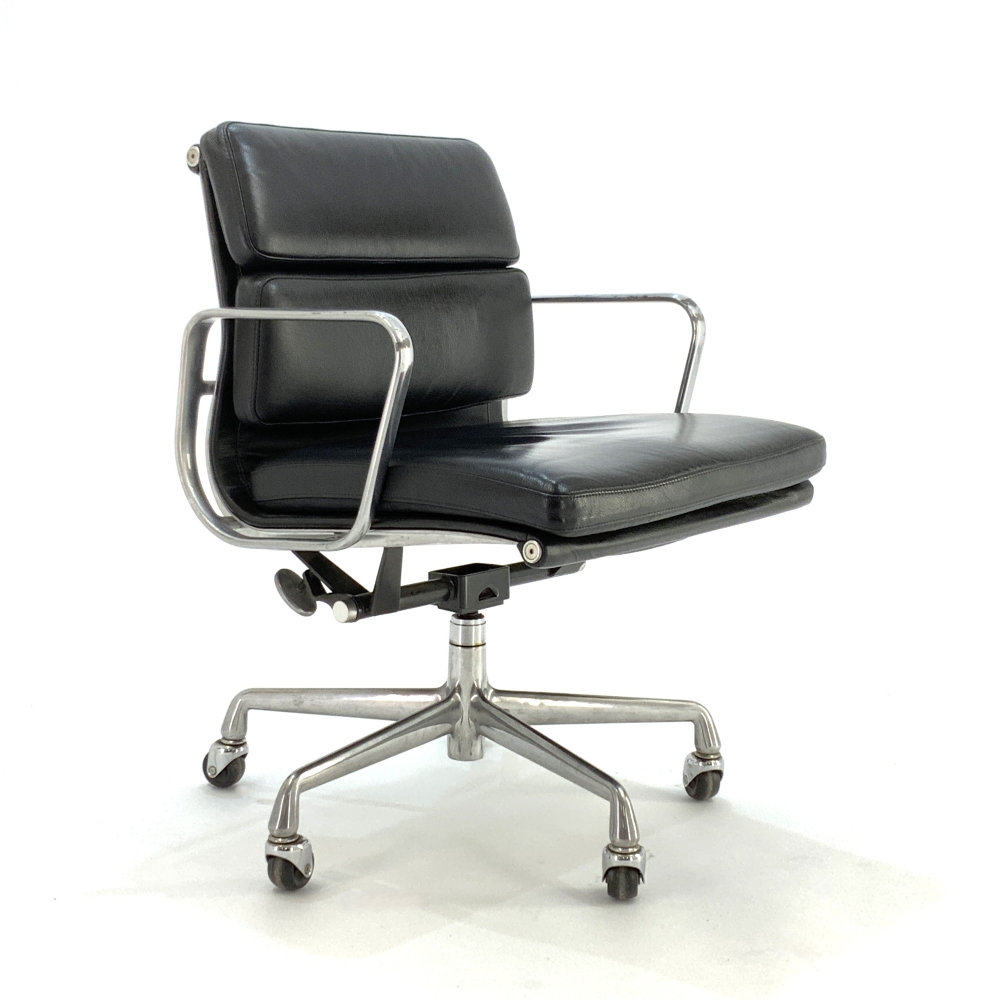
The Soft Pad Group closes the era with its most luxurious office seat: the Aluminum Group’s frame and suspension carrying stitched leather cushions, introduced in 1969. It is the boardroom’s mid-century default for a reason — the cushions add presence without abandoning the tension-membrane engineering underneath — and it is also the design the replica industry copies hardest in this category, which makes the maker’s marks and the frame details worth learning before any vintage purchase.
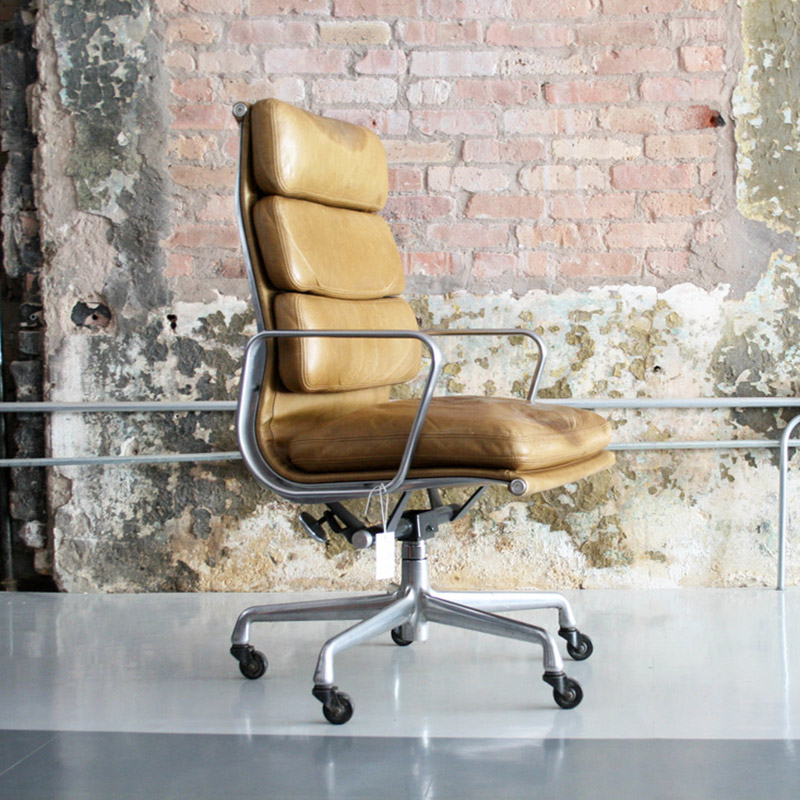
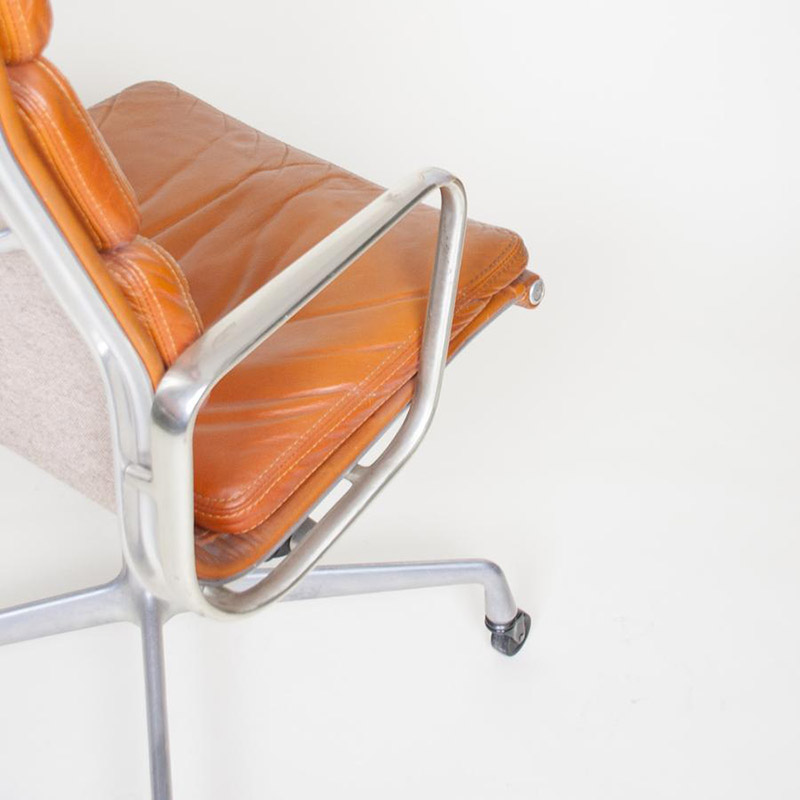
Eames Soft Pad Group
The Boardroom Default, 1969Designer — Charles and Ray Eames for Herman Miller.
Materials — Aluminum Group frame and suspension carrying stitched leather cushions.
Signature Details
- The era’s most luxurious office seat
- Cushions add presence over the same engineering
- The hardest-copied chair in the category
Spotting an Original
- Herman Miller / Vitra labels and stitch pattern
- Arm casting forms a complete D on originals
- Cushion attachment method
Production
1969 onward
Licensed Today
Herman Miller / Vitra
3. Eames Time-Life Chair – Herman Miller, 1960
The Time-Life Chair is executive weight class: designed around 1960 for the lobby of the Time-Life Building in New York, a wide low chair of thick cushions on a polished four-star aluminum base, with the desk-height version following soon after. It reads as the most traditional chair the Eameses ever drew until you sit in it and the proportions announce themselves. Vintage first-generation examples in original leather are among the category’s blue chips.
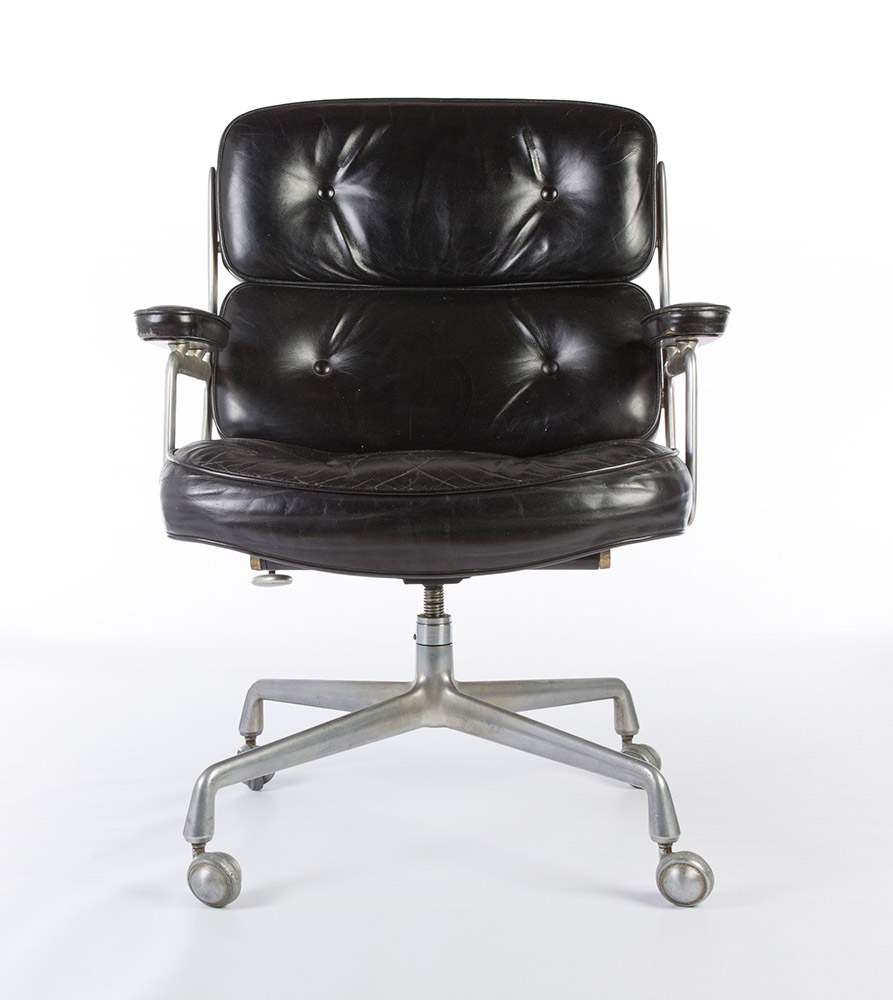
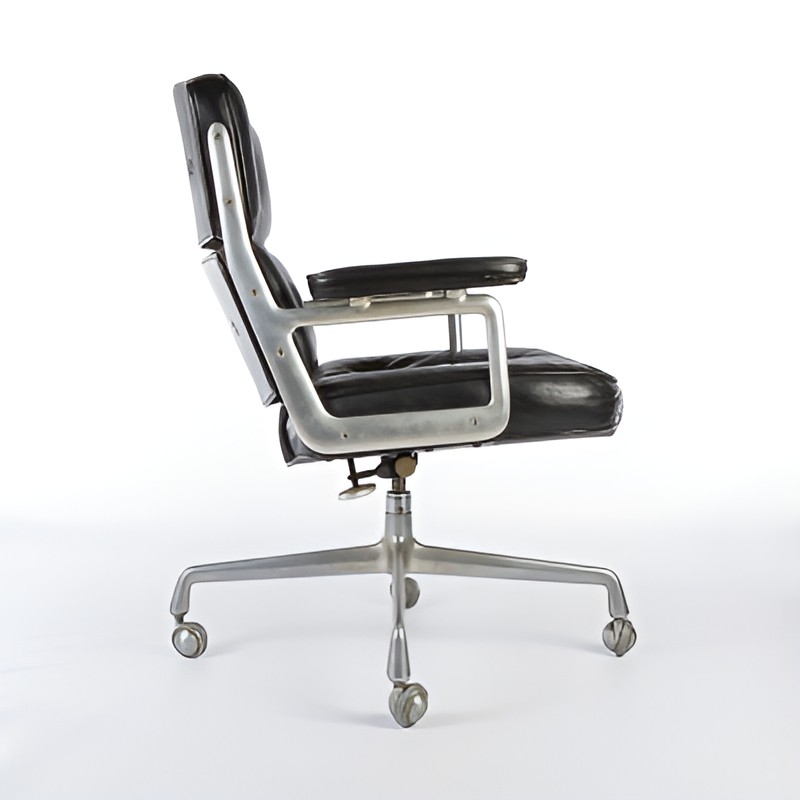
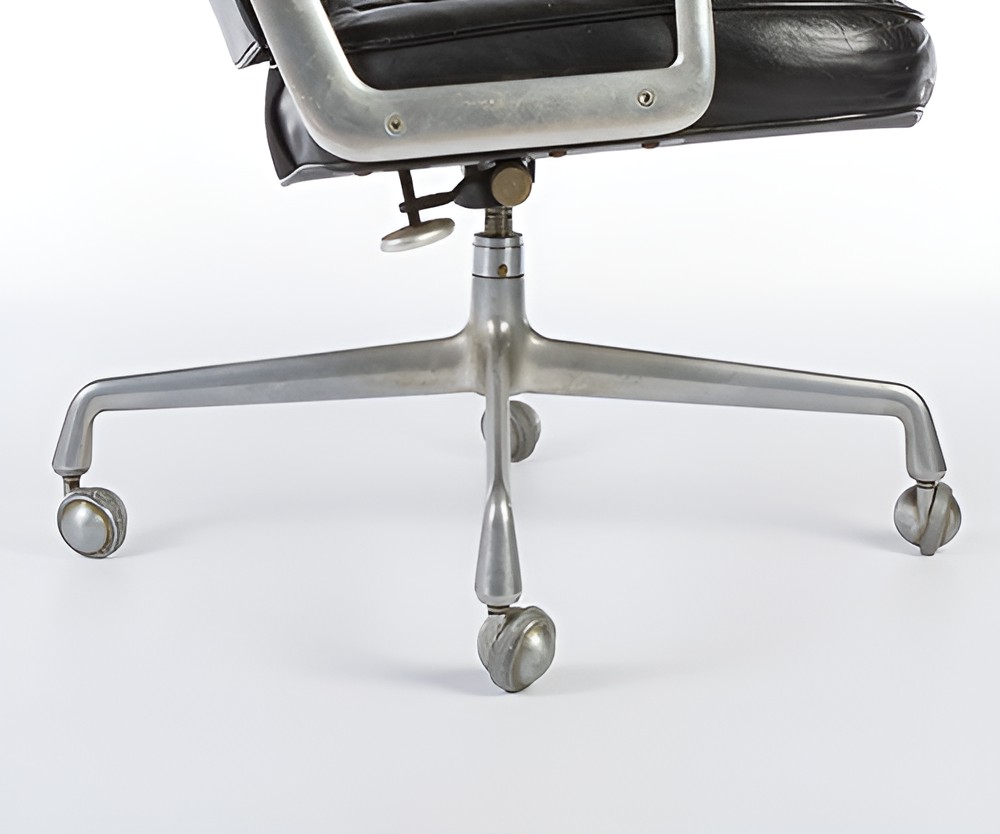
Eames Time-Life Chair
Executive Weight Class, c. 1960Designer — Charles and Ray Eames, for the lobby of the Time-Life Building, New York.
Materials — Thick cushions on a polished four-star aluminum base; desk-height version followed the lobby original.
Signature Details
- Designed for one Manhattan lobby
- The widest, lowest Eames executive profile
- First-generation leather examples are blue chips
Spotting an Original
- Herman Miller markings and base casting
- Original leather and cushion loft
- Generation details date the example
Production
c. 1960 onward
Licensed Today
Herman Miller
4. Pollock Executive Chair – Knoll, 1963
The Pollock Executive Chair is one structural idea worn as jewelry: Charles Pollock — who wrote that a chair is like a sculpture, and designed only a handful in his career — built the chair around an exterior aluminum rim that carries the structure and draws the silhouette at once, with tufted leather over a molded shell inside it. Designed in 1963 and introduced by Knoll in 1965, it became one of Knoll’s most enduring sellers and the visual shorthand for the era’s executive floor. The rim is also the authentication point: clones get its section and plating wrong.
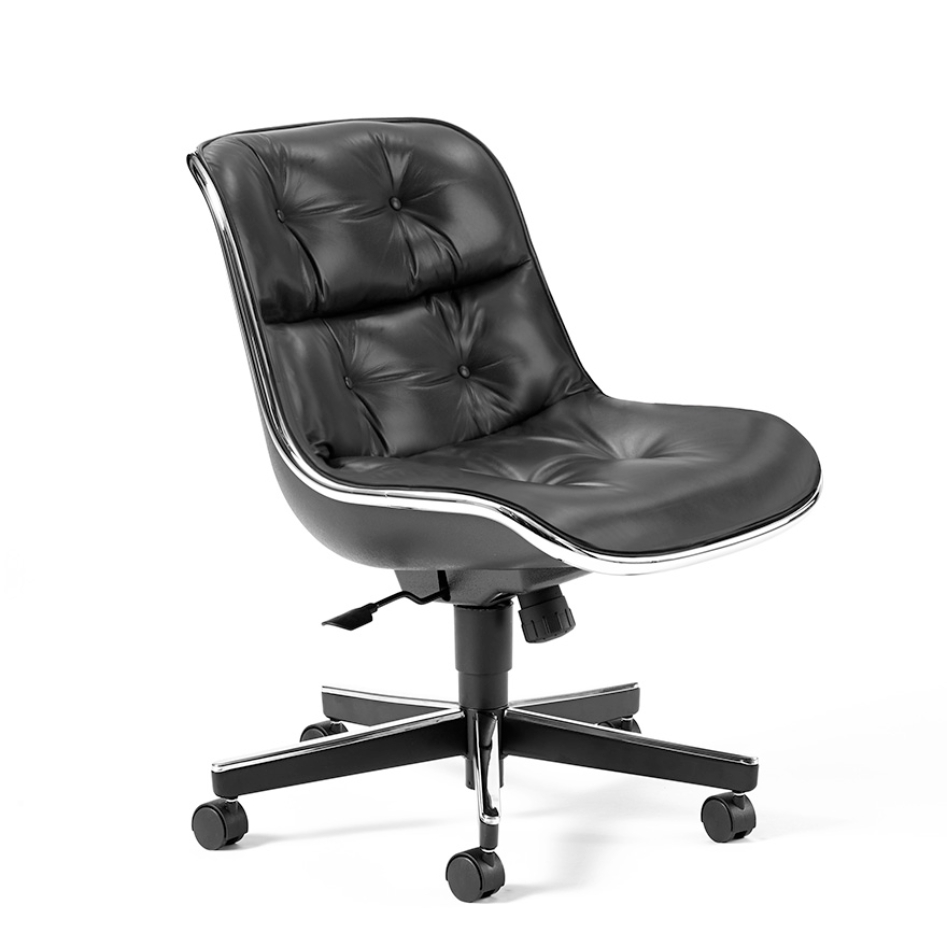
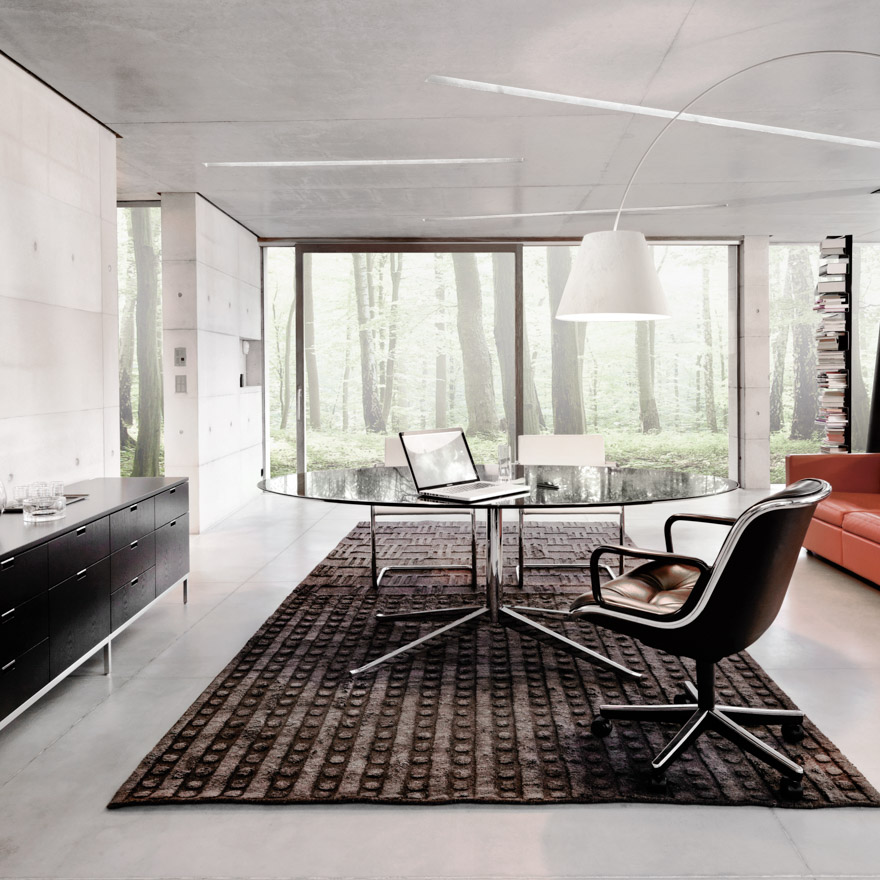
Pollock Executive Chair
One Idea as Jewelry, 1963Designer — Charles Pollock for Knoll; designed 1963, introduced 1965.
Materials — Exterior aluminum rim carrying the structure; tufted leather over a molded shell.
Signature Details
- The rim is structure and silhouette at once
- Pollock: a chair is like a sculpture
- One of Knoll’s most enduring sellers
Spotting an Original
- Knoll markings
- Rim section and plating — clones get both wrong
- Tufting pattern fidelity
Production
1965 onward
Licensed Today
Knoll
5. Saarinen Executive Chair – Knoll, 1950
The Saarinen Executive is the quiet workhorse of the canon: a gently curved upholstered shell on slim legs or a swivel base, designed by Eero Saarinen around 1950 and in continuous production at Knoll since. It furnished the era’s offices and dining rooms interchangeably — the shell is that adaptable — and it remains the least expensive entry into licensed Saarinen. For the desk, the swivel version earns its keep; for everywhere else, the four legs.
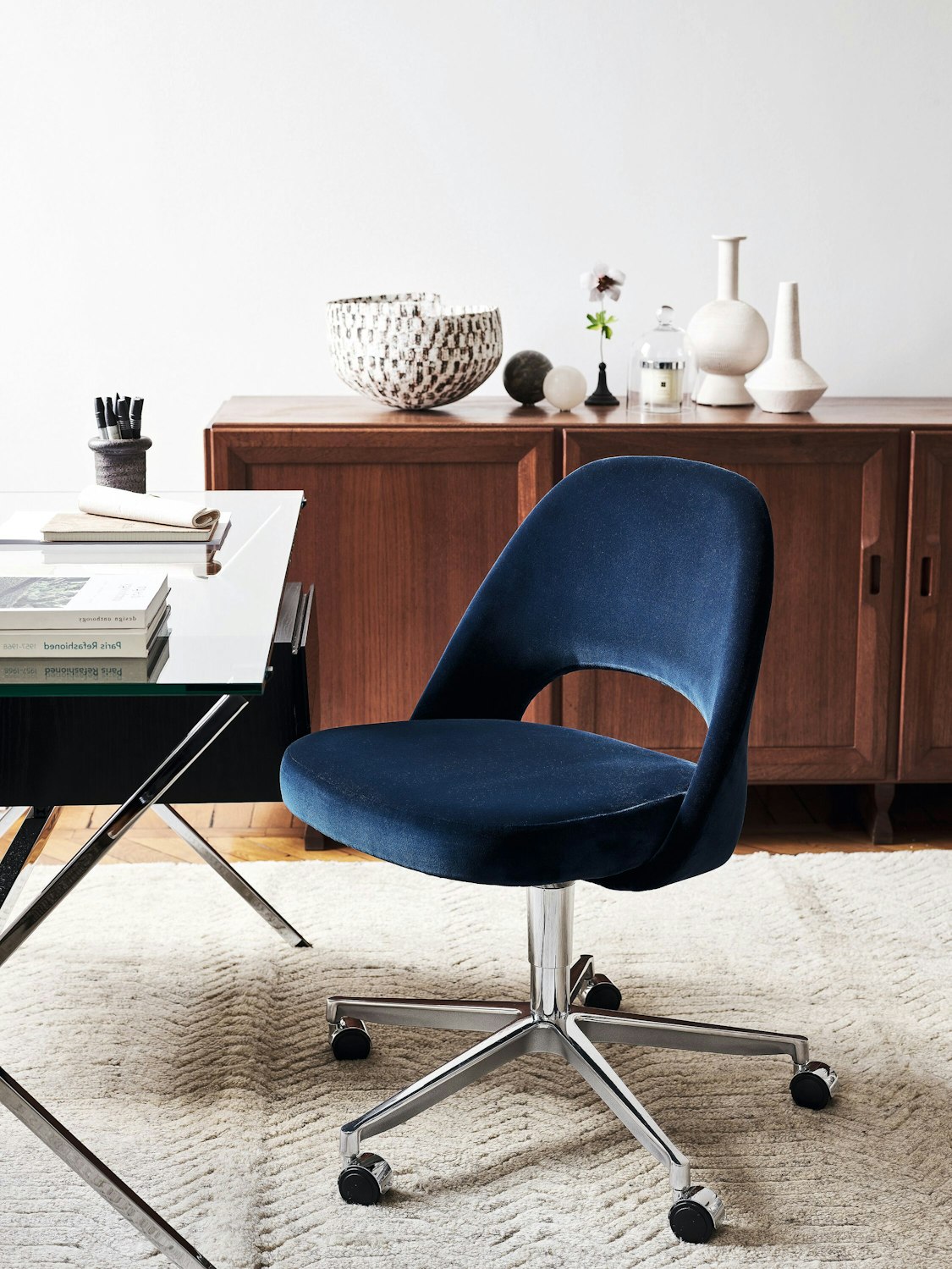
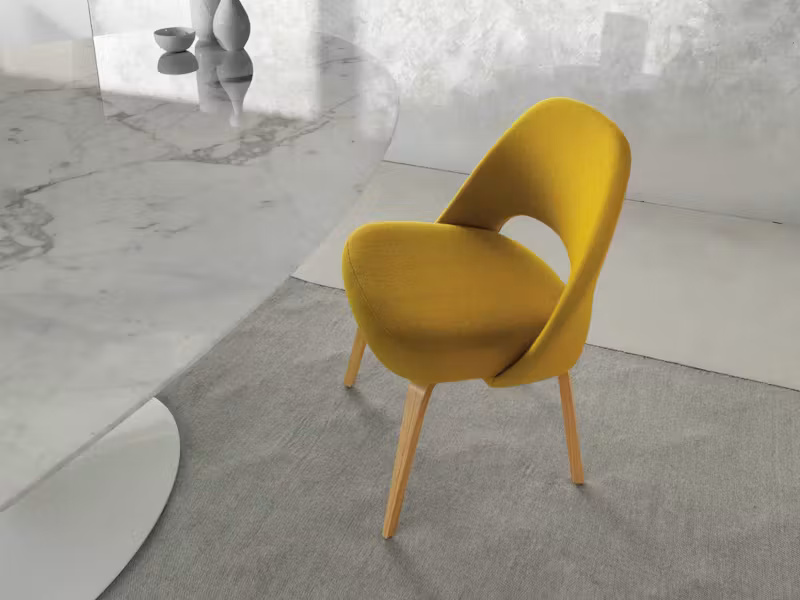
Saarinen Executive Chair
The Quiet Workhorse, 1950Designer — Eero Saarinen for Knoll.
Materials — Curved upholstered shell on slim wood or tubular legs, or a swivel desk base.
Signature Details
- In continuous production since around 1950
- Furnished offices and dining rooms interchangeably
- The least expensive licensed Saarinen
Spotting an Original
- Knoll labels
- Shell curvature and leg detail
- Base variant matches claimed period
Production
c. 1950 onward
Licensed Today
Knoll
6. Jacobsen Oxford Chair – Fritz Hansen, 1965
The Oxford is Arne Jacobsen doing academic gravitas: designed in 1965 for the dons of St Catherine’s College, Oxford — another building he detailed down to the furniture — as a narrow, high-backed profile that gives the sitter architecture without bulk. Fritz Hansen produces it in desk-height versions with and without arms, and its slim vertical presence solves the home-office problem the wide executive chairs create in small rooms.
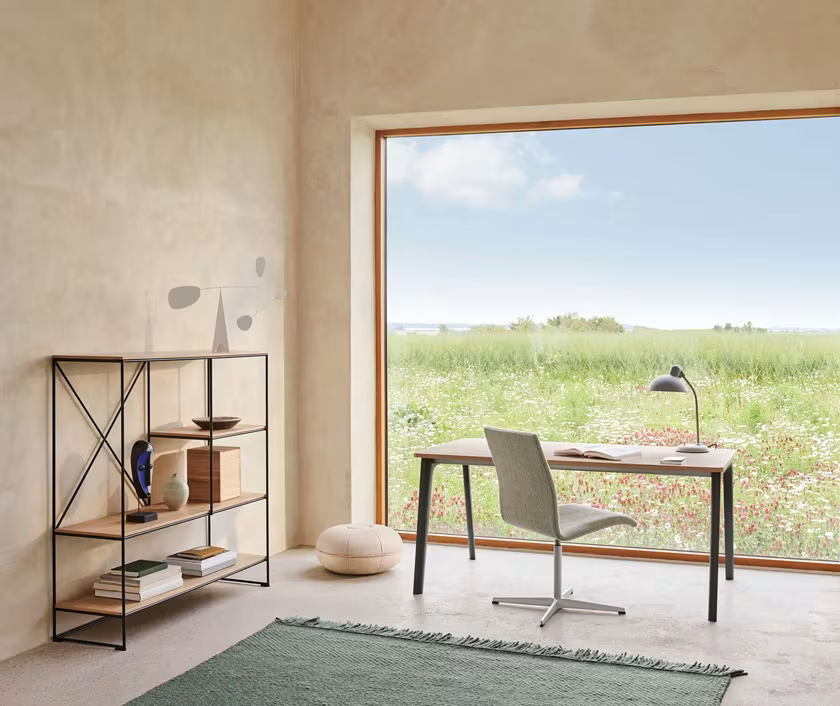
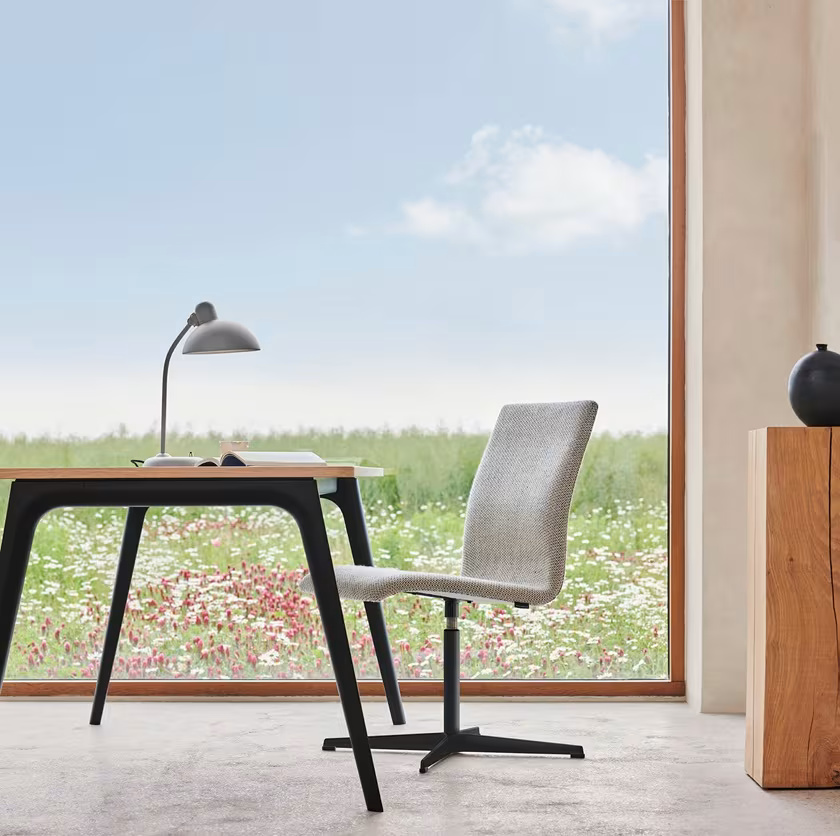
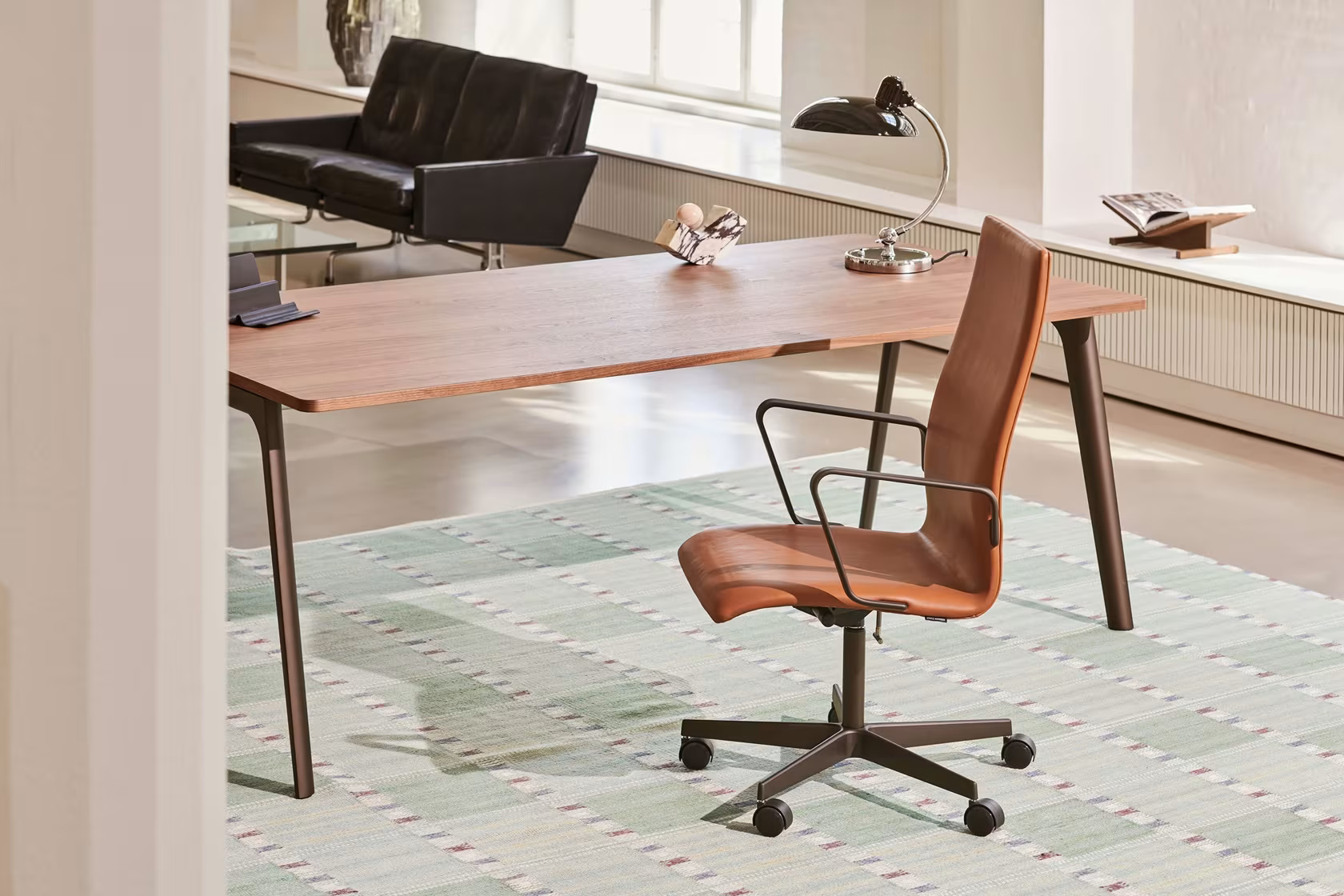
Jacobsen Oxford Chair
Academic Gravitas, 1965Designer — Arne Jacobsen, for the dons of St Catherine’s College, Oxford.
Materials — Narrow high-backed molded profile, model 3272 family; desk versions with and without arms.
Signature Details
- Another Jacobsen building detailed to the furniture
- Architecture for the sitter without bulk
- Solves the small-room executive problem
Spotting an Original
- Fritz Hansen markings
- Profile narrowness — copies widen it
- Base and mechanism quality
Production
1965 onward
Licensed Today
Fritz Hansen
7. Wegner Swivel Chair (PP502) – 1955
The Swivel Chair is the canon’s ergonomic conscience: Hans Wegner designed it in 1955 in an ongoing dialogue with Dr. Egill Snorrason, the Copenhagen physician whose studies of sitting posture during the polio epidemic had convinced him the small of the back needed direct support — and whose public critique of Danish furniture’s indifference to ergonomics Wegner took personally. The answer is the chair’s low top rail, a sculpted piece of solid wood placed exactly where Snorrason’s research pointed, over a leather seat and a four-star steel base with silver-soldered joints. Presented at the Cabinetmakers’ Guild exhibition in 1955 and originally built by Johannes Hansen, it has been produced by PP Møbler since 1991 — a doctor’s science wearing a cabinetmaker’s craft.
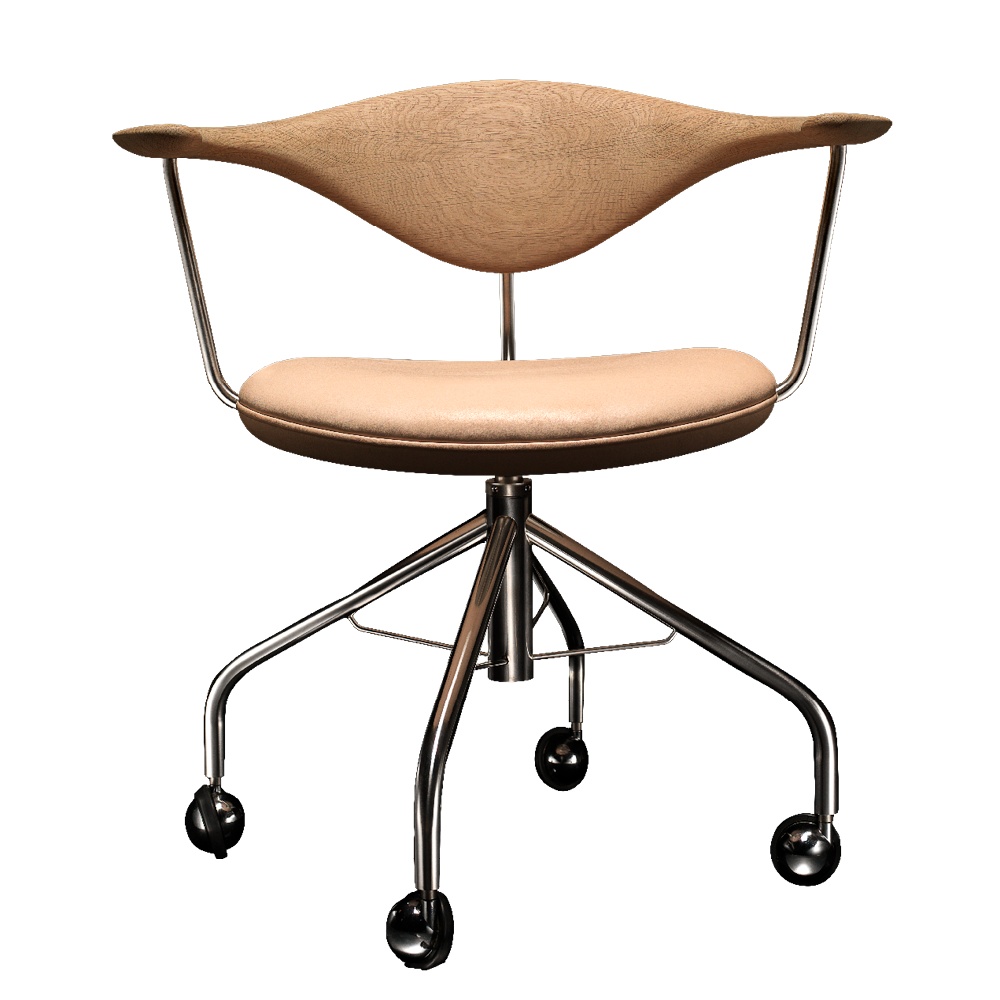
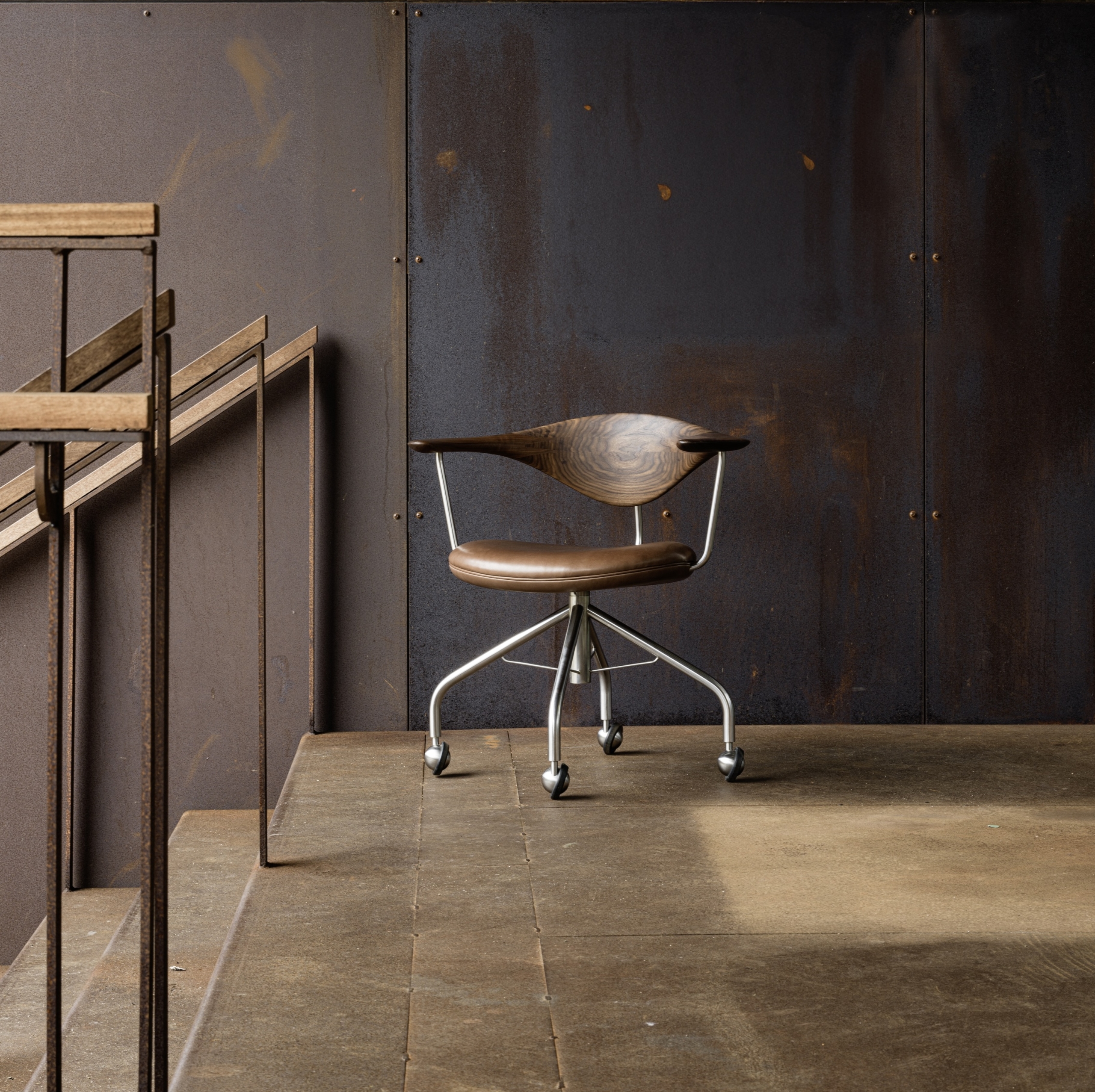
Wegner Swivel Chair (PP502)
The Ergonomic Conscience, 1955Designer — Hans Wegner, in dialogue with physician Egill Snorrason’s sitting-posture research.
Materials — Sculpted solid-wood top rail at lumbar height; leather seat; four-star steel base with silver-soldered joints.
Signature Details
- The top rail sits where a doctor’s research pointed
- Presented at the 1955 Cabinetmakers’ Guild exhibition
- Craft-intensive by design — never cost-minimized
Spotting an Original
- Johannes Hansen (vintage) or PP Møbler stamps
- Silver-soldered base joints
- Top rail wood and sculpting quality
Production
1955; PP Møbler since 1991
Licensed Today
PP Møbler
8. FK 6725 “Bird” Chair – Fabricius & Kastholm, 1964
The Bird is the connoisseur’s pick on this list: Preben Fabricius and Jørgen Kastholm’s 1964 high-back desk chair — a sculpted leather shell spreading like its namesake above a swivel base — built with the steel-and-leather exactness that made the pair Denmark’s answer to the executive category. Originals produced by Kill International trade briskly at auction and on the vintage market, where the design’s relative obscurity keeps prices below its Eames-tier quality.
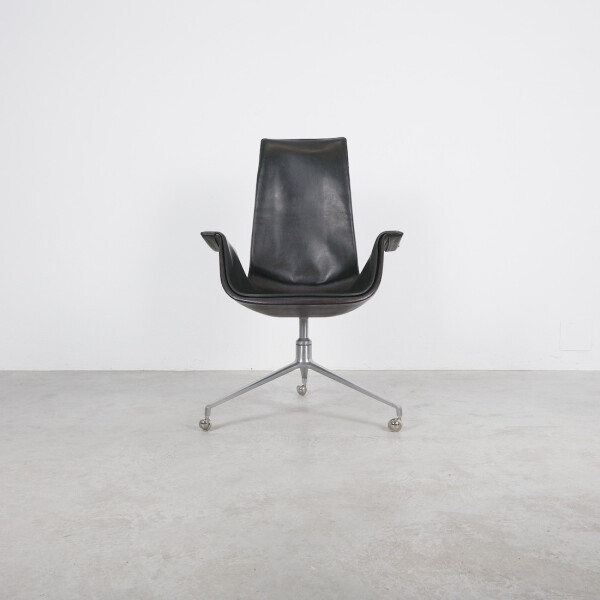
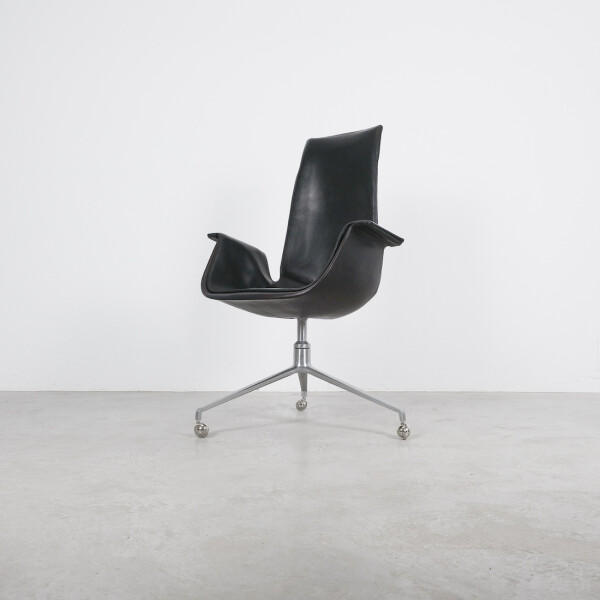
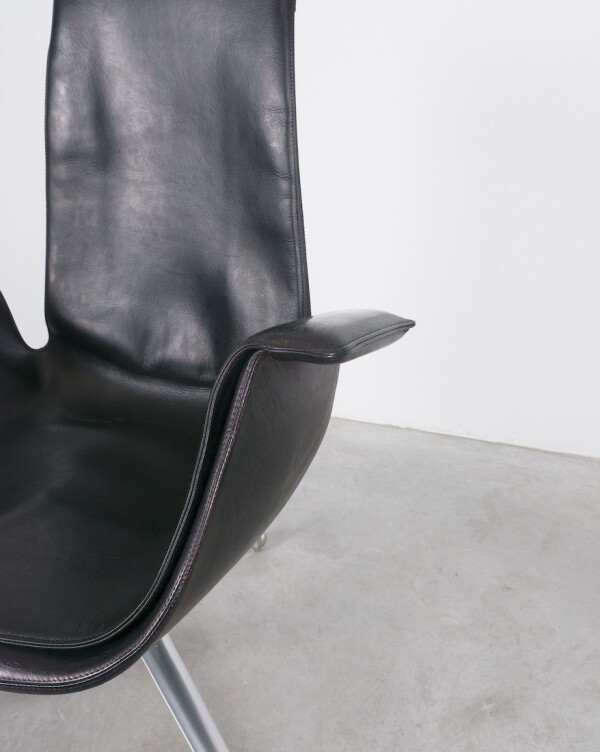
FK 6725 “Bird” Chair
The Connoisseur’s Pick, 1964Designer — Preben Fabricius and Jørgen Kastholm.
Materials — Sculpted leather shell spreading above a swivel base; steel-and-leather exactness.
Signature Details
- Denmark’s answer to the executive category
- Quality above its market price
- Brisk auction trade in originals
Spotting an Original
- Kill International provenance on vintage
- Shell form and leatherwork
- Lange Production marks on current builds
Production
1964; Lange Production current
Licensed Today
Lange Production
9. Chandigarh Office Cane Chair – Pierre Jeanneret, c. 1955
The Chandigarh office chair is the canon’s civil servant: Pierre Jeanneret’s teak-and-cane desk seating for the administrative buildings of Chandigarh, drawn in the mid-1950s and made by the thousands for working bureaucrats — which makes it the only chair here designed as office equipment for a whole city. The auction market’s love affair with the Chandigarh corpus applies in full, and so does its caution: this is the most faked body of work in the mid-century trade, and documentation outranks every other consideration.
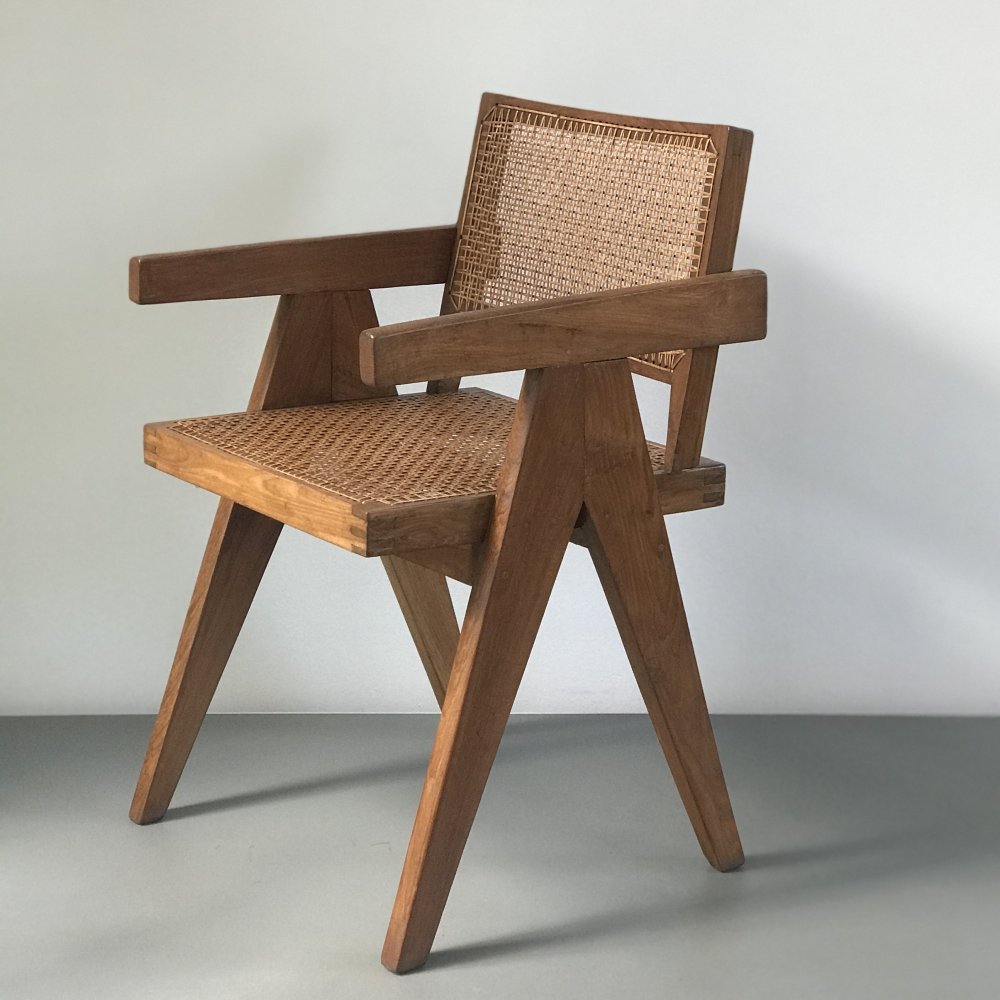
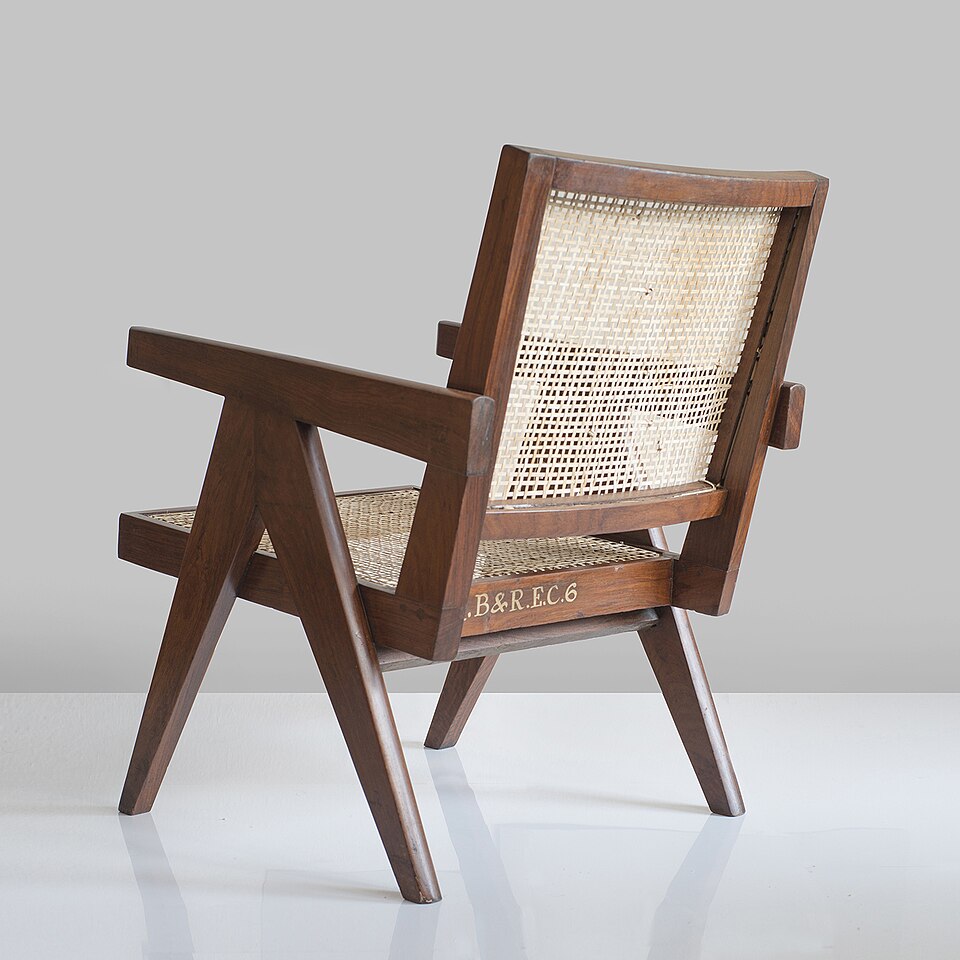
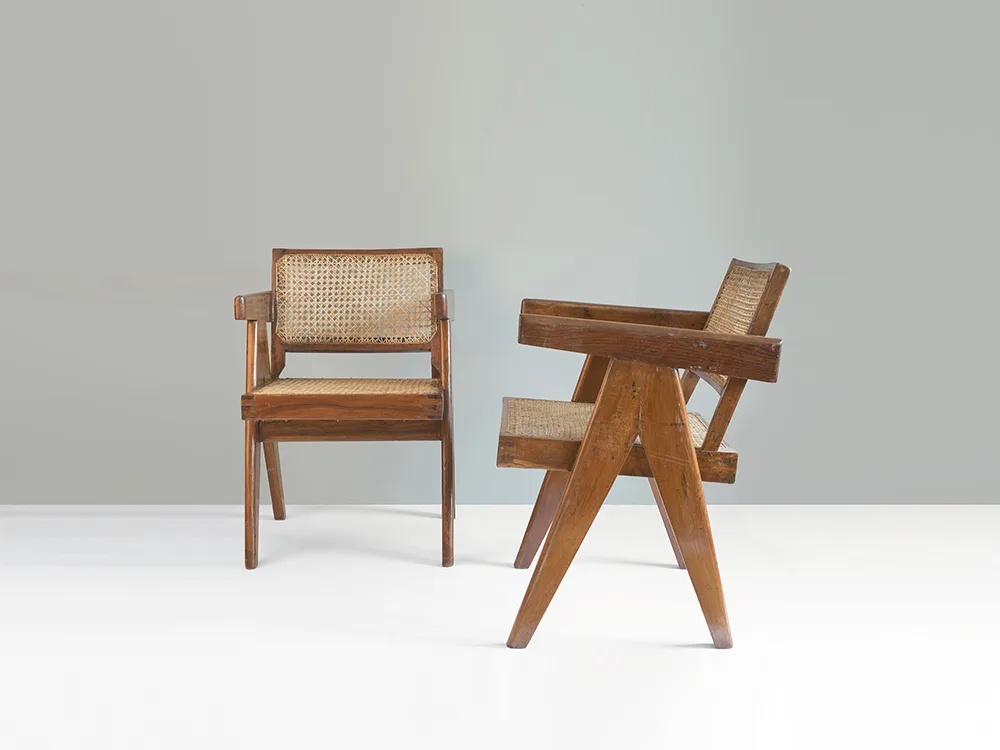
Chandigarh Office Cane Chair
The Canon’s Civil Servant, c. 1955Designer — Pierre Jeanneret, for the administrative buildings of Chandigarh.
Materials — Solid teak frame, cane seat and back; made by the thousands for working bureaucrats.
Signature Details
- Office equipment designed for a whole city
- Government surplus turned auction star
- The most faked corpus in the trade
Spotting an Original
- Documented Chandigarh provenance only
- Teak aging consistent with the claim
- Cassina estate marks on reissues
Production
c. 1955; Cassina reissue current
Licensed Today
Cassina – Estate Collection
10. Eames Molded Shell, Task Configuration – Herman Miller, 1950s
The molded shell on a task base is the era’s democratic desk chair: the same one-piece fiberglass shell that seated mid-century dining rooms, ordered on swivel and rolling bases for offices — the system logic of one shell, many bases, applied to work. It remains the least expensive licensed route to a genuinely mid-century desk chair, vintage shells with period task bases turn up regularly, and the fiberglass texture rules from our chairs guide apply unchanged.
Most of what sells under this category’s name appears nowhere above: contemporary velvet and bouclé task chairs wearing the era’s tapered-leg costume over a standard gas-lift mechanism. They are furniture, not fraud — but they are not mid-century designs, and a list of icons owes its readers the distinction stated plainly. The anatomy of how beloved designs breed imitations is the subject of the most imitated chair in design history, and the map of where licensed, vintage, and everything else actually sell is in our survey of the best places to buy furniture online.
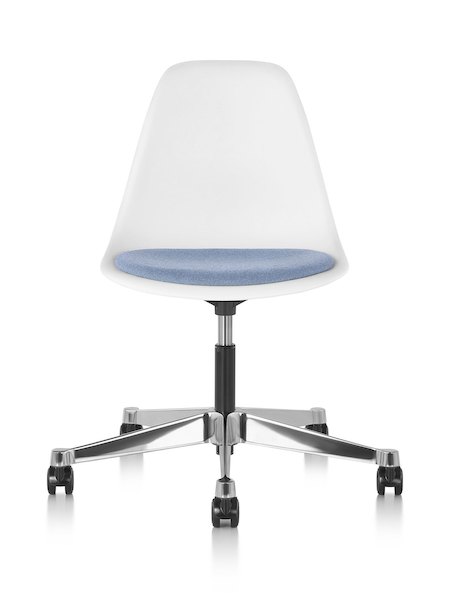
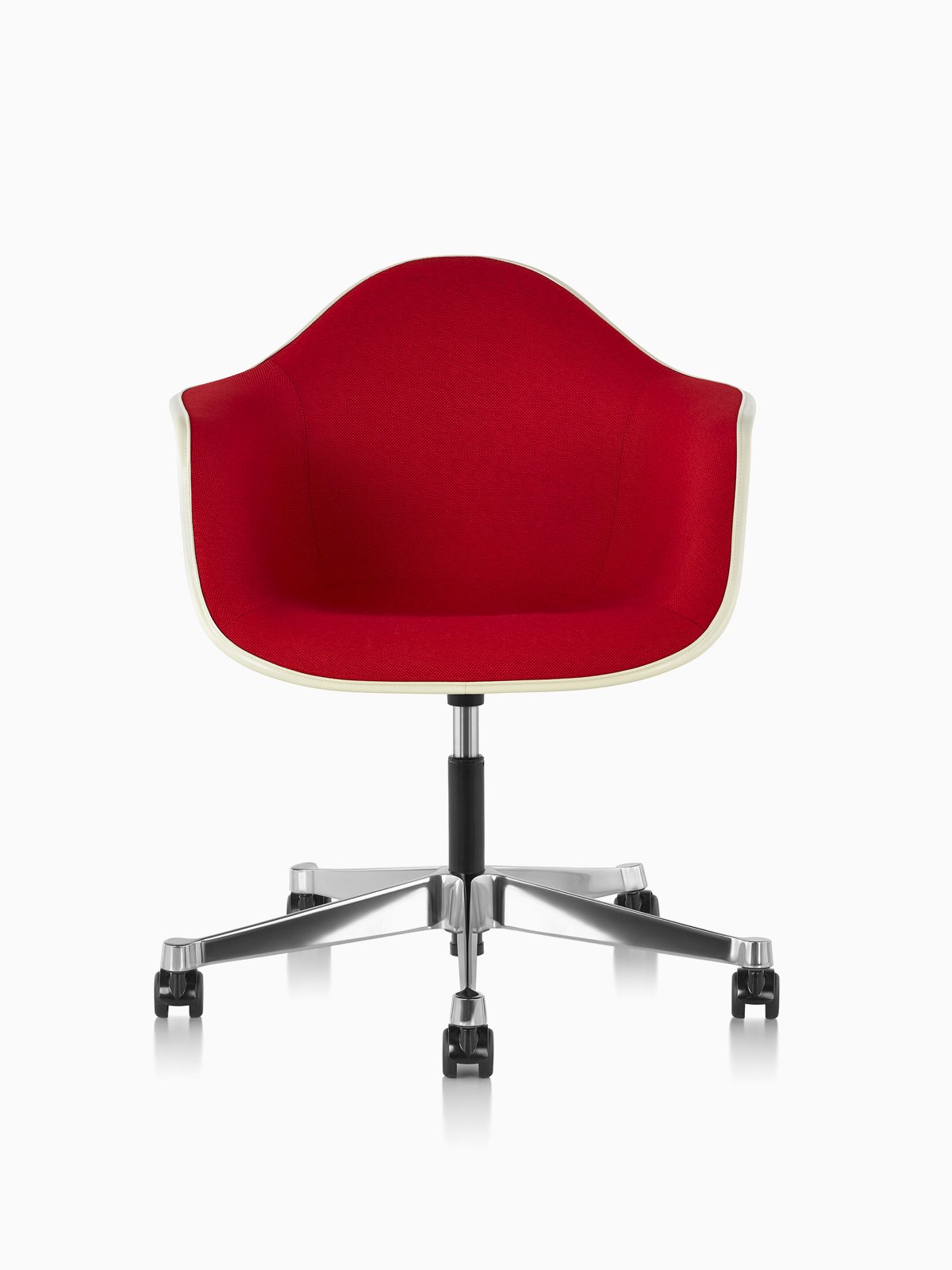
Eames Molded Shell, Task Base
The Democratic Desk Chair, 1950sDesigner — Charles and Ray Eames for Herman Miller — the shell system applied to work.
Materials — One-piece fiberglass (now also polypropylene) shell on swivel and rolling task bases.
Signature Details
- One shell, many bases — the system at the desk
- Vintage fiberglass shows strand texture
- The accessible licensed entry point
Spotting an Original
- Herman Miller stamps under the shell
- Period task base matches shell era
- Shell edge finish and texture
Production
1950s onward
Licensed Today
Herman Miller / Vitra; Modernica fiberglass
What is a true mid-century modern office chair?
A documented design from roughly 1945–1970 built for desk or executive use: the Eames Aluminum, Soft Pad, and Time-Life groups, Pollock’s and Saarinen’s executives for Knoll, Jacobsen’s Oxford, and their peers. The velvet-and-gold task chairs sold under the label are contemporary designs in period styling — a different product answering a different budget.
Are Eames-era office chairs ergonomic by modern standards?
Partially. The tension-membrane Aluminum Group and its descendants support posture well and adjust for height and tilt, but none offers the lumbar systems, seat-depth adjustment, or long-shift tuning of a modern task chair. The honest split many owners run: the mid-century chair for presence and meetings, a modern ergonomic chair for the eight-hour days.
Which mid-century office chairs are still in production?
Nearly the whole canon: Herman Miller and Vitra build the Eames groups, Knoll the Pollock and Saarinen executives, Fritz Hansen the Oxford, PP Møbler the Wegner Swivel, Lange Production the FK 6725, and Cassina the Chandigarh designs under the Jeanneret estate. Continuous production is much of what separates this list from the costume tier.
Do vintage mid-century office chairs hold value?
The documented ones do — Time-Life and Soft Pad examples in original leather, Pollocks with clean rims, and provenanced Chandigarh pieces all trade firmly, and the FK 6725 remains the value pick relative to its quality. Condition and maker’s marks carry the price; reupholstered examples trade on the frame’s honesty.
What is the best mid-century office chair for daily work?
The Eames Aluminum and Soft Pad groups adjust for height and tilt and carry the longest sitting hours most gracefully; Wegner’s PP502 is the canon’s most deliberate back-support design, shaped with a physician’s research; and the molded shell on a task base is the accessible entry. For eight-hour screen days, many owners pair one of these with a modern task chair and keep the icon for the room it improves.
Resources
- Eames Office — Aluminum Group History and the Irwin Miller House Commission
- Herman Miller / MillerKnoll — Eames Aluminum, Soft Pad and Time-Life Production Records
- Knoll — Pollock and Saarinen Executive Collection Documentation
- Fritz Hansen — Oxford Chair, St Catherine’s College Archive
- PP Møbler — pp502 Swivel Chair Design History (the Snorrason Collaboration)
- Architecture Lab — 23 Most Loved Mid-Century Modern Chairs
- Architecture Lab — The Most Imitated Chair in Design History
- Architecture Lab — Best Places to Buy Furniture Online

