

Bunk beds combine functionality, playfulness, and intelligent space planning for homes, dorms, and compact apartments. They stack or elevate sleeping zones to free valuable floor area for study, play, or storage. Designs range from classic twin-over-twin wooden bunks to metal lofts and built-in alcove beds. This guide explains every major bunk bed type—organized by material, design, and style—so you can choose a safe, durable, and space-efficient bunk bed for your family or project.

Bunk Beds Based on Material
1. Wooden Bunk Beds
Wooden bunk beds provide warmth, structural strength, and timeless design appeal. Hardwoods like oak, maple, or ash hold more weight and resist racking, while softwoods such as pine work well for children’s rooms when properly reinforced. Wooden frames can be sanded, stained, or repainted easily, making them ideal for long-term use. Typical lifespan exceeds 20 years with basic maintenance.

2. Metal Bunk Beds
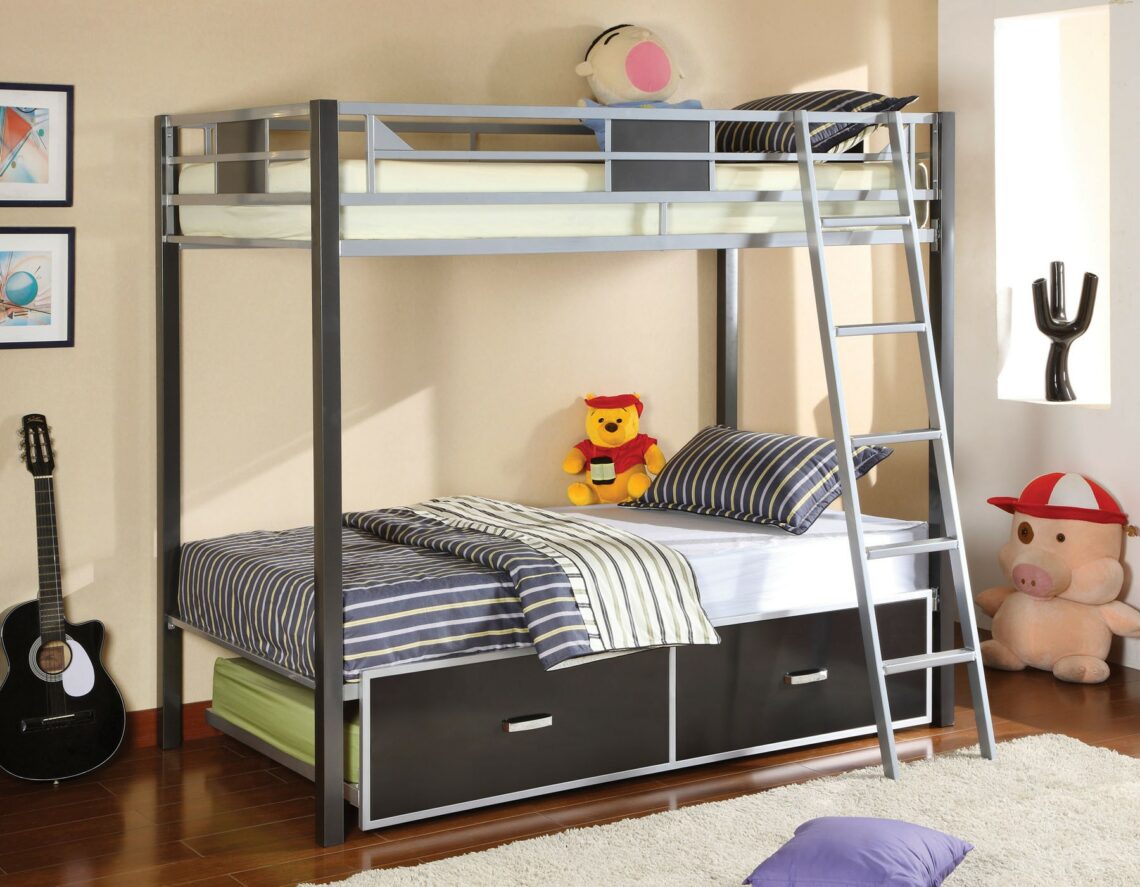
Metal bunk beds use tubular or square steel frames to achieve a slim, minimal look. Powder-coated finishes resist rust and are available in black, white, and bright primary tones for kids’ rooms. Metal beds suit dormitories and studio apartments because they’re light and easy to move. Always check manufacturer weight ratings—top bunks often support 90–115 kg (200–250 lb).
Bunk Beds Based on Design
3. Standard Bunk Bed
A standard bunk bed, also known as a twin-over-twin, features two equal sleeping surfaces stacked vertically with a ladder and guardrails. This design maximizes space in shared bedrooms and small apartments. Standard bunks typically accommodate standard twin mattresses measuring 96 cm × 190 cm (38 × 75 in). Many models convert later into two separate twin beds.

4. Loft Bed
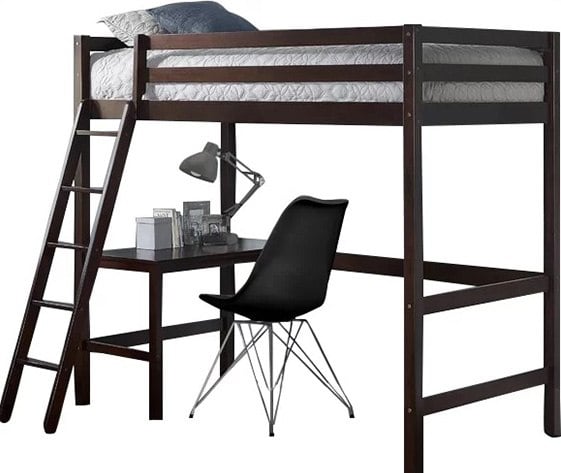
A loft bed elevates a single mattress to create usable space below for a desk, sofa, or wardrobe. It’s ideal for small bedrooms or studio apartments where every square meter counts. Clearance under the loft usually measures about 140–150 cm (55–59 in). Metal and wood variants both work well, depending on the desired style and budget.
5. Futon Bunk Bed
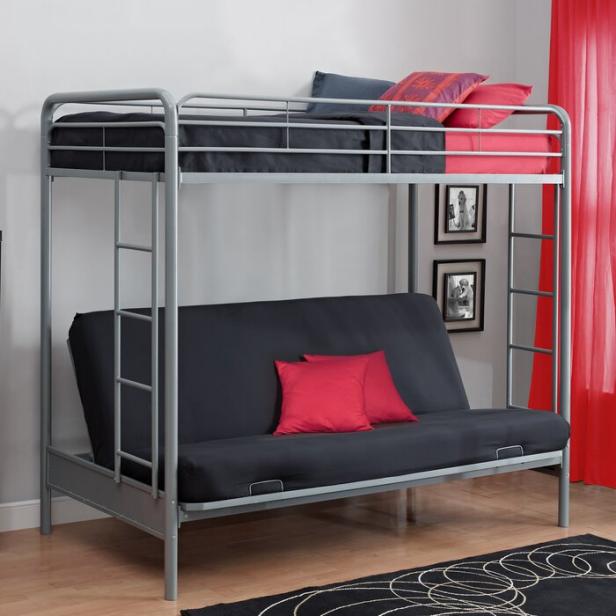
A futon bunk bed pairs a standard bed on top with a foldable futon couch below, serving as both sofa and guest bed. This hybrid layout works perfectly for teens or dorm rooms. When unfolded, a futon provides full sleeping space, but ensure at least 80 cm (31 in) of clearance for the backrest to tilt safely.
6. Triple Bunk Bed
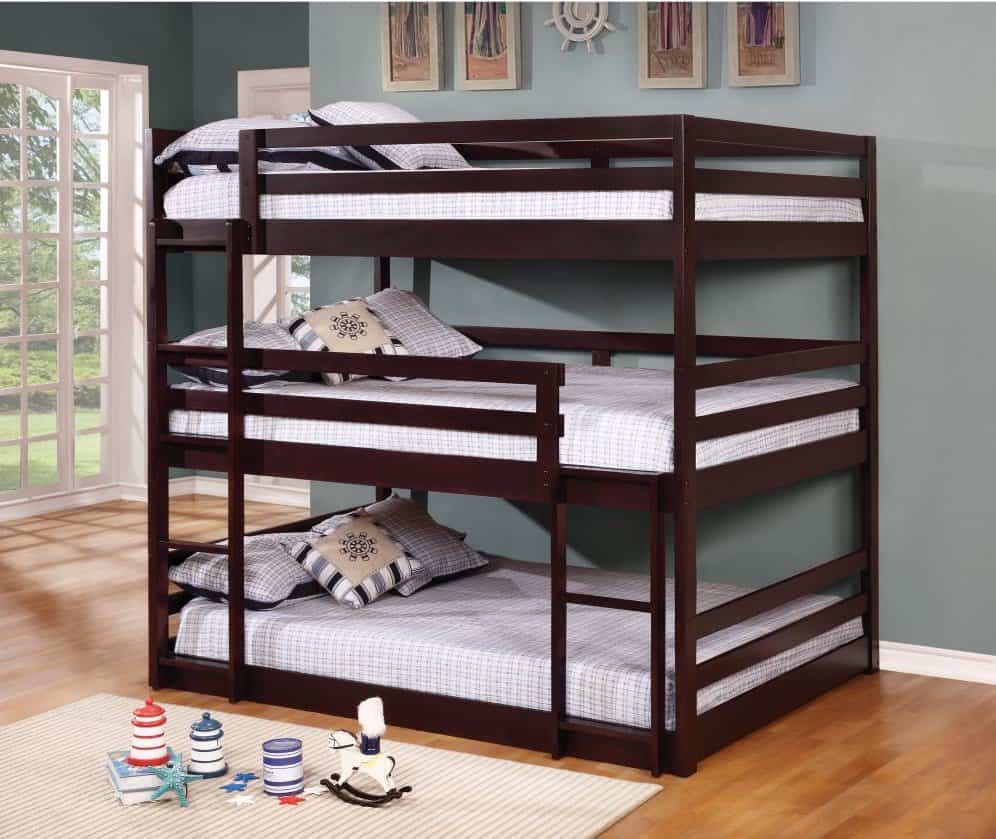
A triple bunk bed stacks three sleeping levels, making it the best choice for large families, dorms, or cabins. The ceiling height should exceed 2.7 meters (9 feet) to maintain adequate headroom between levels. Sturdy hardwood or reinforced metal frames are essential for load stability. Triple bunks can sleep three adults comfortably when properly rated.
7. Trundle Bunk Bed
A trundle bunk bed hides an extra pull-out bed under the bottom bunk for guests or siblings. The lower trundle slides on casters, requiring about 90 cm (35 in) of clear floor space to extend fully. It’s the most practical way to add a third sleeping zone in rooms with low ceilings or limited vertical space.

8. Treehouse Bunk Bed
A treehouse bunk bed adds playful architecture by framing the upper bunk as a miniature house. Made almost exclusively from wood, it often includes windows, a roofline, and built-in shelving. Treehouse designs typically cost 25–30% more than standard bunks but double as imaginative play spaces, eliminating the need for separate play furniture.

9. L-shaped Bunk Bed
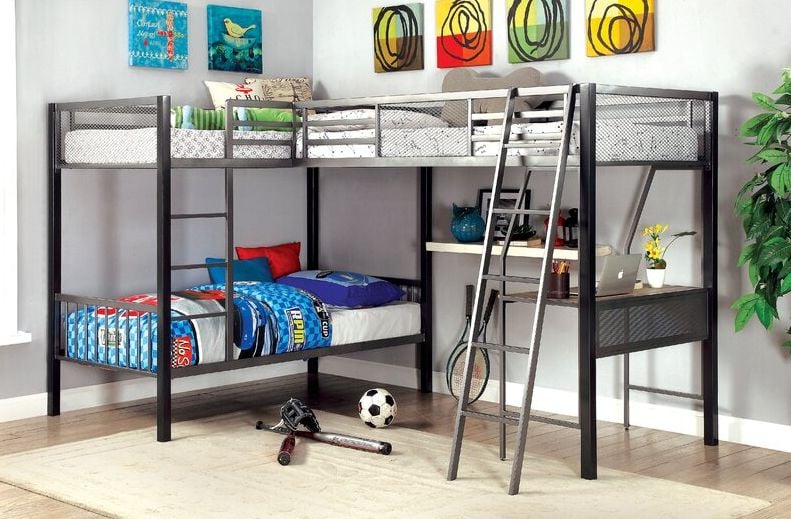
An L-shaped bunk bed places the lower and upper bunks at a 90° angle, forming an “L.” This design opens the center of the room and allows for added drawers, desks, or storage cabinets. The layout works well in corners or shared rooms where visual separation is desired. Many models include a workstation beneath the elevated section.
10. Study Bunk Bed
A study bunk bed integrates a desk or workstation beneath a raised sleeping platform. It’s a space-saving choice for students or children who need a dedicated study area. Proper lighting and cable management improve comfort and organization. For safety, ensure guardrails extend at least 13 cm (5 in) above the top mattress height.
11. Built-in Bunk Bed
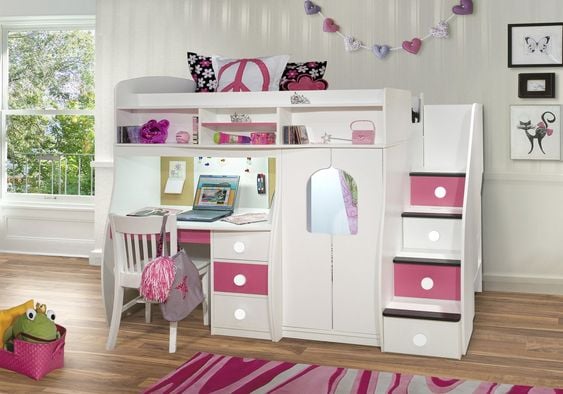
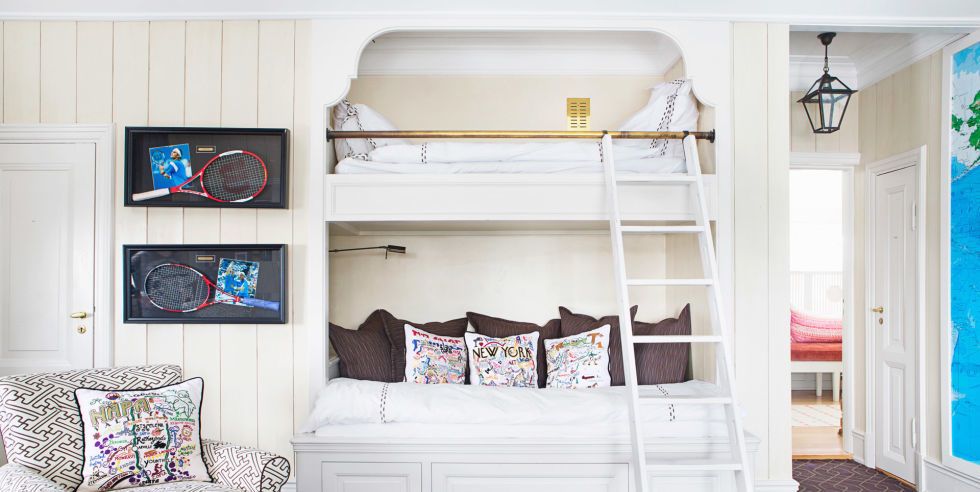
A built-in bunk bed is custom-constructed into a wall niche or alcove. It feels permanent, safe, and architecturally cohesive. Built-ins can incorporate drawers, shelves, or staircases instead of ladders, making them ideal for young children. The price ranges from 2,500 to 8,000 $ (2,300–7,360 € , £2,000–6,400) depending on materials and finish.
Bunk Beds Based on Style
12. Traditional Bunk Bed
A traditional bunk bed relies on solid wood, framed headboards, and symmetrical posts. This classic silhouette suits heritage interiors or cozy cabins. Traditional bunks emphasize durability and long life rather than modular flexibility. Most include turned spindles or carved accents that recall early 20th-century craftsmanship.
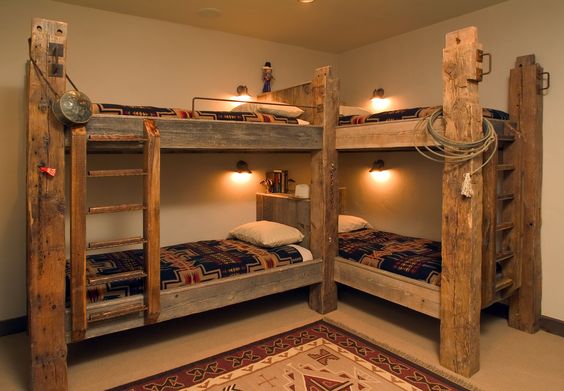
13. Rustic Bunk Bed
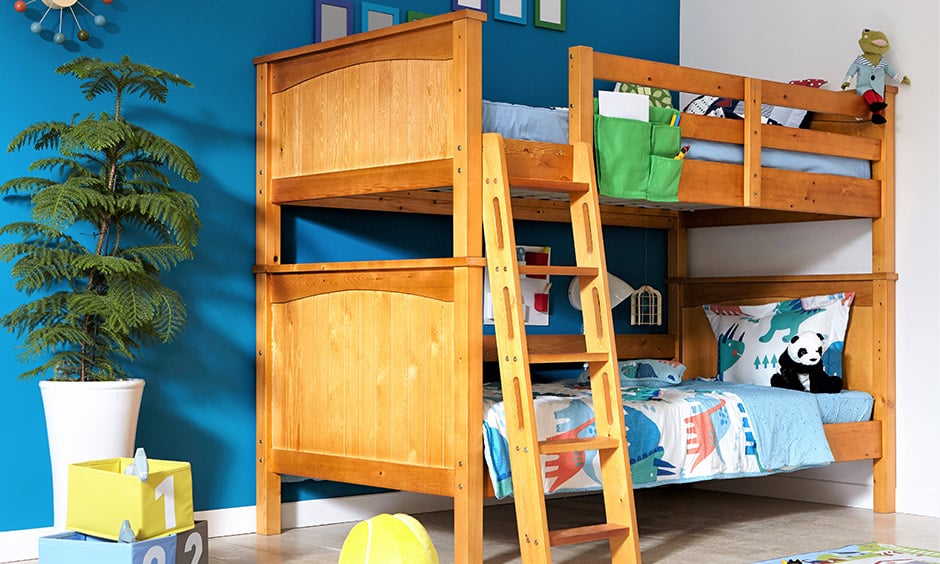
A rustic bunk bed uses unpolished timber or log construction for a handcrafted appearance. It fits perfectly in mountain homes, lodges, and nature-themed kids’ rooms. The rough-hewn look hides wear, and protective sealants make rustic bunks safe for everyday use. Expect natural imperfections—they’re part of the design’s character.
14. Modern Bunk Bed
A modern bunk bed emphasizes minimalism, function, and integrated storage. Flat panels, built-in drawers, and hidden hardware create clean lines. These designs work in both children’s and adults’ bedrooms, especially where a sleek, uncluttered look is desired. Many modern bunks include built-in steps rather than ladders for easier access.

15. Industrial Bunk Bed
An industrial bunk bed borrows cues from warehouse and loft interiors. Blackened steel pipes, mesh guardrails, and exposed bolts create a raw, utilitarian aesthetic. These bunks are popular with teens and college students for their rugged, grown-up appeal. A clear powder coat prevents corrosion and makes cleaning effortless.
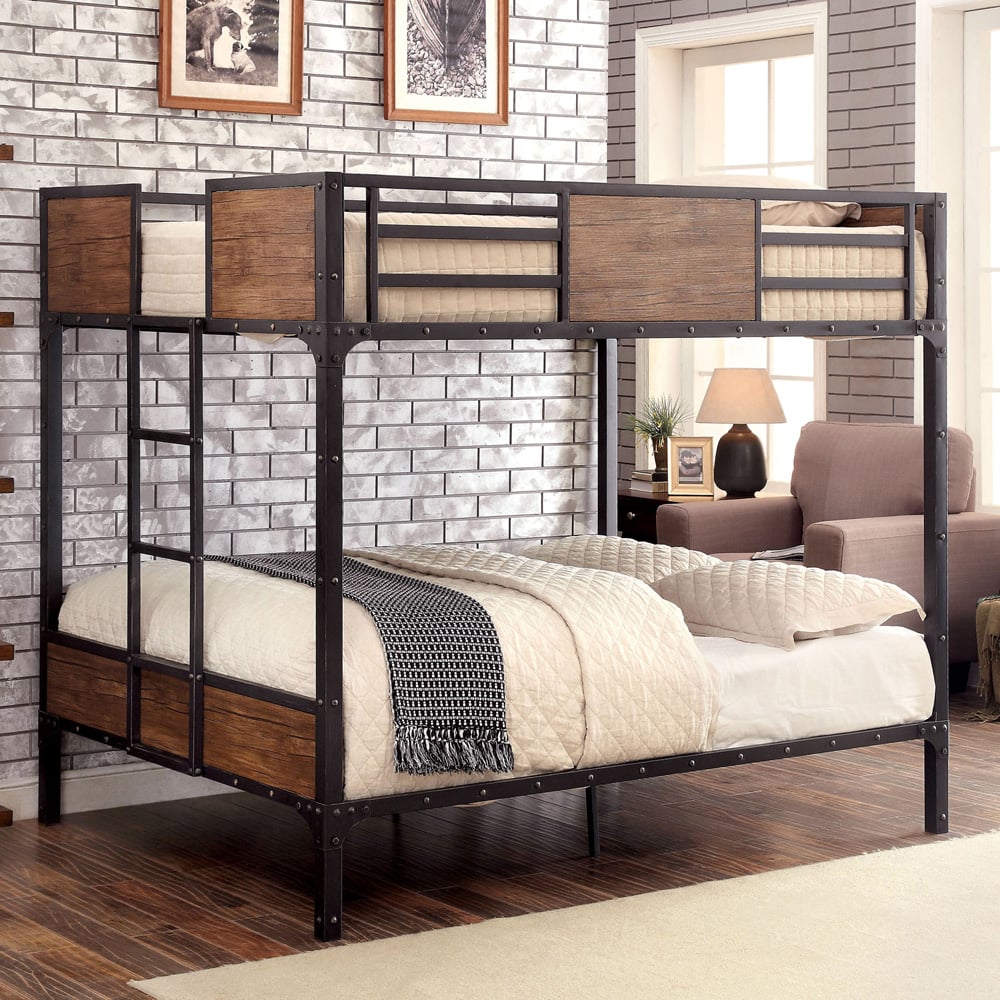
16. Transitional Bunk Bed
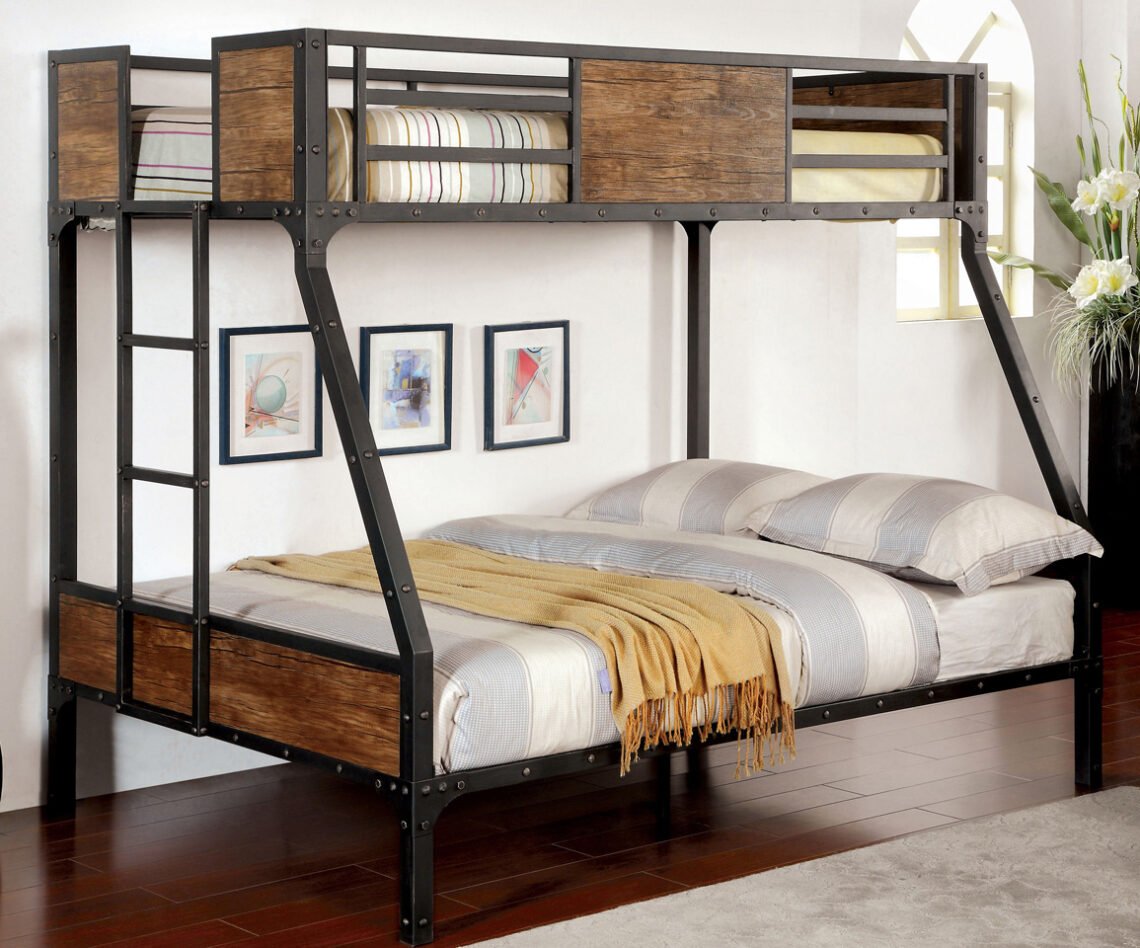
A transitional bunk bed bridges classic warmth and modern efficiency. Frames may combine wood posts with metal rails or matte hardware. The neutral palette works across interior styles and age groups. Transitional bunks remain one of the most versatile categories because they adapt visually to both traditional and modern decor.
Buying Guide: How to Choose the Right Bunk Bed
Measure the room height first. A top bunk needs at least 76–90 cm (30–36 in) of headroom above the mattress to sit up safely.
Select the bed size by user age. Twins fit children; fulls or twin-over-fulls suit teens or adults.
Match the material to longevity. Hardwood and metal frames last longest.
Add storage if space allows. Built-in stairs with drawers or desks beneath lofts increase usability.
Check safety certifications. ASTM or EN-747 labels confirm compliance with fall and load standards.
Bunk Bed Types Comparison Table
| Type | Typical Fit | Sleeps | Storage | Average Price* | Lifespan | Notable Feature |
|---|---|---|---|---|---|---|
| Wooden | Most homes | 1–4 | High | 400–1,800$ (370–1,660€ , £320–1,440) | 20+ yrs | Warm, classic look |
| Metal | Dorms, studios | 1–4 | Low | 250–1,200$ (230–1,100€ , £200–950) | 10–15 yrs | Lightweight frame |
| Standard | Shared rooms | 2 | Medium | 250–900$ (230–830€ , £200–700) | 15–20 yrs | Converts to twin beds |
| Loft | Small spaces | 1 | High | 300–1,200$ (275–1,100€ , £240–950) | 20 yrs | Space under bed |
| Futon | Guest rooms | 2–3 | Low | 350–1,000$ (320–920€ , £280–800) | 10–15 yrs | Sofa by day |
| Triple | Large families | 3 | Low | 700–2,000$ (640–1,840€ , £560–1,600) | 20 yrs | 3 stacked bunks |
| Trundle | Low ceilings | 3 | High | 450–1,200$ (410–1,100€ , £360–950) | 15–20 yrs | Pull-out 3rd bed |
| Treehouse | Kids’ rooms | 1–2 | Medium | 800–2,500$ (740–2,300€ , £640–2,000) | 15 yrs | Playhouse design |
| L-Shaped | Corners | 2–4 | High | 600–1,800$ (550–1,660€ , £480–1,440) | 20 yrs | Open floor center |
| Study | Teen rooms | 1 | High | 500–1,500$ (460–1,380€ , £400–1,200) | 20 yrs | Integrated desk |
| Built-in | Custom homes | 2–4 | High | 2,500–8,000$ (2,300–7,360€ , £2,000–6,400) | 30+ yrs | Permanent joinery |
| Traditional | Any | 2 | Medium | 400–1,400$ (370–1,290€ , £320–1,100) | 25 yrs | Classic detailing |
| Rustic | Cabins | 2 | Low | 600–1,800$ (550–1,660€ , £480–1,440) | 25 yrs | Natural texture |
| Modern | Urban homes | 1–3 | High | 500–2,000$ (460–1,840€ , £400–1,600) | 20 yrs | Minimal lines |
| Industrial | Dorms | 2 | Low | 350–1,200$ (320–1,100€ , £280–950) | 15 yrs | Steel pipe design |
| Transitional | Most homes | 2 | Medium | 450–1,500$ (410–1,380€ , £360–1,200) | 20 yrs | Mixed materials |
Frame only; mattresses sold separately. Prices vary by retailer and region.
Bunk Beds Frequently Asked Questions
At what age is it safe to use the top bunk?
Children aged six or older can safely use the top bunk when the bed includes full-height guardrails on all sides and a stable fixed ladder or staircase. Younger children should always sleep on the lower bunk for better safety.
How much ceiling clearance should a bunk bed have?
A minimum of 76–90 cm (30–36 in) between the top mattress and the ceiling allows comfortable sitting and prevents head bumps. Triple bunks require ceilings at least 2.7 m (9 ft) high for safe use.
Can a regular twin mattress fit in a bunk bed?
Yes. Standard twin mattresses measuring 96 × 190 cm (38 × 75 in) fit most bunks. Avoid mattresses thicker than 20 cm (8 in) to ensure guardrails remain above mattress height for safety compliance.
Where is the best place to position a bunk bed?
Place the bed in a corner to reduce exposed edges and free wall space. Keep it away from windows, ceiling fans, and light fixtures. Maintain an accessible outlet nearby for a nightlight or charging devices.
Is a triple bunk bed worth it for families?
Triple bunks are ideal for households with three children or frequent guests and tall ceilings. They maximize vertical space but require careful ladder and guardrail inspection before use.
Can bunk beds be repainted or refinished?
Wooden frames can be sanded and refinished using low-VOC paint or varnish. Metal frames can also be repainted after light sanding and priming with oil-based enamel. Always reassemble after full curing.
Key Safety Guidelines
- Guardrails must rise at least 13 cm (5 in) above the mattress surface.
- Ladders should attach securely to prevent movement.
- Stairs with drawers offer safer access for younger users.
- Always check fasteners after moving or reassembling a bunk bed.
- Keep top bunks clear of ceiling fans and pendant lights.
Final Thought
A well-chosen bunk bed turns limited floor space into an organized, flexible sleeping area. Wood rewards longevity and timeless warmth; metal and engineered designs deliver lightness and ease of movement. The best choice aligns with room height, user age, and storage needs, proving that good design always begins with proportion and ends with comfort.
How to Decorate Your Bedroom for Better Sleep
20 Stunning Hanging Bed Ideas for Indoor & Outdoor Relaxation

