

Ceiling lighting defines the tone and function of interior architecture. Beyond visibility, ceiling lights influence proportion, mood, and visual continuity between spaces. Selecting the right type involves understanding the relationship between fixture form, light quality, ceiling height, and intended activity.
This guide explains seventeen ceiling light types and the logic behind their design. It also outlines materials, lighting control systems, and room-specific recommendations used by architects and interior designers when defining lighting layers.
Types Of Ceiling Lights

A. Mounted Ceiling Lights
Mounted fixtures attach close to the ceiling plane and are ideal for smaller rooms or spaces with ceilings lower than 8 feet (2.4 m). They create general or ambient light without encroaching on spatial volume.
1. Flush Lights
Flush fixtures sit flat against the ceiling. Their shallow form spreads light evenly, making them suitable for bedrooms, corridors, and compact bathrooms.
Typical diameters range between 12 and 24 inches. A single large flush fixture can illuminate a medium-sized room if fitted with the correct lumen output. In low spaces, flush lights prevent clutter and maintain a calm ceiling line.

2. Semi-Flush Lights
Semi-flush fixtures hang several inches below the ceiling (4–8 in / 10–20 cm). The gap allows light to wash across the ceiling while providing direct illumination below. This dual direction enhances height perception, which benefits spaces between 8 and 10 feet high.
They are often used in small dining rooms or kitchens where a suspended pendant might feel too heavy.

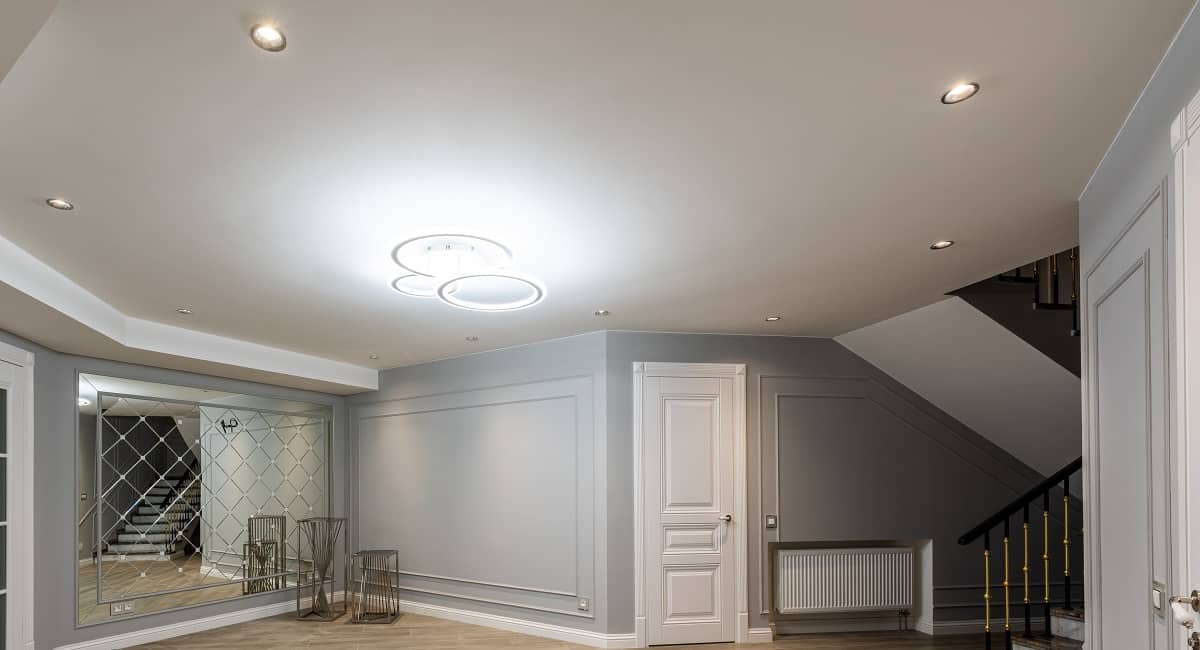
3. Recessed Ceiling Lights
Recessed, or “can” lights, are embedded within the ceiling cavity. They are practical in low or sloped ceilings where the projection must remain minimal.
Each fixture requires about 6 inches (15 cm) of clearance above the ceiling surface for housing and insulation. Since light diffusion from a single recessed unit is narrow, several are usually needed to create uniform brightness.
Directional trims allow accent or task lighting on artwork, counters, or furniture.
4. Utility Lighting
Utility lights serve garages, laundry rooms, and workshops. They prioritize brightness and durability rather than appearance.
Most use flush-mounted LED panels or metal-cased linear fixtures that distribute broad, clear light efficiently. Though simple, they remain indispensable in functional zones.

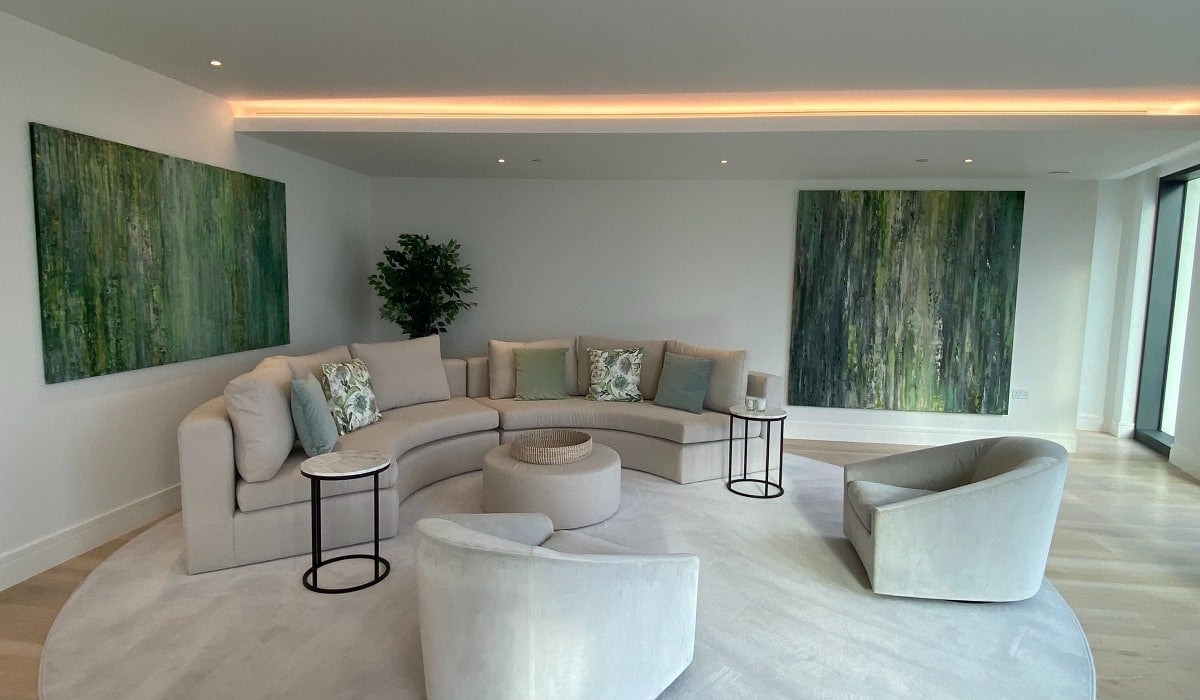
5. LED Indirect Lighting
Indirect lighting uses LED strips concealed behind moldings or recesses. The light reflects off the ceiling, creating a diffused ambient effect without visible sources.
It is energy-efficient, cost-effective, and ideal for bedrooms or living areas requiring gentle light control. Many designers pair indirect strips with flush or semi-flush fixtures for layered results.
B. Hanging Ceiling Lights
Hanging fixtures descend into the room, defining focal points and task zones. They suit medium to high ceilings and rooms where lighting acts as both function and feature.
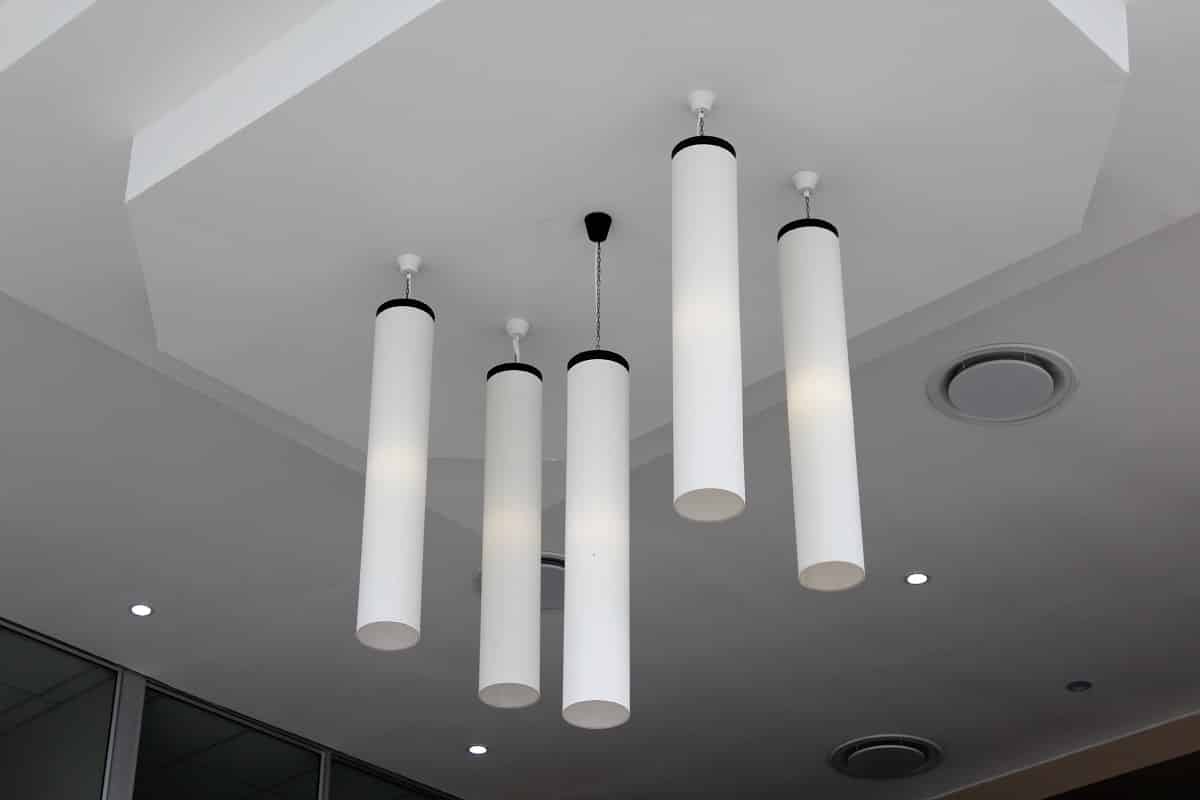
1. Pendant Light
Pendants suspend from cords or rods and direct light downward. They provide focused illumination for work surfaces, dining tables, and kitchen islands.
Single pendants create local focus, while grouped pendants establish rhythm and proportion in long spaces.
Mount height is critical—keep about 30–36 inches above a countertop or table to prevent glare.
2. Inverted Pendant Lights
Inverted pendants direct light upward, producing softer, reflected illumination. This approach visually enlarges smaller rooms and suits dining or living spaces where diffuse glow is preferred.
They also highlight ceiling details such as beams, coffers, or crown moldings.

3. Chandeliers
Chandeliers combine multiple lamps or branches into a single decorative structure. They balance form and illumination, ideal for dining and living rooms with ceilings above 9 feet (2.7 m).
The lowest point should sit around 30 inches above a table. Diameter typically equals half the table width.
Uplight designs enhance spatial height; downlight versions emphasize surfaces below. Installation usually requires professional handling due to weight and wiring complexity.

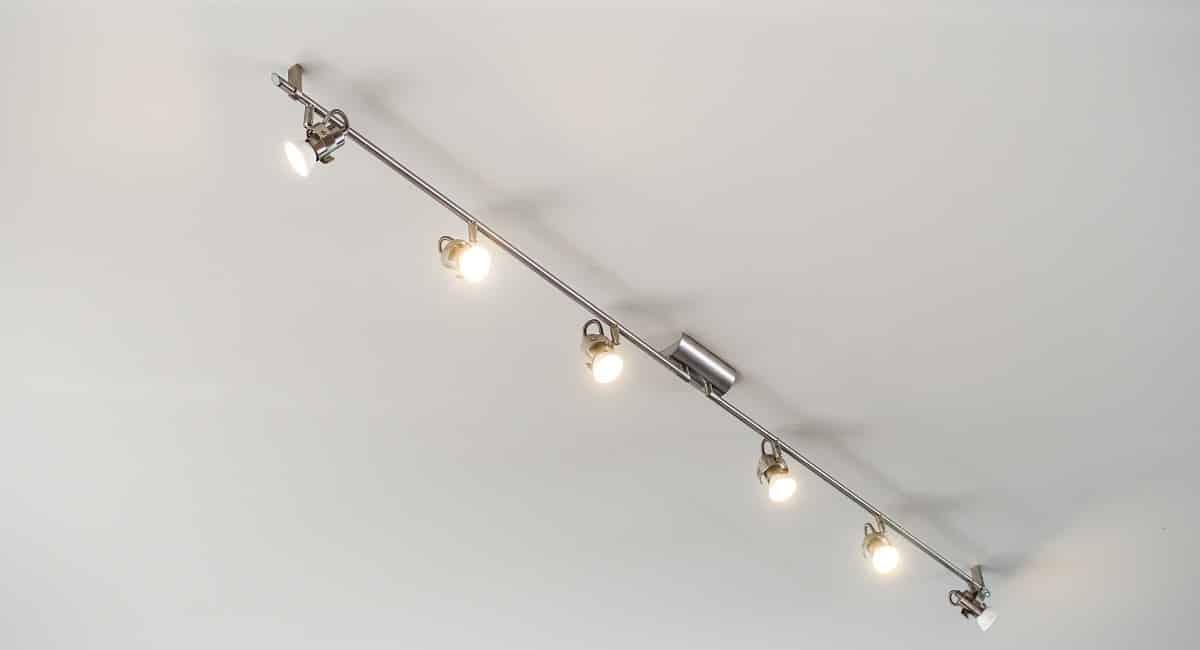
4. Track And Rail Lighting
Track lighting systems position adjustable heads along a powered rail or linear channel. They deliver versatile, directional light for task and accent purposes.
Rail systems extend flexibility by curving to follow architectural lines.
These are common in contemporary kitchens and galleries. Adjustable heads allow precise aiming at artwork or preparation zones.
5. Island Lighting
Island fixtures focus on kitchen islands or workbenches. They hang lower than general pendants and distribute light evenly across the work surface.
Designs range from single linear bars to multiple grouped pendants. Beyond function, island lighting often becomes a visual anchor within an open-plan kitchen.

C. Ceiling Light Materials
The fixture material determines the character, diffusion, and reflectivity of light. It also contributes to the design vocabulary of the interior.
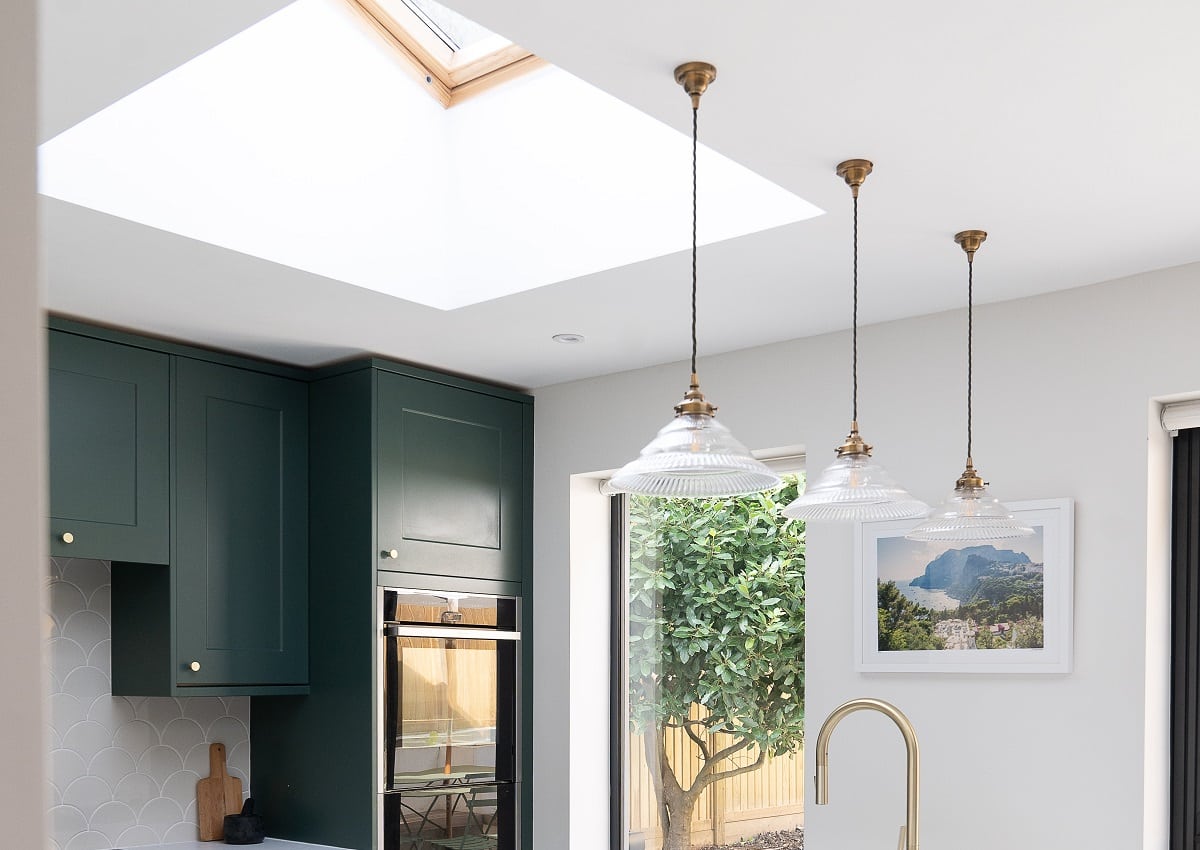
1. Glass Ceiling Lights
Glass diffuses light evenly, making it suitable for general illumination. Clear glass emphasizes brightness, frosted glass softens glare, and tinted glass adds tone or color.
Glass appears across fixture types—flush, semi-flush, pendants, and chandeliers—and adapts to both modern and classic interiors.
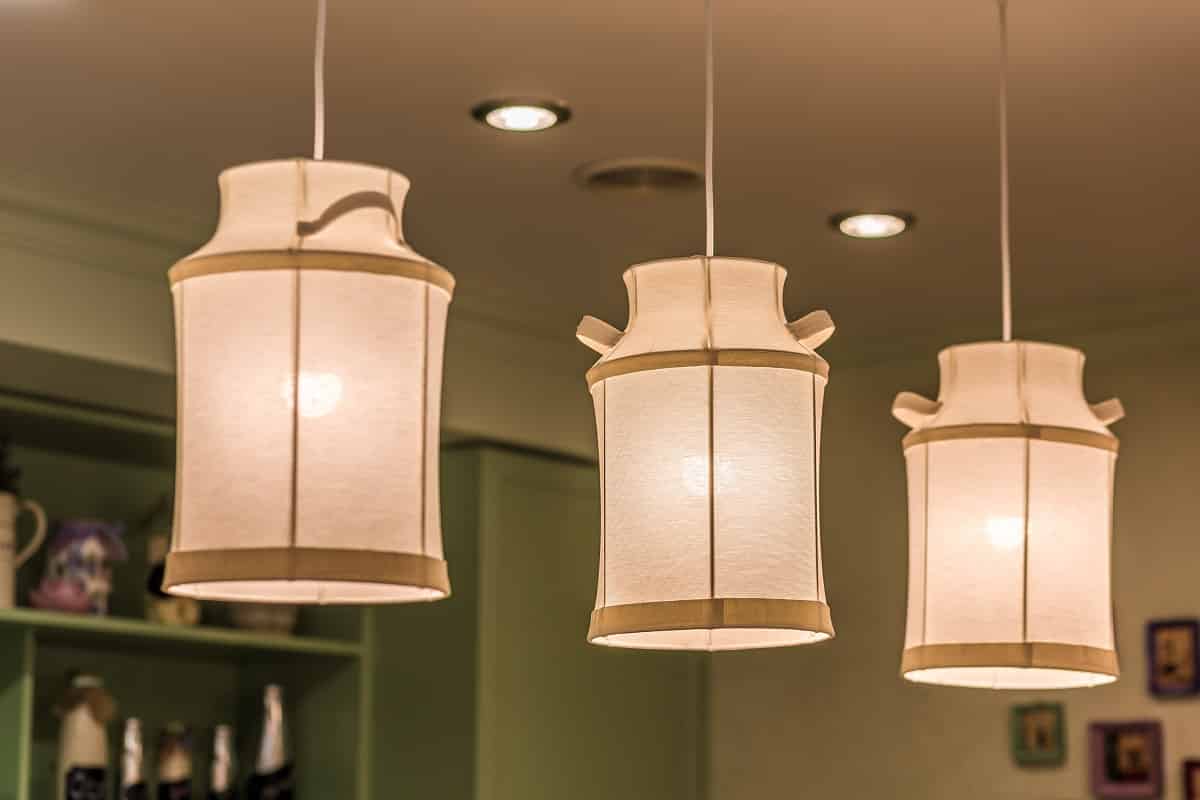
2. Fabric Light Fixtures
Fabric shades emit a gentle, diffused glow that promotes calmness. They fit bedrooms, lounges, and hospitality spaces where warmth and comfort are essential.
Shade color influences visibility and mood: lighter tones brighten the room; darker fabrics create intimacy.
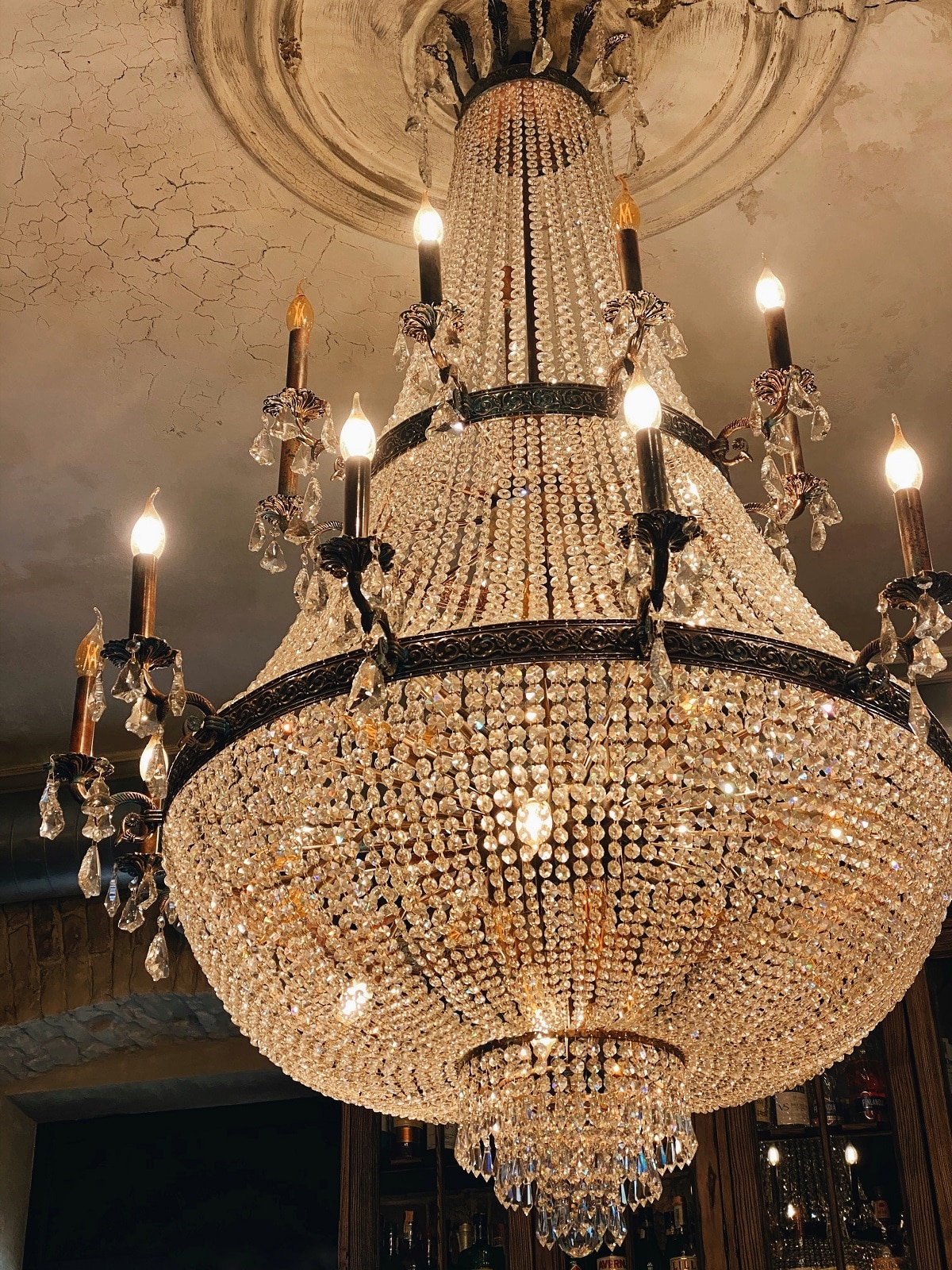
3. Crystal Ceiling Lights
Crystal refracts light across multiple surfaces, creating sparkle and visual complexity. It dominates chandelier design but also appears in pendants or semi-flush forms.
Due to brightness and density, crystal suits spacious interiors with high ceilings.
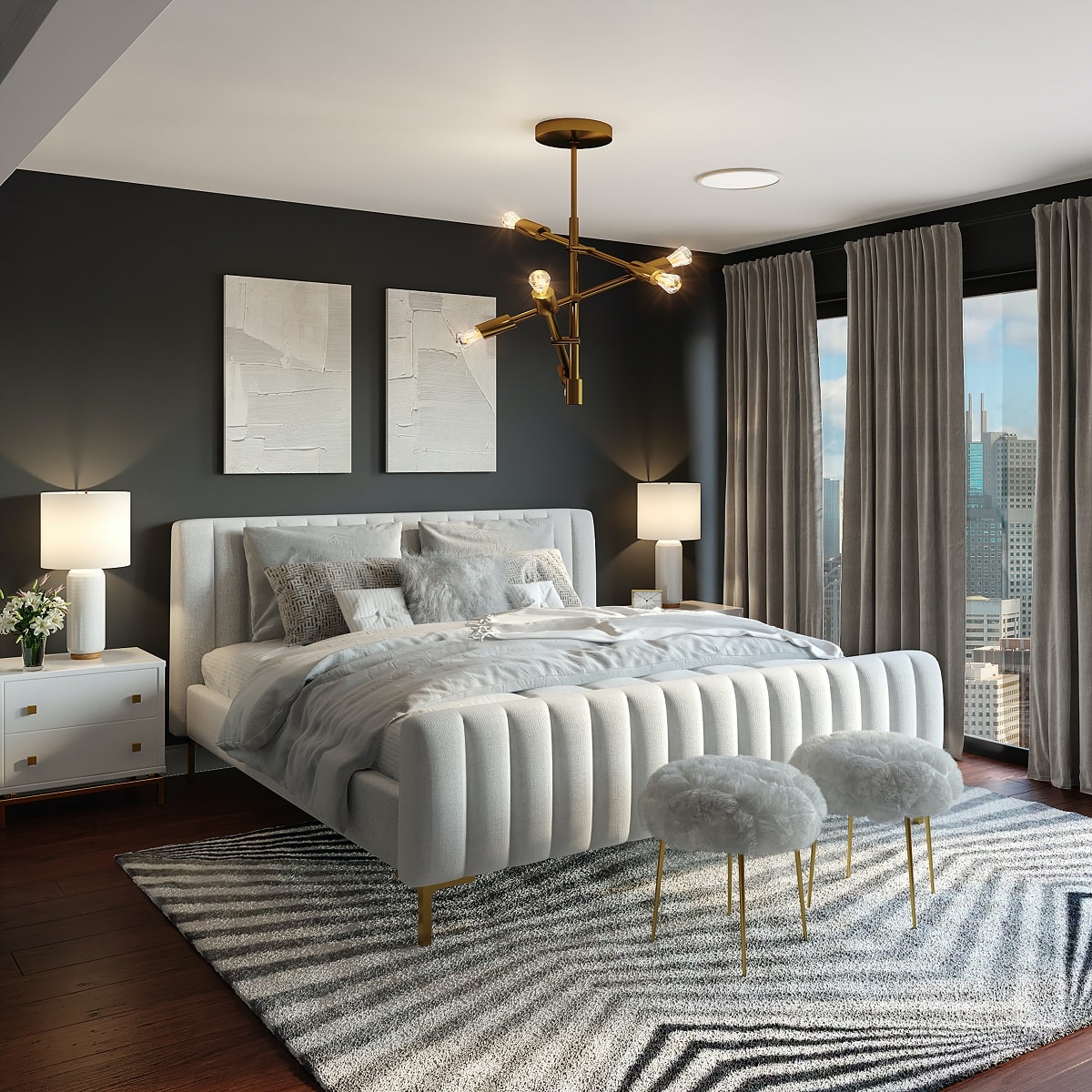
4. Metal Ceiling Lights
Metal offers structural clarity and durability. It appears in linear, industrial, and minimal fixtures such as tracks, pendants, and island bars.
Finishes like brushed nickel, brass, or matte black adapt to distinct architectural palettes.
Metallic surfaces reflect light directionally, contributing to sharper contrast and stronger geometry.
D. Other Ceiling Lights
Now that you’ve looked through our lists of various light designs and ceiling light materials, we’ve added some additional lighting options to amp up your room décor.
1. Ceiling Fans With Lights
Ceiling fans with integrated lamps combine lighting and ventilation. They are efficient in compact rooms where space is limited.
Mounting kits adapt to flat or sloped ceilings, ensuring consistent airflow and balanced light.

2. Ceiling Spotlights
Spotlights emit concentrated beams for focused tasks or display lighting. Modern versions employ LED technology with adjustable color temperature and beam width.
Spotlights often appear in large kitchens or living rooms where specific focal points—art, furniture, or textures—require emphasis.

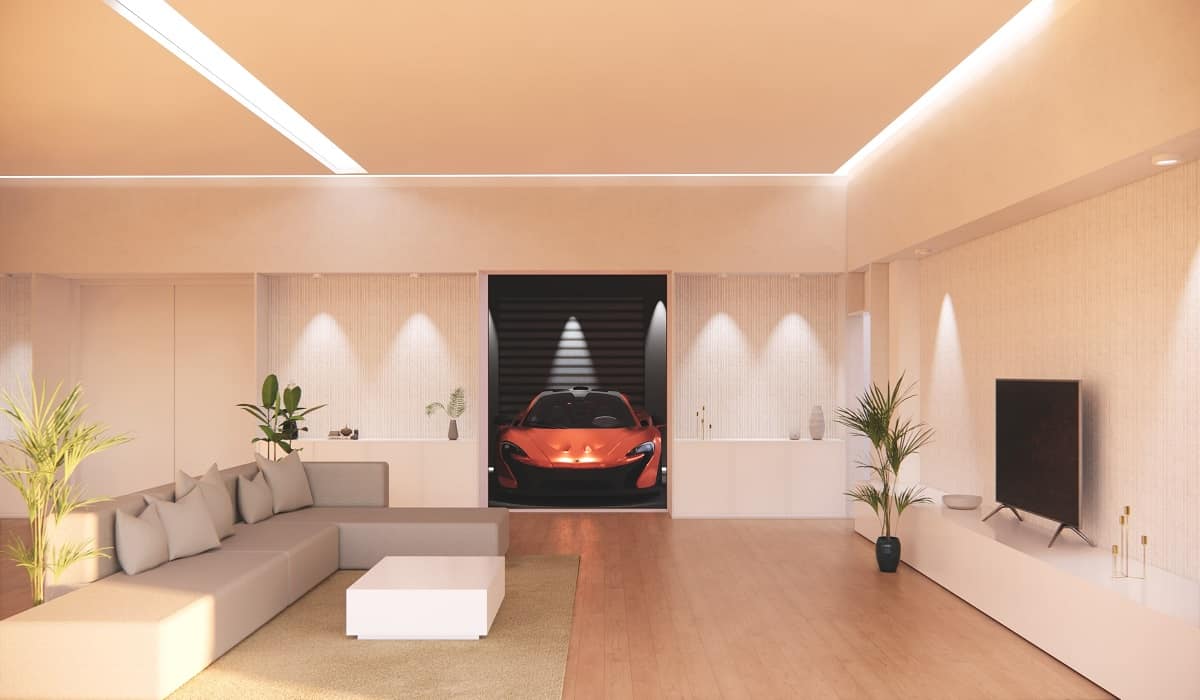
3. Cove Lights
Cove lighting hides within architectural recesses or ledges, reflecting soft illumination onto adjacent surfaces.
It creates depth and dimension without visible hardware. Often used in hallways or living rooms, it functions as the ambient layer of a multi-source lighting plan.
Soundproofing and Ceiling Lights
Lighting design affects acoustics as much as aesthetics. Recessed fixtures and penetrations in ceilings can transmit sound between floors.
To maintain acoustic integrity, surround fixture openings with sound-damping materials such as mass-loaded vinyl or acoustic sealant.
Hard materials like glass and metal reflect sound, while fabric shades absorb a small portion, improving comfort in echo-prone rooms.
How Dimmer Switches Improve Light Control
Dimmer switches regulate intensity and shape the atmosphere. Lowering output saves energy and extends bulb lifespan while adapting brightness to different times of day.
Smart dimmers integrate with digital home systems for remote or automated control.
Check compatibility between bulb type and dimmer mechanism—mismatched components often cause flickering or reduced range.
Choosing Ceiling Lights by Room
Bedroom
Bedrooms benefit from soft, glare-free light. Flush mounts or semi-flush fixtures provide general illumination without overpowering the space.
Pendants above bedside tables serve as focused task lighting, freeing surface area. Recessed trims near wardrobes or mirrors ensure adequate brightness for dressing areas.
Kitchen
Kitchens demand a layered strategy: general ambient light from flush fixtures, task lighting from track heads or under-cabinet LEDs, and focal illumination over the island.
Combining light sources minimizes shadows and supports both cooking and social activities.
Living Room
Living rooms often mix ambient, task, and accent lighting. A chandelier or semi-flush fixture provides central brightness, while spotlights or tracks highlight artwork or architectural features.
Metal or glass pendants fit contemporary layouts; crystal or fabric shades align with classical settings. The goal is balance—enough light for reading or conversation without harsh contrasts.
Best Light Bulbs for Ceiling Fixtures
| Bulb Type | Efficiency | Typical Use | Dimmable | Key Notes |
|---|---|---|---|---|
| LED | Very high | Task & ambient | Yes (if compatible) | 90% less energy use, long life |
| CFL | High | General light | Sometimes | Affordable, slower warm-up |
| Halogen | Medium | Accent & task | Yes | Crisp color, moderate heat |
| Incandescent | Low | Decorative | Yes | Warm color, low efficiency |
Ceiling Lights — Frequently Asked Questions
What are the main components of a ceiling light?
A ceiling fixture generally includes a bulb, socket, reflector, electrical wiring, trim, and diffuser or lens. Each part influences light spread and maintenance.
Can ceiling lights be mounted on walls?
Some flush or recessed fixtures adapt to walls, but pendants and chandeliers are unsuitable because of weight and heat output. Always consult the manufacturer’s specifications.
Are all ceiling lights dimmable?
No. Dimming depends on both bulb and dimmer technology. LEDs and CFLs require compatible electronic dimmers for stable performance.
Why do lights flicker?
Flickering indicates loose connections, incompatible dimmers, or overworked bulbs. If replacing the bulb does not resolve the issue, inspect wiring with a licensed electrician.
Are battery-powered ceiling lights worth using?
Battery-powered lights provide portability and easy installation but lack continuous brightness. They work well as temporary or supplemental lighting rather than main sources.
Key Considerations for Architects and Designers
- Ceiling height dictates fixture type: use flush or recessed in low spaces, hanging fixtures in taller rooms.
- Layer lighting—ambient, task, and accent—to achieve depth and comfort.
- Material and finish should correspond to interior style and light diffusion goals.
- Include dimmers and zoning controls early in the design phase.
- Plan for acoustic and thermal continuity when integrating recessed or cove systems.
Summary
Ceiling lighting defines both function and perception within architecture. Each fixture type—flush, semi-flush, recessed, pendant, chandelier, or cove—serves a distinct role. By matching lighting typology to space proportion, activity, and finish, designers create rooms that feel coherent, efficient, and visually balanced.
Related Articles
30 Best Architect Lamps for Desk, Table & Office

