

The types of doors used in residential architecture play a defining role in spatial layout, acoustic insulation, energy efficiency, and overall visual coherence. Beyond functioning as access points, doors are structural and stylistic components that influence circulation, privacy, and ambient control throughout the home. Contemporary building systems offer a wide spectrum of door types—from sliding, pocket, French, and bifold doors to flush, barn, and pivot options—each tailored for different applications and performance standards. Material selection is equally critical: timber and aluminum offer structural resilience, fiberglass enhances thermal insulation, PVC improves cost-efficiency, while glass doors, including models with textured elements like rainglass, increase light transmission while preserving privacy. Whether you’re specifying internal partitions or statement entry systems, detailed knowledge of these formats ensures architectural precision and design integrity. For clients prioritizing sound attenuation, high-performance assemblies can be explored in our guide on how to soundproof a door.
Door Types Based on Material Used
Metal Doors
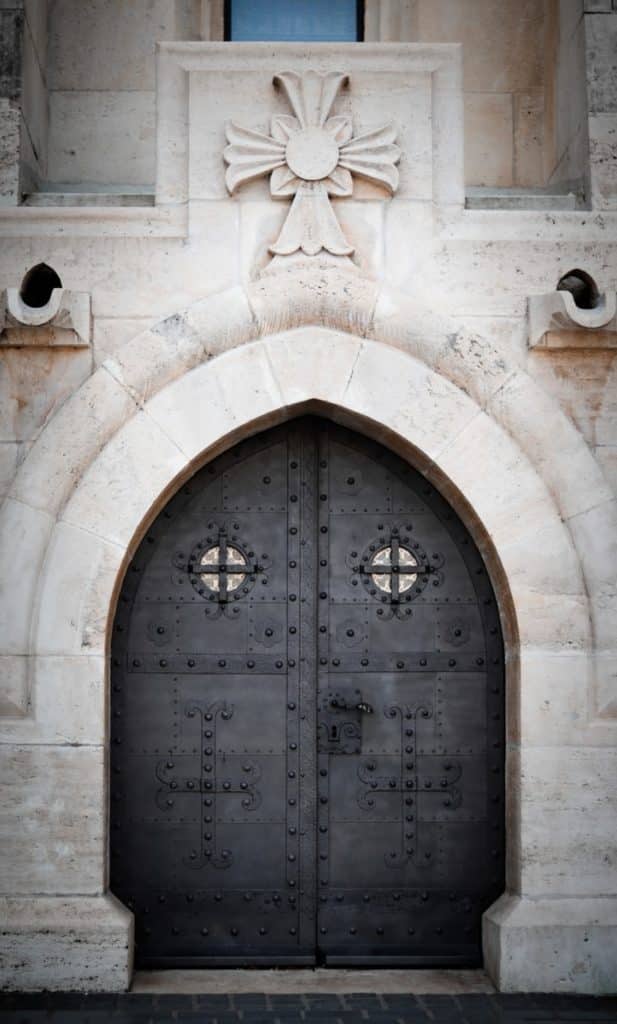
Steel has been a favorite for several years because they are useful and an excellent alternative for both interior and exterior doors alike. You can find them in strong and hollow options. Metal is considered to be a great alternative to wooden doors and is mostly utilized for making frames.
These frames can be designed out of channels, angles, tee, or even pushed steel plates. But in case you’re opting for steel frames, you should be aware that hinges and hold-fast are usually bonded firmly to the frame. And the best part, you can even have a regular shutter constructed out of any material (wood, aluminum, etc.) to have it fixed on the steel frames.
Steel is a more economical option compared to other materials and is being utilized thoroughly for homes. The doors that are constructed out of steel are made with a high-quality cold-rolled Mild Steel (MS) sheet, which is later accurately crafted.
They are available in beautiful tones with a range of wood grain texturing and require minimal maintenance. Plus, the durability is on point and provides excellent security.
Wood/ Timber Doors
The most common material that has been used for constructing doors and windows is wood or timber. It‘s said to be one of the oldest and primary pillars of the manufacturing industry. People have generally opted for wooden doors because it is widely available.
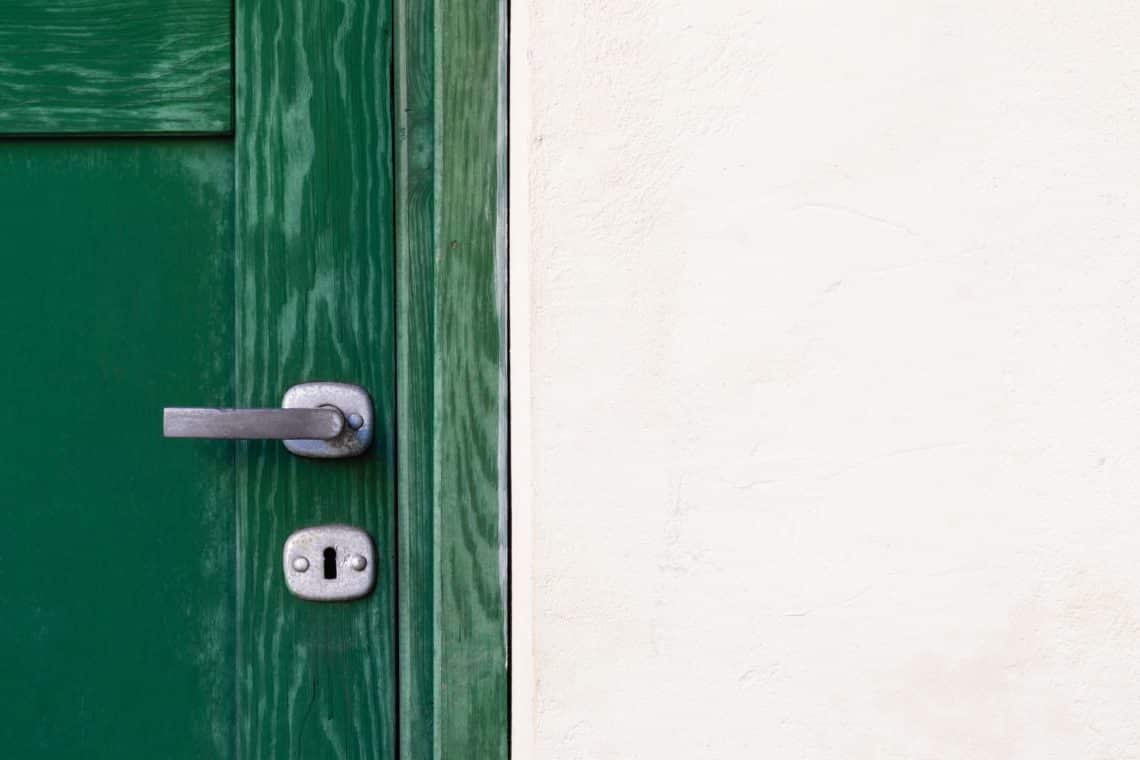
Plus, it is quite a simple material to work on. In fact, with the right tools, you can do it too.
As mentioned above, you can find a variety of wood in the market, but before selecting a particular type, you need to consider certain factors like budget and durability.
It also depends on whether you’re purchasing wood for commercial or residential properties because the longevity and regular usage patterns will differ. Even though you can use wood or timber for all doors around the house, it’s best suited for the front doors because of its high durability.
Glass Doors
When glass is used for doors and windows, the main purpose is generally for paneling. But you can have it designed the way you prefer, depending on the location where you want to have it installed. Typically, glass doors are used for the backside of a house or balcony to provide an obstructed view of the garden or your backyard.
The front doors that are made using glass are equally gorgeous. However, you need to ensure that durability and privacy are considered beforehand. One of the common styles is cut glass panels, which are later set into wooden frames. This design is frequently used and makes for a great alternative when it’s being used for front doors.
On the other hand, they are pretty heavy, and they come with a higher price tag that is mainly for its overall luxurious appearance. However, it also requires regular upkeep to maintain the shine.
Fiberglass Doors
What is fiberglass? It’s a fibrous form of glass that is woven into cloth. This material is not just known for its high tensile strength, but it’s also pretty durable, lightweight, and non-flammable. When glass fibers are bonded with resin, they can be used for constructing a range of products such as doors, bathtubs, windows, and so on.
Moreover, fiberglass is included in the list of the most solidified materials that require relatively low maintenance when compared to steel and wood.
Since it doesn’t bow, warp, or twist, fiberglass is considered to be very stable. These doors also consist of high insulation properties because of the underlying foam layer between the different surfaces. Plus, doors that are made with fiberglass can be carefully designed with wood panels for better aesthetics.
You can use fiberglass doors for both interior and exterior locations. Further, you can also find designer options such as door stiles and beveled glass for the outside doors. Some of these doors are crafted in a manner that it looks straight out of Architectural Digest magazine.
Aluminum Doors
Aluminum is known for its lightweight design and has been widely used in the market for the construction of windows, doors, curtain walls, partitions, etc. Most people generally prefer aluminum frames for doors because it has a distinct benefit of being able to withstand the onslaughts of regular usage.
These frames have high durability, and they are not easily affected by termites, which makes it a great investment. Windows and doors that are made from aluminum can be sliding or side hung, making them suitable for interior and exterior locations. Best of all, they are high on the aesthetic factor and turn out to be a pretty good investment in the long run.
Battened and Ledged Door
If you’re looking for a basic door type that has been used for ages, you’ll find battened and ledged doors topping the list. These doors have wood battens with height like the door itself, which comes in at 35 mm densities, which are groove and tongue jointed. Generally, the doors are provided with three ledges (horizontal members) for the top, center, and bottom.
For better design and more rigidity, the battened and ledged doors can be either normally braced or braced and framed, which depends on your requirements. These doors are typically used for the baths, toilets, and other such rooms. However, battened and ledged doors are commonly used in homes where the economy plays an important role.
Flush Doors
A flush door comes with a completely smooth surface because it’s made of Medium Density Fiberboard or plywood that is further reinforced over a lightweight timber frame. Thus, it has a hollow core, which is often filled with loads of cardboard core material.
Plus, flush doors are generally utilized for the interiors of a house, although with a few changes here and there, they can be used as exterior doors. For such doors, the frames can be constructed with steel or wood, which can hold the weight correctly. The doors are also hinged along one side to allow the door to open in a single direction.
This door type is commonly found in the market because of its affordable price range, durability, and overall aesthetics. But if you’re planning to use flush doors for baths or toilets, ensure that the inner face of the door is covered with aluminum sheets to prevent water damage. And the frames for such doors can be made in any conventional manner.
Paneled Door
Paneled doors are most frequently used in modern-day houses. The door frames are made out of wood, and the shutter panels are constructed using plywood, tough board, blockboard, wood, and so on. Plus, the panels of these doors are such that you can use them to make a variety of styles that can enhance their ornamental aspects.
The panels can be constructed of glass. If you cover some parts of the door in wood panels, while the remaining parts are made using glass panels, then the structure is known as paneled and glazed. Such kinds of doors are versatile and also aesthetically pleasing.
Plus, you can have it designed by the location and by the house. The door frames for the paneled models can be constructed out of metal sections or wood.
PVC Door
PVC or Poly Vinyl Chloride is a plastic component that is frequently used for making a range of products for the house, including pipes, water tanks, fittings, and so on.
The use of PVC for making doors is becoming common, and it’s available in a range of different colors and styles. This gives the customers a lot of options to choose from, especially when they have narrowed it down to this material type.
Plus, one of the main advantages of using PVC doors is their properties, such as high resilience, anti-destructive, termite-proof, moisture-resistant, lightweight, and so on. These doors also have a simple manufacturing and installation process.
However, they are not suited for entry doors because of their lightweight construction, lack of weatherproof properties, and inability to resist harsh environmental conditions. Such doors are readily available in the market and are relatively cost-effective when compared to other wood or metal doors.
Bamboo-Jute Composite Doors
When you look for renewable options for a door, you’ll find a host of bamboo laminates that also include a frame. Bamboo has a maturity cycle of 3-4 years, which makes it a great natural resource when compared to other forest hardwoods.
One of the valid options for a wood product is the jute-coir composite board that can be used for manufacturing doors. Natural hard fibers like jute and coir are infused with phenolic resins for manufacturing these boards.
The demand for this product is on the rise because it offers some good benefits- rust-resistant, water-resistant, environment-friendly, termite-resistant, and biodegradable. And since it’s a substitute for wood, it comes with great potential for gradually processing it into composites.
Such doors are cost-efficient, and it’s being produced mainly by entrepreneurs who are focusing on sustainability.
Fiber Reinforced Plastic (FRP) Door
Fiber Reinforced Plastic is a general term that is used to refer to the fibrous reinforcement of glass with plastics. It’s a durable material because of which it’s used for manufacturing a large number of products, including doors. The tensile strength of FRP is considered to be more than ten times that of PVC.
The FRP molded doors are easily available in several colors and finishes, such as natural wood finish, which has been the trend of the season. The standard door thickness is about 30/35 mm, and it can also have two leaves with around 1.5 mm thickness.
These leaves are carefully molded over a core material to form a sandwich panel that offers excellent fire-retardant properties. You’ll also find a few wooden supports for fixing locks, stoppers, handles, and other accessories, all of which help to improve the overall aesthetics.
Door Types Based on the Design
Roller Door
The rolling shutter doors are also known as sectional overhead doors that are generally used for garages, workshops, shop fronts, and storage facilities. You can find a lot of trendy designs these days, which makes for a great addition to the living room.
They are typically constructed from fiberglass or metal, which are incredibly hard-wearing. Plus, you can incorporate a roller door in the house to separate the interiors from the garden or the deck. The rolling door is a great advantage because it does not require much space.
It requires minimal maintenance, and it’s long-lasting, which is the major highlight of this door type. It also offers proper safety and some much-needed privacy, mainly if your house is located in a busy, bustling area. When you get a roller door, you’re putting up a protective barrier between the house and the outside world.
Hinged Door
The single-hinged door is one of the most frequently utilized doors for home interiors. Since one end of the door will be installed on the hinges, the other end tends to swing open from one space to another. Thus, you need to ensure that the room has sufficient space for opening the hinged door; otherwise, it will end up blocking your limited space.
You can get hinged doors just as a single piece and have them professionally installed, or you can choose the pre-hung door system with a hassle-free installation procedure.
The exterior doors come with three hinges, and they are pretty heavy. But the interior doors are relatively lightweight and have two hinges. When it comes to thickness, the exterior doors are about 1-¾ inches, and the interior ones are commonly 1-⅜ inches thick.
Pocket Doors
Pocket doors are space-saving architectural features designed to slide into concealed wall cavities, eliminating the swing radius required by conventional hinged doors. Their origins trace back to 19th-century Victorian homes, but modern design has revitalized their relevance through clean-lined profiles, soft-close systems, and minimalistic hardware. Today, they are particularly well-suited for compact zones such as laundry areas, powder rooms, or galley kitchens, where traditional doors compromise circulation space.
Design options include solid-panel constructions, sliding French double pocket doors for wider spans, and glazed models like frosted or rainglass pocket doors that balance privacy with light permeability. Available as complete kits—including track systems, door slabs, and mounting hardware—these doors must be planned, ensuring structural clearance within the wall and absence of plumbing or electrical conduits. When fitted properly, they can also support sound isolation functions, making them ideal for bedroom suites or media rooms. Material selection, frame compatibility, and locking mechanisms further influence functionality. A detailed breakdown of sizing standards, installation techniques, design variants, and common performance issues such as misalignment or track wear can be found in this in-depth pocket door buying guide, which outlines essential criteria including spatial planning, frame integration, and acoustic efficiency.
French Doors
If you’re looking for something architecturally distinctive and symbolically elegant, French doors are an excellent fit. Typically mounted with three to four hinges on each side of the opening, they allow for a full, unobstructed view when both panels are opened. French doors are often enhanced with decorative glass panels, which elevate their visual impact while inviting natural light between spaces.
Their symmetrical form and timeless appeal make them a popular choice for interior transitions as well as exterior applications like patio entryways. For those drawn to handcrafted detail and period-style ornamentation, French doors also align beautifully with Art Nouveau door styles, which emphasize organic curves and intricate glasswork.
Pivot Door
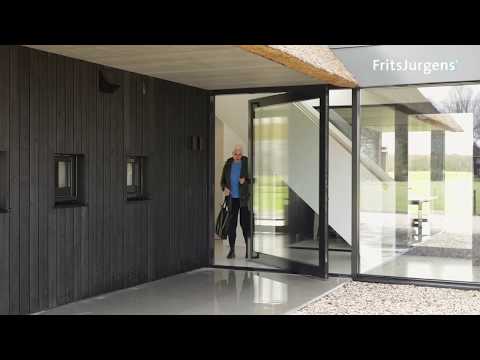
Pivot doors help to enhance the overall decor of the house and give it a modern style statement. When the pivot doors are open, the panel looks like it’s part of the wall design.
The frame is designed in a way that helps it support the heavier weight of your door. Since pivot hinges support the door, one at the bottom and the other on top, you don’t need to reinforce the door frame separately. However, it gives a stunning entrance to your room, and it’s more significant than the regular doors that are available.
Bifold Door
Bifold doors are pretty versatile. It comes with a set of doors that are hinged together, and you can fold the panels to have a great view. The doors are installed on a metal track that hangs from the head or the top of the opening. It helps to open up the room to the outdoors and is ideal for filling the home interiors with natural light.
Sliding Door
Moving doors are often known as bypass doors, which are a must for homes that require a large opening, like your closet or back patio. You cannot swing open these doors; rather, you need to move them on a track. The door consists of steel rollers that are provided at the bottom and top, which help to slide the door open gently.
This means that the door won’t protrude into your space, even if it’s placed in the bedroom balcony. It’s typically constructed with wooden frames and comes with a full-sized glass construction. Plus, it doesn’t take over too much space and maintains a balance with the other components in the room.
However, you can access only a part of the opening at once. All in all, if you want a minimalist look with clean lines and a refined style, then this is a good bet.
Dutch Doors
The Dutch doors have a distinct design with panels that divide the top and bottom sections. They are divided horizontally, which makes it suitable for homes that have pets and children. Because you can open the top half for some fresh air while the bottom section stays shut.
To use it like a regular door, you can secure both sections by bolting the two halves together. Dutch doors can be used for the cooking area and even for the front door, considering it has a strongly built. This door is still popular for its old-world feel as well as its practicality.
Barn Doors
While barn doors give the perfect country vibe, they’ve become a trendy mainstay in modern homes and farmhouses alike. It has a vintage charm that helps in adding separation and style to closets, bathrooms, bedrooms, and more.
You can pair it with high-quality machined hardware and amazing architectural decorative glass to make a completely stunning package. The door material can be selected based on the functionality that you want from the door. For instance, the wooden doors are most common; they block light and reduce sightlines and also help to close off space more efficiently.

Conclusion
Architectural door selection today requires a holistic approach—one that considers operational style, thermal and acoustic performance, material lifespan, and formal coherence within the built environment. Hinged, pivot, sliding, and pocket systems all serve specific spatial and functional roles, each with its own detailing and assembly logic. Whether you’re optimizing hallway circulation, introducing natural light into partitioned interiors, or selecting thermally insulated entry systems, decisions should align with both spatial intent and daily use. Comparative frameworks across typologies, materials, and door leaf configurations can be found in the broader architectural overview of door types, which helps contextualize their use across residential layouts and programmatic requirements.
Related Articles

