home/products/9 best thermal curtains – insulation, opacity & fit
9 Best Thermal Curtains – Insulation, Opacity & Fit
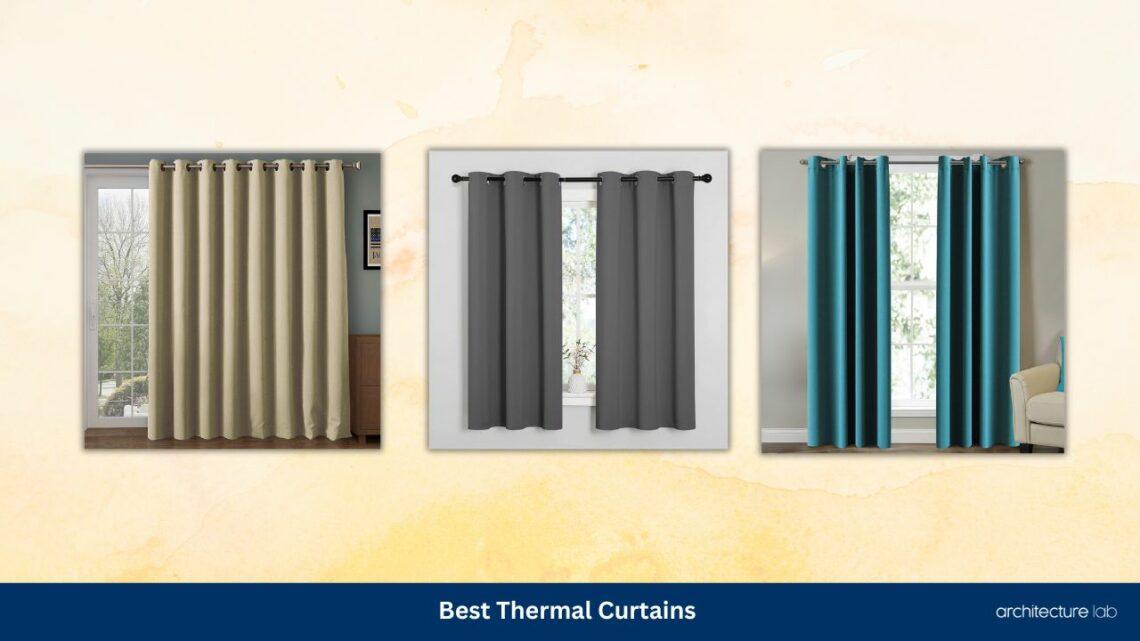
Thermal curtains are engineered window insulation multi-layered drapes whose dense weaves and backings slow the heat that windows leak in winter and admit in summer, and their story properly starts with the Department of Energy's numbers instead of a marketing claim. Drawn heavy draperies reduce heat loss from a warm room by up to 10 percent, medium-colored panels with white backings cut summer heat gain by a third, and the gains depend as much on installation sealed sides, center overlap, fabric close to the glass as on the fabric itself. The nine picks below are verified current products spanning the real decisions this category demands, from full theater blackout to room-darkening panels that insulate without blacking out a living room, because thermal and blackout are separate properties the market loves to blur. The measuring math that makes any of them seal properly lives in our guide to how to measure for blackout curtains, and the physics gets its own treatment in do blackout curtains keep heat out.
Review
Thermal curtains are engineered window insulation multi-layered drapes whose dense weaves and backings slow the heat that windows leak in winter and admit in summer, and their story properly starts with the Department of Energy's numbers instead of a marketing claim. Drawn heavy draperies reduce heat loss from a warm room by up to 10 percent, medium-colored panels with white backings cut summer heat gain by a third, and the gains depend as much on installation sealed sides, center overlap, fabric close to the glass as on the fabric itself. The nine picks below are verified current products spanning the real decisions this category demands, from full theater blackout to room-darkening panels that insulate without blacking out a living room, because thermal and blackout are separate properties the market loves to blur. The measuring math that makes any of them seal properly lives in our guide to how to measure for blackout curtains, and the physics gets its own treatment in do blackout curtains keep heat out.
01. NICETOWN Contemporary Lined Thermal Blackout – Best Overall
The Contemporary Lined panels earn the top slot on construction; no independent rating carries them. A separate sewn-in liner backs the face fabric, which does double duty: the liner blocks the light the weave alone cannot, and the two-layer assembly traps the air gap that insulation is made of. Cornell Cooperative Extension recommends exactly that separate lining, because the incorporated layer of air has some insulating value. NICETOWN's own catalogue sells the construction under its lined 100 percent blackout families.
In use
The lined build hangs heavy and straight, which matters for thermal work, a panel that hangs flat against its neighbors seals better than a stiff one that gaps. Light control runs to genuine blackout in the lined construction regardless of face color, sidestepping the color-dependence that thins out cheaper triple-weaves. Multiple header options and the full retail size run make the measuring math straightforward to execute.
What could be better
Two layers weigh more than one, so the rod and brackets need a rating for the load, and the price sits above single-layer triple-weaves. Both costs buy the performance the test documented.
What We Like
- Sewn-in liner blocks the light a weave alone cannot
- Liner construction insulates and blocks regardless of face color
- Hangs heavy and seals well at the overlap
What We Don't Like
- Needs sturdy hardware
- Costs more than unlined triple-weave
2. H.VERSAILTEX Back Tab Thermal Insulated – Best Room-Darkening Without Blackout
This is the answer to the question readers actually ask, a genuine back-tab thermal curtain that does not have to be blackout. H.VERSAILTEX builds the line on a three-layer woven construction and publishes the number that decides the purchase: shading runs from 50 to 100 percent depending on colorway. Choose a light color, and you own a back-tab thermal panel that darkens a room without sealing it black; choose deep tones and the same construction approaches full blackout.
In use
The dual header is the quiet luxury, every panel hangs by rod pocket or back tab as you prefer, and the back-tab hang gives the clean pleated face that grommets cannot. The triple weave carries the thermal duty in both directions, the hand is soft for the price class, and the line runs the full size range at Amazon and Walmart. One measuring rule matters here, and it is not special to back tab, since the maker-published measuring guides recommend twice the rod width in fabric whatever the header.
What could be better
The color-dependent opacity that makes the line flexible also demands attention at checkout, a buyer wanting blackout who picks a light colorway lands toward the 50 percent end of the maker's published range and gets a surprise. The product page states the range; read it.
What We Like
- Back-tab thermal with opacity you choose by colorway
- Rod pocket and back tab in one panel
- Full-size run, a published shading range
What We Don't Like
- Light colors will not black out a room — by design
- Wants twice the rod width in fabric, like every header
3. Sun Zero Aria Theater-Grade Magnetic – Best Light Seal
The Aria panels answer the failure that ruins a blackout install, the glowing gap where two panels meet, with hardware instead of hope, magnetic closures that pull the center seam shut and keep it shut. Theater-grade 100 percent blackout is the retail name the line is sold under, and no tested figure backs it, and Sun Zero's own site publishes energy saving, thermal insulating and noise reducing as brand claims and no Aria page at all.
In use
The center seam closes itself every time the panels swing together, which turns the four inch center overlap in Cornell's prescription into something the curtain does automatically. The back-tab header hangs a clean face, the pair pricing sits remarkably low for the feature set, and for bedrooms and media rooms the magnetic seam is the difference between dark and almost dark.
What could be better
Magnets seal the center, and the sides remain the installer's job, the wraparound and seal-the-sides discipline still applies. The color range trails the bigger lines.
What We Like
- Magnetic center closure defeats the panel gap
- Theater-grade blackout is the maker's own description
- Back-tab hang, sold in pairs
What We Don't Like
- Sides still need proper mounting to seal
- Narrower color selection
4. NICETOWN Velvet – Best Luxury Feel
NICETOWN Velvet is a room-darkening thermal curtain line built on velvet pile, an insulating layer in its own right because the dense nap traps air, with the thermal construction behind it doing the rest. NICETOWN's own site hangs the line by rod pocket, back tab or ring clip, the linked size being the rod-pocket version, the retailer listings run strong ratings across colors, and the dual rod-pocket-and-back-tab header carries over from the flat lines.
In use
The drape is the argument, velvet hangs with a weight and fall that flat polyester cannot fake, and the same mass that looks expensive slows heat and softens sound. Most colors darken the room without reaching absolute blackout, which suits living rooms where full black reads oppressive.
What could be better
Velvet asks more care than flat weaves, shows crush marks under careless handling, and the deep colors that suit the material also dominate a room's palette. A design decision as much as a thermal one.
What We Like
- Genuine insulating mass with luxury drape
- Rod pocket and back tab options
- Noise softening comes free with the pile
What We Don't Like
- More care, visible crushing if mishandled
- Most colors darken without fully blacking out
5. Deconovo Thermal Blackout – Best Budget
Deconovo Thermal Blackout is a triple-weave thermal curtain line built over an insulated backing, and it anchors the category's value end. Prices furnish a whole room for the cost of one premium pair, and the fabric carries OEKO-TEX Standard 100 certification, which budget lines often skip.
In use
The triple weave does real thermal duty, the darker colorways reach near-blackout, and the line's size and color breadth suits outfitting multiple windows to match. For renters and first apartments, this is the rational entry to the category, real insulation physics without a premium.
What could be better
Opacity follows color as it does across all unlined triple-weaves, the hand is serviceable more than luxurious, and hems arrive with packaging creases that want a steam before hanging.
What We Like
- Real triple-weave thermal at entry pricing
- OEKO-TEX certified fabric
- Wide size and color run for whole-room matching
What We Don't Like
- Light colors filter rather than block
- Fabric feel matches the price
6. RHF Wide Thermal Blackout – Best for Sliders and Wide Windows

Wide openings break the two-panel math, because the ready-made lines here top out at 52-inch panels, so a sliding door takes four of them and wears every seam. One wide panel covers what two standard ones would, halving the seams a light leak can exploit. No maker or retailer page for this panel would open for this update, so the case for it rests on that geometry and on editorial judgement, not on a spec sheet.
In use
The single-panel coverage suits patio sliders, picture windows, and the wall-of-glass conditions where thermal curtains earn their keep most, big glass is the envelope's biggest leak, and one heavy wide panel drawn across it at night is real insulation a renter can install without touching the window. Fewer seams also means the center-overlap discipline concentrates in one place instead of three.
What could be better
Wide panels are heavy panels, so hardware ratings matter double here, and the width selection at retail fluctuates, confirm the exact size in stock before planning a wall around it.
What We Like
- Extra-wide coverage with fewer light-leaking seams
- Purpose-built for sliders and picture windows
- Heavy hang suits the big-glass thermal job
What We Don't Like
- Demands serious rod hardware
- Retail width availability varies
7. NICETOWN Outdoor Thermal Blackout – Best Outdoor
Covered patios, pergolas, and porch enclosures have their own thermal problem, solar gain that makes the space unusable by afternoon, and NICETOWN's outdoor line answers with triple-weave blackout panels built to live outside, the pick Bob Vila's tested thermal roundup from November 2025 singled out for the job.
In use
The panels block the low sun that roofs cannot, cut the radiant heat load on the space behind them, and take the outdoor life, moisture exposure, wind movement and UV, that would degrade interior curtains in a season. Grommet, top-and-bottom-grommet and tab-top hangs across the collection, the straps a check on the wind.
What could be better
Outdoor duty is hard duty; expect a few seasons of service, and bring them in for the worst weather. Color selection favors the practical.
What We Like
- Purpose-built for sun control outdoors
- Triple-weave blackout construction
- Turns an afternoon-hot patio usable
What We Don't Like
- Finite outdoor lifespan by nature
- Utilitarian palette
8. H.VERSAILTEX Star Thermal for Kids – Best for Children's Rooms
The kids’ pick does two jobs at once — the blackout-and-thermal construction builds the dark, cool room the Sleep Foundation’s medically reviewed guidance recommends for children, and the printed glitter-star pattern keeps the night-sky theme without breaking the blackout, reflective silver stars that catch a night light and admit no daylight. Bob Vila's tested thermal roundup from November 2025 named it Best for Kids.
In use
The reflective stars catch a night light and glow while the opaque blackout fabric behind them holds full darkness, and the polyester takes the cleaning schedule a child's room demands.
What could be better
The stars sit on the face of the fabric and do not pierce it; a die-cut constellation effect belongs to NICETOWN's Star Cutout line instead, whose own light-control guide rates blackout as blocking most sunlight, depending on the fabric, color and installation.
What We Like
- Blackout and thermal duty with a design children love
- Glitter stars make the dark room the fun room
- Easy-clean polyester
What We Don't Like
- Stars glow only where a night light reaches them
- One aesthetic, strongly stated
9. Joydeco Custom Thermal – Best Made-to-Measure
Joydeco Custom Thermal is a made-to-measure curtain line built to the measurements you send, in linen, velvet, or chenille, with blackout strictly optional and headers from back tab to rod pocket on order. Ready-made sizes fail some windows, the arched, the extra-tall, the architecturally odd, and a custom order answers them.
In use
Custom solves the two problems ready-made panels force on a buyer, exact length without hemming and exact width for proper fullness and overlap, and the fabric menu reaches the natural fibers the ready-made market barely offers in thermal builds. The maker publishes its own measuring guides for the order.
What could be better
Custom means waiting weeks where retail ships in days, prices scale with fabric and size, and returns work like custom returns everywhere, measure twice, order once.
What We Like
- Exact dimensions, fullness, and header to order
- Natural-fiber thermal options ready-made rarely offers
- Blackout optional, opacity chosen deliberately
What We Don't Like
- Lead times and custom pricing
- No casual returns
How Thermal Curtains Work – and the Real Numbers
A thermal curtain insulates by trapping still air between fabric and glass, and every design choice in a thermal panel serves that air gap, density slows conduction, layers and liners multiply the trapped air, and tight installation keeps the warm room's air from washing over the cold glass. Two published figures set expectations correctly. Cornell Cooperative Extension puts a drapery hung conventionally on a traverse rod at a 5 to 10 percent reduction in heat loss, and the Department of Energy credited medium-colored draperies with white plastic backings with cutting summer heat gain by about 33 percent. Curtains are the accessible layer of window insulation, not the last word in it; Cornell prescribes what earns more, a closed top, both sides sealed, the drapery touching sill or floor and a four inch overlap at the center, which takes a tightly woven lined drapery to 25 percent.
Start with one vocabulary correction. Light-filtering, room-darkening, blackout, and 100 percent blackout are opacity tiers; thermal is a separate property entirely, and a curtain can be fully thermal at any opacity, the H.VERSAILTEX back-tab thermal line proves it in one product family. Buy opacity for the room's use and thermal construction for the window's exposure, and refuse any listing that treats the words as synonyms. Buyers whose first question is light control should start from the best blackout curtains guide, where the construction tiers get the full treatment.
How These Picks Are Verified
Every one of the nine products was checked against its current retailer listing or maker's page wherever one would open — construction, header options, sizes, and the opacity claims this category loves to inflate — and the two whose pages refused, the Sun Zero Aria and the RHF wide panel, say so in their own entries. Performance credentials come from independent testing where it exists, named in the entry it supports. Prices and stock move faster than articles, so treat listed figures as the neighborhood and the linked listing as the fact. Where a claim could not be verified to a source, it does not appear.
Frequently Asked Questions
What are the best thermal curtains for winter?
The best thermal curtains for winter are the heaviest constructions drawn at night — the lined and two-layer builds, floor length, sealed at sides and center — because winter performance runs on trapped air rather than color. The NICETOWN Contemporary Lined and the velvet line lead the winter case, and Cornell Cooperative Extension puts a conventionally hung drapery at 5 to 10 percent against 25 percent for a lined one sealed at all four edges.
Do thermal curtains actually work?
Thermal curtains do work, within stated limits: Cornell Cooperative Extension credits a conventionally hung drapery with 5 to 10 percent less heat loss and a lined one sealed at all four edges with 25 percent, and the Department of Energy credited white-backed medium colors with about a third less summer heat gain. Installation decides whether a given pair reaches those numbers; loose, short, gappy hanging forfeits most of the benefit.
What is the difference between thermal and blackout curtains?
The difference between thermal and blackout curtains is that thermal describes insulation, dense or layered construction that slows heat transfer, while blackout describes opacity, and the market blurs the two together. Many products are both, but a light-colored thermal curtain can darken a room only partially while insulating fully, and that combination is a legitimate choice and no defect.
Do thermal curtains help in summer?
Thermal curtains do help in summer, and color carries the season’s result: the DOE's 33 percent heat-gain reduction figure belongs to medium-colored draperies with white plastic backings, which bounce solar radiation back out the glass. Deep colors absorb instead, so summer performance favors the lighter half of a line's palette.
Can thermal curtains be room-darkening instead of blackout?
Thermal curtains can be room-darkening instead of blackout, because the two categories are independent, and the clearest example is the H.VERSAILTEX back-tab thermal line, whose shading runs from 50 to 100 percent by colorway on one identical construction. Pick a light color for an insulated living room that still feels like daytime, a dark one for a bedroom that does not.
What header style is best for thermal curtains?
The best header style for thermal curtains is the one that seals your particular window: Joydeco's published header specifications fit grommets to rods under 1 inch, rod pockets to rods under 1.5 inches and back tabs to rods under 2 inches, and the same maker recommends twice the rod width in fabric whatever the header. The header changes the length math, so measure for the header before ordering for the look.
Conclusion
Three picks resolve most thermal-curtain decisions, and which three is editorial judgement and no tested ranking. The NICETOWN Contemporary Lined is the pick for overall thermal duty, liner-built insulation and the light blocking a sewn-in liner brings in one panel. The H.VERSAILTEX back-tab thermal line is the flexibility pick, one construction spanning room-darkening to blackout by color choice, and the direct answer to readers who want insulation without a blacked-out room. And the Sun Zero Aria is the engineering answer, magnetic closures that seal the center gap every other pair leaves to chance. Whichever fits, the measuring discipline seals the deal literally — sides covered, centers overlapped, fabric run to sill or floor — and turns any of these nine from fabric into insulation.
Article by Aida Vasquez for Architecture Lab · Published 5 April 2023 · Updated 1 October 2026
More Product Reviews
Topdon TC002C Review for Building Diagnostics: Specs, Field Tests, Alternatives
HIKMICRO B10S Review for Building Diagnostics: Specs, Field Tests, Alternatives
5 Best Fiber Laser Engravers and Cutters for Precision Work