

Most blackout curtains can be washed, and the ones that get ruined are almost always ruined the same way — heat and harsh cycles destroying the very layer that does the blackout. The rule that governs everything is construction: woven builds, triple-weaves, and sewn-in fabric liners tolerate a gentle machine cycle the way ordinary curtains do, while coated and foam-backed panels carry their blackout as an applied layer that cracks, peels, and flakes under hot water, bleach, high-spin agitation, and above all the dryer. Identify which construction hangs on your rod — the care label says, and so does a look at the back — and the rest of this guide is the routine that keeps the blackout in the fabric where it belongs.
The Construction Rule
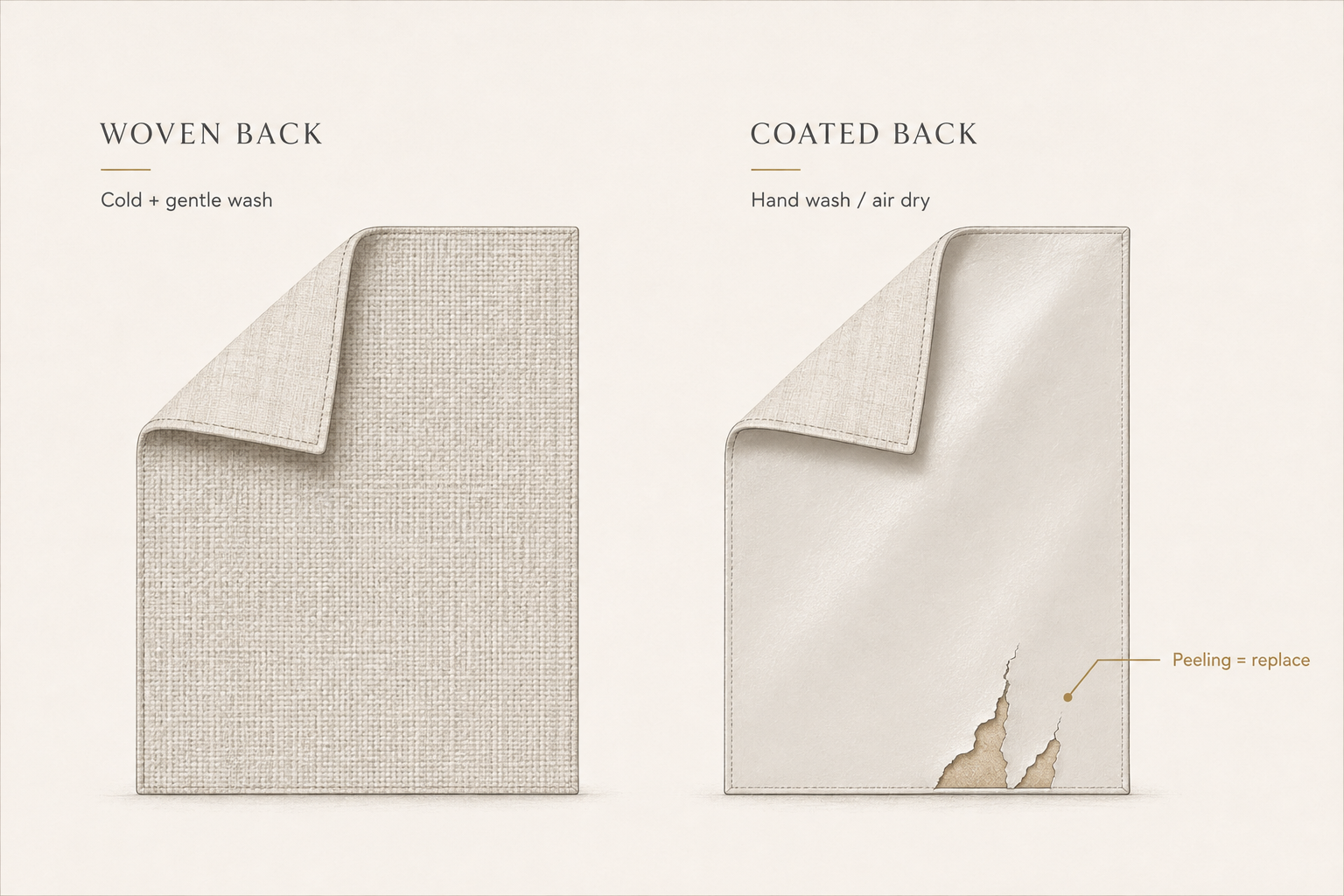
Turn a panel over. A back that looks and feels like fabric — a woven liner, a second cloth layer, or the same weave as the face — belongs to the washable tier, and current makers state it plainly: the care lines on the lined and triple-weave products in our best blackout curtains guide run to cold machine washing below 30 °C on a gentle cycle with no bleach. A back that looks sprayed, rubbery, or foam-like is an applied coating, and the safe ceiling drops to hand washing or the gentlest cold cycle with the machine half empty — and some coated panels, plus the velvet faces and natural linens from the premium tier, carry dry-clean or spot-clean instructions that outrank anything written here. The label wins every argument.
Machine Washing, Step by Step
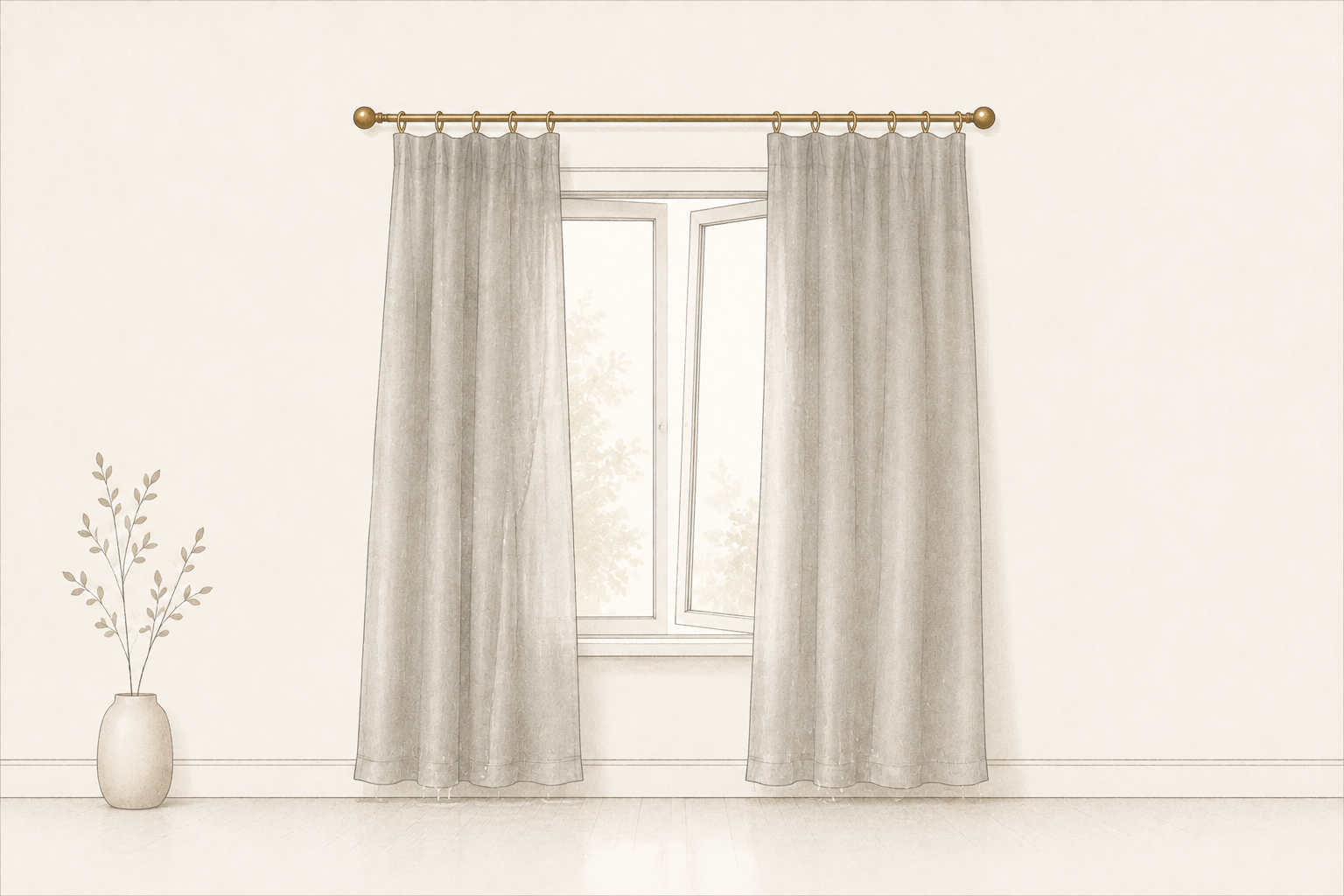
Shake or vacuum the panels first with the brush attachment on low suction — dust is most of what curtains accumulate, and removing it dry halves the wash’s work. Wash two panels at most per load so the machine agitates fabric instead of a knotted mass, cold water, gentle cycle, a mild detergent and nothing else — no bleach, no fabric softener, which can coat and stiffen blackout layers. Skip the heavy spin for coated builds. Then the step that decides everything: air dry. Hang the panels back on their rod damp and let them finish there — the weight pulls wrinkles out as they dry, the rod does the work of a drying line, and the dryer’s heat never gets its chance at the coating. If a dryer is unavoidable for a woven build, the label’s lowest tumble setting with the panels removed damp is the ceiling.
What Kills a Blackout Layer
Heat, unsuitable cleaning products and harsh mechanical action can damage a blackout backing. Follow the finished curtain’s care label before washing, drying or pressing it. Do not assume a garment steamer is safer than an iron: steam adds both heat and moisture. For packaging folds, start with the guide to removing creases from blackout curtains and use heat or steam only if the exact product’s instructions permit it. Cracking or peeling is a coating problem, not a wrinkle to press flat.
| Construction | Wash | Dry | Iron or steam |
|---|---|---|---|
| Triple-weave, no coating | Machine, cold, gentle | Air dry on the rod; low tumble if the label allows | Iron or steam only if the finished-product care instructions permit it |
| Sewn-in fabric liner | Machine, cold, gentle, two panels per load | Air dry on the rod | Follow the assembled curtain’s pressing and steaming instructions |
| Foam or coated back | Hand wash or gentlest cold cycle; label may say spot-clean only | Air dry only, never tumble | No heat or steam unless the manufacturer expressly permits it for this backing |
| Velvet face | Gentle cold or per label | Air dry; low heat at most | Use only the treatment allowed by the finished-product label |
| Natural linen, premium lined | Usually dry clean per label | — | Per cleaner |
How Often, and the Between-Wash Routine
Twice a year is the working schedule for a full wash — spring and fall, matching the season change that has you at the windows anyway — with a monthly pass of the vacuum brush keeping dust from settling in. Kitchens and smokers’ rooms wash more, bedrooms less, and the sniff test outranks the calendar. Between washes, spot-clean drips and marks with a damp cloth and mild soap on the face side, working from the edge of the mark inward, and let the panel dry hanging.
Frequently Asked Questions
Can you machine wash blackout curtains?
The woven and fabric-lined constructions, yes — cold water, gentle cycle, no bleach, two panels per load, exactly as current makers’ care labels state. Coated and foam-backed panels want hand washing or the gentlest cold cycle at most, and their labels sometimes say spot-clean only. The label wins.
Can you put blackout curtains in the dryer?
Air drying on the rod is the safe answer for every construction, and the only answer for coated backs — dryer heat crazes and peels applied blackout layers, and the damage is permanent. Woven builds tolerate the lowest tumble setting if the label allows, removed damp.
How do you wash blackout curtains without ruining them?
Follow the construction — check the back, read the label, wash cold and gentle with mild detergent, skip bleach and softener, and dry the panels hanging on their own rod. Damage has several possible causes; do not assume a visible crease or worn backing can be corrected by washing.
How often should blackout curtains be washed?
A full wash twice a year suits most rooms, with a monthly vacuum-brush pass in between; kitchens and high-dust rooms wash more often. Overwashing ages coated backs faster than dust does, so the vacuum carries the routine and the machine stays seasonal.
Do blackout curtains need dry cleaning?
Only when the label says so — usually the natural-fiber and premium lined tiers, such as linen faces where washing risks shrinkage. The polyester constructions that dominate the category are engineered for home washing within the cold-and-gentle rules above.
Resources
- Manufacturer care labels and published care lines — NICETOWN, H.VERSAILTEX, Deconovo, and peers
- Architecture Lab — Best Blackout Curtains
- Architecture Lab — Best Thermal Curtains
- Architecture Lab — Do Blackout Curtains Keep Heat Out
- Architecture Lab — How to Measure for Blackout Curtains

