

The face fabric and blackout backing can have different limits for heat and moisture.
Creases in blackout curtains are best approached in stages: hang the panels correctly, let the fabric settle, then use only the pressing or steaming method allowed for that curtain. Heat can smooth the face fabric while damaging the layer behind it. A woven blackout cloth, a separate lining and a coated backing may look similar from the room but need different care.
Let the curtain hang freely
A packing crease is usually a sharp line across otherwise sound fabric. Hanging the curtain gives the panel room to unfold under its own weight. Some creases soften; others remain. There is no single settling time that applies to every weave, lining and coating.
Align the hooks or rings, arrange the heading evenly and free the hem from furniture or a radiator. A twisted hook can pull a diagonal wrinkle through the cloth. A panel trapped behind a bedside table cannot fall straight, however carefully it has been pressed.
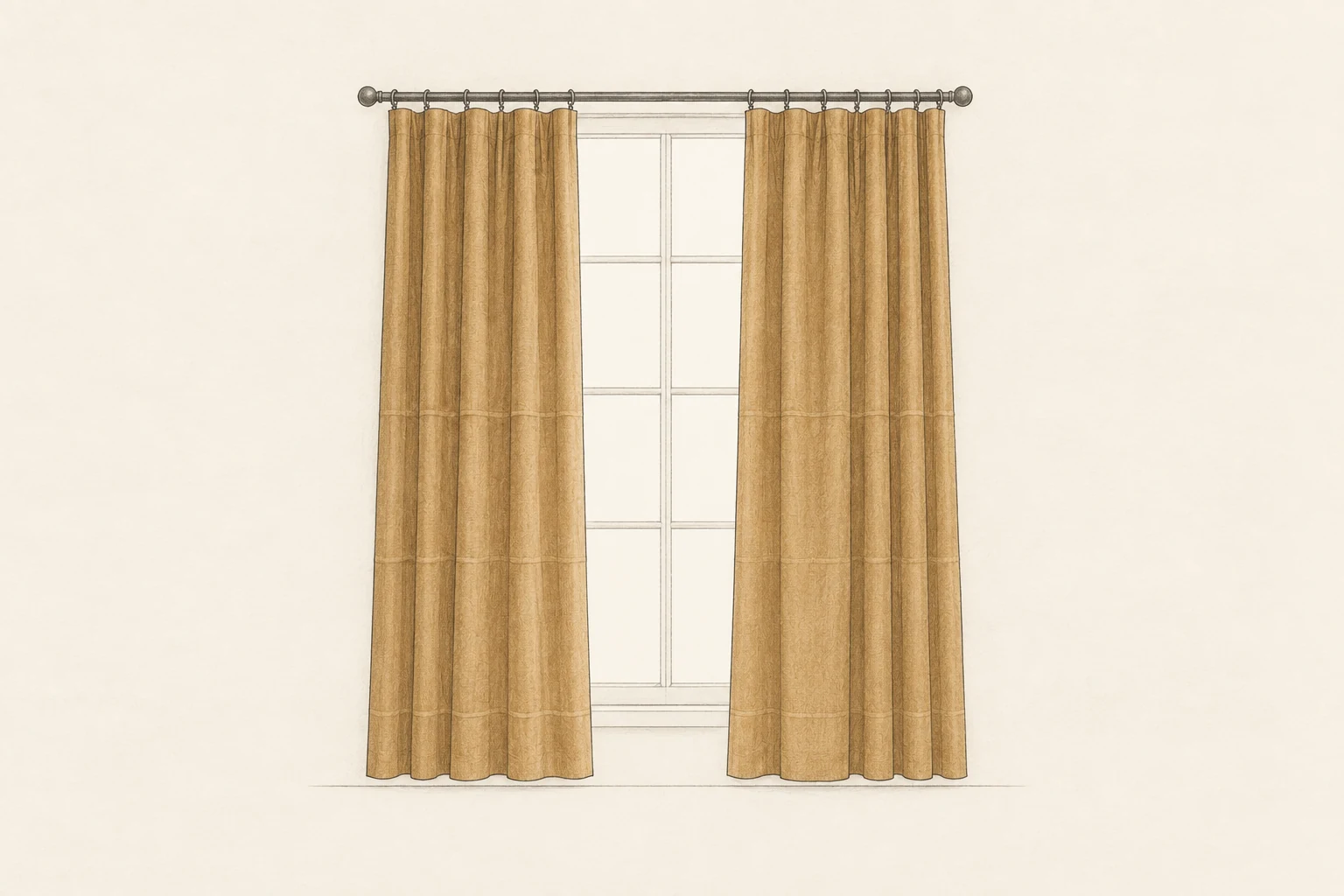
If the folds remain crowded when the curtains are open, the problem may be the available stack-back space. The track width, heading and finished drop determine how the fabric hangs as well as how much glass it covers.
Ironing depends on the backing
Blackout curtains can be ironed when the care instructions for the finished panel permit it. The temperature and pressing side matter. A polyester face does not establish what a bonded coating or separate lining can withstand.
The limits differ even among finished blackout curtains. One finished-curtain care sheet permits ironing up to 150°C (300°F) but prohibits tumble drying. Another coated-curtain care sheet permits low-temperature ironing on the face side only. Neither instruction should be applied to an unidentified panel.
Where pressing is permitted, follow the specified setting, side and any requirement for a pressing cloth. If the label is missing, the product name or order record can help the manufacturer identify the construction before heat is applied.
When steaming is suitable
Steaming is suitable only when the curtain maker permits it. A garment steamer delivers moisture as well as heat, and permission to iron does not automatically establish that steaming is appropriate.
The linked coated-curtain instructions say the backing softens when wet and can stick to itself; heat also softens it. Bathroom steam, damp towels in a dryer and similar household fixes are therefore unreliable choices for an unidentified blackout panel.
For a curtain approved for steaming, use the maker’s method and stop if the surface changes color, feels tacky or begins to separate. Washing blackout curtains is a separate care decision, not a necessary step in removing a packing crease.
A crease or a damaged coating?
A crease changes the shape of the fabric. A split or peeling backing changes the material itself. Look along the fold in daylight: intact cloth may simply be bent, while flaking, exposed fabric or stuck layers suggest damage.
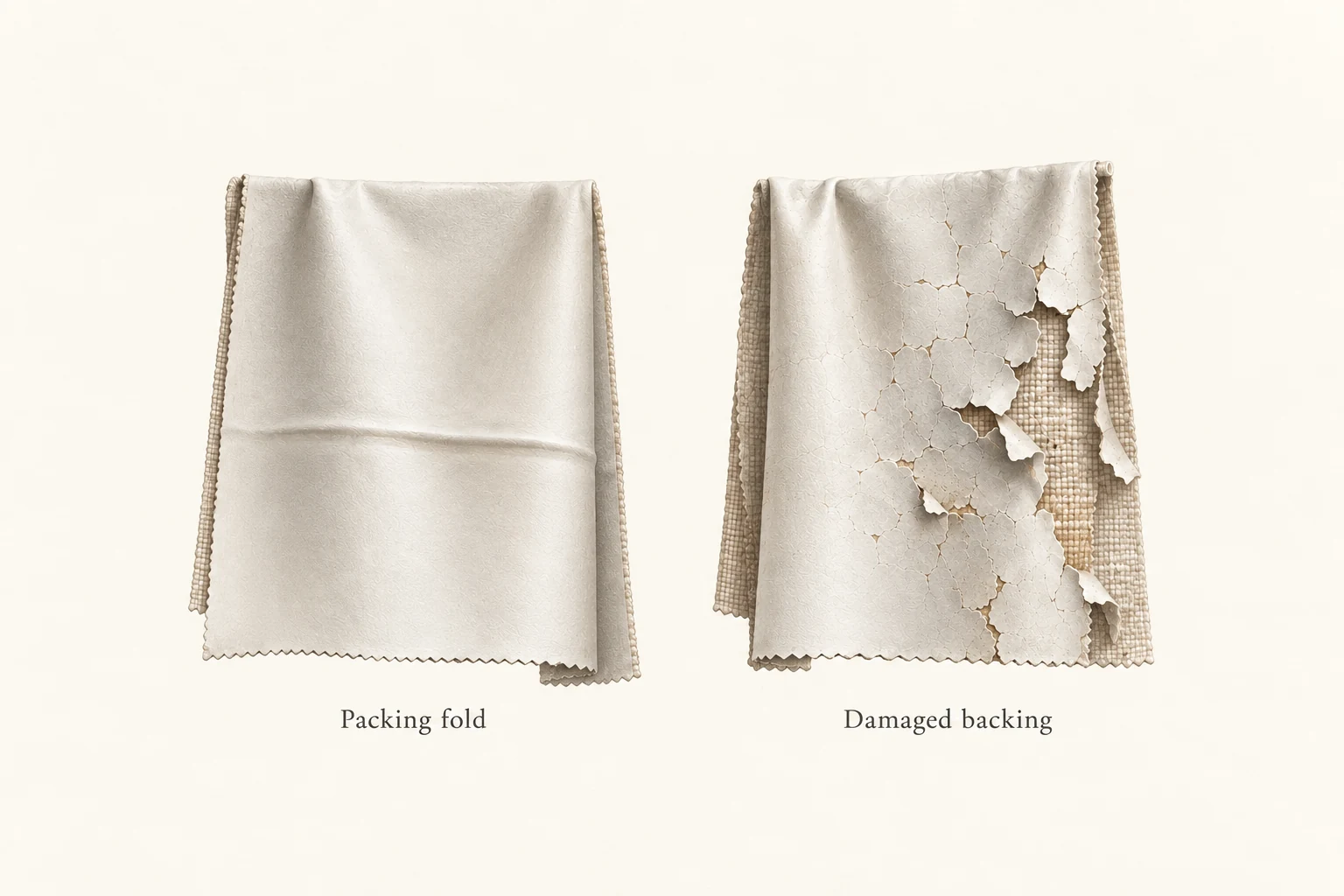
Further heat will not replace a missing coating. Photograph the affected area and contact the seller or manufacturer with the product details before attempting another treatment.
Keeping creases from returning
When taking curtains down, retain the care label and follow the maker’s storage instructions. Sharp folds and heavy objects pressed onto the packed fabric can leave new marks. Coated surfaces also need to be packed so they do not stick together.
At the window, leave enough room for the panels to gather without being crushed against a wall or trapped behind furniture. The open curtain needs space as well as the closed one.
Resources
- Finished blackout-curtain care instructions.
- Coated blackout-drapery care and cleaning instructions.

