

The mid-century modern floor lamp is where the era’s designers were allowed to make sculpture and call it equipment, and the ten entries below — seven documented icons, one American production tier, and two honest archetypes — cover the category the way the market actually presents it. The stakes of knowing the difference are unusually well stated here, because the manufacturer of the most famous lamp on this list says it plainly: Flos calls the Arco one of the most imitated design icons ever, which makes floor lamps the lighting chapter of the story we follow across the most imitated chair in design history. Each entry names its designer, date, and the maker building the authentic one today; the room these lamps organize is treated in our mid-century modern bedroom guide, where sculptural lighting is rule five.
1. Arco – Achille & Pier Giacomo Castiglioni, Flos, 1962
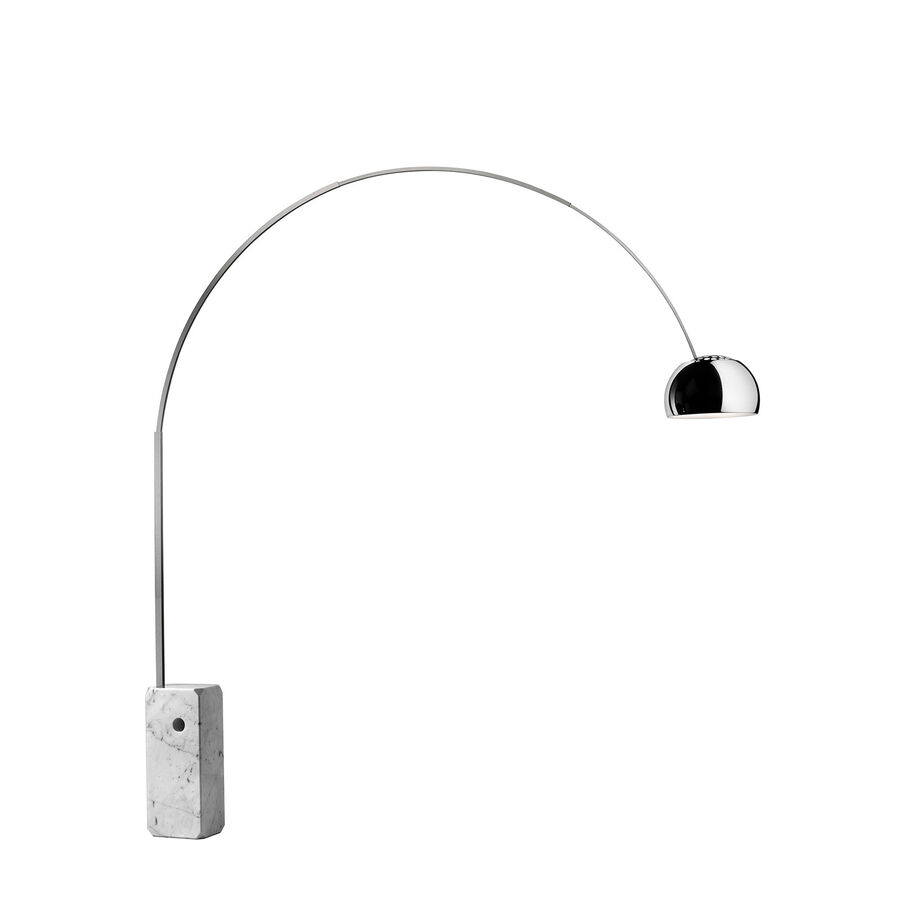
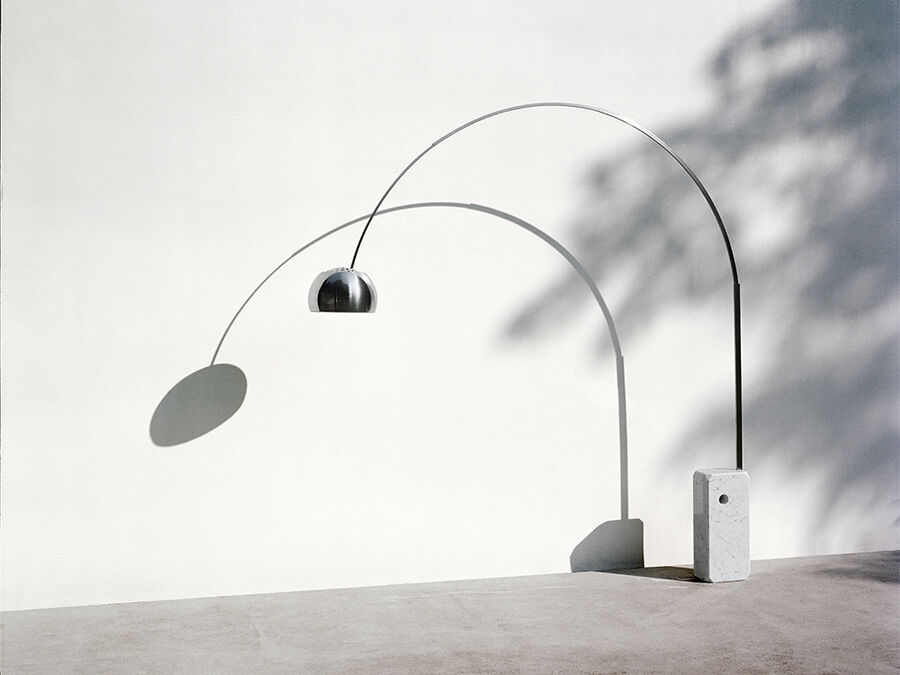
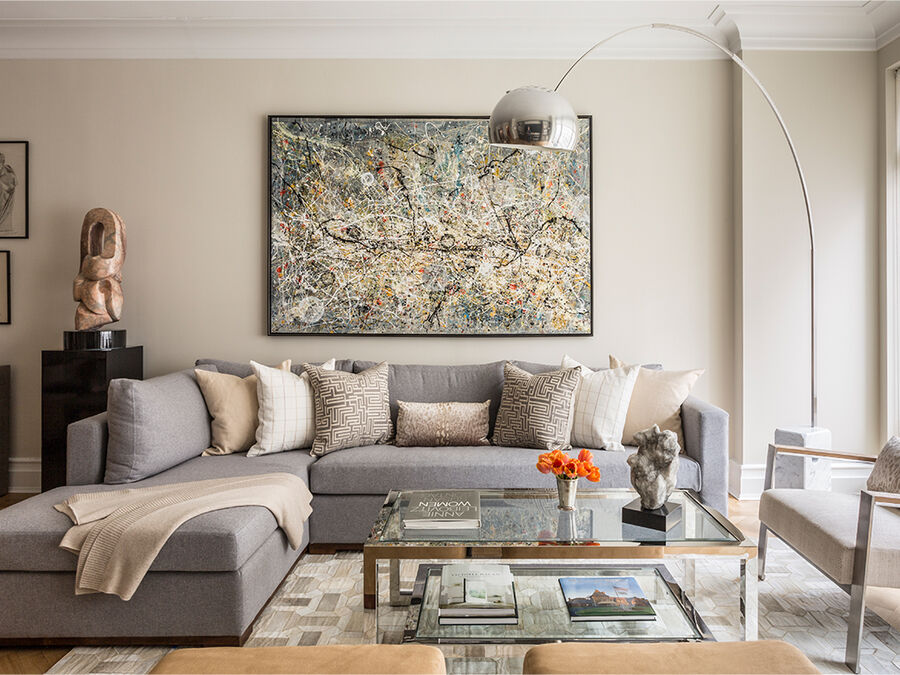
The Arco is the floor lamp doing a ceiling fixture’s job: the Castiglioni brothers designed it in 1962 to solve a stated practical problem — overhead light above a table without drilling the ceiling — and took the answer from the street lamp, whose ground-fixed arch throws light far from its base. A telescoping stainless arc carries a spun-aluminum shade out over the room from a Carrara marble counterweight, its corners beveled and a hole bored through for two-person lifting. It entered MoMA’s collection, has been in constant production at Flos since release, and trails a copy economy its own maker describes as the largest in design — which makes the marble’s weight and finish the buyer’s first authentication check.
Arco
The Overhead Problem, Solved, 1962Designer — Achille & Pier Giacomo Castiglioni for Flos; inspired by the street lamp.
Materials — Telescoping stainless arc, spun-aluminum shade, Carrara marble counterweight with beveled corners and lifting hole.
Signature Details
- Ceiling light without drilling the ceiling
- In MoMA’s collection
- Flos itself calls it the most imitated icon
Spotting an Original
- Marble weight — copies substitute composites
- Beveled corners and bored lifting hole
- Flos markings and arc action
Production
1962 onward, constant
Licensed Today
Flos
2. Akari Floor Lamps – Isamu Noguchi, Ozeki & Co., 1951
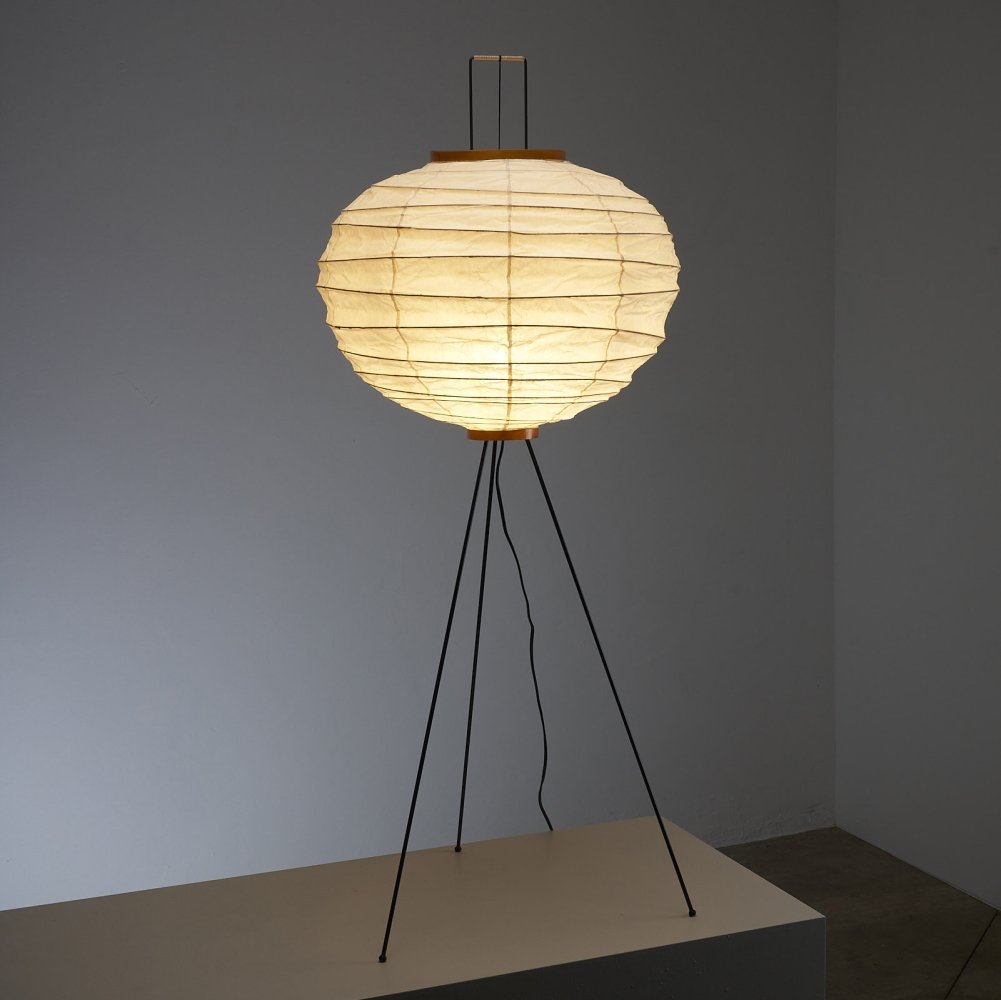
The Akari lamps are light as sculpture by declaration of their maker: Isamu Noguchi stopped in Gifu, Japan in the spring of 1951 at the mayor’s invitation to help revive the city’s centuries-old paper lantern craft, sketched rounded organic forms on the spot, and saw the first models enter production by late that year under a name he chose — akari, light, with a suggestion of weightlessness, written in characters combining sun and moon. Ozeki & Co. has built them in Gifu ever since: bamboo ribs wound on wooden molds, washi paper applied wet, the whole lamp collapsing for shipping. Floor models range from tripod-legged globes to tall column stands, and early examples carry the red sun-and-half-moon mark that now authenticates the rarest pieces.
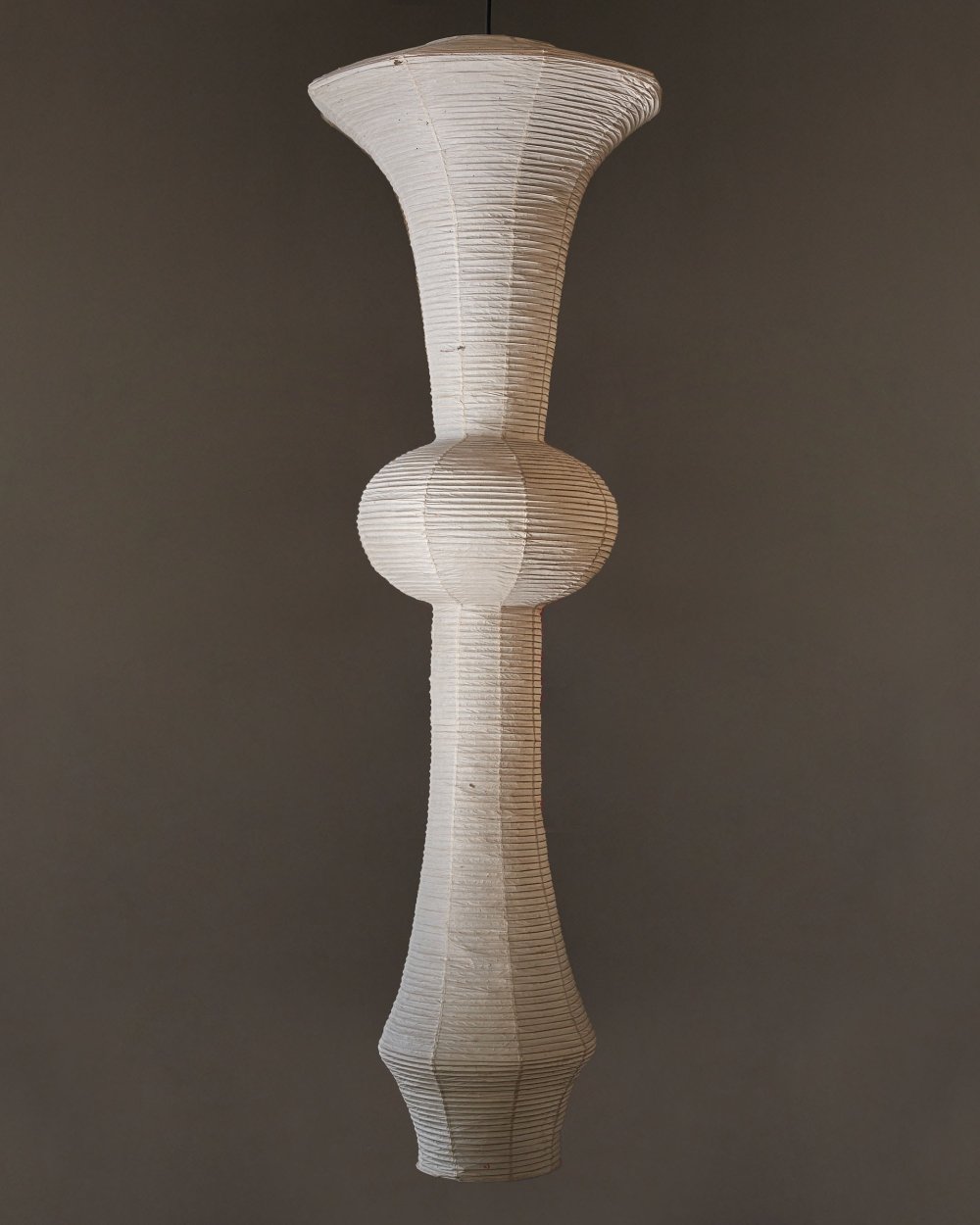
Akari Floor Lamps
Light Sculpture, 1951Designer — Isamu Noguchi, from his 1951 Gifu visit to revive the city’s lantern craft.
Materials — Washi paper on spiral bamboo ribs over wooden molds; metal legs and stands; collapses for shipping.
Signature Details
- Named akari — light, with weightlessness implied
- Handmade in Gifu by Ozeki & Co. since 1951
- Floor models from tripod globes to tall columns
Spotting an Original
- Red sun-and-half-moon mark on earliest pieces
- Noguchi signature on shade (later production)
- Ozeki construction — bamboo spiral, not wire
Production
1951 onward, Gifu
Licensed Today
Ozeki & Co. (Vitra distributes in Europe)
3. Grasshopper – Greta Magnusson Grossman, 1947
The Grasshopper is the silhouette that gave mid-century lighting its posture: Greta Magnusson Grossman — the Swedish designer who relocated to California in the 1940s and became one of the few women to establish herself in the era’s design trade — drew the lamp in 1947 with a tilted tripod stance and an elongated cone shade, a fixture that seems caught mid-step. It fused Scandinavian restraint with West Coast ease two decades before that fusion had a name, and it returned to production through GUBI’s reissue, which carries the design today.
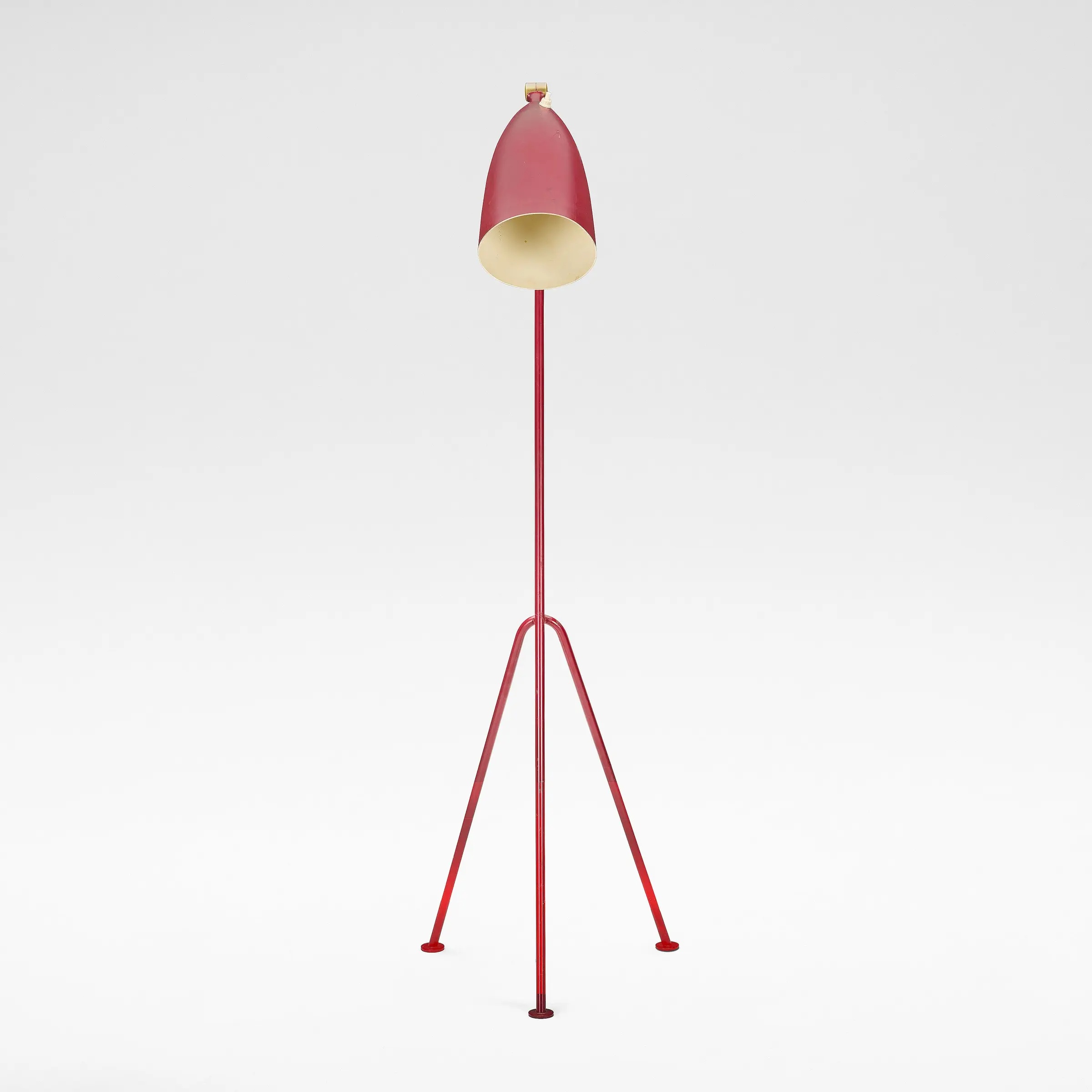
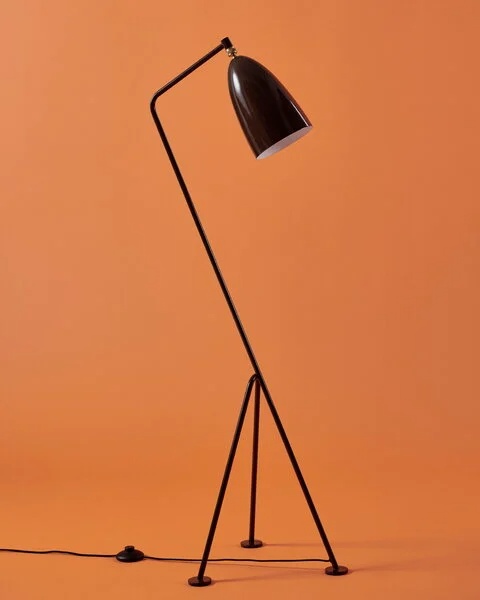
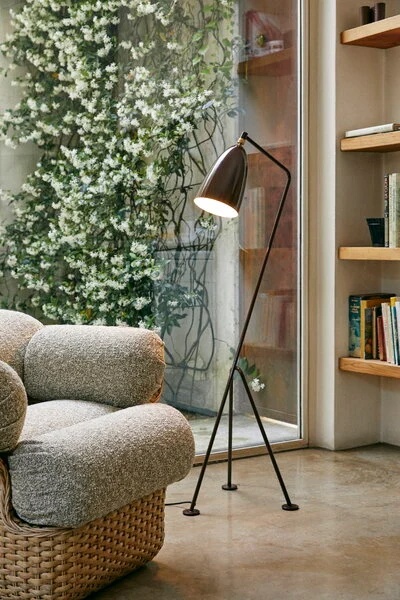
Grasshopper
The Tilted Stance, 1947Designer — Greta Magnusson Grossman — Swedish-born, California-established, one of the era’s few recognized women designers.
Materials — Tilted tripod steel legs, elongated cone shade.
Signature Details
- Mid-step posture defines the silhouette
- Scandinavia meets California, 1947
- Returned to production via GUBI
Spotting an Original
- GUBI markings on reissue
- Vintage originals rare — provenance required
- Cone proportions — copies shorten the shade
Production
1947; GUBI reissue current
Licensed Today
GUBI
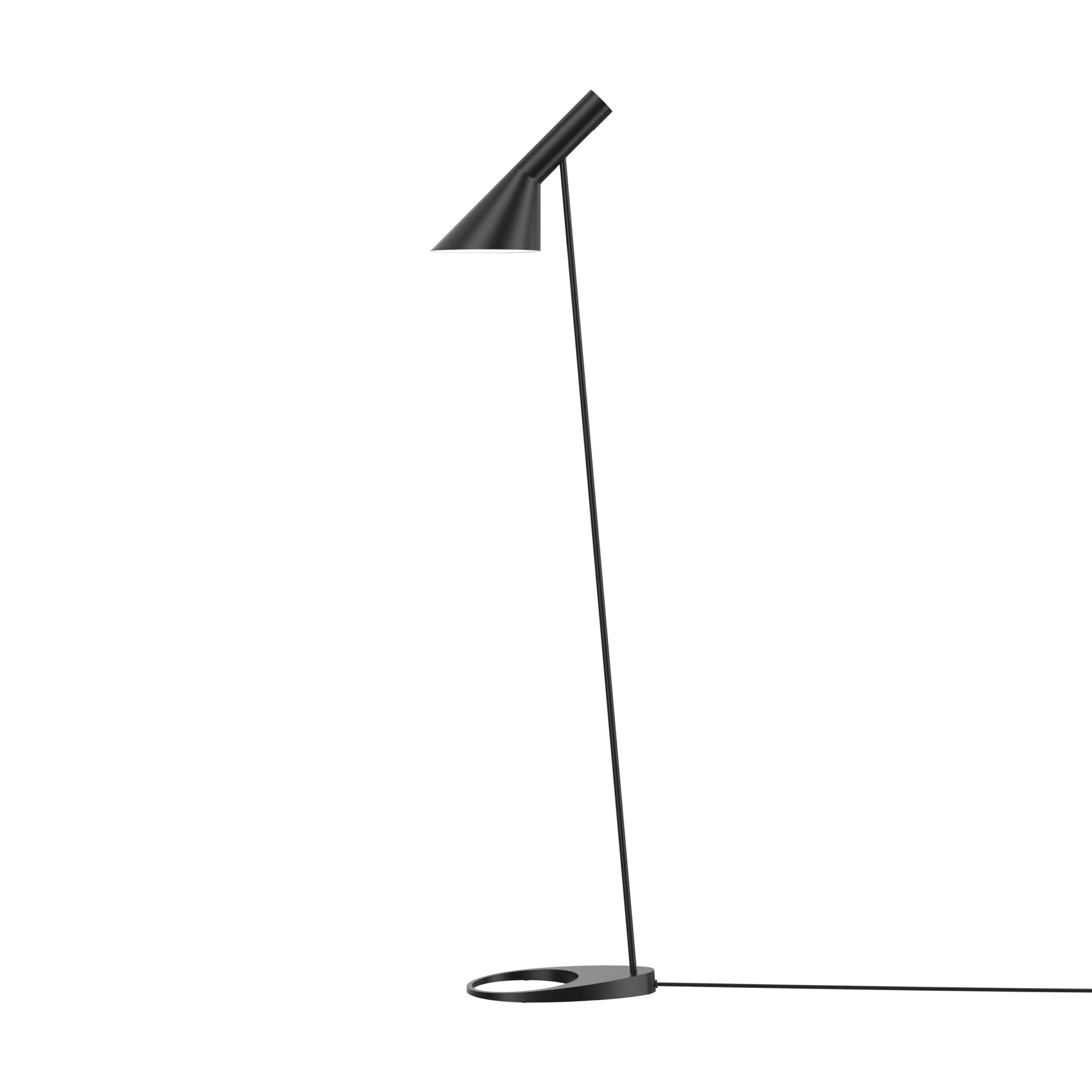
4. AJ Floor Lamp – Arne Jacobsen, Louis Poulsen, 1957
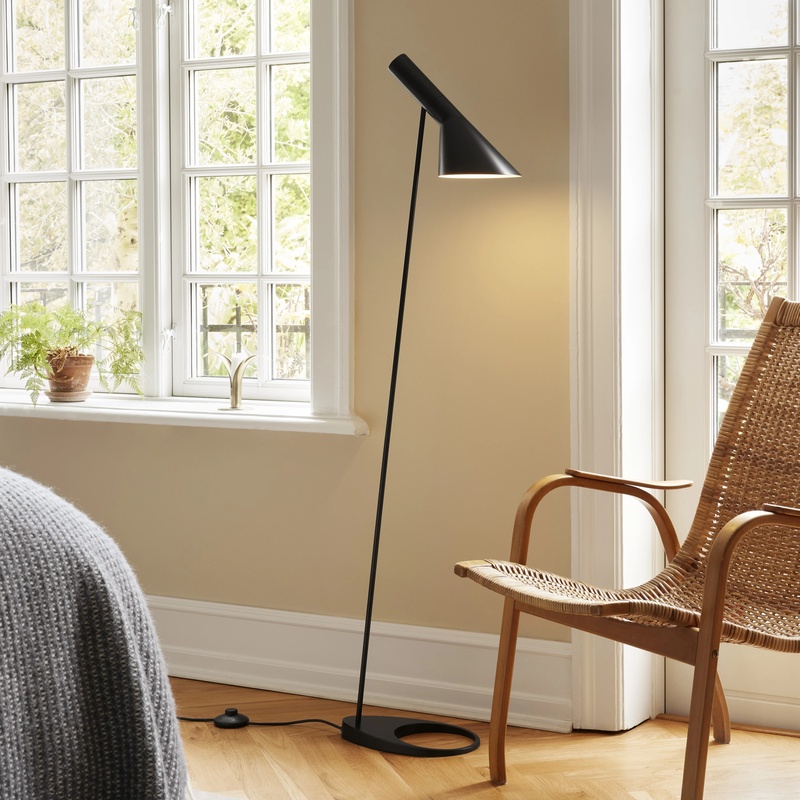
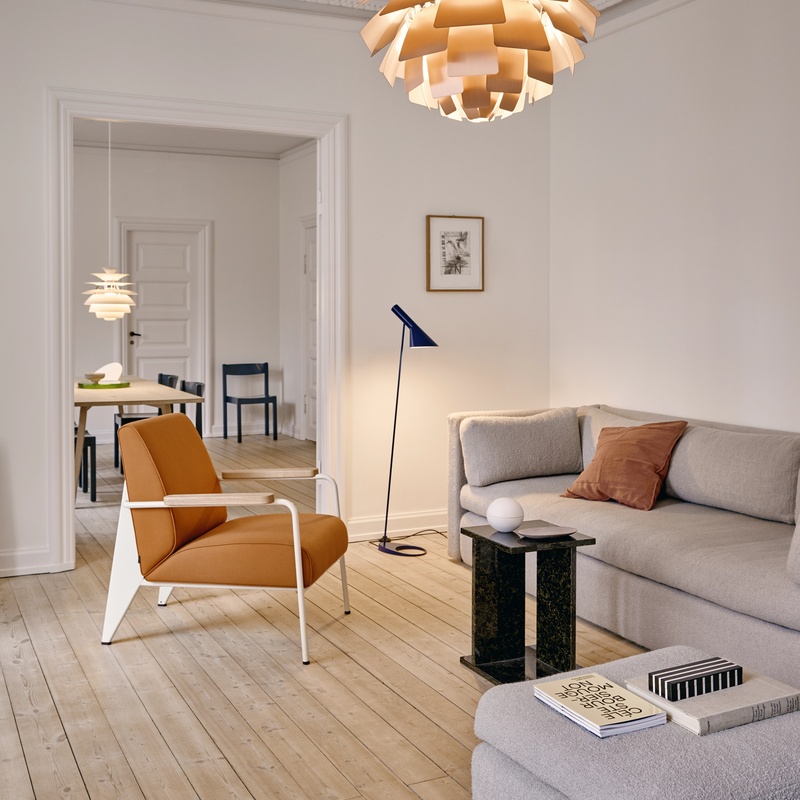
The AJ Floor is the third member of this site’s running SAS Royal Hotel story: Arne Jacobsen designed it in 1957 for the Copenhagen hotel he detailed down to the doorknobs — the same commission that produced the Egg and the Swan in our chairs guide — as a family of floor, wall, and table lamps whose angular tilted head plays against the furniture’s curves. Louis Poulsen has produced it since, in a palette that has grown with the decades, and the asymmetric head remains the era’s cleanest reading light: aimed, not spilled.
AJ Floor Lamp
The SAS Commission, 1957Designer — Arne Jacobsen for the SAS Royal Hotel, Copenhagen — with the Egg and the Swan.
Materials — Angular tilted head on a slim stem; family of floor, wall, and table versions.
Signature Details
- The hotel’s straight-line counterpoint to its curves
- The era’s cleanest aimed reading light
- Palette has grown with the decades
Spotting an Original
- Louis Poulsen markings
- Head geometry — copies round the angles
- Base weight and stem finish
Production
1957 onward
Licensed Today
Louis Poulsen
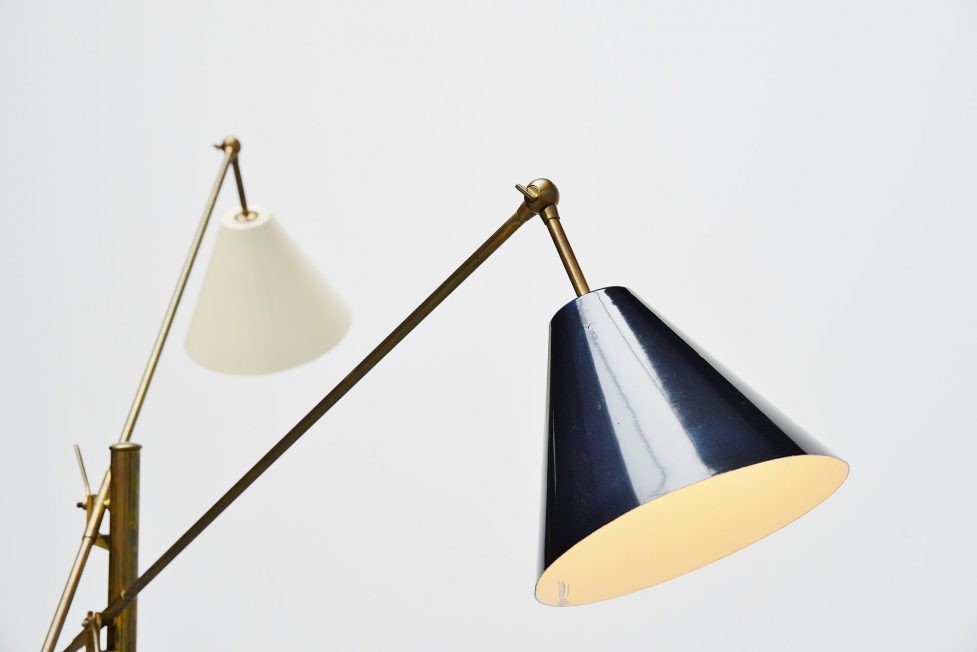
5. Triennale – Angelo Lelii, Arredoluce, 1947
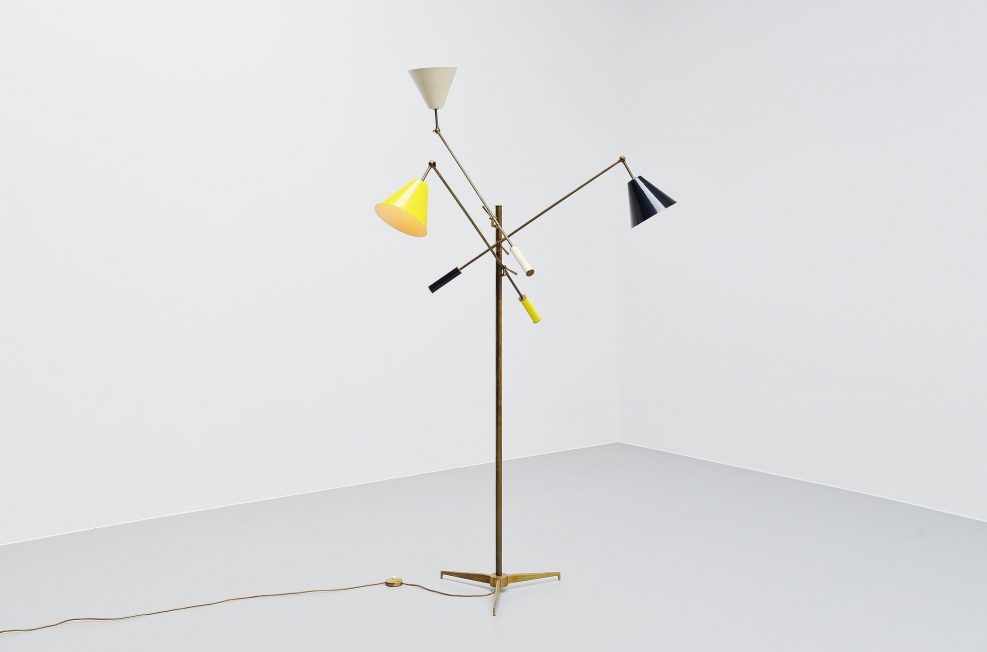
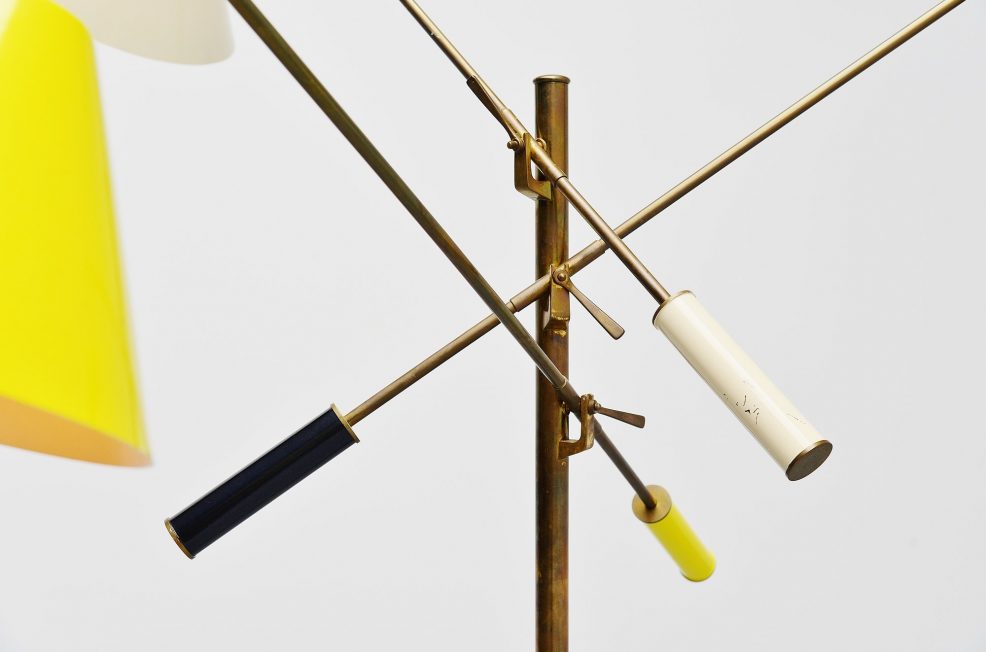
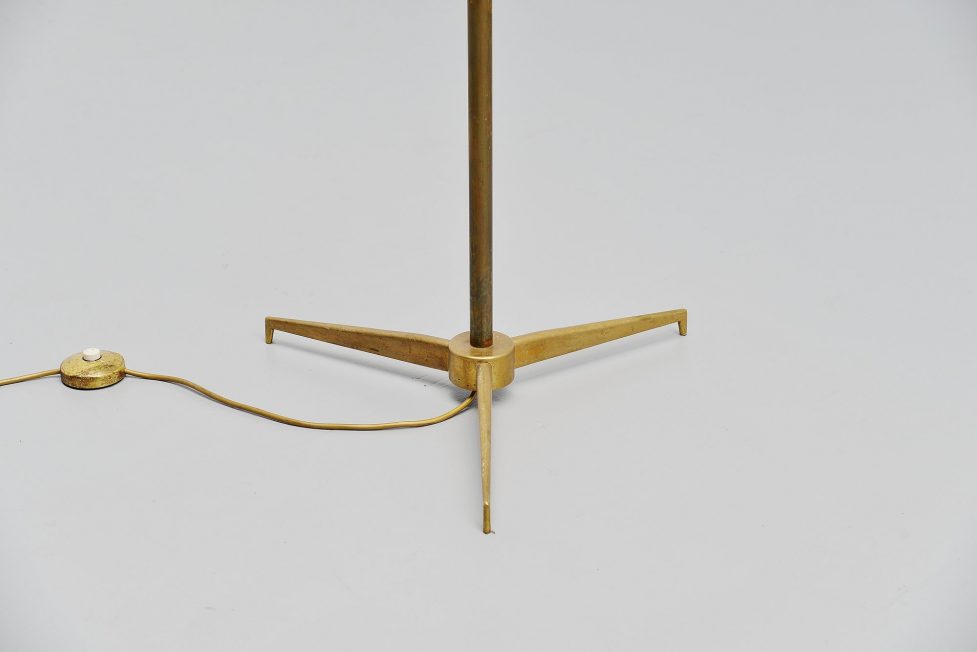
The Triennale is Italian lighting’s other crown: Angelo Lelii’s model 12128 for Arredoluce, the Monza company he founded in 1947 — three counterbalanced arms rising from a central pole, each ending in an adjustable aluminum diffuser, produced in brass and in lacquered primary colors. Most Italian sources date the design to 1947, and the postwar Milan Triennale that exhibited it supplied the name that stuck; the lamp crossed the Atlantic too, manufactured in the United States for the Raymor Corporation. Arredoluce ran until 1987 and no licensed production survives, which makes this the list’s pure vintage prize — documented examples, including one with Richard Neutra house provenance, trade at the top of the Italian lighting market.
Triennale
Italian Lighting’s Other Crown, 1947Designer — Angelo Lelii, model 12128 for Arredoluce, the Monza company he founded in 1947.
Materials — Three counterbalanced arms on a central pole, adjustable aluminum diffusers; brass and lacquered primary-color versions.
Signature Details
- Named by the postwar Milan Triennale that showed it
- US production existed for the Raymor Corporation
- Arredoluce ran until 1987 — no licensed production survives
Spotting an Original
- Arredoluce provenance and hardware detail
- Counterbalance action and diffuser finish
- Pure vintage market — faked accordingly
Production
1947 – Arredoluce era (to 1987)
Licensed Today
None — vintage only
6. Three-Arm Floor Lamp – Serge Mouille, 1952
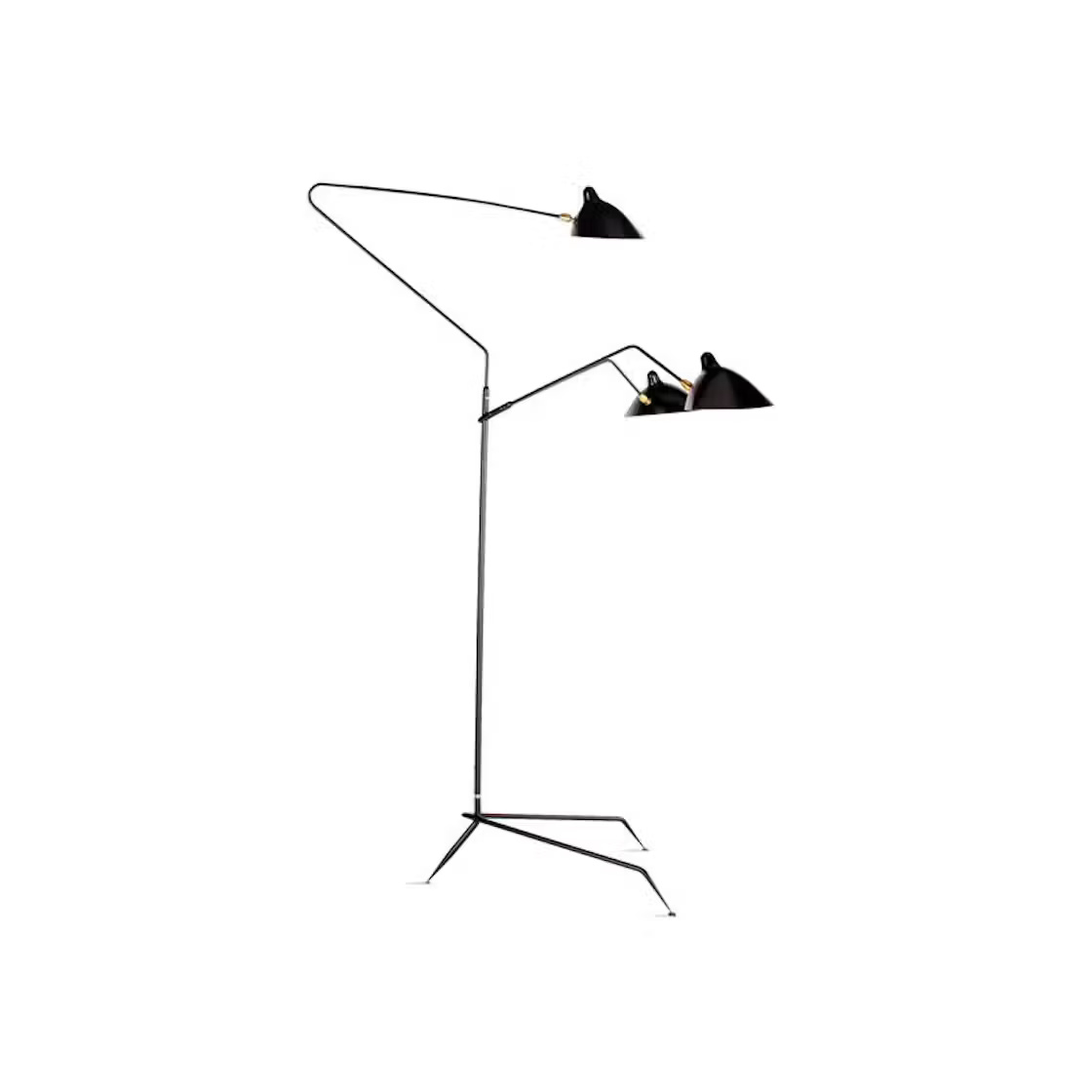
The Lampadaire Trois Bras is French modernism standing on its own legs: Serge Mouille created it in 1952 for the Compagnie des Arts Français, at Jacques Adnet’s urging, as the heart of his Formes Noires series — three black lacquered-aluminum arms rotating independently from a central pivot, each ending in a shade Mouille shaped like a stretched drop. He described the work as a reaction against the era’s Italian lighting, which he found too complicated, and the lamp’s hardware says so: brass joints, washers, six-sided screws, nothing hidden. Editions Serge Mouille produces it today from the period molds, serial-numbered with certificates — necessary armor, since the silhouette is copied nearly as widely as the Arco.
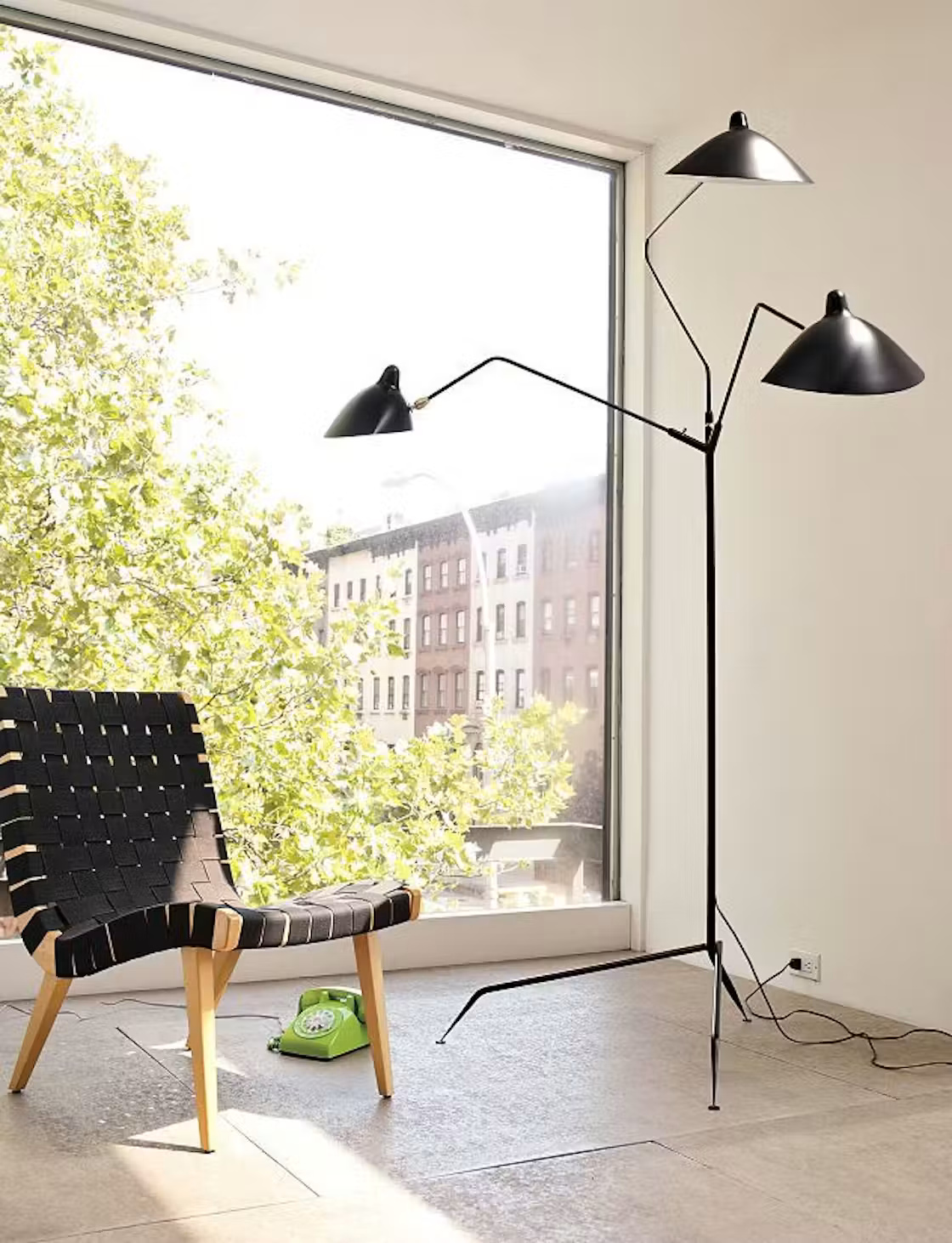
Three-Arm Floor Lamp
Formes Noires, 1952Designer — Serge Mouille, for the Compagnie des Arts Français at Jacques Adnet’s urging.
Materials — Three independently rotating black lacquered-aluminum arms; brass joints; washer and six-sided screw hardware.
Signature Details
- A stated reaction against complicated Italian lighting
- Insect-like stance, nothing hidden
- Heart of the Formes Noires series
Spotting an Original
- Editions Serge Mouille serials and certificates
- Period-mold production details
- Copied nearly as widely as the Arco
Production
1952; Editions Serge Mouille current
Licensed Today
Editions Serge Mouille
7. Toio – Achille & Pier Giacomo Castiglioni, Flos, 1962
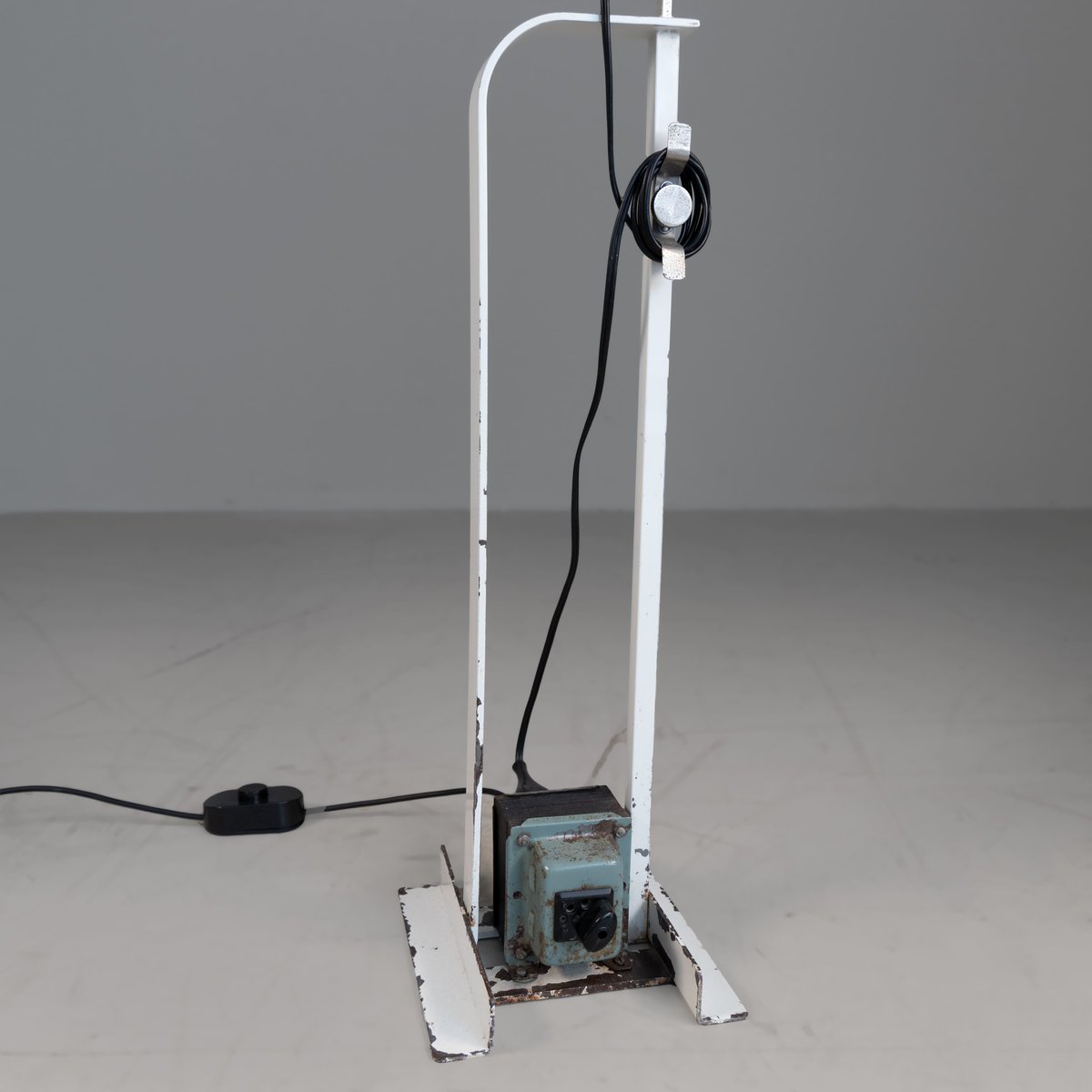
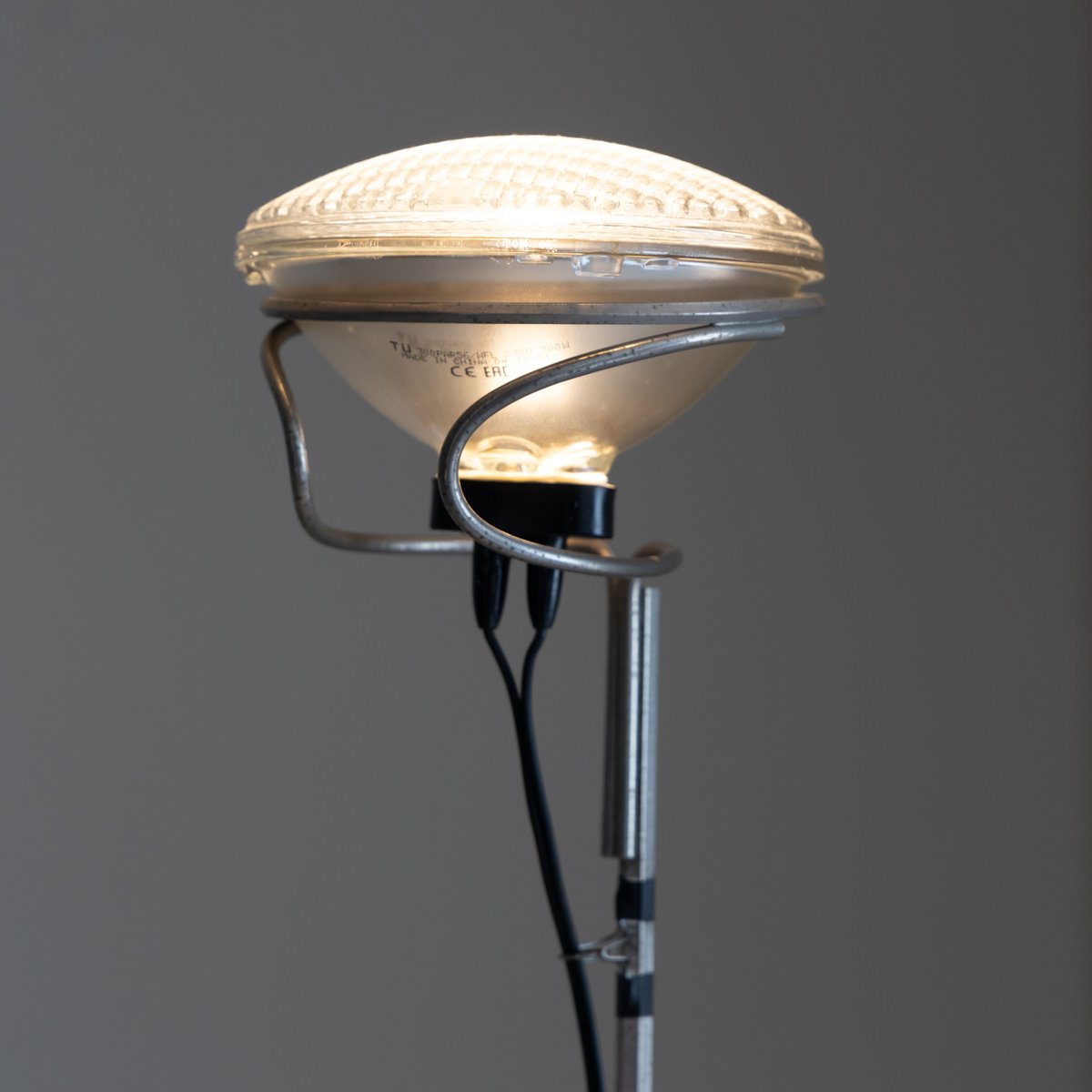
The Toio is the readymade as lighting: the same brothers, the same year as the Arco, and the opposite temperament — a 300-watt car headlight imported from the United States, mounted on a nickel-plated hexagonal brass stem fitted with fishing-rod rings that guide the cord, over an enameled steel base where the exposed transformer works as the counterweight and a boat cleat coils the slack. The name plays on the English word toy, the method descends from Duchamp, and the lamp sits in MoMA’s permanent collection — proof that mid-century lighting had a sense of humor with museum-grade execution. In production at Flos since 1962.
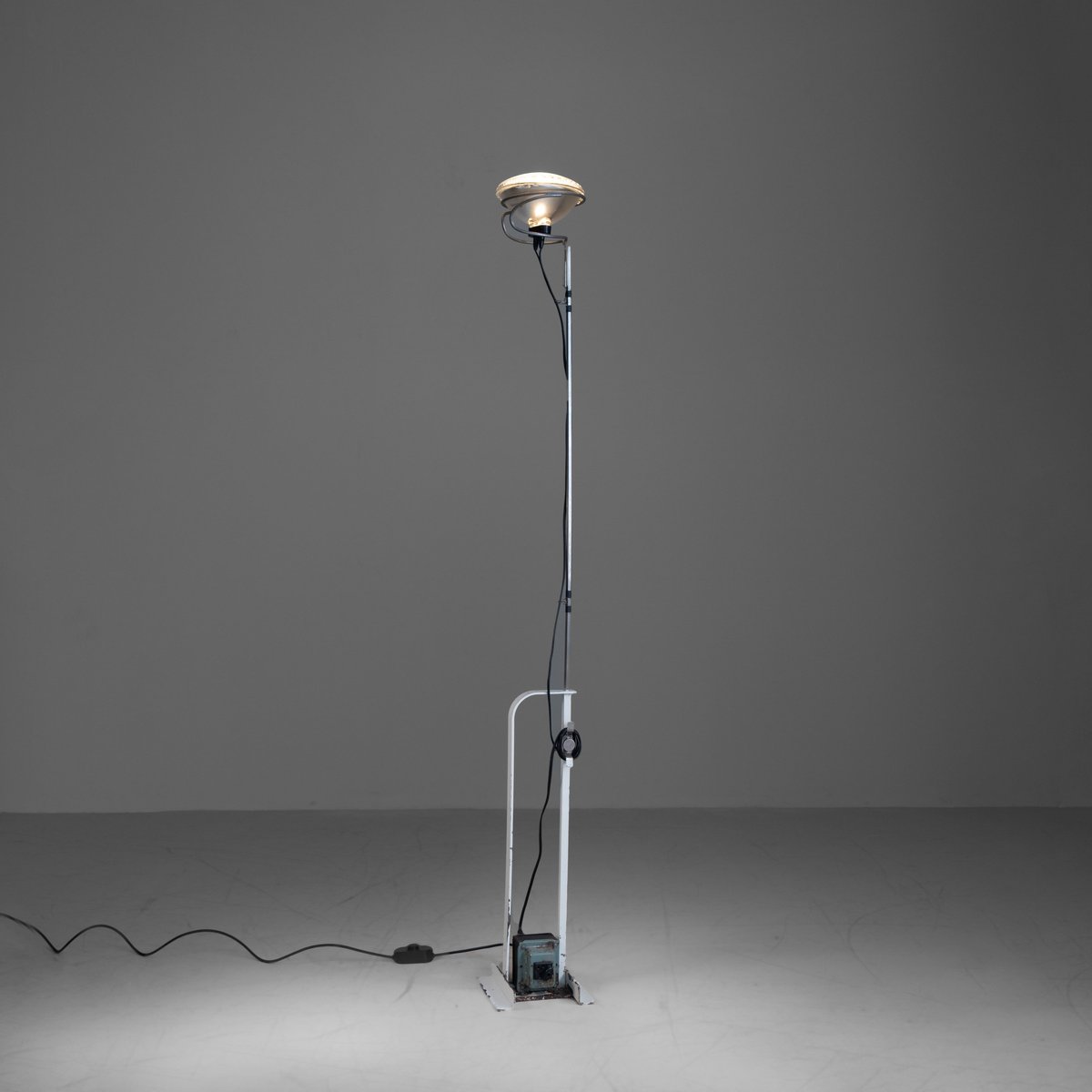
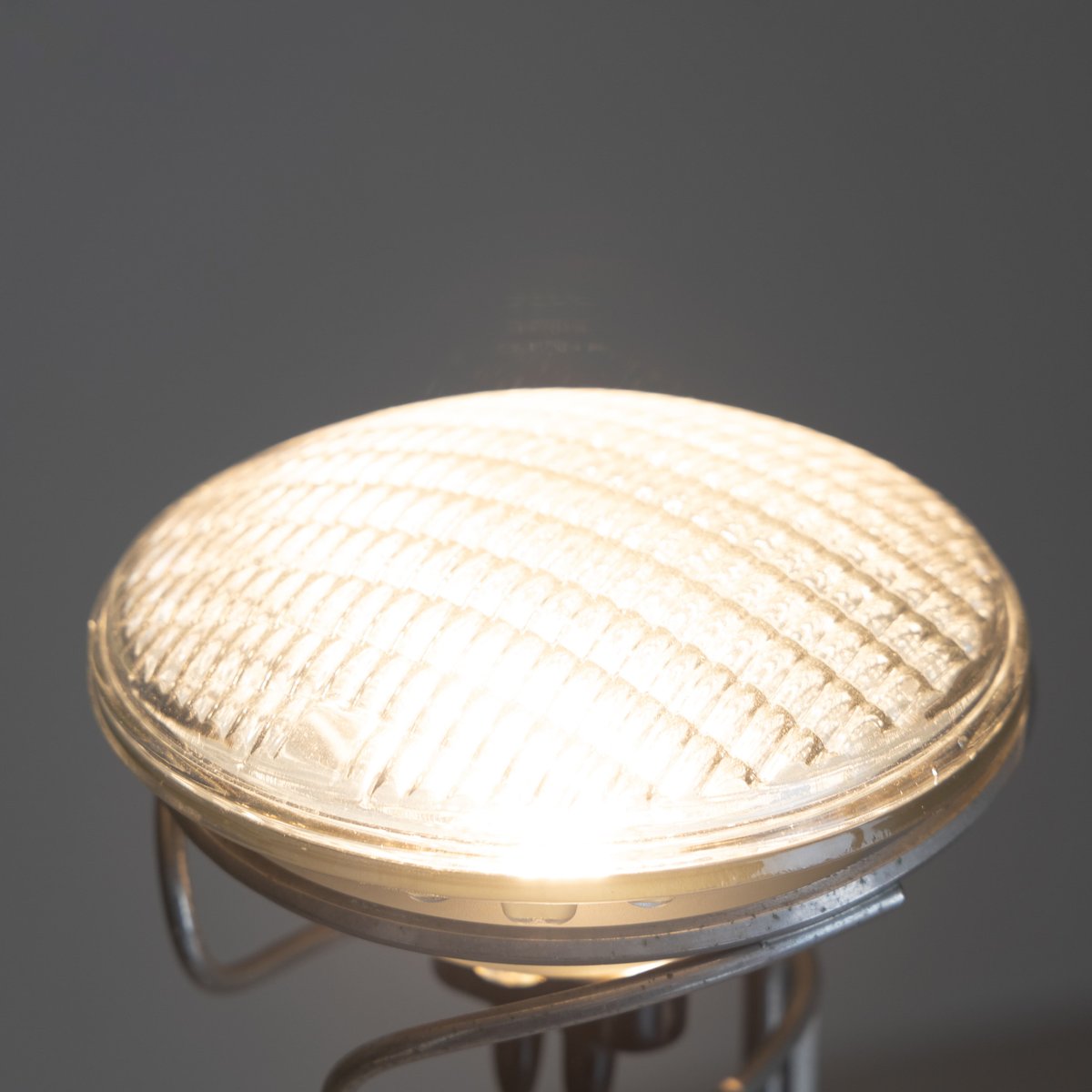
Toio
The Readymade, 1962Designer — Achille & Pier Giacomo Castiglioni for Flos; Duchamp-descended assembly.
Materials — 300-watt US car headlight, hexagonal nickel-plated brass stem, fishing-rod cord rings, exposed transformer as counterweight, boat cleat.
Signature Details
- Name plays on the English word toy
- Every part is a found object doing new work
- In MoMA’s permanent collection
Spotting an Original
- Flos markings
- Exposed transformer is correct, not a flaw
- Fishing-rod rings and cleat detail
Production
1962 onward
Licensed Today
Flos
8. The American Arc — Laurel, Sonneman, and the Domestic Tier
The American arc lamp is what happened when the Arco crossed the Atlantic without its license: makers led by Laurel Lamp Manufacturing and designers like Robert Sonneman produced chrome arcs and sculptural floor lamps for the US market through the 1960s and 70s, at department-store prices and in honest quantity. The tier deserves its own entry rather than a footnote, because it obeys the volume-manufacturer rule from our beds guide: a marked Laurel or Sonneman is a documented American production piece with its own collector market — a different and more honest purchase than an unmarked “Arco” whose seller hopes you won’t ask.
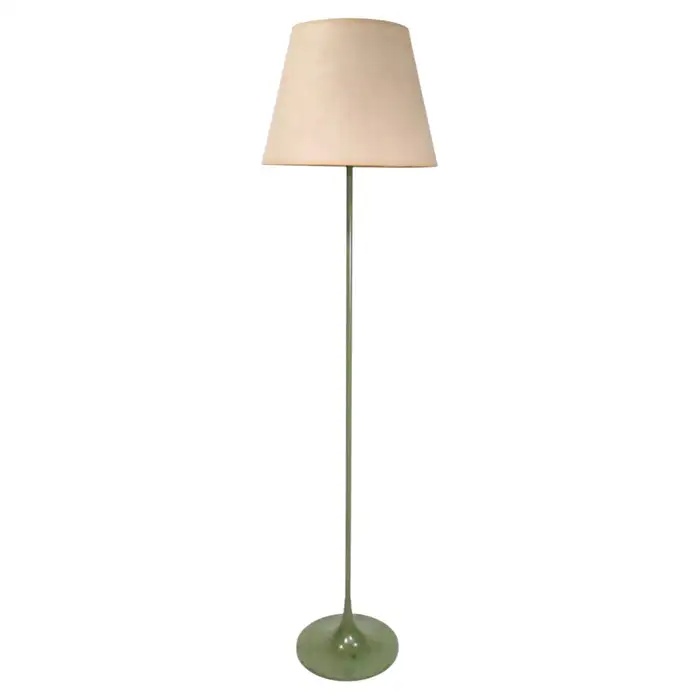
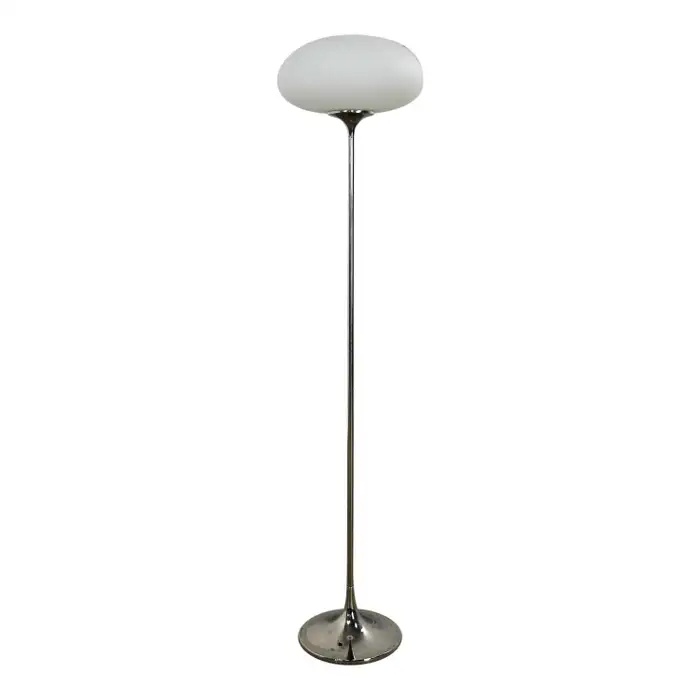
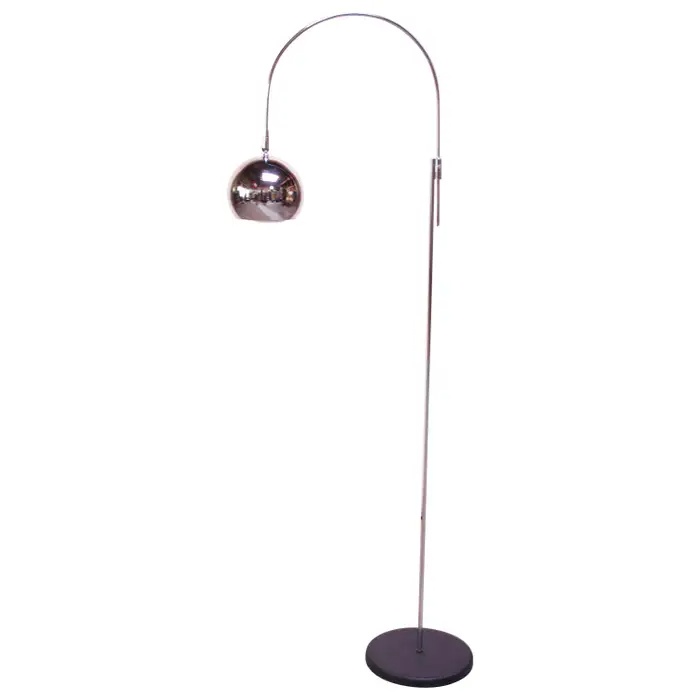
The American Arc
Laurel, Sonneman & the Domestic TierDesigner — US production led by Laurel Lamp Manufacturing and designers including Robert Sonneman.
Materials — Chromed steel arcs and sculptural floor lamps, 1960s–70s, department-store distribution.
Signature Details
- The Arco’s idea at American volume
- A documented tier with its own collectors
- Honest quantity, honest prices
Spotting an Original
- Laurel / Sonneman markings where present
- A marked American arc beats an unmarked “Arco”
- Chrome condition sets the price
Production
1960s – 1970s
Licensed Today
Vintage market only
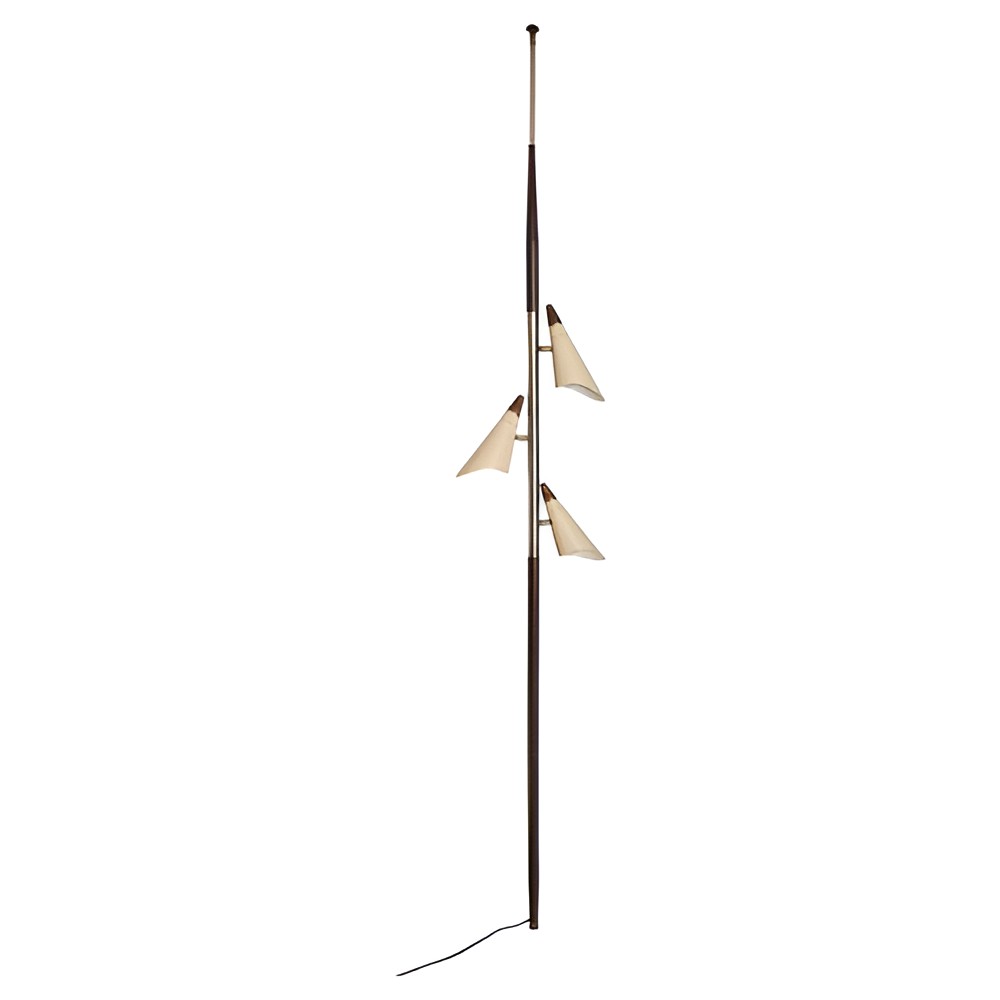
9. The Tension Pole Lamp
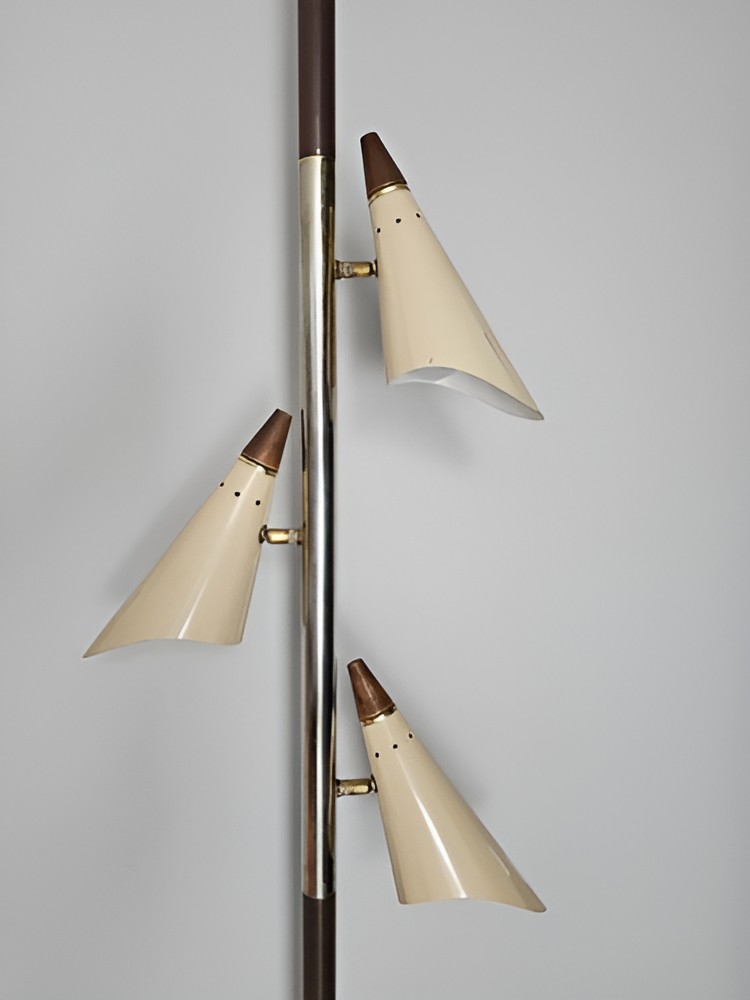
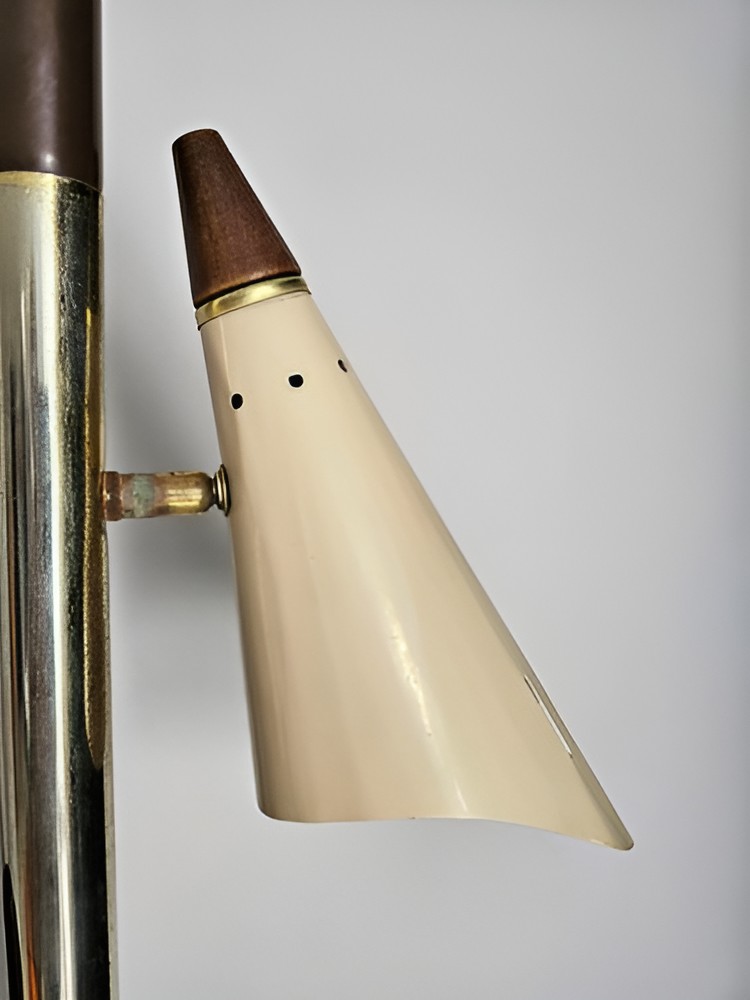
The tension pole lamp is the era’s anonymous vertical: a spring-loaded pole braced floor-to-ceiling carrying two or three adjustable cone or bullet shades, produced by countless makers, sold through every catalog, and almost never attributed — because most were never designed by anyone whose name was meant to survive. It is genuinely period, spatially clever in rooms too small for a footprint, and the vanities-guide archetype rule applies in full: buy condition, wiring, and shade completeness, not a name the listing supplies.
The Tension Pole Lamp
The Anonymous VerticalDesigner — No single author — produced by countless makers across the era.
Materials — Spring-loaded floor-to-ceiling pole with two or three adjustable cone or bullet shades.
Signature Details
- Zero-footprint lighting for small rooms
- Genuinely period, rarely attributed
- Every catalog carried one
Spotting an Original
- Buy condition, wiring, and shade completeness
- Attribution is a bonus, not a basis
- Original shades matter most
Production
1950s – 1960s
Licensed Today
Vintage market; no license exists
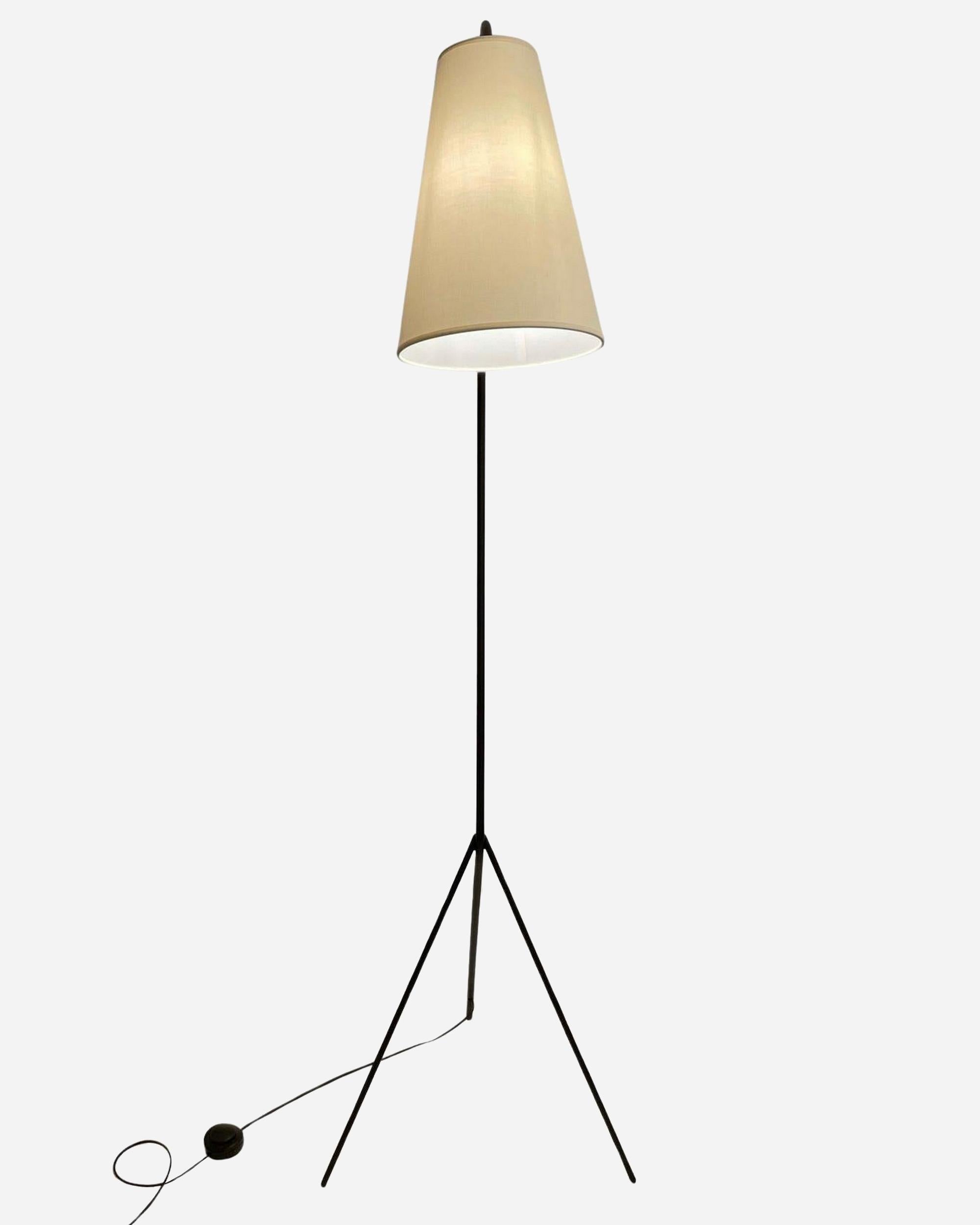
10. The Tripod Cone Lamp
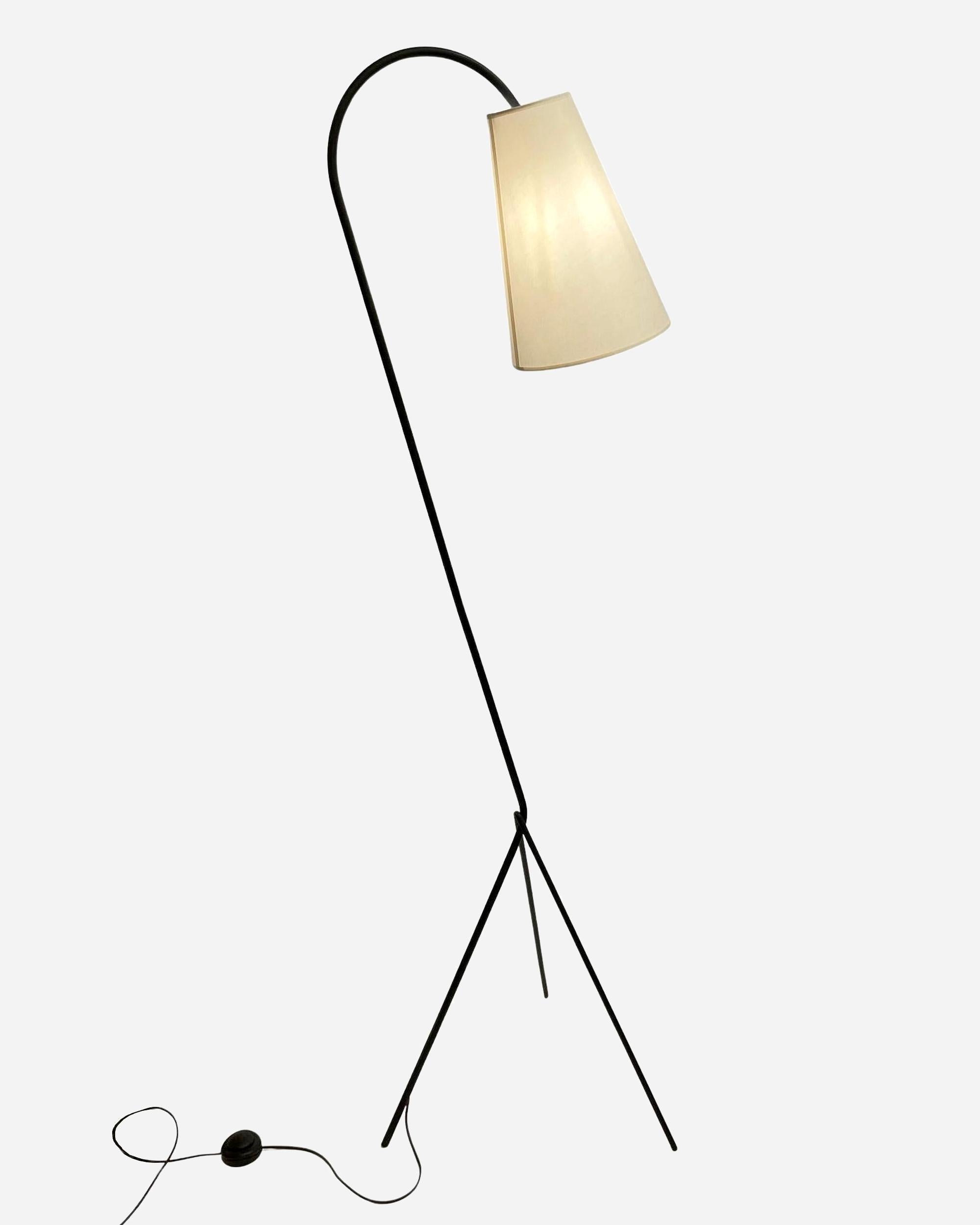
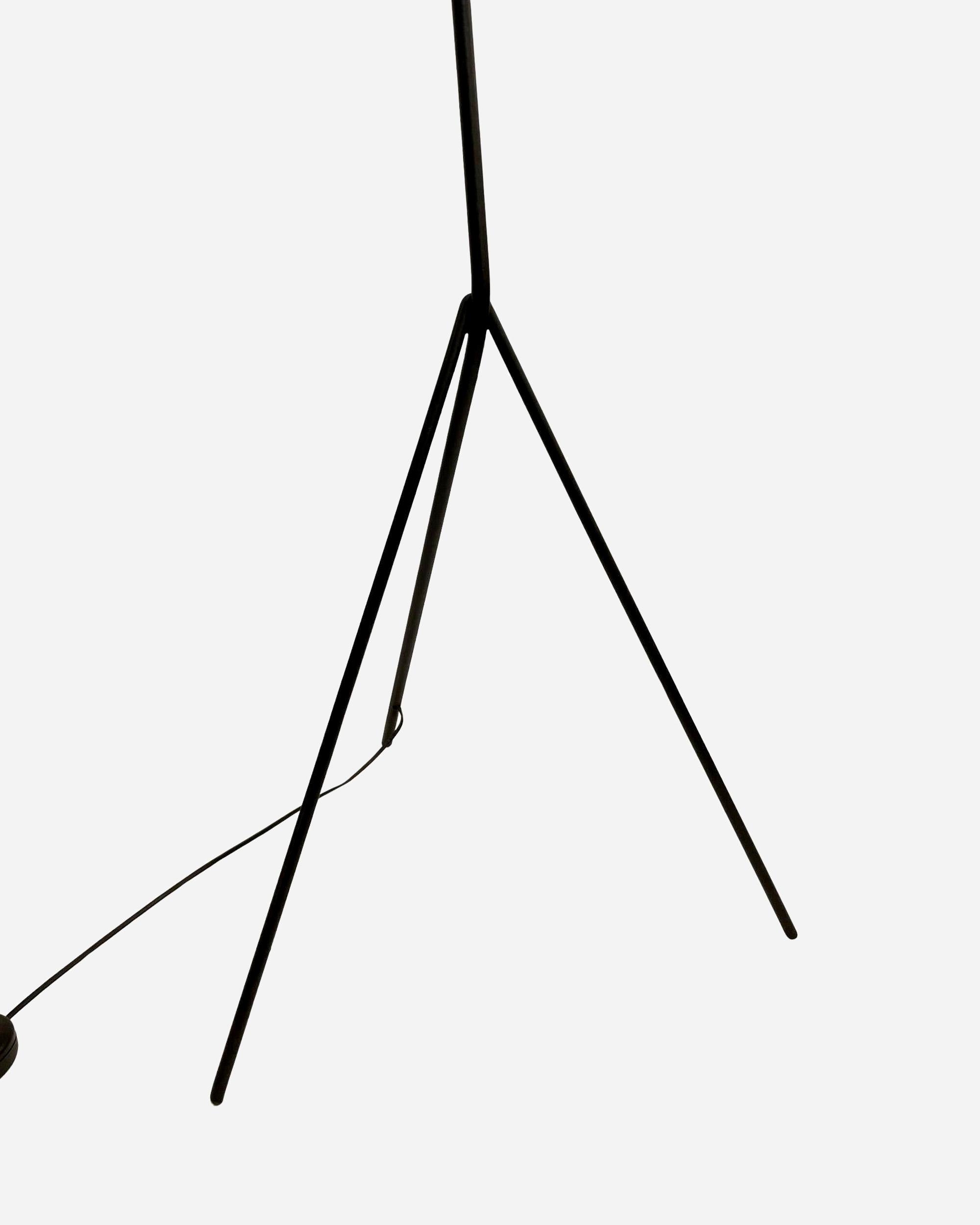
The tripod cone closes the list as the archetype the whole category leans on: three splayed legs — brass, black steel, or wood — under a fiberglass or fabric cone, made across two decades by makers famous, obscure, and unrecorded. When a room needs one object to say the era quietly, this is the shape that says it, and the honest market for it runs on the same terms as the pole lamp: original shades and clean rewiring set the price, attribution is a bonus where it truthfully exists, and the silhouette itself is the point.
The Tripod Cone Lamp
The Archetype ItselfDesigner — Makers famous, obscure, and unrecorded, across two decades.
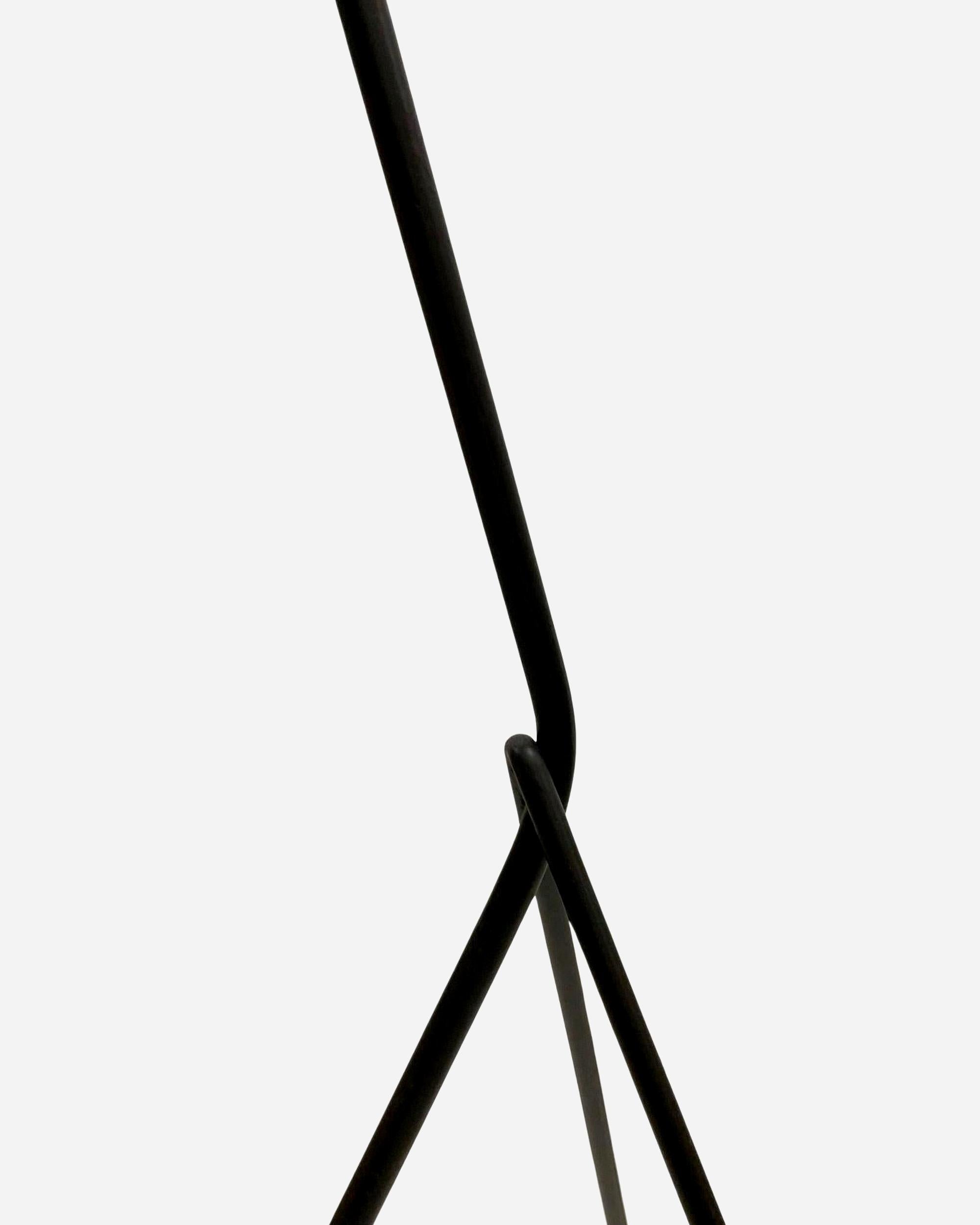
Materials — Three splayed legs in brass, steel, or wood under a fiberglass or fabric cone.
Signature Details
- The shape that says the era quietly
- Made at every price point
- The silhouette is the point
Spotting an Original
- Original shade and clean rewiring set the price
- Leg splay and ferrule quality separate tiers
- Names only where they truthfully exist
Production
1950s – 1960s
Licensed Today
Vintage market; no license exists
Licensed, Reissued, or Copied
The floor lamp market splits exactly along the lines the chairs guide drew, with lighting’s own twist: rewiring. Licensed production — Flos for the Castiglioni designs, Ozeki for Akari, GUBI for Grossman, Louis Poulsen for Jacobsen, Editions Serge Mouille with its serials and certificates — carries the engineering, the marks, and electrical safety certification; the Triennale, its maker gone since 1987, exists only as vintage and is faked accordingly, which copies routinely economize away along with the marble’s weight and the welds. Vintage buying adds the electrician’s question to the collector’s ones: period wiring is period, and a lamp is the one furniture category where authenticity and daily safety can pull in different directions — resolved by professional rewiring that preserves everything visible.
What makes a floor lamp “mid-century modern”?
A documented design or period production from roughly 1945–1970 in the era’s language: sculptural stance, honest materials — aluminum, brass, steel, paper, marble — the light source treated as a design element, and structure doing the ornament’s work. The category’s icons split between Europe’s editioned designs and America’s volume production, and both are legitimately mid-century.
What is the most iconic mid-century floor lamp?
The Arco, by production continuity since 1962, museum presence, and the scale of imitation — which its own manufacturer calls the largest of any design icon. The Akari series runs closest behind on a different axis: not one lamp but a sculptural language in continuous handcraft since 1951.
How can you tell a real Arco from a copy?
Weight first: the genuine Carrara marble base is heavy enough that Flos bored a hole through it for two-person carrying, and copies substitute lighter composites. Then the finish — beveled marble corners, the telescoping stainless arc’s action, and Flos markings. A convincing shade over a light base is the standard fake.
Are vintage floor lamps safe to use?
With period wiring, treat them as rewiring candidates rather than plug-and-play purchases: insulation from the 1950s and 60s degrades regardless of how clean the lamp looks. Professional rewiring preserves everything visible, costs little against the lamp’s value, and is standard practice among reputable dealers — many sell vintage lamps already rewired and say so.
Do mid-century floor lamps work with LED bulbs?
Yes, and usually better than with their original bulbs: warm LED at 2700K reproduces the period’s incandescent color at a fraction of the heat, which matters especially for the Akari’s paper and any fabric shade. The one caution is dimmers — older dimmer hardware and LED drivers can disagree, so pair rewired lamps with LED-compatible dimmers.
Resources
- MoMA — Arco Floor Lamp (1962) and Toio, Collection Records
- Flos — Arco and Toio Design Histories (Fondazione Achille Castiglioni Materials)
- Ozeki & Co. / Noguchi Documentation — Akari Light Sculptures, Gifu, 1951 Onward
- Louis Poulsen — AJ Lamp Family, SAS Royal Hotel, 1957
- Editions Serge Mouille — Formes Noires Series Documentation
- GUBI — Greta Magnusson Grossman, Grasshopper Reissue
- Architecture Lab — The Most Imitated Chair in Design History
- Architecture Lab — 13 Mid-Century Modern Bedroom Ideas
- Architecture Lab — Timeless Furniture Pieces


