

Mid-century modern dining chairs are the movement’s hardest brief solved twenty-one ways: a chair bought in fours and sixes rather than singly, sat in for hours at a stretch, tucked under a table rail, and lifted daily — constraints that disqualify most sculptural showpieces and explain why the dining canon rewards lightness, stacking, and honest joinery above drama. This list collects the twenty-one designs that earned dining rooms, each with its designer, date, current licensed maker, and the set-level practicalities a dining purchase turns on. Where a chair also ranks among the era’s overall icons, its full history lives in our guide to the 23 most loved mid-century modern chairs; here it is judged at the table.
A note on what this list replaced: the anonymous “mid-century style” dining chairs of the retail aisle borrow tapered legs and little else. Every chair below has an author, a date, and a paper trail — the standard the era set and the one worth paying for, at any budget.
1. Wishbone Chair (CH24) – Hans Wegner, Carl Hansen & Søn, 1949
The Wishbone is the reigning mid-century dining chair, and dining is the job Wegner drew it for: light enough to lift one-handed, armrail low enough to tuck under most tables, and a hand-woven paper-cord seat that firms comfortably over long sittings. Sets of six originals constitute a meaningful vintage market of their own; new production runs in a dozen woods and colors. At the table, its one demand is space — the curved rail wants a few centimeters beside each neighbor.
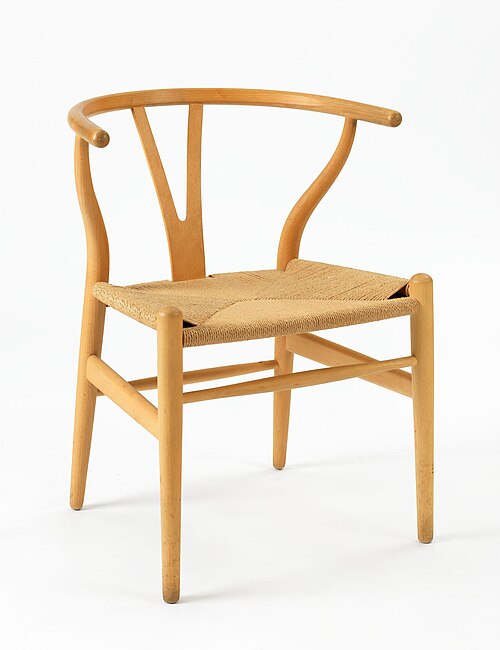
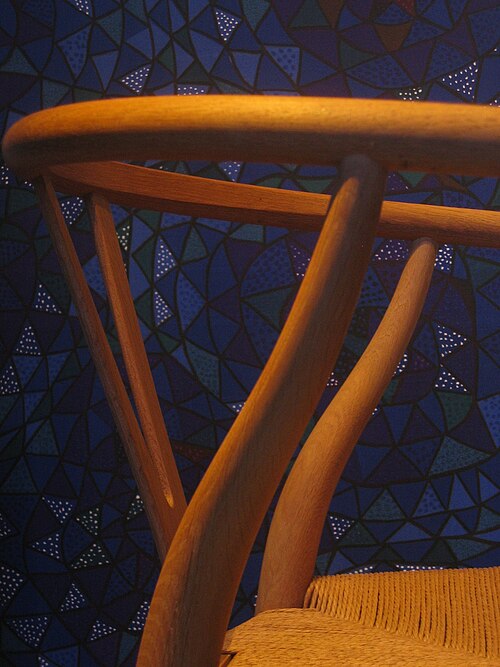
Wishbone Chair (CH24)
Reigning Dining IconDesigner — Hans Wegner for Carl Hansen & Søn, 1949.
Materials — Steam-bent frame, Y-back, hand-woven paper-cord seat.
At the Table
- Lifts one-handed; tucks under most rails
- Cord seat firms comfortably over long sittings
- Curved rail wants breathing room between chairs
Spotting an Original
- Carl Hansen & Søn markings
- Paper cord, never plastic
- Y-to-rail joinery quality
Production
1950 onward
Licensed Today
Carl Hansen & Søn
2. Møller Model 71 and 78 – Niels Otto Møller, J.L. Møllers, 1951 and 1962
The Møller chairs are the connoisseur’s Danish dining set: Niels Otto Møller’s Model 71 of 1951 and the finer-lined 78 that followed a decade on, built by his family firm J.L. Møllers in Denmark to joinery tolerances that made the brand a byword. Teak or rosewood frames with paper-cord or leather seats, armless, light, and sized for close table spacing — the archetypal chair under the archetypal teak extension table. Vintage sets hold value unusually well because the construction survives use.
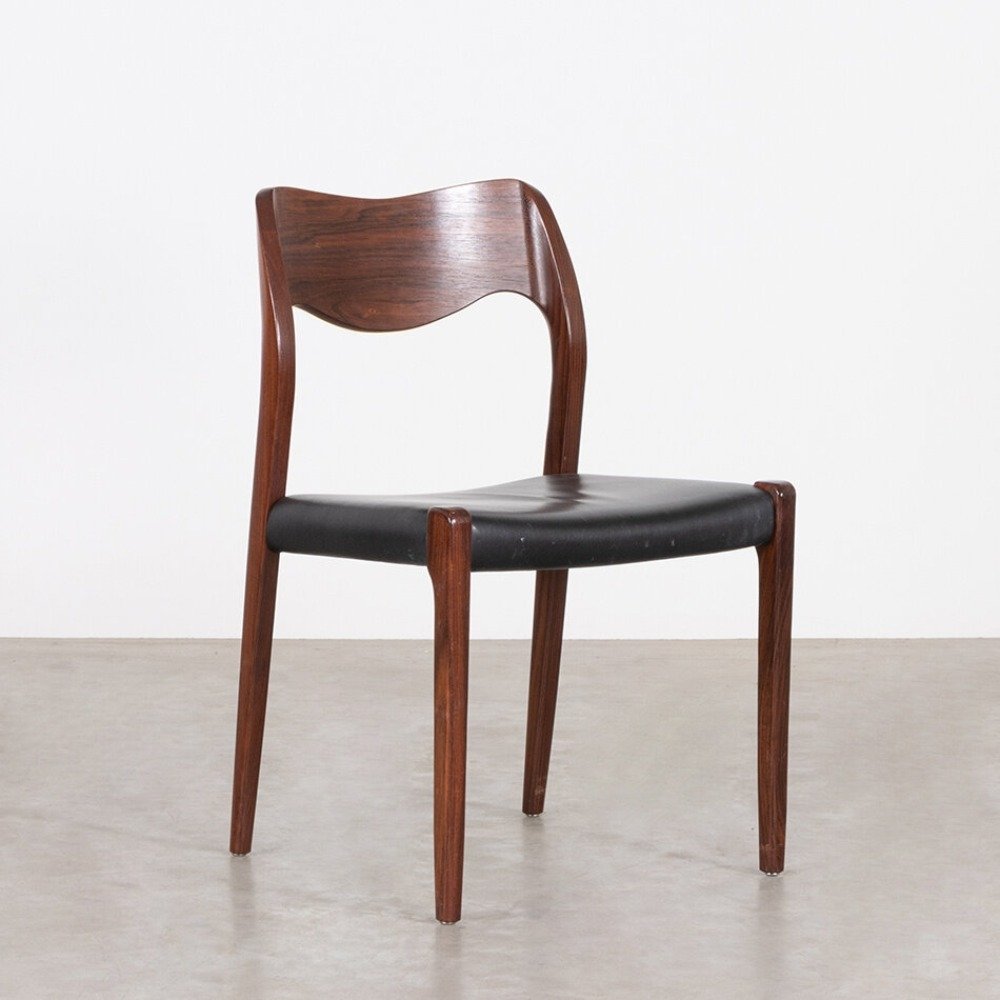
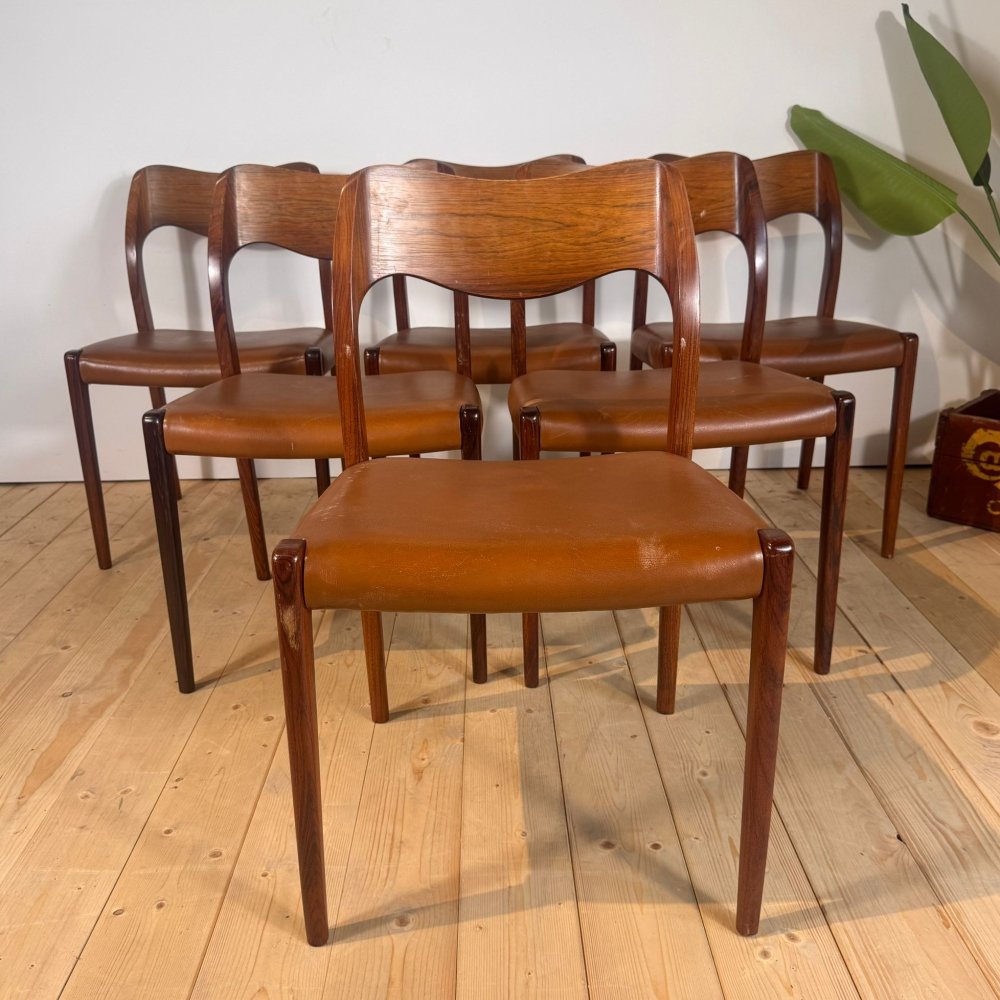
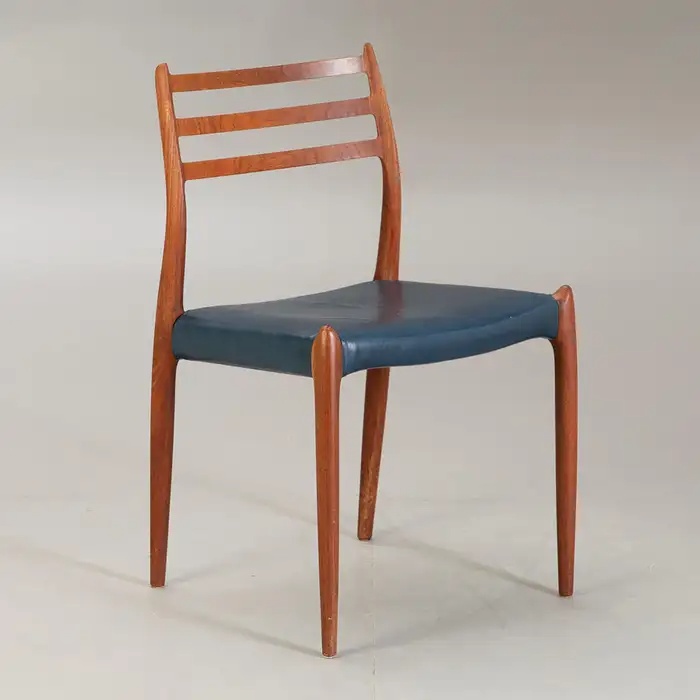
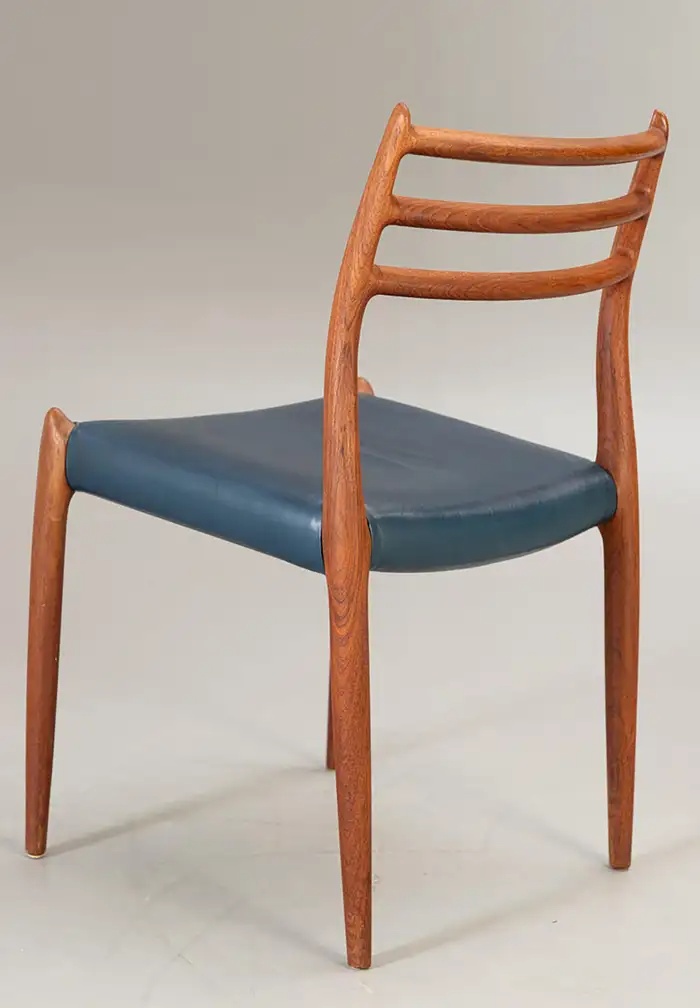
Møller Model 71 & 78
Connoisseur’s Danish SetDesigner — Niels Otto Møller for J.L. Møllers, 1951 and 1962.
Materials — Teak or rosewood frames; paper-cord or leather seats.
At the Table
- Armless, close-spacing, light
- The archetype under the teak extension table
- Vintage sets hold value — construction survives
Spotting an Original
- J.L. Møllers markings
- Joint tolerances — the firm’s byword
- Cord or leather seat condition
Production
1951 / 1962 onward
Licensed Today
J.L. Møllers
3. J39 “People’s Chair” – Børge Mogensen, 1947
The J39 is Danish modern at its most democratic: Børge Mogensen designed it in 1947 for FDB, the Danish co-op movement, as an affordable everyman’s chair — solid wood, Shaker-plain lines, woven seat — and it has been in production essentially ever since. It is the dining chair as public infrastructure, and its plainness is the point: a set of six disappears politely behind the meal.
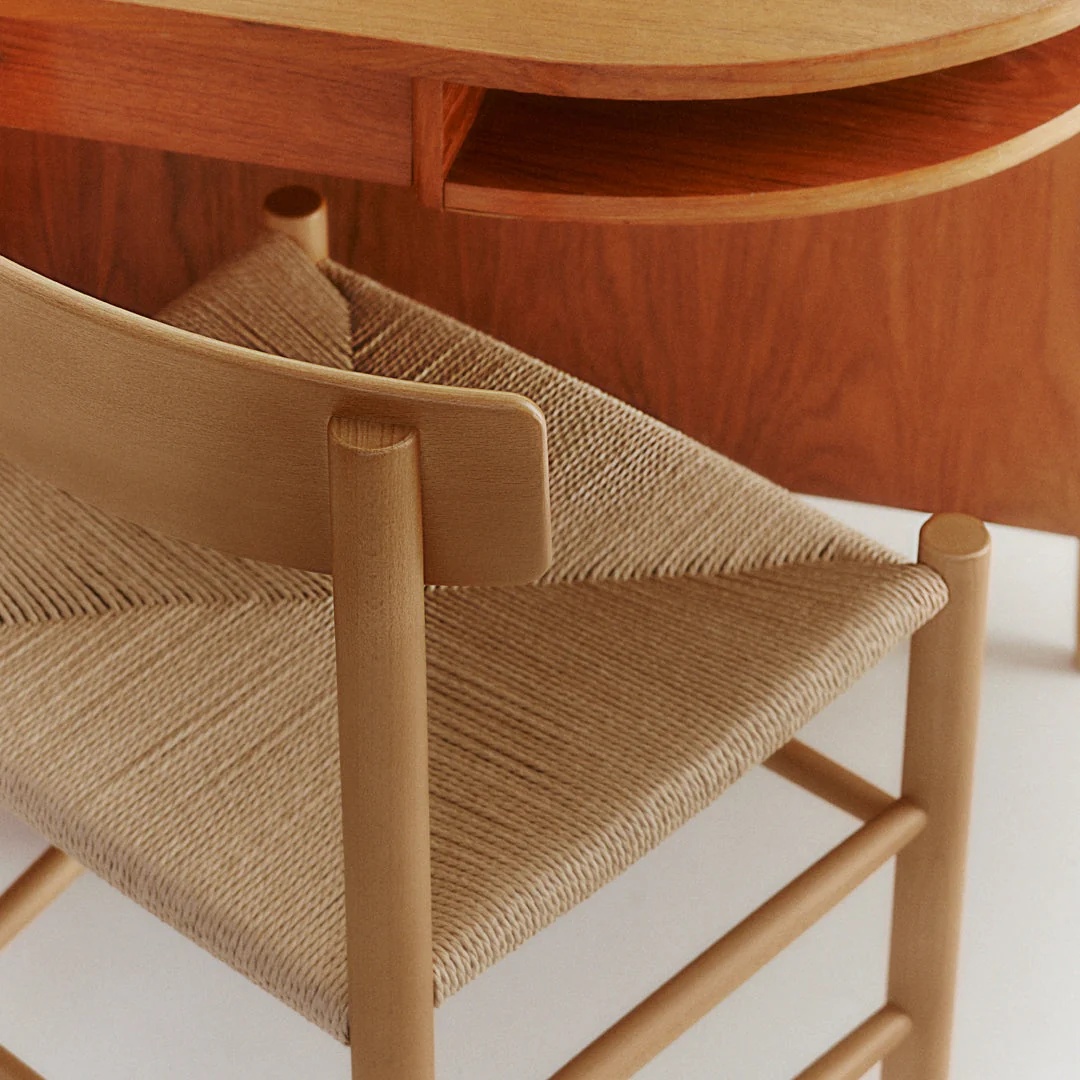
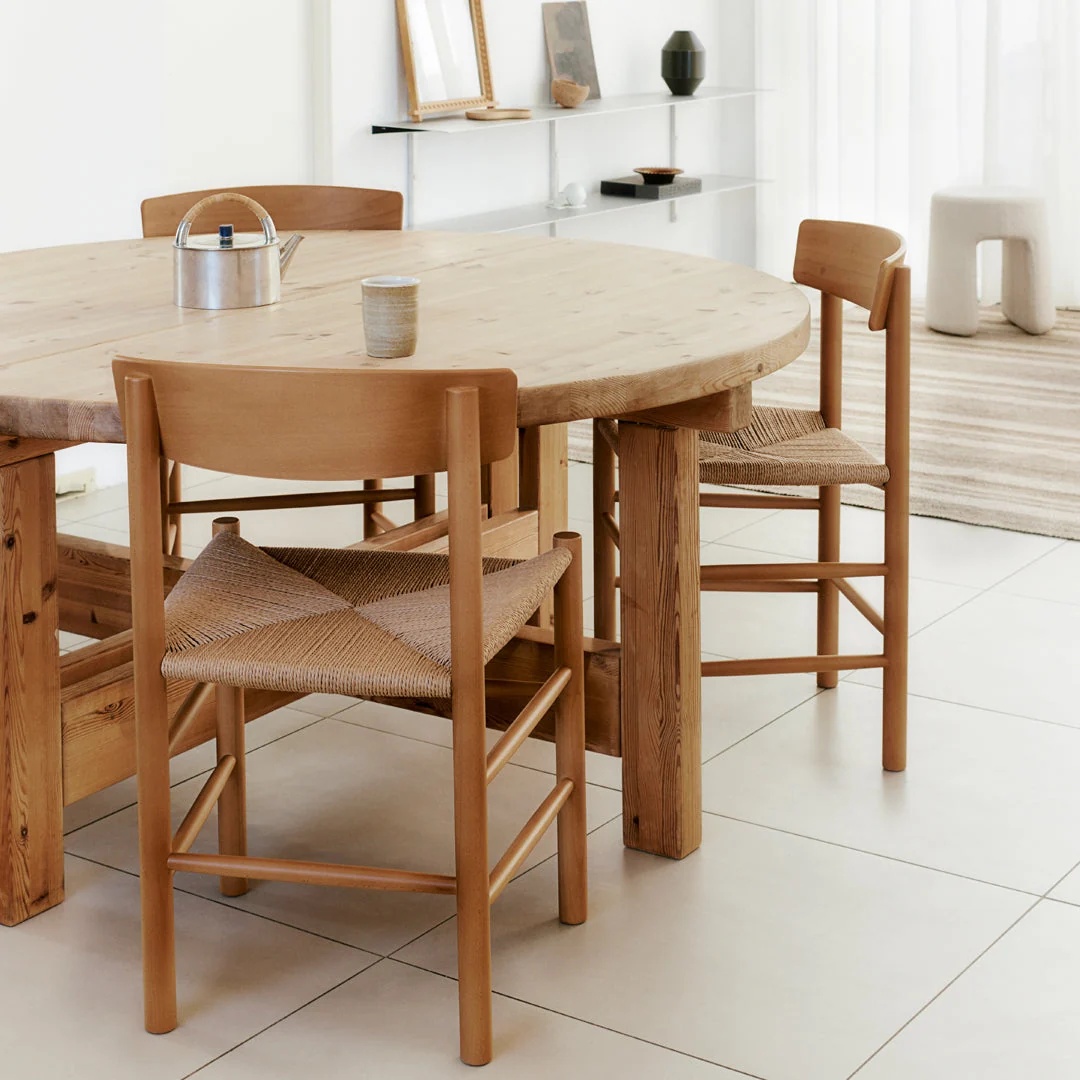
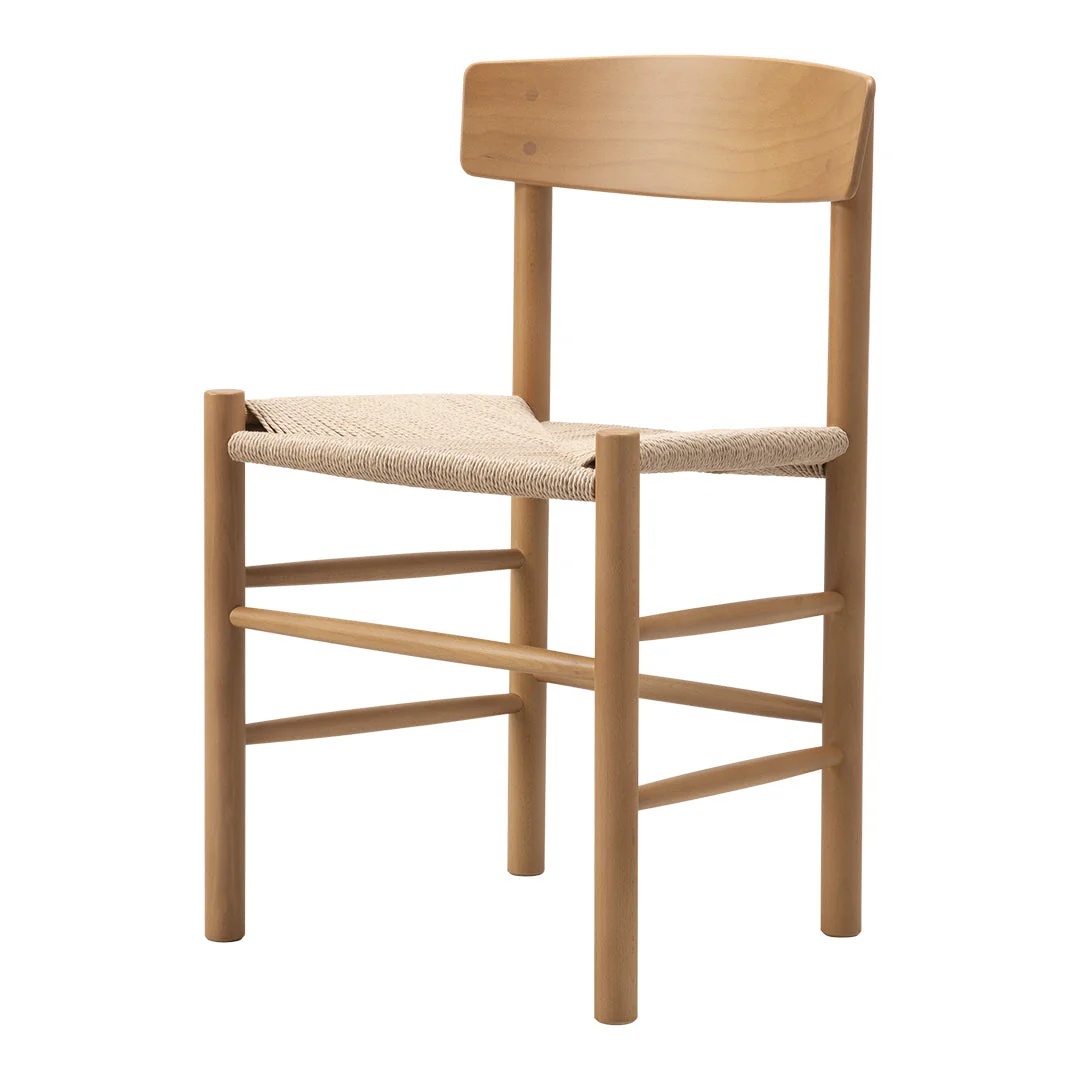
J39 “People’s Chair”
Democratic DanishDesigner — Børge Mogensen for FDB, 1947.
Materials — Solid wood, Shaker-plain frame, woven seat.
At the Table
- Affordable everyman’s chair by design
- A set of six disappears behind the meal
- In production essentially since 1947
Spotting an Original
- Fredericia (current) or FDB (vintage) marks
- Seat weave pattern
- Plainness is the authenticity
Production
1947 onward
Licensed Today
Fredericia
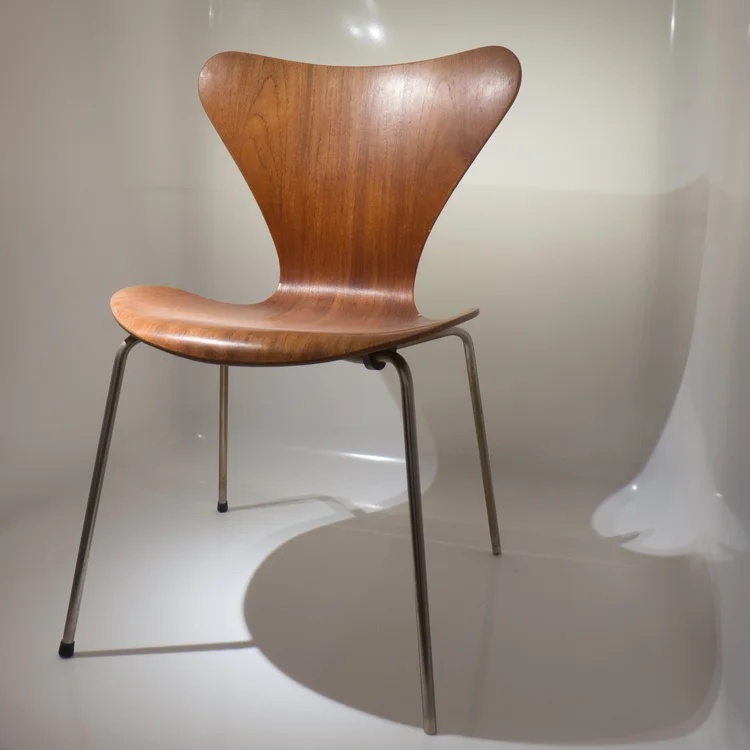
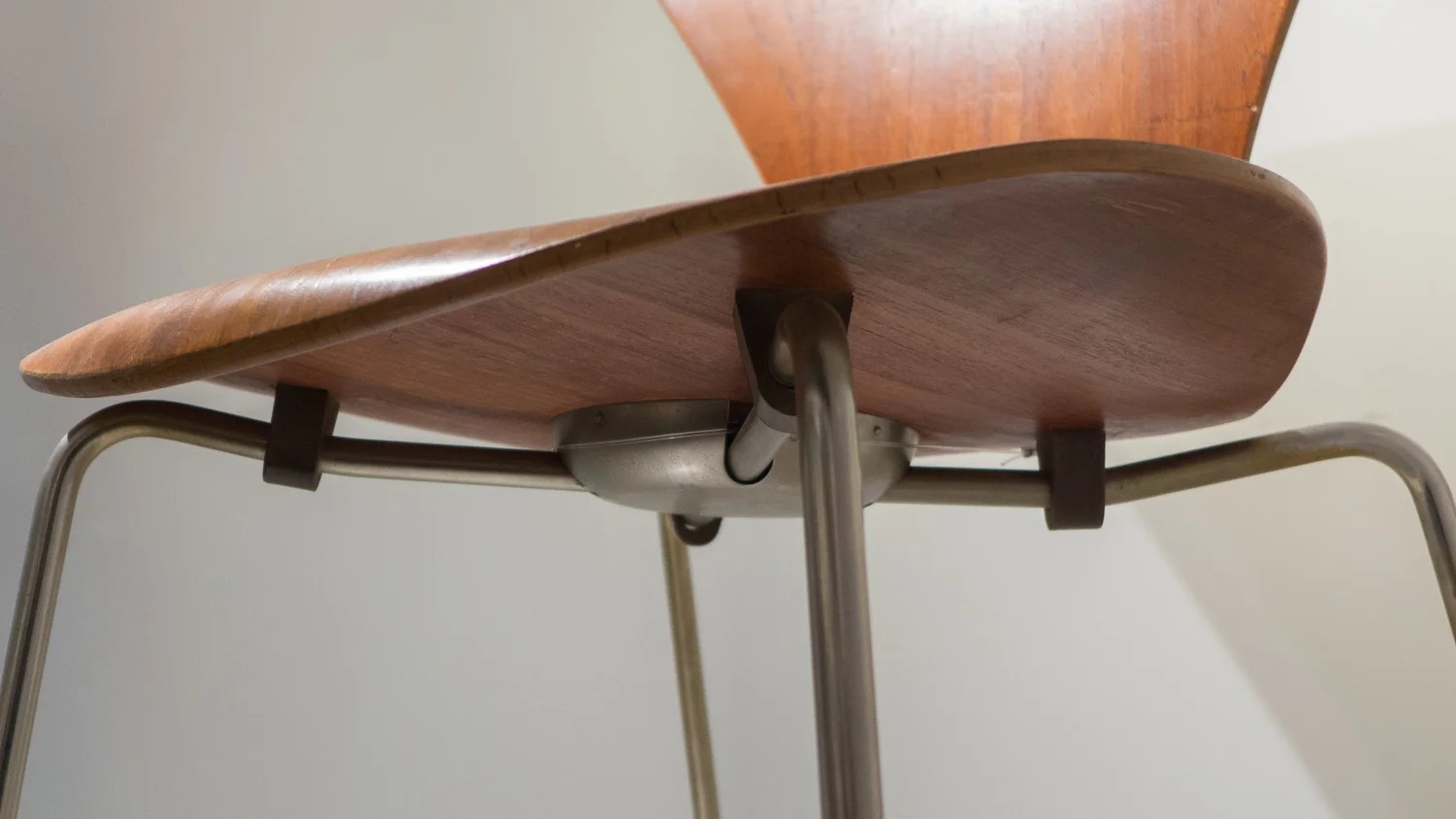
4. Series 7 – Arne Jacobsen, Fritz Hansen, 1955
The Series 7 is the volume champion at the dining table for the same reasons it conquered everywhere else: a one-piece plywood shell that flexes with the sitter, stackable storage between dinners, and a footprint that seats six around a modest table. Armless as standard, which suits tight spacing; the shell’s waist is the comfort mechanism. Its full biography — including the famous photograph staged on a copy — sits in the canon guide.
J39 “People’s Chair”
Democratic DanishDesigner — Børge Mogensen for FDB, 1947.
Materials — Solid wood, Shaker-plain frame, woven seat.
At the Table
- Affordable everyman’s chair by design
- A set of six disappears behind the meal
- In production essentially since 1947
Spotting an Original
- Fredericia (current) or FDB (vintage) marks
- Seat weave pattern
- Plainness is the authenticity
Production
1947 onward
Licensed Today
Fredericia
5. Ant Chair – Arne Jacobsen, Fritz Hansen, 1952
The Ant is the Series 7’s slimmer ancestor, drawn by Jacobsen in 1952 for a pharmaceutical company’s canteen: a wasp-waisted plywood shell originally on three legs for clean stacking and easy floor cleaning. The three-legged original remains the purist’s choice and the four-legged version the stable one — a genuine fork in the buying decision, since both are in production.
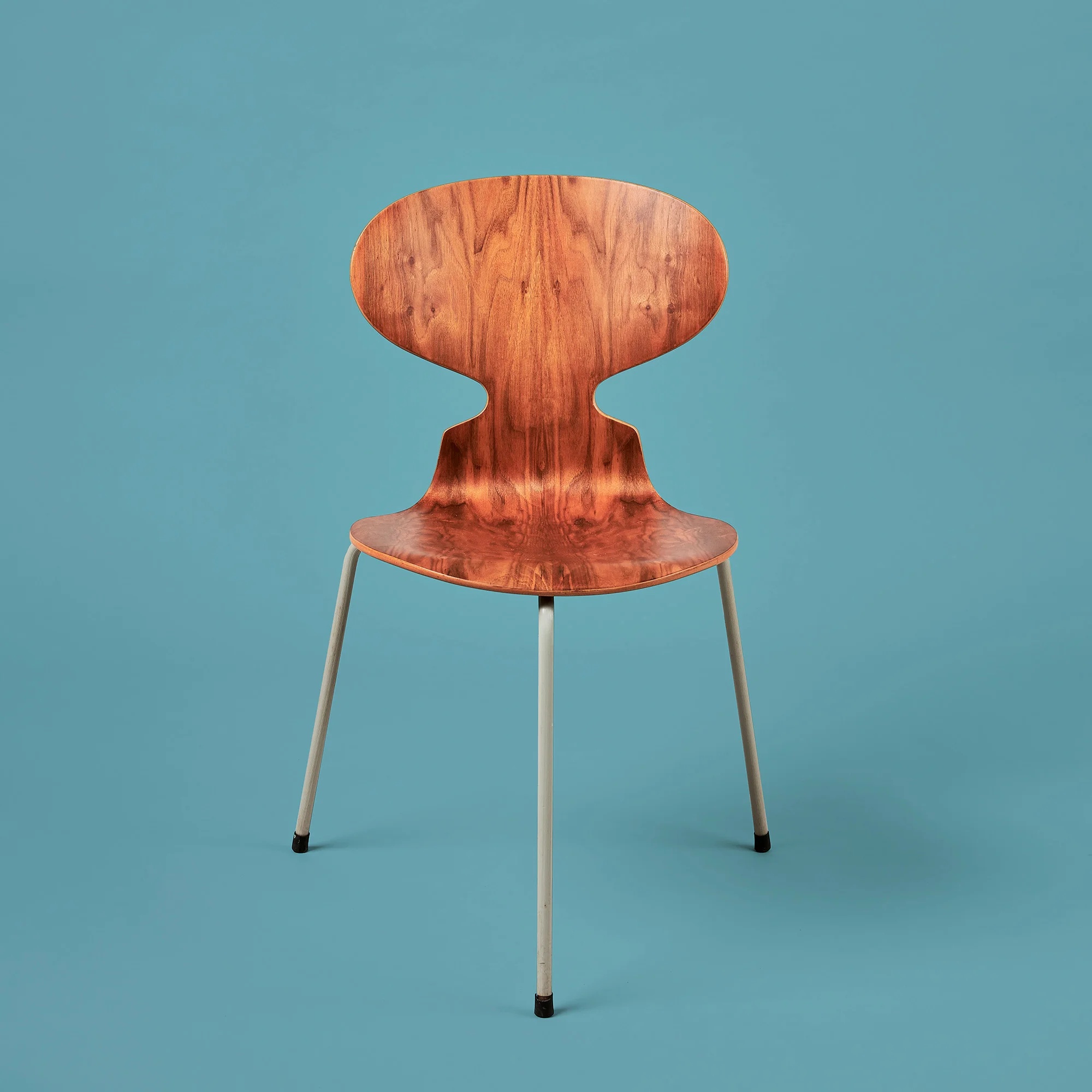
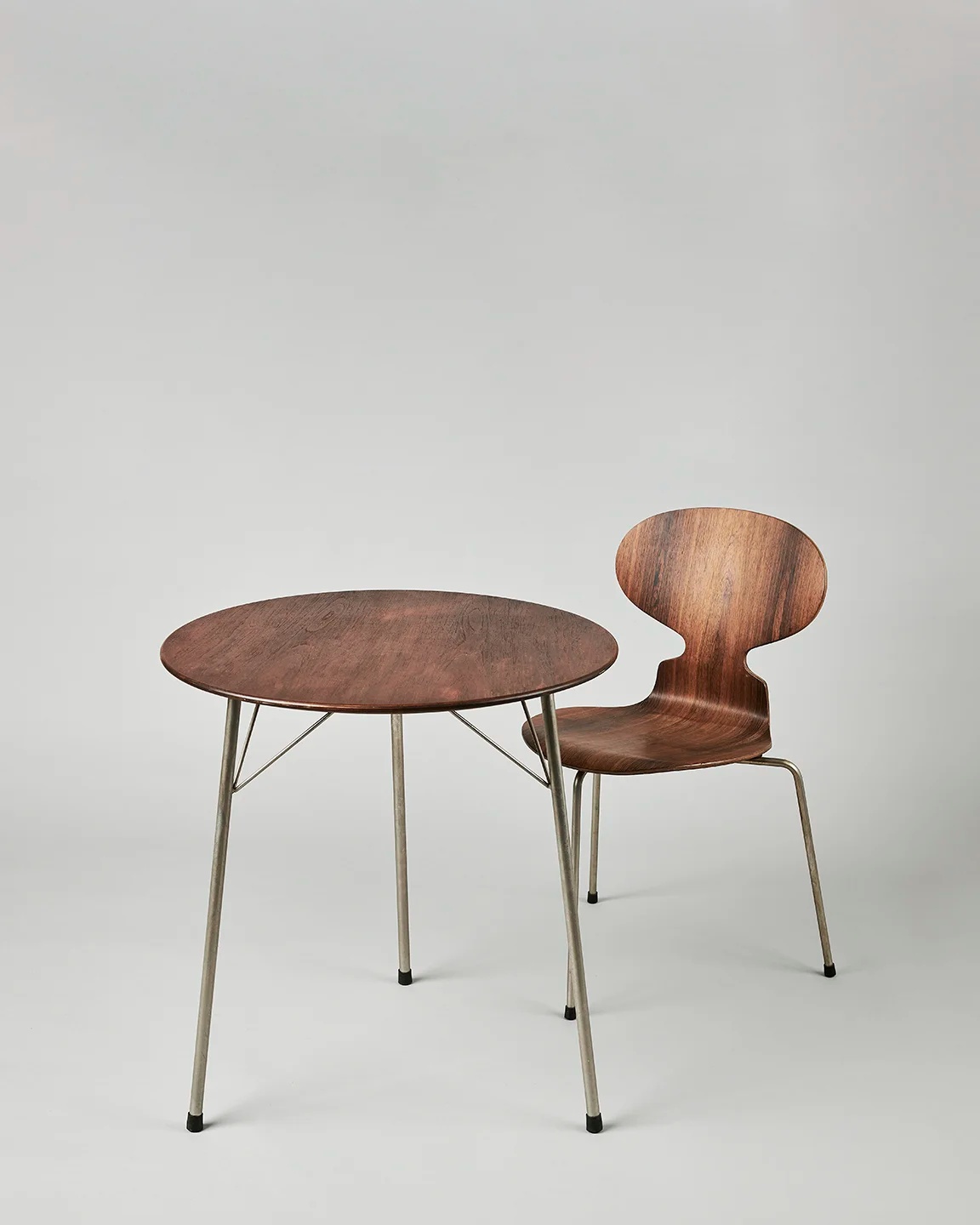
Ant Chair
The Slimmer AncestorDesigner — Arne Jacobsen for Fritz Hansen, 1952.
Materials — Wasp-waisted plywood shell; three or four legs.
At the Table
- Drawn for a canteen — stacking born in
- Three legs: purist; four legs: stable
- Lightest footprint on the list
Spotting an Original
- Fritz Hansen markings
- Leg count states the era and intent
- Shell waist curvature
Production
1952 onward
Licensed Today
Fritz Hansen
6. Cherner Armchair – Norman Cherner, 1958
The Cherner is the era’s most sinuous dining armchair and its best cautionary tale: Norman Cherner designed the bentwood arms-and-shell for Plycraft in 1958, was told the project had died, then found it selling under a fabricated name — and sued his way to credited authorship in 1961, the same year Norman Rockwell put the chair on a Saturday Evening Post cover. The ribbon-thin arms sweep from the backrest in one gesture, and the armchair still tucks at standard tables because the arms rise late.
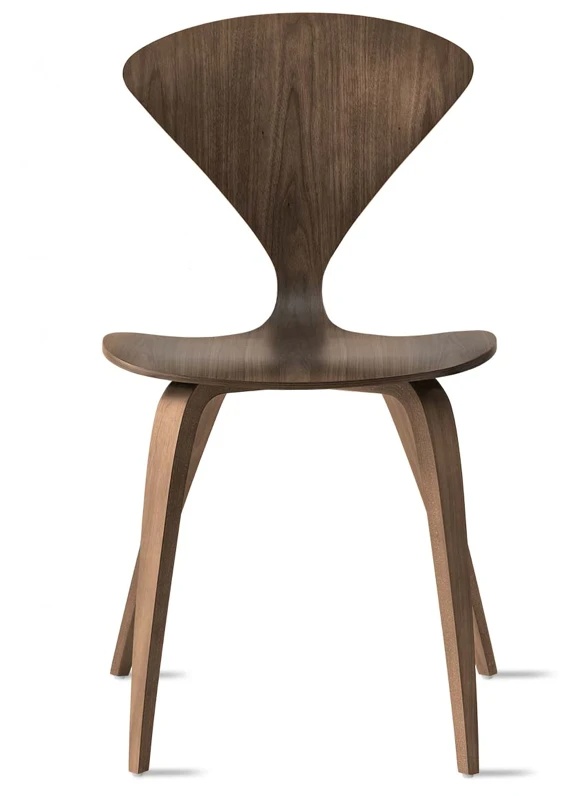
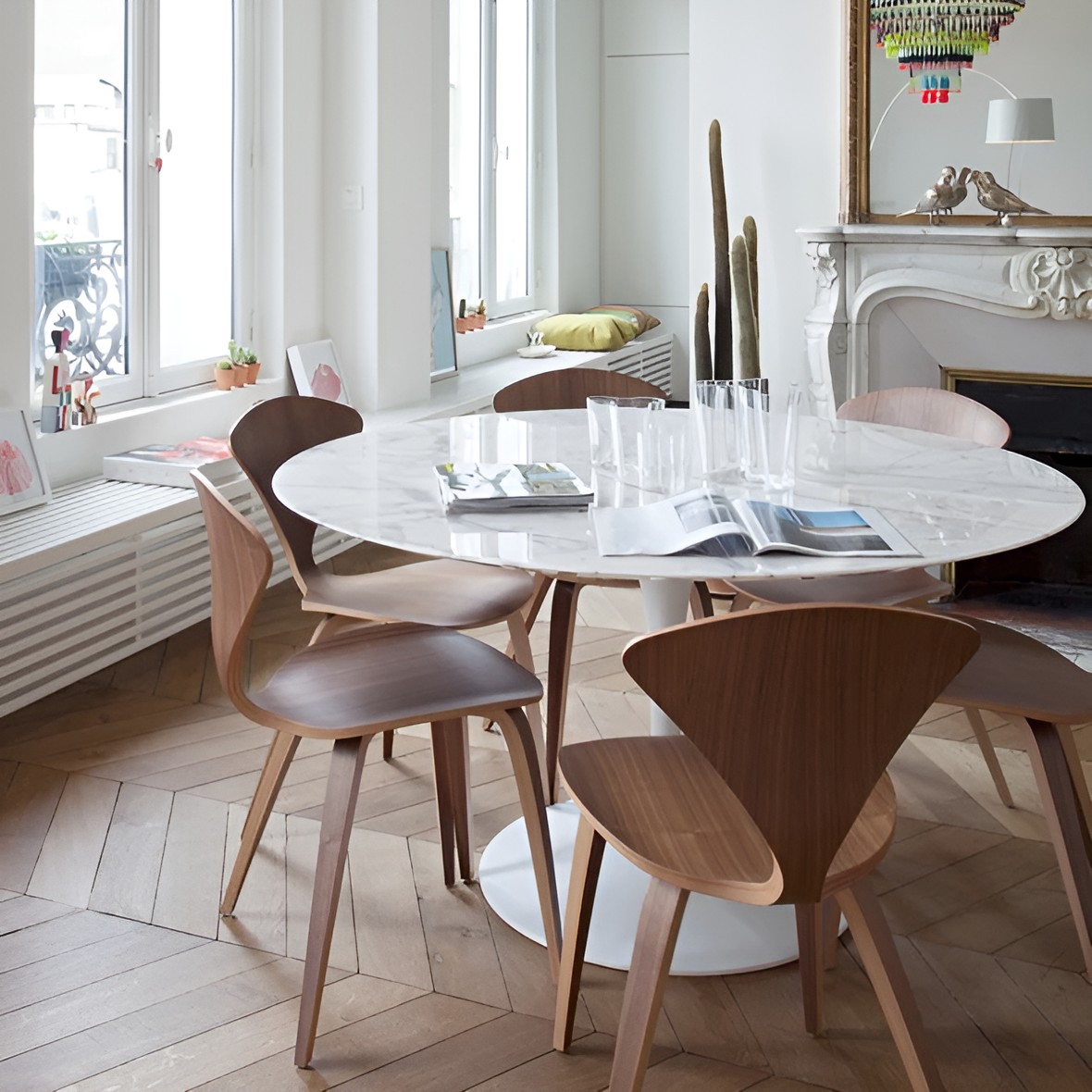
Cherner Armchair
Sinuous, With a LawsuitDesigner — Norman Cherner, for Plycraft, 1958.
Materials — Molded plywood shell with ribbon-thin bentwood arms.
At the Table
- Arms rise late — clears standard rails
- The era’s most sculptural dining armchair
- On a 1961 Saturday Evening Post cover
Spotting an Original
- Pre-1961 “Bernardo” labels: the lawsuit rarity
- Post-1961: credited Cherner/Plycraft labels
- Cherner Chair Company on current builds
Production
1958 – early 1970s; reissued
Licensed Today
Cherner Chair Company
7. Eames Molded Side Chair – Charles and Ray Eames, Herman Miller, 1950
The Eames side shell is the dining workhorse of the plastic revolution: the armless molded chair on Eiffel wire or dowel legs, first mass-produced in fiberglass in 1950 and sold by the set from the start. It wipes clean, shrugs off children, and mixes shell colors around one table without breaking the room. Vintage fiberglass sets show the strand texture collectors pay for; current shells run in polypropylene and re-engineered fiberglass.
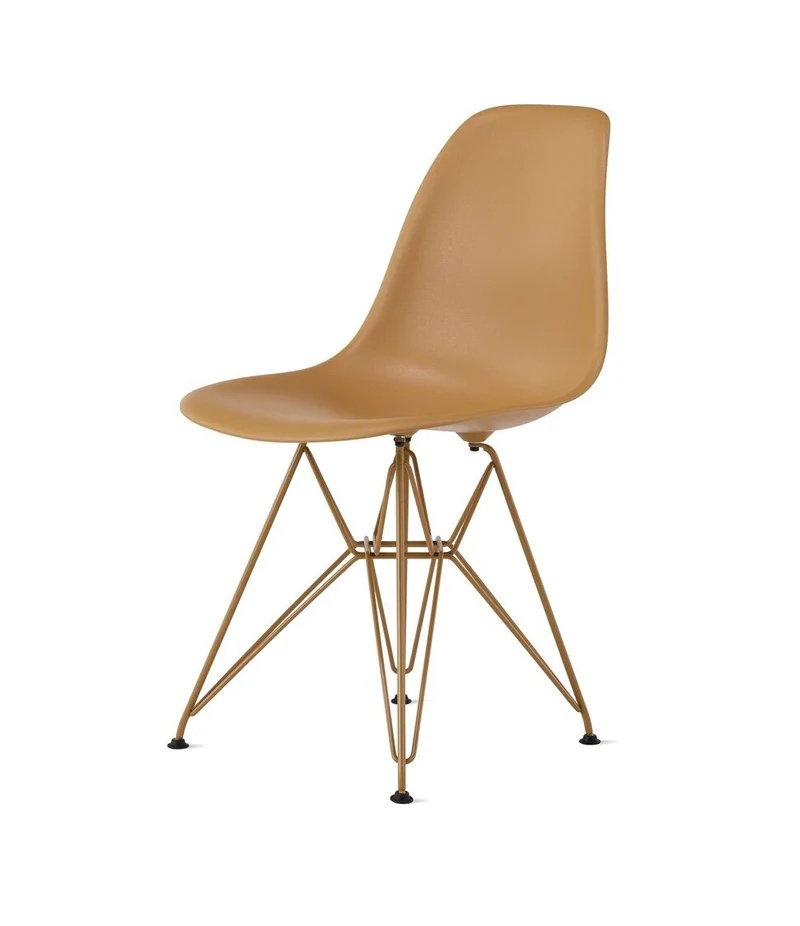
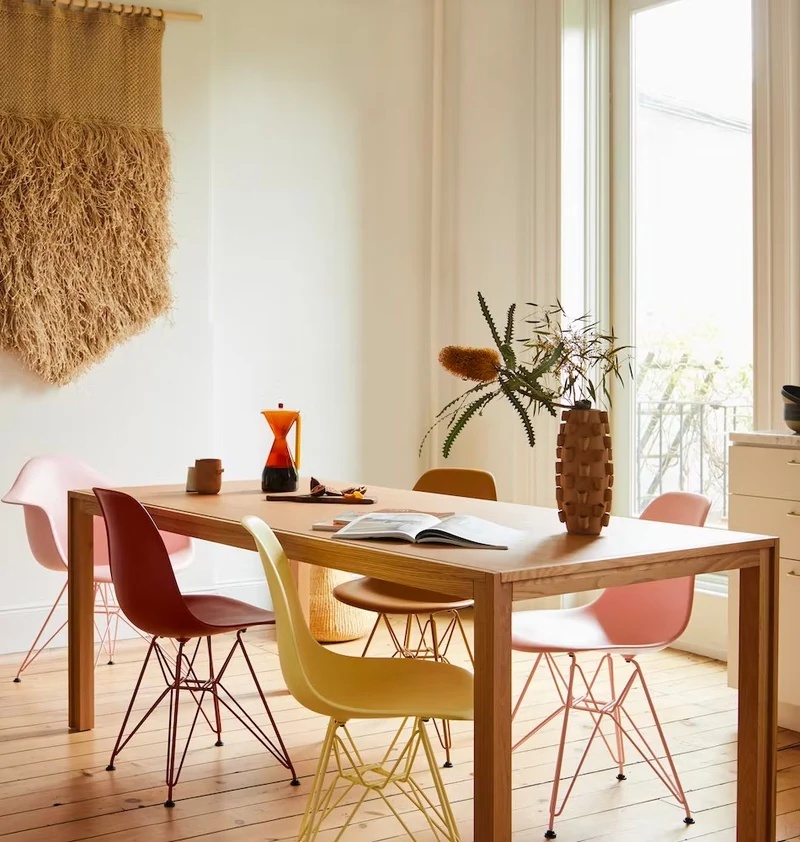
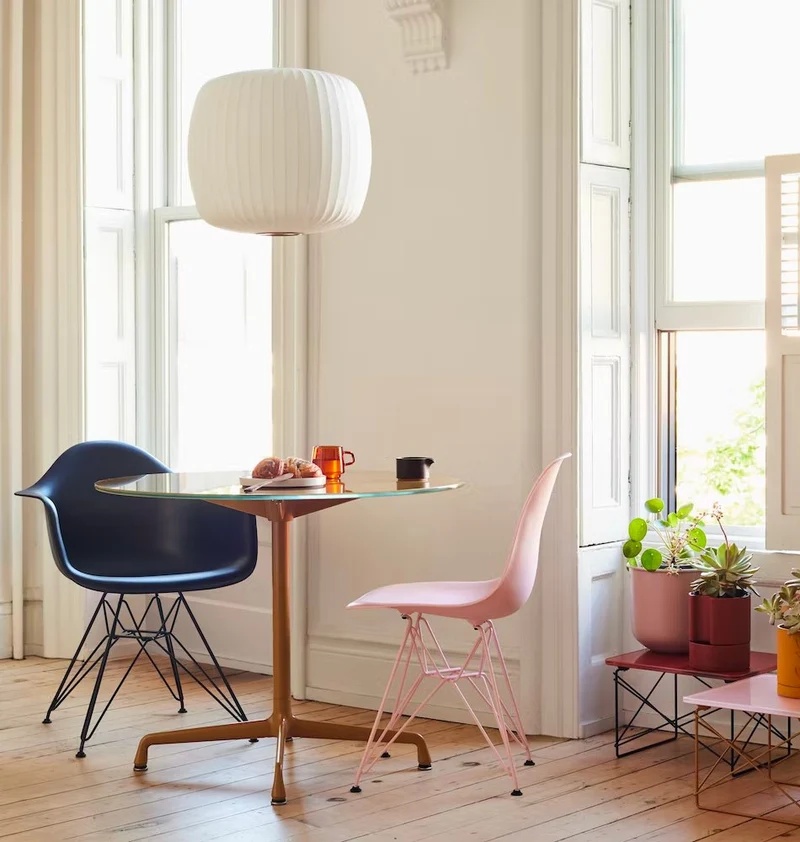
Eames Molded Side Chair
Plastic-Revolution WorkhorseDesigner — Charles and Ray Eames for Herman Miller, 1950.
Materials — One-piece shell; Eiffel wire or dowel legs.
At the Table
- Wipes clean; shrugs off children
- Mix shell colors around one table
- Sold by the set from the start
Spotting an Original
- Herman Miller stamps under shell
- Vintage fiberglass strand texture
- Base geometry exact on originals
Production
1950 onward
Licensed Today
Herman Miller / Vitra; Modernica
8. Tulip Side Chair – Eero Saarinen, Knoll, 1956
The armless Tulip is the dining version of Saarinen’s pedestal argument: one stem per sitter, no leg collisions at any seat count, and a swivel that makes tight corners graceful. Around Saarinen’s own pedestal table the set achieves the era’s only truly legless dining room — the composition the collection was designed to complete.
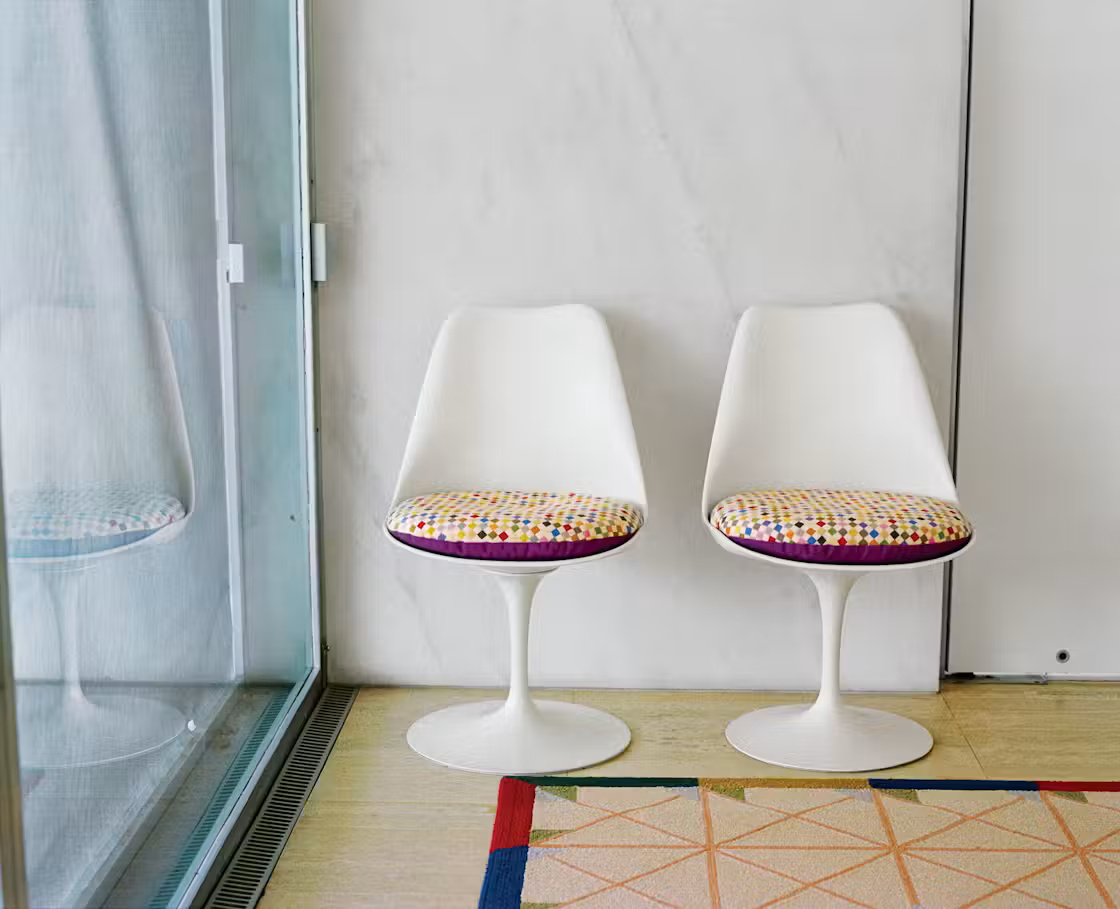
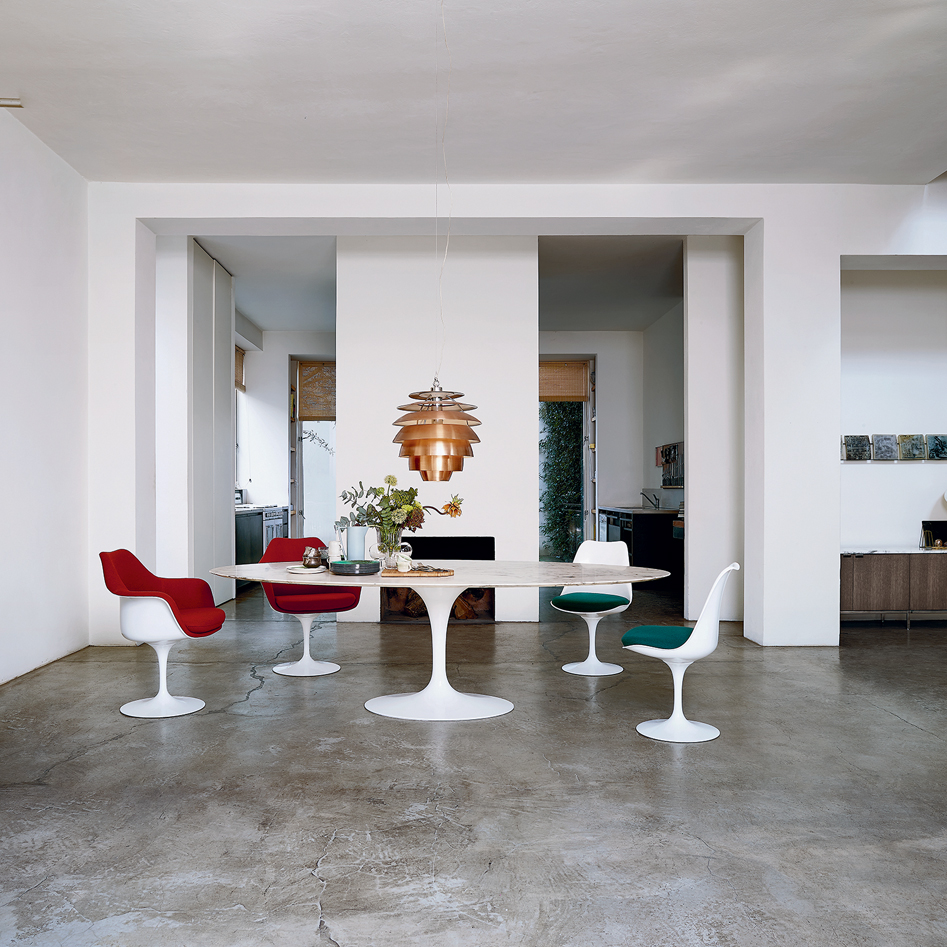
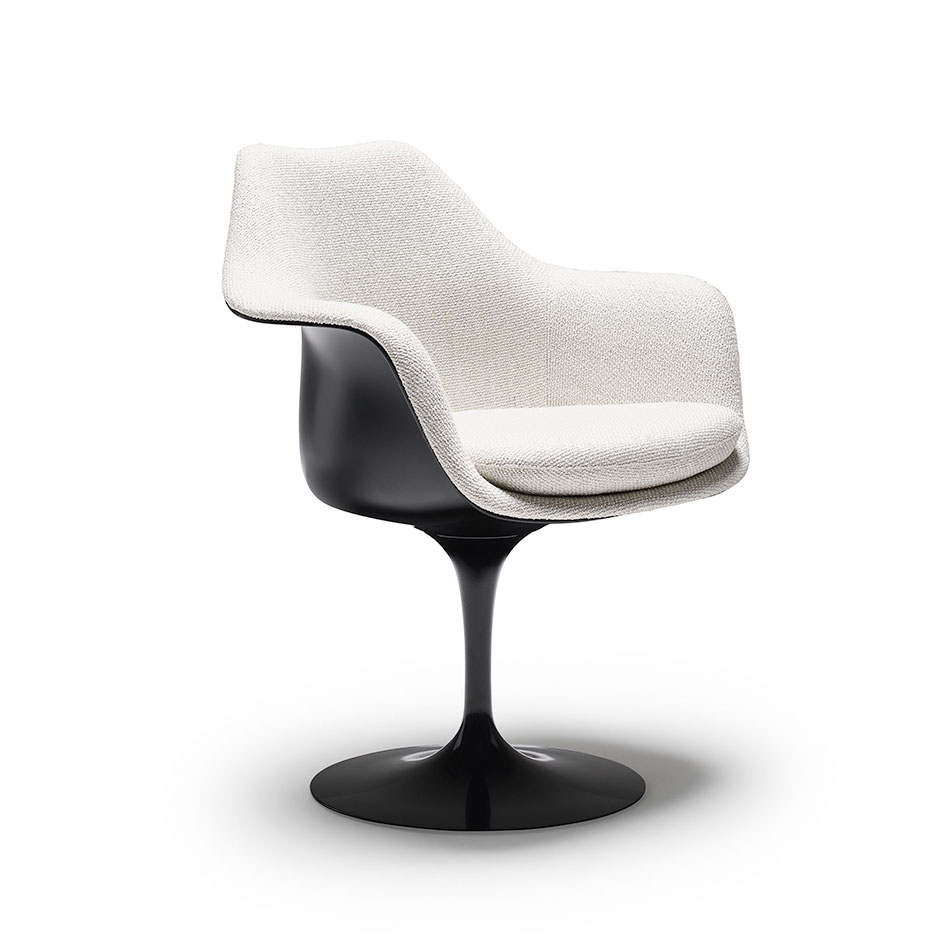
Tulip Side Chair
No Leg CollisionsDesigner — Eero Saarinen for Knoll, 1956.
Materials — Molded shell on single cast-aluminum pedestal.
At the Table
- One stem per sitter — corners stay graceful
- Swivel eases tight spacing
- Completes Saarinen’s pedestal table
Spotting an Original
- Knoll labels
- Cast aluminum base weight
- Shell-to-stem finish
Production
1956 onward
Licensed Today
Knoll
9. Cesca Chair – Marcel Breuer, 1928
The Cesca is the cantilever that made steel domestic, and the dining table is where it lives: the tubular frame gives a measured flex over a long dinner, the cane seat breathes, and the armless version spaces tightly. An interwar design canonized by mid-century production — the story our canon guide tells in full — it remains among the most affordable licensed classics on this list.
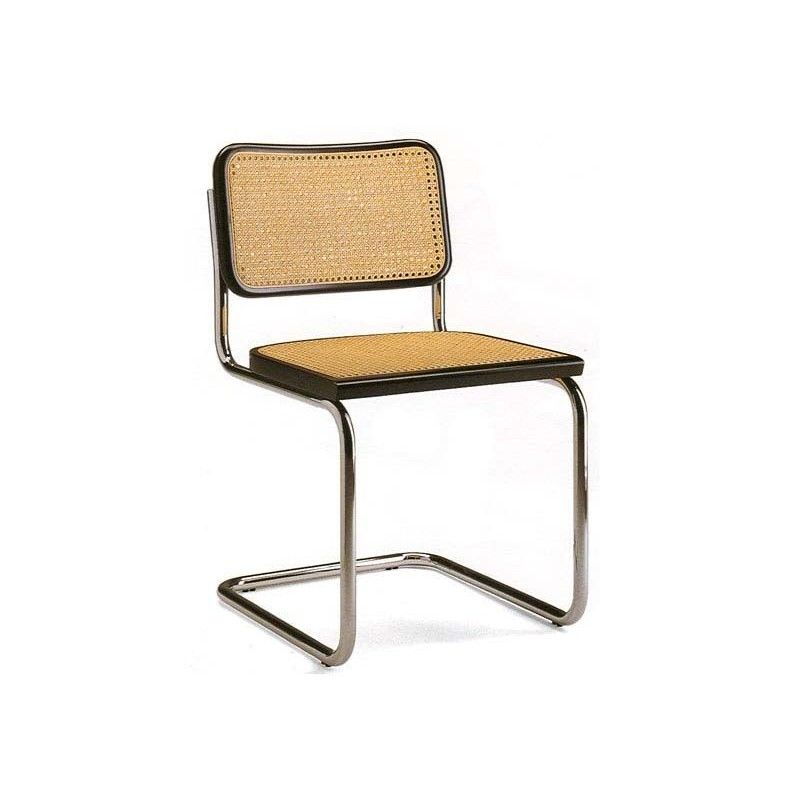
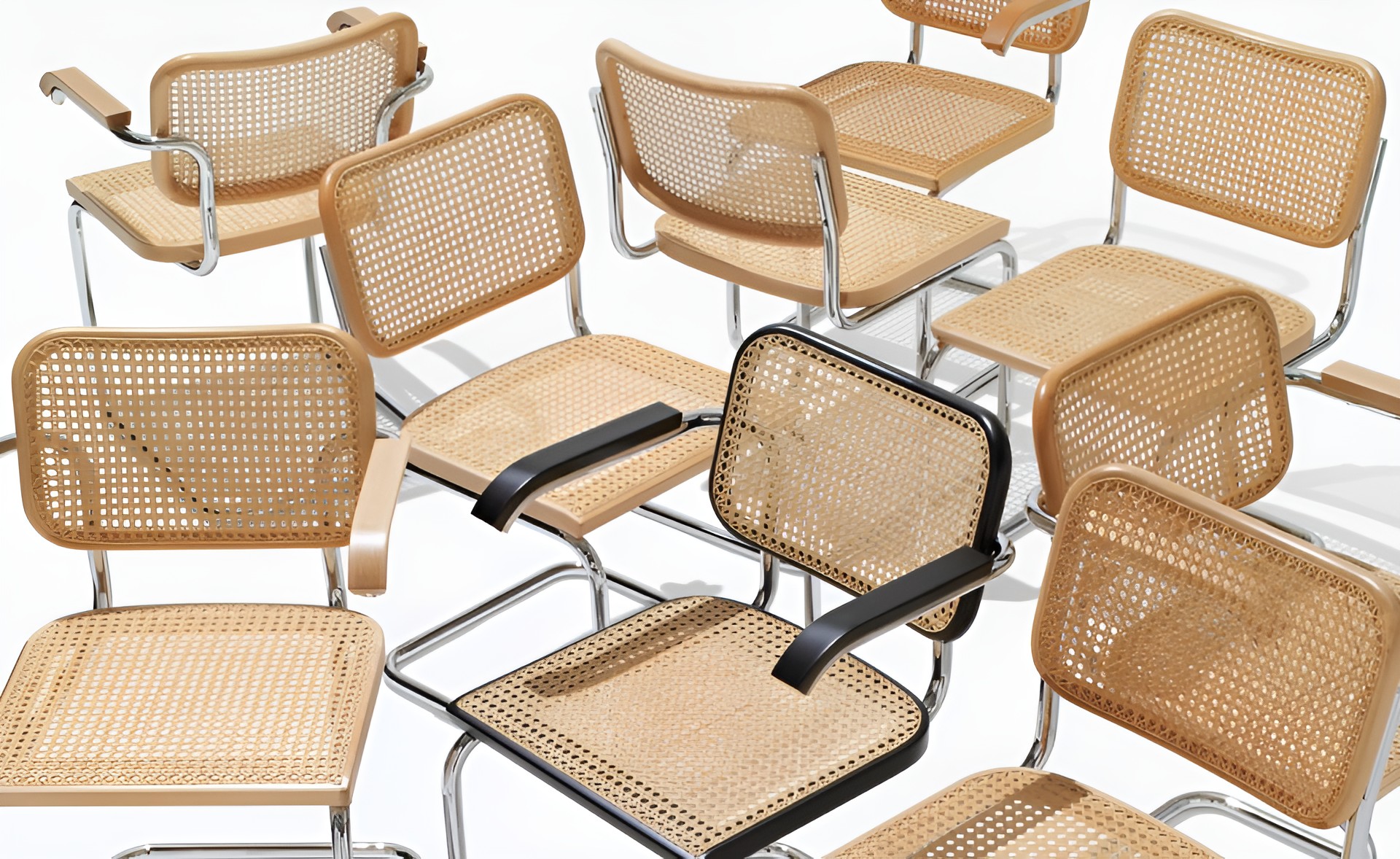
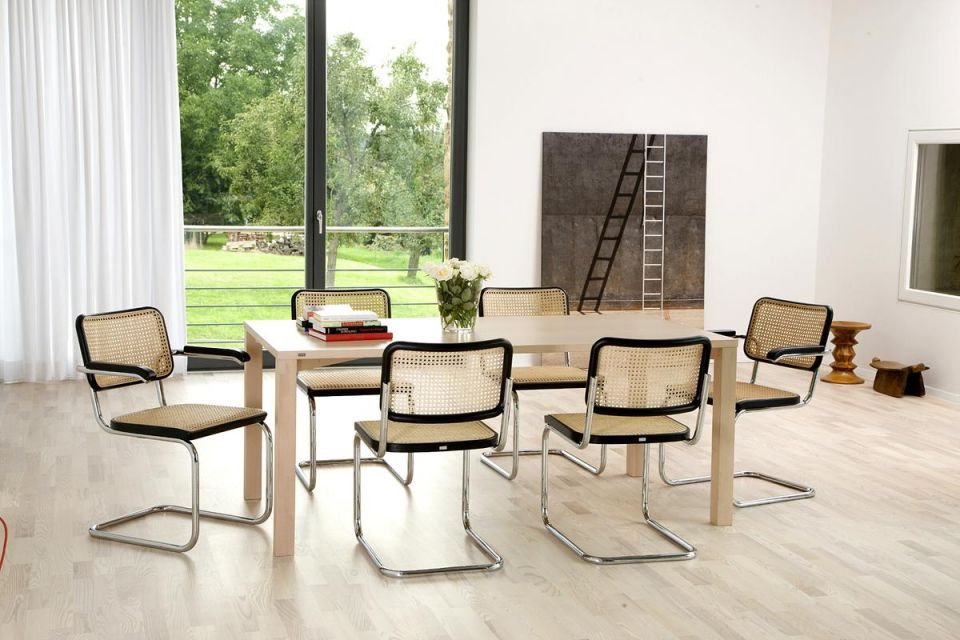
Cesca Chair
Steel Made DomesticDesigner — Marcel Breuer, 1928; mid-century canonized.
Materials — Tubular steel cantilever; beech and cane seat.
At the Table
- Measured flex over a long dinner
- Cane breathes; armless spaces tightly
- Most affordable licensed classic here
Spotting an Original
- Knoll or Thonet S 32 markings
- Hand caning versus machine sheet
- Cantilever ride quality
Production
1928 design; continuous
Licensed Today
Knoll; Thonet
10. Superleggera – Gio Ponti, Cassina, 1957
The Superleggera is the lightness brief taken to its conclusion: Gio Ponti refined the traditional Chiavari fisherman’s chair into a 1.7-kilogram dining chair — famously light enough for a child to lift with one finger, as Cassina’s advertising demonstrated — with a triangular-section ash frame and cane seat. It is the list’s reminder that a dining chair is picked up thousands of times in its life, and that an Italian took that fact most seriously.
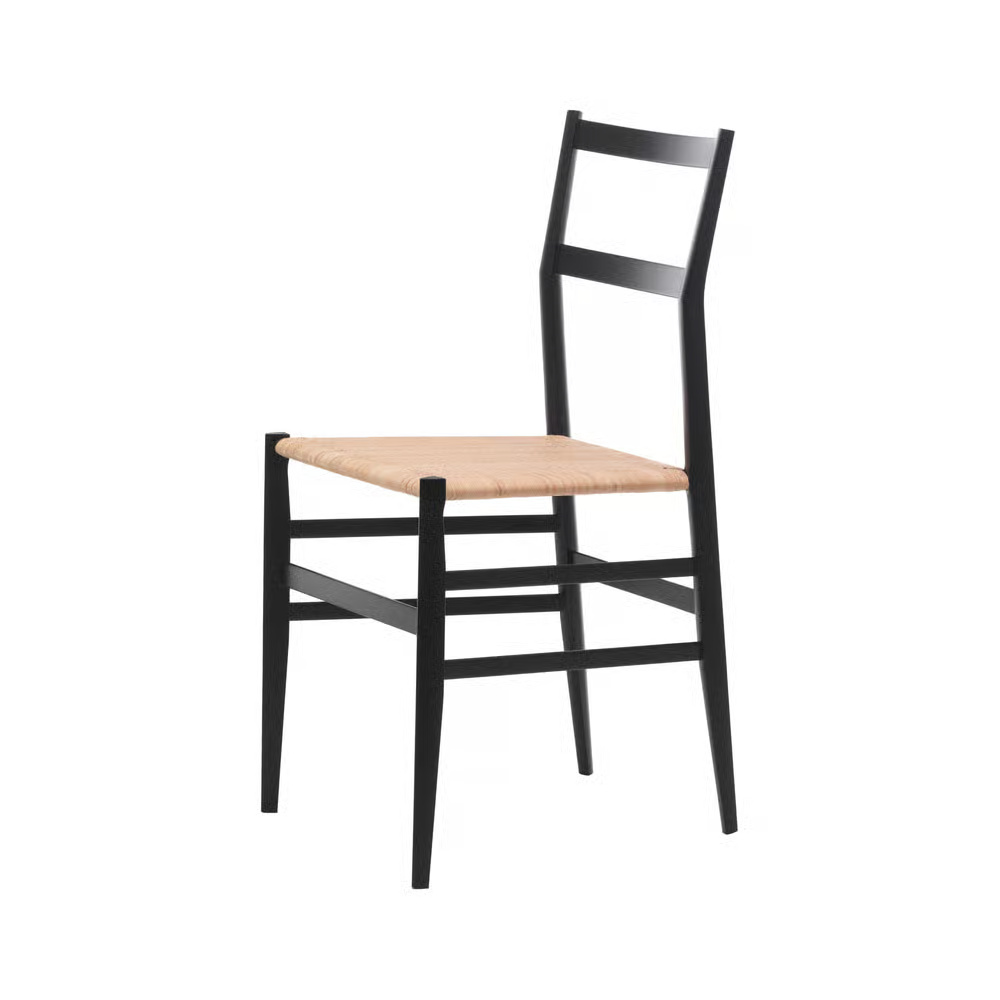
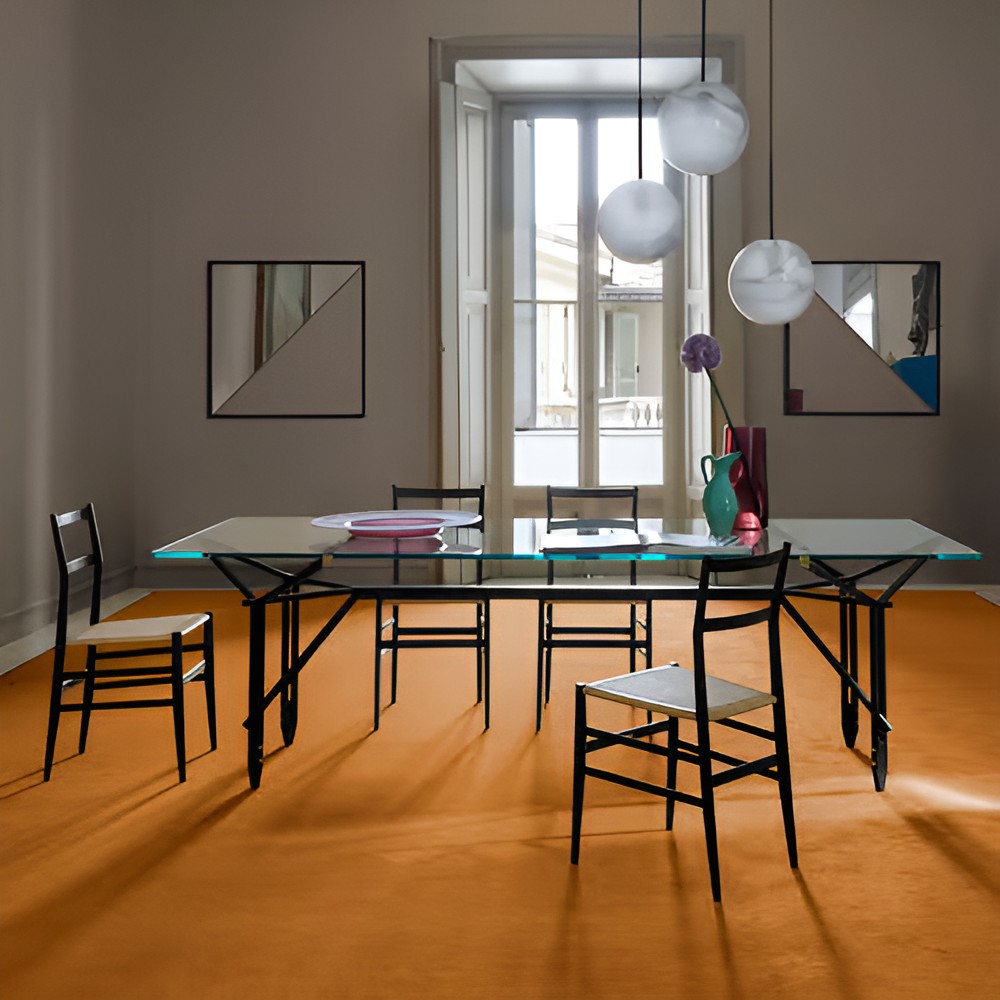
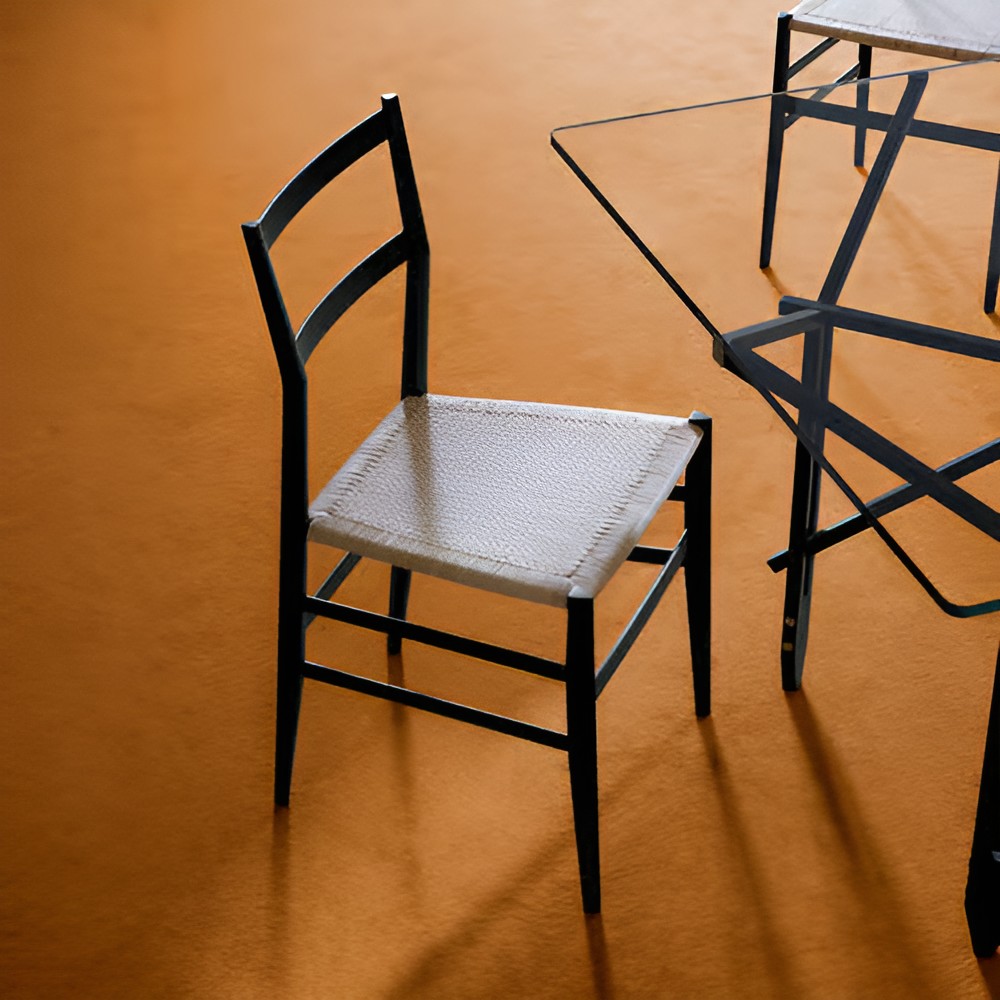
Superleggera
1.7 KilogramsDesigner — Gio Ponti for Cassina, 1957.
Materials — Triangular-section ash frame, cane seat.
At the Table
- Light enough for one finger — famously
- Chiavari tradition refined to a limit
- Picked up thousands of times gracefully
Spotting an Original
- Cassina markings
- Triangular leg section — the signature
- Frame weight is the authenticity test
Production
1957 onward
Licensed Today
Cassina
11. Risom Side Chair (666) – Jens Risom, Knoll, 1943
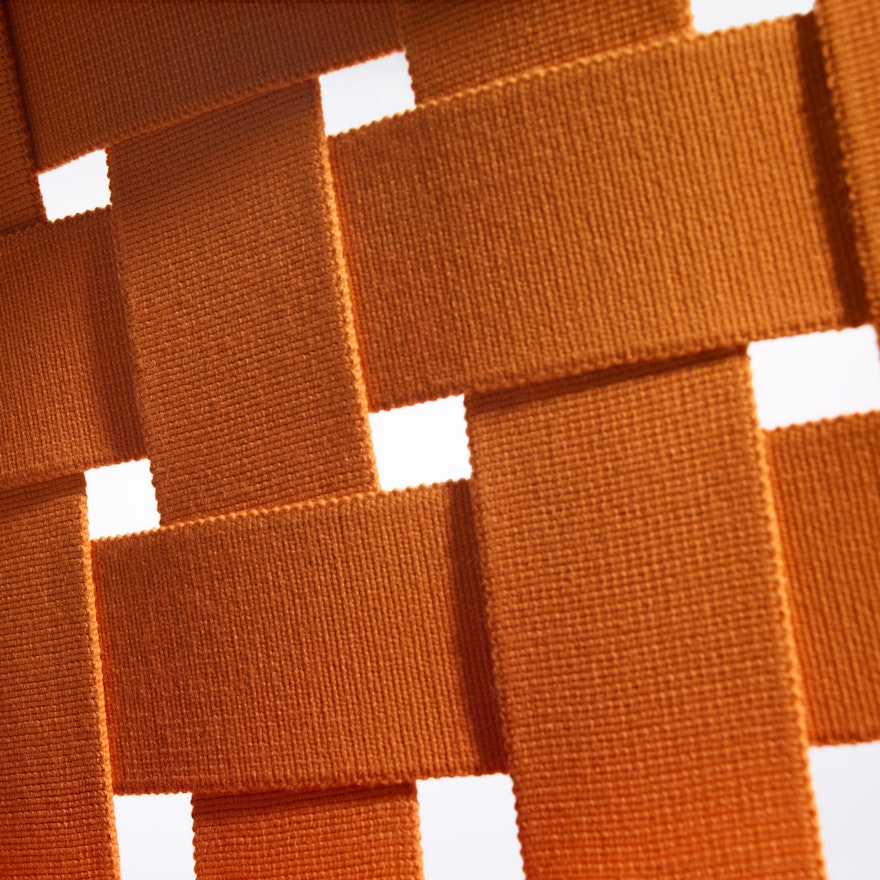
The Risom 666 is founding-document furniture: among the first designs Knoll ever produced, drawn by the Danish-American Jens Risom in the early 1940s with a webbed seat born of wartime material limits — surplus cotton strapping on a simple hardwood frame. The webbing gives it a comfort no hard-seat rival matches, and its modest scale suits small dining rooms the grander Danes crowd.
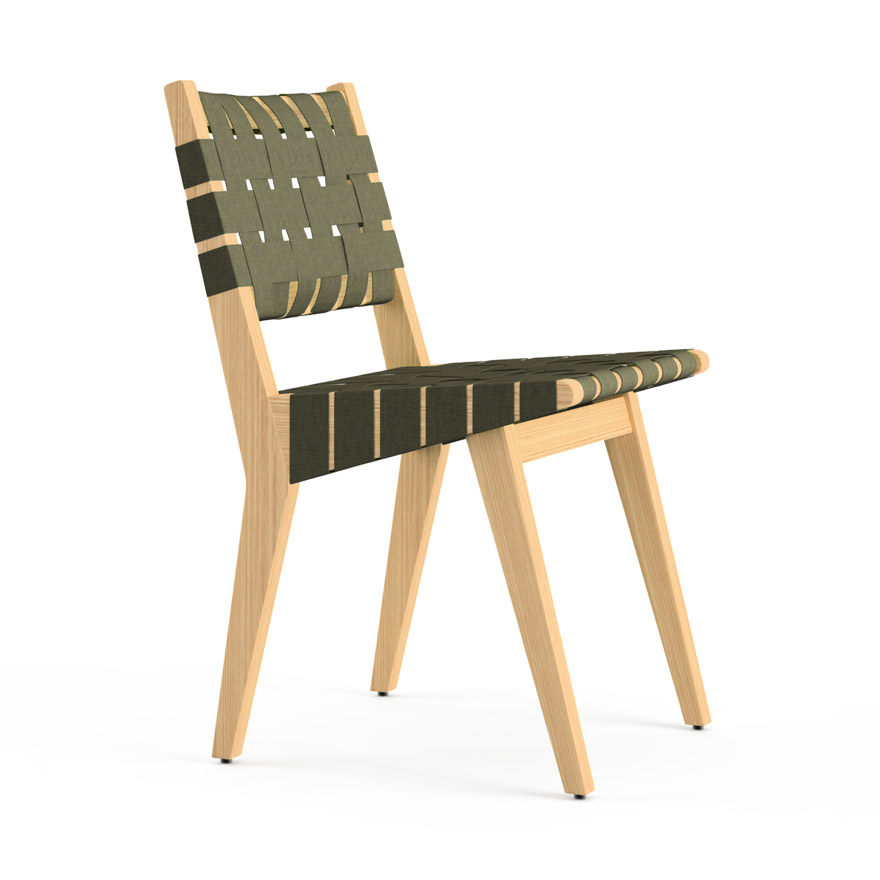
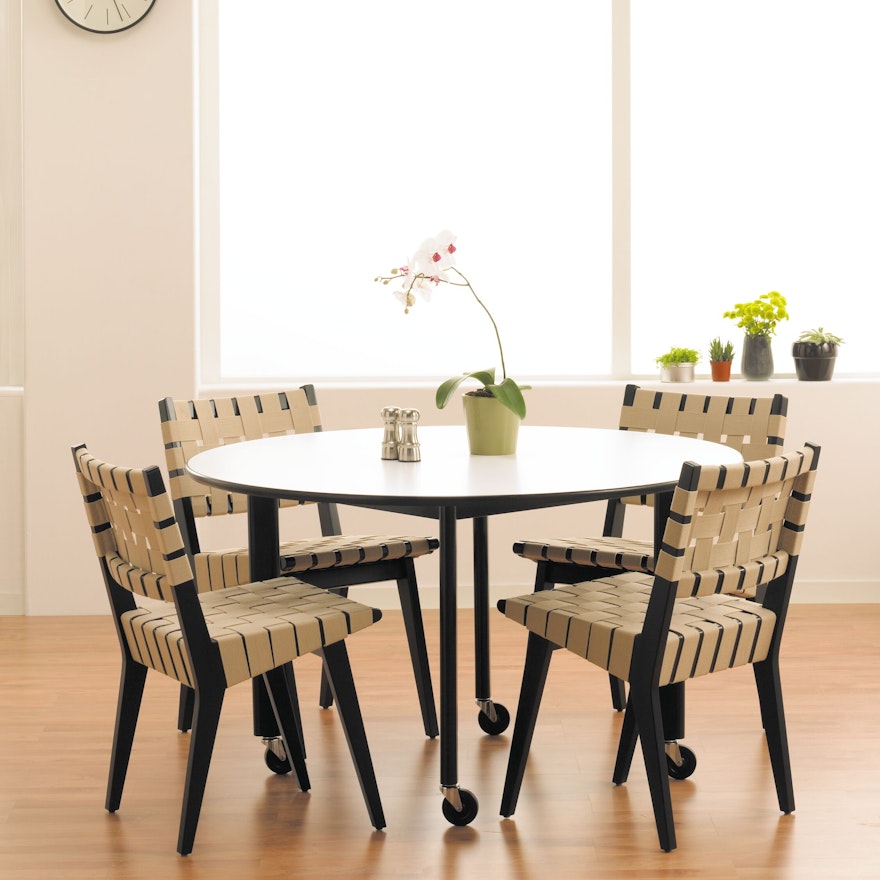
Risom Side Chair (666)
Knoll’s Founding ChairDesigner — Jens Risom for Knoll, 1943.
Materials — Hardwood frame; woven surplus-webbing seat.
At the Table
- Webbing outcomforts every hard seat
- Modest scale suits small rooms
- One of Knoll’s first fifteen designs
Spotting an Original
- Knoll production markings
- Webbing weave pattern
- 600-series provenance on vintage
Production
1943 onward
Licensed Today
Knoll
12. Round Chair (“The Chair”) – Hans Wegner, 1949
The Round Chair is the head-of-table option: Wegner’s exposed-joinery masterwork, famous since the 1960 Kennedy–Nixon broadcast, works at dining height with arms that invite a long evening. It spaces generously rather than tightly — the usual pattern is two at the table ends with armless chairs between, which is also the economical way to own the era’s most expensive dining seat.
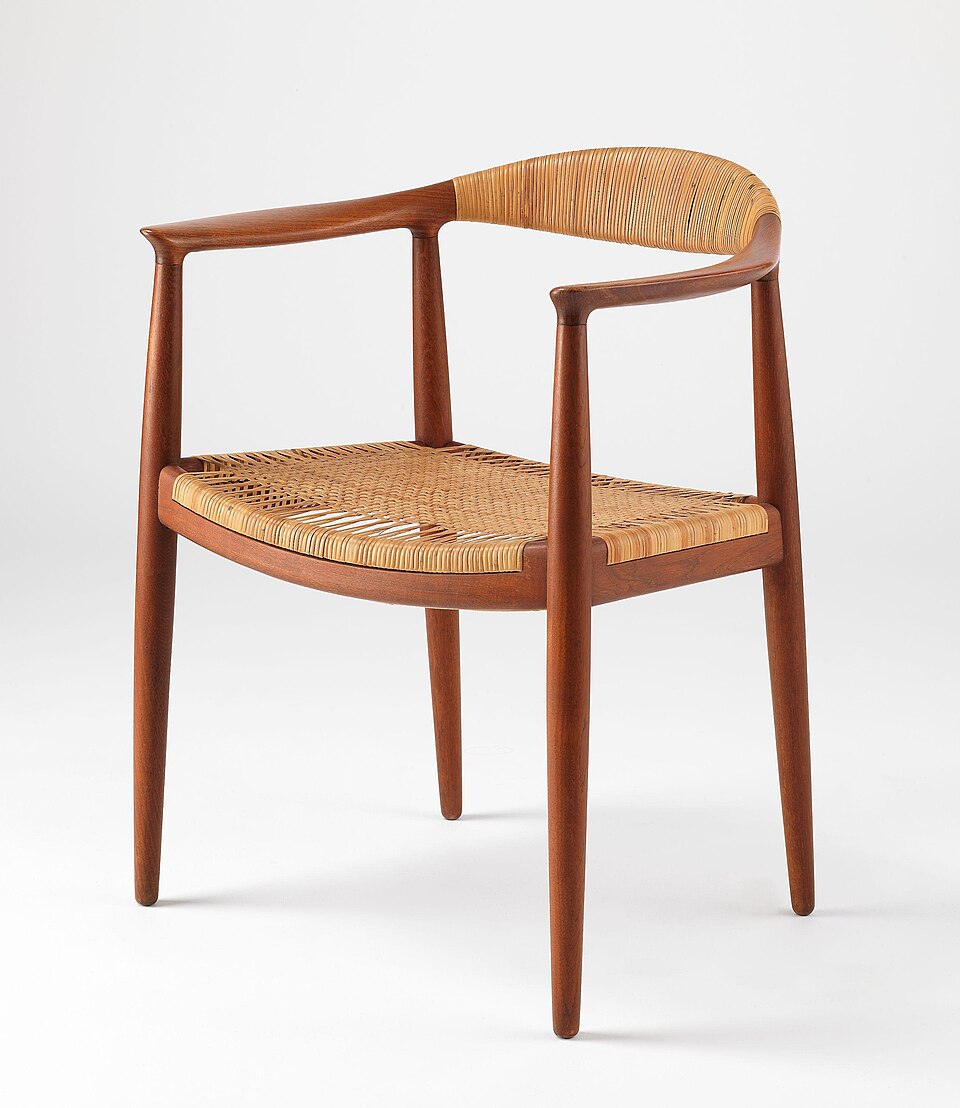
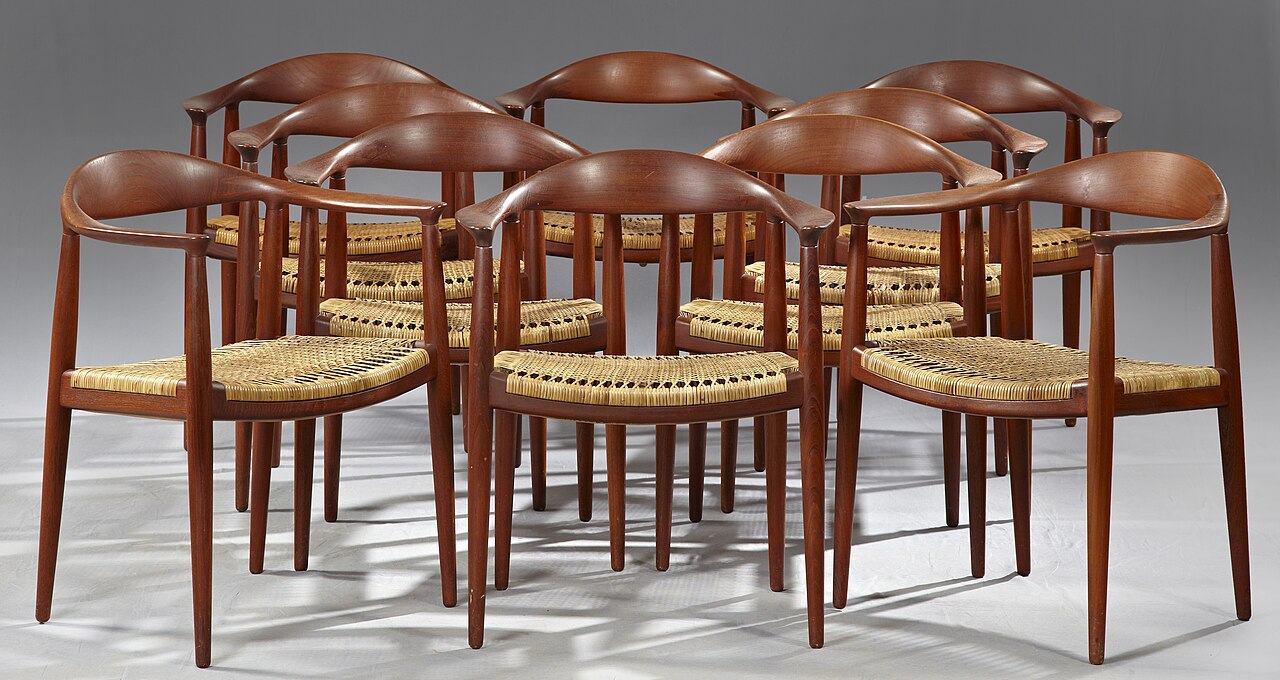
Round Chair (“The Chair”)
Head of TableDesigner — Hans Wegner for Johannes Hansen, 1949.
Materials — Solid wood; one steamed back-and-arm arc; exposed joinery.
At the Table
- Arms invite the long evening
- Spaces generously — table ends, not rows
- Kennedy–Nixon, first televised debate, 1960
Spotting an Original
- Johannes Hansen (vintage) / PP Møbler marks
- Finger-jointed arm splice
- Cane weave detail
Production
1949 onward
Licensed Today
PP Møbler
13. CH23 – Hans Wegner, Carl Hansen & Søn, 1950
The CH23 is early Wegner rediscovered: an armless dining chair from his first Carl Hansen collection, with a woven cord seat and a distinctive double-woven back splice, out of production for decades and relaunched to a warm reception. It offers Wishbone craftsmanship in a squarer, more compact silhouette that spaces closely — the insider’s alternative at the same table.
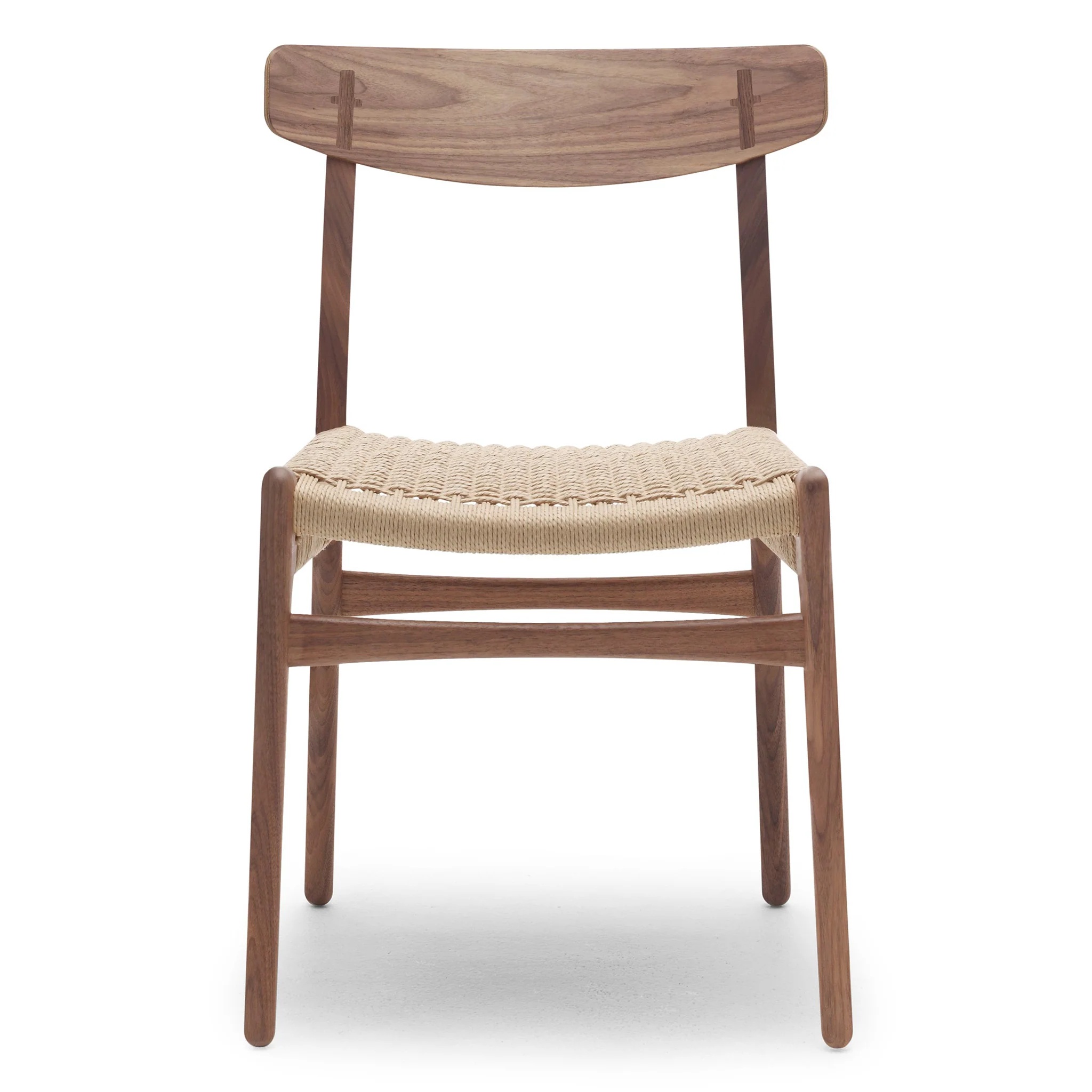
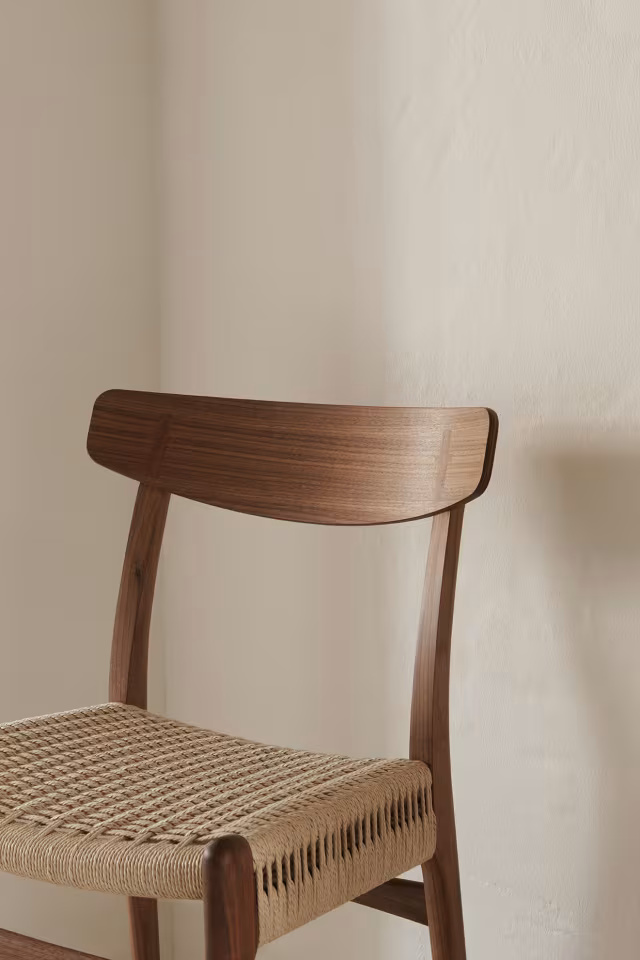
CH23
Insider’s WegnerDesigner — Hans Wegner for Carl Hansen & Søn, 1950.
Materials — Cord seat; double-woven back splice.
At the Table
- Squarer, more compact than the Wishbone
- Close spacing at the table
- Decades out of production, relaunched
Spotting an Original
- Carl Hansen markings
- The double-woven splice — its signature
- Vintage examples: rarity grade
Production
1950; relaunched
Licensed Today
Carl Hansen & Søn
14. Sawbuck Chair (CH29) – Hans Wegner, Carl Hansen & Søn, 1952
The Sawbuck brings the X-frame trestle to the table, and its angled legs are more than expression — they land the floor contact inboard, so the chair sits stable on uneven floors and slides under rails cleanly. In two-tone oak and walnut a set of six turns the joinery into the dining room’s pattern.
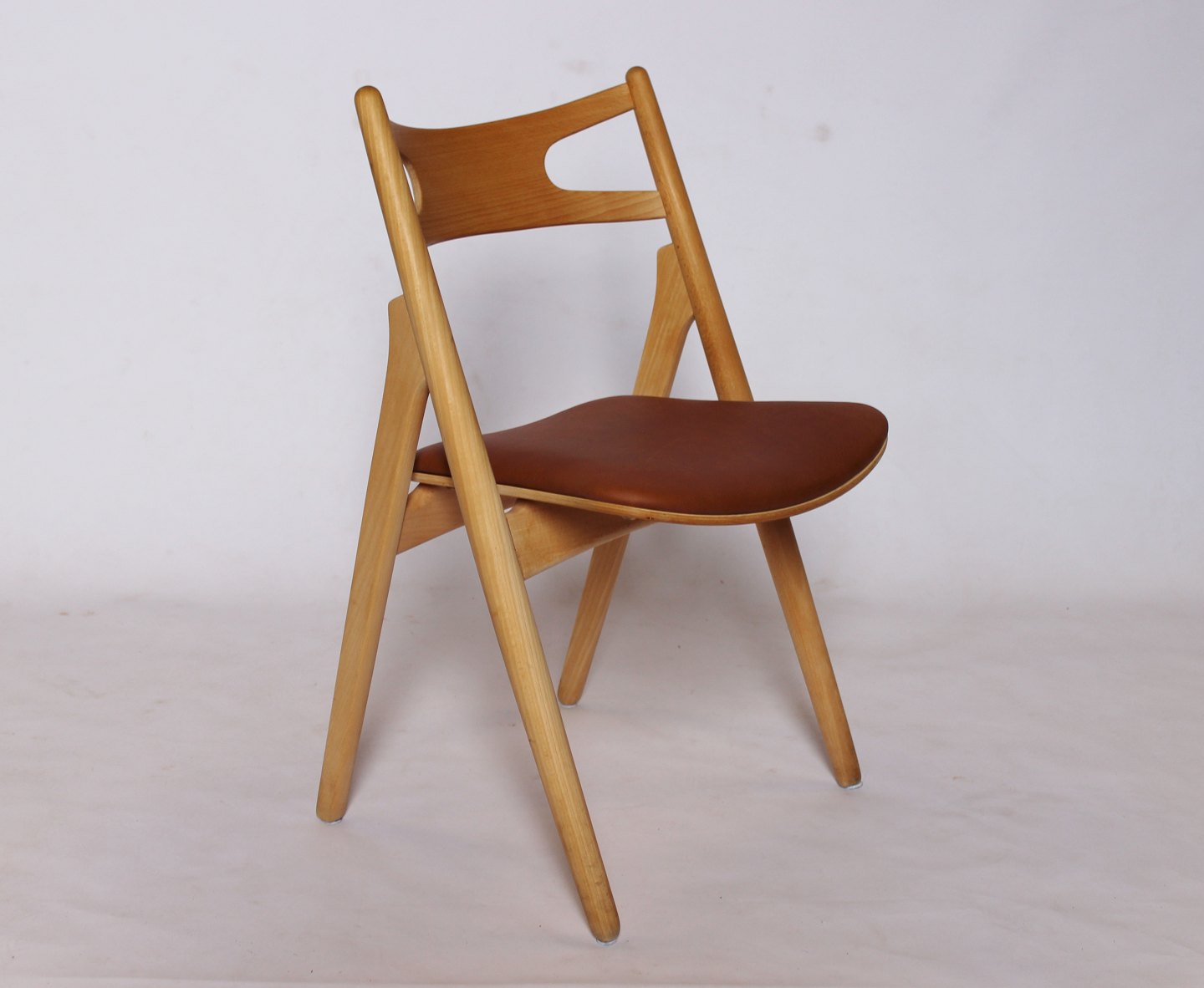
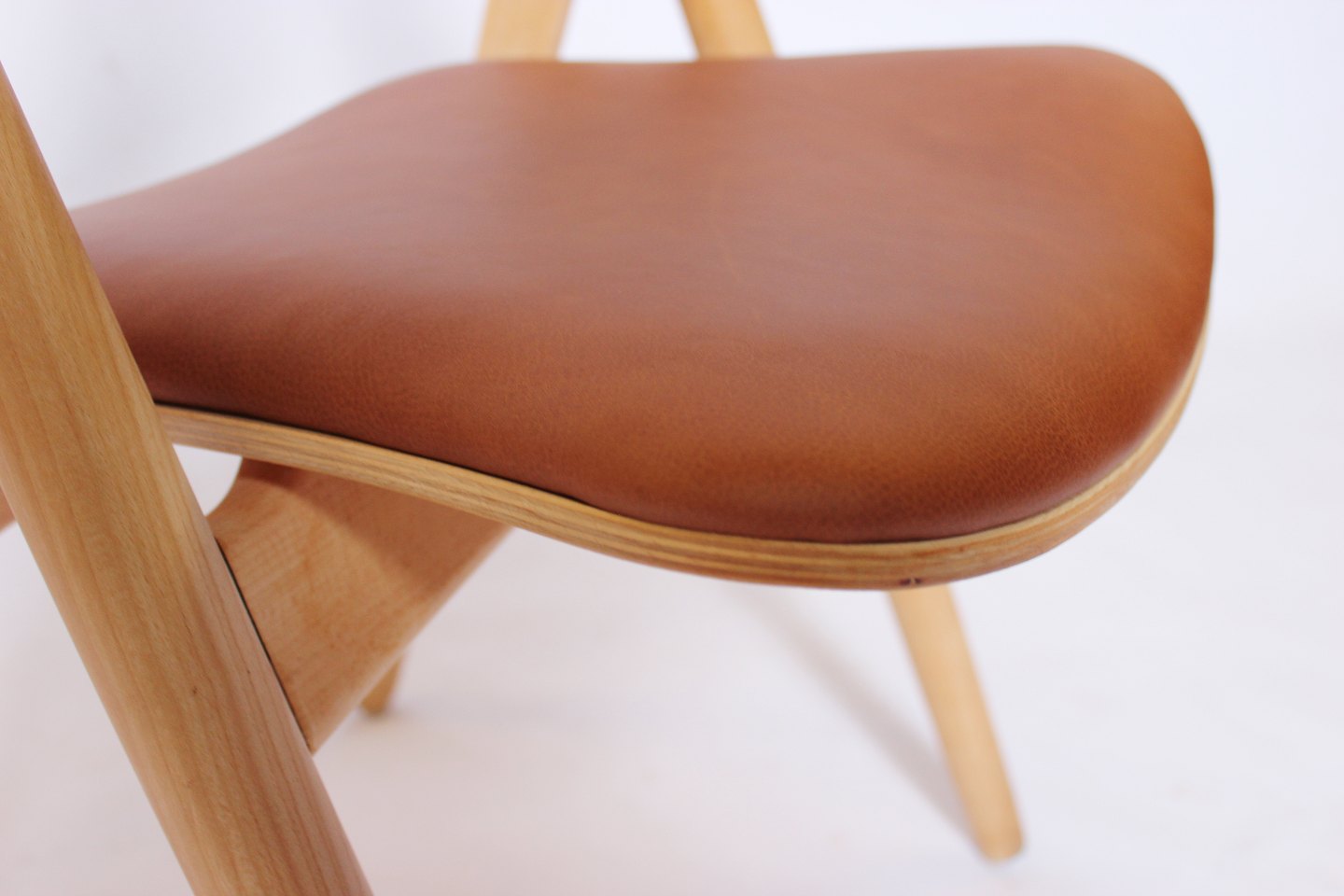
Sawbuck Chair (CH29)
Trestle at the TableDesigner — Hans Wegner for Carl Hansen & Søn, 1952.
Materials — Solid wood X-form legs; shaped seat; two-tone builds.
At the Table
- Angled legs land inboard — stable on uneven floors
- Slides under rails cleanly
- Six chairs turn joinery into pattern
Spotting an Original
- Carl Hansen markings
- True oak and walnut, not stains
- Leg-to-seat joint execution
Production
1952 onward
Licensed Today
Carl Hansen & Søn
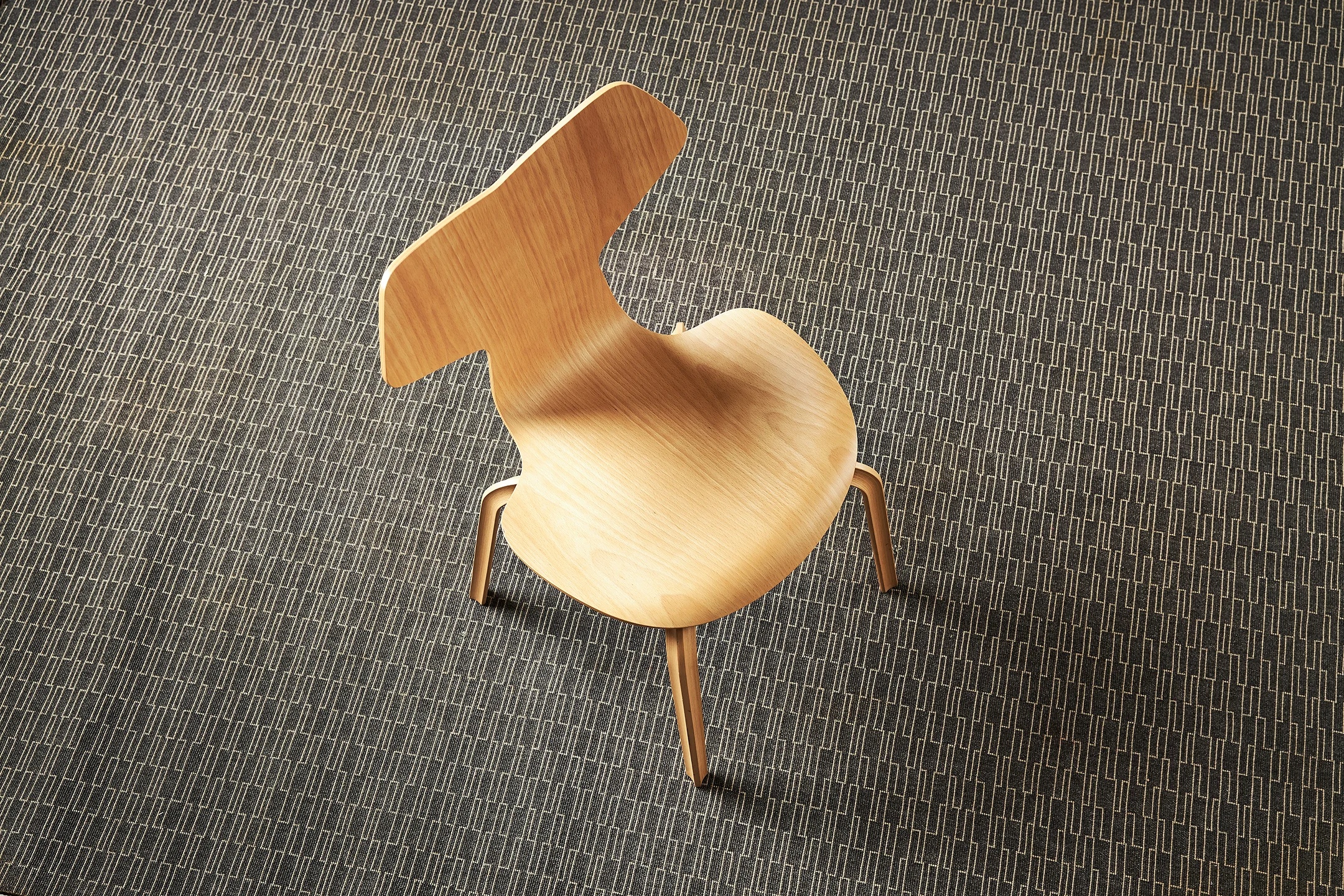
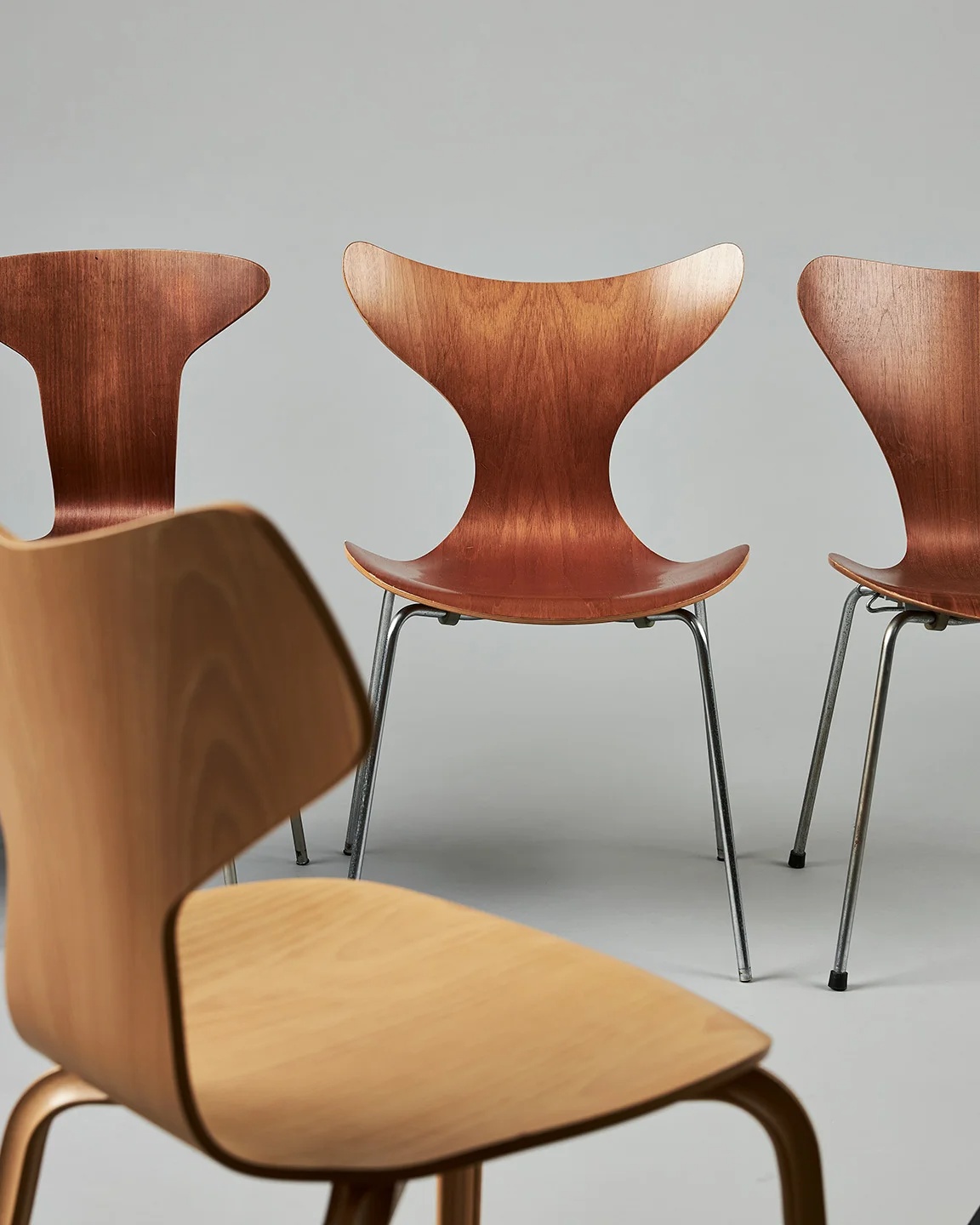
15. Grand Prix Chair – Arne Jacobsen, Fritz Hansen, 1957
The Grand Prix is Jacobsen’s plywood shell in formal dress: the pinched waist and pointed back that took the namesake prize at the Milan Triennale in 1957, on profiled wood or steel legs. It reads dressier than the Series 7 at the same footprint, which is precisely its dining-room case.
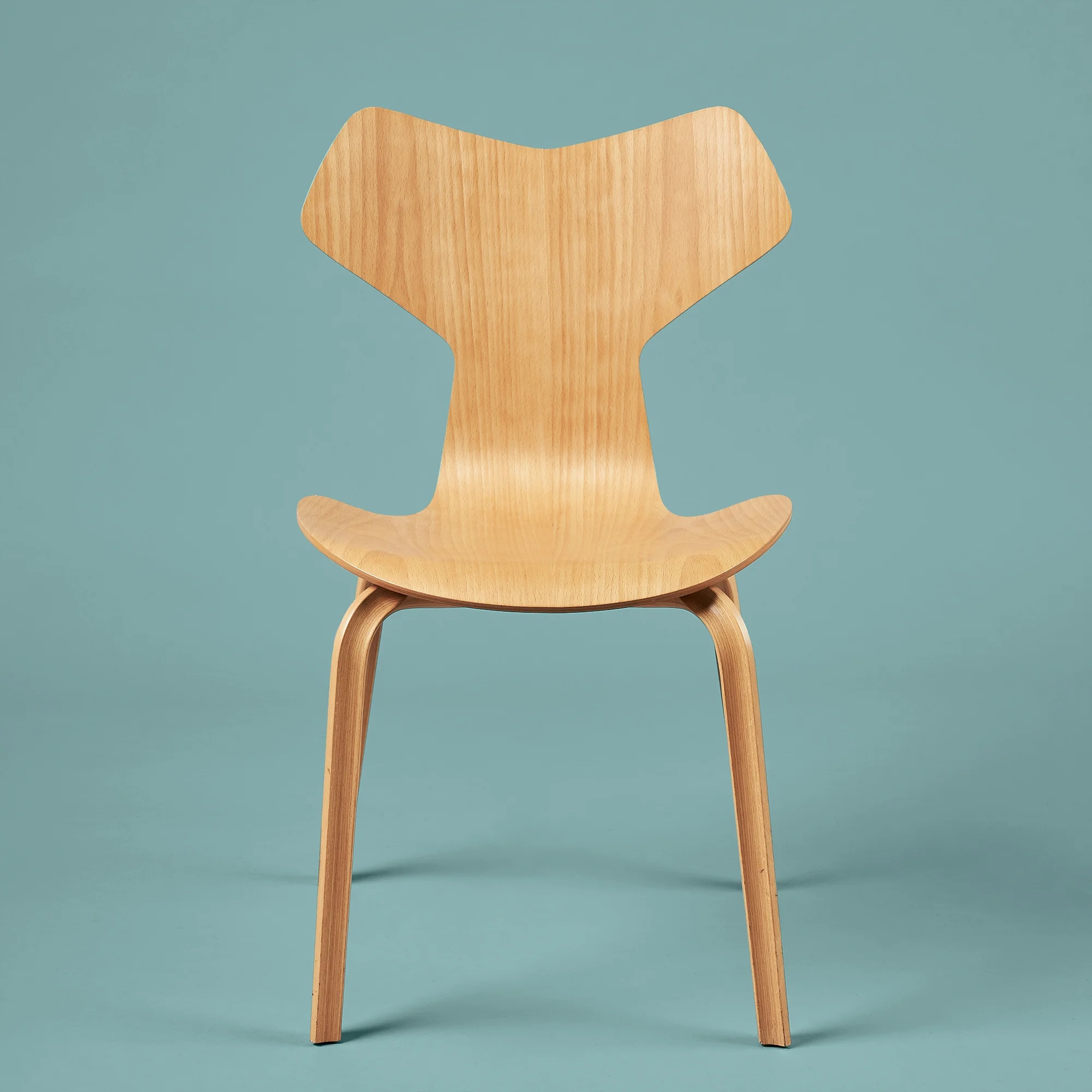
Grand Prix Chair
Formal Dress PlywoodDesigner — Arne Jacobsen for Fritz Hansen, 1957.
Materials — Pinched-waist shell, pointed back; wood or steel legs.
At the Table
- Dressier than Series 7, same footprint
- Milan Triennale prize name
- Wood-leg version warms formal rooms
Spotting an Original
- Fritz Hansen markings
- Back point profile
- Leg material states the version
Production
1957 onward
Licensed Today
Fritz Hansen
16. Panton Chair – Verner Panton, Vitra, 1967
The Panton earns its dining seats on practicality that surprises its looks: fully stackable, wipeable, weatherable in its polypropylene generation, and armless by nature. A set delivers the era’s boldest dining room per euro spent, and the cantilever flex does real comfort work over a meal. The one-piece plastic story it opened is told in the canon guide.
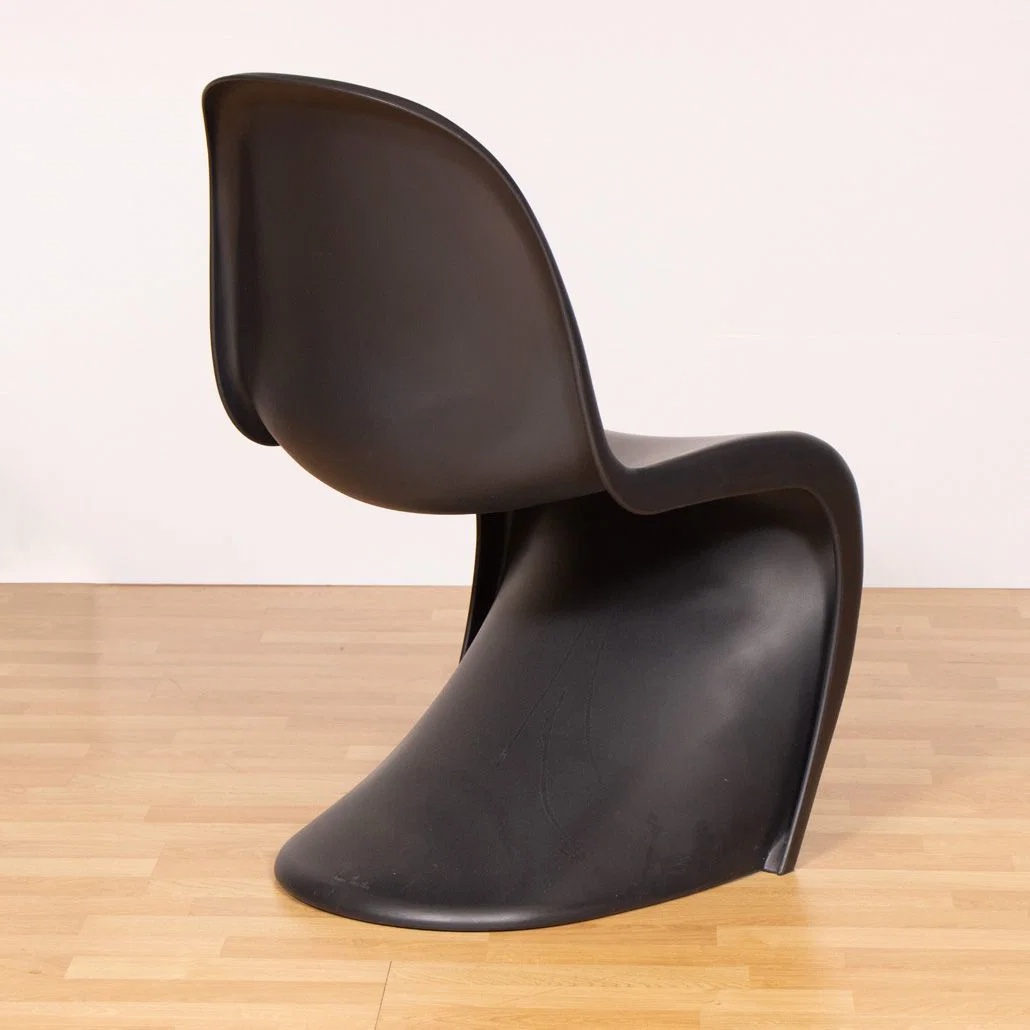
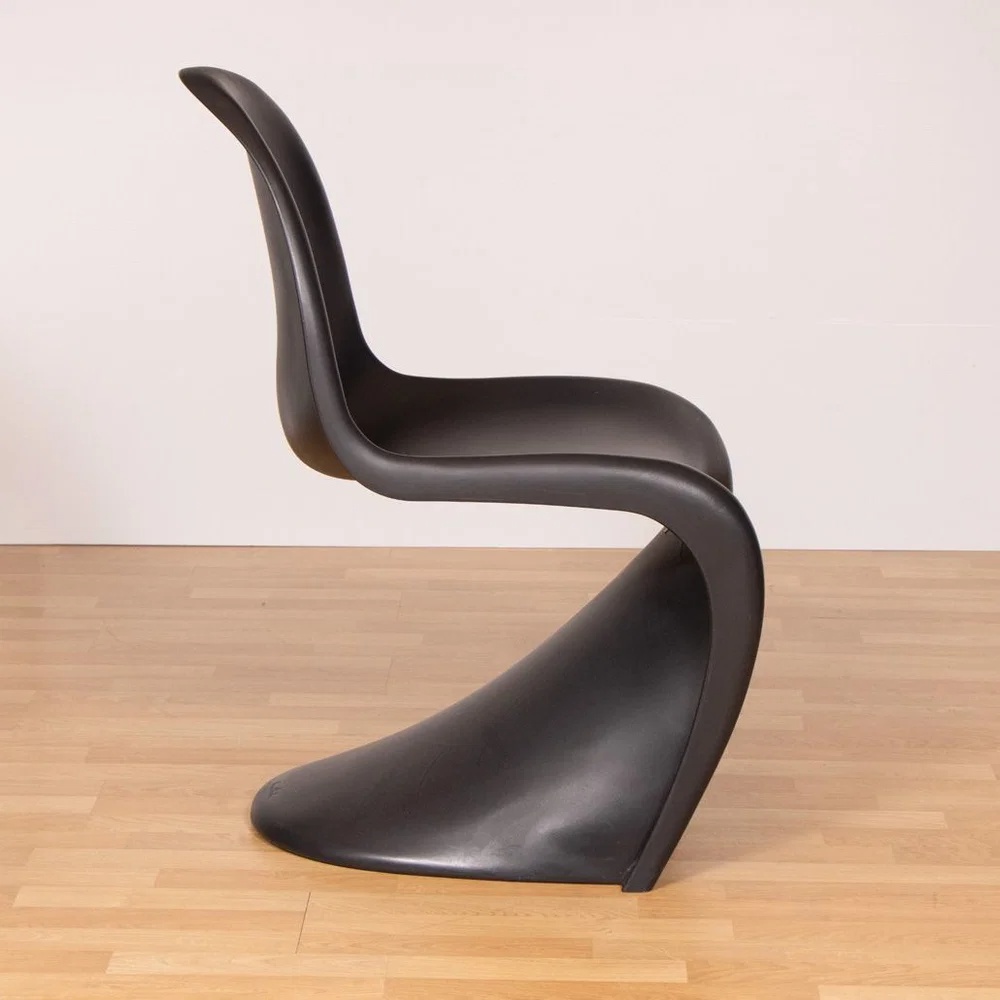
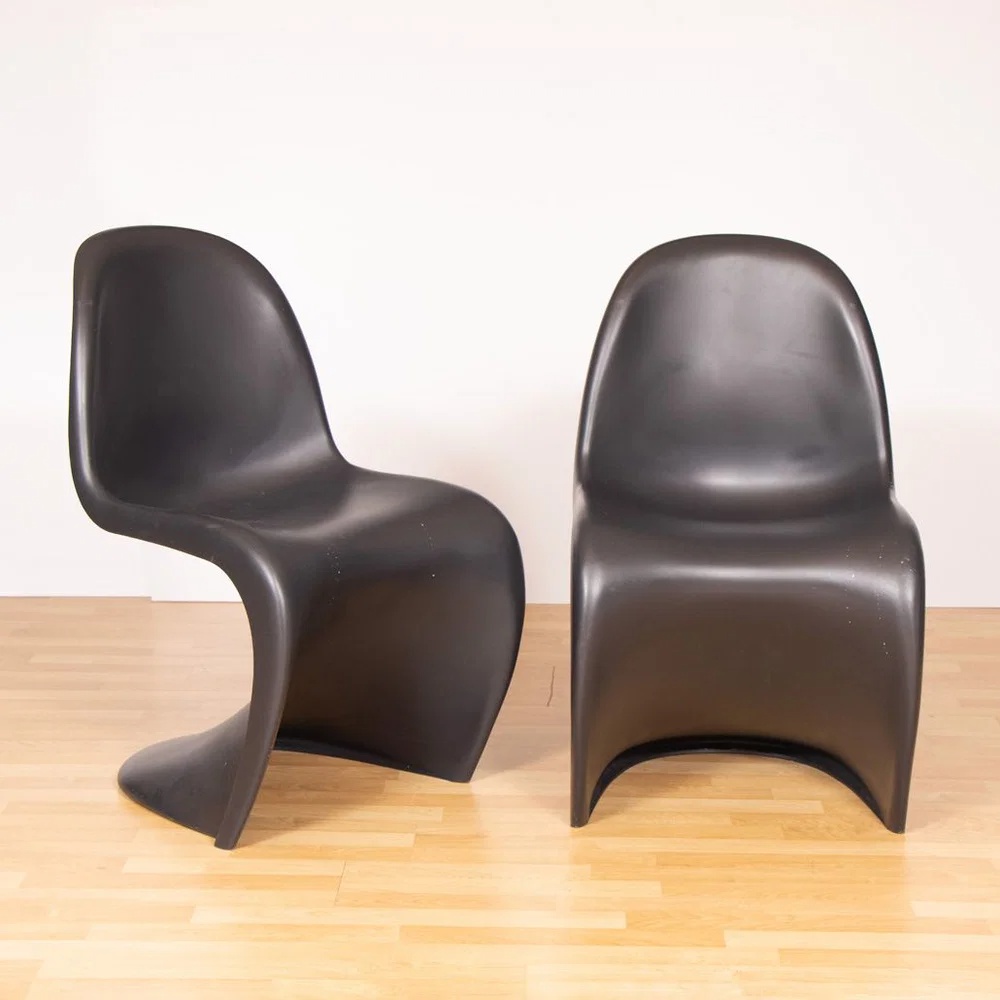
Panton Chair
Boldest Room per EuroDesigner — Verner Panton with Vitra, 1967.
Materials — Single-piece molded plastic cantilever.
At the Table
- Fully stackable, wipeable
- Cantilever flex works over a meal
- Armless by nature — tight spacing
Spotting an Original
- Vitra markings; material generation dates it
- Knockoffs crack at the knee
- Dyed-through plastic on current builds
Production
1967 onward
Licensed Today
Vitra
17. Bertoia Side Chair – Harry Bertoia, Knoll, 1952
The Bertoia side chair is the wire lattice at dining scale: lighter and tighter-spacing than the Diamond lounge, with the same welded transparency that keeps a set of six from visually filling a room. The optional seat pad is, at dinner length, less optional.
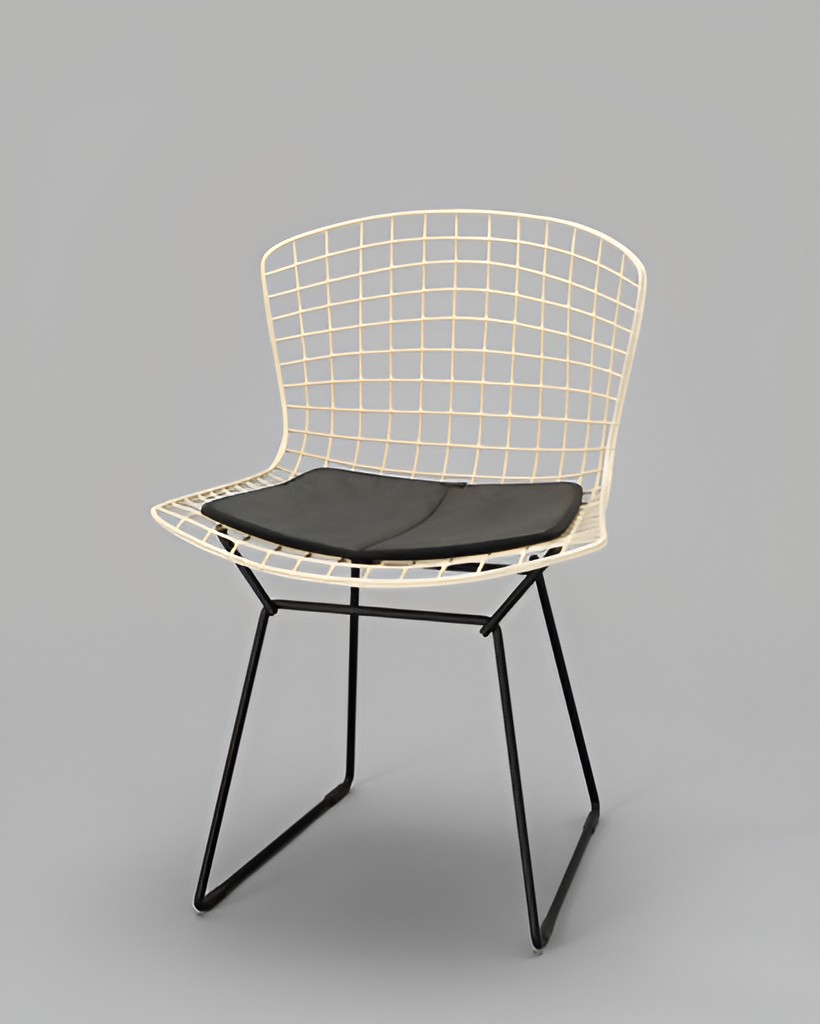
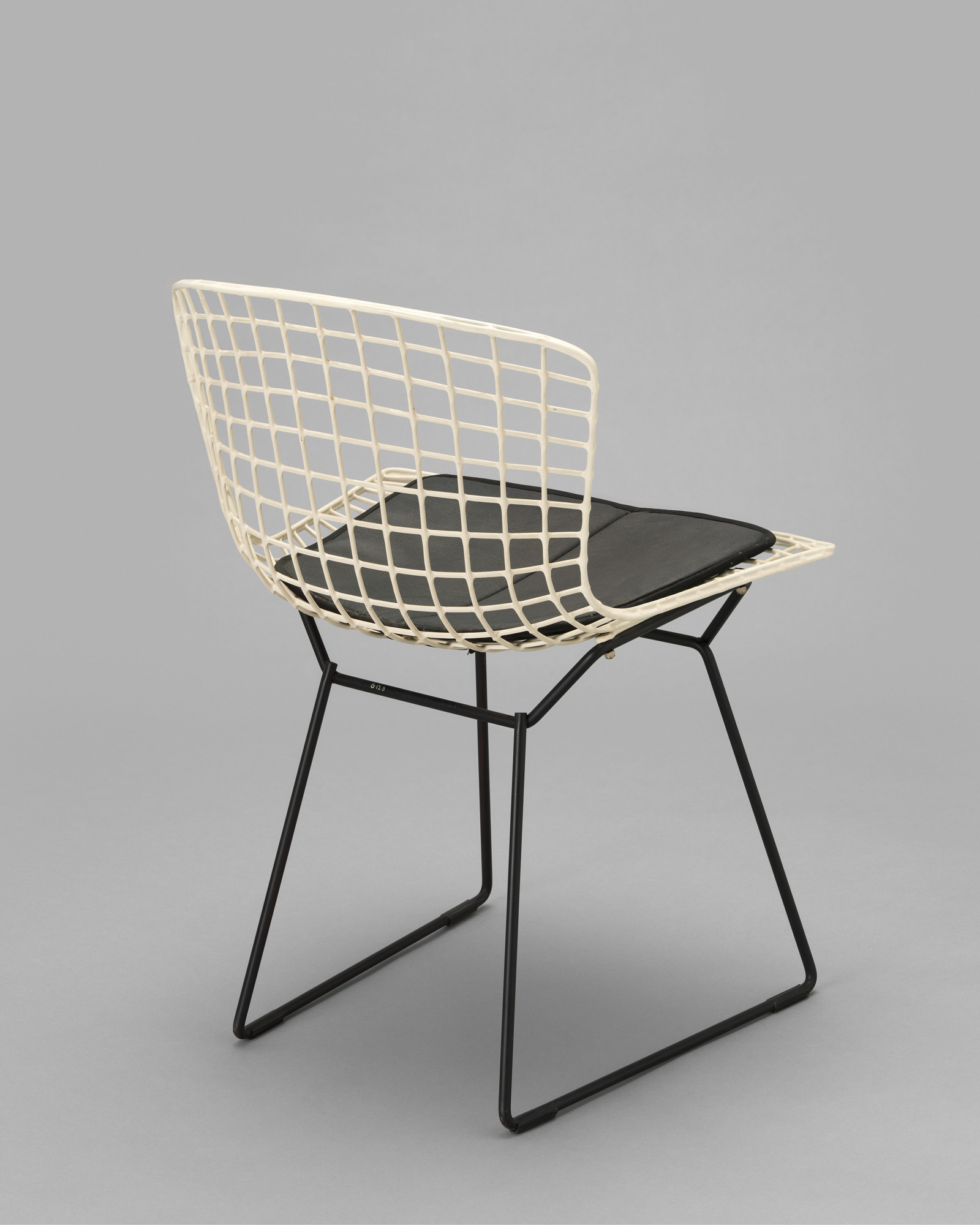
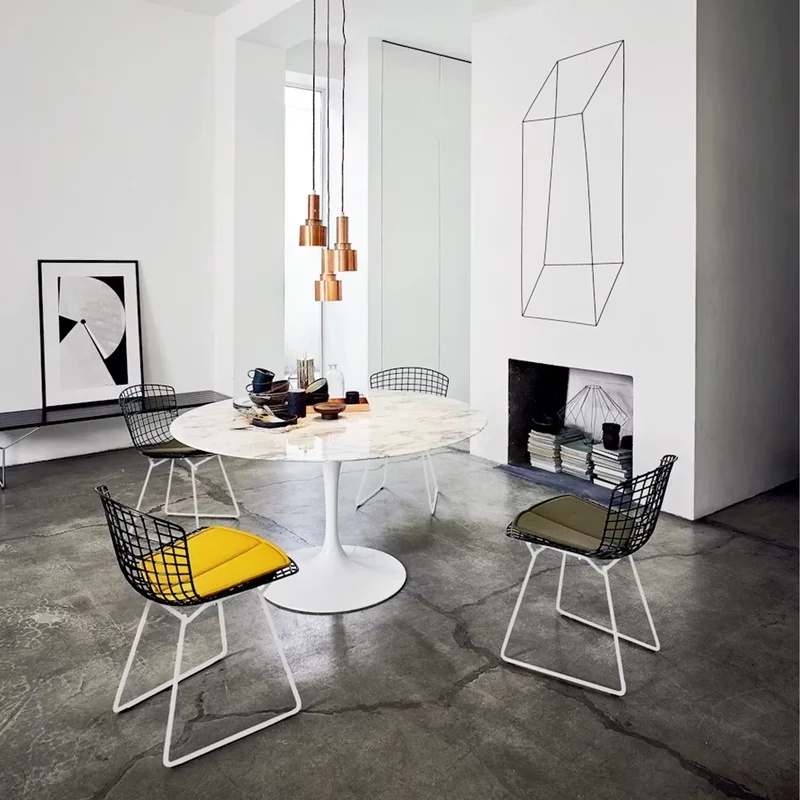
Bertoia Side Chair
Wire at Dining ScaleDesigner — Harry Bertoia for Knoll, 1952.
Materials — Welded steel wire lattice; optional pad.
At the Table
- Visual transparency — six chairs, no bulk
- Tighter spacing than the Diamond
- Pad is non-optional at dinner length
Spotting an Original
- Knoll markings
- Weld count and cleanliness
- Wire gauge — replicas run thin
Production
1952 onward
Licensed Today
Knoll
18. Saarinen Executive Chair – Eero Saarinen, Knoll, 1950
The Executive is the upholstered answer on a list of hard seats: Saarinen’s shell-backed, fully padded chair has served as many dining rooms as offices since 1950, on wood dowel or tubular legs. For hosts whose dinners run past midnight it is the comfort ceiling of the mid-century canon.
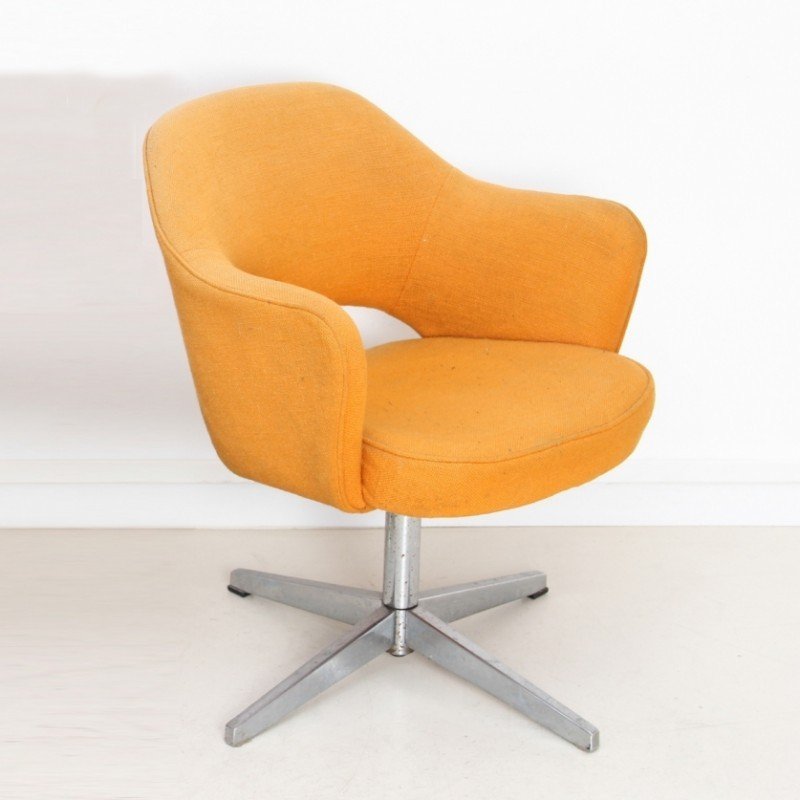
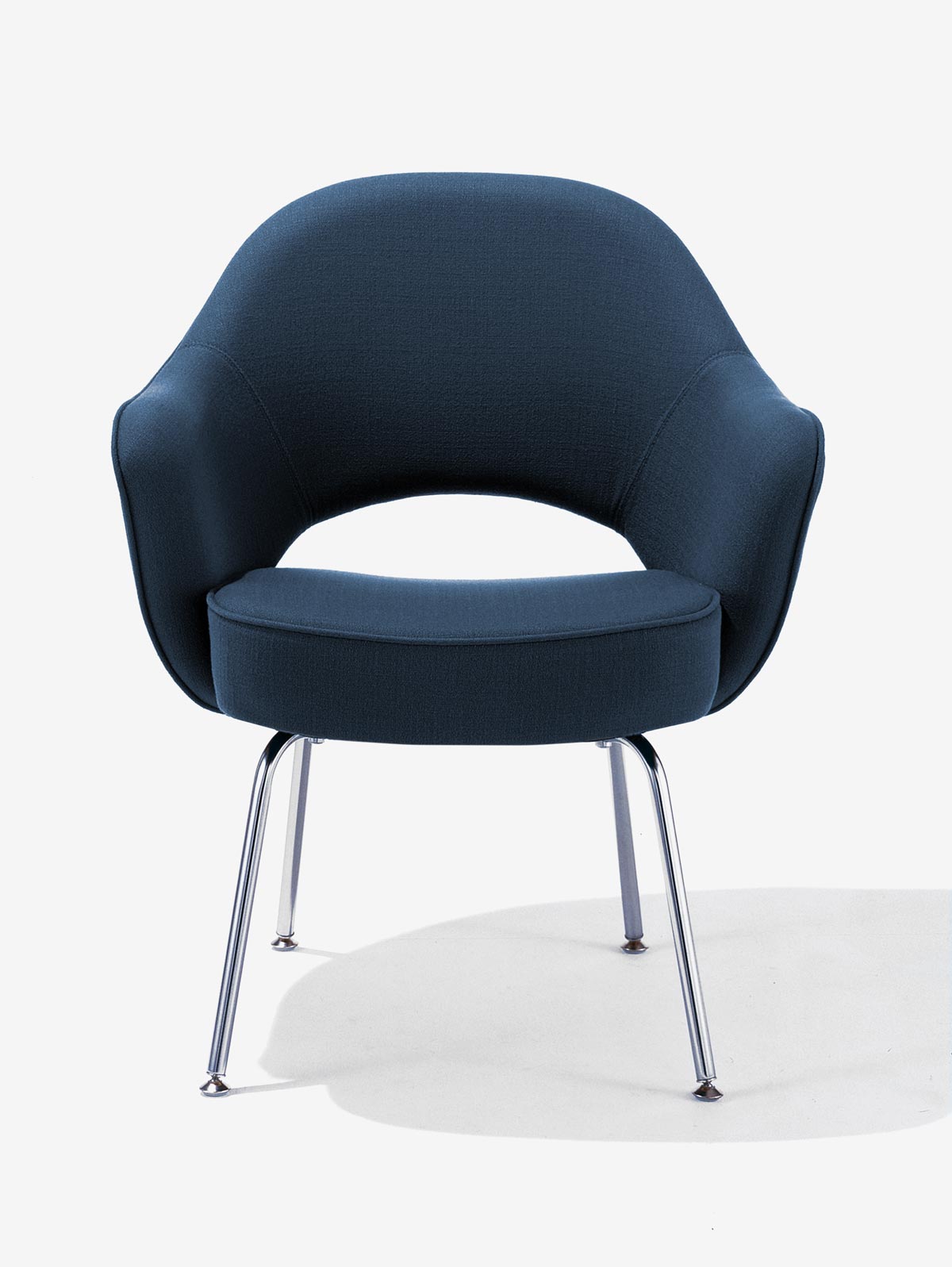
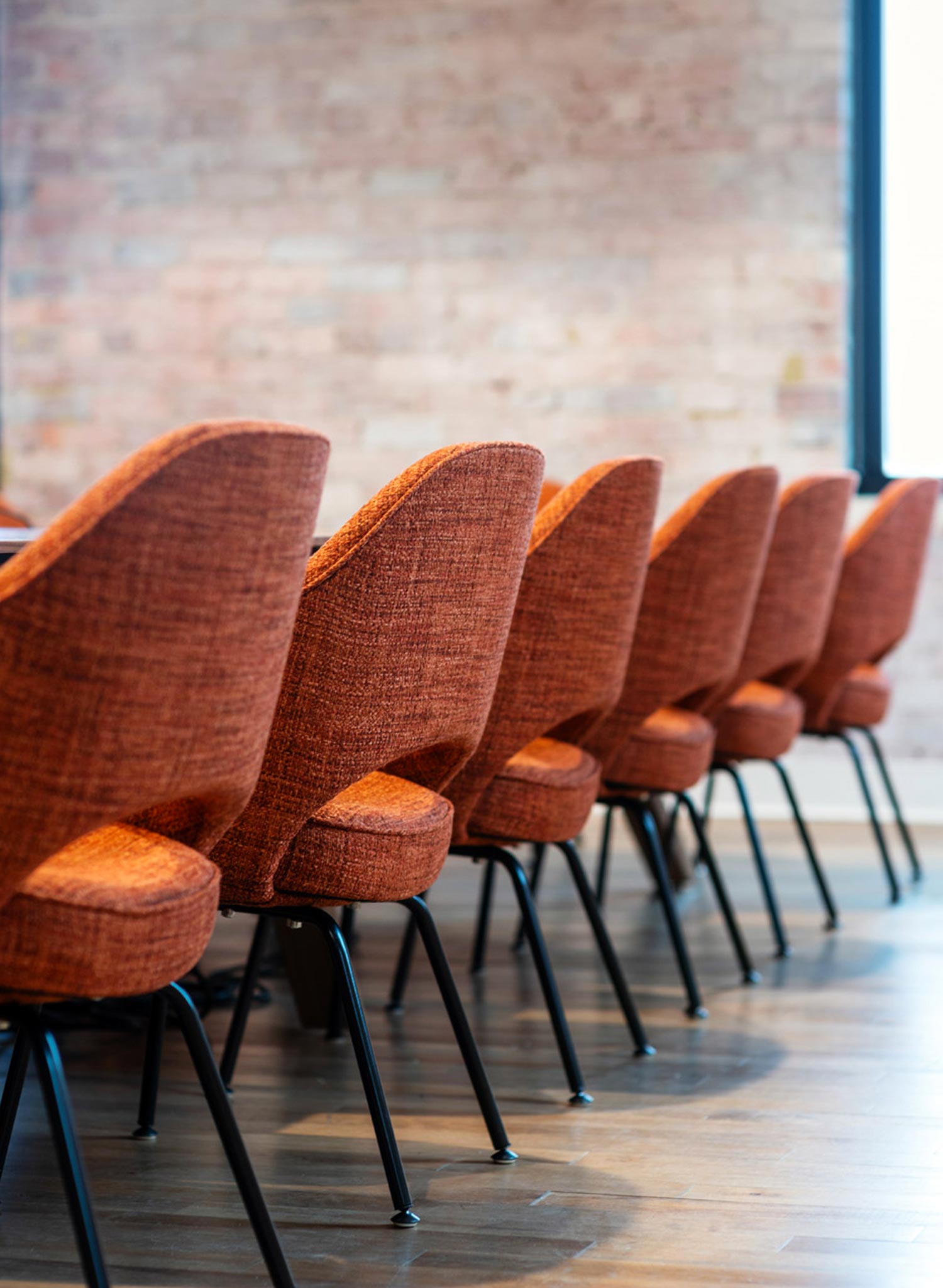
Saarinen Executive Chair
The Comfort CeilingDesigner — Eero Saarinen for Knoll, 1950.
Materials — Upholstered shell back and seat; dowel or tubular legs.
At the Table
- Fully padded — dinners past midnight
- As many dining rooms as offices since 1950
- Upholstery renewable; shell enduring
Spotting an Original
- Knoll labels and shell construction
- Leg style states the generation
- Reupholstery is period-appropriate
Production
1950 onward
Licensed Today
Knoll
19. Chandigarh Cane Chair – Pierre Jeanneret, c. 1955
The Chandigarh chair dines in teak and cane: Jeanneret’s V-legged government seating works at the table with a breathing cane seat and a firm upright posture, and its auction celebrity has made a set the statement purchase of the current market. The corpus is heavily faked, so the documentation rule from our canon guide applies double at set quantities.
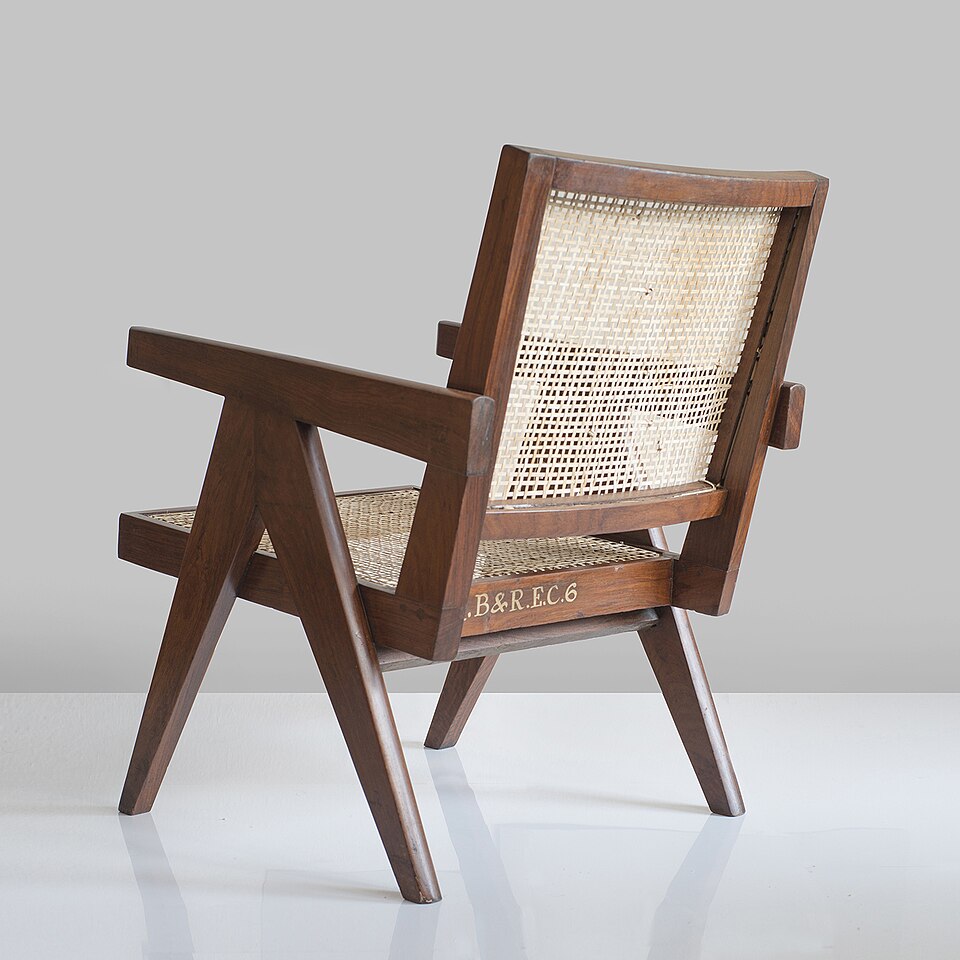
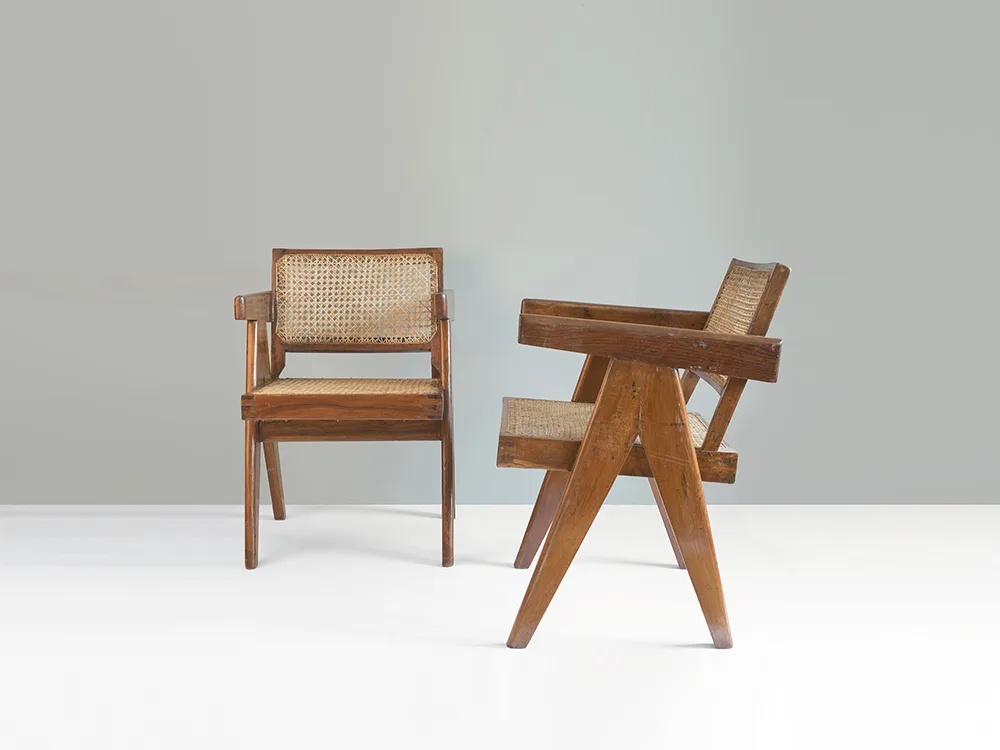
Chandigarh Cane Chair
Statement Set of the MarketDesigner — Pierre Jeanneret, c. 1955.
Materials — Solid teak V-legs; cane seat and back.
At the Table
- Cane breathes; posture firm and upright
- Auction celebrity at set quantities
- Teak ages honestly at the table
Spotting an Original
- Documented provenance only — corpus heavily faked
- Cassina marks on estate reissues
- Teak repairs common at junctions
Production
c. 1955; Cassina reissue
Licensed Today
Cassina (estate)
20. Elbow Chair (CH20) – Hans Wegner, Carl Hansen & Søn, 1956
The Elbow is Wegner’s compact armchair paradox: a continuous steam-bent rail that gives real arm support inside an armless footprint, designed in 1956 and brought to serial production decades later. It solves the dining armchair’s classic failure — arms that bang the table rail — by keeping them low and short.
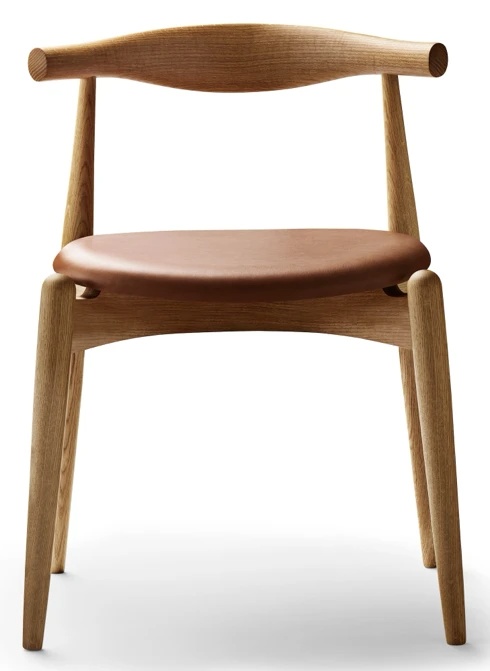
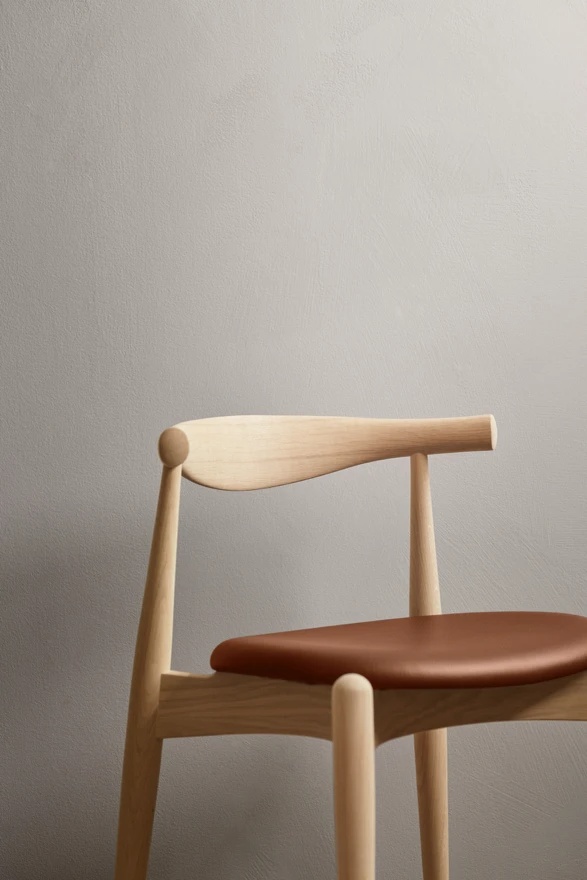
Elbow Chair (CH20)
Armchair, Armless FootprintDesigner — Hans Wegner for Carl Hansen & Søn, 1956.
Materials — Continuous steam-bent rail; compact frame.
At the Table
- Arms stay low and short — clears rails
- Real support inside a side-chair footprint
- Solves the classic armchair failure
Spotting an Original
- Carl Hansen markings
- One-piece bent rail — the signature
- Modern production; vintage scarce
Production
1956 design; later serial production
Licensed Today
Carl Hansen & Søn
21. CH36 – Hans Wegner, Carl Hansen & Søn, 1962
The CH36 closes the list in Shaker key: Wegner’s tall-backed, cord-seated side chair of 1962, plainer than the Wishbone and quieter than the CH23, built for the long family table rather than the design magazine. It is the Wegner for people who want the joinery without the statement.
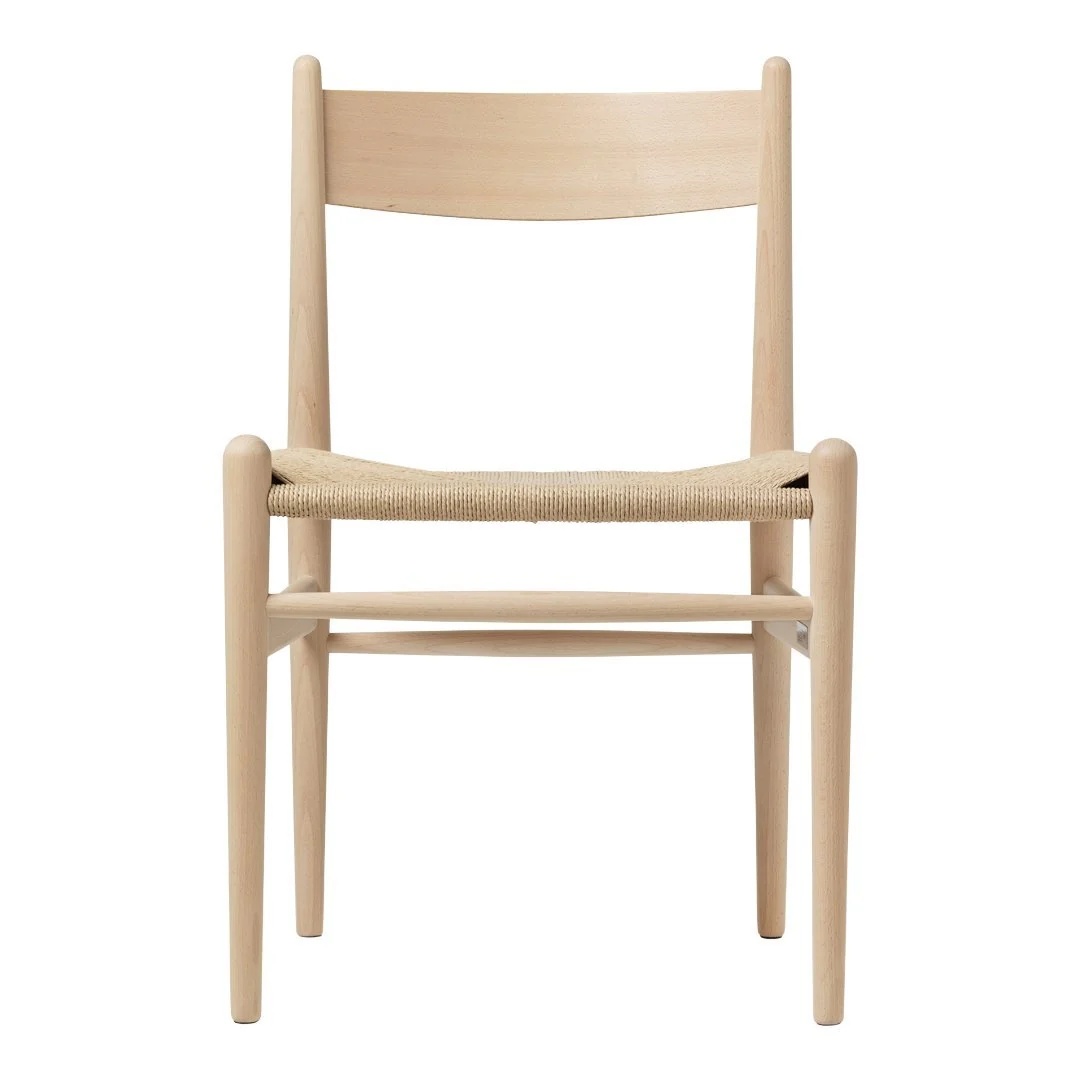
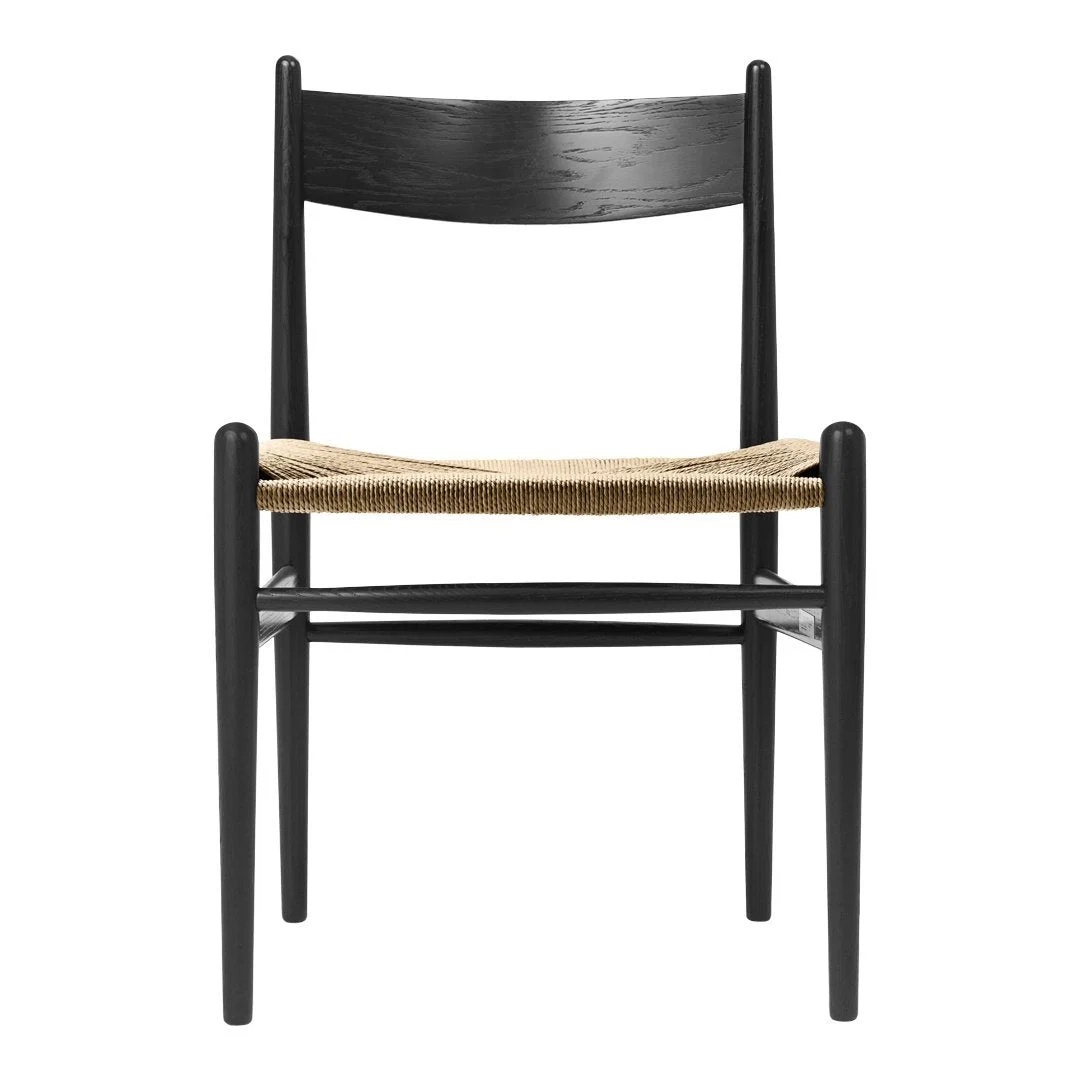
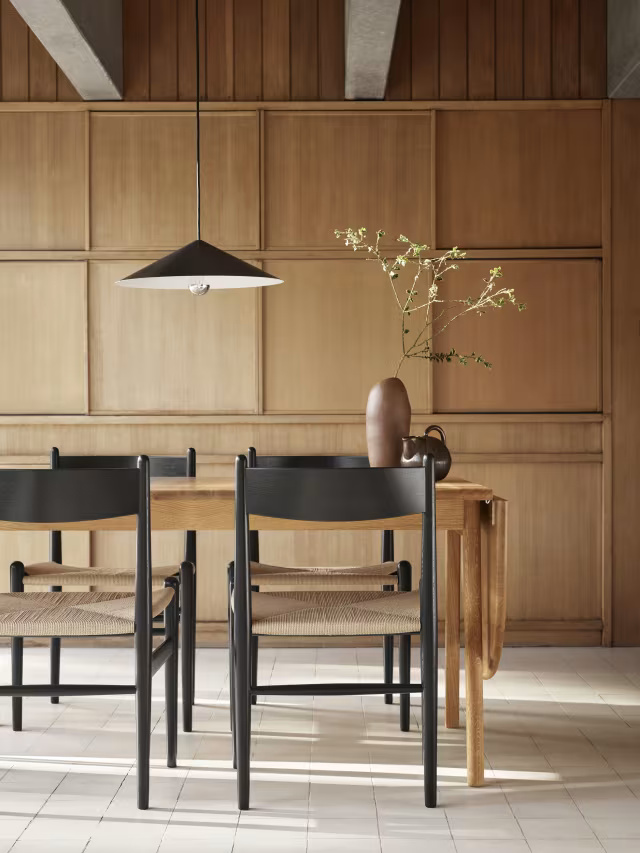
CH36
Shaker KeyDesigner — Hans Wegner for Carl Hansen & Søn, 1962.
Materials — Tall back, cord seat, plain solid wood.
At the Table
- Built for the family table, not the magazine
- Quietest Wegner at the meal
- Cord seat renewable by craftspeople
Spotting an Original
- Carl Hansen markings
- Back height and slat plainness
- Wood species honesty
Production
1962 onward
Licensed Today
Carl Hansen & Søn
Sizing a Mid-Century Dining Set
The numbers that make a set work: standard dining tables run 28 to 30 inches high, which wants seat heights of 17 to 19 inches — where every chair above sits — and roughly 24 inches of table width per setting, more where armchairs or the Wishbone’s curved rail join. Armchairs need arm heights that clear the table rail or apron; the Elbow and Cherner are drawn to pass, the Round Chair prefers table ends. Mixing is period-correct — armless sides with statement ends was the era’s own pattern, and it remains the budget’s best friend. On materials, the same rules that govern the era’s casework govern its seats: know your walnut color from staining, expect paper cord and cane to be renewable by craftspeople (a repairable seat is a feature, not a flaw), and weigh vintage sets against licensed new production always.
What makes a dining chair mid-century modern?
An author and a date, before anything visual: the movement’s dining chairs are documented designs in its language — molded plywood or plastic shells, exposed joinery, tubular or rod steel, woven cord and cane seats, tapered legs — built light because dining chairs move daily. Retail “mid-century style” borrows the legs; the canon carries the paper trail.
Which mid-century dining chairs are best for everyday family use?
The Eames molded side chair and the Series 7 take daily abuse best — wipeable shells, no woven seats to snag, stackable when the room converts. Among the wooden Danes, the J39 and the Møller chairs were engineered for exactly this duty and their vintage survival rates prove it.
Are vintage Danish dining sets a good buy?
Generally yes, with two checks: maker’s marks (J.L. Møllers, Carl Hansen, Fritz Hansen, France & Søn and their peers all labeled) and seat condition, since paper cord and cane are renewable but re-weaving a set of six costs real money. A marked vintage set frequently undercuts new licensed production while outbuilding it.
How many inches per person at a mid-century dining table?
Roughly 24 inches of table edge per setting with armless chairs, closer to 28 with armchairs or wide-railed designs like the Wishbone. Seat heights of 17 to 19 inches pair with the standard 28-to-30-inch table; measure the apron before committing to any armchair.
Can you mix mid-century dining chair designs at one table?
Yes — the era did. The period pattern puts armless side chairs along the length and statement armchairs at the ends; unity comes from repeating one element, usually wood tone or seat material, across the mix. Mixing also breaks the set-of-six price barrier on the expensive designs.
Resources
- Carl Hansen & Søn — Hans J. Wegner Production Archive (CH20, CH23, CH24, CH29, CH36)
- Fritz Hansen — Arne Jacobsen Design Archive (Ant, Series 7, Grand Prix)
- Knoll — Risom, Saarinen, Breuer and Bertoia Collection Documentation
- Cherner Chair Company — Company and Design History
- Cassina — Superleggera and Hommage à Pierre Jeanneret Collections
- Fredericia — Børge Mogensen J39 Documentation
- J.L. Møllers Møbelfabrik — Model 71 and 78 Production History
- Architecture Lab — 23 Most Loved Mid-Century Modern Chairs
- Architecture Lab — Timeless Furniture Pieces


