

The mid-century modern coffee table is the room’s low center of gravity, and the era treated it as a serious design problem: the thirteen documented tables below — designer, maker, and date for each — include museum pieces, mass-market icons, and the most faked glass-top silhouette in furniture. The category’s rule of thumb survives in the dimensions: the era’s tables run low, mostly 15 to 17 inches, drawn to sit beside lounge chairs and sofas that hug the floor, which is why a mid-century table under a modern high-armed sofa looks marooned and why the pairing logic runs both ways. The seating side of that equation is documented in our guide to the 23 most loved mid-century modern chairs; this is the table those chairs gather around.
1. Noguchi Table (IN-50) – Herman Miller, 1947
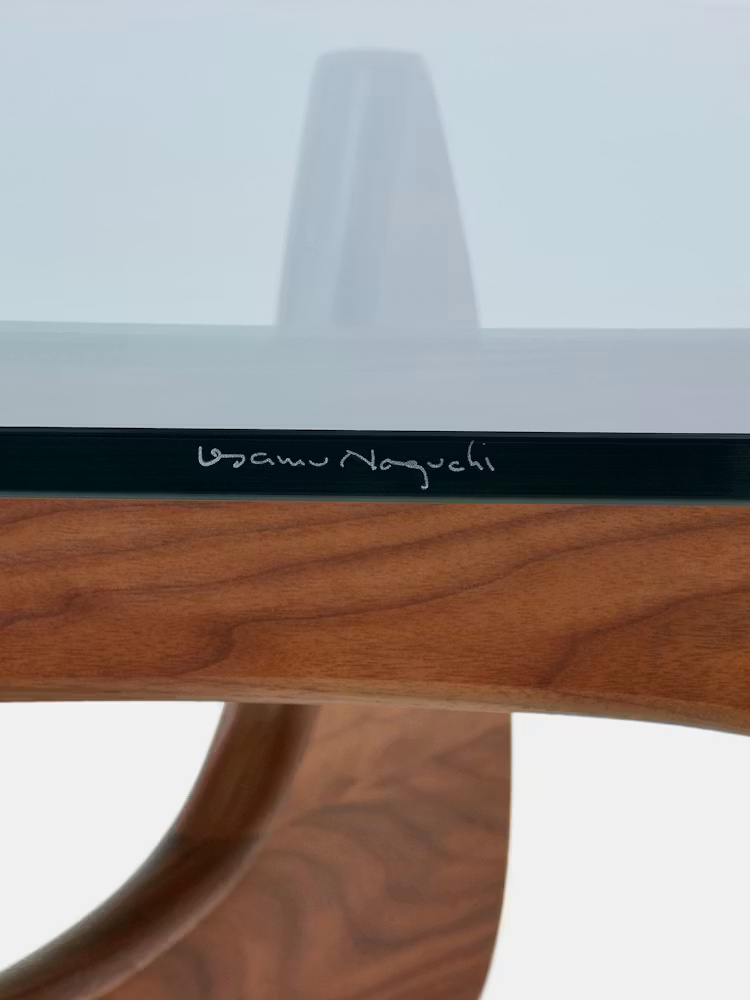
The Noguchi Table is the coffee table as sculpture, and its biography outclasses most furniture: Isamu Noguchi designed the original version in 1939 as a commission from the president of MoMA, modified it in 1944 to accompany George Nelson’s article “How to Make a Table,” and saw Herman Miller put it into production in 1947. Three parts make the whole — a free-form plate-glass top and two identical interlocking curved wood legs forming a self-stabilizing tripod — in walnut, birch, or cherry originally, with Vitra producing for Europe since 2000. It sits in MoMA’s collection, and current production carries Noguchi’s signature etched on the glass edge and the base, which matters because no table on this list is reproduced without license more relentlessly.
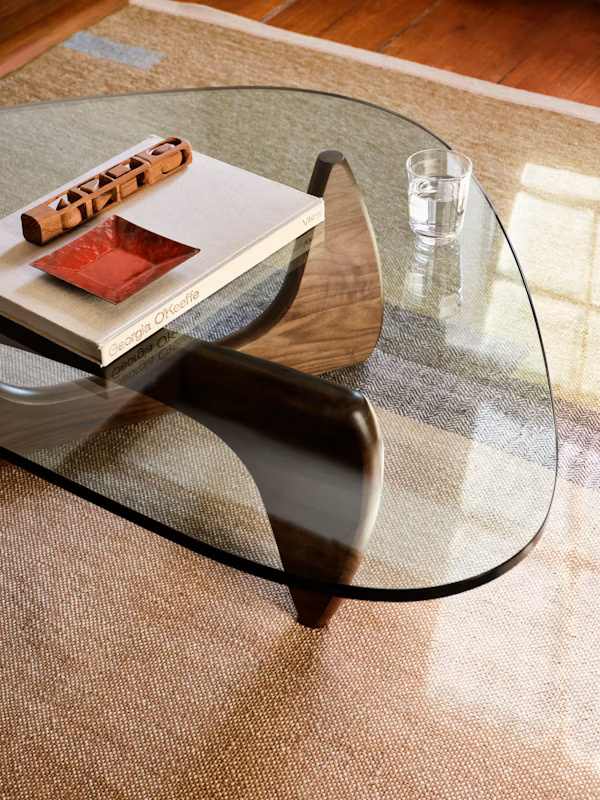
Noguchi Table (IN-50)
The Sculpture, 1947Designer — Isamu Noguchi; 1939 MoMA-president commission, modified 1944 for George Nelson’s “How to Make a Table.”
Materials — Free-form plate-glass top; two identical interlocking curved legs in walnut, birch, or cherry.
Signature Details
- Three parts, self-stabilizing tripod
- In MoMA’s collection
- The most faked glass-top table in furniture
Spotting an Original
- Signature etched on glass edge and base (current)
- Herman Miller / Vitra provenance
- Copies simplify the interlocking joint
Production
1947 onward
Licensed Today
Herman Miller / Vitra (Europe)
2. Saarinen Pedestal Tables – Knoll, 1957
The Pedestal coffee and side tables are the Tulip chair’s argument continued: Eero Saarinen’s 1957 collection for Knoll cleared what he called the “slum of legs” with a single flaring cast-aluminum stem under marble, wood, or laminate tops. The design carries an honest secret — the all-plastic table Saarinen wanted was beyond 1957’s materials, so the stem is aluminum finished to match and a plywood disc stiffens the top from below — and a marketplace warning: the Pedestal group is among the most counterfeited furniture of the century, so the Knoll markings and the base’s weight do the authenticating. In continuous production since release.
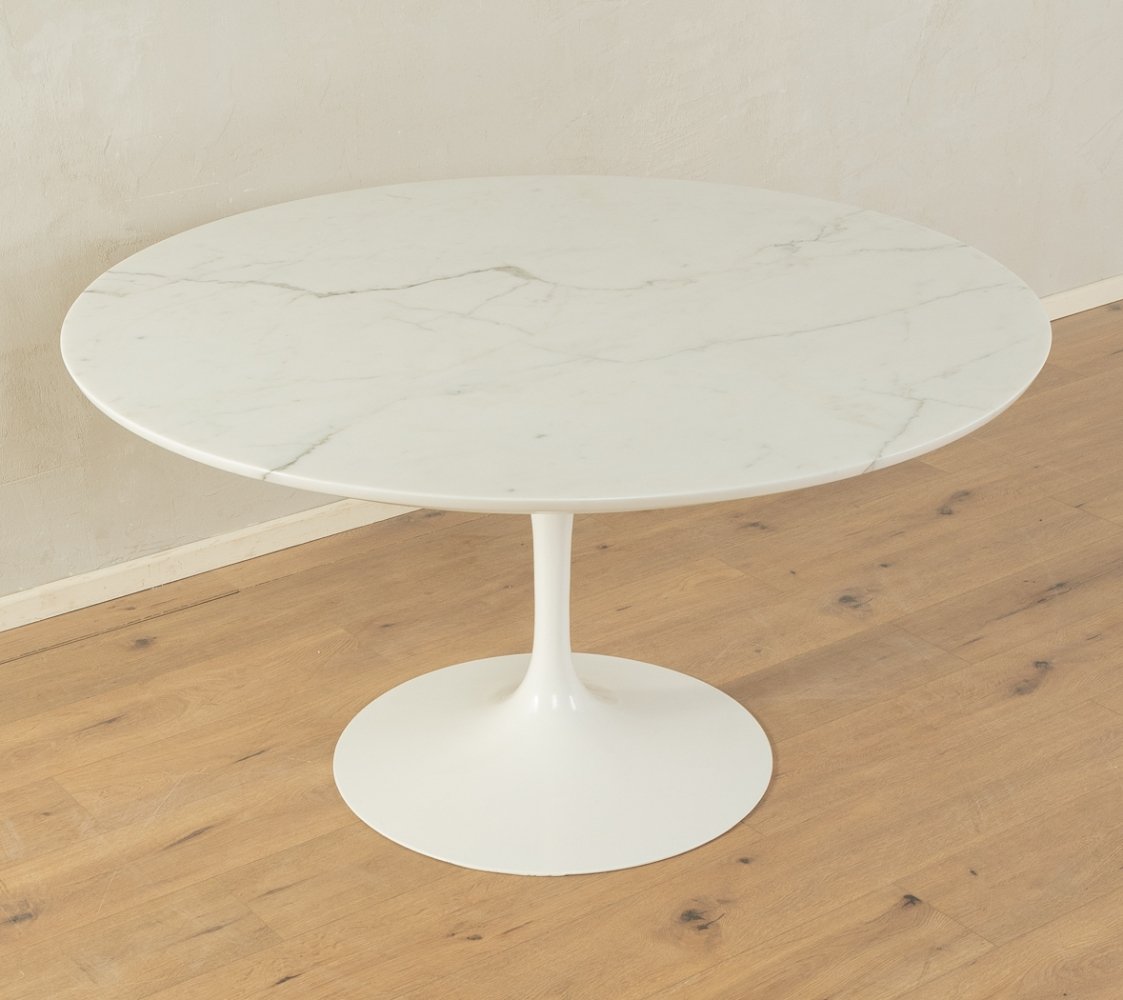
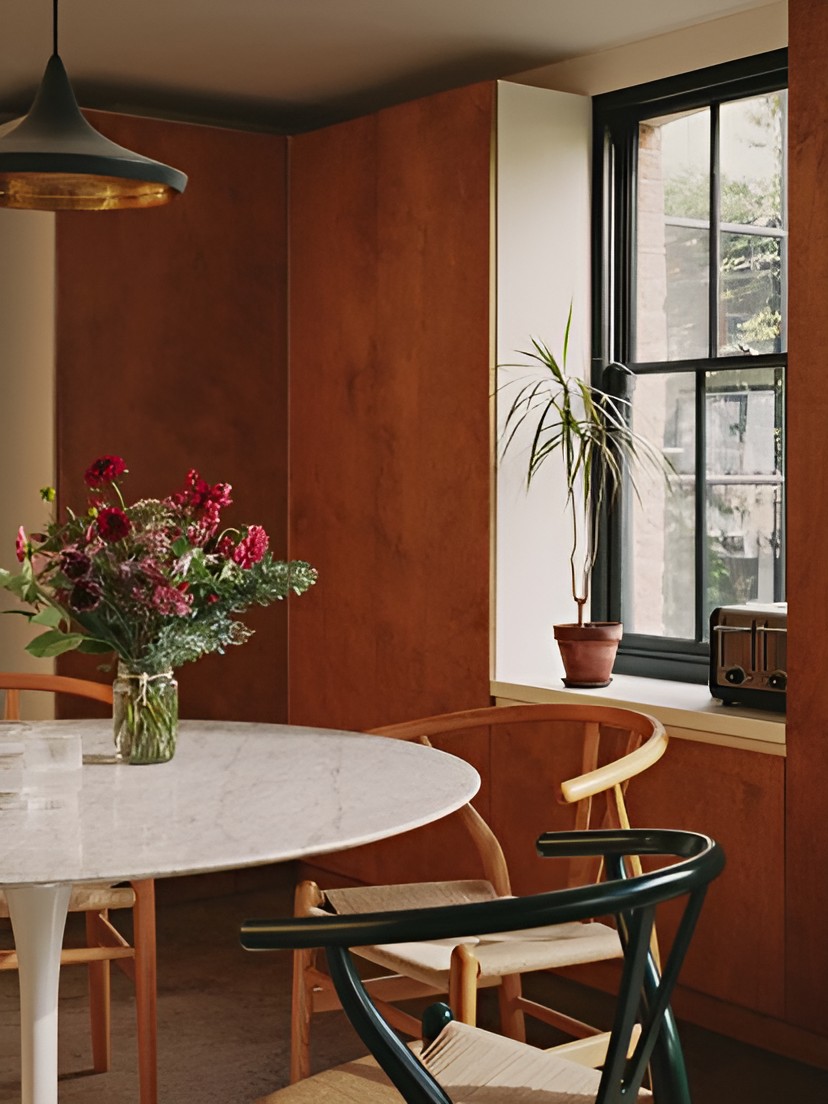
Saarinen Pedestal Tables
The Slum of Legs, Cleared, 1957Designer — Eero Saarinen for Knoll, Pedestal Collection.
Materials — Cast-aluminum flaring stem; marble, veneer, or laminate tops; plywood stiffening disc beneath.
Signature Details
- One stem replaces four legs
- The all-plastic ideal awaited later materials
- Among the century’s most counterfeited furniture
Spotting an Original
- Knoll labels and base weight
- Stem casting quality
- Top-edge finish on marble versions
Production
1957 onward
Licensed Today
Knoll
3. Florence Knoll Coffee Table – Knoll, 1954
The Florence Knoll table is modern architecture scaled to shin height: a thin square or rectangular top — glass, marble, or veneer — on a welded steel frame, designed in 1954 as part of the occasional-table collection accompanying her lounge seating, and awarded the American Institute of Interior Designers’ First Award the same year. Knoll called her approach architectural rather than sculptural, the rational geometry she absorbed from Mies van der Rohe, and the table proves the description: it is the straight line to the Noguchi’s curve, and an example in rosewood and chrome sits in MoMA’s collection. In production at Knoll today.
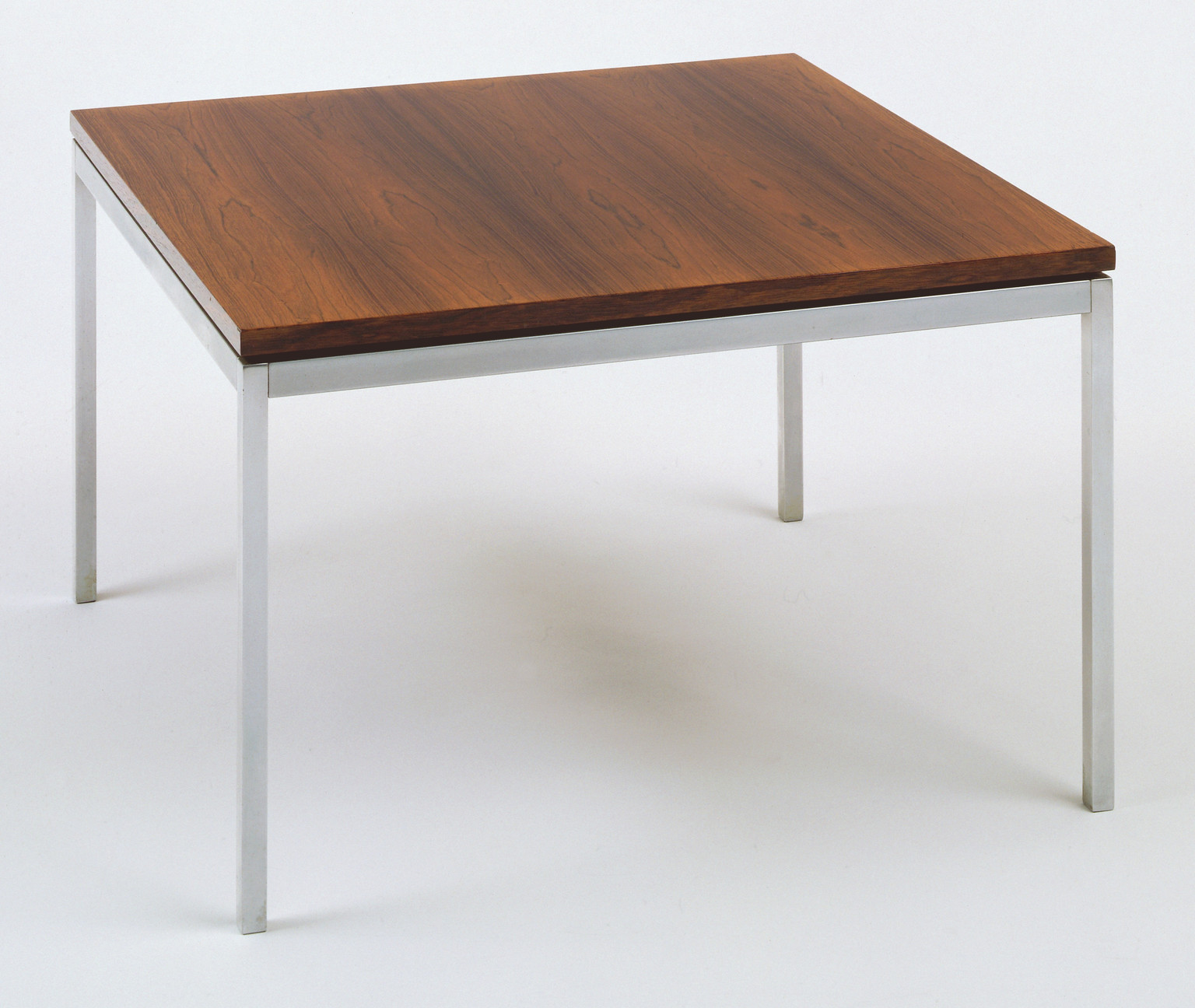
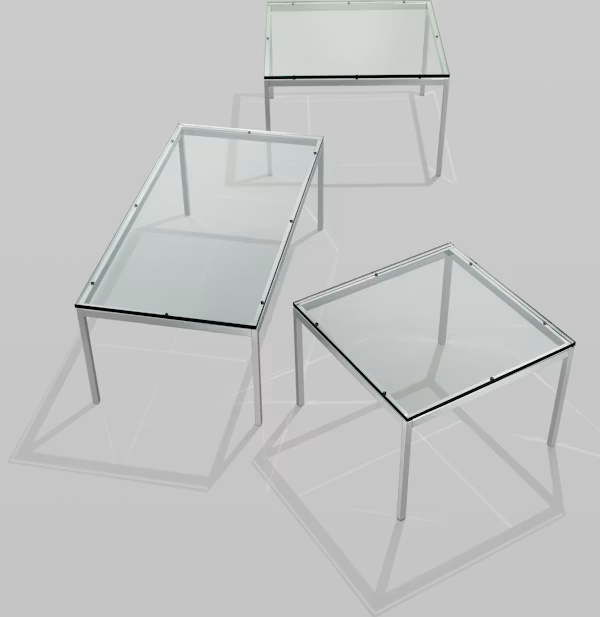
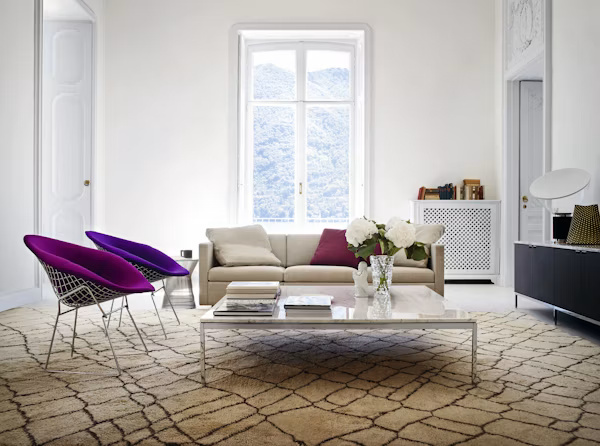
Florence Knoll Coffee Table
Architecture at Shin Height, 1954Designer — Florence Knoll; occasional-table collection accompanying her 1954 lounge seating.
Materials — Thin glass, marble, or veneer top on welded polished-steel frame.
Signature Details
- AIID First Award, 1954
- Rosewood-and-chrome example in MoMA’s collection
- Mies-derived rational geometry
Spotting an Original
- KnollStudio logo and signature stamps
- Frame weld quality at corners
- Top thickness per period spec
Production
1954 onward
Licensed Today
Knoll
4. Lane Acclaim Tables – Andre Bus, 1958
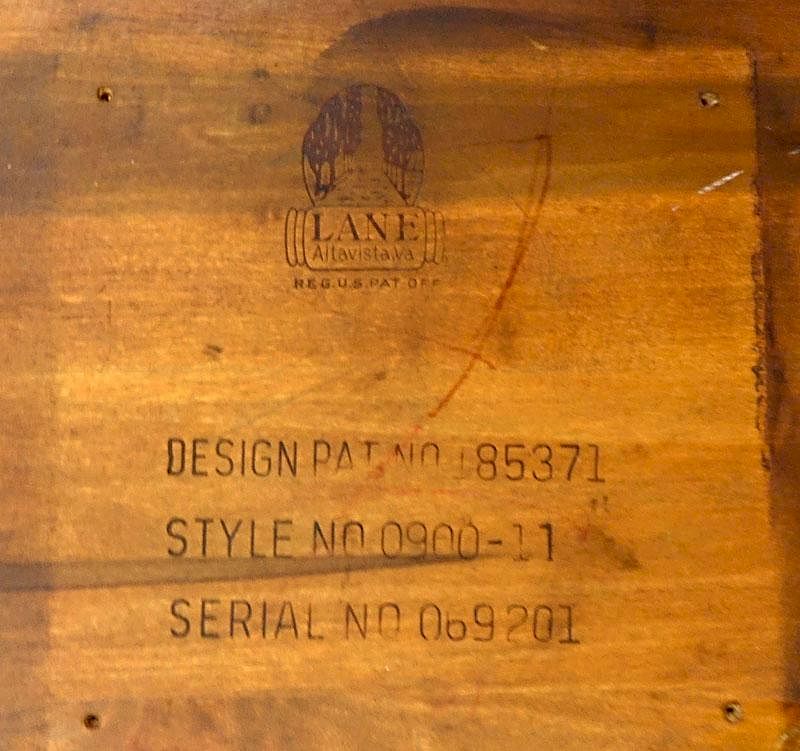
The Acclaim is the people’s entry, and the whole famous line began as tables: Dutch designer Andre Bus drew the series for Lane Furniture of Altavista, Virginia, launched in October 1958, and its walnut tops with oversized contrasting dovetail inlays — elm early, ash later — became one of American furniture’s most recognized motifs. The line answered Danish imports with Danish restraint plus American flourish, sold enormously, grew into a full suite, and survives in quantity, which keeps clean examples attainable. Authentication is friendly: Lane markings and patent numbers under the top, and veneer condition sets the price.
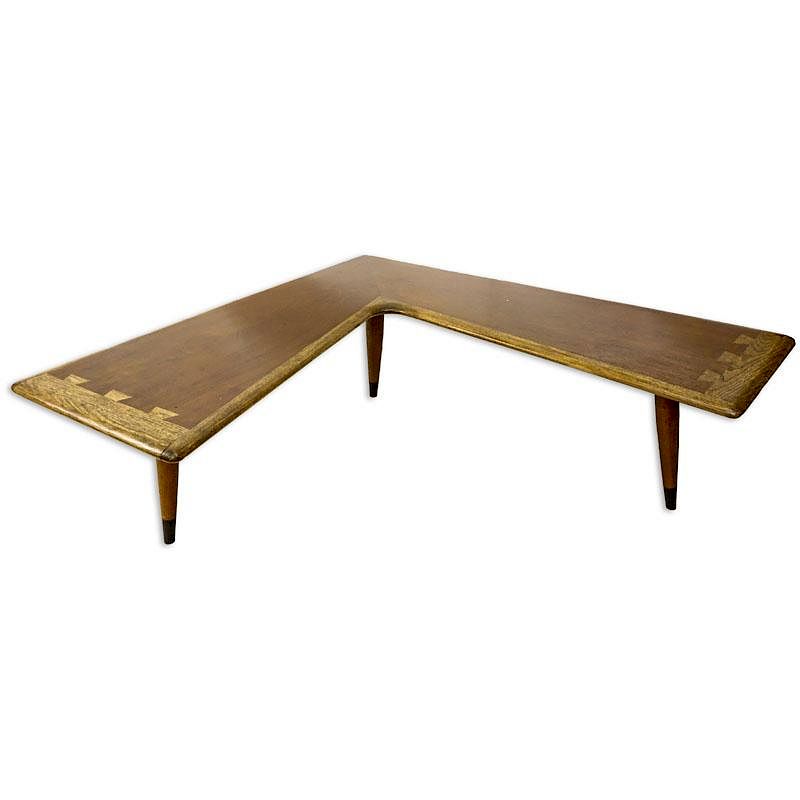
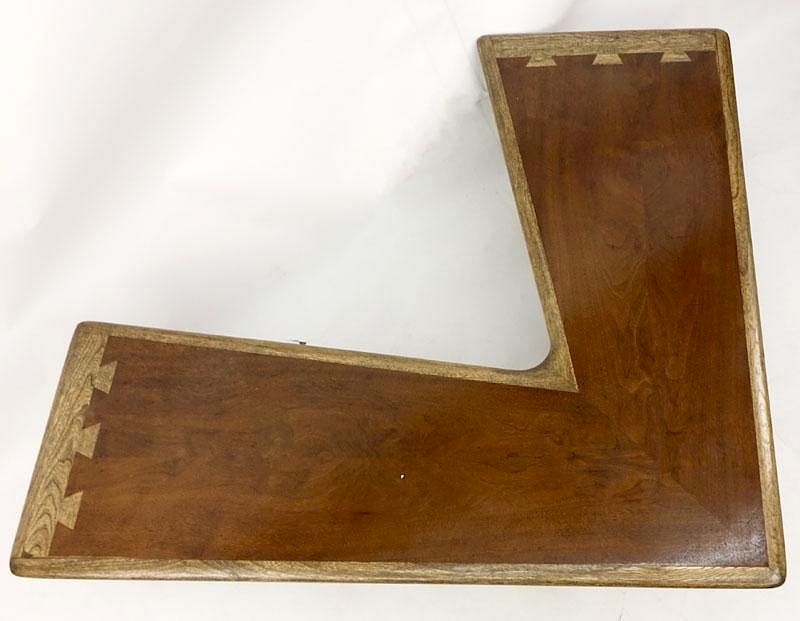
Lane Acclaim Tables
The People’s Entry, 1958Designer — Andre Bus for Lane Furniture, Altavista, Virginia; the line began as tables.
Materials — Walnut tops with oversized contrasting dovetail inlay — elm early, ash later; tapered legs.
Signature Details
- Launched October 1958; grew into a full suite
- The dovetail motif is the signature
- Survives in quantity — the attainable icon
Spotting an Original
- Lane markings and patent numbers under top
- Veneer condition sets the price
- Acclaim II is the later laminate version
Production
1958 – 1960s
Licensed Today
Vintage market only
5. Nelson Platform Bench – Herman Miller, 1946
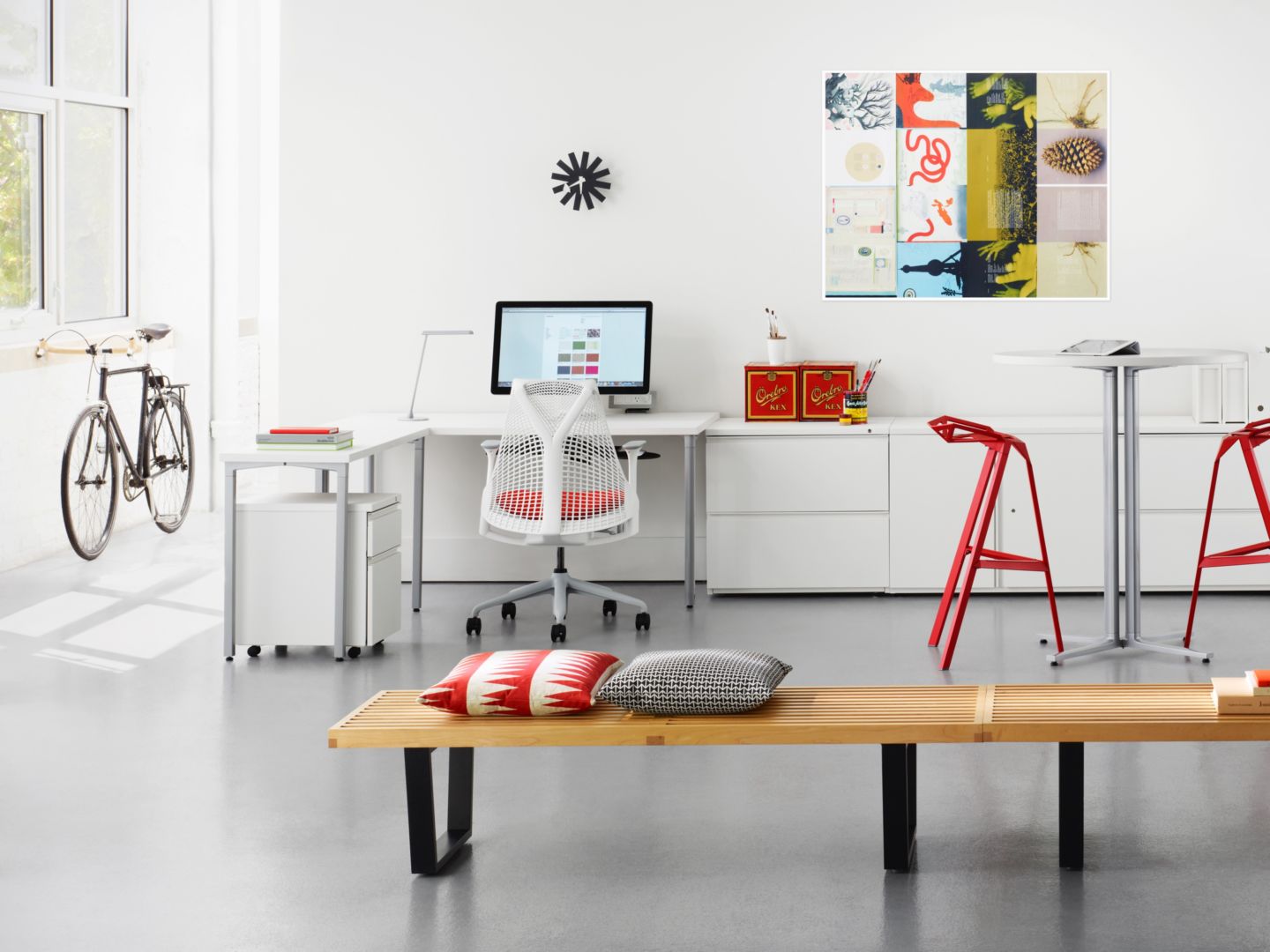
The Platform Bench is the coffee table that refuses to admit it: George Nelson’s slatted bench, designed in 1946 at the start of his Herman Miller tenure, was drawn as seating and adopted immediately as a table, its maple slats and ebonized legs carrying books, trays, and feet with equal indifference. It remains the category’s best answer for rooms that change their minds — bench today, table tomorrow, media stand next year — and Herman Miller builds it today from the original drawings.
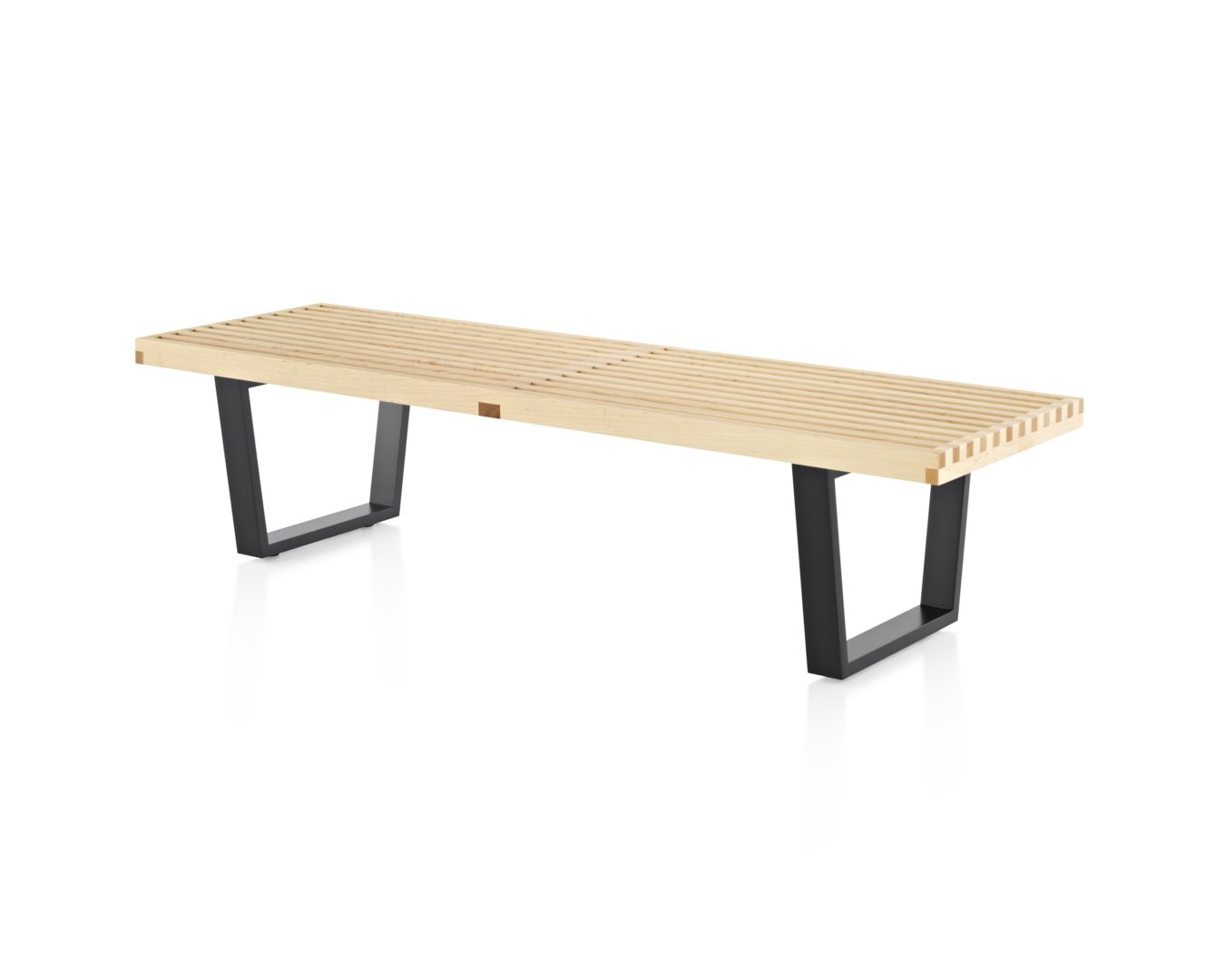
Nelson Platform Bench
Bench and Table at Once, 1946Designer — George Nelson for Herman Miller, at the start of his design directorship.
Materials — Maple slat top on ebonized wood or steel legs.
Signature Details
- Designed as seating, adopted as a table
- The category’s most flexible icon
- Built today from the original drawings
Spotting an Original
- Herman Miller markings
- Slat spacing and leg detail per period
- Vintage finish honesty
Production
1946 onward
Licensed Today
Herman Miller
6. Noguchi Cyclone Table – Knoll, mid-1950s
The Cyclone gives the list its second Noguchi and its most kinetic base: a wire-strut vortex spinning between a round top and a cast-iron foot, developed for Knoll in the mid-1950s alongside its dining-height sibling. Where the IN-50 is landscape, the Cyclone is motion, and the two tables mark how wide one sculptor’s furniture could range. Vintage examples trade under Knoll provenance; the wire cage’s weld quality separates originals from the tributes.
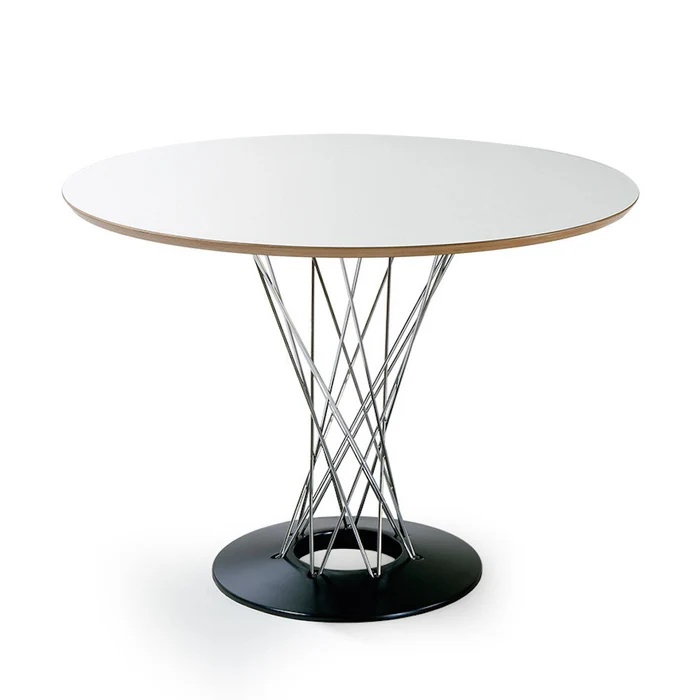
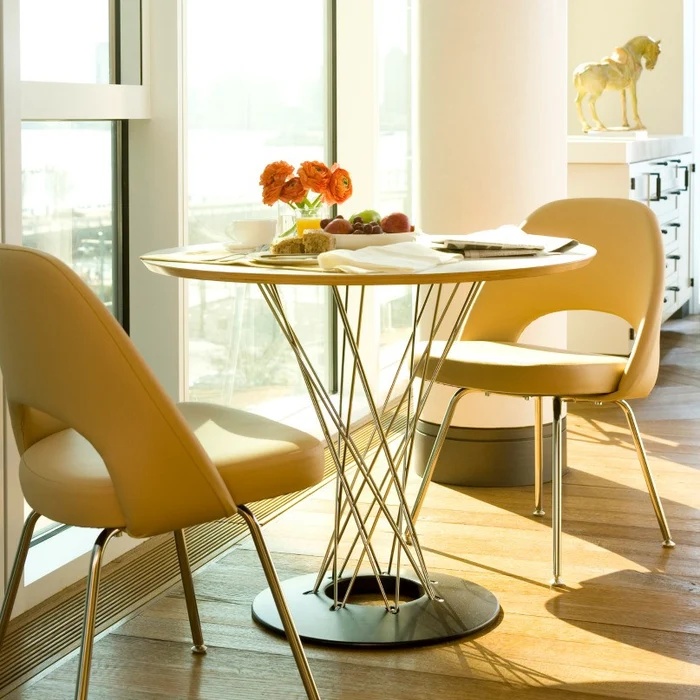
Noguchi Cyclone Table
Motion as a Base, mid-1950sDesigner — Isamu Noguchi for Knoll, alongside its dining-height sibling.
Materials — Wire-strut vortex between round top and cast-iron foot.
Signature Details
- The sculptor’s second table language
- Kinetic where the IN-50 is landscape
- Knoll production of the 1950s
Spotting an Original
- Knoll provenance
- Weld quality through the wire cage
- Foot casting detail
Production
mid-1950s
Licensed Today
Knoll (reissues vary by market)
7. Platner Coffee Table – Knoll, 1966
The Platner coffee table is the wire-rod cylinder from the seating collection carrying glass instead of a sitter: hundreds of vertical steel rods welded into a base that is structure and ornament at once, introduced with the 1966 collection. Platner’s stated ambition — decorative, graceful design on a rational base rather than applied ornament — reads even more clearly in the table than the chairs, since nothing interrupts the moiré. The rod count and weld cleanliness authenticate, exactly as with the seating.
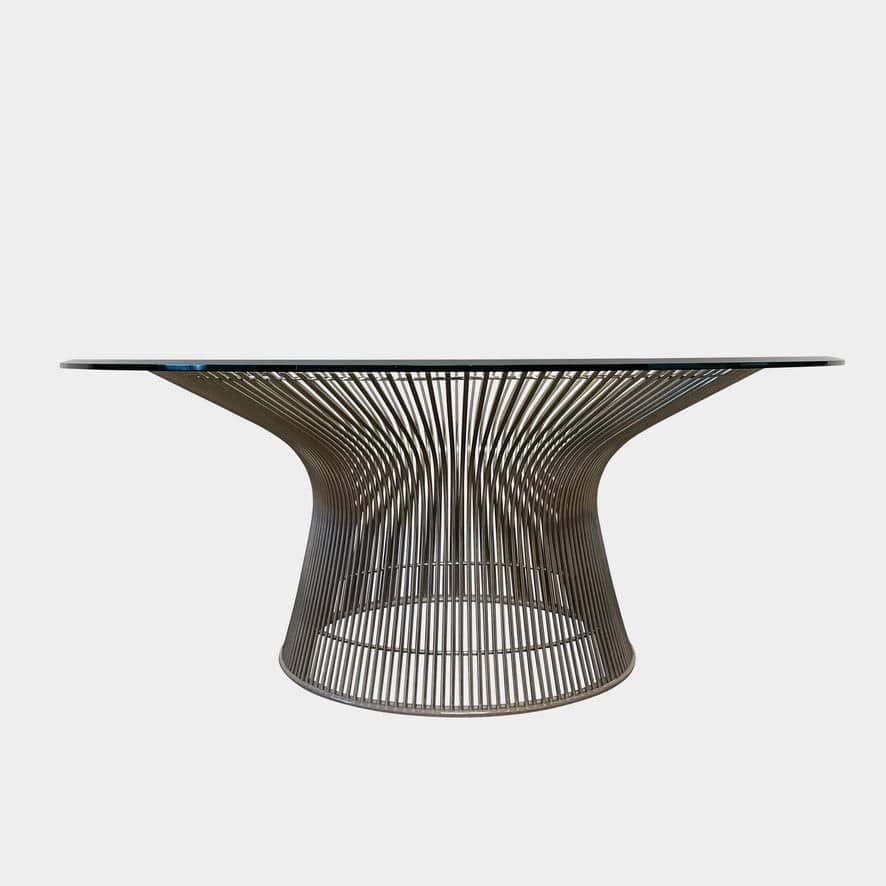
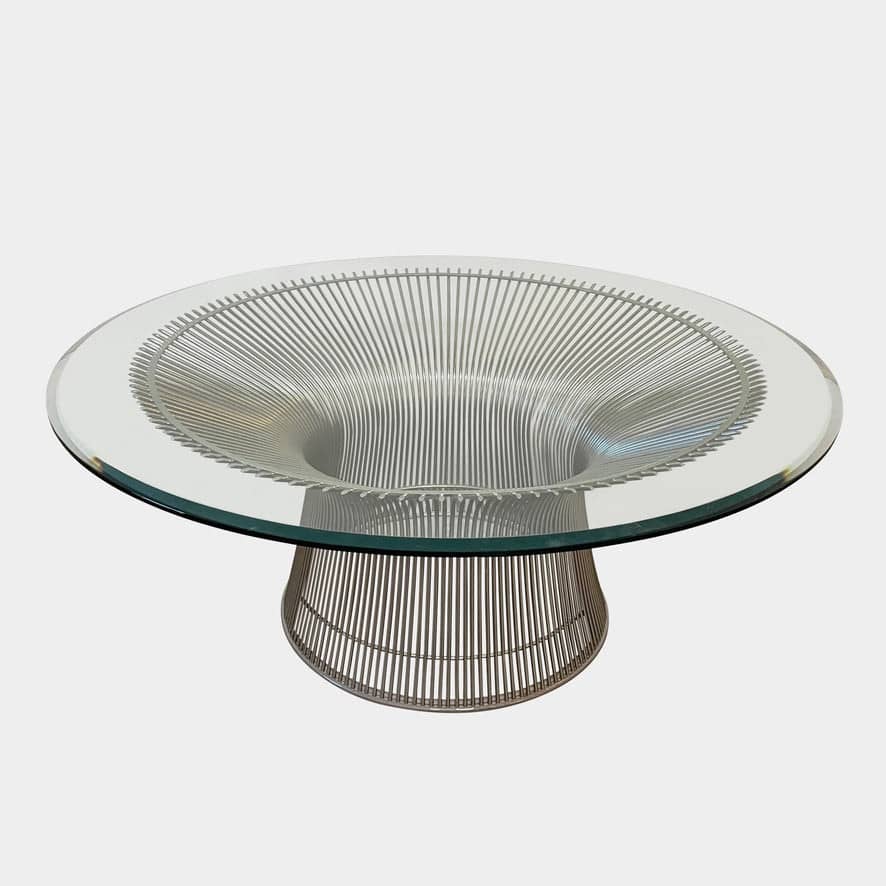
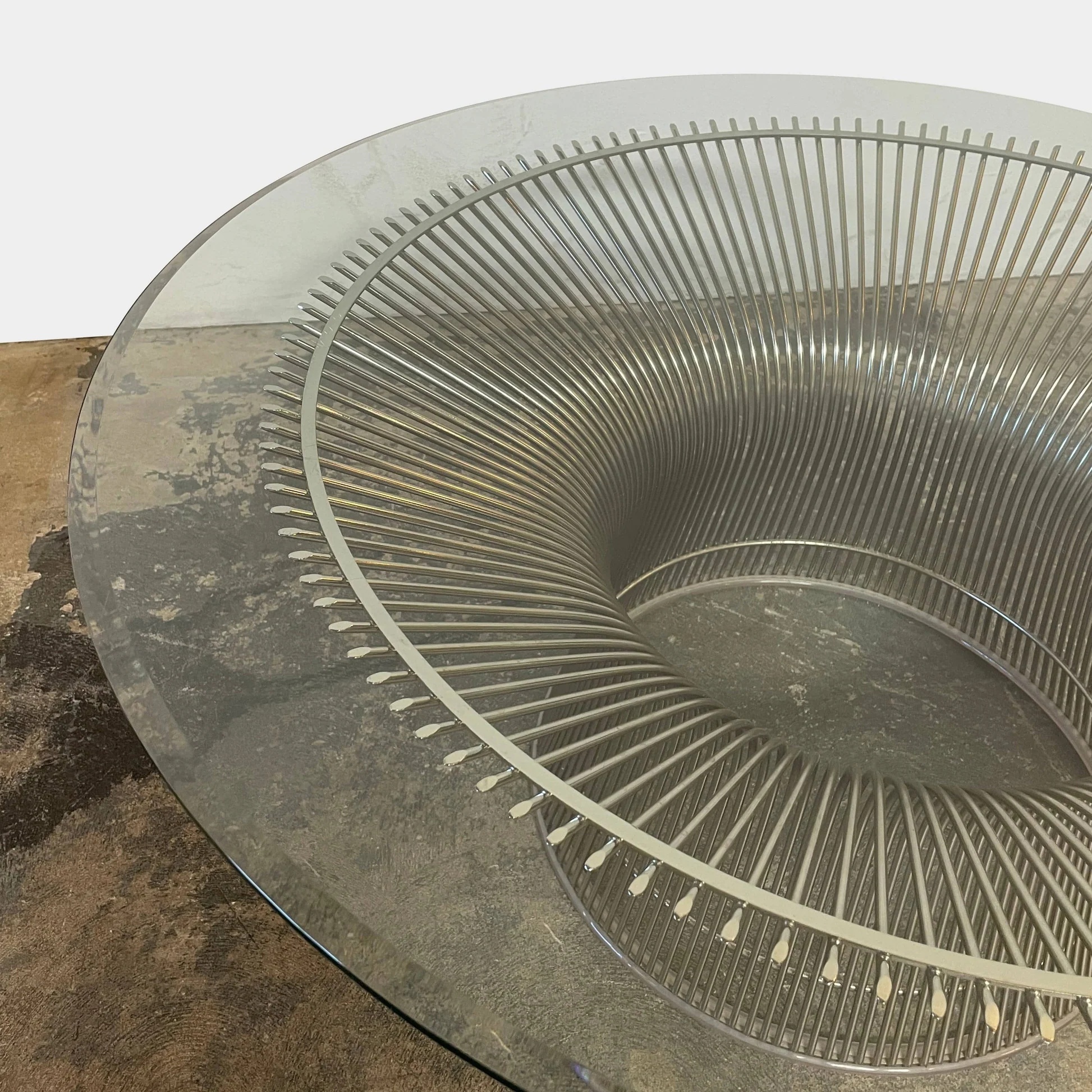
Platner Coffee Table
Structure as Ornament, 1966Designer — Warren Platner for Knoll, with the 1966 collection.
Materials — Hundreds of vertical welded steel rods under a glass top.
Signature Details
- The moiré cylinder uninterrupted by a sitter
- Decorative intent on a rational base
- Matches the collection’s seating
Spotting an Original
- Knoll markings
- Rod count and weld cleanliness
- Clones hollow the base
Production
1966 onward
Licensed Today
Knoll
8. Kagan Sculptural Tables – Kagan-Dreyfuss, 1950s
Kagan’s tables bring the list its glamour wing: carved walnut bases in continuous organic gestures under glass, marble, or boomerang-shaped tops, produced through Kagan-Dreyfuss — his 1950–1960 partnership with Hugo Dreyfuss — and his own labels. The frames follow the same rule as his beds: the carving is the irreplaceable part, glass is renewable, and documented provenance carries the price. Gallery-provenanced examples anchor the connoisseur end of the American market.
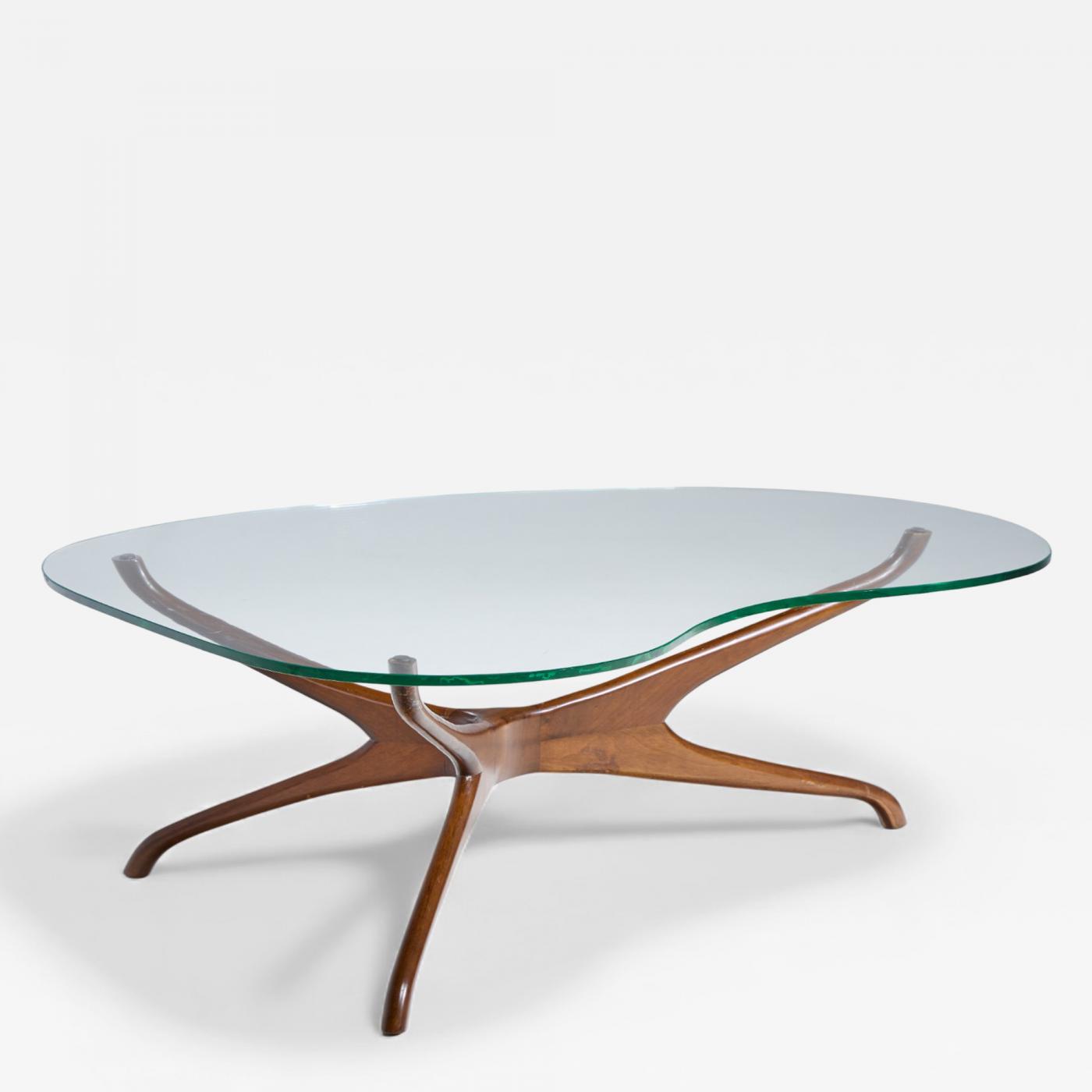
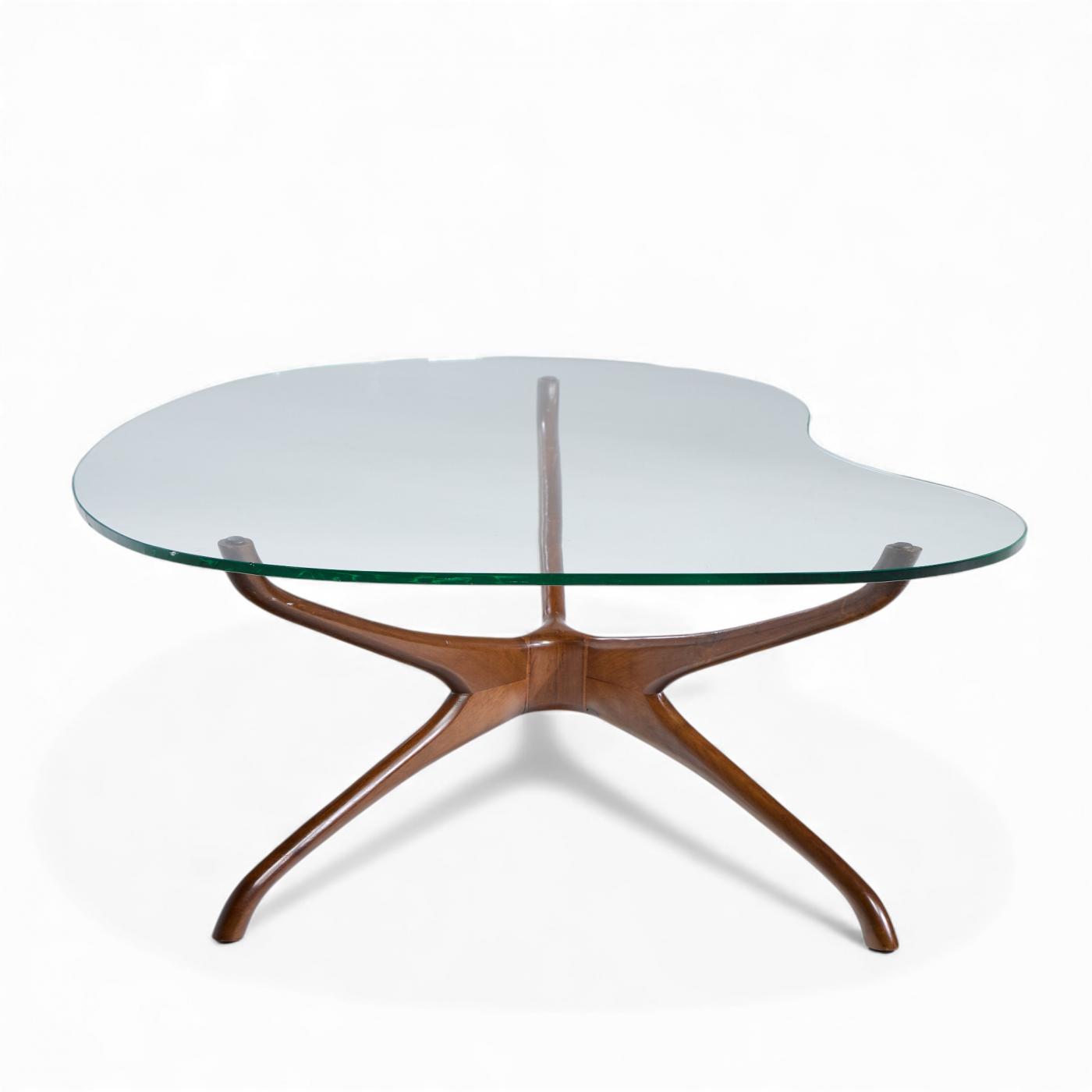
Kagan Sculptural Tables
The Glamour Wing, 1950sDesigner — Vladimir Kagan, through Kagan-Dreyfuss (1950–1960) and his own labels.
Materials — Carved walnut bases in continuous gestures; glass, marble, or boomerang tops.
Signature Details
- The carving is one gesture, never applied parts
- Gallery provenance anchors the market
- Glass renewable; walnut irreplaceable
Spotting an Original
- Kagan-Dreyfuss or Kagan Designs documentation
- Carving continuity
- Base-to-top attachment method
Production
1950s – 1960s
Licensed Today
Vintage and estate market
9. Wormley Occasional Tables – Dunbar, 1950s–60s
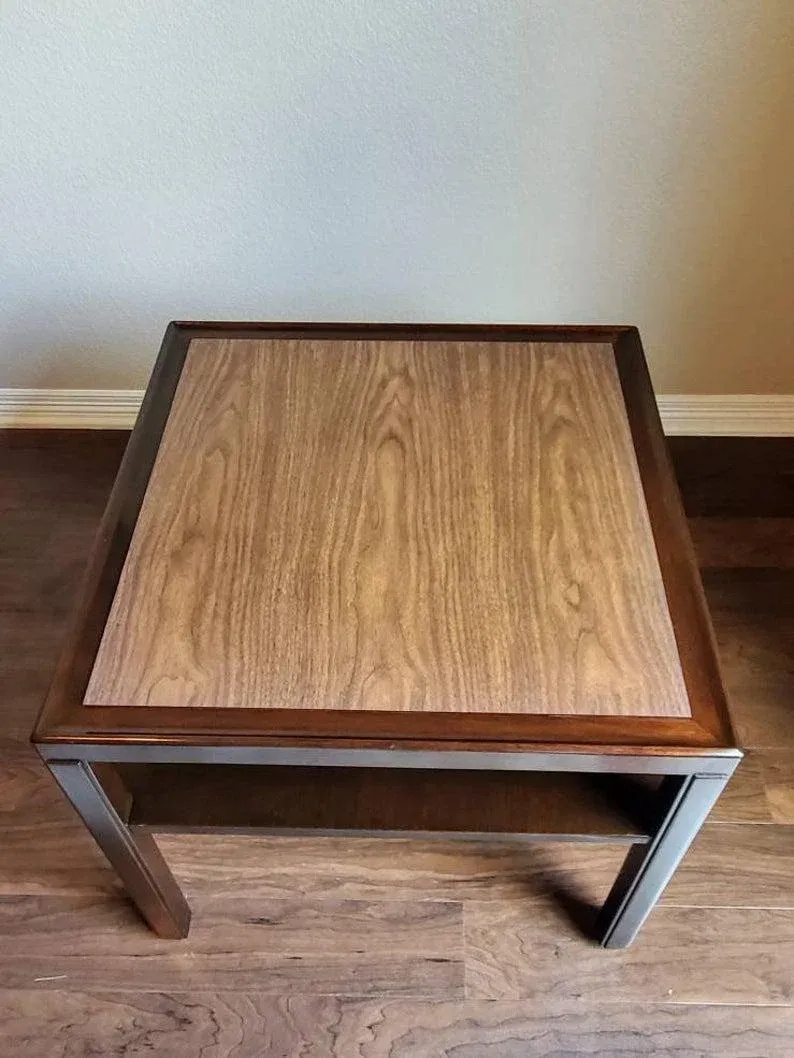
Wormley at Dunbar made the coffee table a setting for other arts: his occasional tables pair walnut and mahogany with inset ceramic tiles by Gertrud and Otto Natzler and rosewood and brass details, built to Dunbar’s exacting standard. They are the list’s quietest entries and among its most expensive, priced on craft rather than silhouette — the same connoisseur logic as his storage beds in our iconic mid-century modern beds guide, where Dunbar’s build quality does the talking.
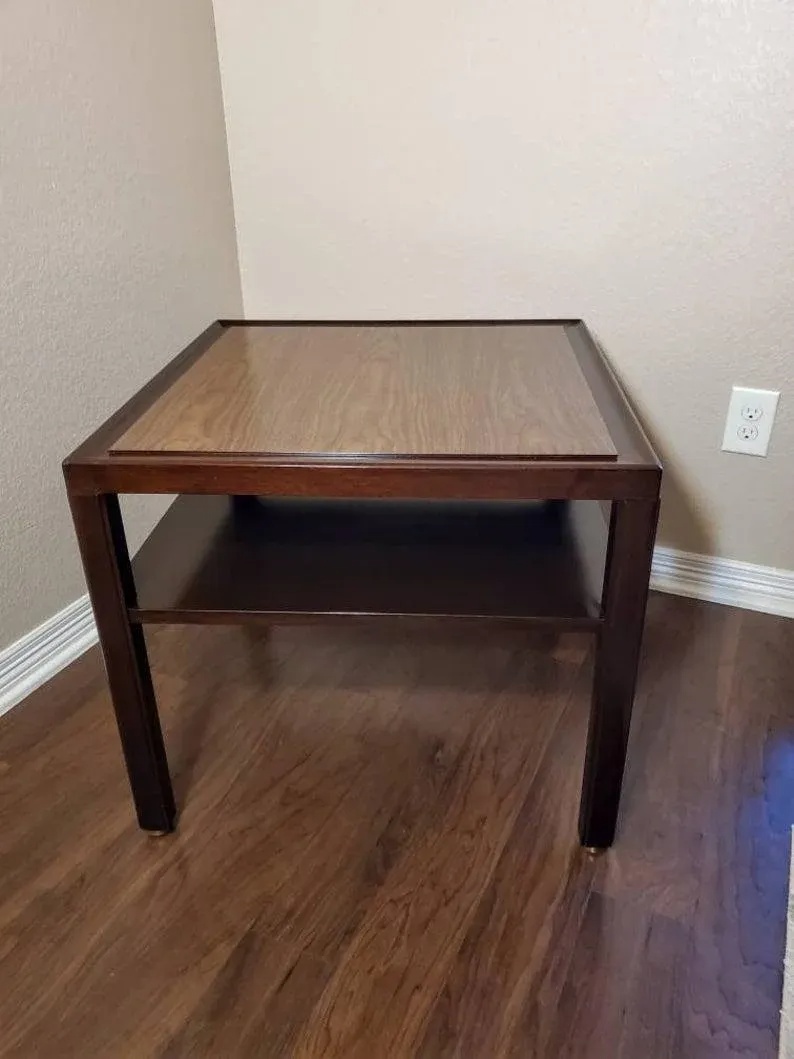
Wormley Occasional Tables
Craft Carrying Craft, 1950s–60sDesigner — Edward Wormley for Dunbar.
Materials — Walnut and mahogany with inset Natzler ceramic tiles, rosewood and brass details.
Signature Details
- Tables built as settings for ceramic art
- Dunbar’s exacting construction standard
- Priced on craft, not silhouette
Spotting an Original
- Dunbar markings
- Natzler tile authentication where present
- Joinery and finish quality
Production
1950s – 1960s
Licensed Today
Vintage market only
10. Pearsall Boomerang Tables – Craft Associates, 1960s
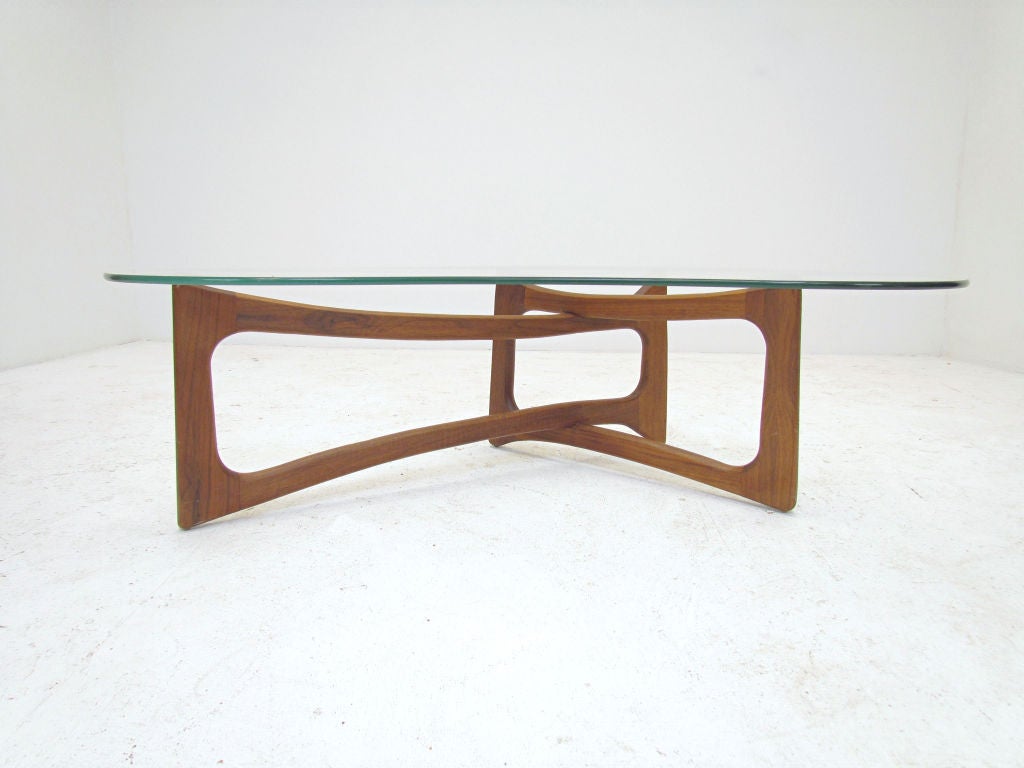
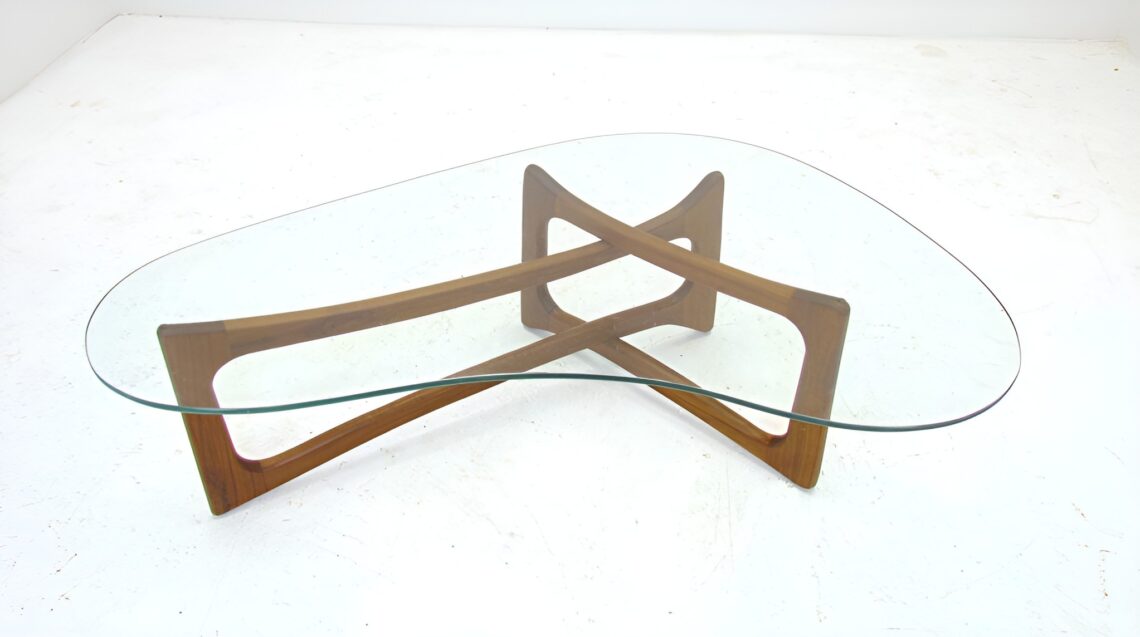
The Pearsall boomerang is the statement entry with the asterisk the statement deserves: sweeping sculpted-walnut bases under kidney or boomerang glass, sold through Adrian Pearsall’s Craft Associates in the 1960s — and attributed today far more often than documented, since catalogs are scarce and the silhouette bred imitators in its own decade. The buying rule from our beds guide applies verbatim: weigh the construction and the sweep of the carving more heavily than the name on the listing.
Pearsall Boomerang Tables
Statement, With an Asterisk, 1960sDesigner — Adrian Pearsall, Craft Associates — attributed far more often than documented.
Materials — Sculpted walnut sweeping bases under kidney or boomerang glass.
Signature Details
- The era’s boldest table silhouette
- Bred imitators in its own decade
- Catalog documentation is scarce
Spotting an Original
- Construction and carving over the listed name
- Craft Associates provenance where it exists
- Base joinery quality
Production
1960s
Licensed Today
Vintage market; attribution-dependent
11. Broyhill Brasilia Tables – 1962
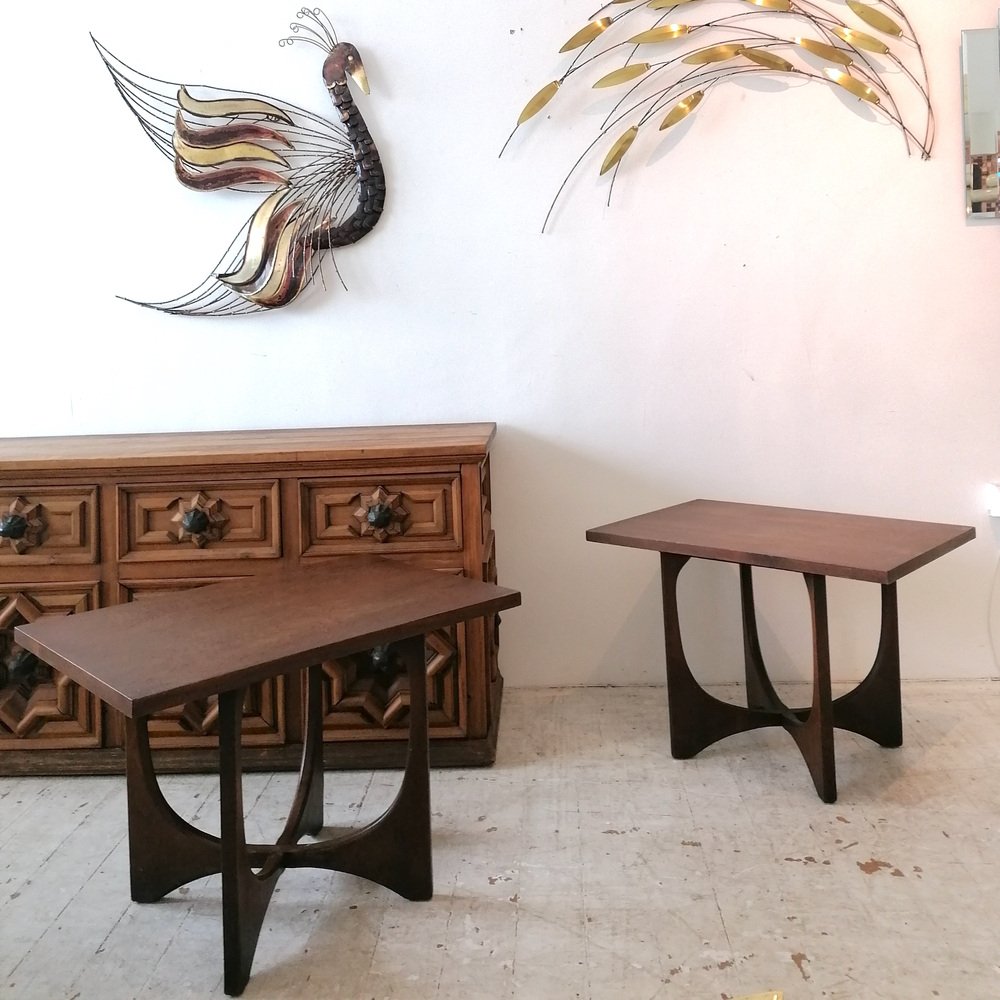
The Brasilia tables carry Oscar Niemeyer’s arches at coffee height: the sculpted parabolic motif of the 1962 line — designed by Broyhill’s Mel Smith after Paul Broyhill’s visit to the new Brazilian capital, with Niemeyer as inspiration rather than author — runs through the line’s occasional tables in walnut with brass accents. They complete a Brasilia bedroom or stand alone as the mass-market era’s boldest table silhouette, and the deep collector community keeps demand steady.
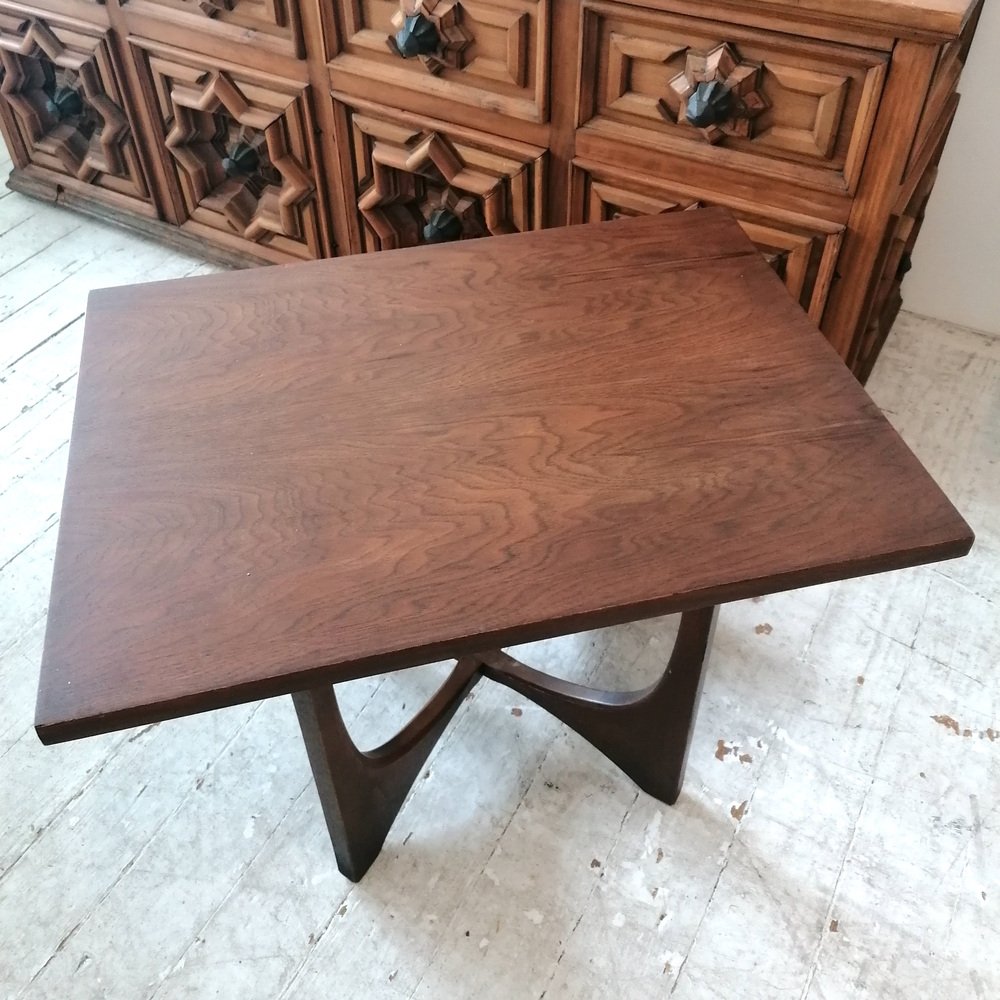
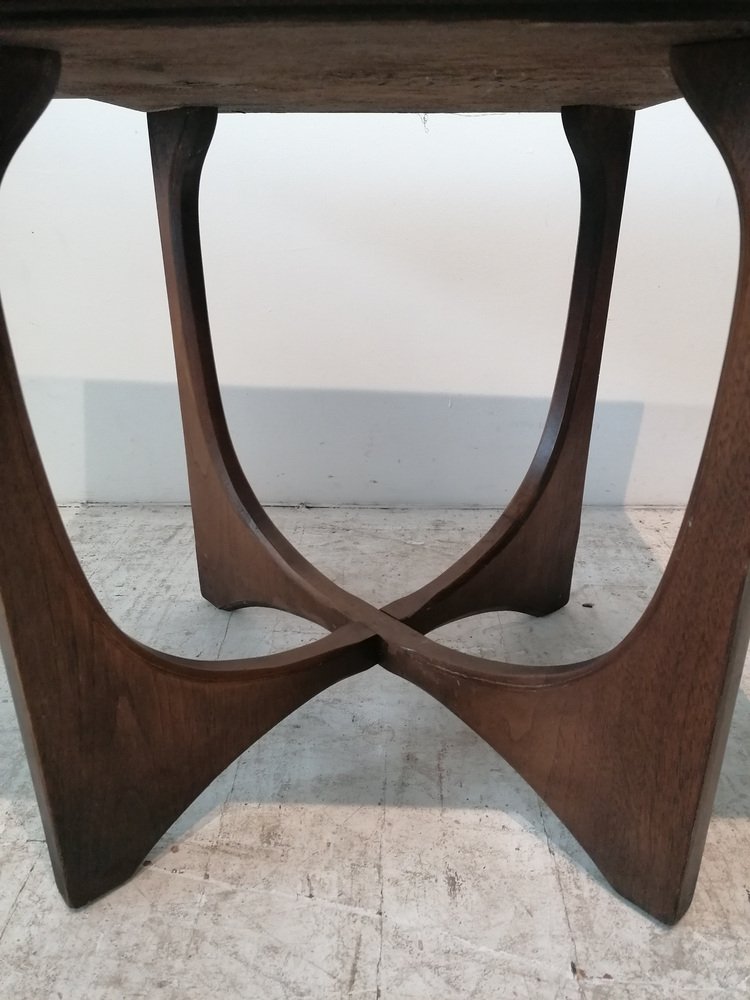
Broyhill Brasilia Tables
Niemeyer’s Arches, Low, 1962Designer — Mel Smith for Broyhill Premier, after Paul Broyhill’s Brasília visit; Niemeyer inspired, not author.
Materials — Walnut with sculpted parabolic arches and brass accents.
Signature Details
- The 1962 line’s motif at coffee height
- Completes a Brasilia suite
- Deep collector community sustains demand
Spotting an Original
- Broyhill Premier markings
- Arches carved and applied, not routed
- Consistent walnut casework
Production
1962 – c. 1970
Licensed Today
Vintage market only
12. Schultz Petal Table – Knoll, 1960
The Petal table is nature translated with engineering honesty: Richard Schultz composed the top from separate petal-shaped leaves — inspired by Queen Anne’s lace — floating on a branching base, designed for Knoll in 1960. Each petal is finished individually, which gives the table its gapped, botanical top and its instantly recognizable overhead view. It is the smallest-footprint icon here and the one that photographs best beside the era’s wire seating.
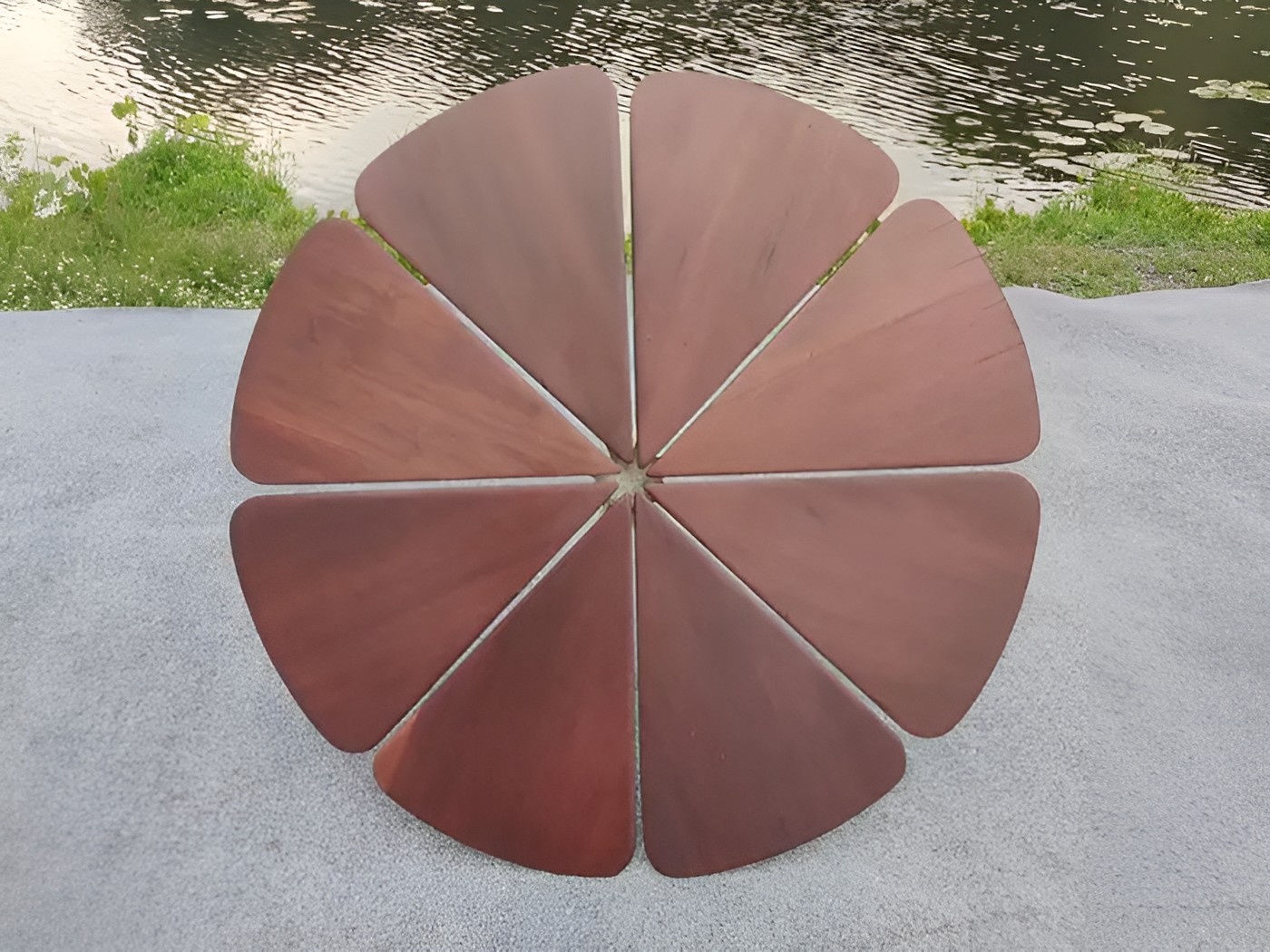
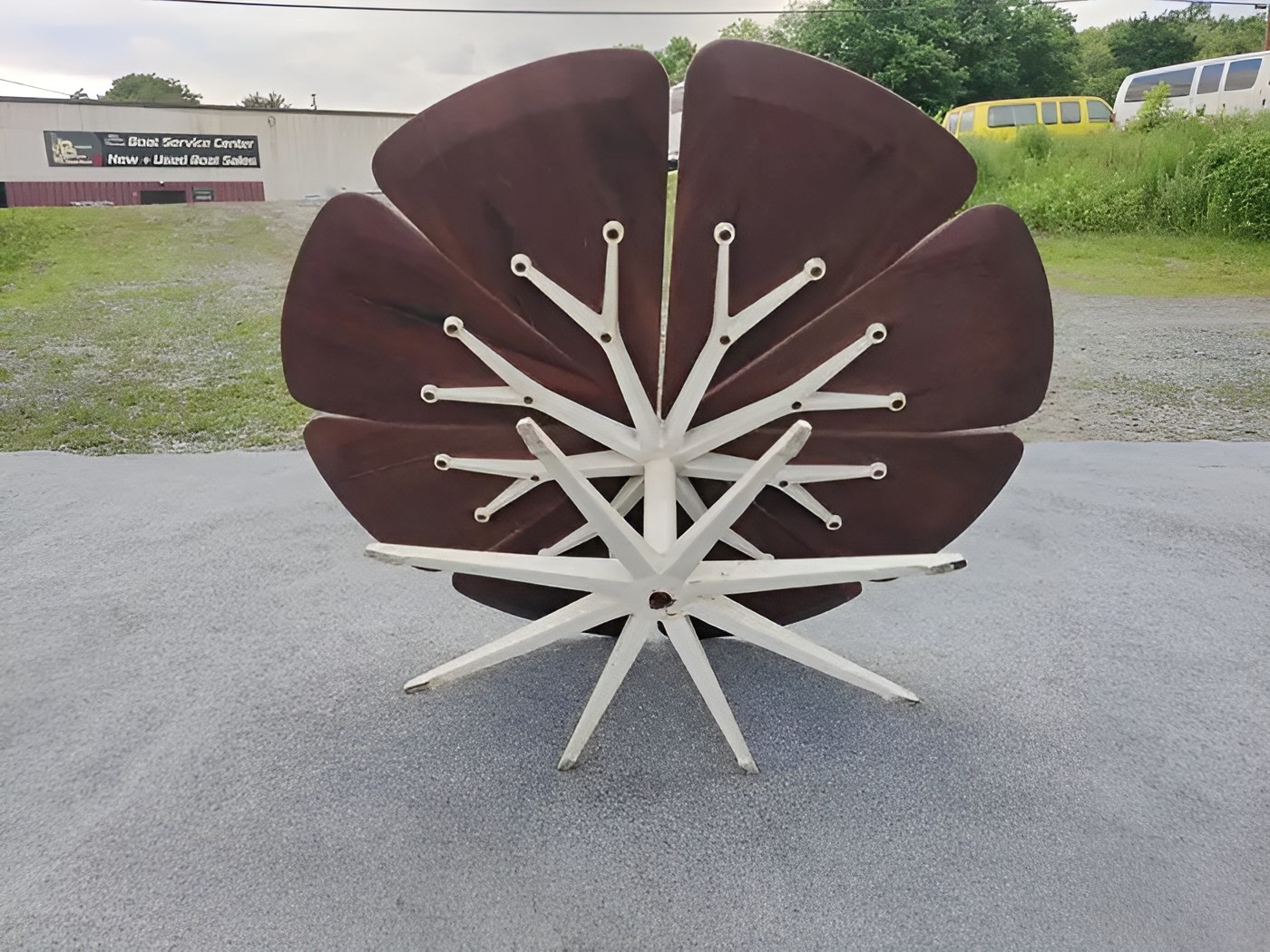
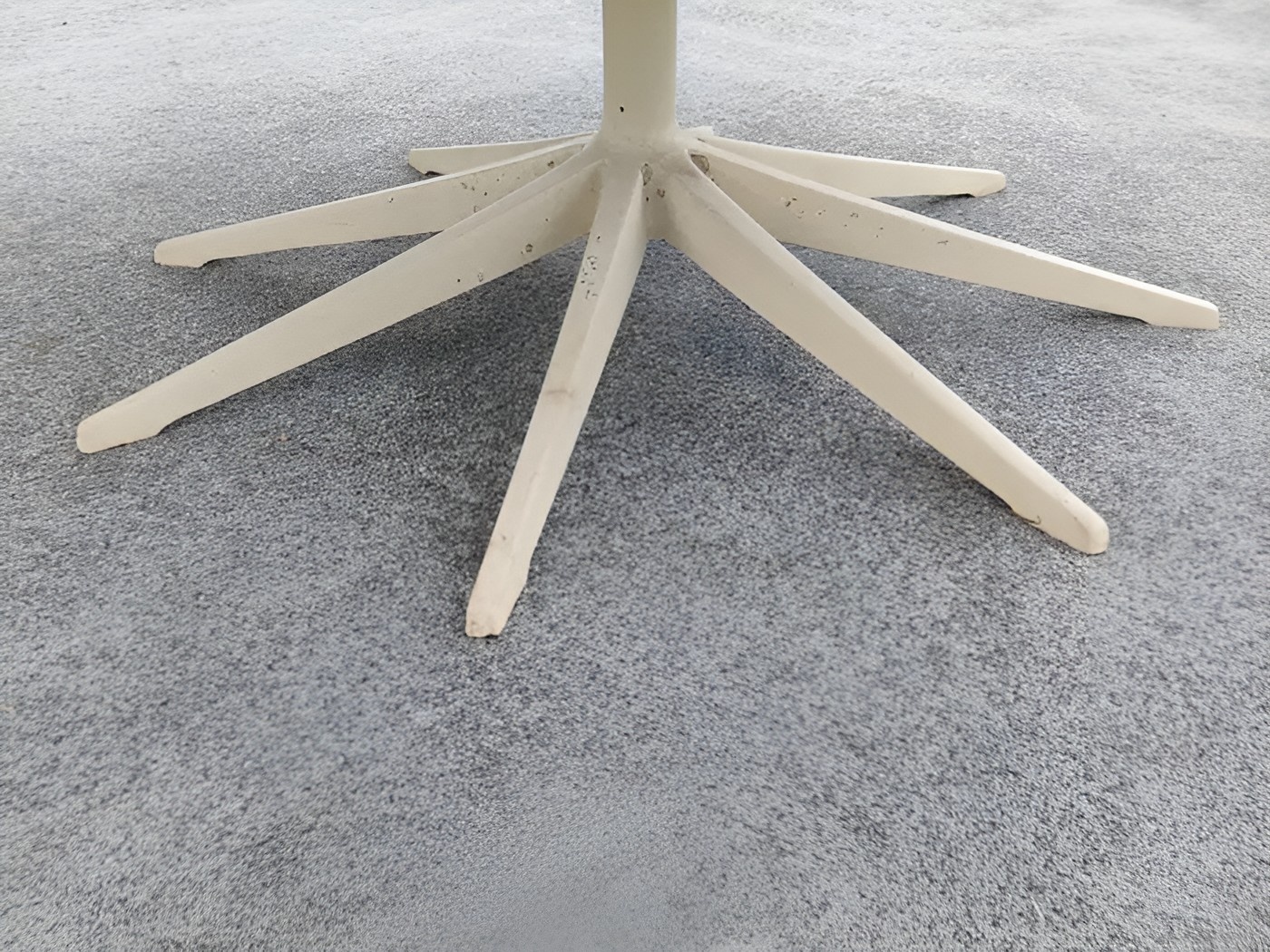
Schultz Petal Table
Botany, Engineered, 1960Designer — Richard Schultz for Knoll; inspired by Queen Anne’s lace.
Materials — Separate petal-shaped leaves on a branching base; each petal finished individually.
Signature Details
- The gapped botanical top reads best from above
- Smallest-footprint icon on the list
- Pairs naturally with wire-era seating
Spotting an Original
- Knoll provenance
- Individual petal finishing
- Branch casting detail
Production
1960 onward
Licensed Today
Knoll (production varies by period)
13. The Surfboard Table
The list closes with a shape rather than a signature: the elongated elliptical “surfboard” top on splayed or hairpin legs, produced by nearly every American maker of the era at every price, from designer editions to anonymous thousands. It is the category’s honest archetype — often unattributed, endlessly made, and genuinely period — and it obeys the vanities-guide rule for archetypes: buy it on condition and construction, not on a name a seller supplies, because most surfboard tables never had one.
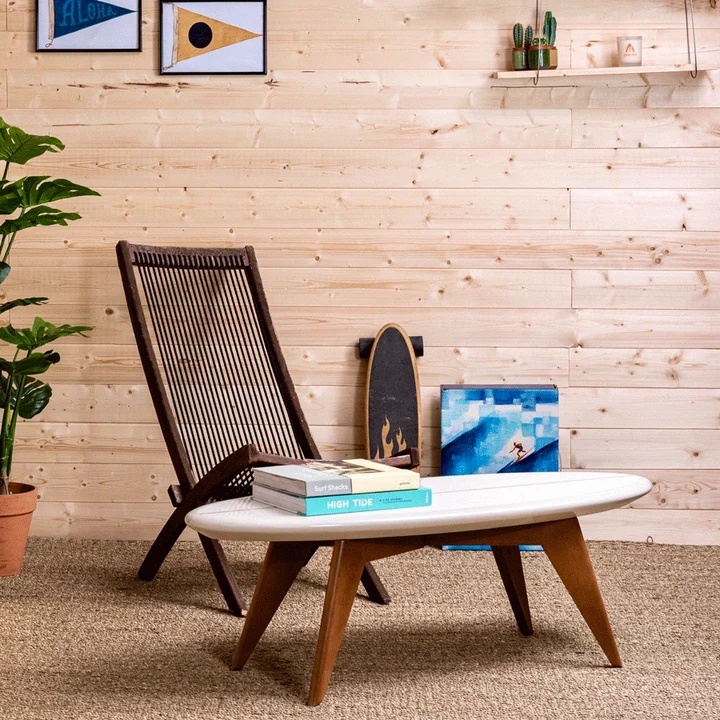
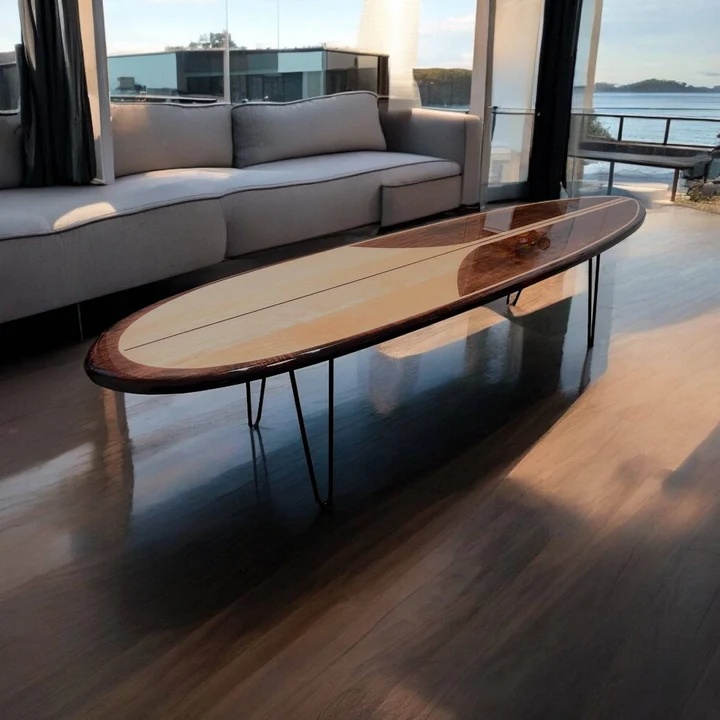
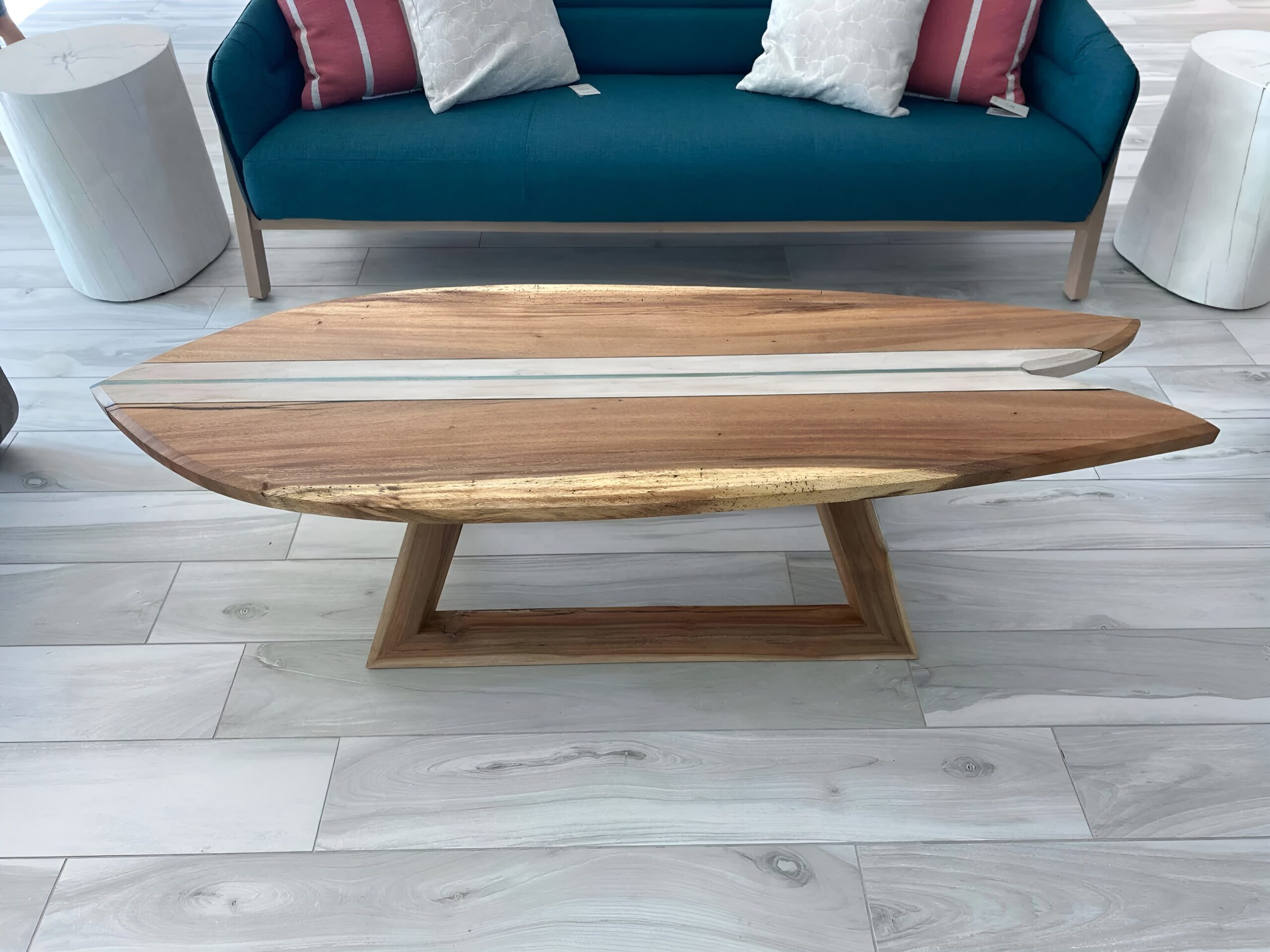
The Surfboard Table
The Honest ArchetypeDesigner — No single author — produced by nearly every American maker of the era at every price.
Materials — Elongated elliptical top on splayed or hairpin legs; walnut, laminate, and everything between.
Signature Details
- Genuinely period, endlessly made
- Often unattributed by design, not loss
- The shape is the signature
Spotting an Original
- Buy condition and construction, not supplied names
- Maker marks where they exist are a bonus
- Leg attachment quality separates tiers
Production
1950s – 1960s
Licensed Today
Vintage market; no license to hold
Original, Reissue, Replica
Three tables on this list are counterfeited at industrial scale — the Noguchi, the Saarinen Pedestal, and the Platner — and the authentication economy around them is simple to state: licensed production (Herman Miller, Vitra, Knoll) carries marks, signatures, and weight the copies economize away; the Noguchi’s etched signature and the Pedestal’s base heft are checks a buyer can run in person. The wider anatomy of why beloved designs breed copies is the standing subject of the most imitated chair in design history, and where each economy — licensed, vintage, honest volume-tier — actually sells is mapped in our survey of the best places to buy furniture online.
What makes a coffee table “mid-century modern”?
A documented design or period production from roughly 1945–1970 in the era’s language: low height (typically 15–17 inches), honest materials — walnut, glass, steel, marble — sculptural or rigorously geometric bases, and ornament earned through structure. The height is the quickest tell; the era drew its tables for low seating.
What is the most iconic mid-century coffee table?
The Noguchi Table, by museum presence, continuous production since 1947, and the size of the unlicensed economy imitating it. The Saarinen Pedestal group runs second on the same three measures.
How can you tell a real Noguchi table from a copy?
Current licensed production carries Noguchi’s signature etched on the glass edge and on the base, plus Herman Miller or Vitra provenance; vintage examples authenticate through the wood species (walnut, birch, cherry), the glass’s weight and edge finish, and paperwork. The interlocking-leg geometry is exact on originals — copies visibly simplify the joint.
Are Lane Acclaim tables valuable?
They are the attainable icon: produced in large numbers from 1958, marked under the top, and priced on condition — intact dovetail veneer especially — rather than rarity. A clean Acclaim coffee table remains one of the least expensive entries into documented American mid-century design, which is precisely its historical role.
What height should a coffee table be for a mid-century sofa?
Match the era’s math: the table top should sit within an inch or two of the sofa’s seat height, and mid-century seats run low, which is why the period’s tables cluster at 15–17 inches. A tall modern sofa wants a taller table; the pairing, not either piece alone, is what reads correct.
Resources
- MoMA — Florence Knoll Coffee Table (1954), Collection Record
- MoMA Design Store — Noguchi Table Design History (1939 Commission, 1944 Nelson Article, 1947 Production)
- Knoll — Saarinen Pedestal Collection, Platner Collection, and Florence Knoll Low Tables Documentation
- Herman Miller — Noguchi Table and Nelson Platform Bench Archives
- Boston MCM — Lane Acclaim Launch History and Period Catalog Scans
- Dezeen — Saarinen’s Tulip Table, Mid-Century Series
- Architecture Lab — 23 Most Loved Mid-Century Modern Chairs
- Architecture Lab — 13 Iconic Mid-Century Modern Beds
- Architecture Lab — Timeless Furniture Pieces


